Sunday, September 23, 2012

2 Sem 2012 - Part Eleven

Denny Zeitlin
Wherever You Are: Midnight Moods For Solo Piano


By Ken Dryden
Denny Zeitlin has balanced careers as a psychiatrist, medical school professor, and jazz pianist/composer since earning his MD at Johns Hopkins in 1964. Equally at home performing with his working trio and as a solo pianist, Zeitlin focuses on the latter in this striking session which he recorded himself in his home studio. His imaginative arrangements of the familiar standards that make up much of this collection put them into a new light, perfect for late-night listening with someone special. "Body and Soul" has been recorded so frequently in the decades since Coleman Hawkins' landmark 1939 record that it would seem that there is little left to explore within it, but Zeitlin's lush reharmonization reveals new glistening facets in this timeless gem. "Good-Bye," long associated with Benny Goodman as his sign-off theme, packs an even greater emotional punch with Zeitlin's deliberate, thoughtful setting. Jazz musicians have often turned the '40s ballad "I Hear a Rhapsody" into an uptempo swinger, though Zeitlin's introspective rubato treatment returns it to its romantic roots, seducing the listener with his lyrical playing. The pianist's fresh rendition of the poignant ballad "You Don't Know What Love Is" begins with him improvising on its bridge and slowly working his way into it, adding a subtle Latin undercurrent as he reharmonizes its familiar theme. Zeitlin also revisits two of his originals, the mysterious "Time Remembers One Time Once" and the richly textured "Wherever You Are." This compelling solo piano CD is destined to become one of Denny Zeitlin's landmark recordings.


Rita Marcotulli/ Javier Girotto/ Luciano Biondini
Variazioni Su Tema


By PianoSolo
“Comporre le immagini, radunare ombra e luce, canone e fuga in un racconto legato armonicamente, è il segreto di una partitura paziente, è conoscere la corrispondenza [musicale e cromatica] fra tono e tono, fotogramma dopo fotogramma, fino alla formula che, improvvisa, spalanca il mondo: musica da vedere, ogni tasto del pianoforte come un fotogramma…” così scrive nelle note di copertina di questo cd Francesco Giardinazzo.
Fotogrammi, ovvero musica da film questa che la pianista Rita Marcotulli compone per il suo nuovo trio di insolita costituzione: l’argentino Javier Girotto al sax soprano e baritono e Luciano Biondini all’accordion. Tre voci con forte personalità che danno corpo ai dodici brani, dodici “Variazioni su tema” che non sono altro che dodici racconti in musica, scene di cui ci sembra di carpire uno svolgimento visivo perché nascono da un contesto in cui è l’immagine a dominare: il cinema appunto. Rita Marcotulli consolida così un’esperienza compositiva che già da anni conduce con passione: la scrittura di musica per il cinema, che le ha fatto guadagnare il Ciak d’oro, il Nastro d’argento e il David di Donatello per la sua colonna sonora del film “Basilicata coast to coast” di Rocco Papaleo e per le sue composizioni dedicate al cinema di François Truffaut. Basta leggere i titoli di questi dodici brani per comprendere il carattere evocativo di questa musica.
“L’amore fugge” è ritmicamente incalzante, come una cadenza di passi in corsa trafelata, un passo marcato dal pianoforte di Rita Marcotulli, qualcosa di imprendibile, qualcosa che se ne va senza poter essere afferrato, mentre la voce dell’accordion di Luciano Biondini echeggia dolcezza, essenza dell’amore, una vena di malinconica tenerezza che il sax di Girotto completa con l’elemento ardore. “La vanità” esibisce se stessa prima con spudoratezza, per poi indugiare in un momento di ampio e profondo respiro, sospesa nella contemplazione di sé, quasi drammatica ammissione della propria vacuità con gli inserti insinuanti del sax di Girotto, differente da ciò che ritroviamo poco dopo ne “La vanità apparente”, in cui cambia l’atmosfera, cambia il sentimento, e la vanità è solo vezzo, maschera esteriore che nasconde un’anima larga e ricca, e sono le voci del trio che si intrecciano in melodie cantabili, quasi arie.
Il pianismo di Rita Marcotulli in questo lavoro non rinnega una delle caratteristiche del suo stile: la capacità evocativa mediante linee melodiche ampie e liriche nella loro sostanza espressiva, ma si trasforma al tempo stesso in potente sezione ritmica del trio al momento opportuno. Interessante l’incedere lento e riflessivo del brano di apertura “L’essenza dell’essere”, in cui l’incipit della nuda voce del pianoforte della Marcotulli ci ricorda persino Satie in un’essenzialità del suono che fa pensare a un movimento verso le cose. Questo movimento ci conduce però in un luogo dove qualcosa di magico sta accadendo, una scena che si popola di cose e persone, lo spazio in cui nasce una storia.
Track list:
1.L’essenza dell’essere/ 2.I due ubriaconi/ 3.L’amore fugge/ 4.La vanità/ 5.Il piccolo Principe/ 6.Nothing lasts for long/ 7.I danzatori delle stelle/ 8.Vanità apparente/ 9.Bambini nel tempo/ 10.Interludio/ 11.Nel mare colore del vino/ 12.Varia.


Pablo Seoane Trio
Falou


By EastWind
Pablo Seoane is a bright, young jazz pianist whose star is rising fast in Europe. He has a very modern style that is based on modal jazz with a post-Brad Mehldau sensibility. At the same time, he has a wild, passionate side to his playing. The all-original compositions are wonderful, combining the heritage of traditional jazz, modern harmonies and varied rhythmic devices. Recommended!
Album Tracks:
1. Alceo negro
2. Se acabo la molicie
3. Poplitea
4. Trevas de Queluz
5. Cambio cidades por mapa
6. Drologo
7. Rua conselheiro La Fayette
8. Sly en Lubeck


Olivier Antunes Trio
Theme From Elvira Madigan
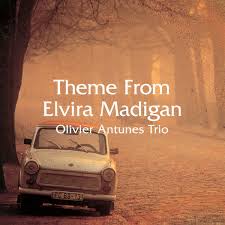

By EastWind
Olivier Antunes, born in Paris in 1973 and grew up in Denmark, is arguably the premier jazz pianist from that country. His three albums from the Japanese label, Marshmallow Records, have firmly established him in my mind as the most lyrical and imaginative pianist of the Bill Evans school.
In this relatively early recording (originally released in 2003), Antunes is backed by two legendary Danish musicians: bassist Mads Vinding who became a star on Duke Jordan's Flight to Denmark<.b> and drummer Alex Riel who has played with Ben Webster, Bill Evans, Dexter Gordon and more recently with Jan Lundgren. This superb trio collected beautiful melodies from many different corners of the musical world, including the great American songbook, classical music (Mozart, Grieg), and tunes written by by Ennio Morricone, Nat Adderley, and Elton John.
These beautiful melodies are played beautifully, with imagination, subtlety and thoughtfulness. A beautiful piano trio album that should be treasured by many jazz fans for many years. Very highly recommended!
Produced by Makoto Kimata.

Album Tracks:
1. Someday My Prince Will Come
2. Chi Mai
3. The Old Country
4. Boy on a Dolphin
5. Theme from Elvira Madigan
6. My Foolish Heart
7. Solveigs Song
8. Hush-A-Bye
9. Can You Feel The Love Tonight
10. Den Bla Anemone (The Blue Anemone)  


Dena DeRose
Travelin' Light: Live In Antwerp, Belgium


By JazzCorner
The First Solo Recording of Her Illustrious Career.
Dena DeRose is a swinging jazz pianist, a gifted vocalist and a talented composer and arranger. Renowned for her intelligent interpretation of standards and her distinctive voice, DeRose's new solo recording, "Travelin' Light," features her in the intimate venue, The Chromatic Attic in Antwerp, Belgium. For this recording, DeRose digs deep into the Great American Songbook unearthing some little-known gems along with other well-known classic compositions.
"This recording is one that I have wanted to make for years. Solo...just me and the piano. Live. I've received many requests to do a solo recording. I wanted to make it happen, but it took awhile to find the right time to do it, the right songs, the right audience and the right room for such a recording. The perfect setting was the Chromatic Attic in Antwerp, Belgium, operated by Herman Van Hove. I was encouraged to record there by my good friend and great jazz pianist, Jack Van Poll, and Herman ‘handpicked' the audience, so the evenings were ‘right' in every respect.
To do a ‘live' solo recording seemed daunting at first, but at the same time it gave me a sense of comfort as it reminded me of how I began this whole journey of singing and playing jazz. I started my career in my hometown of Binghamton, NY performing solo, weekly for about 2 years ...singing and playing piano in the corner of a hotel bar on an old Wurlitzer upright with a very supportive, encouraging and ‘regular' crowd that came by every week!
The songs I chose for this recording are quite dear to my heart. Some were challenging and new for me, while some were songs I've done for more than 20 years, but not in a solo format until now. I fell in love with Nice ‘n Easy and Travelin' Light when I heard the great Shirley Horn perform them live in NYC many times. Two Different Worlds has a story that many people can relate to as the world becomes a smaller place with people living and working in countries other than where they grew up, meeting and falling in love with someone of another culture, nationality or color of skin. This is a song inspired by vocalist Sammy Davis, Jr. Portrait in Black and White has a wonderful English lyric by Roger Shore. It's a Brazilian song written by the great Tom Jobim, but, Shore's story hit home for me a few years back and I'm sure the lyrics will speak to many who hear it.
Why Did I Choose You? is from the movie ‘The Yearling' written in 1966 (a great year!). I remember watching the movie when I was very young and I liked the song.
Blue in Green is a Miles Davis (and Bill Evans) tune, but with a lyric by the incredible lyricist Meredith d'Ambrosio (a true Renaissance woman!!). She titles it "Blue and Green." Meredith's lyric really brought this song to my attention again after having played this tune many times through the years. I Never Told You has a heart breaking story by the incomparable Arthur Hamilton and the music is from one of my all time favorite composers, Johnny Mandel. A rare gem! Twilight World by Marian McPartland and Johnny Mercer has an interesting story that one can see...very visual, very clear, very clever as many Mercer lyrics are. Marian's music truly makes the lyrics come alive. The rest of the tunes I just love - period. I hope you will enjoy them as much as I do."


Nesin Howhannesijan Trio
Sonocore


By EastWind
Once again, Atelier Sawano of Japan discovered a talented European jazz musician who deserves our attention. Born and raised in Berlin, German bassist Nesin Howhannesijan began playing violin at age six and later switched to bass. His trio, with pianist Kelvin Sholar and drummer Ernst Bier, exudes quiet tension, flowing lyricism and tight interplay.
The program of original compositions shows influences from different genres of music and displays quiet emotions and soulfulness under the surface of well-constructed beauty. The sound quality of this CD is also superb.
Release Date : 10/22/2011
Recording : 2010
Personnel :
Nesin Howhannesijan (bass)
Kelvin Sholar (piano)
Ernst Bier (drums)

Track list :
1. Seven Seals
2. Circles
3. Ballad New
4. Sonocore
5. Monolyth
6. Gypties
7. Homecoming
8. 1915
9. Stereotype Threat
All Compositions are by Howhannesijan
*Except Gypties by Sholar


Matteo Negrin
Jouer Sans Frontières



By  Marco Buttafuoco per Jazzitalia
Brezze leggere e cieli tersi, piccole storie, malinconie leggere. Quella di Matteo Negrin e una musica rassicurante, che prende per mano l' ascoltatore e lo porta - senza mai farlo perdere - in luoghi aperti, calmi, rassicuranti.
A volerlo, un po' forzatamente, inquadrare "Jouer sans frontieres" potrebbe essere definito come una proposta "easy listening" di classe, basato com'è su temi ricorrenti e leggermente ipnotici (un po' alla Ludovico Einaudi. mai troppo scavati, mai troppo sviluppati o variati). Il chitarrista torinese ed i suoi compagni di viaggio sembrano puntare più sulla bellezza e sulla purezza del suono che sull'esplorazione del loro materiale musicale. Ed in questo senso occorre dire che il loro lavoro è perfettamente riuscito, perché il disco è molto piacevole da ascoltare. La musica, lo dice il titolo basato forse sull'identico vocabolo che in francese si usa per giocare e suonare, è ricca di echi non invadenti di varie culture musicali: profumi di Sud America, di Medio Oriente, di jazz, ovviamente. Il tutto risulta alla fine molto gradevole anche se, a parere di chi scrive, fin troppo minimalista. Un po' troppo bozzettistico. Un pizzico di energia in più non avrebbe, forse, guastato.
Una parola di elogio meritano i tre musicisti che collaborano col leader, che completano con eleganza e buon gusto il quadro sonoro proposto da Negrin.

Thursday, September 06, 2012

Wynton Marsalis, or ... 2+3+5+7+3 = 2


Wynton Marsalis 1984 at the Grammy Awards

By Claudio Botelho
For those who have nothing better to do, we’ve been putting some thoughts on line for some time now. Our blog is called by me “The Zero Comments Blog”, for reasons I think I don’t have to align.
The fact that art critics can’t be objectively valued (as art itself) encourages us to say the things we say without fear of being objectively contradicted. The fact that we talk about jazz puts our responsibility still farther and, being laymen as we are, father still.
The other day, I was watching a TV program about Wynton Marsalis. It was an old one, as he was still mustached, slim and very young. Probably his famous once contractor Art Blakey was with us by that time. By them, Marsalis was already a great instrumentalist, better than today. He was still sporting, in his playing, that inner flame he’s lost for a long time now and was, in that program, alternating playings with fierce criticisms about jazz critics. The playing was faultless, the critics were terrifying and showed, to big effect, an autocratic man, filled with prejudice, unable to receive any appraisal with which he didn’t concur. In his mind, laymen assessments were no more than exercises of belittlement or shallow praise.
According to his words, one cannot make any negative statement about jazz, and – who knows? – even a mere suggestion, unless he understands the fundaments of playing music. So, if you don’t know key signatures, pitches, modes, glissandi, textures, compass, scales and the likes, please, don’t ever open your mouth to say you didn’t like some playing, OK? If you don’t cook, eat anything they give to you in silence…
Oh, I almost forgot: it’s also sine qua non to know and understand an entity called New Orleans to have the right to be any derogatory or complimentary about this art…
He was also critical of those who found Louis Armstrong as an “intuitive genius”. He said he didn’t know what this could mean: “’Intuitive genius’, what is it?” If Armstrong was a success for so long, he obviously knew what he was doing and that was no doubt a consequence of hard work.
So, in this domain, no laymen can express his opinion! “Intuitive geniuses” like Erroll Gardner, for instance, a distinctive piano player who never learned to read music and composed “Misty”, was just a fictional entity which infests the minds of certain dumb-opinionated ones.
Composers like Antônio Carlos Jobim, Cole Porter, George Gershwin and many other creative music composers were only by-products of hard work in conservatories and their very peculiar styles were given to them by their teachers!
Well, I have no doubt Marsalis studied in better music schools than Jobim (Julliard, for instance) and, most probably, was a more diligent student, if we judge this by the personality of each one. But, would you say Marsalis’ compositions (not his playing, for that matter…) bettered Jobim’s in any reasonable way? I think not. So, time to talk about innate talent: that factory equipped asset that comes along with certain products… Jobim was one of them, as was Gardner and, obviously, Armstrong.
Why does music exist? Is it to please those knowledgeable enough to dissect it in all its structures; those who can quantify and qualify all its components or was it created to please the senses, to make our thoughts wander, to give us goosebumps, to give us all sort of emotions, after all? I think even Marsalis will agree: music exists to enliven our souls!
As a subjective mean, it is prone to cause the most mixed emotions and, therefore, be the subject of all kinds of appreciations. Some will like a certain song as much as another will hate it or be completely indifferent. On account of this, considering its intangibility, the praise of one is the scorn of another and any artist should be receptive to take both.
I have a hunch there’s much more to learn from a bad honest critic than from a praiseful one, but it only works if the receptor is humble enough to accept it in its own terms, irrespective of the ‘possible intention’ of its author. To begin with, let’s accept it as truthful; let’s consider it a viable truth and let’s learn from it. Let’s work with it, make comparisons to other views and make our certainty. Then, use it in our benefit…
Of course, those inhabited by aggressive narcissism, having a grandiose sense of self worth and lacking somewhat to accept responsibility for his own actions, will have a predilection to never feel receptive to critics and, therefore, won’t pick up any lesson from them…
Marsalis, a recipient of an inordinate number of awards, probably the most honored of contemporary jazz musicians and certainly one of the most heralded musicians of these days, has received many critics from his jazz colleagues, but not only on account of his aversion to pundits. Although he’s never produced an ill note using his super-duper wind instruments, he has, in the esteem of many jazz musicians, a narrow view of jazz: too traditionalist and this has had (I guess) a great weight in his playing, which, as much as I’ve seen, lacks spontaneity and radiance. Everything is too much in the right place, being the old established cannons always de rigueur followed. But, where is the brilliance, the adventure, the unexpected? You should search elsewhere… Like someone has said, as a jazz musician, he’s a good classical instrumentalist. I wholeheartedly agree with it!
(I don’t know, but I suspect that those hi-tech trumpets he uses, whose structural body seem to be made out of a single billet of brass take away from the music some of its intrinsic vibrations and, in turn, give it a touch of coldness; a kind of sterility that deprives it of their natural warmth. Musicians like Tomasz Stanko and Enrico Rava (which, to the best of my knowledge, use more conventional instruments) sound extremely vibrant and the sound of their horns seem much stronger and richer, as opposed to the constricted sound of their more up-to-date counterparts. Sometimes, ultra perfectionism, as much as art is concerned, results in backward movements…)
Nobody is critic-proof, even and specially the critics themselves. After all, they will be evaluated by their readers… The profession of playing music in front of an audience is certainly risky and those who make up their minds to do it may be always sure they will be the subject of appraisals and scorns.
As a jazz player, Marsalis is his fiercest critic and this showed undoubtedly when he decided to give up the natural life of a jazz musician, deciding not to expose himself in abandon for fear of not being up to the task. So, while refraining to accept all unwanted critics, he decided to follow other paths which, I admit, he’s done with considerable merit, although at the cost of jeopardizing somewhat the jazz in his country for a long time now.
At what extent? I don’t know.
Why talking about a register done so long ago? Because it represents a turning point in the story of jazz in the USA, which has been trapping the opinions of many of its aficionados to these days…

Sunday, September 02, 2012

Hal David 1921 - 2012


Oct. 17, 2011: Legendary songwriters Bert Bacharach, left, and Hal David pose with singer Dionne Warwick at the "Love, Sweet Love" musical tribute to Hal David on his 90th birthday in Los Angeles, Calif. (AP)


By Fox News
Hal David, who along with partner Burt Bacharach penned dozens of timeless songs for movies, television and a variety of recording artists in the 1960s and beyond, has died. He was 91.
David died of complications from a stroke Saturday morning in Los Angeles, according to Jim Steinblatt, spokesman for the American Society of Composers, Authors and Publishers. David was a longtime member and former president of ASCAP.
Bacharach and David wrote many top 40 hits including "Raindrops Keep Fallin' On My Head," "Close to You" and "That's What Friends Are For."
"As a lyric writer, Hal was simple, concise and poetic -- conveying volumes of meaning in fewest possible words and always in service to the music," ASCAP's current president, the songwriter Paul Williams, said in a statement. "It is no wonder that so many of his lyrics have become part of our everyday vocabulary and his songs... the backdrop of our lives."
Many lyrics and tunes from Bacharach and David continue to resonate in pop culture, including "Do You Know the Way to San Jose" and "I Say A Little Prayer" to "What The World Needs Now Is Love." Their music was recorded by legendary singers including The Beatles, Barbra Streisand, Frank Sinatra, Neil Diamond and their longtime partner Dionne Warwick.
In May, Bacharach and David received the Library of Congress Gershwin Prize for Popular Song during a White House tribute concert attended by President Barack Obama.
Bacharach, 83, thanked Obama, saying the award for his life's work topped even the Oscars and Grammys he won for individual projects. David could not attend because he is recovering from a stroke. His wife, Eunice David, accepted on his behalf.
More than 55 years after their first songs hit the airwaves, Obama said "these guys have still got it." He noted their music is still being recorded by such artists as Alicia Keys and John Legend.
"Above all, they stayed true to themselves," Obama said. "And with an unmistakable authenticity, they captured the emotions of our daily lives -- the good times, the bad times, and everything in between."
David and Bacharach met when both worked in the Brill Building, New York's legendary Tin Pan Alley song factory where writers cranked out songs and attempted to sell them to music publishers. They scored their first big hit with "Magic Moments," a million-selling record for Perry Como.
In 1962 they began writing for a young singer named Dionne Warwick, whose versatile voice conveyed the emotion of David's lyrics and easily handled the changing patterns of Bacharach's melodies. Together the trio created a succession of popular songs including "Don't Make Me Over," "Walk On By," "I Say a Little Prayer." "Do You Know the Way to San Jose," "Trains and Boats and Planes," "Anyone Who Has a Heart," "You'll Never Get to Heaven" and "Always Something There to Remind Me."
Bacharach and David also wrote hit songs for numerous other singers: "This Guy's in Love with You" (trumpeter Herb Alpert in his vocal debut), "Make It Easy on Yourself" (Jerry Butler), "What the World Needs Now is Love" (Jackie DeShannon) and "Wishin' and Hopin"' (Dusty Springfield). They also turned out title songs for the movies "What's New, Pussycat" (Tom Jones), "Wives and Lovers" (Jack Jones) and "The Man Who Shot Liberty Valence" (Gene Pitney).
In a 1999 interview, David explained his success as a lyricist this way: "Try and tell a narrative. The songs should be like a little film, told in three or four minutes. Try to say things as simply as possible, which is probably the most difficult thing to do."
The writer, who lived in New York, often flew to Los Angeles, where he and Bacharach would hole up for a few weeks of intense songwriting. Sometimes they conferred by long-distance telephone; "I Say a Little Prayer" was written that way.
The hit-making team broke up after the 1973 musical remake of "Lost Horizon." They had devoted two years to the movie, only to see it scorned by critics and audiences alike. Bacharach became so depressed he sequestered himself in his vacation home and refused to work.
Bacharach and David sued each other and Warwick sued them both. The cases were settled out of court in 1979 and the three went their separate ways. They reconciled in 1992 for Warwick's recording of "Sunny Weather Lover."
David, meanwhile, went on to collaborate successfully with several other composers: John Barry with the title song of the James Bond film "Moonraker;" Albert Hammond with "To All the Girls I've Loved Before," which Julio Iglesias and Willie Nelson dueted on; and Henry Mancini with "The Greatest Gift" in "The Return of the Pink Panther."
Born in New York City, David had attended public schools before studying journalism at New York University.
He served in the Army during World War II, mostly as a member of an entertainment unit in the South Pacific.
After the war, he wrote lyrics for several composers until that fateful Brill Building meeting with Bacharach.
A longtime member of the American Society of Composers, Authors and Publishers, David served as the organization's president from 1980 to 1986.
He married Anne Rauchman in 1947 and the couple had two sons.

Sunday, August 26, 2012

2 Sem 2012 - Part Ten

Halie Loren
Heart First


By Dan Bilawsky
Though vocalist Halie Loren has made a name for herself by bringing her warm and inviting alto to bear on a mixture of pop and jazz classics, she has received far too little attention in the United States. Much of the praise heaped upon her comes from Japan, where her fan base is strong and plentiful, but this Alaska-born, Eugene-based beauty may finally be able to make major inroads in the U.S. market with Heart First.
This fourteen-track program is heavy on the heart theme, her diverse material drawn from disparate sources that fit this overall concept. Nevertheless, it all comes together to perfection. Depending on the song, Loren can be sweet, sly, or sultry, but she always finds the right read.
All of the covers on Heart First have been done ad infinitum, but Loren's ability to find something new in the old makes this a fun ride. She finds the middle ground between Bob Marley's impassioned delivery and Annie Lennox's pop sheen on "Waiting In Vain," strips "Sway (Quién Será)" to its seductive core, and removes any hint of Eartha Kitt from "C'est Si Bon." "All Of Me," underscored by a slow burning bass and tom groove, receives a reading that's far more provocative than the norm.
In Loren's able hands, Neil Young's twang is nowhere to be found on his "Lotta Love," which sounds like a cross between a Michael Bublé pop hit and "Everyday Is A Holiday (With You)" from Esthero and Sean Lennon. While innovation is present in many of the arrangements, Loren doesn't mess with some standards on some standards. "Taking A Chance On Love" and "My One And Only Love" both receive fairly routine deliveries, giving the young vocalist a chance to shine in a more straightforward manner.
While Loren's talents as a songwriter are downplayed here (there are only four originals sprinkled amongst the fourteen tracks), she does make an impact with her self-penned pieces. "In Time," the most moving of Loren's originals, crosses Hem-like serenity with a Sophie Milman-leaning sound, while the title track mixes country inflections with traces of barroom informality. "Tender To The Touch," with its strong R&B influence, is the most pop-leaning of the bunch, and the album-opening "A Woman's Way" proves to be the most breezy, in music if not in words.
The backing band on this album does a fine job throughout, even if it largely serves as window dressing for Loren. Pianist Matt Treder, who regularly brings class, charm and his own instrumental voice into the picture, and trumpeter Rob Birdwell, who makes an impact with only a scant presence on a few tracks, are the notable exceptions.
Heart First should help to elevate Halie Loren's profile on the home front. She's deserving of more attention, and this record is pure magic.
Track Listing:
A Woman's Way; C'Est Si Bon; Waiting In Vain; Sway (Quién Será); Heart First; My One And Only Love; Feeling Good; All Of Me; Tender To The Touch; Taking A Chance On Love; Lotta Love; In Time; Smile; Crazy Love.
Personnel:
Halie Loren: vocals, piano (12); Matt Treder: piano, Rhodes piano; Mark Schneider: bass; Brian West: drums; William Seiji Marsh: guitar; Sergei Teleshev: accordion (1), button accordion (13); Rob Birdwell: trumpet (2), flugelhorn (4, 11); Hank Shreve: harmonica (7); Dale Bradley: cello (12).


Melissa Stylianou
Silent Movie


By Christopher Loudon, JazzTimes
In New York, New York, director Martin Scorsese's ambitiously flawed homage to Manhattan's postwar music scene, taxman Jimmy Doyle (Robert De Niro) explains to vocalist Francine Evans (Liza Minnelli) that a "major chord" is when everything in your life works out perfectly. Professionally speaking, singer-songwriter Melissa Stylianou has achieved a major chord. Across three previous albums, all distinctively good, Stylianou was finding her footing, experimenting with different styles and interpretive approaches. Now, with Silent Movie, she settles into a spellbinding groove that advances her to the forefront of contemporary vocalists, rivaling the storytelling élan of Joni Mitchell and Carly Simon.
Working with her regular quartet - pianist Jamie Reynolds, guitarist Pete McCann, bassist Gary Wang and drummer Rodney Green - augmented by cellist Yoed Nir, percussionist James Shipp and multireedist Anat Cohen, Stylianou traverses an intriguingly wide-ranging assortment of covers that extends from Jerome Kern, Henry Mancini and Johnny Mercer to James Taylor and Paul Simon. Brazilian singer-songwriter Vanessa da Mata's "Onde Ir" unfolds with the delicacy of an orchid, while Johnny Cash's "I Still Miss Someone" becomes a stunning study in regret. Three originals complete the project, including Stylianou's cautiously romantic lyrics added to Vince Mendoza's "Hearing Your Voice," and her heartbreaking narrative fitted to Edgar Meyer's "First Impressions." Finally, there is the title track, crafted by Stylianou and her husband, Reynolds, which brilliantly depicts the drama of a disintegrating relationship in cinematic terms.


Linda Ciofalo
Dancing With Johnny


By LuckyJazzMusic
As one of the greatest lyricists in American music history, Johnny Mercer's work is familiar to most. Songs like "I'm Old Fashioned," "That Old Black Magic," "Skylark," "The Days of Wine and Roses," Moon River" and "Come Rain and Come Shine" are oft-covered, and it is rare to find a jazz artist who doesn't include a Mercer number in their repertoire. A vocalist himself, Mercer's lyrics especially found favor with jazz vocalists like Chet Baker and Frank Sinatra, because, as vocalist Linda Ciofalo explains, of their "dancing" quality and attention to the craft of painting a picture and telling a story. That said, tribute albums to Mercer are not as prevalent (one by Rosemary Clooney comes to mind) - perhaps because his "old-fashioned" style has somewhat fallen out of favor, or maybe because he worked with some many different composers - including Henry Mancini, Jerome Kern, Hoagy Carmichael, Woody Herman, Harold Arlen and many more across a range of musical directions. But the strength of his songbook is such that the songs are timeless, and Ciofalo - following her "sun"-themed release Sun-Set (see our review here) - has returned to her early love of Mercer's melodies in presenting this all-Mercer recording. Arranged by the smooth-voiced Ciofalo and pianist John DiMartino, the album includes the aforementioned Mercer gems, as well as "Tangerine," "Early Autumn," "Day In Day Out," "One for My Baby( And One More for the Road)," as well as lesser-known numbers culled from Mercer's more than 1,700 songs - including "Talk to Me Baby," "P.S. I Love You" and "I Remember You." With a superb band backing her, including first rate saxophonist Joel Frahm, bassist John Benitez, drummer Ernesto Simpson, nylon-string guitarist Paul Meyers and percussionist Little Johnny Rivero, along with trumpeter extraordinaire Brian Lynch on several tunes - the direction taken is often an intriguing Latin one. For example, the often sultry "Tangerine" is given a full-blooded Afro-Cuban treatment highlighted by Ciofalo's understated delivery and Lynch's passionate trumpet solo. Hard to believe old chestnuts like "I'm Old Fashioned" and "Days of Wine and Roses" can be done again and be compelling, yet Ciofalo and DiMartino deserve credit for their fresh takes that breath life into these classics. Frahm, as always, is excellent throughout, while the rhythm section deserves credit for their sensitivity and support of their vocalist. And it is hard to not be moved by Ciofalo's heartfelt way with Mercer's words, especially on less-heard deep cuts "Talk to Me Baby" and "P.S. I Love You." A return to the romance and penetrating lyricism of a bygone era, refreshed by modern, Latin-flavored arrangements, and sung by a singer with deep respect for the material. 


Meredith D' Ambrosio
By Myself


By Raul D'Gama Rose
The deliciously husky contralto of Meredith d'Ambrosio is unlike any other today, but that's obvious. What is not immediately evident is the effect it has, the body's temperature rising slowly—not after listening to a few charts on By Myself, for that would take too long; but after hearing but a few short choruses. By the time the song in question is over, the mind is delirious and ready to surrender body and soul to d'Ambrosio. Of course it helps that the vocalist is a truly gifted storyteller who inhabits the many sultry tales in Arthur Schwartz's music, whose noir music she celebrates on this album.
D'Ambrosio has a voice that is limited in its range; not unlike Shirley Horn, she uses what she has to the best effect. She is essentially a troubadour who tells a story with sublime elegance and vividness. And she breaks hearts like the spurned lover in the last track of the album, the legendary "Haunted Heart." Like that lover, d'Ambrosio sings in grey tones and sometimes in the colors of rust and terracotta. Her annunciation is clear and her inflection just barely above a whisper. None of this seems to matter though. She begins a line softly, and just when it seems it will continue to sound at that low pitch and die there, d'Ambrosio takes the pitch up a few quarter tones; repeating the line, she spirals it back and down a notch. The faint vibrato in her voice dies and there is a faint echoing "ahumph" in its place, or just a sigh—a very sad sigh.
Like Sheila Jordan, pitch does not matter much. The song's emotion is delivered in minute, nuanced quarter and sixteenth tones that seem almost hidden to the ear. The key is listening to d'Ambrosio with the whole body. Sometimes a sigh will mean more than a whole unspoken series of choruses. There is much of this in many of the songs here. "I Guess I'll Have To Change My Plan" is one such song that echoes these emotions in just that manner. This is also the nuanced manner in which "You And The Night And The Music" is written—and sung by d'Ambrosio.
The vocalist is also her own best accompanist and, like Horn, the dynamics she employs on piano are as nuanced as her own voice. Although this is a consistent feature of the album, the crowning moments come in "Dancing in the Dark," because the lyric line is almost constantly accompanied by the piano and when it is not, the piano continues as if it were d'Ambrosio's voice itself. With this album, d'Ambrosio joins Sheila Jordan as one of the finest living story tellers in music.
Track Listing:
By Myself; Through A Thousand Dreams; Once Upon A Long Ago; If There Is Someone Lovelier Than You; All Through The Night; High And Low; I Guess I’ll Have To Change My Plan; You And The Night And The Music; Something To Remember You By; Dancing In The Dark; Then I’ll Be Tired Of You; Why Go Anywhere At All?; I See Your Face Before Me; Haunted Heart.
Personnel: Meredith d’Ambrosio: piano, voice.


Pat Mallinger Quartet feat. Bill Carrothers
Home On Richmond


By Dan McClenaghan
Minneapolis/St. Paul-bred Pete Mallinger, steeped in the tradition of saxophonists Charles Lloyd, Sonny Rollins and John Coltrane, opens Home on Richmond with Lloyd's "Third Floor Richard." The Chicago-based saxophonist's quartet takes the tune on a wild ride, like a jalopy with a bad wheel alignment careening down a mountain road with questionable brakes. It's a loose-jointed, freewheeling eleven minutes, and the brakes are just barely applied as the group segues into a rollicking thirteen-minute version of Charlie Chaplin's "Smile," a tune that gets covered often, but never quite like this.
Recorded live at Chicago's Green Mill, the quartet, also featuring pianist Bill Carrothers, always sounds as if it's walking the edge of a precipice, teetering, up on one leg, arms scooping air for balance, spontaneous as all get out. Carrothers' solos on the opener are romping, devil-may-care, rough-cut gems, glistening between Mallinger's jagged notes.
Mallinger's title tune explores more sedate and overtly pretty territory. Carrothers is given a lot of room, and the pianist turns in a sparkling extended solo, before adeptly comping behind a solo from bassist Dennis Carroll that leads into Mallinger's craggy blowing.
"Living Space" comes from the Coltrane songbook, circa 1965. Mallinger switches from tenor to soprano, and the quartet captures the dense, free and spiritual intensity of late-Trane to perfection, with drummer George Fludas exploding around another startling Carrothers solo. Mallinger's soprano blows back in, re-injecting Trane-like spiritual tranquility into the mix.
While the set is mostly an edge-of-the-seat listening experience—so well-suited to a live show—the quartet also delves into pensive beauty. Carrothers' "Snowbound" opens with a gorgeous piano intro, and then drifts on Mallinger's long, drawn-out notes over the rhythm section's spare accompaniment, a piece of music that, in its unalloyed beauty, nearly equals Carrothers' "Peg," from the pianist's marvelous "A Night at the Village Vanguard" (Pirouet, 2011).
The closing "Nagasaki" returns to a swooping and swerving jazz mode, the quartet blowing out in high gear on an outstanding night of live music.
Track Listing:
Third Floor Richard; Smile; Home on Richmond; Living Space; Snowbound; Nagasaki.
Personnel:
Pat Mallinger: tenor, alto and soprano saxophones; Bil Carrothers: piano; George Fludas: drums; Dennis Carroll: bass.


Sarah Elgeti Quintet
Into The Open


By Edward Blanco
From the Danish Radio (DR) Big band—directed by such greats as Thad Jones, Bob Brookmeyer and Jim McNeely—to the jazz environment of Copenhagen's Café Montmarte, Denmark has been at the forefront in nurturing and producing some of the finest jazz musicians in Europe and, indeed, the world. Saxophonist/flautist Sarah Elgeti is the latest Danish wonder to emerge on the international stage, astounding critics with Into the Open, by her all-Danish quintet. Elgeti wields her sax like a veteran journeyman, pens her own music, is an educator and as a multi-instrumentalist on this debut, performing on tenor and soprano saxophones, flute and percussion.
The leader pairs with alto and baritone saxophonist Marianne Markmann-Eriksen, creating a saxophone front line that powers the music in an assertive yet stylish manner. The very brief "Home" seems more of a warm-up for Elgeti, the only featured soloist, sounding off on a number many have described as Nordic in nature. Nevertheless, "Bossa Among the Trees" reveals a superb band and the first Elgeti-Markmann-Eriksen saxophone combination on a pulsating bossa-influenced excursion. "Out in the Fields" takes the band to a quieter landscape, maintaining the musical conversation between the saxophonists while highlighting beautiful chords from Christian Bluhme Hansen's nylon string guitar.
The funk is alive and well coming into the open on the gyrating "Downstairs," while "Ringe I Vand" (let it rain) and "Clouds" share common atmospheric textures, showcasing Elgeti on flute. The swinging, hard bop "Blustering Waves" captures excellent play from Ben Besiakov on Fender Rhodes, though it is not the main highlight of the tune. The all-out saxophone assault from the leader and Markmann-Eriksen's husky baritone are the featured voices, augmented by Mikkel Uhrenholdt and Magnus Poulsen's additional alto saxophones.
With the short "Clouds" drifting into more mellow territory, the light and melodic "Angelique" (dedicated to her mother) takes the sensitive balladic route, offering Elgeti an opportunity to strike a warm and tender tone. In stark contrast, the official finale, "Night Moves," provides a very different approach with an improvised avant-garde sound. The album concludes with a fusion-tinged percussive rendition of "Bossa Among the Trees" as a remixed bonus track.
Presenting a variety of styles from bop, bossa and funky blues to straight-ahead and avant-garde, Into the Open is a sparkling debut from the Sarah Elgeti Quintet, a group of unheralded Danish musicians led by the newest saxophone voice to emerge from Denmark's proud jazz scene and culture. Virtually unknown in the United States, with this gem of a recording, Elgeti is poised to take her music into the open embrace of American audiences.
Track Listing:
Home; Bossa Among the Trees; Out in the Fields; Downstairs; Ringe I Vand; But I Wish I Could; Trying To Forget; Blustering Waves; Clouds; Angelique; Night Moves; Remix/ Bossa Among the Trees.
Personnel: 
Sarah Elgeti: tenor saxophone, soprano saxophone, flute, percussion; Marianne Markann-Eriksen: alto saxophone, baritone saxophone; Christian Bluhme Hansen: guitar, percussion; Ben Besiakov: piano, Fender Rhodes (5, 8, 10); Mikkel Uhrenholdt: alto saxophone (5, 8); Magnus Poulsen: alto saxophone (8).

2 Sem 2012 - Part Nine

Harold Danko
Unriched


By Mike Joyce
After a recent recording date, saxophonist Rich Perry’s rhythm section took a sort of busman’s holiday and cut a trio session—hence the clever title. With additional studio time available, pianist Harold Danko, bassist Jay Anderson and drummer Jeff Hirshfield revisited several jazz and pop favorites. How Perry spent the rest of the day is anyone’s guess, but his bandmates certainly made the most of his absence, fashioning a series of performances that manage to sound both relaxed and thought-out.
Given the circumstances, it’s no surprise that an air of spontaneity infuses the album, beginning with a jaunty take on “Sweet and Lovely.” It’s brightened by Danko’s rippling chromaticism and powered by his resounding left hand, to say nothing of Hirshfield’s insistent but unfussy brand of swing. Another enhancement—again, no surprise—is the Anderson-wrought solo interlude that helps elevate this track and others to come.
The trio moves on to salute five of Danko’s favorite artists: McCoy Tyner, via a deeply soulful interpretation of “Search for Peace”; Thelonious Monk, who is represented by the delightfully rambunctious and evocative “Criss Cross”; Hoagy Carmichael, who inspires an unabashedly sentimental version of “The Nearness of You”; Ornette Coleman, who no doubt would get a big kick out of hearing the trio’s kinetic treatment of “The Blessing”; and, saved for last, Bob Haggart’s “What’s New?,” ruminatively explored by Danko and Hirschfield and crisply accented by Anderson’s brushwork.


Eddie Gomez
Per Sempre


By Ken Dryden
Eddie Gomez collaborated with five Italian musicians to produce this 2009 session, which primarily focuses on original ballads. The veteran bassist, recognized as a major player since his 11-plus years working with pianist Bill Evans, is in top form, providing an inventive foundation in the rhythm section. The sole standard is an unusual "Stella by Starlight" with tenor saxophonist Marco Pignataro (who also doubles on soprano sax) and flautist Matt Marvuglio alternately playing the lead and harmony, with the pulsating rhythm section that includes Gomez, pianist Teo Clavarella, and drummer Massimo Manzi. The bassist's warm ballad "Arianna" glistens with its early morning, spring-like air, showcasing its composer playing both arco and pizzicato, with him chanting softly along with his solo. Gomez's new version of his "Forever" (premiered on his 1987 CD Power Play) is an elegant affair with potent solos by Pignatano, Clavarella, and Marvuglio. The pianist's "Pops and Alma" has the flavor of progressive chamber music, while Marvuglio's extended "Why Cry?" is an emotional affair, with powerful playing by Pignatano (who switches to soprano for his solo) and the composer in a lush setting. Pignatano's somber ballad "Homesick" is beautifully voiced, with Gomez's haunting arco bass setting the mood, followed by the miniature bass solo in his "Epilogue."
Recording information: Groove Factory Studio, Castel Maggiore, Bologna, Italy (12/2009).
Photographers: Celine Hercolani; Max Giardina.
Personnel: Matt Marvuglio (flute); Marco Pignataro (soprano saxophone, tenor saxophone); Teo Ciavarella (piano); Massimo Manzi (drums).
Audio Mixer: Tony Marvuglio.


Igor Butman Orchestra
Sheherazade's Tales


By System Rec
Recorded live in 2010 at the Cherry Wood Art Festival in Moscow, “Scheherazade’s Tales” found world-renowned Russian saxophone player Igor Butman—along with prominent NY jazz artists Sean Jones, Kathy Jenkins, Peter Bernstein and James Burton—presenting a crossover program featuring Nick Levinovsky’s jazz arrangements of the symphonic suite “Scheherazade” by the celebrated Russian composer Nikolai Rimsky-Korsakov, along with two songs from the Russian Gypsy tradition, “Dark Eyes” and “Coachman, Don’t Rush The Horses”, as well as the American jazz standard, “Caravan”. Executed with impeccable style and ingenuity, this original fusion of classical music and jazz was enthusiastically received by audience and critics alike.
Personnel:
Peter Bernstein (guitar, solo (3, 5, 6); Sean Jones (trumpet, solo (1, 2, 3, 6); Kathy Jenkins (vocal);
James Burton (trombone); Igor Butman (tenor, soprano saxophones, solo (1, 3, 6);
Denis Shvytov (alto, soprano saxophones); Konstantin Safyanov (alto saxophone, flute, solo (7);
Dmitry Mospan (tenor, soprano saxophones, solo (5); Alexander Dovgopoly (bari saxophone, flute);
Pavel Zhulin (lead trumpet); Alexander Berenson (trumpet, solo (1); Alexander Sakharov (trumpet);
Vadim Eilenkrig (trumpet); Pavel Ovchinnikov (trombone); Alevtina Polyakova (trombone);
Nikolay Shevnin (bass trombone); Anton Baronin (piano, solo (5); Eduard Zizak (drums);
Vitaly Solomonov (bass)
Tracks:
1. Dark Eyes, 2. Coachman, Don't Rush the Horses, 3. Caravan, 4. Sheherazade Mov. 1
5. Sheherazade Mov. 2, 6. Sheherazade Mov. 3, 7. Sheherazade Mov. 4


Yelena Eckemoff
Flying Steps 


By Susan Frances
The scrolling notes of pianist of Yelena Echemoff embroider imagery soundscapes that soothe, excite and entrap the listener in an experience beyond earthly dimensions. Her latest album Flying Steps features Peter Erskine on drums and Darek Oleszkiewicz on double bass, and establishes Echemoff as an engaging pianist and composer of ambient bliss.
Tracks like "Promise" and "A Smile" have a sensual gait that incites the listener to drift off into a luxuriating oasis of melodic improvisations. The soft curls and relaxing lunges of Echemoff's keys in "Good Morning" produced a soothing ambiance, and shift to somber etudes along "For Harry." The dulcet doodling of her keys through "Isolated" imbues a contemplative lilt changing to an upbeat wandering in "Where Is Maxim?" The pensive waddling of her keys in "Tears Will Come" are supported by light drum taps and deep toned bass notes, which manifest into a hypnotic swagger in "Insomnia" with broad sweeps in Echemoff's keys.
Her music is rooted in classical chamber music concepts and orchestral structures coalesced with pop music-inspired rhythms and influenced by jazz improvisations. Born and raised in Moscow, Russia, Yelena Echemoff began playing the piano at four years old. Her mother, Olga was her first piano teacher. Yelena was further educated at the Piano School of the Moscow State Conservatory where she earned a Master's Degree in piano performance and pedagogy. She worked as a piano teacher for the Moscow Music Schools. She and husband left the Soviet Union and have been living the USA since 1991, where she developed a discography as an independent recording artist adding Flying Steps to her lengthy catalog in 2011.


Kathy Kosins
To The Ladies Of Cool


By Larry Taylor
Singers June Christy, Chris Connor, Anita O'Day and Julie London were prominent in the 1940s and '50s. Christy, O'Day and Connor all spent time with Stan Kenton's band, while the sultry London became a pinup as well as a big record seller. Popular with both jazz and pop fans, these singers could regularly be heard on 78s and radio, singing the siren call for the emerging West Coast cool sound. With her fifth album, To the Ladies of Cool, singer Kathy Kosins does a terrific job honoring these four greats with her honey-coated voice.
Hailing from Detroit, Kosins has a long list of credentials as singer, composer and arranger. She grew up immersed in the city's jazz and R&B scenes and started out performing soul, rock, and funk, switching to jazz some 15 years ago, now combining gigs with a teaching career. Her style is sophisticated yet natural, torchy but breezy.
Kosins went to Los Angeles to record in the stomping grounds of her four honorees, selecting tunes from their repertoires. Among the titles, some are well-known, others she had never heard before. Overall, the session is a big success and much is owed to pianist Tamir Hendelman, who did the arrangements and contributes superb backup and solos. The rest of her band also deserves praise.
Obvious from the get-go, Kosins does her own thing. On "Learnin' the Blues," she abandons London's dreamy, sexy softness for a harder-edged bluesy defiance. With "All I Need is You," from Connor's songbook, Kosins again goes against the grain, distilling Connor's cool, compressed emotionality into a lightly swinging brew. O'Day's wordless vocalese on "Hershey's Kisses" gives way to Kosins' witty lyrics, giving voice to a lighthearted rhythmic romp where the singer joins the horns for some catchy harmony à la O'Day. Kosins pays homage to Christy, long associated with "Lullaby in Rhythm," on an up-tempo scat version, where Hendelman and guitarist Graham Dechter share solo space wonderfully, with saxophonist Steve Wilkerson solidly pushing the song to its finish. The CD ends exceptionally with Kosins' wistful bossa nova treatment of "Where Are You?"
Raise the glass and here's a toast. With To the Ladies of Cool, four standout vocal pioneers are deservedly celebrated.
Track Listing:
Learnin'the Blues; Nightbird; Don't Wait Up For Me; All I Need Is You; Free and Easy; Hershey's Kisses; Lullaby In Rhythm; November Twilight; Kissing Bug; Where Are You?
Personnel:
Kathy Kosins: vocals; Tamir Hendelman: piano: Graham Dechter: guitar; Gilbert Castellanos: trumpet (2, 3, 4, 9); Steve Wilkerson: reeds (4, 6); Kevin Axt: bass (1, 5, 7, 8, 10); Paul Keller: bass (2-4, 6, 9); Bob Leatherbarrow: vibraphone, drums.


Pablo Aslan Quintet
Piazzolla In Brooklyn and The Rebirth of Jazz Tango


By Lawrence Peryer
Thanks to artists like pianist Pablo Ziegler, woodwind multi-instrumentalist Paquito D'Rivera and bassist Pablo Aslan, the union of jazz and tango has been made complete over the last several decades. Tango music, which like jazz has had a long and complex history often entwined with issues of class, has been present in the Americas for well over 100 years. As popular music, tango was in many ways the main (only?) rival to jazz in in the dancehalls of the 1930s and 1940s.
Also like jazz, tango after World War II moved out of the ballrooms and into clubs and concert halls, becoming music to listen to and watch, with a much diminished or even non-existent role for dancing. While saxophonist Charlie Parker and the other early beboppers were leading this transformation in jazz, Argentinean-born bandeneon player Astor Piazzolla was doing the same for tango. Throughout his career Piazzolla was concerned with the elevation and growth of the form. As a composer he led the genre into its first confluences with "serious" music—with jazz, modern classical and baroque elements all in the mix.
Piazzolla was equally concerned with his own commercial success, especially in America and Europe. This success would come for him, but in the late 1950s ambition led the artist to push a record specifically for US consumption: Take Me Dancing! The Latin Rhythms Of Astor Piazola & His Quintet (yes the artist's name was misspelled on his own record). An example of its commercial intent: no track breaks the three-minute mark.
As far as truth in advertising goes, "Latin Rhythms" fit the bill. As much mambo as tango, the record is not nearly the "artistic sin" Piazzolla would claim in later years, but it was in no way a commercial success. And it was by no means an inspired work.
At least not until Pablo Aslan decided to listen to it again, that is. What Aslan discovered was a "rhythmic approach that obscured the writing," and therefore a creative challenge, a bit of salvage work. Aslan set out to use the original arrangements of the compositions, which individually had intriguing bits of melody, as starting points for a more fully realized integration of jazz and tango, more in keeping with Piazzolla's own true artistry. With the arrangements largely intact, Aslan and his quintet found room to breathe, adding tasteful, if restrained, improvisations throughout.
The resulting record, Piazzolla In Brooklyn (carrying the subtitle "and the rebirth of Jazz Tango") is, on balance, a successful one, given Aslan's intention, though not particularly ground breaking. Before a single note is played the concept and provenance begins to feel a bit gimmicky. Much emphasis is made in the liner notes (by writer Fernando Gonzalez and with a brief essay by Aslan himself) of the genesis of the project and the peculiarity of the Take Me Dancing! album. It is almost as if the current work cannot stand on its own and needs to be constantly compared to the "monstrosity," in Piazolla's words, that is Take Me Dancing!
Where Pizzolla's record was repetitive and dynamically flat, Aslan has wisely varied the tempos and certainly improved upon the fidelity. Pianist Abel Rogantini has a lyrical quality to his playing that adds much-needed colour to an essentially rhythmic musical style. He, along with Aslan's "re- arrangements," is the true star here, though the entire quintet avails itself well.
As a form, "jazz tango" may be fully realized. Perhaps the only innovations left are to be found in the future integrations of other instruments or traditions with the heavy lifting being done by arrangers and not composers. Piazzolla In Brooklyn is not an essential recording in this artist's or genre's canon, but it is a highly listenable and tasteful representative of where the form stands in 2011. It also re-contextualizes and ultimately redeems a career low point of an important innovator.
Tracks:
La Calle 92; Counterpoint; Dedita; Laura; Lullaby Of Birdland; Oscar Peterson; Plus Ultra; Show Off; Something Strange; Triunfal.
Personnel:
Pablo Aslan: bass; Gustavo Bergalli: trumpet; Nicols Enrich: bandoneon; Daniel "Pipi" Piazzolla: drums; Abel Rogantini: piano.


Eddie Daniels & Roger Kellaway
Live At The Library Of Congress


By Raul D'Gama Rose
Perhaps no wind instrument can be as expressive as the human voice besides the trombone and clarinet. The litmus test, so to speak, might be to cast either instrument in a silent movie and then to watch the film as the instruments imitate the lives whose stories they tell. Of course the instruments must be played exceptionally well—perhaps trombonist Roswell Rudd and clarinetist Barney Bigard, in days gone by or, if the film were being made today, clarinetist Don Byron or Eddie Daniels. How about adding a piano and having Roger Kellaway sit in? That would be a miraculous film and a life worth living. As a matter of fact, this did happen on February 25, 2011 and now there is a record to prove it. Live at the Library of Congress is the title of what surely must have been one of the most memorable evenings at that august venue.
Daniels is one of the most celebrated modern artists on the clarinet, and along with Don Byron, he has, in fact come to redefine its scope and broadened the timbres of the instrument: Daniels, by extending the upper register, and Byron, by making it sound more like a human voice with the occasional growl and smear in the lower register. Daniels is also one of the great virtuoso players and can play in any idiom, including classical, Latin and jazz. He has dramatic expression and his intonation is bright and curvy, bringing out the woody nature of the instrument with polished tones in a myriad hues. His lines are lilting and he plays in triplets, dazzling runs, and arpeggios. His spectral playing inhabits another world of sound, as if he were sculpting a figure in four dimensions. But here he would use a French curve instead of a set square.
Kellaway and Daniels are soul mates who made the now-classic Memos from Paradise (GRP, 1988). Kellaway is a jazz musician who can elicit as much of an array of emotions as pianist Vladimir Ashkenazy does when playing Frederic Chopin. Kellaway speaks directly to the human soul; he does not "play" the notes on the piano, but caresses them lovingly, making them laugh and cry. His fingers brush them and they jump for joy, or weep with despair. He could just as easily join Daniels to create that moving picture of life, which is exactly what they do on this album.
How else would the two men bring a woman to life on "Etude of a Woman" and "Pretty Women"? Who else besides Daniels and Kellaway could conjure the reflection of light dancing on an edifice and the objet d'art within it as they do on "Capriccio Twilight," on this, the most stately album this year?
Track Listing:
Strike Up The Band; Capriccio Twilight; Somewhere; Rhythm-a-ning; America The Beautiful; Etude Of A Woman/Pretty Woman; Just Friends; A Place That You Want To Call Home; 50 State Rambler.
Personnel: Eddie Daniels: clarinet; Roger Kellaway: piano.

Monday, August 20, 2012

Judging The Judges


By Claudio Botelho
The August issue of Down Beat magazine included the results of the critics’ votations of the best of the year. A great unanimity was obtained by Vijay Iler’s “Accelerando”: it was, by far, the best album of the season. 110 votes, against 69 received by Sonny Rollins’ “Road Show, Vol.2”, the second most voted! So, we have here an excess of 60 % over the second place. It’s a very comfortable advantage, meaning that, if taken into consideration the eclectism of the suffragists (as they’re from all around the globe), “Accelerando” wasn’t just the best outing of the period, but a kind of work which pleased the most different tastes: a truly “universal” product! Wow!
Well, “Accelerando”was a no-brainer for me: very good interplay, uninspired compositions (personal taste is personal taste…), to a great extent, an annoying repetition of drum beats (very common with certain rhythms when the drummers just don’t know what to do) and a sense of urgency pervading the whole work. The music is instigating, indeed, the form very personal, different from anything else. Surely Iyer has already carved an original path for himself, enough to distinguish his playing from the gigantic plethora of pianists around. You can undoubtly recognize him from the early beginning of any of his renderings.
For me, his “raw playing” is too much visceral, too urbane, allowing little or no space at all for dreaming. It’s like a crowded big city downtown, at six P.M. In this sense, It’s too political for my tastes…
But, the numbers from Downbeat critics are too expressive and disagreements like mine must be taken with a giant grain of salt. Let’s wait to see what the readers of that magazine have to say. We must not forget that critics are fed up with mainstream works and, when something different arrives, hyperboles sometimes come along from them. I’m old enough to have seen many novelties to be no more than the fruits of the season…
From now on, I’ll be waiting for the endurance of works like this and will be witnessing if it really gets engraved in the jazz records. Besides, let’s see what the DB readers have to say about it…
Meanwhile, let me suggest some alternative plain good music for you. Their only merit is to please the senses… Here they go:

1- JESPER SOMSEN – “DREAM’S, THOUGHTS & POETRY – THE MUSIC OF  ENRICO  PIERANUNZI”;

2- DARIO CARNOVALE TRIO – “PENSIERI NOTTURNI”;

3- GIOVANNI MAZZARINO QUARTET –“ IN SCICILIA UNA SUITE”;

4- JOHN TAYLOR – “GIULIA’S THURSDAYS”;  and

5- KEKKO FORNARELLI – “CIRCULAR THOUGHT”.


The first, the second, the third and the last one are not the kind of albums to be spotted on DB. They’re from Europe and, in addiction to an undisputable good taste and musical finesse, they don’t usually play havoc with blowing instruments: these never overbear the game, as happens so much with music from other places of this planet. Things are always even. That’s a special skill of them.
Look out for the number one cited above: The inspiration was the great pianist Enrico Pieranunzi!
Pieranunzi has been doing exceptional music for a long, long time and, finally, someone remembered of this. His musical themes and those associated with him, as can be seen in Somsen’s work, speak by themselves…
Again, there’s nothing fancy here, just plain good old music which will never be out of fashion!
(I should add that these albums have come to me from dear friends of Fortaleza-CE who have this bad habit of sharing with us from Brasília things that have enthralled them. Thank you very much guys!)
In DB survey, Greg Porter’s “Be Good“was granted the fourth most voted.
OK, jazz, as a kind of music, has been defying many, as these simply don’t know what exactly it is. For me, it’s no more than something new created inside a theme, something never written by its author. Sometimes, it is previously written, i.e. entirely recomposed before the actual performance. Other times it’s instant music, created during the performance. In general, aside from the so called “free jazz”, the presentations mix these two forms.
Still, one can work as used to do Billie Holliday, in her very, very peculiar way of singing: through tiny modulations, she built her super personal style. The songs were thoroughly rearranged in a way many times missed by the common listener. The little arrangements ran from the first chord to the last one.
Another can act like Sinatra or Bennett who, hiring arrangers to make-up the songs they’d perform, acted just like any other musician who obliged himself to follow the charts they were given. The final result may be taken as jazz, but, is this performer a jazzist? As much as I like “The Voice”, I have my doubts…
Would you say these icons were made of the same piece of cloth as Kurt Elling, Joe Williams, Mel Tormé, Al Jarreau, Bobby McFerrin or the maven Mark Murphy? You judge it…
This time, when I listened to Porter’s album, I had no idea I was listening to a jazz singer, but, to my astonishment, he’s got a fourth place from DB critics. A fourth place! So, only three albums outperformed “Be Good”! Wow, again!
I’ve listened to this album some months ago and, to tell the truth and nothing but the truth, its jazz escaped completely from my perception: maybe he’s a new Billie Holliday who’d done some nano-arrangements which I couldn’t detect. As such, disguised as one more pop music out of so many extant, he deceived me into thinking I’ve bought the wrong album!
I’m not here talking about the musical value of Porter’s effort; “Be Good” just does not seem to be a jazz album for me. I haven’t listened to any other of his previous outings and, so, could not say much about his musical prowess. It just seems to me very weird that so many critics put his last album ahead of so many genuinely jazz productions.
Would the critics place him side by side with the above cited?
I wonder I Knew…

Sunday, August 19, 2012

2 Sem 2012 - Part Eight

Michel & Tony Petrucciani
Conversation


By Don Williamson
While I don’t like to bring personal experiences into CD reviews, I may be forgiven for this one exception. Maybe not. When I listen to Conversation, I am reminded of watching Bucky and John Pizzarelli perform in a duo performance last fall. As they played a number of tunes that Bucky and his uncles taught John as a boy, it seemed that John’s, not acceptance, but celebration of his father’s spirit provided the greatest kind of public tribute possible. As Bucky would lead, John would follow, and eventually the conversation flowed without words, and in fact in a manner that surpassed words. When Bucky dropped back into a relaxed swing, John evoked his teenage fascination with the Beatles and rock. The night before, when John’s trio played, he took time out of his performance to give the family history of Joe Mooney’s influence on Bucky and of the brother-and-sister-and-father-and-uncles jam sessions. Music was a means for family communication and closeness.
Obviously, this isn’t a review about the Pizzarellis’ duo. However, the same family connection appears to be present on Conversation, wherein father Tony and son Michel join in a performance that achieves more than the playing of notes or the accompaniment of one another or the entertainment of an audience. It puts on public display, and in public audio format, an understanding between the father who encouraged his son to play piano in spite of his serious physical handicaps—and who released his son to the world as the teenager joined Charles Lloyd half a world away. And the son reciprocates with love and appreciation during this concert in Lyon, France, in 1992. Even though the son is gone and the father survives, the recording exists as a documentation of their convergence of styles and similarities of spirit.
With the lightness and vigor of his rhythm guitar, Tony not only follows Michel, but also on “Summertime” he creates a casual sophistication the belies the technical mastery that they both exhibit. Somewhat similar in feel to Nat Cole’s trio, the fact that the Petruccianis lack a bass doesn’t affect the movement of the performance. Michel slyly plays the bass lines himself as he improvises and alternates the chord changes with the left. This bi-dextral ability is most evident on “Billie’s Bounce,” on which father and son play the rippling bop lines in unison as Michel walks his left hand in reference to the double-bass function. Even as he solos, his single-noted left-hand accents never cease.
Even as they respectfully comp behind the other and trade choruses on tunes like “My Funny Valentine” or “Someday My Prince Will Come” (a song perfectly suited to the sound of this duo), they allow the audience to hear each musician singly. Tony solos on “Nuages,” recalling the French lineage of guitar interpretatins of Django Reinhardt’s tune. By the same token, Michel interprets Miles Davis’ “Nardis” on his own, wrapping twists and turns into the musical portrait that he paints, the final half tone resolution an insistent motive within the tune.
In honor of the occasion of the father-and-son tour, Tony wrote “Michel’s Blues,” the structure of the tune serving as the basis for the familial interchange. Its complexity isn’t as important as the fact that it allows for them to have fun with it, one lick inspiring the other to pick it up and embellish it.
A number of Michel Petrucciani CD’s have been released after his passing, including Michel Petrucciani: Concerts Inédits, with his brother Louis. Perhaps Conversation, though, is the most historically significant, relaxed and personally meaningful.
Track Listing: Summertime, Sometime Ago, All The Things You Are, My Funny Valentine, Nuages, Nardis, Michel
Personnel: Michel Petrucciani, piano; Tony Petrucciani, guitar


Monty Alexander Trio
Love Me Tender


By EastWind
Veteran pianist Monty Alexander left Jamaica and came to the United States at age 17. This new recording for Venus Records celebrates his 50 years in the land of jazz. Known for his straight ahead sensibilities and sometimes considered a successor of Oscar Peterson, his long career has widened his musical spectrum and brought maturity to his playing.
Soulful, swinging, funky and decidedly straight ahead, Alexander's maturity brought a certain richness and relaxed elegance to his playing. With his trusted rhythm section, he plays standards and a couple of his originals, plus a few of Ray Brown's (his mentor and early collaborator) repertory. This is one of his strongest albums in recent years!
Recorded at Avatar Studio in New York on September 12 and 13, 2010.


Aldo Romano
Inner Smile


By Dreyfus
Aldo Romano se joue des conventions et ne cesse d’avancer. Il distille ses coups de baguettes comme d'autres vont déguster un bon vin, avec un raffinement qui n'empêche jamais l'ivresse.
Infatigable créateur, il revient avec ce nouvel album, enregistré dans son pays d’origine, l’Italie.
Entouré de ses amis, Aldo a composé la quasi totalité des titres et donne de nouvelles sublimes mélodies.
Interprétées par Enrico Rava à la trompette ou Baptiste Trotignon au piano, Thomas Bramerie assurant la solidité rythmique.

Tracklist:
01. Positano (Aldo Romano) 04:09
02. More (Marcello Cirociolini, Nino Oliviero, Riziero Ortolani) 05:11
03. Kind Of Autumn (Aldo Romano, Baptiste Trotignon, Enrico Rava, Thomas Bramerie) 04:09
04. Anny's Lullaby (Aldo Romano) 03:32
05. Il Piacere (Aldo Romano) 03:38
06. Old Devil Moon (Burton Lane, E.Y. Harburg) 05:34
07. Inner Smile (Aldo Romano) 04:01
08. My Funny Valentine (Lorenz Hart, Richard Rodgers) 08:52
09. Where Is Aldo? (Baptiste Trotignon) 02:06
10. E Si Sogna (Aldo Romano) 02:56
11. I'm Getting Sentimental Over You (Ned Washington, George Bassman) 04:21

Line-up/Musicians:
Enrico Rava: trumpet
Baptiste Trotignon: piano
Thomas Bramerie: double bass
Aldo Romano: drums


Ettore Fioravanti
Le Vie Del Pane e Del Fuoco


By Neri Pollastri
Decolla lentamente questo lavoro del nuovo quartetto di Ettore Fioravanti, che include due giovani leve della scuola romana accanto a un navigato musicista come Marcello Allulli. Le prime due tracce, infatti, suonano un po' troppo rilassate, poco inventive e alla fin fine un po' già sentite, sul solco di quel jazz melodico del quale lo stesso Fioravanti ci ha offerto in passato alcune pagine magistrali, ad esempio una decina d'anni orsono con il suo Belcanto, ma che qui appare opacizzato.
Però con la radicalmente rivista versione di "Brava," di Bruno Canfora e portata al successo negli anni Sessanta da Mina, le cose cominciano a cambiare: chitarra e batteria suonano ritmicamente assieme, si aprono spazi per il tenore di Allulli, le atmosfere acquistano originalità. La quota si alza ancora in "Walk on the Wild Side" di Lou Reed, dove Benini apre in country friselliano, quasi parodiando il brano originale, fino a offrire uno spazio di intensità dinamica a Fioravanti ed Allulli, che si producono in un lacerante free che conserva memoria del tema. Il ritorno alle origini, con il delicato "Scrigno" di Fioravanti (in realtà brano già noto come "Girotondo" fin da Ricercar Scintille, del 1997), assume così tutt'altro peso e conferisce ben altro equilibrio al complesso del disco. Che trova poi una sua sintesi nel successivo "Mantra," di Allulli, ove tensione dinamica, espressività e lirismo si fondono pienamente.
In tal modo, la cifra del quartetto e del disco assume una sua autonoma originalità. Resta tuttavia la sensazione che si potesse fare di più, volando in quota più a lungo. Per farlo, sarebbe stato forse necessario che Benini fosse più ardito e si liberasse più spesso da alcuni cliché che attraversano le sue pur tecnicamente ineccepibili improvvisazioni e che Ponticelli avesse con continuità fatto sentire la presenza del suo contrabbasso come avviene nella conclusiva "Black Hair," non a caso di sua composizione. Ma si tratta appunto dei due membri più giovani del quartetto ed è quindi ragionevole che debbano ancora mettere a punto qualcosa. Li aspettiamo alle prossime prove di questo interessante gruppo. Così come l'ospite, il pianista Enrico Zanisi, presente gradito in tre delle nove tracce.
Visita il sito di Ettore Fioravanti.
Elenco dei brani:
1. Red (Ponticelli) - 5:38; 2. Fiordalisi (Fioravanti) - 6:49; 3. Brava (B. Canfora) - 3:57; 4. Aria di vetro (Bonini) - 5:44; 5. Walk on the Wild Side (L. Reed) - 6:21; 6. Scrigno (Fioravanti) - 7:16; 7. Manta (Allulli) - 5:35; 8. Strategia della tensione (Bonini) - 6:20; 9. Black Hair (Ponticelli) - 5:32.
Musicisti:
Ettore Fioravanti (batteria), Marcello Allulli (sax tenore), Marco Benini (chitarra), Francesco Ponticelli (contrabbassi), Enrico Zanisi (piano in 2, 7 e 9).


Wallace Roney
Home


by Glenn Astarita
One of the premier modern jazz trumpeters, Wallace Roney's Home fuses postmodernism with a classic 60's Blue Note Records stylization and touts the best of many jazz worlds on this superfine 2012 release. Over the years, Roney has developed a stylistic realm of sound amid inferences to Miles Davis's bluesy intonations. The band, including Roney's talented brother and saxophonist Antoine, glide through original compositions and works by renowned jazz artists. The ensemble launches the festivities with a warmhearted and contrasting take on Wayne Shorter's "Utopia," brimming with the hornists' thematic expansions and blustery solos.
Here and throughout, the musicians use space as an enhancer. Wallace Roney maximizes his attack via articulate voicings, spiked with flickering breakouts and near effortless fluency. Power and eloquence attain equal footing as the artists often dig deep from within.
Guitar great John McLaughlin's "Pacific Express" is dappled with a touch of Miles Davis's "Bitches Brew" jazz fusion, sparked by Aruan Ortiz's electronic keys that counter's an air of mystery, modeled by the leader's deftly enacted muted lines and a loose, funk-rock vibe. And the band shifts gears on "Dawn," which is an up-tempo ballad layered by Doug Carn's organ phrasings, and the frontline's breezy notes atop a smoothly flowing Latin pulse as the band throttles the pitch and pursues an open-air forum. However, "Ghost" is a piece that aptly conveys ethereal attributes, due to the trumpeter's dark voicings that resonate with clairvoyant underpinnings.
Home is an album that offers respite from many of the post-bop products that seemingly flood the market these days, largely devised on knotty time signatures sans any tangible or memorable melody lines. Nonetheless, Wallace Roney's artistry radiates to the hilt with this impeccably arranged program that discloses additional rewards on subsequent listens.

Tracks: Utopia, Home, Pacific Express, Plaza Real, Dawn, Evolution of the Blues, Ghost of Yesterday, Revive.
Musicians:Wallace Roney (trumpet), Antoine Roney (soprano & tenor saxophones), Aruan Ortiz (keyboards), George Burton (Fender Rhodes, #4), Doug Carn (organ, #5), Rahshaan Carter (bass), Kush Abadey (drums, #1,3 & 6), Darryl Green (drums, #4 & #5), Bobby Ward (drums, #2, 7 & 8), Shakoor Sanders (percussion, #2).


Eli Degibri
Israeli Song


By Dan Bilawsky
If jazz buffs were approached at the start of the 1990s and asked to list some top-flight Israeli jazz musicians, plenty of them wouldn't be able to utter a single name. That just goes to show how much the times have changed. In 2010, Israeli-born jazz musicians are among the brightest stars in modern jazz and saxophonist Eli Degibri's name is high up on this list. Degibri arrived in the United States in 1997—to attend Berklee—and he ended up in the Big Apple in 2002, where he began to make a name for himself as one of the most consistently engaging forces on the scene. While he's had the opportunity to work with legendary figures like pianist Herbie Hancock, his own recordings—up to this point—have always featured his contemporaries, such as drummer Jeff Ballard and pianist Aaron Goldberg.
With Israeli Song, Degibri moves in a different direction and, in the process, has put together what is, perhaps, one of the best small groups to show up on record this year. Brad Mehldau mans the piano chair on this recording and two legendary alumni of trumpeter Miles Davis—bassist Ron Carter and drummer Al Foster—round out the rest of the quartet. While this type of line-up might seem like a gimmick, meant to draw fans in with big names, that's not the case. Degibri has been an important presence in Foster's band for eight years and Carter connected with the saxophonist after he left Berklee to attend the Thelonious Monk Institute of Jazz Performance.
Degibri's originals make up more than half of the program, but each member of the band also contributes one piece, and a pair of choice chestnuts—Dizzy Gillespie's "Bebop" and Harold Arlen's "Somewhere Over The Rainbow"—also make it onto the program. Within these selections, Degibri also takes the opportunity to settle into duo dialogues with each band member at one time or another. "Bebop" brings Degibri and Foster together, as the saxophonist positively burns over the drummer's constant comping. Foster rightly pays tribute to bop drumming pioneers like Kenny Clarke and Max Roach, but marries their ideals with his own ideas and assertions. "Somewhere Over The Rainbow" gives Carter and Degibri a chance to connect on a softer selection, while the emotionally riveting "Israeli Song"—along with "Liora"—are all about the saxophone-piano relationship. Mehldau adds some heightened drama to the former and the latter features some fun rhythmic toying.
The rest of the material hits on a variety of moods and subtle musical events are ever-present. Degibri's singing saxophone gently moves over Mehldau's roving piano on the pianist's "Unrequited," but Degibri builds to a more intense peak and seems to separate himself—sound-wise—from the band as time moves on. The saxophonist pays tribute to Carter—like saxophonist John Coltrane paid tribute to bassist Paul Chambers ("Mr. P.C.")—with "Mr. R.C." While Carter's solo here is a virtual clinic on taste and technical possibilities for the soloing string player, the way he always chooses the right notes as an accompanist—and works as a team player—is the real reason that Ron Carter is the preeminent bassist of our time. "Judy The Dog" is a peppy piece that weds swing and funk feels, and Foster is on fire during his own funk-laced "Look What You Do To Me." "Jealous Eyes"—the obligatory ballad—demonstrates brilliant pliability within the rhythmic creations of Carter and Mehldau, while "Manic Depressive" is a prime piece of gin-soaked bluesiness, complete with a terrific tenor performance from Degibri. Balance is the key to this record, and these 11 performances manage to be modern enough for the contemporary scene, traditional enough for those who don't tread in deeper waters and good enough to be considered one of the best recordings of the year.
Tracks:
Unrequited; Mr. R.C.; Judy The Dog; Jealous Eyes; Manic Depressive; Bebop; Liora; Look What You Do To Me; Third Plane; Somewhere Over The Rainbow; Israeli Song.
Personnel:
Eli Degibri: tenor saxophone, soprano saxophone; Brad Mehldau: piano; Ron Carter: bass; Al Foster: drums.

2 Sem 2012 - Part Seven

Kenny Werner
Me, Myself & I


By Larry Taylor
Pianist Kenny Werner, though comparatively unsung, has been appreciated by many since forming a trio in 1981. He is also known for his series of stellar duos with harmonica virtuoso Toots Thieleman. Additionally, he has done yeoman duty with guitarist John Scofield, bassist Dave Holland and saxophonist Joe Lovano, all the while—for more than 20 years—working as arranger and accompanist for singer Betty Buckley.
Me, Myself and Iwas recorded solo in Montreal, Canada at the small Upstairs Jazz Bar and Grill club, in June, 2012, during the city's renowned jazz festival. Of this engagement, Werner says that the "ideas just kept flowing." He was feeling so good about his playing that he mentioned it to owner Joel Giberovitch, who decided to make a live recording. This is the satisfying result.
From the get-go, Werner's relaxed and lightly swinging style is apparent. Of the seven sides, one is an original; the others are pop and jazz standards. The intimate setting is conducive to long takes—four of them last from 10 to 13 minutes or more—giving ample opportunity to stretch and extend his ideas.
Werner explores Thelonious Monk's familiar "'Round Midnight," excavating shards of melody which he shapes into his own impressionistic creation. Werner's own "Balloon" becomes a tone poem based, he says, on the life of a helium balloon. Appropriately, the melody drifts along, suddenly soaring before the sphere inevitably runs out of gas and slowly floats down, the song ethereally resolving. John Coltrane's "Giant Steps" surprises, being rendered in a light and lyrical manner—not with solid "sheets of sounds," as a critic once described Trane's style.
Two standards round out the album. "All The Things" (Jerome Kern and Oscar Hammerstein's "All the Things You Are") shows Werner's ballad prowess, hinting at an indebtedness to Bill Evans but finishing in a blaze of notes. He plays an extended version of Thad Jones and Louis Ouzer's "A Child Is Born," examining every aspect of this lovely piece. In a charming touch near the end, he whistles the song.
Hearing Werner alone and unfettered, as on Me, Myself and I, is a great opportunity to fully appreciate his ample talent.
Track Listing: Round Midnight; Balloons; All The Things; blue is green; I Had a King; Giant Steps; A Child is Born.
Personnel: Kenny Werner: piano.


Al Jarreau
and The Metropole Orkest: Live, with Vince Mendoza


By Shannon
If you shy away from orchestral settings fearing they will be either too serious and cerebral or (on the other side) too lite and easy this album is the myth buster. All you have to do is look at arranger-conductor Vince Mendoza's credits listed above to see that he is able to come up with material and arrangements that fit the songs and the artists perfectly and bring a lot of out-of-the-box originality to the party and Metrople Orkest is not just billed as a Jazz big band, they proudly fly the pop music flag too. These virtuoso musicians play anything and everything and make it all sound effortless. This is also one of the rare live recordings that actually captures and projects the feeling of exuberance that sweeps over the audience when Jarreau starts working his magic onstage.
The song selection is perfect. Mendoza, Jarreau, and Jarreau's musical director Joe Turano have chosen songs that have not been overworked and overexposed - deeper album cuts, a few classic gems, and tracks from several albums that fell through the cracks during the early 20th century music biz sea-change (including "Accentuate The Positive" which is probably one of the most underrated contemporary jazz albums ever). Combined with the new arrangements it makes the album sound both fresh and timeless. Jarreau is in fine voice - every word and every note is beautifully expressive and you can feel this wonderful thread that connects artist and band - he isn't in front of them, he's inside them, and vice-versa.
It would take 11 more paragraphs to give justice to these songs but words never have been able to distill the essence of the music. Take the leap and click this into your cart and join the fans who heard previews and sold out the first shipment on release day. To quote a cliche - "this ain't your grandfathers big band music" but there is music on here that everyone from your grandfather to your pre-schooler will love. Enjoy!


Kekko Fornarelli
Circular Thought


By Alfonso Tregua per Jazzitalia
Album d'esordio per Kekko Fornarelli, giovane pianista barese, questo Circular Thought cattura immediatamente l'attenzione grazie al suo perentorio avvio, una vigorosa e incalzante Footprints, che mette subito in luce l'incisivo interplay del trio, ampliato con la grintosa voce strumentale del sempre più convincente Francesco Bearzatti. Il versatile sassofonista contribuisce con misura anche nella pacata versione dello standard For Heaven's Sake e nel vivace originale Il Grande Bluff, caratterizzato dalla notevole libertà espressiva che i componenti del gruppo si concedono, mai disgiunta dall'indispensabile controllo della forma.
Più meditativi e lirici risultano invece i tre episodi, ulteriori esempi della vena compositiva del leader, in cui il quarto componente è Marco Tamburini. Si va dalla delicata ballad che dà il titolo al disco, con il piano a fornire elegante contrappunto alle volute sonore intessute dal trombettista, al conclusivo Andante passando per le cadenze da love song di Mari, brano dagli accenti evocativi, permeato da un equilibrato tocco di romanticismo: qui Fornarelli, oltre a ritagliarsi un riuscito intervento solistico, concede spazio, in apertura e chiusura, ai calibrati virtuosismi di Maurizio Quintavalle e Mimmo Campanale.
Particolare attenzione, ovviamente, meritano le due esecuzioni in trio, dove il maggiore spazio disponibile permette di valutare al meglio le peculiarità strumentali del nostro, ben sostenuto dall'efficace sezione ritmica. Un classico, Bluesette di Toots Thielemans, con il fraseggio fluido e insieme frastagliato del pianista in evidenza; ed ancora un originale, The Acrobat, la cui atmosfera in continuo ed evolutivo mutamento è ben rappresentata dal titolo, che richiama l'immagine di un precario equilibrio, di una situazione in bilico e per questo tonificante, atta a tenere i sensi in continua allerta.
In conclusione, Circular Thought è un lavoro pregevole, frutto di un serio e ben meditato approccio alla pubblicazione discografica. Fornarelli mostra, come tratto distintivo, un pianismo angoloso e moderno, derivante da un tenace spirito di ricerca e da una salutare tendenza a sfuggire in maniera sistematica ai cliché, ai percorsi stereotipati e privi di rischi. Traspare in controluce un ascolto attento ed una buona conoscenza dei maestri del passato (e contemporanei), ma al tempo stesso una sicura ed istintiva rielaborazione della materia sonora, una chiara e positiva tensione verso una cifra stilistica personale.


Tessa Souter
Listen Love


By Victor L. Schermer
In Listen Love she is a "thinker's singer," exploring the complex human meanings of songs, each of which has its own special twist, and with a bare minimum of instrumental accompaniment.
In this, her debut album, Tessa Souter brings our attention to the lyrics by holding back on the timing and using the least amount of accompaniment necessary to bring out the flavor of the song. There is no drum set, only slight percussive accents to some of the songs, and often with only one instrument joining in. And with slight shifts in emphasis and tonality, Souter explores a nuance of meaning or tells a more extended story. For instance, in "The Peacocks," a Jimmy Rowles tune with Norma Winstone lyrics, she offers a laid back, reflective version of a ballad with only piano accompaniment, illustrating her minimalist approach. Then, in a way which pleasantly surprises the listener, she takes a classic tune by guitarist Pat Martino, "Willow," sets to it her own lyrics that have more to do with "blue" than with "willow," adds some nice guitar work by Freddie Bryant and the lucid bass lines of Essiet Essiet, and simply reminds us of the gentle side of the legendary Martino—who usually functions in hard drive, but is also capable of sensitivity and tenderness. In John Lucien's "Listen Love," Chambo Corniel provides a pianissimo percussion backdrop, and the music intensifies with the only instance of scat choruses on the album and a breathless ending.
The mood changes with Sting's "Fragile"; a tragic song about anger, pain and suffering and their resolution: "The blood will flow...," "How fragile we are." We have here a musical version of the biblical Ecclesiastes, showing how Souter is capable of taking on some difficult subjects. In "You Don't Have to Believe," a Souter original, the singer starts out with a middle eastern chant and develops an erotic dance with a bitter lyric: "Even though you're not mine, the stars shine." By contrast, "Daydream" and "Insensitez" offer mild Brazilian flavorings. Then Souter renders a Mal Waldron/Billie Holiday song, "Left Alone," placing her own brand on it, enhanced by Freddie Bryant's beautiful guitar accompaniment.
Finally, Souter again surprises us with a spiritual chant: "The Creator Has A Master Plan" by Pharoah Sanders and Leon Thomas, in which the theme from John Coltrane's "A Love Supreme" serves as a mantra.


Tigran Hamasyan Trio
New Era


By Jay Deshpande
At twenty-one, pianist Tigran Hamasyan has already done much to launch his name into the world of emergent young lions. He has toured throughout Europe, moving beyond his native Armenia to take prizes in jazz competitions from Moscow to Monaco. And, after winning the prestigious Thelonious Monk Jazz Piano Competition in 2006, he studied in the United States before returning to Paris, where he recorded his first album, New Era.
Hamasyan's predicament is a common one. Like many young jazz musicians releasing their first records, he tries to prove his place in jazz with a few standards, while also working overly hard to showcase his range as a performer through originals and atypical tunes. The result is an album that tries to do too many things, and leaves the listener without a singular sense of the musician's voice.
The suite that opens the album illustrates this problem. The first part, "Homesick," is an energetic romp, carefully structured to let the trio work through a series of hits on the melody, before Hamasyan takes off with an up-tempo solo that hovers over harmonies in the manner of Keith Jarrett's trio work. "Part 2: New Era" borrows a single tumbling fragment of the earlier melody and expands it into a vamp, with Hamasyan doubling on piano and keyboards.
Both sections of the suite would make for nice compositions on their own. But in the end, the relationship between these two parts is so tenuous that one wonders why Hamasyan wanted to draw them together as a suite. And the fact is that the young winner of the Thelonious Monk Jazz Piano Competition can actually perform any of the aesthetics that he samples on New Era. He simply needs to choose which one he will devote himself to for the time being.
Naturally, the most arresting sounds that come off this record are the ones that make the most use of Hamasyan's unique background. In addition to the spate of jazz originals, New Era features two Armenian folk songs. "Aparani Par" and "Zada Es" not only fill out the album—they give it depth, nuance, and a unique character. This development is largely due to Vardan Grigoryan, who plays a series of Armenian woodwinds on these tracks. The narrow, often oriental sounds of the duduk and the shvi, wailing above the melody on "Aparani Par," are not easily forgotten.
The world of young jazz pianists is disturbingly broad, and it's easy to get lost within it, even if one so clearly exhibits the talents and potential of a Tigran Hamasyan. Where this player will be able to come to the fore is in the characteristics that make him an original. Too many others will release first records with "Well, You Needn't" and "Solar" on them as proof of validity, but a song like "Gypsyology" could be found nowhere else. It has all the gaudy bravado of an Eastern European folk dance, and it's frequently hilarious, with its constantly rising chords and unstoppable backbeat. But it's also devoid of self-consciousness, and it's the kind of song that one can't help but listen to.
If Tigran Hamasyan can bring together his virtuosic understanding of past piano masters with this taste for the folksy and dramatic to create a singular voice out of them, he has a long and exciting career before him.
Tracks:
Part 1: Homesick; Part 2: New Era; Leaving Paris; Aparani Par (The Dance Of Aparan); Well, You Needn't; Memories From Hankavan And now; Gypsyology; Zada Es; Solar; Forgotten World.
Personnel:
Tigran Hamasyan: piano, keyboards; Francois Moutin: acoustic bass; Louis Moutin: drums; Vardan Grigoryan: duduk (4,8), shvi (4), zurna(8).