Sunday, October 23, 2016

2 Sem 2016 - Part Five

Peter Bernstein
Let Loose


By Thomas Conrad
Peter Bernstein has built a career in the service of others, especially saxophone players and organists. He was in Sonny Rollins’ best working band of the new millennium, and has been crucial to Lou Donaldson and Dr. Lonnie Smith. On Let Loose he slips seamlessly into the role of leader. It is a balanced, polished, erudite guitar recital that was made in one day.
Bernstein’s music is devoid of rough edges yet always sounds bluesy. On a tender song from the 1950s, “Blue Gardenia,” his precise single-note lines trace the melody sincerely, only subtly rephrasing it. Yet his understatements possess the sublimated urgency of someone whose emotional domain is the blues.
With instruments such as piano and electric guitar (as opposed to, say, saxophone), it is slightly perplexing how special players are able to imprint their own sound, their own tonal signatures. Bernstein personalizes every note and makes them glow. The clarity and purity of his guitar sound is beautifully rendered on this recording. (Sonic quality is a strength of the Smoke Sessions label.)
The bassist and drummer here, Doug Weiss and Bill Stewart, have long histories with Bernstein. Pianist Gerald Clayton is a new collaborator. Clayton’s presence creates high expectations. His imaginative daring has transformed many recent ensembles, including major ones like the Charles Lloyd Quartet. But whereas Lloyd gives Clayton space to create his own original art within the leader’s vision, Bernstein keeps Clayton in a box. On ballads like “Tres Palabras” and harder stuff like Woody Shaw’s “Sweet Love of Mine,” both examples of Bernstein’s insightful repertoire decisions, Clayton reinforces the leader’s concept of beauty but does not extend it. The album’s title notwithstanding, one of the few things Bernstein does not do well in music is let loose.


Melissa Errico
Legrand Affair: The Songs Of Michel Legrand


By William Ruhlmann
Although the musical Amour, with a score composed by Michel Legrand, had only a brief run on Broadway in 2002, it earned a Tony Award nomination for its female lead, Melissa Errico, who in 2005 began working with Legrand and producer Phil Ramone on a solo album of Legrand's songs. She put that project aside to take a career hiatus and start a family, then recorded an album about children and motherhood, 2008's Lullabies & Wildflowers. So, it took until 2011 for the long-gestating Legrand album to appear, but it proves worth the wait. Legrand Affair is a full-scale collaboration between singer and composer, with Legrand providing arrangements and orchestrations, and even stepping in to accompany Errico on piano and, on "Once Upon a Summertime," to sing (and scat) along. His charts for some of his best-known movie themes are lush and pastoral, and Errico, with her restrained, precise singing, is an ideal vocal embodiment of the lyrics. Many of those words were contributed by Alan and Marilyn Bergman, who bring to their settings of Legrand's swirling, circular melodies appropriately poetic and elliptical lyrics. The classic example, of course, is the series of similes that makes up the lyric to the Academy Award-winning "The Windmills of Your Mind" from the 1968 film The Thomas Crown Affair. But the Bergmans also provide a succession of prepositional phrases for "In Another Life," and elsewhere they traffic heavily in nature and weather imagery to describe the contours of long-term love affairs. Errico studiously avoids material that the Legrand/Bergman team wrote for Barbra Streisand; no "The Way We Were" or anything from Yentl. But the veteran composer has written so many songs that she still has plenty to choose from, including a couple of French lyrics. And Legrand makes as strong an impression in the album as the singer, usually allowed an instrumental section in each song to get his point across with ravishing, often wistful strings. He is a full participant in his own tribute, but Errico also stakes a claim as a major interpreter of his catalog.


Gregory Porter
Take Me To The Alley


By Thom Jurek
With 2013's Liquid Spirit, jazz singer and songwriter Gregory Porter's Blue Note debut, he accomplished what few in his vocation have in recent decades -- sold over a million albums globally. He also won the 2014 Grammy for Best Jazz Vocal Album. In addition, in 2015, U.K. electronic unit Disclosure released "Holding On" -- a co-write with the singer that featured his vocal -- as the lead single from their Caracal album. The track was a worldwide club hit and inspired numerous remixes. On Take Me to the Alley, Porter sticks to what he does best: writing and singing great songs in his honeyed, unhurried yet disciplined baritone. Kamau Kenyatta remains his producer and his longtime band is back -- drummer Emanuel Harrold, bassist Aaron James, pianist Chip Crawford, and saxophonists Yosuke Sato (alto) and Tivon Pennicott (tenor) -- with select guests including trumpeter Keyon Harrold, vocalist Alicia Olatuja, and organist Ondrej Pivec. The leadoff track, unsurprisingly, is his own version of "Holding On," with a double-timed, brushed hi-hat, Motown-esque bassline, and crystalline piano. It skirts the edges of pop-soul yet remains in the jazz camp. Porter's lyrics are direct, confessional, and poetic. The spiritual clarity of the gospel message in the title cut is underscored by Olatuja's harmony vocal and Harrold's melodic trumpet break. "Consequence of Love" is one of the finest moments here, a tender midtempo ballad offered with the no-nonsense conviction that reveals love may be beyond the measurement of the rational, but commitment to it remains necessary for the revelation of its truth. Porter employs gospelized soul-blues (à la Ray Charles) in "Don't Lose Your Steam," one of two songs inspired by his son. The horns frame the B-3 and rhythm section groove while Sato's solo becomes a responsorial voice. "Fan the Flames" is a swinging political post-bop finger-popper with punchy horns. It's an anthemic call to arms with great solos by Pennicott and Keyon Harrold. The artful, strident narrative in "French African Queen" is accompanied in feverish modal form by the ensemble, accented by fluid rhythms that touch on Latin and African grooves (check the Fela Kuti-inspired horns to boot). A second version of "Holding On," with urban soulman Kem, feels unnecessary in comparison to the first. Conversely, the closer, a second read of the ballad "Insanity" with Lalah Hathaway in duet, should have replaced the first one, because it is superior. A seamless intersection of pop-jazz and adult cotemporary soul, it is a set highlight. If there's a knock against Take Me to the Alley, it's that it feels a bit long. Editing out two or three tunes would have heightened its impact. That Porter doesn't break new ground here isn't a big deal; he doesn't need to. His voice, already a standard of excellence by which others are judged, is matched by a truth-laid-bare songwriting style that is singular and second to none.


Nelson Faria & Frankfurt Radio BigBand
Live In Frankfurt


By Kees Schoof
There are musicians whose participation on an album always adds something extra. Nelson Faria is one of those musicians. Whenever his name is mentioned in the line-up, one can be sure that there’s something good about the album… Nelson Faria is a fantastic and dedicated musician (guitarist, composer, arranger). The various projects he participated in always benefited from his presence. So it was a smart move when the HR Bigband and Nelson Faria decided to join forces.
The HR Bigband is The Frankfurt Radio Bigband. The German orchestra acquired a solid reputation and worked with (jazz) musicians like Mike Stern, Michael Brecker, John Scofield and Jack Bruce. They also have experience in Brazilian music. They invited Tania Maria (2010, It’s Only Love) and the orchestra recorded the album Viva o Som(2009) with the music of Hermeto Pascoal. With Nelson Faria on guitar and as arranger, we now have an album that was recorded live in Frankfurt, 2009, and is nothing short from fantastic! Nelson Faria invited the two other members of Nosso Trio as special guests to accompany him. Ney Conceição on bass and Kiko Freitas on drums do an outstanding job, as always. They forgot they’re 2/3rd of Nosso Trio and make themselves part of the orchestra, leaving the honors as soloist to Nelson Faria. Another Brazilian input comes from the attentive percussionist Cristiane Gavazzoni (from Curitiba). She’s a regular member of the HR Bigband and also performed in other bands and orchestras throughout Europe.
The clever and tasteful arrangements make sure that the music stays Brazilian. It also underlines the quality of the musicians from the HR Bigband and the orchestra as a whole that they seem to feel what Nelson Faria had in mind with the music. The album opens with Nelson’s own composition “Brooklyn High,” which serves as kind of an overture, an introduction of the orchestra with sharp soloing by the leader himself, Andy Greenwood (trumpet), Günter Bollmann (trombone), Ney Conceição (bass) and Kiko Freitas (drums). It’s followed by another Nelson Faria composition, the Bossa Nova “Rio.”
Among the repertoire we find three compositions by João Bosco. It’s a funny thing about João Bosco’s music that his own vocal interpretations of the songs always are the best. But on an album like this, it shows how much potential his music has for instrumental arrangements. It’s pure jazz; something that also can be said, of course, about Jobim’s representation on the album, his composition “Dindi.” The rendition of this classic is breathtakingly beautiful, a perfect confluence of a Brazilian standard and jazz tradition. Nelson Faria opens in a most lyrical way after which Matthias Erlewein takes over the sentiment on the tenor sax. His soloing is absolutely a top performance. “Manhã de Carnaval” reaches that same level. Here it’s Martin Auer on the trumpet who answers to the inspirational opening by Nelson Faria.
Each track on this album is a joy to listen to. The arrangements are surprising; the soloing is superb and never disturbed by a too heavy big band sound. Everything sounds in perfect harmony. It’s absolutely among the finest releases in 2011, both in the jazz as in the Brazilian fields. Nelson Faria proves he can be counted among the greats, while the HR Bigband shows again that European Radio Orchestras often house the best local musicians; disciplined, original, dedicated and with perfect craftsmanship.
ALBUM INFORMATION:
Nelson Faria & Frankfurt Radio Bigband
Live in Frankfurt
Independent (2011)
Time: 75’20”
Tracks:
Brooklyn High (Nelson Faria)
Rio (Nelson Faria)
Dindi (A.C. Jobim – Aloysio de Oliveira)
Incompatibilidade de Gênios (João Bosco – Aldir Blanc)
Linha de Passe (João Bosco – Aldir Blanc – Paulo Emílio)
Bala com Bala (João Bosco – Aldir Blanc)
Manhã de Carnaval (Luiz Bonfá – Antonio Maria)
Estamos Aí (Mauricio Einhorn – Durval Ferreira – Regina Werneck)
Vera Cruz (Milton Nascimento – Márcio Borges)

Sunday, October 16, 2016

Claus Ogerman 1930 - 2016


By Marc Meyers
Claus Ogerman, an achingly beautiful jazz-pop orchestral arranger whose signature sound behind singers and instrumentalists featured violins scored in a high register, with the violas, cellos and bass playing sensually voiced chords below, died in Germany on March 8. He was 85.
News of Ogerman’s passing more than seven months ago seems to have escaped most traditional media in the States and other countries largely because his family was unavailable by phone to officially confirm his death at the time. His family also decided to keep the news private. As a result, many fans of his music may still be unaware of his death.
During a conversation last week with producer Tommy LiPuma about Ogerman's legacy, I mentioned I had heard that Ogerman was seriously ill. Tommy, who produced 12 albums with Ogerman as an artist and arranger, said he had, in fact, died earlier this year. Tommy said Ogerman's nephew, Spencer Matheson, had called him a few days after Ogerman's death with the sad news, asking Tommy to let singer-pianist Diana Krall know.
Tommy said that at the time, Spencer had asked him to keep it confidential, since the family didn’t want Ogerman's passing to be made public yet. Later, when the sad news was leaked by a few of Ogerman's German musician friends, Spencer convinced his family to make the news public. But by then, too much time had passed and Ogerman was largely forgotten by the press, at least in the U.S.
As an arranger in the jazz-pop world, Ogerman had few peers. He was remarkably prolific, even in a business where brand-name arrangers had to hire others to ghostwrite scores for them just to keep up with the work. Ogerman's warm, delicate string orchestrations still sound like sheer, luxurious curtains blowing in a gentle breeze, and there remains a dramatic, autumnal quality about his orchestrations that slowly envelope singers and instrumentalists like a silver mist. His big band, pop-rock and soul charts also had an unmistakable snap.
Ogerman began his recording career in Germany in 1952 as the pianist in a sextet led by Max Greger. Throughout the early 1950's, he recorded with a Greger and a range of German jazz-pop artists. His first recording with an American jazz musician was a Chet Baker jam session in Baden-Baden, Germany, in 1955.
Discovered by Stan Getz, Ogerman moved to the States in 1959 and quickly found work as a fast, diligent arranger. His earliest charts for American pop artists were for Solomon Burke and Lesley Gore, including her 1963 hit It's My Party. In 1962, Ogerman came to the attention of producer Creed Taylor shortly after Creed was named head of Verve.
At Verve, Ogerman first arranged the song Where Are You? by Jack Teagarden on the trombonist's Think Well of Me album in 1962. In May 1963, Ogerman began arranging a long string of bossa nova albums for Creed, developing a soft sound with strings that would become his hallmark. The first of these albums was Antonio Carlos Jobim's The Composer of Desafinado Plays. Throughout the 1960s, Ogerman arranged a massive catalog of superb albums produced by Creed at Verve (upward of 70, by Ogerman's count) and then continued with Creed when he moved to A&M and later founded CTI.
Shortly after CTI folded in 1978, Ogerman moved to Warner Bros., where he was produced by Tommy LiPuma. Together, Tommy and Ogerman recorded Dr. John’s City Lights; George Benson’sBreezin’, In Flight and Living Inside Your Love; Michael Franks’Sleeping Gypsy; Joao Gilberto’s Amoroso; Ogerman’s Gate of Dreams, Cityscape (featuring Michael Brecker) and Claus Ogerman, featuring Michael Brecher; Diana Krall's The Look Of Love and Quiet Nights; and Ogerman's Across The Crystal Sea,featuring Danilo Perez.
Over the course of five decades, starting in the 1960s, Ogerman recorded several hundred albums in the U.S. and Germany, where he spent half the year. The exact number still isn't known and probably won't be until someone writes his biography.
Claus Ogerman's arrangements speak volumes about his sensitivity and taste.

Sunday, September 25, 2016

2 Sem 2016 - Part Four

The Impossible Gentlemen
Let´s Get DeLuxe


By Adrian Pallant
Something of a Northern homecoming for guitarist Mike Walker and pianist/keyboardist Gwilym Simcock, a great buzz of excitement preceded the album launch of The Impossible Gentlemen’s third release, Let’s Get Deluxe, at Manchester Jazz Festival last night. Looking back from the stage of the RNCM Theatre, every one of the steeply-tiered seats appeared to be filled, and a warm expression of appreciation greeted this ‘international supergroup’ as they took up their positions. Alongside US colleagues, bassist Steve Rodby and drummer Adam Nussbaum, the name of Iain Dixon has now been added, providing a seamless woodwind and synth addition to the Gents’ distinctive musical character.
The new recording is stacked with layered instrumental textures (most notably Simcock on French horn), yet their live interpretation was a triumph, as revealed in the bright, opening prog-guitar groove of title track Let’s Get Deluxe. Grungy, late-night Dog Time (which Walker explained didn’t quite cut it in his straight Salford accent, but rather pronounced “Dawwwg Tahhhm”) is already an album standout – but here, the guitarist coaxed the most wonderful howls and caterwauls from his fretboard as it melded with Simcock’s double-banked Nord organ tremolo, before erupting into a full-bodied blues rocker with contrasting, mysterious episodes.
Dedicated to late, great pianist John Taylor, A Simple Goodbye is one of the most affecting tributes, and Simcock’s delicate chordal eloquence at the grand piano was matched by Walker’s oh-so-subtle string-bent cries – had a pin dropped in the hall, it would surely have been noticed; and blithe, countrified Speak to Me of Homebreezed along to Walker’s picked guitar and Dixon’s folksy soprano sax improvisations, expounding on the nursery-rhyme simplicity of its original melody. A complex left-hand piano figure introduced shuffling Barber Blues (from the band’s second album), developing to feature delightful bass clarinet from Dixon and lithe bass perambulations from Rodby, with Mike Walker feeling and mouthing every nuance of his octaved extemporisations; and amidst colourful drum soloing, with a few cheeky fake endings, Nussbaum’s cymbal work was positively balletic.
Closing the set with an even more energised version of the new album’s Propane Jane, Simcock jabbed away funkily with his effective Fender Rhodes voicing, and those deliciously soaring electric guitar lines from Walker could happily have been soaked up into the wee small hours by this rapt audience. But with that final number announced after just over an hour, never has a concert melted away so quickly, the whole auditorium rising to its feet in genuine gratitude for the beauty they had witnessed (many later taking to social media to declare it “one of the jazz gigs of the year”). Quite rightly called back for an encore, the band’s known playfulness surfaced: as Mike Walker’s guitar became detached from its strap, he genially muttered, “What ‘ave ah dun ‘ere?”, promptly followed by Gwilym Simcock's subtle teasing in the form of a perfect rendition of the Some Mothers Do ‘Ave ‘Em theme at the top of the Steinway!


Kenny Barron Trio
Book Of Intuition


By Mac Randall
For some strange reason, the trio that Kenny Barron has been leading for the past decade, featuring bassist Kiyoshi Kitagawa and drummer Johnathan Blake, had never cut an album until now. We should all thank the deity of our choice that they finally entered a recording studio, because Book of Intuition is a total delight.
From the first minute of the bossa-nova-ish opening track, “Magic Dance,” previously recorded as “J.J. Dream” with Ron Carter and Lenny White, the high degree of attunement between Barron and his bandmates is obvious. When he lays into a particularly frisky single-note phrase early on in his solo, Blake responds split seconds later with a flourish of ride cymbal and side stick, over which Kitagawa imposes a slight ritard to humorous effect. Next up is “Bud Like,” a blazing Barron performance stoked by Blake’s command of accents and Kitagawa’s dexterous walking. And so it continues through a mix of old and new material, including two pretty selections from Barron’s soundtrack for the 2010 film Another Harvest Moon.
Two standout pieces are by Thelonious Monk, to whom Barron’s had a direct spiritual line for many years. Although he may be a much smoother pianist technically than Monk, the two share a wicked sense of humor. For “Shuffle Boil,” Barron starts off his solo in a surprisingly romantic mood, then delves into deep funk, as if to say he was only kidding with that first bit. Even better is his solo take on “Light Blue,” which alternates fluid Tatum-esque arpeggios with jarring dissonances and ends on a downward glissando that fails perfectly to resolve anything.


Alessandro Lanzoni
Diversions

Diversions

By Brian Morton
Through his two latest, most successful records, “Dark Flavour” and “Seldom”, released on CAM JAZZ in 2013 and 2014, respectively, Alessandro Lanzoni has conclusively developed his own features as an artist who puts his talent to good use in an unceasing musical exploration, to meet his inborn communication needs that are funnelled into narrative paths, both fanciful and logical, where form and imagination are strongly balanced. A performer so willing to explore could not but find piano solo as a favourable environment, in which he is able to release his creative energy most genuinely and subjectively: this is how Lanzoni’s latest album, again to be released on CAM JAZZ, was born. Its title, “Diversions”, conveys Alessandro’s ability to create ever-changing sonic landscapes through free improvisation, places where the listener is led confidently by an expert who knows how to manoeuver the roughest paths, mastering the most varied musical languages. For his stylistic versatility, Alessandro Lanzoni perfectly represents a contemporary aesthetic theory that leads the artist to express the many different stimuli of today’s world. But all this is supported by the young pianist’s strong background of classical studies, skilfully absorbed formal patterns and own genuine “jazzy” nature that induce the famous Scottish music reviewer, Brian Morton, to say: “Lanzoni’s music is not so much washed on the banks of the Arno as dipped in the waters of the Mississippi”, joking about his name, oddly sounding like Manzoni, the Italian author of “The Betrothed”.
Recorded in Ludwigsburg on 8 - 9 September 2015 at Bauer Studios.
Recording engineer: Johannes Wohlleben


Enrico Zanisi
Keywords


By Franco Fayenz
Keywords. The first that come to mind are: inventiveness, talent, musicality, technique, composition, fusion, courage. You’ll find other keywords by listening to Enrico Zanisi’s brand new record. One could fill an entire review with them. Once again, the very young player from Rome (born in 1990) shows an amazing maturity in leading his trio through the recording of this sumptuous, kaleidoscopic album. With the support of Joe Rehmer on double bass and Alessandro Paternesi on drums, Zanisi built up a sterling recording, which (nearly) consists of original tunes, except for the closing piece, “Träumerei” by Robert Schumann: less than three minutes of elegance in its purest form, as if, at the end of a splendid musical journey, the trio wanted to say that everything starts from there, the old masters. Indeed, technical command over the instrument is derived from a deep-seated classical background, which enables Enrico Zanisi to explore any land with astonishing confidence and awareness, considering that he is only twenty-three years old. (Jazz by new talent is still rich in influences of all kinds.) It’s difficult to recommend one song, rather than another: from its opening, “Claro”, to its closing dedicated to Schumann, this album is a clear round of enlightened, well-written tunes, with airy moods (“Equilibre”), havens of peace (“Au Revoir”) and captivating rhythms (“Power Fruits”). Keywords (is it also a pun with the “keyboard”, of which Zanisi is a master?) is the ideal sequel to Life Variations, recorded a year ago, which displayed a fully blossomed, defined personality. Same concept (Ermanno Basso in the production room, Rehmer e Paternesi as excellent co-leads), up a notch. The Roman pianist is definitely ready to enter the circle of Italy’s top jazzmen, as already stated by Musica Jazz magazine in 2012.
Recorded in Ludwigsburg on 12, 13 June 2013 at Bauer Studios
Recording engineer: Johannes Wohlleben

Saturday, September 17, 2016

2 Sem 2016 - Part Three

Phronesis
Parallax


By Roger Farbey
Parallax (noun) "the apparent displacement of an observed object due to a change in the position of the observer." This phenomenon is exactly how the listener new to Phronesis' oeuvre would perceive this, their sixth album recorded within the last decade.
"67000 MPH" for example, is a whistle stop tour of musically-defined gravitational resistance. The mad tempo changes and frequent erratic structural modulations characterise this frenetic opening number penned by Anton Eger. But in spite of this wild compositional metamorphosing the music is absolutely gripping. The initial fractured nature of Ivo Neame's "Ok Chorale" is soon resolved with undulating waves of light and shade from all three musicians playing together almost telepathically.
The tentative start to Jasper Hoiby's "Stillness," via sombre arco bass, belies its subsequent robustness propelled by Neame's florid piano and Eger's tumultuous rhythmic pulse. A breathing space is afforded in Neame's delicate ballad, "Kite For Seamus" at odds with the ensuing juddering explosions of Høiby's "Just 4 Now," his bass lines vibrantly percolating through the morass of piano and drums.
There is a considerable staccato element to Eger's "Ayu," emphasised by Eger's driving percussion, but typically there are paradoxical passages of near-tranquillity too. In contrast to the melee, Høiby's ballad "A Silver Moon" exudes sensitive fragility and a keen and haunting melody. The spaces here allow bass and piano in particular to interact magnificently.
In sections of Ivo Neame's aptly titled "Manioc Maniac" his rambunctious piano begins at times to channel Cecil Taylor whereas the concluding number, Eger's "Rabat," gradually resolves into a more coalescent form, centred around repeated chord patterns which permit some release to the built-up tension, finally drawing the piece to a relatively sedate close.
In truth, Phronesis are one of the most exciting jazz trios around. Although initially bassist Høiby's brainchild, the band is democratic both in terms of the prominence of all three musicians, each of whom are virtuosos in their own right, and also by the equal sharing of the composing duties. But crucially, the sheer energy that's generated from this album is simply phenomenal.
Track Listing: 
67000 MPH; OK Chorale; Stillness; Kite For Seamus; Just 4 Now; Ayu; A Silver Moon; Manioc Maniac; Rabat.
Personnel: 
Jasper Høiby: double bass; Ivo Neame: piano; Anton Eger: drums.


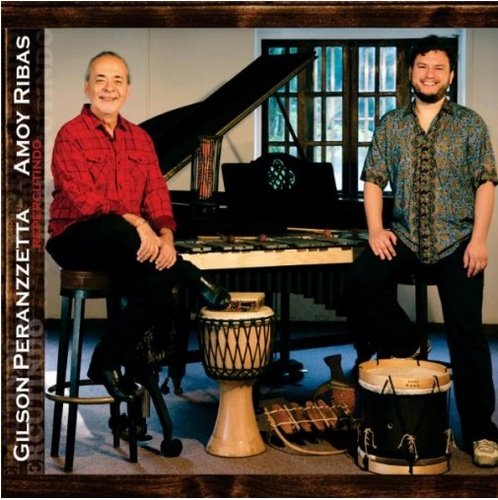
Gilson Peranzzetta & Amoy Ribas
Repercutindo


Lançado em 2015.

Tracklist:
1. Fator Rh (03:56)
2. Luiz Eça É pra Você (04:19)
3. Loa de um Barranqueiro (05:24)
4. Paz (04:15)
5. Croa de um Jongueiro (03:42)
6. Repercutindo (02:58)
7. Lá Vai o Cara (04:47)
8. Entre Rios (05:27)
9. Quase em Gana (04:38)
10. Chega de Verdades Queremos Promessas (03:27)
11. Paisagens de Vidro (05:19)
12. Aprendi Com Donato (03:29)


Ed Motta
Perpetual Gateways


By John L Walters 
Ed Motta’s music can be an acquired taste. This is not because his music is especially challenging or ‘difficult’ – though his use of harmony is far from simple. It’s more that Motta inhabits a world of his own making which seems far removed from the everyday machinations of the post-internet music industry, from the commercial landscape of pop music and from the day-to-day concerns of many listeners and musicians.
I guess that Motta, like Charles Mingus, like Martin Scorsese, Byron or Shelley is a kind of romantic, who yearns for times and places he is too young to have experienced at first hand. And, like a portrait painter in a time of abstract expressionism, or a machine code programmer trying to make sense of Facebook, he is an outsider who is bursting with inside information, the sort of person outlined by Brian Wilson in ‘I Guess I Just Wasn’t Made For This World.’
Motta has well honed skills as a singer-songwriter-instrumentalist, which makes him a rare artist in an age of delegators and generalists. Furthermore he appears to have a brain and intellectual appetite the size of a small, inhabitable planet, in possession of a vast amount of knowledge about cheese, wine, jazz, stage musicals, comic books, arcane instruments and the ‘Yacht Rock’ culture he explored in the album AOR. (This 2013 masterpiece lovingly recreated West Coast sounds of the late 1970s in Rio studios, with guests such as Jean Paul ‘Bluey’ Maunik from Incognito and David T. Walker, and hip English lyrics by Rob Gallagher aka Earl Zinger.)
For Perpetual Gateways, Motta has set his controls for the heart of jazz-rock – with an emphasis on the jazz side of the hyphen. He hired musicians who were around at the time of the music’s heyday, pianists Greg Phillinganes and Patrice Rushenand flutist Hubert Laws, and younger guys such as bassist Cecil McBee Jr and trumpeter Curtis Taylor, who – like Motta – appear to have ingested that West Coast sound in their parents’ vinyl). The producer is Kamau Kenyatta, known for his fine work with Gregory Porter, and the album has the form of an LP: one side is Soul Gate; the other, Jazz Gate.
Side one opens with Captain’s Refusal, a jazzy yacht-rock song with nifty horn punctuation and close mic’d lead vocal tracking reminiscent of George Duke’s mid-70s albums. Phillinganes’ electric piano solo sneakily quotes from ‘Girl From Ipanema’ as if responding to Motta’s musical joke, and there is a splashy, flamboyant ending by drummer Marvin ‘Smitty’ Smith.
Hypochondriac’s Fun pairs bizarre lyrics with a perky, rolling groove that has a hint of Michael McDonald-era Doobie Brothers – it swings and rocks at the same time. If you listen on headphones, Motta’s vocal is almost in your ears, a whispering presence both calming and slightly weird. There’s a barnstorming acoustic piano solo by Phillinganes – you can imagine the other session players applauding after the take.
Good Intentions has an understated keyboard minor chord vamp and groove from the Donny Hathaway / Stevie Wonder school, with an arrangement (by Motta himself) that locks so neatly with the rhythm track that the horns can be mixed high. More classy acoustic piano (by Patrice Rushen) and drums that make you wish Marvin ‘Smitty’ Smith had played on Donald Fagen’s sweet but somewhat underproduced Hold On To That Slinky Thing (on Sunken Condos).
Reader’s Choice is Motta’s take on a torch song, with a lovely chord sequence, and a fine trumpet coda by Curtis Taylor in which he channels the most dramatic soul ballads he’s ever internalised. However the English words (Motta’s own) are somewhat opaque. Even if Motta’s songs make Elton John’s repertoire sound tepid, Bernie Taupin has nothing to worry about.
The Soul Gate A-side comes to an end with Heritage Déjà Vu, the most explicitly Latin track on the whole album, with a nice turnaround between upbeat yacht rock and a jazzy chorus montuno that invokes the sound of Brazilian-themed jazz-rock albums from the 1970s: early Return To Forever, Flora Purim, Airto, George Duke and Earth Wind and Fire.
The Jazz Gate second side of Perpetual Gateways starts with Forgotten Nickname, another breezy ballad with magnificent flute by Hubert Laws.
The Owner is a hustling, up-beat hard bop song with colourful drums, piano vamps and trumpet/sax hooks that channel a 1960s Horace Silver influence. There’s an exuberant acoustic piano solo by Rushen plus more Taylor on trumpet and an arrangement by Kenyatta – it’s proper, full blooded jazz!
A Town in Flames opens with a blare of free-ish horns and cymbals that evoke Motta’s Aystelum (which itself was reminiscent of the intro to Steely Dan’s Everything Must Go). The track then hustles along like crazy and features another terrific solo by Laws.
I Remember Julie is an uncompromisingly forthright jazz piece driven along by a busy, ultrafast 4/4 swing time feel – like that of the best mid-60s jazz quartets and quintets. Motta demonstrates his vocal chops with a melody that could plausibly be a vocalese version of something from Miles Smiles.
Overblown Overweight, with its fleet 6/4 pulse, takes us down the path of ‘righteous jazz’ re-trodden so successfully by Gregory Porter, Kamasi Washington and a host of newer bands. There are great vocal harmonies, a roaring tenor sax solo by guest Charles Owens, and an electric piano solo by Rushen. Motta treats us to some scat singing. Defying its title, the track sounds lean and sleek.
Although Perpetual Gateways deliberately pushes buttons for those who loved this music the first time round, its strength lies in what Motta has done with the idiom to make it new. At a time when much popular music sounds rigid, arthritic, auto-tuned and overproduced, Perpetual Gateways is a generous, authentic treat – fast on its feet and bursting with energy.


Marcotulli/ Erskine/ Danielsson
Trio M/E/D


By Neri Pollastri
Questo disco live documenta la tournée fatta nel 2014 in trio da Rita Marcotulli, Palle Danielsson e Peter Erskine, antichi compagni di avventura (con il contrabbassista svedese la pianista romana registrò nel lontano 1993 il primo disco a proprio nome, lo splendido Night Caller) già avevano registrato un disco (uscito per la collana dell'Espresso) nel 2006. Di quella tournée viene qui ripreso il concerto tenutosi il 13 luglio a Genova.
Avvalendosi anche della tensione e della concentrazione di un concerto dal vivo, il disco mette assai bene in mostra il valore della formazione: pariteticità basata su una perfetta intesa artistica, ecletticità stilistica mai scissa dalla centralità della melodia, originalità del repertorio, fulgide qualità dei singoli. Di quest'ultimo fattore si ha un esempio emblematico fin dall'apertura, la prima delle due tracce di Danielsson dedicate ai pianeti: nel bel brano dalle curiose forme di derivazione barocca, il contrabbassista si produce in una bellissima introduzione in solitudine, che riprende di nuovo poco prima della conclusione. Il prologo di una performance di altissimo livello che ne prova la splendida forma.
Non sono da meno i due compagni: la Marcotulli -della quale è presente qui solo un brano, "This Is Not" -ha ovviamente più volte modo di mettersi in luce (tra i tanti momenti si ascolti il modo in cui conduce e varia espressivamente la seconda parte dell'ultimo brano, "Autumn Rose" di Erskine); il batterista, oltre a essere sempre molto presente nell'ordito paritetico (si senta lo scambio con la pianista nella seconda metà di "This Is Not"), domina ampiamente la scena nel suo "Bulgaria," ove si produce in un lungo assolo d'apertura.
Due gli omaggi, il primo a Monk , con un "Pannonica" certo più smussata rispetto alla spigolosità dell'originale ma comunque ricca di espressività, e l'altro, con un "Nightfall" sentitissimo e infatti molto bello, a Charlie Haden, che all'epoca del concerto era scomparso da appena due giorni.
Un gruppo di primo piano, dunque, che presenta una musica curatissima, moderna e viva, forse non particolarmente innovativa ma che unisce fruibilità e spessore, bellezza dei suoni e invenzioni improvvisative.
Track Listing:
Mars; This Is Not; Spells; Pannonica; ForJupiter; Nightfall; Bulgaria; Autumn Rose.
Personnel:
Rita Marcotulli: pianoforte; Palle Danielsson: contrabbasso; Peter Erskine: batteria.


Francis Hime
50 Anos de Música


By Biscoito Fino
Os 75 anos de vida e 50 de carreira de Francis Hime foram celebrados no palco, em grande estilo, ao som de uma trilha sonora generosa em clássicos e novas canções do compositor, intérprete, arranjador e pianista carioca. Registrado pelo Canal Brasil, o espetáculo comemorativo, batizado com o nome de Francis Hime - 50 Anos de Música, está sendo lançado em CD e DVD.

FAIXAS: 
01. ILUSÃO 
02. AMOR BARATO 
03. SEM MAIS ADEUS 
04. MARIA DA LUZ 
05. FANTASIA PARA HARPA E ORQUESTRA 
06. MINHA 
07. AMOROSA 
08. SESSÃO DA TARDE
09. FANTASIA PARA VIOLINO E ORQUESTRA
10. PASSAREDO 
11. ATRÁS DA PORTA 
12. BREU E GRAAL 
13. MISTÉRIO 
14. CANÇÃO APAIXONADA 
15. TROCANDO EM MIÚDOS
16. NAVEGA ILUMINA

Sunday, August 28, 2016

2 Sem 2016 - Part Two

Kenny Werner/ Hein Van De Geyn/ Hans Van Oosterhout
Collaboration


By Scott Yanow
Collaboration has a dozen fascinating and mostly free improvisations by the great pianist Kenny Werner in a trio.
Pianist Kenny Werner, bassist Hein Van de Geyn and drummer Hans van Oosterhout have worked together on an occasional basis in the past including taking a short tour and functioning as Toots Thielemans’ quartet for a few concerts. But while the musicians are familiar with each other, they have not performed together all that often. Rather than sharing years of mutual experiences, they share a similar outlook towards improvising jazz. Their common vision is on display throughout this continually fascinating and intriguing disc.
With Werner leading the way, the trio creates new compositions and improvisations on the spot during a dozen performances. One of Werner’s songs, “Elegante,” is explored at great length. The trio also performs Paul Simon’s “Sound Of Silence” and the standard “There Will Never Be Another You.” However even those two songs are mostly freely improvised with the tunes being largely unrecognizable until late in the performances when the melodies gradually appear.
In addition to the close interplay and the many fine Van De Geyn bass solos, it is difficult not to be impressed by Kenny Werner’s chord voicings. Not only does he seem to know every chord ever played but gives the impression that he is creating some never heard before.
Even with the fairly free playing on many of these selections, the results are often melodic, lyrical and a logical extension of each piece’s ideas. Collaboration deserves several close listens.


Bill Charlap Trio
Notes From New York


By Matt R. Lohr/JazzTimes
It’s worth remembering that no artist is constantly obligated to reinvent the wheel. Sometimes, just making a really great wheel can be an accomplishment in itself. And while no one would say Notes From New York, the new outing from the Bill Charlap Trio, represents a paradigm shift in the piano-trio canon, it’s an album of such instrumental invention and brio that it easily stands as the year’s most purely delightful recording thus far.
Charlap’s piano technique is singular and stunning in the way it weds a chiming, almost dainty touch to a leaping, top-to-bottom keyboard attack. If “muscular elegance” is not too much of an oxymoron, it’s the perfect phrase to describe the pianist’s approach. His album-opening rendition of “I’ll Remember April” is a master class in fast-paced swing, drummer Kenny Washington’s staccato rhythms driving Charlap to ever-rising single-note explosions. “Tiny’s Tempo” bustles along with effortless flair, showcasing a bouncy solo from bassist Peter Washington, and Charlap lightly trips his way through “A Sleepin’ Bee”; there, Kenny Washington’s shuffling brushes provide an unwavering companion on the journey.
But Charlap’s trio also brings considerable vitality and élan to Notes From New York’smoodier material. The pianist’s low-register block chords give “Make Me Rainbows” an admirable sense of ardor, with Peter Washington’s walking strings adding just enough blues to the mix. “There Is No Music” blends polished refinement with a somber, minor-keyed tenderness and darkly shimmering Charlap glissandos. The whole affair closes with “On the Sunny Side of the Street,” which Charlap, playing unaccompanied, reinvents as a bittersweet ballad full of longing and echoey empty spaces. But even when it’s tugging at your heartstrings, Notes From New York is a luxurious, exquisitely pleasurable experience. Charlap and his trio have given us a “wheel” that rolls on straight and true.


Enrico Zanisi
Piano Tales


By Brian Morton
Since his debut, Enrico Zanisi has proved to have the makings of a rocketing star, to whom the label of enfant prodige of Italian jazz was soon to become a tight fit. That’s why this piano solo album by Enrico Zanisi, to be released on CAM JAZZ, seems well-timed for an ideal start to a new era in the career of this young pianist. Following three trio albums and several side projects, Piano Tales comes to crown a journey during which the Roman pianist has explored the boundaries of his music but leaving its distinguishing natural grace intact. This recording reveals a brand new Zanisi, more full-fledged but, above all, aware of his potential as songwriter and player. This work consists of eleven tracks, mostly less than four minutes long, a purported collection of musical feelings, more than an actual concept album. It also features more complex pieces with a highly designed improvisational approach. But the prevailing element in a mood accommodating fullness and emptiness, music and silence, is Zanisi’s airy piano-playing, both inexpressible and sharp. In young players like him one seldom finds such a clear awareness of one’s own means as well as an already distinct musical personality like his. Though, Zanisi has both of them, unmistakably.
Recorded in Cavalicco on 27 - 28 May 2015 at Artesuono Recording Studio
Recording engineer: Stefano Amerio.


Nils Landgren With Janis Siegel
Some Other Time


By Bruce Lindsay
Hot on the heels of his guest appearance on Mo' Blow's funky Live In Berlin (ACT Music, 2016), trombonist and singer Nils Landgren moves over to Broadway with Some Other Time. As the sub-title makes clear, this is A Tribute To Leonard Bernstein—a worthy and at times achingly beautiful tribute, too.
Landgren is joined by The Manhattan Transfer vocalist Janis Siegel and by the excellent rhythm section of Jan Lundgren on piano, Dieter Ilg on bass and Wolfgang Haffner on drums. The Bochum Symphoniker, conducted by arranger Vince Mendoza, joins in on a few tracks including "Overture: America" a 42-second introduction that gives the erroneous impression that this album will solely focus on West Side Story.
Landgren's light, sweet-toned and often plaintive voice suits the more romantic numbers particularly well. It lacks the undertone of aggression that could have given "Cool" a degree of menace, but the cat-creep rhythm that Lundgren, Ilg and Haffner set down more than compensates—it's somehow sexy and slightly menacing at the same time. On the other hand, Landgren's vocal on "Somewhere" is so melancholy that it brings a tear to the eye—once again, the rhythm section's empathic performance is superb.
Landgren's trombone playing is a constant pleasure. On "Maria," which gets a fine arrangement from Mendoza, he's swinging and upbeat, on "Somewhere" his playing is gentle and spacious, on "Lucky To Be Me" his solo is brief but replete with good-humored charm.
Siegel is an excellent choice of guest vocalist for these songs. Her duet with Landgren on Mendoza's arrangement of "Some Other Time" is the strongest of her appearances but her solo vocal on "The Story Of My Life" and "Lucky To Be Me" run it pretty close.
If Some Other Time does have a weakness, it's in the choice of some of the lesser-known numbers. Despite Mendoza's arrangements "A Quiet Girl" and the instrumental "A Simple Song," though pleasant, never really come to life especially when compared to the rest of the program.
Track Listing: 
Overture: America; Some Other Time; Cool; Maria; Somewhere; The Story Of My Life; One Hand, One Heart; Something's Coming; Lonely Town; A Quiet Girl; Lucky To Be Me; A Simple Song.
Personnel: 
Nils Landgren: vocals, trombone; Jan Lundgren: piano; Dieter Iig: bass; Wolfgang Haffner: drums; Janis Siegel: vocals (2, 6, 8, 9, 11); Members of the Bochumer Symphoniker, conducted by Vince Mendoza.

Saturday, August 27, 2016

Rudy Van Gelder 1924 - 2016


By Felix Contreras
Rudy Van Gelder, an audio recording engineer who captured the sounds of many of jazz's landmark albums, died Thursday morning in his sleep. He was at his home studio in New Jersey, according to Maureen Sickler, his assistant engineer. He was 91.
Van Gelder's work is heard on hundreds of albums, on record labels like Blue Note, Prestige, Savoy and Impulse, featuring the likes of Miles Davis and John Coltrane, Art Blakey and Thelonious Monk, Duke Ellington and Count Basie, Sonny Rollins and Wayne Shorter. His contribution to jazz was twisting knobs and setting microphones, but it proved vitally important. For more than six decades, Van Gelder's innovative approach to recording created a trademark sound that many call definitive. As a result, he became the go-to guy for musicians looking to accurately capture their unique sound identities on record.
Van Gelder started by recording his high-school friends in his parents' living room in Hackensack, N.J., in the 1940s. Those early sessions turned into a side career in audio recording — by day, he was a practicing optometrist — which turned into a full-time occupation.
He was not a producer with artistic control, but as a technician, Van Gelder handled every aspect of the recording process from setup to mastering. He was notoriously secretive about his techniques, though part of his method involved how he placed each instrument in its own sonic space. That allowed for the subtleties and dynamics of the ways musicians manipulated the brass and wood of acoustic instruments.
In a 1993 interview with NPR, Van Gelder explained the motivation for his meticulous approach to studio recording.
"What we're doing is important," he said. "As opposed, for example, to a club date where a musician goes and couple hundred people are going to hear what he played that night. If he's making a record, even if it's not a very successful record, thousands of people ultimately are going to hear it. And I consider that important."
Saxophonist Sonny Rollins worked with Van Gelder on many sessions, including those which resulted in Saxophone Colossus, A Night At The Village Vanguard (a live remote recording) and Thelonious Monk and Sonny Rollins. On the phone at his home, he remembered Van Gelder as "very much an artist" whose talent allowed musicians to focus on doing their jobs.
"It wasn't the days when ... everybody comes by and listens in the booth and sees how it sounds," Rollins said. "No, no — if we did it, we knew [the recording] would be impeccable, and perfect. And so we came in, did our recordings, and we left. Next thing, record comes out with superb sound. Hey, well, that's Rudy. Rudy was the engineer."
In 1959, after he had already recorded the aforementioned Rollins albums and hundreds of others, Van Gelder moved from his parents' living room to a custom-built recording studio in nearby Englewood Cliffs, N.J. It had nine-foot-high cathedral ceilings, appropriate for a space that would become a shrine for jazz musicians.
Rudy Van Gelder took pains to credit the performers who created the sounds, as well as the producers who chose his studio to document that work. Still, they kept choosing his studio.
"We get albums that sound the way they want them to sound," Van Gelder said in 1993. "The rest of it can all be very difficult — including me, personally and any other way. But I try to make sure that nothing leaves here that is not flattering to the musician and that is not what the musician wants. When they tell me that they like what they hear, what comes out of here, then that's my reward."
As he entered his 70s, Van Gelder helped Blue Note and Prestige take his original analog recordings into the digital age by remastering them. Don Sickler, a musician who is married to Van Gelder's assistant Maureen Sickler, says Van Gelder was working on a mix just last week. When he died, he was just down the hall from his beloved studio.

Tuesday, August 23, 2016

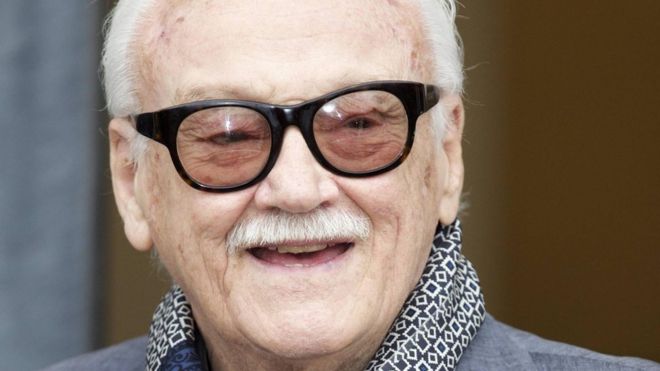
Toots Thielemans 1922 - 2016


By Peter Keepnews
Toots Thielemans, one of the only musicians to have a successful career as a jazz harmonica player, died on Monday in Brussels. He was 94.
The death was confirmed by Mr. Thielemans’s agency, which did not specify a cause. Mr. Thielemans, who retired in 2014 for health reasons, had been hospitalized recently with a broken arm.
That Mr. Thielemans played jazz on the harmonica was unusual enough. Even more unusual was how he first gained international attention: by playing guitar and whistling in unison.
He introduced this approach in 1961 on his recording of the wistful but jaunty jazz waltz “Bluesette,” which he wrote.
The record became an international hit, and the song was his signature. It also became a jazz standard, recorded by numerous instrumentalists, among them Chet Atkins, Tito Puente and Mr. Thielemans himself, who went on to record it several more times. It was also recorded, with lyrics by Norman Gimbel, by Sarah Vaughan and other singers.
But his distinctive sound on the chromatic harmonica was Mr. Thielemans’s primary claim to fame and, especially, to fortune.
Although his name was well known in the jazz world — he performed with greats like Ella Fitzgerald, Benny Goodman and Charlie Parker — it was relatively unknown to the general public; his playing, on the other hand, was virtually ubiquitous.
It can be heard on the soundtracks of movies including “Midnight Cowboy” and “The Getaway.” It was featured in television commercials and on records by, among many others, Ms. Fitzgerald, Paul Simon, Billy Joel, Dizzy Gillespie and Quincy Jones, who once called Mr. Thielemans “one of the greatest musicians of our time.” For more than four decades, it has been heard in the opening theme music of “Sesame Street.”
Jean-Baptiste Frédéric Isidore Thielemans was born on April 29, 1922, in Brussels, where his parents owned a cafe. He offered various explanations over the years for how he came to be known as Toots, sometimes saying he chose the name himself and at others saying it was given to him; whatever the truth, the name was apparently borrowed from two American jazz musicians, Nuncio Mondello and Salvador Camarata, who both went by Toots.
Musically inclined from an early age, he began playing the accordion at 3 and took up the harmonica in his teens. A few years later, inspired by Django Reinhardt, a fellow Belgian, he began playing guitar, as well. By the end of World War II he had become a full-time musician.
In 1949, he shared the stage with Charlie Parker at the Paris Jazz Festival, and a year later he toured Europe as the guitarist in a sextet led by Benny Goodman. He moved to the United States in 1951 and eventually became a citizen.
From 1953 to 1959, he was a member of the British jazz pianist George Shearing’s popular quintet. He mostly played guitar with Mr. Shearing, but his harmonica work was featured on at least one number at every performance. It was also showcased on the handful of albums he recorded as a leader in those years.
After leaving the Shearing group, Mr. Thielemans became a busy studio musician, even spending a few years on staff at ABC. But he remained active in jazz, with the harmonica now his main instrument. He toured frequently, and occasionally recorded as the leader of a small group, for the rest of his life.
Most of his albums presented him in a straightforward jazz context, but late in his career they took on a more international color. On “The Brasil Project,” released in 1992, and a follow-up, released the next year, he collaborated with Milton Nascimento, Gilberto Gil and other prominent Brazilian artists. And on the 1998 album “Chez Toots” he returned to his roots, leading a group of French and Belgian musicians in a program of French songs.
Playing a set in New York a few months after turning 80, Mr. Thielemans “seemed dazzled by his glorious sunset, and found shelter under the umbrella of sophisticated schmaltz,” Ben Ratliff wrote in The New York Times, adding: “He’s in good shape, only losing wind at the end of a long string of notes; but he finds off-centered rhythms, attaining a little bit of freedom, knocking his instrument from side to side for tremolos.”
Albert II, then the king of Belgium, bestowed on Mr. Thielemans the honorary title of baron in 2001. The country’s prime minister, Charles Michel, said on Monday, “We have lost a great musician, a warm personality.”
The National Endowment for the Arts named Mr. Thielemans a jazz master for 2009, the highest honor that can be accorded a jazz musician in the United States. “I accept this distinction with pride and emotion,” he said at the time, adding that he had only “played at music” until a Louis Armstrong record in 1940 provided “instant contamination” and changed the direction of his life.
Mr. Thielemans lived in La Hulpe, a suburb of Brussels. Information on survivors was not immediately available.
In March 2006, Mr. Thielemans was the guest of honor at an all-star Carnegie Hall tribute concert, with the pianist Herbie Hancock and the clarinetist Paquito D’Rivera among the performers. Reviewing the concert for The Times, Nate Chinen praised both Mr. Thielemans’s “exuberantly expressive” playing and his infectious spirit.
“No one stole the spotlight from Mr. Thielemans,” he wrote. “He was having giddy fun, and the feeling was contagious.”

Tuesday, August 16, 2016

Bobby Hutcherson 1941 - 2016


By Associated Press
Bobby Hutcherson, the bricklayer's son who became one of the greatest, most inventive jazz vibraphonists to pick up a pair of mallets, has died at age 75.
Hutcherson died Monday at his family home in Montara, a small seaside community south of San Francisco. The cause was complications related to emphysema, longtime family friend Marshall Lamm said.
Best known for his post-bop recordings for Blue Note Records in the 1960s and 1970s, Hutcherson played with a litany of jazz greats as both bandleader and sideman during a career spanning more than 50 years.
Among them were Herbie Hancock, Sonny Rollins and Dexter Gordon, the latter a childhood friend.
When “Enjoy the View,” the last of his more than 40 albums, was released in 2014, JazzTimes magazine declared it “a worthy addition to an era-defining discography.” Among Hutcherson's last performances was a four-night run of shows two years ago at San Francisco's SFJazz Center, where he played alongside saxophonist David Sanborn, organist Joey DeFrancesco and drummer Billy Hart, who had recorded “Enjoy the View” with him.
Noted for an eclectic approach that was at once colorful, powerful, cool and melodic, Hutcherson came of age musically as jazz was moving into a cerebral, more avant-garde era that matched his playing style.
“Bobby Hutcherson's sound and innovative style on the vibraphone helped revitalize the instrument in the 1960s, adding an adventurous new voice to the free jazz and post-bop eras,” the National Endowment for the Arts, which honored him with its prestigious Jazz Master award in 2010, said Tuesday.
Robert Hutcherson was born Jan. 17, 1941, in Los Angeles and raised in Pasadena.
He studied piano as a child but switched to vibraphone after hearing Milt Jackson play the instrument on a recording of Thelonious Monk's “Bemsha Swing.”
Captivated by the sound, he recalled spending the summer working for his father so he could save enough money to buy his own vibraphone.
As soon as he acquired it, jazz bass player Herbie Lewis, a junior high school buddy, allowed him to join his band and almost immediately got the group a small local gig. Unfortunately, Hutcherson hadn't yet had time to learn to play his instrument.
He said, “Don't worry. We'll take a black felt pen and write down on each bar which note to hit next,” Hutcherson told JazzTimes in 2014.
Just before he was to go on, however, a stage manager erased all the marks.
“Well, I hit the first note; I remembered that. But from the second note on it was complete chaos. You never heard people boo and laugh like that.”
Afterward his father told him he wanted his son to become a bricklayer.
Within a few years, however, Hutcherson was playing with greats including saxophonist Billy Mitchell, trombonist Al Grey and the others, appearing at New York City's fabled Birdland and other clubs.
He released his first album, “The Kicker,” in 1963, going on to appear on numerous recordings by other artists as well. He also appeared with Hancock, Gordon and others in the 1986 jazz film “ ‘Round Midnight” and composed “Little B's Poem” and other musical pieces.
He is survived by his wife, Rosemary, and sons Teddy and Barry, the latter a jazz drummer and inspiration for the song “Little B's Poem.”

Saturday, July 30, 2016

2 Sem 2016 - Part One

Brad Mehldau Trio
Blues and Ballads


By Geno Thackara
It's easy to play the blues—or at the very least it's easy to learn the basics—but keeping the form fresh and interesting is another matter entirely. Likewise, any beginner can tackle a quiet ballad, but presenting something simple and pretty is really harder than it sounds. The Brad Mehldau Trio manages its always-distinctive blend of all those things on this lineup's fifth release, still making song-sculpting and harmonic shifting into something both inventive and accessible.
They run a vast gamut in "Since I Fell for You" alone as they stretch that age-old I-IV-V pattern into a ten-minute exploration that never settles into rut or repetition. Mehldau wanders from lightly bouncing shuffle to freeform tonal meandering and back again, whileJeff Ballard and Larry Grenadier demonstrate their impeccable skill for knowing when to add a light touch and when it's best to stay out of the way. The opener and the smoky "My Valentine" wind up bookending the album with the bluesiest treatments while largely sandwiching the more song-based pieces in between. As the title declares, this set omits the genre-spanning originals and modern rock covers (or often reinventions, rather) that usually make part of his mix in favor of more familiar material.
A couple Lennon/McCartney tunes are the newest ones to be found here, while the disc is rounded out by a few standards quite a bit older than that from the likes of Charlie Parkeror Cole Porter. In the spirit (if not necessarily the footsteps) of Keith Jarrett's classic trio, this crew is concerned less with the songs themselves than the possibilities for exploration they can offer. Each provides a springboard to playful dialogue and the chance for surprise. "I Concentrate on You" luxuriates in its airy minor Latin feel while the Beatles' "And I Love Her" gets an extended workout, including staggered rhythmic grooving and a sort of subdued mini-crescendo between the piano and Ballard's drums. The framework may start straightforwardly, but even the simpler pieces get stretched with Mehldau's mix of kaleidoscopic chording and smoothly winding melody runs.
The trio continually enjoys the easy back-and-forth of longtime mates without losing any spontaneity. Whether there's some complexity behind a song's structure or not, the results are always pleasing to the ear and no trouble to simply follow if you don't feel like dissecting what's going on. More seriously intense work can wait for another album (or for the listener, another hour). Forward-thinking envelope-pushers deserve a break now and then as much as anyone, and Blues and Ballads makes an enticing rainy-day listen to give their down time and ours a most beautifully cool accompaniment.
Track Listing: 
Since I Fell for You; I Concentrate on You; Little Person; Cheryl; These Foolish Things (Remind Me of You); And I Love Her; My Valentine.
Personnel:
Brad Mehldau: piano; Larry Grenadier: bass; Jeff Ballard: drums.


Steve Kuhn Trio
At This Time...


By Budd Kopman
The wonderful and deeply satisfying At This Time... brings together pianist Steve Kuhn leading a trio comprised of electric bassist Steve Swallow and the ubiquitous (and always smiling drummer) Joey Baron. The immediate impulse for the recording was an extended set by this trio at Birdland, in New York City in 2015.
Swallow and Kuhn go back forty years to Kuhn's ECM debut,Trance, with Kuhn knowing Baron for more than twenty years. This trio also recorded Kuhn's latest ECM release, Wisteria in 2012.
The set list comes from the tunes played at the gig, and, even though these players all know each other very well, this very feeling of familiarity is enhanced by the fact that they had just played together. Granted, pros can be called together on short notice to play live or record and perform admirably, but there is an ineffable something about the atmosphere created by this album that gives it its special sound.
The nine tracks are mostly in the six-minute range, with Kuhn's "All The Rest Is The Same" taking seven and a half minutes, and "Ah Moore" by Al Cohn reaching over nine minutes, so there is quite enough room for stretching out. However, the record feels as if it flies by, primarily because of the multitude of details that fit together perfectly and which flow ever forward. There is not a moment of fluff or indecision; each tracks sounds like first take, spontaneous creation with nothing to improve upon by trying again.
This feeling of spontaneous perfection is only enhanced by the quality of the recording itself -the piano is crystalline (as is Kuhn's touch), Swallow's amazingly smooth electric bass sound is centered and full, but soft on the edges, while Baron knows exactly what to do and when to do it.
The tunes themselves range from the well known opener, "My Shining Hour" to lesser known standards such as Kurt Weil's "This Is New," "Lonely Town" by Leonard Bernstein and Quincy Jones' "The Pawnbroker" among others. The Kuhn originals are placed in the middle of the set, with the perfect choice of "The Feeling Within" being performed solo, adding just the right touch of intensity.
At This Time... will command attention without demanding it, and the attentive listener will find much in which to revel many times over.
Track Listing: 
My Shining Hour; Ah Moore; The Pawnbroker; All The Rest Is The Same; The Feeling Within; Carousel; Lonely Town; This Is New; I Waited For You.
Personnel: 
Steve Kuhn: piano; Steve Swallow: electric bass; Joey Baron: drums.


Hiromi
Spark


By Jeff Winbush 
There are three reasons why some people will not enjoySpark, the fourth album from the Trio Project featuring Hiromi Uehara, the Japanese-born pianist and composer and drummer Simon Phillips and bassist Anthony Jackson:
1. It's too complex. 2. It rocks too hard to be jazz. 3. It's long (72 minutes).
None of these are good reasons. Here are three reasons which are good ones:
1. Simplicity has its place. So does complexity. 2. Jazz is not a hyphenated word. It's just jazz. 3. You can't make and bake a cake in two minutes. Patience is its own reward.

Hiromi continues to be one of the most inventive and awe-inspiring pianists in jazz today. Phillips' drumming is alternatingly both dynamic and precise. Jackson is the silent partner of the band, but is the glue which holds it together so it doesn't fly apart into undisciplined soloing.
That's the risk involved in a Hiromi recording. At what point will her dazzling proficiency give way to just spraying notes all around the joint like an Eddie Van Halen freak-out turned up to "11" on the overkill scale? This is an entirely fair comparison. Hiromi can match a guitar god like Van Halen for speed, frenzy and mindless self-indulgence when she goes off.
"Spark" leads off with a gently synth/piano solo that takes off as soon as Phillips comes in and Hiromi engages in dueling leads as they chase each other in musical game of "tag." Good luck with figuring out what the time signature is. The stuttering stop-start of "In A Trance" shows off the favored approach of the Trio Project to jazz: aggressive, inventing and very, very fast and furious.
Even when "In A Trance" slows down to a more traditional approach, it isn't long before it reverts to the highly individualized nature of the players. Phillips launches into a drum solo, shows off some hot licks, and then ends up with some killer fills and cymbals work until Jackson and Hiromi come back in with a vaguely Latin piano riff.
Is "Indulgence" a playful jab at the naysayers who accuse the piansit of being more style than substance? Maybe so and maybe no, but whatever the intent it, along with "What Will Be, Will Be" is a showcase for Jackson's contrabass guitar work and some mighty fine funky grooves and the restrained solo piano piece "Wake Up and Dream" washes over the listener like warm spring rain.
Like it or not (and some jazzheads don't), Hiromi is much more than an programmed automaton who can play really fast. The rollicking closer "All's Well" is funky good fun which connects emotionally on every level. For jazz to resonate beyond its base it has to—repeat—has to develop and promote artists the way rock, pop and country does. It cannot thrive and will not survive unless the new generation is alerted of the new innovators residing among them just beyond their range of hearing. Hiromi is one of those innovators.
Oscar Peterson said, "Too many jazz pianists limit themselves to a personal style, a trademark, so to speak. They confine themselves to one type of playing. I believe in using the entire piano as a single instrument capable of expressing every possible musical idea. I have no one style. I play as I feel."
Hiromi Uehara is living what Peterson advised. Hers is the piano in the Spark.
Track Listing: 
Spark; In A Trance; Take Me Away; Wonderland; Indulgence; Dilemma; What Will Be, Will Be; Wake Up And Dream, All's Well
Personnel:
Hiromi: piano, keyboards; Anthony Jackson: contrabass guitar; Simon Phillips: drums


Enrico Pieranunzi
Tales From The Unexpected: Live At Theater Gutersloh


By Neri Pollastri
Registrato dal vivo al Teatro di Gütersloh il 29 agosto del 2015, questo disco fa parte della prestigiosa serie "European Jazz Legends" della Intuition, che giustamente sceglie un artista come Enrico Pieranunzi per il suo terzo capitolo.
Il pianista romano si presenta in trio, una delle sue formazioni preferite, con partner europei come il danese Jasper Somsen e il francese Andre "Dede" Ceccarelli; in programma alcune delle sue composizioni più famose, come "Fellini's Waltz" e "Anne Blomster Sang," e ben quattro improvvisazioni.
Pieranunzi conferma le proprie altissime qualità, fatte di grande sensibilità nel tocco, elegante scioltezza nel fraseggio, costante liricità nelle improvvisazioni. Cose che valgono in tutto l'arco dell'ora abbondante della performance, ma che sono ben riassunte nella traccia centrale, "B.Y.O.H.," ove troviamo anche un eccellente assolo di Somsen.
Il pianista è ben assistito dalla ritmica, che interagisce con lui in modo molto sinergico, benché il trio non appaia pienamente paritetico, probabilmente a cagione anche della prevalenza di brani della penna di Pieranunzi. Interessante comunque dare attenzione ai dettagli della relazione tra i musicisti: per esempio, in "Tales from the Unespected" il lavoro svolto da Ceccarelli è a lungo di raddoppio e sottolineatura della tastiera, mentre nelle improvvisate "Improtale" l'interazione è assai più stretta che negli altri brani.
Eccellente lavoro non lontano dalle vette in trio raggiunte nella sua carriera da Pieranunzi,Tales from the Unespected si conclude con la registrazione di un'intervista di una dozzina di minuti al pianista, in inglese, subito dopo il concerto.
Track Listing: 
Improtale 1; The Waver; Anne Blomster Sang; Improtale 2; B.Y.O.H.; Tales from the Unespected; Improtale 3; Fellini's Waltz; Improtale 4; The Surprise Answer; Interview with Enrico Pieranunzi.
Personnel: 
Enrico Pieranunzi: pianoforte; Jasper Somsen: contrabbasso; André Ceccarelli: batteria.

Thursday, July 07, 2016

Don Friedman 1935 - 2016


By Nate Chinen/ NY Times
Don Friedman, a versatile pianist who moved easily between the modern-jazz mainstream and the more volatile jazz avant-garde, died on June 30 at his home in the Bronx. He was 81.
The cause was pancreatic cancer, his wife, Marilyn, said.
Mr. Friedman had a crisp, fluid technique and an adventurous approach to harmony, which made him a desirable sideman over a career that lasted more than 60 years. He worked for decades with the trumpeter Clark Terry, a popular emblem of swinging ebullience, and also commingled with pioneers of free jazz like the alto saxophonist Ornette Coleman.
During the 1960s, when modern jazz was undergoing a seismic upheaval largely instigated by Coleman, Mr. Friedman darted back and forth across the supposed fault line. He played on albums by the trumpeter Booker Little, notably “Out Front,” a landmark of progressive postbop featuring Max Roach on drums and Eric Dolphy on alto saxophone, flute and bass clarinet. He also toured with the uncompromising reed player and composer Jimmy Giuffre.
But he also freelanced with jazz traditionalists like the cornetist Bobby Hackett and toured with a popular Latin-jazz group led by the flutist Herbie Mann. In 1964 he appeared on “Discovery!,” the debut album by the tenor saxophonist and flutist Charles Lloyd.
In an email, Mr. Lloyd praised Mr. Friedman as “a great sage of beauty and grace” with “a modern, lyrical style.”
Mr. Friedman was a prolific solo artist, if relatively unheralded, except in Japan, where he had a substantial and loyal following. Several of his early albums received five-star reviews (the magazine’s highest honor) from DownBeat, which also anointed him a New Star in its annual critics’ poll. But the later name for that honor, Talent Deserving Wider Recognition, would be much more apt in describing Mr. Friedman’s career as a leader.
Donald Ernest Friedman was born on May 4, 1935, in San Francisco. His parents, both immigrants — his father, Edward, from Lithuania, and his mother, the former Alma Loew, from Germany — encouraged his interest in classical piano, which he began studying at age 4. When he was 15, his family moved to Los Angeles, where he discovered jazz and quickly began playing it, initially with a style derived from the bebop paragon Bud Powell.
Some of Mr. Friedman’s earliest work came with West Coast jazz stalwarts like the trumpeter Shorty Rogers and the saxophonist Buddy Collette. He first played in New York in 1956, with the clarinetist Buddy DeFranco, and he made it his home two years later. His debut album, released in 1961 on the Riverside label, was “A Day in the City,” featuring a suite inspired by his brief studies in composition at Los Angeles City College.
Mr. Friedman formed a close musical alliance with the Hungarian jazz guitarist Attila Zoller, featuring him on a pair of critically hailed albums influenced by free improvisation, “Dreams and Explorations” (1964) and “Metamorphosis” (1966).
In addition to his wife, Mr. Friedman is survived by a daughter, Lynn Friedman; a stepson, Rory Friedman; and three grandchildren. Three previous marriages ended in divorce.
In recent years Mr. Friedman worked mainly as a leader, in a crisply swinging style. Among his notable albums are “Piano Works VI: From A to Z,” a solo tribute to Mr. Zoller (2006), and “Waltz for Marilyn,” featuring the guitarist Peter Bernstein (2007). “Nite Lites,” his final trio album, was released last year.

Saturday, June 25, 2016

1 Sem 2016 - Part Seven

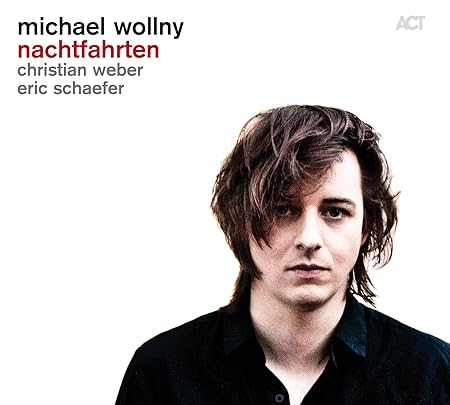
Michael Wollny
Nachtfahrten


By John Fordham/The Guardian

The imaginative and fluently skilful German pianist Michael Wollny covered music by Alban Berg, Edgard Varése and the Flaming Lips on his last album, but the 14 tracks here are mostly his own work or that of his superb trio with Christian Weber (bass) and Eric Schaefer (drums) – save for the odd excursion into the Twin Peaks soundtrack or the music of medieval master Guillaume de Machaut, and a piece by Wollny’s former teacher Chris Beier, whose piano-playing was undermined by a neurological condition. Nachtfahrten – “night journeys” – is a more shaded, melodically sparing venture than its predecessor Weltentraum, with Beier’s enforced retreat into essences and understatement a key inspiration, but its layering and fine details are just as fascinating. Schaefer’s Motette No 1 springs ingenious improv from a rocking vamp, Beier’s White Moon is a beautiful melody enhanced by a steady, Mehldau-like manner. Schaefer’s Ellen has the kind of pop-ballad feel that Esbjörn Svensson might have given it and Au Clair de la Lune wanders wistfully amid pinging cymbal sounds and sparse drum rolls. They are one of the world’s great jazz-driven piano trios, and Nachtfahrten takes nothing away from this assessment.


John Taylor
2081


By CamJazz
“A family project” is how Alex Taylor, singer-songwriter as well as John’s son, labels the English pianist’s latest album. And that is exactly what it is, considering that John, who wrote the music, and Alex, who wrote and sang the lyrics, are joined by Leo Taylor on drums. Oren Marshall on tuba, whose surname is not Taylor but who is most assuredly very close to the Taylor family, completes the quartet. Together they recorded the album entitled “2081” drawing inspiration from Kurt Vonnegut’s short story “Harrison Bergeron”, published in 1961. John Taylor was commissioned to write the music to this album by BBC Radio 3 for the Cheltenham Jazz Festival. Originally written for octet, it was then readapted for the “2081” quartet. Alex explains: “Vonnegut’s story depicts a dystopian future in which everyone is equal. Nobody is allowed to be smarter, better looking or more physically able than anyone else. Those individuals who are gifted with intellect, talent and so on are made to bear ‘handicaps’”. At times, John Taylor’s musical realm is reassuring and consistent with his own standards, while, at other times, it conveys the mysterious, unsettling future depicted by Vonnegut, by pursuing a hybrid sound, mingling jazz, pop and the soundtrack mood. This pursuit definitely benefits from the sonic scenarios opened by Marshall’s tuba, as well as the Leo’s drumming style (already launched on a brilliant career on the indie-rock scene with his band The Invisible), who very often introduces modern, offbeat hypnotic rhythms here. Alex further explains: “I wanted to be able to tell a love story within the world Vonnegut created, from a standpoint external to the novella but very much in that theme”.
Personnel:
John Taylor ( Piano ); Oren Marshall ( Tuba ); Alex Taylor ( Vocal ); Leo Taylor ( Drums )


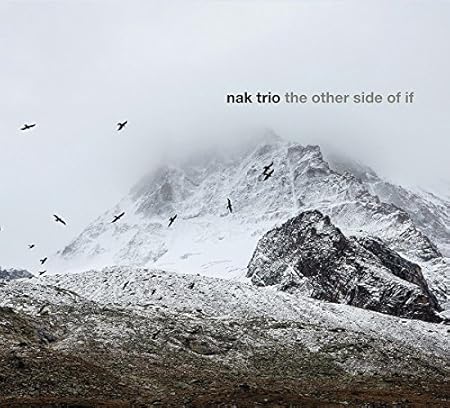
Nak Trio
The Other Side Of If


By Challenge
"Jazz made in Poland" has been considered a seal of quality since the 1960s. Well-known musicians as Zbigniew Namysłowski, Tomasz Stańko, Michał Urbaniak, Krzysztof Komeda, Zbigniew Seifert, Adam Makowicz, Jan Wróblewski, Urszula Dudziak, Leszek Zadlo and Vitold Rek shaped an unmistakable style that lifts the substance of American swing with the yearning of the Eastern European bloc countries for freedom and adventure to a high quality, exciting common denominator. Admittedly, the explosive, sparkling atmosphere of Polish catacomb and underground jazz belongs to past at the latest since the political upheavals in Europe at the end of the 1980s. Today, it is above all pianists who set the tone of the cultural image of the country. Marcin Wasilewski and Leszek Możdżer are getting worldwide recognition with their diverse projects as creators of a new musical language. It is quite possible that three young Polish musicians will be mentioned in one breath with them in the future: Dominik Wania (piano), Jacek
Kochan (drums) and Michał Kapczuk (bass) have joined forces under the cryptic slogan "NAK Trio" to create a community of interest exceptional in every way.
You can consider these names as quite representative of the unconventional approach of the combo, which runs like a thread through all their actions: not straight ahead, but always a bit out-of-the-box. NAK does not stand for the initial letter of the last name of the protagonists as in other formations, but instead for the final letter: KochaN– WaniA – KapczuK. It continues consistently in this direction with the title of their debut album "The Other Side Of If". Although all of this is probably a bit abstract, indefinable, perhaps somewhat philosophical, drummer, composer and producer Jacek Kochan apologizes smiling. "If you think about the exact meaning of the word 'if', then a few questions first arise in your mind in any language. 'What if?' 'What would happen if?' Perhaps 'Would it be better or worse if?' Since the answer always remains unresolved and consequently the symbolism of the little word 'if', there is a certain fascination, something mysterious, with respect to everything." In exactly the same way, Jacek Kochan, Dominik Wania and Michał Kapczuk want to enchant their fans. Far from the classic A-A-B-A jazz pattern, the seven original compositions are based more on two masters of classical modernism the 20th century, the Hungarian Béla Bartók (1881-1945) and his Polish compatriot Witold Lutosławski (1913-1994). "We consider it important that all four instruments are in the forefront," Kochan explained. Excuse me, in a trio? "Simple," laughs the primus inter pares (the first among equals) of NAK trio. "Bass, drums, and the left and the
right hand of the piano player. The reason is that Dominik has developed a technique with his left hand that is very unique and differs clearly from that of other jazz pianists. The melodies and harmonies have more of a chromatic structure. I hope that this does not frighten off jazz aficionados too much, because it actually still is jazz. Our jazz. However, fans of classical music might also like it!"


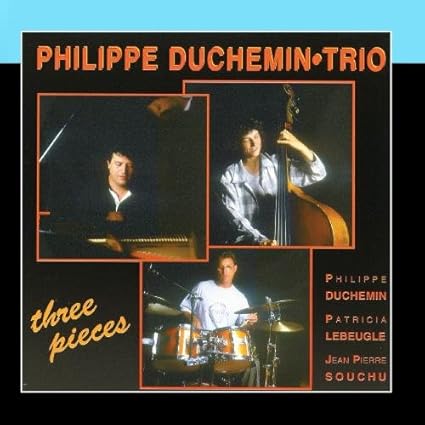
Philippe Duchemin Trio
Three Pieces


Personnel:
Piano : Philippe Duchemin; Acoustic bass : Patricia Lebeugle; Drums : Jean Pierre Souchu

Tracks:
1- Take bach (4'44")
2- Honey (6'23")
3- fond brun (7'15")
4- Bernie's Tune (5'51")
5- Fumet (5'34")
6- Quand je monte chez toi (7'05")
7- What is this thing called love (5'55")
8- Lucy in the sky with diamond (6'01")
9- Tea for two (5'18")

Saturday, May 21, 2016

1 Sem 2016 - Part Six

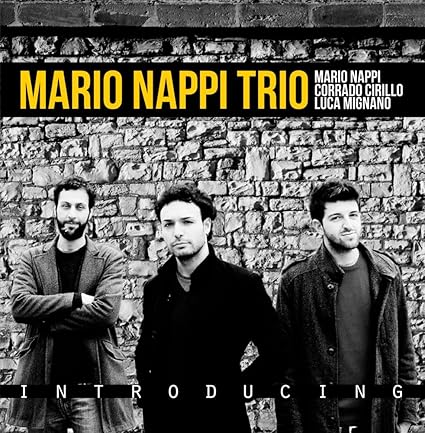
Mario Nappi Trio
Introducing


By Jesper Bodilsen
“It is a good album and I like the variety of the songs My favorite songs are Introducing, Waltz for a Poet and Notte di San Lorenzo. It is a nice trio you have - take care of them Great playing from all 3 of you.”
Tracks:
1. Preludio; 2. Introducing; 3. Waltz for a Poet; 4. Blues for X; 5. Notte di San Lorenzo;
6. Apple (Corrado Cirillo); 7. To Monk; 8. A Christmas Song for; 9. Pezzettino
Personnel:
Mario Nappi (piano); Corrado Cirillo(double bass); Luca Mignano (drums)


Stefano Battaglia Trio
In The Morning: The Music Of Alec Wilder


By Karl Ackermann
Over the past five years Stefano Battaglia could have easily taken bassist Salvatore Maiore and drummer Roberto Dani into the ubiquitous realm of classically trained piano trios, where improvisation, chamber and dark lyricism meet but rarely ignite. But along with his classical training and an established ear for free jazz, hard bop and mainstream, Battaglia has grown and capitalized on those collective skills. The Milan, Italy native has increasingly chosen an open mind and ear, an affinity for spontaneity, and an approach that has been additive over the years. His original ECM trio of bassist Giovanni Maier and percussionist Michele Rabbia Raccolto (2005) explored similar territories ten years ago, but the synergy of styles has grown more fluid and natural over time.
With the same excellent trio that produced The River of Anyder and Songways (ECM, 2011 and 2012), the combo returns with an enormously successful outing on In The Morning. The overarching theme is remote; a consideration of the work of the late American composer Alec Wilder who composed for jazz flavored pop, opera, film and was recorded by notables from Frank Sinatra to saxophonist Dave Liebman and Keith Jarrett. Though celebrated within the music community, and sufficiently recorded through his own projects and covers, Wilder, known in his time to be a somewhat domineering and disagreeable character, was not overtly recognized by the public music market.
Record live in Torino, Italy in April 2014 In The Morning reflects the eccentric combination of styles in which Wilder composed. The long title track (almost twelve minutes) opens with the type of lyrical Bill Evans style that Battaglia has been understandably fond of over the years. Maiore interjects a brief solo, Dani washes over the cymbals and Battaglia then picking up a more abstract variation of the main theme that effectively incorporates Wilder's pop experimentalism. Followed by another extended composition—"River Run"—the trio goes further out in pushing rhythmic and energetic performance, adding more color and texture.
Compositions like "Moon and Sand" and "When I Am Dead My Dearest" are given more poignant treatments with Maiore's deep, resonating bass anchoring the pieces and Dani moving them along with a more musical than pulsating approach. The lengthiest piece on the album, "The Lake Isle Of Innisfree" begins as a minimalist exercise and takes its time building up to more grounded and harmonic textures. The closer, "Chick Lorimer" is the most abstract song in the collection though it re-grounds and goes out in an uplifting manner.
The members of this trio have a strong understanding of each other and a seemingly transcendent connection that allows them to stray individually without losing context. Battaglia's traditional roots, both classical and jazz, are shared with his experimental nature and the results are always refined. In The Morning is the best of his trio recordings and a real pleasure to listen to.
Track Listing: 
In The Morning; River Run; Moon And Sand; When I Am Dead My Dearest; The Lake Isle Of Innisfree; Where Do You Go?; Chick Lorimer.
Personnel: 
Stefano Battaglia: piano; Salvatore Maiore: bass; Roberto Dani: drums.


Thomas Enhco
Feathers


By Julien Le Gros
Il n’a que vingt-six ans et a enregistré avec des légendes comme Peter Erskine, Jack De Johnette et John Pattitucci. L’univers du premier disque piano solo de Thomas Enhco sorti chez Verve mêle allègrement le jazz et la musique classique.
Les fées se sont penchées sur le berceau du pianiste-violoniste Thomas Enhco, révélation des Victoires du jazz en 2013. Son beau-pèreDidier Lockwood l’a fait débuter sur la scène de Jazz à Juan avec Martial Solal en 1998 et fait faire ses gammes avec des jazzmen avertis comme André Cecarelli Bireli Lagrène ouNiels-Henning Orsted Pedersen au sein du Centre des musiques Didier Lockwood. Sa mèreCaroline Casadesus, avec laquelle il a collaboré, est une grande soprano, fille du chef d’orchestre Jean-Claude Casadesus. 
Son frèreDavid Enhco est un trompettiste chevronné, invité sur l’album de Thomas Someday my prince will come, produit par le japonais Itoh Yasohachi en 2009. Mais comme dit Brassens: « sans technique un don n’est rien qu’une sale manie». Loin de s’endormir sur ses lauriersThomas Enhco a su fructifier son héritage musical avec un perfectionnisme qu’on sent à chaque note sur Feathers. C’est le premier album de piano solo du jeune virtuose, exercice réputé casse-gueule mais dont il se tire haut la main. Le précédent Fireflies– sorti chez Label Bleu en 2012 était en trio avec Chris Jennings à la contrebasse et Nicolas Charlier à la batterie.
Au fil de thèmes empreints de romantisme comme Watching you sleep, Letting you go ou Je voulais te dire on sent la double formation classique et jazz du musicien. Thomas Enhcorevendique l’influence de grands compositeurs classiques qu’il a interprété sous la férule de la concertiste Gisèle Magnan comme Schumann, Chopin Fauré, Dutilleux ou Prokofiev. Il fait aussi montre d’un certain humour. Un des meilleurs titres de l’album s’intitule Mischievous, littéralement espiègle, un autre au tempo effréné Looking for the moose: A la recherche de l’élan, est peut-être inspiré par une aventure canadienne du jeune homme. Long morceau comme une épopée sonore Sand creek song se réfère au massacre d’indiens par des soldats américains en 1864 dans le Colorado. Car le pianiste a sillonné le globe, accompagnant Jane Birkin en Amérique latine en 2008, s’installant à New York, la Mecque du jazz , tournant en Chine, Russie, Israël, Turquie, Liban, Syrie, Philippines, Nouvelle-Calédonie…
He’s fine thank you
Feathers porte bien son nom. Léger, aérien, le disque est idéal pour se poser dans son canapé un dimanche après-midi ensoleillé printanier en écoutant I’m fine Thank You, sans doute le plus joli thème de l’album. Pour la suite Thomas Enhco est déjà sur la brèche. Il doit sortir cette année un autre album avec la percussionniste bulgare Vassilena Serafimova sur le prestigieux label de musique classique Deutsche Gramophon…


Adam Birnbaum/ Doug Weiss/ Al Foster
Three Of A Mind


By Karl Ackermann 

Pianist/composer Adam Birnbaum has performed in the company of diverse leaders such as traditionalist trumpeterWynton Marsalis, the edgier saxophonist Greg Osby and the eclectic composer/conductorDarcy James Argue's Secret Society and his Secret Society. On one hand Birnbaum is a change agent having utilized three different rhythm sections in as many outings as a trio leader. He also demonstrates a strong conviction for retaining a musical style rooted in fundamentals. On Three of a Mind he is joined by veteran drummer Al Foster—whose résumé includes Miles Davis and Thelonious Monk—and Foster's regular bassist Douglas Weiss both of whom he has also performed with.
A Julliard graduate, Birnbaum's frequent appearances on the downtown New York club scene have grown to a presence at a number of prestigious international festivals. He has composed commissioned works and arranged a unique hybrid of classical and ethnic Japanese folk music for performance. Birnbaum's variety of musical experiences have provided him with a rich melodic vocabulary and a firm sense of timing. The familiar trio configuration on Three of a Mind does their best work when they work together, taking advantage of their individual and collective experiences together.
The high level of synergy is revealed from the start with the buoyant "Binary." A bit funky and repetitive, Foster and Weiss add a fullness that carries over to the moderate tempo "Dream Waltz." The latter features an appealing solo from Weiss. Foster subtly guides alternating tempos moving seamlessly from shuffle patterns to layered rhythms and adding dimension to simple compositions. A number of pieces such as "Thirty-Three," "Rockport Moon" and "Stutterstep" are unmistakably rooted in mainstream jazz but Birnbaum uses grass roots rudiments to drive his controlled style of improvisation.
Birnbaum expertly utilizes his experience and understanding of music to challenge himself with a multitude of methods and styles. His non-westernized encounters allow him to rethink conventional structures without discarding them. In the company of Foster and Weiss the players use each other as sounding boards that fuel an openness to individual development. The trio doesn't marginalize improvisation though it is often camouflaged by their ability to play with flawless coherence.
Track Listing: 
Binary; Dream Waltz; Thirty-Three; Brandyn; Rockport Moon; Stutterstep; Kizuna; Dream Song, #1 (Huffy Henry); Ooh, What You Do to Me.
Personnel: 
Adam Birnbaum: piano; Al Foster: drums; Douglass Weiss: Bass.