Sunday, January 22, 2017

1 Sem 2017 - Part One

Bill Evans
Some Other Time: The Lost Sessions From The Black Forest


By Mark Richardson Executive Editor
Some Other Time is a newly unearthed Bill Evans studio album, initially recorded in 1968 in Germany but not released until this month. It still sounds fresh and alive almost 50 years later.
Casual jazz fans know Bill Evans through his association with Miles Davis. Kind of Blue, the one jazz album you own if you only own one, features Evans on piano on four of the five tracks, and his brief liner notes sketch out the group's approach to improvisation in poetic and accessible terms. When you learn a bit more about Kind of Blue, you learn that Davis actually envisioned the record with Evans in mind. And though for years Davis was listed as the album's sole composer, Evans wrote "Blue in Green" (he eventually received credit.)
Another Kind of Blue piece, "Flamenco Sketches," was partly based on Evans' arrangement of "Some Other Time," the Leonard Bernstein standard. (Evans had earlier used the slow opening vamp as a building block to his breathtaking solo piano composition "Peace Piece"). So though he may not be an especially famous jazz musician, Bill Evans played an integral role in shaping the most famous jazz recording of all time, and the arc of his discography is a rewarding one for those branching off from classic Miles. "Some Other Time" continued to be a touchstone piece for Evans for the rest of his life, appearing regularly on his albums (notably on his duet record with Tony Bennett). And now it's become the title track to a newly unearthed studio album, one recorded in 1968 in Germany but not released until this month.
Jazz in general overflows with archival material. It's a live medium, and recordings of shows have been common since the early part of the last century. Studio LPs could typically be cut in a couple of days, which generally meant a wealth of unused songs and outtakes. But it's somewhat rare to have a true unreleased album—a collection of songs recorded together at a session with the thought of a specific release that never saw the light of day.
Some Other Time: The Lost Session From the Black Forest is one of these. It was recorded when Evans was on tour in Europe with a trio that included Eddie Gomez on bass and, on drums, a young Jack DeJohnette, who would go on to much greater fame with Miles Davis, Keith Jarrett, and as a leader himself. It was cut between stops on a European tour by German producer Joachim-Ernst Berendt, with the idea that the rights and a release plan would be figured out later. This particular group had only been documented on record just once, on At the Montreux Jazz Festival, recorded five days prior to this date. So the existence of an unheard studio album by the trio is a significant addition to the Evans story.
The piano/bass/drums trio setting is where Evans did his most important and lasting work. He thrived on both the limitations and the possibilities of the set-up, and returned to it constantly over the course of his quarter-century recording career. He generally favored truly collaborative improvising in the setup; the bassist in his trio was expected to contribute melodically and harmonically, in addition to rhythmically, and he could often be heard soloing alongside the pianist. Eddie Gomez, heard on this album, was a steady partner of Evans' for a decade, and the level of empathy between the two players is something to behold. On "What Kind of Fool Am I?," Gomez's dancing lines darts between Evans' bass notes, almost serving as a third hand on the piano. On the immortal title track, Gomez seems like half a conversation, accenting and commenting on Evans' melodic flourishes. For his part, DeJohnette offers tasteful and low-key accompaniment, heavy on the brushwork and soft textures on cymbals—he was more of a role-player at this point in his career. But the three together feel like a true unit.
The tracklist on Some Other Time is heavy on standards, with a few Evans original sprinkled in. To love the American songbook is to be in love with harmony, and Evans never stopped discovering new possibilities in old and frequently played songs. He had a way of phrasing chord progressions for maximum impact, and he used space as virtually another instrument. Evans recorded "My Funny Valentine" many times in a number of different arrangements, often uptempo, but here he drags it out into an achingly poignant ballad that picks up speed as it goes. In his autobiography, Miles Davis famously described Evans' tone as sounding like "like crystal notes or sparkling water cascading down from some clear waterfall," and the tumble of notes on the faster sections of "My Funny Valentine" evince that crystalline loveliness. In addition to the material planned for the original LP, there's a second LP of outtakes and alternate versions that feels very much on par with the first disc.
Evans' art has endured in part because he has a brilliant combination of formal sophistication and accessibility; critics and his fellow musicians heard the genius in his approach to chords, his lightness of touch, and his open-eared support of others in his band, while listeners could put on his records and simply bask in their beauty, how Evans' continual foregrounding of emotion made the sad songs extra wrenching and the happy ones extra buoyant. He was sometimes criticized for an approach that could sound like "cocktail piano," meaning that it wasn't terribly heavy on dynamics and tended to be lower key and generally pretty, but this turned out to be another strength. If you wanted jazz in the background while engaging in another activity, Evans was your man, and if you wanted to listen closely and hear a standard like "Some Other Time" pushed to the limits of expression by his ear for space, he was there for that too.
Evans was one of those jazz artists who changed relatively little over the course of their career. His style developed and his sound had subtle shifts in emphasis over time, but his general approach to music was remarkably consistent, and he remained apart from most of the fashionable trends that wound through the jazz of his era. His first studio date as a leader, in 1956, was just a year after Charlie Parker's death, with bebop very much still au courant; his last, in 1979, the year before his death, was the year Chuck Mangione was nominated for a Grammy for the discofied light jazz funk of "Feels So Good." In both of those years, Evans recorded small-group acoustic jazz albums featuring his standard trio, playing a mix of standards and a few originals. About midway between those two bookends came this set, recorded in a small studio in Germany and left on the shelf, and it still sounds fresh and alive almost 50 years later.


Tommy Smith & The BBC Scottish Symphony Orchestra
Modern Jacobite


By John Fordham
Tommy Smith, the great Scottish saxophonist, composer, bandleader and educator, studied classical orchestration in the 1990s, and has played in plenty of challenging jazz/classical settings. But Modern Jacobite is his most ambitious journey yet, centred on an intricately woven three-movement symphonic work inspired by the Jacobite uprisings; it is bookended by a rapturous tenor-sax improvisation on Rachmaninoff’s Vocalise, and by Chick Corea’s famous Children’s Songs interleaved with Smith’s own Bairn’s Songs as personal variations on the same theme. The Jacobite pieces embrace violent, cinematic soundscapes for slewing brass and thundering percussion; deep cello themes that segue into pulsating tenor-sax ruminations; Scottish folk dances that become pipe-toned tenor jigs. There are seamless sprints into swing and fast-changing scene-shifts in which Smith’s sophisticated awareness of the BBC Scottish Symphony Orchestra’s full potential testify to his long-honed musical class and attention to detail. Jazz/classical crossovers can be full of pitfalls, but this one is a triumph.


Edward Simon
Latin American Songbook

Latin American Songbook

By Peter Hum
However you want to frame it, pianist Edward Simon’s latest disc, Latin American Songbook, is excellent.
The album, which was released Friday, has all the virtues of Latin jazz going for it, and in heaping quantities. With his interpretations of popular songs by great Cuban and South American composers, Simon dials up broad, direct emotions and stirring, rhythmic adventure. That’s as you might expect. For Simon, a native of Venezuela who now lives in the San Francisco area, re-imagining a beloved bolero, tango or bossa nova is intensely personal.
The CD is also a superior jazz piano outing, with Simon, bassist Joe Martin and drummer Adam Cruz demonstrating a remarkable rapport as they course through the disc’s program and profoundly explore their material. Of course, Simon’s jazz credentials are impeccable, including his sideman work with such leaders as Bobby Watson, Paquito D’Rivera and Terence Blanchard, not to mention his work with peers such as David Binney, John Patitucci, Brian Blade and Luciana Souza.
Ultimately, it’s best not to pigeonhole Simon’s latest recording as this kind or that kind of record — as some jazz critics’ polls might have you do — and simply enjoy its rush of passionate and deeply articulate music.
With its seven tracks over 55 minutes, Latin American Songbook creates a compelling sonic world. A charged version of Astor Piazzolla’s Libertango, kicks off the disc, and the famed Argentinian bandoneon player’s classic, dramatic piece loses nothing in translation for piano trio. Simon delights with glowing chords and urgent, racing, melodic improvising and the support from Martin and Cruz, sounding especially supercharged, is unrelenting and utterly in sync.
A perfect down-shift follows with the elegant ballad Alfonsina y el mar, by the Argentinian composer Ariel Ramírez.
Gracias a la vida, by the Chilean composer Violeta Parra, is a meditative, bittersweet exercise in slow, open, rubato playing that brings Martin’s bass into the spotlight for its theme after Simon’s austere introduction.
There’s room on Simon’s disc for one Brazilian piece, namely Antonio Carlos Jobim’s Chega de saudade. The twist here is that Simon redeploys the piece as a bright, driving swinger, complete with piano and drums trading eight-bar sections, and his move works like a charm.
Closing the disc is the tender Cuban bolero En la orilla del mundo. A version some years ago by Charlie Haden, which featured pianist Gonzalo Rubalcaba, set the bar for jazz interpretations of this piece, but Simon’s take is just as moving and beautiful.
It’s certainly a bonus that Simon’s artistry has made me discover his inspirations. But you don’t need to be acquainted with the originals or their lyrics to be fully won over by Simon’s music. It has more than enough power and grace in its own right.


Claudio Filippini
Overflying


By Daniele Vogrig
A seguito dei lavori realizzati con il trio scandinavo, al fianco di Palle Danielsson e Olavi Louhivuori (Facing North del 2013 e Breathing in Unison del 2014), e l'ultimo album registrato, in ordine di tempo, con Luca Bulgarelli e Marcello Di Leonardo per il suo trio italiano (Squaring the Circle del 2015), Claudio Filippini matura la sua ultima fatica discografica all'insegna di una precisa svolta artistica, musicale e umana.
Overflying è il primo disco in piano solo realizzato dal musicista pescarese, il quale si è prestato al pianoforte per un dialogo intimo e personale. Come suggerisce il titolo, si parla di un sorvolo al di sopra della materia musicale cara al suo creatore ed esecutore, il quale opera con costante lucidità e intelligenza lungo processi di composizione e scomposizione, tra pezzi classici, brani inediti e ben dosate improvvisazioni, trascendendo decisamente i tradizionali confini jazzistici, gli usuali spazi offerti dagli standards, così come i suoi precedenti lavori.
Dodici pezzi, dodici esperienze, dodici scelte sviluppate con "ardua semplicità," vale a dire all'insegna di un connubio ispirazione-esecuzione-registrazione che si rivela in un moto d'animo istantaneo, innato. Brani come tracce sbiadite di una mappa, che conducono l'ascoltatore verso approdi sicuri, cioè verso le salienti sfaccettature dell'indole musicale di Filippini.
Forza ed energia permeano l'album, a partire dal vigoroso incipit, "Voilà," o nella nervosa "Haze," dove, sulla scia di cellule ritmico-tematiche, tese e minimali, si aprono squarci di tenue improvvisazione, rivelando un animo in perfetto equilibrio tra inquietudine e distensione. Non mancano i momenti più morbidi, densi di languido pathos, come "El Noi De La Mare" e "Mentre dormi," la prima una nenia natalizia catalana rivisitata tematicamente, la seconda una delicata ballad, un dissonante canto della buonanotte che proietta una luce soffusa sul lato più intimista e, forse, sugli affetti del compositore.
Di particolare interesse appaiono le rivisitazioni classiche, a partire dalla Sonata "K 135" di Domenico Scarlatti, un excursus lungo gli ultimi confini del Barocco musicale europeo, della quale ci vengono offerte una pressoché fedele esecuzione della partitura scarlattiana e, parallelamente, una nervosa improvvisazione che decresce lungo un pacato finale dalla profonda cantabilità. De "Le Tombeau de Couperin -Forlane" di Maurice Ravel viene eseguito il terzo movimento, la vivace "Forlane," mentre della "Sonata N. 14—Opera 27 N. 2 -2nd Mov." di Ludwig van Beethoven, la sonata del "Chiaro di luna," viene proposto il secondo movimento, l'Allegretto. Una scelta inusuale, forse controcorrente, ma in linea con gli equilibri interni dell'album, stavolta vivacizzati da un ¾ che ben si sposa con la tensione generale che governa buona parte di questo lavoro.
"Tales of the Old Grandmother" di Sergej Prokof'ev è un passaggio breve e intenso: Filippini ne esegue il secondo movimento, l'Andantino, per una rivisitazione lirico-melodica resa personale da una serie di coloriture quasi impercettibili, che tuttavia distinguono e personalizzano il dialogo che il pianista instaura con il passato. Sergej Prokof'ev Nel complesso, Overflying è una raccolta di minuti racconti musicali, i quali tracciano soltanto alcuni tra i lineamenti di Claudio Filippini, per un continuo divenire musicale ancora tutto da scrivere e da leggere, nel tempo.
Citando François Mauriac: «"Dimmi quello che leggi e ti dirò chi sei" è vero; ma ti conoscerei meglio se mi dicessi quello che rileggi».
Filippini sembra averlo preso alla lettera.
Track Listing: 
Voilà; El Noi De La Mare; Haze; Tales of the Old Grandmother - 2nd Mov.; Phantom Zone; K 135; Impro K 135; Le Tombeau De Couperin - Forlane; Mentre dormi; Sonata N. 14 - Opera 27 N. 2 - 2nd Mov.; Impro Mozart/Beethoven; Via andante.
Personnel: 
Claudio Filippini: piano.

Friday, December 30, 2016

MY FRIENDS PICK - TOP 10 JAZZ CD's - 2016

By Mr. Márcio Távora

Com relativo atraso, estava viajando, eis o que melhor ouví em 2016:
- CD's:
01) STEVE KUHN (2015) – AT THIS TIME...
02) JOEY ALEXANDER (2016) - COUNTDOWN
03) SARAH VAUGHAN (1978) - LIVE AT ROSY’S
04) MICHEL LEGRAND (2015) - MICHEL LEGRAND ET SES AMIS
05) PETE JOLLY (1965) - TOO MUCH, BABY!
06) HERB ALPERT (1969) - WARM
- DVD's:
01) MARCOS VALLE & STACEY KENT (2014) - LIVE AT BIRDLAND, NEW YORK CITY
02) CESAR CAMARGO MARIANO (2016) – JOINED
- BLURAY's:
01) BURT BACHARACH (2015) - A LIFE IN SONG
02) NATALIE DESSAY & MICHEL LEGRAND (2014) - ENTRE ELLE ET LUI (LIVE AT THE CHATEAU DE VERSAILLES
03) TOOTS THIELEMANS (2012) - LIVE AT LE CHAPITEAU OPÈRA DE LIÈGE

Um feliz 2017 para todos os Jazzistas.
Márcio Távora


By Dr. Marcílio Adjadre, M.D.

Melhores CD 2016:
- Passaggio al Bosco - Andrea Garibaldi Trio
- Paquito D'Rivera Plays the Music of Armando Manzanero - Paquito e Manzanero
- Breathe Out - Emil Brandqvist Trio
- Book of Intuition - Kenny Barron Trio
- Little Magic - Michele Polga
- Influencias - Tomás Fraga
- Countdown - Joey Alexander
- At This time... - Steve Kuhn
- TrioKàla - Rita Marcotulli
- Afro Blue - Harold Mabern


By Mr. Claudio Botelho

Caríssimos amigos Jazzistas,
Eis, em primeiríssima mão, minha lista provisória dos melhores deste ano. Como sempre gosto de lembrar-lhes, o critério único é o da emoção, o do gostar de ouvir repetidamente, o de me encantar e me tirar da realidade da vida.
No correr dos próximos dias e até a primeira semana de 2.017, posso fazer correções, até mesmo por influência das listas que virão, pois, dentre tanta coisa que ouvi, fica difícil ter uma certeza muito firme de que as escolhas não embutiram alguma injustiça comigo mesmo, ou seja: pode ter faltado alguém que, por direito delegado por mérito próprio, deveria estar junto aos demais.
Eis a dita cuja, então;

01- STEVE KUHN - AT THIS TIME.
Indiscutível a vantagem deste sobre o segundo colocado (não sei qual é). Trabalho de impressionante unicidade e garra! Seguramente, minha avaliação sobre esse CD está acima da que os demais amigos farão, eis que, fã incondicional de uma percussão brilhante, vi, nesse esforço, uma performance vogorosíssima de Joey Barron, um dos bateristas que mais gosto. Como todo trabalho de SK, este reúne um impressionante "impressionismo", coisa que, também, muito me agrada, pois aprecio grandes contrastes e realismo. Nesse departamento, esse CD exagera! Nota mil!
02- THE IMPOSSIBLE GENTLEMAN - LET'S GET DELUXE.
Á primeira vista, este CD parece roqueiro demais e, para os menos atentos, pode até ser descartado antes mesmo de chegar a seu final. No entanto, ouvindo-o com mais vagar, vão surgindo detalhes de grande sofisticação. Aqui, tem-se, também, um grupo de notável coesão. Desse modo, para que possa ser devidamente aquilatado, precisa ser ouvido por pelo menos três vezes e nunca com os sentidos voltados para outra coisa qualquer.
03- KENNY BARRON - THE BOOK OF INTUITION.
Barron retornando aos seu melhores dias. Deixou a preguiça de lado, escolheu um ótimo repertório, onde pontificam excelentes composições próprias, além de algumas de Monk, um dos meus compositores favoritos, e de outros medalhões da composição. Não acho que os que o acompanham estejam em seu mesmo nível, embora o conjunto exiba um bom entrosamento. A lamentar PROFUNDAMENTE a má qualidade da gravação do piano (ou a qualidade ruim do dito cujo). Observo que os demais estão bem gravados. Assim, esse trabalho foi bem e mal capturado ao mesmo tempo. O engenheiro de gravação resolveu sacanear justamente com o líder. É uma pena, pois essas coisas me desagradam bastante, ao ponto de me influenciar na avaliação geral do trabalho (infelizmente)...
04- JACOB CHRISTOFFERSEN TRIO - FACING THE SUN.
Pianista meio relegado a segundo plano, mas muitíssimo articulado e dinâmico. CD que se ouve rapidim, de uma levada só. Do tipo "levanta defunto". Gravação ótima, bem harmonizada com a eletrizante performance.
05- JOHN BEASLEY - MONKESTRA VOL. 1.
Sou suspeitíssimo em avaliar qualquer coisa associada a Monk. No entanto, vi, nesse trabalho, uma apresentação de muita originalidade, com arranjos que aproveitam bem a multiplicidade de instrumentos de uma orquestra, com uma levada em vários planos muitas vezes e, muito importante, sem cair na tentação de produzir aquele tipo de estridência que costuma afastar os "clientes". Aqui e ali, faz mais barulho do que precisaria, mais no geral, nota-se que JB não intencionou se esconder atrás disso. Aqui, no plano dos arranjos, tem-se uma espécie de "Os Cariocas, as opposed to 'MPB4'"
06- MARIO NAPPI TRIO - INTRODUCING.
Gente nova, com ideias novas. Trabalho complexo que, certamente, demandou muito esforço. O tipo de obra que, a meu ver, estabelece um nível de qualidade que eles mesmos terão dificuldades de igualar no futuro. Nos resta, então, aproveitar...Em tempo: trata-se de um trio.
07- JOEY ALEXANDER - COUNTDOWN.
Esse CD me deu muito trabalho! Ouvi-o pelo menos SETE VEZES, de ponta a ponta, procurando o mesmo nível de emoção que encontrei no anterior. Não fui capaz de achar, tenho que admitir. Isso é impressionante, pois um ano a mais na sua faixa etária, acrescido à sua agenda bastante movimentada deste ano, seguramente lhe trouxeram mais bagagem, mas, pelo visto, lhe tiraram a espontaneidade.Percebi algumas hesitações no conjunto do trabalho. O CD é bom, senão não estaria aqui, mas, no meu sentir, sem dúvidas, o anterior é mais harmônico, mais inspirado e possuidor de um repertório de mais qualidade. Ou seja: é tudo que não poderia ser na comparação com o atual. No entanto, fazer o que?
08- ANDRÉ CECCARELLI/JEAN-MICHEL PILC/THOMAS BRAMERIE - 20 -TWENTY.
JMP tem uma característica, desenvolvida de alguns anos para cá, que torna suas interpretações meio quebradiças, serrilhadas. Deve ser fã de Franco D'andrea, que é um expoente nesse departamento. Muitas vezes, esse estilo tira um pouco a atenção da performance, até porque fica um tanto difícil seguir suas ideias. Eu gostava mais dele no início de sua carreira. No entanto, aqui, sem que ele tenha mudado seu estilo, ficou mais fácil segui-lo, até mesmo porque se dedicou a interpretar conhecidos standards. Nesse aspecto, o repertório é filé. De quebra, emoldurando tudo, o pequeno-grande Ceccarelli e sua poderosa bateria. Aí, me vendo fácil...
09- FABIO GIACHINO - BALANCING DREAMS.
Pianista novo e muito articulado. Pesado mesmo. Mais um da inesgotável safra italiana. Aqui, em trabalho solo muito bom.
10- AARON DIEHL - SPACE TIME CONTINUUM.
Comprei com um pé atrás, pois fui induzido por informações da imprensa americana. Um cara com um nome desses, pensei, não pode tocar mal... Devo dizer, no entanto, que o outro trabalho que tenho dele é fraquíssimo. Insípido, inodoro e incolor. Mas, com um nome desses, certamente ocorreu algum acidente ali. Muito bem. Nesse novo trabalho, seu trio foi acrescido de alguns grandes sopradores, entre eles o octogenário Benny Golson. Tinha tudo para ser pior que o anterior (pelo menos para mim, que sempre acho que estes são estridentes e dominadores, deixando o piano em segundo plano - o que é um crime!). Mas não é que eu quebrei a cara? O CD é daqueles que você ouve de uma tacada só, exibindo algumas faixas de trio, outras de quarteto e outras de quinteto. Os arranjos são muito precisos e os sopradores não ficam donos do pedaço. Muito bem arranjado. E digo mais: a maioria das músicas são dele! muito boa pedida!

OUTRAS ESCOLHAS
11- BILL CHARLAP TRIO - NOTES FROM NEW YORK.
Voltou aos tempos do início de sua carreira, quando apresentava maior dexteridade. O CD, como o do KB, o traz de volta à terra, após longas explorações desencontradas e, em certos casos, caça-níqueis, me parece. É um disco agradável de se ouvir, sem grandes arroubos no geral. Muita finesse, sendo bastante aconselhável para quem não quer suar na audição. No entanto, longe, muito longe mesmo de ser o melhor do ano, como deseja a DB.
10- EDWARD SIMON - LATIN AMERICAN SONGBOOK.
Muito interessante. Recomendado indistintamente para todos. Só não entendi bem o que "Chega de Saudades" está fazendo aqui, pois o trabalho tem um tom mais tendente ao tango do que ao samba. Outras músicas do Tom poderiam ter sido escolhidas sem toldar o mood do trabalho. Mas, este é apenas um pequeno senão. Outro pecadilho: o piano é um Fazioli. Não me convence como alternativa ao Steinway... Gosto bastante do Adam Cruz (baterista).
É isso aí.
Feliz ano novo!!!
Claudio.


By Dr. Carlos Couto 

OS MELHORES DE 2016 CD’s:

1. Gustavo Baião - Canções de Gilson Peranzeta
2. Trio da Paz - 30 anos
3. Cecile McLorin Sauvant - For One to Love
4. Bradford Marsalis Quartet & Kurt Eling - Upward Spiral
5. Steve Kuhn - At This Time
6. Sonia Rubinsky – Villa Lobos - Piano Music - Ciclo Brasileiro / Suite Floral Chôros nº 1, 2 and 5
7. Ricardo Silveira - Jeri
8. Eliane Elias – Made In Brasil
9. Steve Smith & Vital Information – NYC Edition
10.
Paquito D’Rivera & Arturo Sandoval – Reunion


By Dr. Leandro Lage Rocha, M.D.


MELHORES DE 2016:
1. STEVE KUHN - At this time
2. GUSTAVO BAIÃO - Canções de Gilson Peranzzetta
3. RICARDO SILVEIRA - Jeri
4. FELIPE RIVEROS TRIO - Bootlegs
5. GABRIEL GROSSI E FÉLIX JÚNIOR - A Música de Hermeto e Guinga
6. BILL CHARLAP TRIO - Notes from New York
7. ZÉ MANOEL - Canção e Silêncio
8. ANAT COHEN & MARCELLO GONÇALVES - Outra Coisa-The Music of Moacir Santos
9. BIANCA GISMONTI TRIO - Primeiro céu
10. FRANCISCO LO VUOLO - Segment

11. CECILE McLORIN SAUVANT - For One To Love
DESTAQUES:
1. FRAGA-PASQUINI-SIMAN - George and Duke
2. LIVIA E ARTHUR NESTROVSKY - Pós você e eu
3. GUINGA, ZÉ RENATO, JARDS MACALÉ E MOACYR LUZ - Dobrando a Carioca
4. CLAUDIO FILIPPINI TRIO - Squaring the Circle
5. RAQUEL SARACENI - O tempo me guardou você

Thursday, December 29, 2016

WORLDJAZZ TOP 10 - 2016

WORLDJAZZ TOP 10 - 2016

Best Jazz 2016 by WORLDJAZZ

Jazz Record of 2016
- Joey Alexander - Countdown

Top 10(9) Jazz Records of 2016
- Ricardo Silveira: Jeri - Quarteto Ao Vivo
- Gregory Porter: Take Me To The Alley
- Kenny Barron Trio: Book Of Intuition
- Bill Charlap Trio: Notes From New York
- The Fred Hersch Trio: Sunday Night At The Vanguard
- Steve Kuhn Trio: At This Time
- Stanley Cowell: Reminiscent
- Bianca Gismonti Trio: Primeiro Céu
- Stefano Battaglia Trio: In The Morning

Artiste du Jazz 2016
Joey Alexander

Sunday, December 18, 2016

2 Sem 2016 - Part Nine

Branford Marsalis Quartet/Special Guest Kurt Elling
Upward Spiral


By Christopher Loudon at JazzTimes
How did one of the best and most important jazz bands around—saxophonist Branford Marsalis, pianist Joey Calderazzo, bassist Eric Revis and drummer Justin Faulkner—come to unite with one of the best and most important jazz vocalists? The idea ignited when Marsalis and Kurt Elling met during the 2014 Monk competition. Two years on, immediately prior to a New Orleans recording session, Elling and the quartet shared a weekend engagement at Snug Harbor, finding their collective groove and testing various songs. That Elling becomes fully one with the group—this is truly a quintet album—is evident from the opening moments of “There’s a Boat Dat’s Leavin’ Soon for New York,” its feverish pace finally slowing as he adlibs 90 seconds of wolfish patter oozing with carnal desire.
The span of Upward Spiral’s richly diverse playlist proves as compelling as its sterling musicianship. Standards—a “Blue Gardenia” as fragile as that flower’s petals, a punchy, playful “Doxy,” a gorgeously simmered “Só Tinha de Ser Com Você,” a bruised “Blue Velvet” that, per Elling’s intent, feels haunted—commingle with Sting’s “Practical Arrangement,” Chris Whitley’s “From One Island to Another” and the twilit Fred Hersch heartbreaker “West Virginia Rose.” Additionally, Marsalis brings poet Calvin Forbes’ “Momma Said” to cacophonously angular life, and Elling teams with Marsalis to craft the sage, aching “Cassandra Song,” then with Calderazzo for the closing “The Return (Upward Spiral).” If so brilliantly cohesive an album can have an apex it’s “I’m a Fool to Want You”—Elling alone with Marsalis as they plumb its inky depths, rivaling the emotional wallop of Sinatra’s nadir-defining version.


Aaron Diehl
Space Time Continuum


By Allen Morrison at JazzTimes
On pianist-composer Aaron Diehl’s fourth album as a leader, his choices of both material and sidemen illuminate his recording’s title: The 29-year-old from Columbus, Ohio, creates an environment in which historic and contemporary styles of jazz, as well as the Western classical tradition, are welcome and integrated. While the album is not especially piano-centric, fans of Diehl’s exquisite touch, precise articulation and meticulous arrangements will be richly rewarded.
The six originals on Space Time Continuum reveal the influence of jazz forebears like Ellington, Bud Powell and John Lewis, an early role model to whom Diehl has been compared. Like Lewis, he draws on classical tradition; one is as likely to hear an echo of Rachmaninoff as of Ellington. As a pianist he’s equally eclectic, reminiscent of Ahmad Jamal, Monk—and, occasionally, classical virtuosi.
The stellar sidemen include Diehl trio-mates David Wong on bass and Quincy Davis on drums, occasionally augmented by two legendary players, Benny Golson on tenor saxophone and Joe Temperley on baritone. The brilliant, breathy-toned tenorman Stephen Riley performs on two tracks, as does the exciting young trumpeter Bruce Harris.
Despite the emphasis on originals, one of the album’s high points is the opener, “Uranus,” a spit-and-polish arrangement of the underperformed hard-bop standard by Walter Davis Jr. (recorded by Art Blakey and the Jazz Messengers in 1976); it sparkles in a crisp arrangement, with turn-on-a-dime phrasing. The noir-ish “Organic Consequence” features an eloquent, world-weary Golson solo. “Kat’s Dance,” written by pianist Adam Birnbaum, is a duo with Riley that begins like a jazz version of a Chopin nocturne, and it becomes a lilting setting for Riley to lean into the harmony in a quietly spectacular tenor solo. The frenetic “Broadway Boogie Woogie,” commissioned by New York’s Museum of Modern Art, is an interpretation of the famously busy Mondrian painting.
Overall, a remarkably assured performance.


Stacey Kent
Tenderly


By Christopher Loudon at JazzTimes

Though Stacey Kent was born in the States and has been based in England for almost her entire career, she’s developed deep musical passions for France and Brazil, often singing in perfect French and flawless Portuguese. (It’s worth noting here that Kent received France’s Ordre des Arts et des Lettres in 2009.) Tenderly, Kent’s 11th studio album, harkens back to her salad days before all the multilingual finery, focusing almost exclusively on American standards. Still, she can’t help adding some exquisite Latin flair, having legendary Brazilian guitarist Roberto Menescal as her principal accompanist and including Menescal’s lilting “Agarradinhos” among the dozen tracks.
While Kent’s sessions have always tended to be gentle and pensive, Tenderly’s soft elegance is particularly understated. On “Agarradinhos” and the closing “If I Had You,” Menescal provides sole support. Bassist Jeremy Brown joins him for the balance of the album, with tenor saxophonist Jim Tomlinson (Kent’s husband and longtime producer) tiptoeing in on six tracks. Throughout, Kent’s voice remains one of the most appealing in jazz—so pliant, so enticingly smoke-tinged, so warmly expressive. As the name suggests, tenderness prevails: “The Very Thought of You,” “Embraceable You,” “That’s All,” “There Will Never Be Another You,” “If I’m Lucky” and the title cut are crafted of gossamer and silk. Even “In the Wee Small Hours of the Morning” emerges more ruminative than forlorn. If there’s a standout, it’s “No Moon at All,” with Kent’s reading, alternatively noirish and kittenish, cunningly trimmed by Tomlinson as he switches to alto flute.

Saturday, December 17, 2016

2 Sem 2016 - Part Eight

Doctor 3


By Thomas Conrad
Many jazz musicians now draw on popular culture for repertoire, but no one does it with the melodic grace of Danilo Rea. Sometimes he barely decorates a song, as in "Will You Still Love Me Tomorrow." He hesitates over it, thoughtfully arrays it, and renders its question, its plea, its vulnerability, as universal to the human condition. "Hallelujah," Leonard Cohen's masterpiece, has received many fine interpretations. They now sound like the works of children—the adult version is Rea's. A hush falls over "Hallelujah." He marks out the song almost painfully, one necessary note at a time, as if finding it deep in himself.
Personnel:
Danilo Rea, piano; Enzo Pietropaoli, bass; Fabrizio Sferra, drums
Jando MPR 59 CD (CD). 2014. Fondazione Musica per Roma, prods.; Massimo Aluzzi, eng. DDD? TT: 54:25


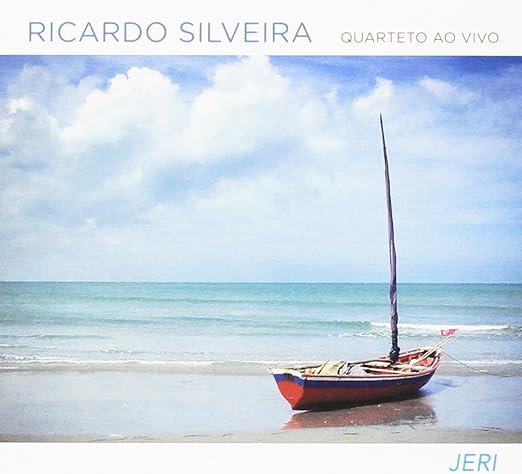
Ricardo Silveira
Jeri - Quarteto Ao Vivo


By Arthur Dapieve
Deve-se tocar - artigo de 09/09/2016
CDs instrumentais como os de Ricardo Silveira, Victor Biglione e Heraldo do Monte são essenciais

"..No momento, CDs de outros três guitarristas habitam a bandeja do aparelho de som. O que está lá há mais tempo é “Jeri”, do quarteto de Ricardo Silveira. “Mercosul”, de Victor Biglione, e o novo “Heraldo do Monte” chegaram há pouco. Apesar de serem CDs “de guitarristas” também são muito distintos entre si, assim como são de “O corpo de dentro”, de Rebetez, no qual, como escreveu Silvio Essinger em crítica recente, a guitarra “é apenas uma voz eventual entre outras (...) numa conversa de alto nível”.
Ricardo Silveira se vale da linguagem jazzística. Sua fluência faz até parecer que tocar é fácil. Já Victor Biglione tem uma pegada mais roqueira. No novo CD, com inspiração em gêneros latino-americanos. E Heraldo do Monte temporariamente deixa de lado a guitarra elétrica para tocar violão caipira, um dos seus primeiros instrumentos.
“Jeri” foi gravado ao vivo na 6ª edição do Festival Choro Jazz, realizado na vila de Jericoacoara, Ceará, em 2014, mas só agora foi lançado, de forma independente. O carioca Silveira, de 59 anos, encerrava a turnê comemorativa de três décadas de carreira. Com ele, David Feldman (teclados), Guto Wirtti (contrabaixo) e Di Stéffano (bateria).
A conjugação entre a informalidade do local e o estilo enganosamente despojado de Silveira foi capturada em “Jeri”. Desce fácil. Além do único disco da Banda Zil e das inúmeras participações em trabalhos alheios, Silveira gravou nove álbuns, iniciados pelo apropriadamente batizado “Bom de tocar” (1984). Esses álbuns criaram um sólido repertório, como “Tango carioca” e “Pepê”, presentes no novo CD, que tem jeitinho de antologia. Se alguém aí nunca ouviu Silveira, “Jeri” é bom lugar para começar."


Di Stéffano
Recomeço


By Aquiles Rique Reis, vocalista do MPB4
Em fevereiro de 2015 comentei o então segundo CD do baterista Di Stéffano e agora, mais de um ano depois, tenho nas mãos o seu terceiro álbum: Recomeço (independente). Tomo a liberdade de citar livremente alguns trechos daquela resenha.
“Prezados leitores e leitoras, hoje vou lhes falar de um CD instrumental – o trabalho do baterista, compositor e produtor musical Di Stéffano Wolff Bazilio. Ajustando acordes, abusando de elogiáveis dinâmicas, a bateria permite uma melhor liga entre o som de suas peças e o som dos outros instrumentos. A bateria de Di Stéffano age como se fosse um instrumento de harmonia, suas baquetas “tocam” os melhores acordes e assim melhor patenteiam as músicas. Harmoniosos, seus arranjos misturam os timbres e lhes dão equilíbrio.”
Que prazerosa surpresa, meu Deus! A bateria de Di Stéffano está ainda mais harmonizadora, expandindo substancialmente o dom de entremear instrumentos, liberando-os para solos e improvisos. Consciente de seu talento, dividindo compassos com a mestria de um hábil improvisador, sua bateria sabe que, se tocar é preciso, harmonizar é fundamental.
Di Stéffano é um baterista nato. Daqueles que, imagino, pegava panelas na cozinha de casa para tirar seus sons; daqueles para quem não existe ruído impertinente, mas sim música vinda do corpo ou de qualquer objeto, com textura, peso ou tamanho díspares.
Recomeço traz novamente à cena o Di Stéffano compositor e arranjador. São onze temas de sua autoria e três em parcerias diversas. Para gravá-los, contou com o talento do músico, pianista e engenheiro de som David Feldman que, além de mixar e masterizar todo o disco, tocou piano na maior parte das músicas.
Num belo trabalho gráfico de Cleiton Martorano, capa, contracapa e encarte embalam o álbum para presente natalino.
Ouço as músicas ganharem vida pelo toque dos instrumentistas que as interpretam: “Nicolas” (Di Stéffano) abre a tampa. Composta em homenagem ao filho, o tema tem presença marcante da bateria de Di Stéffano, da guitarra (Daniel Santiago) e do sax soprano do moçambicano Ivan Mazuze. Os três se desdobram para fazer do tema um divertimento tão solar quanto a criança que brinca sob a brisa do oceano.
“Velhos Amigos” (Di Stéffano e Eduardo Taufic) fecha a tampa. Tendo o baixo acústico a costurar o tema, enquanto a bateria de Di Stéffano une a todos, o flugel (Jessé Sadoc) leva a introdução até entregá-la ao piano (Eduardo Taufic), que chega para tocar um belo intermezzo. O baixo firma o chão, enquanto a bateria trisca o prato, seguindo o seu destino de a todos harmonizar.
Após muito ouvi-lo, concluída a audição de Recomeço, me vem à cabeça lhes dizer algo mais, paciente leitora, estimado leitor: um CD como este tem de estar em qualquer cedeteca que se preze… dito isso, ouso pedir para que se permita surpreender com a sonoridade instrumental que lá está – ela é coisa para se ter sempre por perto, para a ela recorrer em momentos de serena maturidade.

Saturday, November 12, 2016

2 Sem 2016 - Part Seven

John Beasley
Monk'estra, Vol.1 


By Dave Gelly
Since the 1950s, composer-arrangers have made orchestral versions of Thelonious Monk’s music. I have so far heard none that have been quite so bold as John Beasley in recasting what he calls the “architecture” of these dauntingly angular piano pieces for a jazz orchestra. He lifts Monk’s melodies away from their native idiom of bebop and replants them in the musically cosmopolitan 21st century. Monk’s insistent, almost manic worrying at single phrases is replaced by sudden surprises and changes of direction. The variety of orchestral textures seems endless too. There’s a lot to take in, and a lot of conventional ideas to set aside, but through it all Monk’s themes emerge as strong as ever.


The Fred Hersch Trio
Sunday Night At The Vanguard


By Dan McClenaghan 
Reach up to the CD shelf and pull a handful of Fred HerschCDS down. You'll find that the pianist has a good thing going with the Village Vanguard. Alive At The Vanguard (Palmetto Records, 2012) a stellar two CD set, and terrific solo set, Alone At the Vanguard (Palmetto Records, 2011), are Hersch's most recent recordings from the legendary venue; and now he and his trio offer up Sunday Night At the Vanguard.
Hersch says this is his best trio album. Almost every artist says that about their latest—that this one's the best. But he might be right. The vote here would have gone to a studio recording, Whirl (Palmetto Records, 2010), a marvelous in-the-zone effort with this same trio—John Hebert on bass, Eric McPherson playing drums—until Sunday Night At The Vanguard rolled around.
The trio opens with Richard Rodgers' "A Cockeyed Optimist," which is not exactly a familiar tune, in spite of its authorship. But as an opener it works to perfection, with a silvery, raindrop intro that finds a quirky groove that paints an upbeat atmosphere, with a bright melody that sounds like a second cousin to "It Might As Well Be Spring."
"Serpentine," a Hersch original, is a wandering slither of a tune, unpredictable and spooky, lovely in its fluid, abstract way; "The Optimum Thing" sparkles; and "Blackwing Palomino," maybe the only jazz tune ever written for a pencil, has the feel of a new jazz standard.
Hersch's output has been consistently excellent, but sometimes—as on this special Sunday Night—the stars align. The trio, from the opening notes of "The Cockeyed Optimist," is locked into and to a telepathic interplay zone—playful and eloquent, elegant and assured.
The Lennon and McCartney gem, "For No One," has the forlorn desperation of the song's lyrical content. The Beatles' version—a masterpiece in its own right—didn't take things to this dark of a place.
Kenny Wheeler's "Everybody's Song But My Own" rolls in a restless, jittery mode. "The Peacocks," from the pen of Jimmy Rowles, is pensive, lonely. Hersch explores an almost unmatchable majesty of the tune, with a bit of dissonance, before he jumps into Thelonious Monk, with "We See," an irrepressible jewel, followed—as an encore to the show—the Fred Hersch-penned "Valentine," one of the more inward tunes in Hersch's songbook, counterpointing a mostly gregarious, effervescent set by one of the jazz world's top piano trios at the top of their game.
Track Listing: 
A Cockeyed Optimist:Serpentine; The Optimum Thing; Calligram; Blackwing Palomino; For No One; Everybody's Song But My Own; The Peacocks; We See; Solo Encore: Valentine.
Personnel: 
Fred Hersch: piano; John Hebert: bass; Eric McPherson: drums.


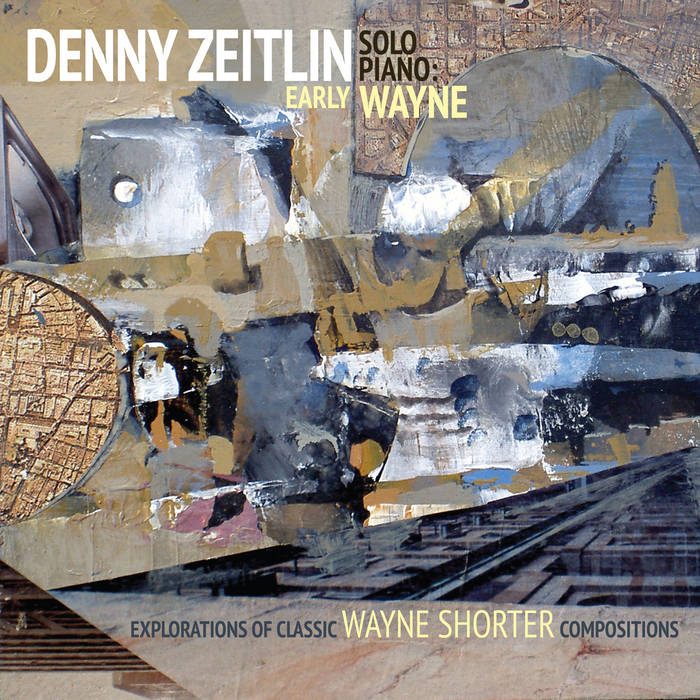
Denny Zeitlin
Solo Piano: Early Wayne


By Budd Kopman 
Early Wayne has many things going for it: it is a well recorded, live concert; pianist Denny Zeitlin, who has been recording for over fifty years, is masterful to the point of completely taking over the listening space, and, last but not least, the material used as the base for his improvisation is a set of ten Wayne Shorter tunes, mostly from the mid-60s.
The list of tunes, and the albums from which they come is below; the albums by Miles Davis were made by his second (great) quintet which included Shorter, Herbie Hancock, Ron Carter and Tony Williams:
1) "Speak No Evil" (Speak No Evil, Blue Note, 1966)
2) "Nefertiti" (Miles Davis, Nefertiti, Columbia, 1967)
3) "JuJu" (JuJu, Blue Note, 1965)
4) "Teru" (Adams Apple, Blue Note, 1967)
5) "Toy Tune" (Etcetera, Blue Note, 1965)
6) "Infant Eyes" (Speak No Evil, Blue Note, 1966)
7) "Paraphernalia" (Miles In The Sky, Miles Davis, Columbia, 1968)
8) "Ana Maria" (Native Dancer, Columbia, 1974)
9) "E.S.P." (Miles Davis, E.S.P., Columbia, 1965)
10) "Miyako" (Schizophrenia, Blue Note, 1967)
For many jazz fans, the Davis/Shorter nexus practically defines the music called "post-bop" and belongs to the "golden era" which began with "be-bop," then "hard-bop" and finally "post-bop."
In any case, most of the tunes have title recognition, if not melodic recognition, by which it is meant that most could not "hum" the tune, but could name it when it is played on the album. Shorter tunes are like that because of the way the melodies are constructed and how the lush harmonies and rhythm interact with it. The music is immediately recognizable in its entirety as "Shorter," but the details are for the most part ingeniously hidden under "the sound."
The Piedmont Piano Company offers an annual performance in their own space to an audience that appreciates the music. Zeitlin took the opportunity to do a "Shorter set" and obviously learned this music and these tunes inside and out. His improvisations, most six minutes or longer, are more like excursions or ruminations, and end up washing over the listener in their vastness.
Yes, a melodic fragment can be recognized (say, that of "Infant Eyes") here and there, but not recognizing the "ur text" in no way diminishes the depth, richness and sheer improvisatory invention of Zeitlin's playing. Each piece has it own mixture of that which has the sound of preparation with that of on-the-spot creation; this makes the album an exciting experience.
Anyone who is unfamiliar with sixties Shorter should definitely look into the Blue Note and Columbia catalogs of this period and deeply imbibe in Shorter and Davis.
The sheer pianistic virtuosity and high musicianship of Zeitlin makes Early Wayne a delightful gem and many times a mesmerizing experience.
Track Listing: 
Speak No Evil; Nefertiti; Ju Ju; Teru; Toy Tune; Infant Eyes; Paraphernalia; Ana Maria; E.S.P.; Miyako.
Personnel: 
Denny Zeitlin: piano.


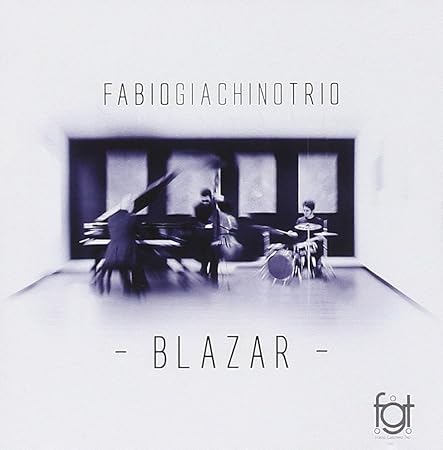
Fabio Giachino Trio 
Blazar


By Traccedijazz
E' uscito il nuovo album, "Blazar", del pluripremiato trio torinese guidato dal pianista Fabio Giachino e formato con il contrabbassista Davide Liberti e il batterista Ruben Bellavia. Prodotto e edito da Abeat Records, è stato presentato in anteprima a Bruxelles per rappresentare la città di Torino in occasione dell’EXPO-TO e dell’Expo 2015 di Milano.
E' uscito "Blazar", il nuovo e terzo album del Fabio Giachino trio, una grande formazione che sta facendo sempre più parlare di sé e che si è affermata nel panorama italiano raccogliendo importanti riconoscimenti. Guidato dal pianista Fabio Giachino, insieme al contrabbassista Davide Liberti e al batterista Ruben Bellavia, il trio con "Blazar" firma il suo terzo lavoro, prodotto ed edito da Abeat Records, che segue i precedenti “Jumble up” (2014) e “Introducing Myself” (feat. Rosario Giuliani, 2012).
In collaborazione con il Torino Jazz Festival, l'album è stato presentato in anteprima a Bruxelles presso l’Istituto Italiano di Cultura per rappresentare la città di Torino in occasione dell’EXPO-TO e dell’Expo 2015 di Milano.
Il titolo dell'album richiama la passione di Giachino per l'astronomia: tecnicamente, il termine blazar siginifica "blazing quasi-stellar object", indicando un fenomeno energetico molto potente che ben rappresenta il carisma dirompente del trio e della sua musica, che sarà portata in tour nel 2015 toccando diverse città italiane.
Dei nove brani presenti nel disco, otto composizioni originali di Giachino e un arrangiamento reggae di "In the wee small of the morning" di D. Mann e B. Hilliard.
Fabio Giachino: "Credo in questo terzo album si sia delineata maggiormente la via che abbiamo intrapreso in questi anni, la coesistenza di differenti influenze stilistiche legate dall’amore comune per lo swing e il beat più incalzante ma, con una maggior ariosità all’interno delle composizioni ed un’attenzione maggiore alla melodia e alla forma. "Blazar" è proprio questo, in scienze viene definito come una sorgente altamente energetica e supercompatta, uno dei più violenti fenomeni dell’universo, ed è così che amo vedere il mio gruppo e la nostra musica: energica, violenta, ma anche dolce e delicata...e che magari faccia anche ballare, come il jazz faceva agli inizi del '900!"
Nato ad Alba e trasferitosi successivamente a Torino, Fabio Giachino è un talento inarrestabile. Seppur giovanissimo ha collaborato con grandi artisti come Dave Liebman, Furio Di Castri, Fabrizio Bosso, Rosario Giuliani, Emanuele Cisi, Maurizio Giammarco, Dino Piana, Aldo Zunino, Dusco Goycovitch, Javier Girotto, Miroslav Vitous esibendosi anche in Francia, Svizzera, Inghilterra, Repubblica Ceca, Polonia, Turchia, Romania, Canada, U.S.A.
Negli anni è stato insignito di importanti riconoscimenti a livello nazionale e internazionale: il "Premio Internazionale Massimo Urbani 2011", il "Premio Nazionale Chicco Bettinardi 2011" e il Red Award "Revelation of the year 2011" JazzUp channel; inoltre, nel 2011, 2012 e 2013 è stato votato tra i primi 10 pianisti italiani secondo il referendum "JAZZIT Awards" indetto dalla redazione della rivista JAZZIT.
Con il Fabio Giachino Trio ha ottenuto il Premio Speciale come "BEST BAND" al "Bucharest International Competition 2014", il premio "Fara Music Jazz Live 2012" (sia come miglior solista che come miglior gruppo), il premio "Barga Jazz Contest 2012" ed il "Premio Carrarese Padova Porsche Festival 2011".
Il trombettista Fabrizio Bosso, nelle note di copertina: "Ho conosciuto Fabio qualche anno fa suonando come ospite del quartetto Jazz Accident e, fin da subito, ho capito che stava nascendo un grande talento. Credo che i progressi che ha fatto in questi ultimi anni siano veramente notevoli, lo dimostra questo riuscitissimo lavoro "Blazar", un disco che strizza l'occhio al jazz newyorkese, ma senza tralasciare la vena melodico-mediterranea che contraddistingue i jazzisti italiani in tutto il mondo. In quanto alla tecnica questo musicista non ha nulla da invidiare ai migliori pianisti della scena jazz internazionale, coadiuvato da una ritmica sempre pronta ad assecondare i suoi input musicali."

Sunday, November 06, 2016

2 Sem 2016 - Part Six

Joey Alexander
Countdown


By Doug Collette
Like most such facile categorizing, 'child prodigy' usually ends up being a dead end rather than a means to explore the subject at hand. In the case of Joey Alexander, it's a disservice precisely because it's so restrictive: if he proves anything on his second album, it is that he will not be confined.
Quite the contrary, the thirteen year-old pianist and composer challenges himself on multiple fronts on Countdown. He not only chooses to play with other musicians, including bassist Larry Grenadier (Pat Metheny, Brad Mehldau) and saxophonist Chris Potter (Dave Douglas, Dave Holland), thereby allowing himself to assimilate technique, but he also takes the risk of involving both of them on an extended foray into Herbie Hancock's "Maiden Voyage;" their detailed exploration of both the melody and rhythm reveals why it's so durable a composition and why the threesome are so simpatico.
The choice of the famous tune also represents the courage Alexander displays in his selection of cover material juxtaposed with his own evocative originals like "Soul Dreamer." John Coltrane's "Countdown" is a somewhat lesser known piece of the late great hornman's (his "My Favorite Things" served as the title of this artist's debut), while, in contrast, "Criss Cross" is one of pianist/composer Thelonious Monk's most famous tunes. Alexander and company approach both numbers with relish and no small amount of abandon.
In fact, the musicians leave self-consciousness so far behind, for a deep engagement in those numbers and their own playing, the combined resonance is as tangible as the audio presence producer Jason Olaine preserves equally vivid in detail and panorama. Ever-present drummer Ulysses Owen Jr.'s fleet but firm rhythms accentuate the various trios rumble and roar, especially when they get going on the album's opener, "City Lights," and the interaction on Wynton Marsalis'" "For Wee Folks" is lighting-fast and nimble to boot.
But the speed there isn't just for its own sake or for the players to show off how well they play, It's indicative not only of the depth of inspiration this precocious pianist/composer displays, but also how infectious is his enthusiasm. Joey's command of the keys lends as much airy atmosphere to his own "Sunday Waltz" as the deeper tones he injects into Billy Strayhorn's "Chelsea Bridge." Based on the cumulative effective of the nine tracks on the Countdown compact disc (there is an extra one, Eddie Harris' "Freedom Jazz Dance," available via I-Tunes), the range of feeling is a direct reflection of Alexander's learned and innate knowledge of his roots.
Not surprisingly, though, the moments he makes the deepest impression(s) are those within Charlie Chaplin's "Smile." Here the young man evinces an emotional depth far beyond his years and therein lies the source of his nascent genius.
Track Listing: 
City Lights; Sunday Waltz; Countdown; Smile; Maiden Voyage; Criss Cross; Chelsea Bridge; For Wee Folks; Soul Dreamer.
Personnel: 
Joey Alexander: piano; Larry Grenadier: bass (3-6, 8, 9); Dan Chmielinski: bass (1,2,7); Ulysses Owens, Jr.: drums; Chris Potter: soprano saxophone (5).


Jackie Ryan
Doozy


By Larry Taylor
This two-CD set is vocalist Jackie Ryan's third recording and it's definitely a keeper. On the heels of her 2007 success, You And The Night And The Music (Open Art Productions), which landed on the charts, also appears destined for success.
With her clear, rich voice, Ryan undoubtedly has one of jazz's great vocal instruments—no low-note warble or reedy high notes for her and with a 3-1/2 octave range, she handles each song with aplomb. In addition, she has a sure sense of phrasing and an unerring accuracy for getting to the heart of a song. To say she always swings is an under-statement.
Based in the San Francisco Bay area, Ryan has played around the world—London, Japan, Amsterdam and made a memorable 2006 appearance in New York at the Lincoln Center. Along the way, she has been backed by some of the best, including Clark Terry, Toots Thielemans, Barry Harris, Terry Gibbs, Buddy DeFranco and Red Holloway.
Her accompaniment here is led by peerless pianist Cyrus Chestnut, and includes a superb front line of tenor saxophonist Eric Alexander, trumpeter Jeremy Pelt and the great Brazilian guitarist, Romero Lubambo.
Ryan includes a collection of pop tunes, Latin American songs and under- appreciated jazz compositions. Everything stands out on about the CD, making it difficult to choose highlights, but here are a few: On the opening title track, her original vocalese interpretation brings to mind the great Annie Ross, with tasty solos delivered by Pelt, Alexander, and Chestnut. Ryan's ability to tell a story and the flexibility of her voice is displayed in "Do Something," as she ranges up and down the scales and in and out of the melody. Also, Chestnut's expertise as an accompanist is reaffirmed in his embellishments. Another favorite, "Speak Low"—executed with a samba beat—is a vivid example of how Ryan builds dramatic intensity.
Lubambo's guitar magic is conjured particularly well in Jobim's "Caminhos Cruzados." His infectious bossa nova rhythm frames Ryan's sensual rendering. Later, their duo on Augustin Lara's classic "Solamente Una Vez" is blissfully beautiful.
Leonard Bernstein's "Some Other Time" finishes off the set, featuring just Ryan and Chestnut. Someone once said that "less is better." That maxim is proven with the stark beauty of this piece.
Track Listing: 
CD1: Doozy; You'll See;Caminhos Cruzados; Do Something; Speak Low; I Must Have That Man; Dat Dere; Beautiful Moons Ago; My How The Time Goes By 
CD2: Opportunity Please Knock; I Haven't Got Anything Better To Do; Brigas Nunca Mais/A Felicidade; Spring Can Really Hang You Up The Most; Solamente Una Vez; Summer Serenade; Get Ride Of Monday; Midnight Sun; Tell Me More And More And Then Some; Some Other Time.
Personnel: 
Jackie Ryan: vocals; Eric Alexander: saxophone; Jeremy Pelt: trumpet, flugelhorn; Cyrus Chestnut: piano; Romero Lubambo: guitar; Ray Drummond: bass; Dezron Douglas: bass; Carl Allen: drums; Neal Smith: drums.


Kenny Wheeler & John Taylor
On The Way To Two


By Mac Randall
The belated release of these 2005 duo recordings was originally intended to honor trumpeter/flugelhornist Kenny Wheeler on the first anniversary of his death. To that end, pianist Taylor penned a touching tribute to his longtime partner in the British chamber-jazz group Azimuth that’s reproduced on the album’s back cover. Not long after writing those words, however, Taylor himself died, making On the Way to Two a memorial to both players. Billy Strayhorn’s “A Flower Is a Lovesome Thing,” sensitively rendered, is the sole non-original here; Wheeler’s wistful compositions dominate, interspersed with three short sketches in which Taylor roots around inside the piano and Wheeler plays spooky lines on muted trumpet.
Decades of collaboration made Taylor and Wheeler highly attuned to each other, and their shared sense of telepathy is audible throughout this disc. The way they make the solo section of “Quiso” pitch and yaw like a tempest-tossed schooner is especially striking. Still, Wheeler seems overmatched at times. Taylor’s particle-accelerator approach to improvisation, smashing melodic fragments together and seeing what patterns they make, is brilliant but far more outgoing than Wheeler’s, which tends toward the circumspect. Also, Wheeler’s signature sudden leaps into the stratosphere are more wayward than usual, often only winding up in the troposphere, and yet he continues to attempt them so regularly that it takes on the air of an unhealthy fixation.
All the same, it’s wonderful to hear Wheeler’s cool, melancholy horn again. “Canter #2” and “Fortune’s Child” even offer us the chance to hear it twice, in a manner of speaking, as tasteful use of overdubbing gives both pieces an unexpected emotional climax. Think of the double-tracked conclusion to A Love Supreme, only in a more sedate style.


Jacob Christoffersen Trio
Facing The Sun


By Annika Westman 

Denmark has a great jazz tradition. Just like Paris, Copenhagen has been a haven for jazz musicians in exile (from the US, South Africa, etc.) for decades. Jazz has had a strong position in the city since the '40s, and many great players have been produced in this fertile climate, the best known being Niels-Henning Ørsted Pedersen. Well, here is another one that deserves international success: pianist Jacob Christoffersen.
The impression that strikes immediately and persists through the whole CD is that this music sounds very fresh and very familiar at the same time. Christoffersen has a clean style, seemingly free of influences from piano icons that he obviously has listened to, like Keith Jarrett and Bill Evans. Sometimes the compositions bring back the flavour from a record like Jarrett's Belonging, or maybe My Song. But the playing style here is really fresh, very distinct and clear, nicely showcased by these beautiful tunes. This record, marked by strong playing and excellent compositions from the first note, is full of musical joy, expressed by the players and absorbed by the listener. Melodies just keep pouring out of Christoffersen, with a nice flow and at the same time a driving attack, a quick punch a couple of notches stronger than we normally hear in this type of jazz.
In addition to his work as a teacher at the well renowned Rhythmic Conservatory of Copenhagen and as a sideman in various Danish jazz groups, Christoffersen also plays with a few rock bands—and maybe that has helped him preserve his straightforward attack and musical approach. These features, combined with a wonderful lyricism and excellent songwriting, makes Facing The Sun a nice musical surprise.
The playing is very dynamic, from not just the piano but the whole band, including great drum solos from Jonas Johansen (whom I recently caught live with Ulf Wakenius, and his drum solos were just as nice on stage as they are on this recording). And Jesper Bodilsen plays his powerful, yet smooth and sensitive bass. That's why he is one of Denmark's busiest bassists, currently engaged with Ed Thigpen, Stefano Bollani, Kasper Villaume, and others.
This is straightforward and very melodic jazz, with a playful and joyful delivery. Simply beautiful, without ever getting too sweet. Rather than calling it mainstream, I would say that this music is right in the heart of jazz.
Track Listing:
Facing The Sun; Everything I Love; Fenster And McManus; Remembering; On The Horizon; Sing Song; Apology; Homecoming; All Of You; Transformation Game.
Personnel:
Jacob Christoffersen: piano; Jesper Bodilsen: bass; Jonas Johansen: drums.

Saturday, November 05, 2016

Bob Cranshaw 1932 - 2016


By Matt Schudel/TheWashigntonPost
Bob Cranshaw, a versatile jazz bassist best known for his association with saxophonist Sonny Rollins, whom he accompanied on virtually every concert and album since 1962, died Nov. 2 at his home in Manhattan. He was 83.
The cause was cancer, said his wife, Bobbi Cranshaw.
Mr. Cranshaw never had an album as a leader, but he was on dozens of well-known jazz recordings, including trumpeter Lee Morgan’s “The Sidewinder” in 1964. He toured for several years with singer Ella Fitzgerald and appeared on more recordings on the famous Blue Note jazz label in the 1960s than any other bass player.
With his early classical training and an ability to play in any style, Mr. Cranshaw proved to be so adaptable and dependable that he may have been the only musician who performed, at various times, with Bing Crosby, Paul Simon, Coleman Hawkins, Thelonious Monk, Rod Stewart, Peggy Lee, the “Saturday Night Live” orchestra and the studio band of “Sesame Street.”
“I didn’t ask to be a star,” he said in a 2014 interview with jazz pianist Ethan Iverson on the Do the Math website. “I wanted to be a sideman. I wanted to be a super-sideman.”
Mr. Cranshaw first performed with Rollins in 1959 at the Playboy Jazz Festival in Chicago. It was a demanding job because, at the time, Rollins had a bare-bones lineup, backed by just bass and drums.
“I said, ‘Yeah, I’ll do it,’ ” Mr. Cranshaw recalled years later, in an interview with a publication of the New York musicians’ union. “And then I thought about it and said, ‘Oh man, am I stepping into something I’m not ready for?’ No pianist, you know.”
Rollins was a challenging musician to accompany, sometimes changing tempos or keys without warning. But Mr. Cranshaw followed him at every turn, and the performance was a success.
After Rollins took a two-year hiatus from music, he asked Mr. Cranshaw to join his band, and he appeared on the classic 1962 album “The Bridge,” marking Rollins’s return to the jazz scene after two years of solitary practice on New York’s Williamsburg Bridge.
For the next 50 years, Mr. Cranshaw was the rhythmic and harmonic anchor for the powerful saxophonist, considered by many the most influential jazz musician of his time. He appeared on nearly 25 albums led by Rollins, including the Grammy Award-winning “This Is What I Do” (2000) and “Without a Song: The 9/11 Concert” (2005).
In addition, Mr. Cranshaw spent more than 25 years with “Sesame Street,” recording the TV show’s theme song by Joe Raposo and other tunes associated with the long-running children’s program, including “(It’s Not Easy) Bein’ Green” and “Sing.”
From 1975 to 1980, Mr. Cranshaw was the bass player with the original studio band of NBC’s “Saturday Night Live,” working alongside keyboardist Paul Shaffer, who later became the director of the band on “The Late Show With David Letterman.” Mr. Cranshaw was a member of the studio band of “The David Frost Show” from 1969 to 1972, working with pianist Billy Taylor, and in the early 1980s, he was the musical director for one of Dick Cavett’s talk shows.
In the early 1970s, Mr. Cranshaw was among the first jazz bassists to adopt the electric bass guitar as his primary instrument. He continued to perform occasionally on the upright bass throughout his life, but back injuries sustained in a car accident initially forced him to switch to the smaller, amplified electric bass.
At first, he faced resistance from jazz purists, who maintained that the electric bass — a backbone of rock music — didn’t fit into the jazz aesthetic. But Mr. Cranshaw brought a rare subtlety to the electric instrument, applying the same touch, musical phrasing and jazz sensibility that he brought to the upright bass.
“A bass is a bass. That’s my attitude,” he said in the interview with Iverson. “I know that the jazz guys don’t dig the electric, so I gotta make it sound and I gotta make it feel like I’m playing the string bass.”
Melbourne Robert Cranshaw was born Dec. 10, 1932, in Chicago. He grew up in a solidly middle-class community in Evanston, Ill., where his father was a choir director.
“I came up in a really lovely neighborhood,” Mr. Cranshaw said in 2014. “As I tell guys, I can play the blues, but I can’t cry the blues because I didn’t come from that kind of thing.”
As a child, Mr. Cranshaw said he often visited church basements in Evanston because he could feel the bass notes of the organ and choirs through the foundation of the building. He gradually realized the bass was his musical calling.
He played in the school orchestra and learned to read music by the time he graduated. He received a bachelor’s degree from Chicago’s Roosevelt University, then served in the Army before beginning his music career in Chicago.
When he moved to New York around 1960, one of the first people he encountered was the eminent bass player Milt Hinton, whom he had long idolized. Hinton took an immediate interest in Mr. Cranshaw’s career, recommended him for recording dates and other jobs.
Among the noteworthy recordings he appeared on were “Idle Moments” (1963) by guitarist Grant Green, “Inner Urge” (1964) with saxophonist Joe Henderson, and “Movin’ Wes” (1964) with guitarist Wes Montgomery. Mr. Cranshaw created the catchy bass line that underscored Morgan’s soul-jazz hit “The Sidewinder” from 1964.
In addition to his studio work, Mr. Cranshaw performed in Broadway pit orchestras and for visiting singers, including Crosby, Lee, Collins and Frank Sinatra. He appeared on several tracks on Simon’s 1973 album “There Goes Rhymin’ Simon.”
His first two marriages ended in divorce. Survivors include his wife of 39 years, Bobbi Curtis Cranshaw of Manhattan; three children from his first marriage; two stepchildren he adopted; and several grandchildren.
Mr. Cranshaw was a central figure in the New York musicians’ union and said he worked so steadily for so long because he managed to avoid drugs and other temptations of the jazz life.
“I did a lot of Blue Note dates because I was on time,” he said. “If you said, ‘Be there at a certain time,’ I was there. It was a business for me at that point. There were great bass players that came through; sometimes they were there and sometimes, you know . . .”

Sunday, October 23, 2016

2 Sem 2016 - Part Five

Peter Bernstein
Let Loose


By Thomas Conrad
Peter Bernstein has built a career in the service of others, especially saxophone players and organists. He was in Sonny Rollins’ best working band of the new millennium, and has been crucial to Lou Donaldson and Dr. Lonnie Smith. On Let Loose he slips seamlessly into the role of leader. It is a balanced, polished, erudite guitar recital that was made in one day.
Bernstein’s music is devoid of rough edges yet always sounds bluesy. On a tender song from the 1950s, “Blue Gardenia,” his precise single-note lines trace the melody sincerely, only subtly rephrasing it. Yet his understatements possess the sublimated urgency of someone whose emotional domain is the blues.
With instruments such as piano and electric guitar (as opposed to, say, saxophone), it is slightly perplexing how special players are able to imprint their own sound, their own tonal signatures. Bernstein personalizes every note and makes them glow. The clarity and purity of his guitar sound is beautifully rendered on this recording. (Sonic quality is a strength of the Smoke Sessions label.)
The bassist and drummer here, Doug Weiss and Bill Stewart, have long histories with Bernstein. Pianist Gerald Clayton is a new collaborator. Clayton’s presence creates high expectations. His imaginative daring has transformed many recent ensembles, including major ones like the Charles Lloyd Quartet. But whereas Lloyd gives Clayton space to create his own original art within the leader’s vision, Bernstein keeps Clayton in a box. On ballads like “Tres Palabras” and harder stuff like Woody Shaw’s “Sweet Love of Mine,” both examples of Bernstein’s insightful repertoire decisions, Clayton reinforces the leader’s concept of beauty but does not extend it. The album’s title notwithstanding, one of the few things Bernstein does not do well in music is let loose.


Melissa Errico
Legrand Affair: The Songs Of Michel Legrand


By William Ruhlmann
Although the musical Amour, with a score composed by Michel Legrand, had only a brief run on Broadway in 2002, it earned a Tony Award nomination for its female lead, Melissa Errico, who in 2005 began working with Legrand and producer Phil Ramone on a solo album of Legrand's songs. She put that project aside to take a career hiatus and start a family, then recorded an album about children and motherhood, 2008's Lullabies & Wildflowers. So, it took until 2011 for the long-gestating Legrand album to appear, but it proves worth the wait. Legrand Affair is a full-scale collaboration between singer and composer, with Legrand providing arrangements and orchestrations, and even stepping in to accompany Errico on piano and, on "Once Upon a Summertime," to sing (and scat) along. His charts for some of his best-known movie themes are lush and pastoral, and Errico, with her restrained, precise singing, is an ideal vocal embodiment of the lyrics. Many of those words were contributed by Alan and Marilyn Bergman, who bring to their settings of Legrand's swirling, circular melodies appropriately poetic and elliptical lyrics. The classic example, of course, is the series of similes that makes up the lyric to the Academy Award-winning "The Windmills of Your Mind" from the 1968 film The Thomas Crown Affair. But the Bergmans also provide a succession of prepositional phrases for "In Another Life," and elsewhere they traffic heavily in nature and weather imagery to describe the contours of long-term love affairs. Errico studiously avoids material that the Legrand/Bergman team wrote for Barbra Streisand; no "The Way We Were" or anything from Yentl. But the veteran composer has written so many songs that she still has plenty to choose from, including a couple of French lyrics. And Legrand makes as strong an impression in the album as the singer, usually allowed an instrumental section in each song to get his point across with ravishing, often wistful strings. He is a full participant in his own tribute, but Errico also stakes a claim as a major interpreter of his catalog.


Gregory Porter
Take Me To The Alley


By Thom Jurek
With 2013's Liquid Spirit, jazz singer and songwriter Gregory Porter's Blue Note debut, he accomplished what few in his vocation have in recent decades -- sold over a million albums globally. He also won the 2014 Grammy for Best Jazz Vocal Album. In addition, in 2015, U.K. electronic unit Disclosure released "Holding On" -- a co-write with the singer that featured his vocal -- as the lead single from their Caracal album. The track was a worldwide club hit and inspired numerous remixes. On Take Me to the Alley, Porter sticks to what he does best: writing and singing great songs in his honeyed, unhurried yet disciplined baritone. Kamau Kenyatta remains his producer and his longtime band is back -- drummer Emanuel Harrold, bassist Aaron James, pianist Chip Crawford, and saxophonists Yosuke Sato (alto) and Tivon Pennicott (tenor) -- with select guests including trumpeter Keyon Harrold, vocalist Alicia Olatuja, and organist Ondrej Pivec. The leadoff track, unsurprisingly, is his own version of "Holding On," with a double-timed, brushed hi-hat, Motown-esque bassline, and crystalline piano. It skirts the edges of pop-soul yet remains in the jazz camp. Porter's lyrics are direct, confessional, and poetic. The spiritual clarity of the gospel message in the title cut is underscored by Olatuja's harmony vocal and Harrold's melodic trumpet break. "Consequence of Love" is one of the finest moments here, a tender midtempo ballad offered with the no-nonsense conviction that reveals love may be beyond the measurement of the rational, but commitment to it remains necessary for the revelation of its truth. Porter employs gospelized soul-blues (à la Ray Charles) in "Don't Lose Your Steam," one of two songs inspired by his son. The horns frame the B-3 and rhythm section groove while Sato's solo becomes a responsorial voice. "Fan the Flames" is a swinging political post-bop finger-popper with punchy horns. It's an anthemic call to arms with great solos by Pennicott and Keyon Harrold. The artful, strident narrative in "French African Queen" is accompanied in feverish modal form by the ensemble, accented by fluid rhythms that touch on Latin and African grooves (check the Fela Kuti-inspired horns to boot). A second version of "Holding On," with urban soulman Kem, feels unnecessary in comparison to the first. Conversely, the closer, a second read of the ballad "Insanity" with Lalah Hathaway in duet, should have replaced the first one, because it is superior. A seamless intersection of pop-jazz and adult cotemporary soul, it is a set highlight. If there's a knock against Take Me to the Alley, it's that it feels a bit long. Editing out two or three tunes would have heightened its impact. That Porter doesn't break new ground here isn't a big deal; he doesn't need to. His voice, already a standard of excellence by which others are judged, is matched by a truth-laid-bare songwriting style that is singular and second to none.


Nelson Faria & Frankfurt Radio BigBand
Live In Frankfurt


By Kees Schoof
There are musicians whose participation on an album always adds something extra. Nelson Faria is one of those musicians. Whenever his name is mentioned in the line-up, one can be sure that there’s something good about the album… Nelson Faria is a fantastic and dedicated musician (guitarist, composer, arranger). The various projects he participated in always benefited from his presence. So it was a smart move when the HR Bigband and Nelson Faria decided to join forces.
The HR Bigband is The Frankfurt Radio Bigband. The German orchestra acquired a solid reputation and worked with (jazz) musicians like Mike Stern, Michael Brecker, John Scofield and Jack Bruce. They also have experience in Brazilian music. They invited Tania Maria (2010, It’s Only Love) and the orchestra recorded the album Viva o Som(2009) with the music of Hermeto Pascoal. With Nelson Faria on guitar and as arranger, we now have an album that was recorded live in Frankfurt, 2009, and is nothing short from fantastic! Nelson Faria invited the two other members of Nosso Trio as special guests to accompany him. Ney Conceição on bass and Kiko Freitas on drums do an outstanding job, as always. They forgot they’re 2/3rd of Nosso Trio and make themselves part of the orchestra, leaving the honors as soloist to Nelson Faria. Another Brazilian input comes from the attentive percussionist Cristiane Gavazzoni (from Curitiba). She’s a regular member of the HR Bigband and also performed in other bands and orchestras throughout Europe.
The clever and tasteful arrangements make sure that the music stays Brazilian. It also underlines the quality of the musicians from the HR Bigband and the orchestra as a whole that they seem to feel what Nelson Faria had in mind with the music. The album opens with Nelson’s own composition “Brooklyn High,” which serves as kind of an overture, an introduction of the orchestra with sharp soloing by the leader himself, Andy Greenwood (trumpet), Günter Bollmann (trombone), Ney Conceição (bass) and Kiko Freitas (drums). It’s followed by another Nelson Faria composition, the Bossa Nova “Rio.”
Among the repertoire we find three compositions by João Bosco. It’s a funny thing about João Bosco’s music that his own vocal interpretations of the songs always are the best. But on an album like this, it shows how much potential his music has for instrumental arrangements. It’s pure jazz; something that also can be said, of course, about Jobim’s representation on the album, his composition “Dindi.” The rendition of this classic is breathtakingly beautiful, a perfect confluence of a Brazilian standard and jazz tradition. Nelson Faria opens in a most lyrical way after which Matthias Erlewein takes over the sentiment on the tenor sax. His soloing is absolutely a top performance. “Manhã de Carnaval” reaches that same level. Here it’s Martin Auer on the trumpet who answers to the inspirational opening by Nelson Faria.
Each track on this album is a joy to listen to. The arrangements are surprising; the soloing is superb and never disturbed by a too heavy big band sound. Everything sounds in perfect harmony. It’s absolutely among the finest releases in 2011, both in the jazz as in the Brazilian fields. Nelson Faria proves he can be counted among the greats, while the HR Bigband shows again that European Radio Orchestras often house the best local musicians; disciplined, original, dedicated and with perfect craftsmanship.
ALBUM INFORMATION:
Nelson Faria & Frankfurt Radio Bigband
Live in Frankfurt
Independent (2011)
Time: 75’20”
Tracks:
Brooklyn High (Nelson Faria)
Rio (Nelson Faria)
Dindi (A.C. Jobim – Aloysio de Oliveira)
Incompatibilidade de Gênios (João Bosco – Aldir Blanc)
Linha de Passe (João Bosco – Aldir Blanc – Paulo Emílio)
Bala com Bala (João Bosco – Aldir Blanc)
Manhã de Carnaval (Luiz Bonfá – Antonio Maria)
Estamos Aí (Mauricio Einhorn – Durval Ferreira – Regina Werneck)
Vera Cruz (Milton Nascimento – Márcio Borges)

Sunday, October 16, 2016

Claus Ogerman 1930 - 2016


By Marc Meyers
Claus Ogerman, an achingly beautiful jazz-pop orchestral arranger whose signature sound behind singers and instrumentalists featured violins scored in a high register, with the violas, cellos and bass playing sensually voiced chords below, died in Germany on March 8. He was 85.
News of Ogerman’s passing more than seven months ago seems to have escaped most traditional media in the States and other countries largely because his family was unavailable by phone to officially confirm his death at the time. His family also decided to keep the news private. As a result, many fans of his music may still be unaware of his death.
During a conversation last week with producer Tommy LiPuma about Ogerman's legacy, I mentioned I had heard that Ogerman was seriously ill. Tommy, who produced 12 albums with Ogerman as an artist and arranger, said he had, in fact, died earlier this year. Tommy said Ogerman's nephew, Spencer Matheson, had called him a few days after Ogerman's death with the sad news, asking Tommy to let singer-pianist Diana Krall know.
Tommy said that at the time, Spencer had asked him to keep it confidential, since the family didn’t want Ogerman's passing to be made public yet. Later, when the sad news was leaked by a few of Ogerman's German musician friends, Spencer convinced his family to make the news public. But by then, too much time had passed and Ogerman was largely forgotten by the press, at least in the U.S.
As an arranger in the jazz-pop world, Ogerman had few peers. He was remarkably prolific, even in a business where brand-name arrangers had to hire others to ghostwrite scores for them just to keep up with the work. Ogerman's warm, delicate string orchestrations still sound like sheer, luxurious curtains blowing in a gentle breeze, and there remains a dramatic, autumnal quality about his orchestrations that slowly envelope singers and instrumentalists like a silver mist. His big band, pop-rock and soul charts also had an unmistakable snap.
Ogerman began his recording career in Germany in 1952 as the pianist in a sextet led by Max Greger. Throughout the early 1950's, he recorded with a Greger and a range of German jazz-pop artists. His first recording with an American jazz musician was a Chet Baker jam session in Baden-Baden, Germany, in 1955.
Discovered by Stan Getz, Ogerman moved to the States in 1959 and quickly found work as a fast, diligent arranger. His earliest charts for American pop artists were for Solomon Burke and Lesley Gore, including her 1963 hit It's My Party. In 1962, Ogerman came to the attention of producer Creed Taylor shortly after Creed was named head of Verve.
At Verve, Ogerman first arranged the song Where Are You? by Jack Teagarden on the trombonist's Think Well of Me album in 1962. In May 1963, Ogerman began arranging a long string of bossa nova albums for Creed, developing a soft sound with strings that would become his hallmark. The first of these albums was Antonio Carlos Jobim's The Composer of Desafinado Plays. Throughout the 1960s, Ogerman arranged a massive catalog of superb albums produced by Creed at Verve (upward of 70, by Ogerman's count) and then continued with Creed when he moved to A&M and later founded CTI.
Shortly after CTI folded in 1978, Ogerman moved to Warner Bros., where he was produced by Tommy LiPuma. Together, Tommy and Ogerman recorded Dr. John’s City Lights; George Benson’sBreezin’, In Flight and Living Inside Your Love; Michael Franks’Sleeping Gypsy; Joao Gilberto’s Amoroso; Ogerman’s Gate of Dreams, Cityscape (featuring Michael Brecker) and Claus Ogerman, featuring Michael Brecher; Diana Krall's The Look Of Love and Quiet Nights; and Ogerman's Across The Crystal Sea,featuring Danilo Perez.
Over the course of five decades, starting in the 1960s, Ogerman recorded several hundred albums in the U.S. and Germany, where he spent half the year. The exact number still isn't known and probably won't be until someone writes his biography.
Claus Ogerman's arrangements speak volumes about his sensitivity and taste.

Sunday, September 25, 2016

2 Sem 2016 - Part Four

The Impossible Gentlemen
Let´s Get DeLuxe


By Adrian Pallant
Something of a Northern homecoming for guitarist Mike Walker and pianist/keyboardist Gwilym Simcock, a great buzz of excitement preceded the album launch of The Impossible Gentlemen’s third release, Let’s Get Deluxe, at Manchester Jazz Festival last night. Looking back from the stage of the RNCM Theatre, every one of the steeply-tiered seats appeared to be filled, and a warm expression of appreciation greeted this ‘international supergroup’ as they took up their positions. Alongside US colleagues, bassist Steve Rodby and drummer Adam Nussbaum, the name of Iain Dixon has now been added, providing a seamless woodwind and synth addition to the Gents’ distinctive musical character.
The new recording is stacked with layered instrumental textures (most notably Simcock on French horn), yet their live interpretation was a triumph, as revealed in the bright, opening prog-guitar groove of title track Let’s Get Deluxe. Grungy, late-night Dog Time (which Walker explained didn’t quite cut it in his straight Salford accent, but rather pronounced “Dawwwg Tahhhm”) is already an album standout – but here, the guitarist coaxed the most wonderful howls and caterwauls from his fretboard as it melded with Simcock’s double-banked Nord organ tremolo, before erupting into a full-bodied blues rocker with contrasting, mysterious episodes.
Dedicated to late, great pianist John Taylor, A Simple Goodbye is one of the most affecting tributes, and Simcock’s delicate chordal eloquence at the grand piano was matched by Walker’s oh-so-subtle string-bent cries – had a pin dropped in the hall, it would surely have been noticed; and blithe, countrified Speak to Me of Homebreezed along to Walker’s picked guitar and Dixon’s folksy soprano sax improvisations, expounding on the nursery-rhyme simplicity of its original melody. A complex left-hand piano figure introduced shuffling Barber Blues (from the band’s second album), developing to feature delightful bass clarinet from Dixon and lithe bass perambulations from Rodby, with Mike Walker feeling and mouthing every nuance of his octaved extemporisations; and amidst colourful drum soloing, with a few cheeky fake endings, Nussbaum’s cymbal work was positively balletic.
Closing the set with an even more energised version of the new album’s Propane Jane, Simcock jabbed away funkily with his effective Fender Rhodes voicing, and those deliciously soaring electric guitar lines from Walker could happily have been soaked up into the wee small hours by this rapt audience. But with that final number announced after just over an hour, never has a concert melted away so quickly, the whole auditorium rising to its feet in genuine gratitude for the beauty they had witnessed (many later taking to social media to declare it “one of the jazz gigs of the year”). Quite rightly called back for an encore, the band’s known playfulness surfaced: as Mike Walker’s guitar became detached from its strap, he genially muttered, “What ‘ave ah dun ‘ere?”, promptly followed by Gwilym Simcock's subtle teasing in the form of a perfect rendition of the Some Mothers Do ‘Ave ‘Em theme at the top of the Steinway!


Kenny Barron Trio
Book Of Intuition


By Mac Randall
For some strange reason, the trio that Kenny Barron has been leading for the past decade, featuring bassist Kiyoshi Kitagawa and drummer Johnathan Blake, had never cut an album until now. We should all thank the deity of our choice that they finally entered a recording studio, because Book of Intuition is a total delight.
From the first minute of the bossa-nova-ish opening track, “Magic Dance,” previously recorded as “J.J. Dream” with Ron Carter and Lenny White, the high degree of attunement between Barron and his bandmates is obvious. When he lays into a particularly frisky single-note phrase early on in his solo, Blake responds split seconds later with a flourish of ride cymbal and side stick, over which Kitagawa imposes a slight ritard to humorous effect. Next up is “Bud Like,” a blazing Barron performance stoked by Blake’s command of accents and Kitagawa’s dexterous walking. And so it continues through a mix of old and new material, including two pretty selections from Barron’s soundtrack for the 2010 film Another Harvest Moon.
Two standout pieces are by Thelonious Monk, to whom Barron’s had a direct spiritual line for many years. Although he may be a much smoother pianist technically than Monk, the two share a wicked sense of humor. For “Shuffle Boil,” Barron starts off his solo in a surprisingly romantic mood, then delves into deep funk, as if to say he was only kidding with that first bit. Even better is his solo take on “Light Blue,” which alternates fluid Tatum-esque arpeggios with jarring dissonances and ends on a downward glissando that fails perfectly to resolve anything.


Alessandro Lanzoni
Diversions

Diversions

By Brian Morton
Through his two latest, most successful records, “Dark Flavour” and “Seldom”, released on CAM JAZZ in 2013 and 2014, respectively, Alessandro Lanzoni has conclusively developed his own features as an artist who puts his talent to good use in an unceasing musical exploration, to meet his inborn communication needs that are funnelled into narrative paths, both fanciful and logical, where form and imagination are strongly balanced. A performer so willing to explore could not but find piano solo as a favourable environment, in which he is able to release his creative energy most genuinely and subjectively: this is how Lanzoni’s latest album, again to be released on CAM JAZZ, was born. Its title, “Diversions”, conveys Alessandro’s ability to create ever-changing sonic landscapes through free improvisation, places where the listener is led confidently by an expert who knows how to manoeuver the roughest paths, mastering the most varied musical languages. For his stylistic versatility, Alessandro Lanzoni perfectly represents a contemporary aesthetic theory that leads the artist to express the many different stimuli of today’s world. But all this is supported by the young pianist’s strong background of classical studies, skilfully absorbed formal patterns and own genuine “jazzy” nature that induce the famous Scottish music reviewer, Brian Morton, to say: “Lanzoni’s music is not so much washed on the banks of the Arno as dipped in the waters of the Mississippi”, joking about his name, oddly sounding like Manzoni, the Italian author of “The Betrothed”.
Recorded in Ludwigsburg on 8 - 9 September 2015 at Bauer Studios.
Recording engineer: Johannes Wohlleben


Enrico Zanisi
Keywords


By Franco Fayenz
Keywords. The first that come to mind are: inventiveness, talent, musicality, technique, composition, fusion, courage. You’ll find other keywords by listening to Enrico Zanisi’s brand new record. One could fill an entire review with them. Once again, the very young player from Rome (born in 1990) shows an amazing maturity in leading his trio through the recording of this sumptuous, kaleidoscopic album. With the support of Joe Rehmer on double bass and Alessandro Paternesi on drums, Zanisi built up a sterling recording, which (nearly) consists of original tunes, except for the closing piece, “Träumerei” by Robert Schumann: less than three minutes of elegance in its purest form, as if, at the end of a splendid musical journey, the trio wanted to say that everything starts from there, the old masters. Indeed, technical command over the instrument is derived from a deep-seated classical background, which enables Enrico Zanisi to explore any land with astonishing confidence and awareness, considering that he is only twenty-three years old. (Jazz by new talent is still rich in influences of all kinds.) It’s difficult to recommend one song, rather than another: from its opening, “Claro”, to its closing dedicated to Schumann, this album is a clear round of enlightened, well-written tunes, with airy moods (“Equilibre”), havens of peace (“Au Revoir”) and captivating rhythms (“Power Fruits”). Keywords (is it also a pun with the “keyboard”, of which Zanisi is a master?) is the ideal sequel to Life Variations, recorded a year ago, which displayed a fully blossomed, defined personality. Same concept (Ermanno Basso in the production room, Rehmer e Paternesi as excellent co-leads), up a notch. The Roman pianist is definitely ready to enter the circle of Italy’s top jazzmen, as already stated by Musica Jazz magazine in 2012.
Recorded in Ludwigsburg on 12, 13 June 2013 at Bauer Studios
Recording engineer: Johannes Wohlleben