Sunday, May 20, 2018

Jack Reilly ( 1932 - 2018 )


By Lynn René Bayley
Jazz pianist, educator and sometime classical composer Jack Reilly, who died this past Friday at the age of 86, was one of my oldest friends who I never met in person. Back in 1989, I started my own homemade music ‘zine devoted strictly to classical music and jazz, a forerunner of this blog. These were the early days of desktop publishing; I used a program called “Publish It!” which set up a three-column-per-page layout, used a hand-held scanner for pictures that converted good-looking photos into poor, grainy images to insert (in some instances I just did a cut-and-paste from the Schwann Catalog because it looked better), had copies made at the local Kinko’s, staple-bound each issue by hand and then sealed the binding with some sort of liquid elastic. It looked homemade and I never had more than 40 subscribers, but I kept it going for three years before I called it quits.
Jack sent me a copy of his early, home-bound copies of his “Species Blues” books (later professionally published by Hal Leonard) to review, but because I was so busy with the current issue I explained to him that I wanted to hold off on reviewing it until I had a chance to properly digest it. For some reason, he assumed I didn’t understand what he was talking about and so told me NOT to review it because I was too stupid. Well, that just ticked me off. I don’t claim to be competent at bookkeeping or building a ham radio, but if there’s one thing I do know, it’s music, so I delved into the three-book series and wrote a very positive and detailed review and sent it to him. He was awed by my analysis of his work, and from that moment on, we became friends.
But for whatever reason, Jack still decided to play me for a fool. He called me on the phone but said his name was Sean Petrahn, an Italian-Jewish jazz critic, and wanted to write reviews for my magazine. I was delighted to have him, even though I already had Ralph Berton and jazz trumpeter Jack Walrath as reviewers in the jazz field (I never was able to get any known names for classical reviews except for Terry Teachout, who I had met a decade earlier at the Aspen Music Festival). Jack/Sean wrote some very fine reviews for my ‘zine, but he kept playing me. He had his wife, Carol Lian, call me on the phone pretending to be Steve Allen’s secretary and asking me how she could get in touch with Sean because Steve wanted him on his TV show. Once I stopped publishing, he admitted the charade and we became real friends.
He was always supportive of me and I of him. I wrote good reviews of his CDs, which were not plentiful, and just couldn’t understand why this superb jazz musician wasn’t as well known as his early friend and colleague, Bill Evans, whose work his resembled in many ways. When he decided to release his series of spontaneous improvisations on the Aleister Crowley deck of tarot cards, “Tzu-Jan: The Sound of the Tarot,” he asked me to write the liner notes, for which he paid me. It was very welcome money, though not a large stipend. The funny thing was, once past his Sean Petrahn phase, we rarely talked on the phone in the intervening years, but we kept in touch via email almost up to the end.
Reilly’s work was consistently interesting. He didn’t lay into technique nearly as much as other jazz pianists, and perhaps this is what held back his popularity. People love flash in jazz pianists, and this Reilly would not do. His music was meaty and well-developed, one of his best works being the “La-No-Tib Suite,” which is Bitonal spelled backwards. He recorded a jazz version of the suite while his wife Carol, a fine classical pianist who also invented her own improvisations, recorded a classical version of it. He continued to send me his CDs to review, some of which appeared in Fanfare, as well as his Hal Leonard copies of Species Blues, The Harmony of Bill Evans and his last book, The Harmony of Dave Brubeck. Reilly’s musical analyses were detailed to a T and always extremely interesting. The Hal Leonard books also included CDs of him playing examples of various chord positions so that musicians could hear what he was writing about. In both books, while respecting the original works, Reilly included reharmonizations of their music in his own style.
When reviewing The Harmony of Dave Brubeck, I mentioned that during Brubeck’s active career many jazz critics lambasted him for his “pretentious” and “heavy-handed” playing style, which I never agreed with (I was a Brubeck fan from the moment Time Out first appeared in the early 1960s). Indeed, some critics even went so far as to approach alto saxist Paul Desmond and ask him why he didn’t just leave the quartet and go out on his own. Reilly was gracious enough to pass my comments on to Iola Brubeck, who wrote me back and commented that it was just the mindset of the time. I still have her email saved in my archive. He was also responsible for giving me Sheila Jordan’s email address, which led to my published interview of her.
Jack’s wacky sense of humor continued to the very end as well. I still have the hysterically funny meme he sent me of President Donald Trump, showing one of his signed executive orders. Over the real executive order, Jack had photoshopped an image directing all jazz musicians to learn to play bebop heads in all 12 keys…beginning with Charlie Parker’s Donna Lee. I knew he had been a cancer survivor, back in the early 2000s, but seemed to be in fairly good health until his final days.
In short, Jack Reilly was a wonderful musician and a loyal if somewhat quirky friend. He continued to send me links to jazz videos and great audio clips he had found online, and I did the same, once locating a late-1950s TV clip of the late George Russell leading a band which included Tony Scott on clarinet and Bill Evans on piano playing some of his pieces. Jack couldn’t thank me enough for that one. We also agreed that the late Clare Fischer, though recognized for his composing skills, was one of the most underrated jazz pianists of his time, and he gushed about the brilliance of the late Hall Overton as well. Reilly also sent me recordings of some of his classical compositions, which although they were well written I found a bit thick in texture and not altogether appealing, but by that time he had come to respect my musical judgment and so wasn’t really offended. I praised his jazz to the very end.
If you haven’t discovered Jack Reilly, and are a jazz fan, you need to search him out on YouTube and also collect some of his records. He was a superb artist whose work, like Mark Murphy’s, flew under the radar.

Saturday, May 12, 2018

1 Sem 2018 - Part Twelve

Seth MacFarlane
No One Ever Tells You


By Christopher Loudon
Four years ago, primetime animation kingpin Seth MacFarlane put his ardor for the Great American Songbook to the test, uniting with arranger and conductor Joel McNeely to record the breezy Music Is Better Than Words. The polished collection of Tin Pan Alley chestnuts and obscurities netted him a Grammy nomination.
MacFarlane and McNeely subsequently reunited for a platter of Christmas tunes. Though the press materials for this third teaming make no mention that the disc’s arrival coincides with Sinatra’s centenary, the timing can’t be accidental. The blueprint for these 17 tracks is clearly those mid-to-late-’50s classics-Only the Lonely, No One Cares, In the Wee Small Hours-that explored the somber flipside of Sinatra’s ring-a-ding-ding frivolity.
Backed by a wall of brass and a sea of strings, MacFarlane again succeeds admirably-as does McNeely, whose charts estimably echo Nelson Riddle and Gordon Jenkins. While he lacks Sinatra’s raw emotional wallop and more closely mirrors the mellow warmth of Dean Martin, he is no poseur. There’s plenty here from the Sinatra canon (including the title track, a last-minute addition to 1957’s otherwise upbeat A Swingin’ Affair! ). But there’s also ample room for MacFarlane to exercise his archaeological skills, digging up such gems as Cole Porter’s storm-clouded “Goodbye Little Dream Goodbye,” Henry Mancini and Carole Bayer Sager’s sweetly forlorn “Don’t Call It Love” (from the film 10) and, from Camelot, Lerner and Loewe’s wishful “Before I Gaze at You Again.”


Stacey Kent
I Know I Dream: The Orchestral Sessions 


By Dan Bilawsky
Stacey Kent has practically done it all over the past twenty years, selling north of two million albums, putting her gorgeously delicate stamp on standards, introducing fresh tunes into the canon, racking up awards, and bringing her flawless voice to fans in more than fifty countries. But one thing she hadn't done prior to this point is record an album with an orchestra. Cross that one off the list now and bathe your ears in this spellbinding music.
With I Know I Dream, Kent's voice receives a warm embrace from a sizeable orchestra containing nearly sixty musicians. But rather than force her to play up to sweeping peaks or grandiose ideals, the strings and winds manage to magnify the warmth and confidential tone endemic to Kent's work. Somehow, this influx of sounds leads to an even further dimming of the lights and sharpening of the emotional intent. It's intoxicating understatement at its finest.
Kent's sensitivity, grace, and multilingual savoir faire all contribute to this pleasure cruise. She serves as an expert tour guide through songs of love, moments of nostalgic reflection, and expressions of joy. Her voice can act as a ray of sunshine or a consoling hand, but above all it serves as a mirror for the heart.
Pieces like "Bullet Train," powered by a contemporary polish and groove, and "Make It Up," with a perky Brazilian flavor, both serve as aural pick-me-ups; forays into French—sly-turned-direct during Serge Gainsbourg's "Les Amours Perdues," emotionally gripping on Léo Ferré's "Avec Le Temps"—leave singular memories hanging in the mist; and scaled back settings like "I Know I Dream," where voice and piano commune with the moment before a stunningly gauzy orchestral draping is drawn around Kent, leave you breathless. Few singers can work their way into a lyric like this.
These arrangements—most by Tommy Laurence, a few involving Jim Tomlinson's hand with or without a partner—fit Kent like a glove, playing to her quiet strengths. The material is first-rate, with Jobim gems and French tearjerkers sharing space with appealing songs Tomlinson co-wrote with (either) Cliff Goldmacher, Kazuo Ishiguro, or Antonio Ladeira. And the musicians, of course, deserve high marks in working to the parameters of the Stacey Kent aesthetic. While this is but one more jewel in a discography with many, it's one that deserves singling out for its luster.
Track Listing: 
Double Rainbow; Photograph; Les Amours Perdues; Bullet Train; To Say Goodbye; Make It Up; Avec Le Temps; I Know I Dream; La Rue Madureira; Mais Uma Vez; That’s All; The Changing Lights.
Personnel: 
Stacey Kent: vocals; Jim Tomlinson: saxophones, alto flute, percussion; Graham Harvey: piano, Fender Rhodes, keyboard; John Paricelli: guitars; Jeremy Brown: double bass; Joshua Morrison: drums; Curtis Schwartz: electric bass (4); Erika Matsuo: station announcement (4); Martin Burgess: violin; Amanda Smith: violin; George Salter: violin; Katie Stillman: violin; Lorraine McAslan: violin; John Mills: violin; Andrew Storey: violin; Richard Milone: violin; Paul Wiley: violin; Rob Bishop: violin; Jenny Godson: violin; Catherine Morgan: violin; Matthew Ward: violin; Jeremy Morris: violin; Clare Hayes: violin; Richard Blayden: violin; Richard George: violin; Alison Dods: violin; Susan Briscoe: violin; Takane Funatsu: violin; Fiona Bonds: viola; James Boyd: viola; Ian Rathbone: viola; Nick Barr: viola; Chian Lim: viola; Reiad Chibah: viola; Martin Loveday: cello; Nick Cooper: cello; Will Schofield: cello; Judith Herbert: cello; Juliet Welchman: cello; Julia Graham: cello; Vicky Matthews: cello; Chris Laurence: bass; Richard Pryce: bass; Lucy Shaw: bass; Eliza Marshall: flute; Sarah Newbold: flute; Patricia Moynihan: flute; Siobhan Grealy: flute; Holly Cook: flute; Jamie Talbot: clarinet, alto flute; Time Lines: clarinet; Tom Lessels: bass clarinet; Steve Morris: contrabass clarinet; John Thurgood: French horn; Corinne Bailey: French horn; Joanna Hensel: French horn; Andy Sutton: French horn; Sue Blair: harp; Adrian Bending: vibraphone, percussion.


Van Morrison and Joey DeFrancesco
You're Driving Me Crazy


By C. Michael Bailey
Van Morrison has been busy, releasing three recordings in quick succession, Roll With the Punches (Exile, 2017), Versatile (Exile, 2017), and presently You're Driving Me Crazy with jazz organist Joey DeFrancesco. At this point in his career, Morrison can pretty well sing what he damn well pleases. On his past several recordings, Morrison has revisited his catalog, recasting some of his older songs in new frames and You're Driving Me Crazyproves no exception. Revisited here are "The Way Young Lovers Do" from Astral Weeks(Warner Bros, 1968), "All Saints Day" from Hymns to the Silence (Polydor, 1991), "Close Enough for Jazz" from Born to Sing: No Plan B (Blue Note, 2012).
The presence of Joey DeFrancesco must be noted for the refinement and aplomb he brings to Morrison's beautiful "Magic Time," infusing the piece with an easy-listening grace. The pair breath a gently-swinging life into Morrison's "Have I Told You Lately" (from Avalon Sunset (Mercury, 1989)), while recasting Inarticulate Speech of the Heart's "Celtic Swing" as a breezy romp featuring Morrison's alto saxophone and Dan Wilson's electric guitar. The pair lay down the blues on Morrison's "Goldfish Bowl" from What's Wrong with this Picture (Blue Note, 2003). It would not be fair to DeFrancesco to label this as a "Van Morrison" recording, but it is that. What DeFrancesco brings to the table is the integrating feature of his exceptional musicianship and swing. The two click best on the old war-horses: "Travelin' Light" and "Every Day I have the Blues" where their music making is effortless. And that is what we have become accustomed to from Morrison, music too easily made and enjoyed. It is not often that nature smiles so generously upon us, but it has done so in Van Morrison.
Track Listing: 
Miss Otis Regrets; Hold It Right There; All Saints Day; The Way Young Lovers Do; The Things I used to Do; Travelin’ Light; Close Enough for Jazz; Goldfish Bowl; Evening Shadows; Magic Time; You’re Driving Me Crazy; Every Day I have the Blues; Have I Told You Lately; Sticks and Stones; Celtic Swing.
Personnel: 
Van Morrison: vocals, saxophones; Joey DeFrancesco: Hammond organ, trumpet; Dan Wilson: guitar; Michael Ode: drums; Troy Roberts: saxophone.


Joey Alexander
Eclipse


By Geannine Reid
Pianist Joey Alexander knows how and when to strike the ivories. At the age of 14 he has already recorded two GRAMMY-nominated studio albums, My Favorite Things (Motema Music, 2015) and Countdown (Motema Music, 2016). Late in 2017, Alexander released Joey.Monk.Live! (Motema Music), a critically acclaimed surprise release to honor Thelonious Monk's centennial. Alexander has released his third studio album entitled, Eclipse. The eleven selections are mixture of originals and standards, demonstrating his aptitude as a composer (Alexander composed six of the eleven tunes), arranger, bandleader, and player. Joining Alexander is a rhythm section of bassist Reuben Rogersand drummer Eric Harland, and guest appearances by saxophonist Joshua Redman on three tracks.
Alexander's original "Bali" opens the disc in a celebratory mood, with a relaxed melody that has nice interaction between the bass and melodic figures. The Latin-ish straight eight feel is a perfect setting for Alexander's playful solo approach, and after Rogers mellow solo, Alexander begins the dance. His lines are clear and defined by clean phrasing and rhythm. He takes his time to build in intensity, developing each melodic fragment to a logical completion before moving on to the next idea. The trio has a very relaxed feel and joy about their playing and they are obviously are having fun playing together.
"The Very Thought of You" has guest artist Redman on the track. Alexander starts the tune of with a solo piano version of the melody. With intricate inner voice leading and smooth rhythmic styling, Alexander takes some very interesting harmonic turns, that are sure to delight. Redman enters and restates the melody; the duo is in symbiosis with each other and blend beautifully. Redman's solo is beautiful, his upper register work is impeccable. The two interact in a way that is conversational highlighting what a good listener Alexander is.
Eclipse is a wonderful third outing by Alexander. There is a nice range of tempos and feels, reflective moments and dramatic displays of virtuosity, and even moments of free group improvisation. Alexander is a confident and creative player that has a trio that converses with trust and respect. Adding the amazing sound of Redman, and you have a magical, musical journey. It's all about exploring the many possibilities of emotion that is Eclipse.
Track Listing: 
Bali; Faithful; Draw Me Nearer; Moment’s Notice; Blackbird; Eclipse; Fourteen; The Very Thought of You; Space; Time Remembered; Peace.
Personnel: 
Joey Alexander: piano; Ruben Rogers: bass; Eric Harland: drums; Joshua Redman: saxophone.

Wednesday, April 25, 2018

Bob Dorough ( 1923 - 2018 )


By Neil Genzlinger at NYTimes
Bob Dorough, a singer, pianist and composer who was well known for his jazz but even better known for “Schoolhouse Rock!,” an infectious series of song-filled cartoons that conveyed math and grammar principles to young viewers, died on Monday at his home in Mount Bethel, Pa. He was 94.
His wife, Sally Shanley, confirmed the death.
Mr. Dorough was a moderately successful jazz pianist and singer when an advertising man named David B. McCall approached him for help with an idea. Mr. McCall had wondered why his son was able to memorize lyrics to rock songs but couldn’t learn the multiplication tables. Would catchy math-related tunes be the answer?
The original concept was to make a record and workbook, but when Mr. Dorough started producing zippy songs like “Three Is a Magic Number” and “My Hero, Zero,” the vision expanded into a series of animated shorts, which ABC began inserting into its Saturday morning lineup in 1973.
The series continued into the mid-1980s, with several revivals in subsequent decades, the subject matter growing to include civics, science and, perhaps most impactfully, grammar.
“Not to unduly shame the American education system,” People magazine began an article in 2016, “but chances are Bob Dorough has had more of an impact on grammar fluency than any other individual in the 20th century.”
Mr. Dorough (rhymes with “thorough”; his wife said Thorough Dorough was a nickname) was music director for the initial series and also wrote and sang some of the most fondly remembered “Schoolhouse Rock!” songs. They apparently stuck in young heads, or parental ones, or both. For the rest of Mr. Dorough’s career, it was not uncommon for him to be playing a jazz set and have someone call for a “Schoolhouse Rock!” tune.
“Just about every concert we did we would do some ‘Schoolhouse Rock!’ because people enjoyed it,” Steve Berger, Mr. Dorough’s longtime guitarist, said in a telephone interview. The songs, he noted, were deceptively intricate.
“What you’ll notice is, each one of them is musically brilliant, is lyrically brilliant,” Mr. Berger said. The key, he said, was Mr. Dorough’s respect for the audience.
“He never wrote down to the kids,” he said. “He always brought them up.”
Robert Lrod Dorough was born on Dec. 12, 1923, in Cherry Hill, Ark. His father, Robert, was a salesman, and his mother, Alma Lewis Dorough, worked for a time for the Singer sewing machine company.
Music was always an interest for young Robert — violin and piano were among the instruments he studied as a child — but the idea of making a career of it really took hold when, as a clarinetist, he joined the high school band in Plainview, Tex., where his family had moved.
“That was when I fell in love with music,” he told The Arkansas Democrat-Gazette last year when he returned to his home state to play in Little Rock. “There was something about the ensemble, a lot of kids playing different horns, and it all fit like a glove when it was good. I said to my parents, ‘I’m going to be a musician.’ ”
First came military service, from 1943 to 1945; Mr. Dorough performed with and arranged for the Army Band. In 1949 he received a music degree at North Texas State Teachers College, then headed for New York, where he immersed himself in the jazz scene. His apartment on East 75th Street became the site of a regular jam session.
“You had to play early because of the neighbors,” he told The Philadelphia Inquirer in 1998. “They’d start knocking on the walls and floor at 10.”
The musicians, though, didn’t mind; the 10 o’clock quitting time meant they could still drop in on the late-night jazz scene downtown.
Mr. Dorough built a résumé that was nothing if not eclectic. In the early 1950s he was the traveling music director for the boxer Sugar Ray Robinson when Robinson tried a tap-dancing career. They were playing France when Robinson decided to return to the ring in 1955, but the Mars Club in Paris offered Mr. Dorough a singing and playing engagement, and he stayed for six months.
He returned to New York and recorded his first album, “Devil May Care,” released in 1956 on the small Bethlehem label. He moved to the West Coast for several years and was playing in a quintet at a Hollywood piano bar when he met Miles Davis, who would later ask Mr. Dorough to write him a Christmas song.
The result, in 1962, was “Blue Xmas (To Whom It May Concern),” a wry, somewhat cynical ditty sung by Mr. Dorough. (Another track from that session, “Nothing Like You,” was included on Davis’s 1967 album “Sorcerer.”)
Another quirky collaboration was “I’m Hip,” a tongue-in-cheek portrait of someone who is decidedly not hip, written with his fellow singer-pianist-composer Dave Frishberg. It became a signature song for Blossom Dearie.
Mr. Dorough also helped produce, arranged for, played on or contributed vocals to albums by an array of artists that included Hoagy Carmichael, the Fugs, Spanky and Our Gang, and Art Garfunkel. He even acted occasionally; he appeared in an episode of the western “Have Gun — Will Travel” in 1959.
By the time he was recruited for “Schoolhouse Rock!” he was well connected in the music world, and thus was able to bring a high-end assortment of talent to that project. Ms. Dearie sang “Figure Eight” and “Unpack Your Adjectives.” Mr. Frishberg wrote (and the jazz trumpeter and vocalist Jack Sheldon sang) one of the series’ most delightful songs, “I’m Just a Bill,”
Though Mr. Dorough recorded many albums over the years, his major-label debut did not come until he was 73, when Blue Note released “Right on My Way Home.”
In addition to his wife, Mr. Dorough is survived by a brother, Gregory; a daughter, Aralee Dorough; and a grandson. His first marriage, to Jacqueline Wright, ended in divorce in 1953. He married Ruth Corine Meinert in 1960; she died in 1986.
Mr. Dorough performed constantly throughout his career and was a regular at the Deer Head Inn in Delaware Water Gap, Pa., where he last played just a few weeks ago. In 2001, when he and Mr. Frishberg performed at the JVC Jazz Festival in New York, Ben Ratliff, reviewing the concert for The New York Times, said of Mr. Dorough, “He’s all eternal youth and love for life, with a ponytail, a toothy smile and a goofy charisma.”
That persona, complete with Arkansas twang, was no act, Mr. Berger said.
“What you saw on the stage,” he said, “was who Bob was.”
A version of this article appears in print on April 25, 2018, on Page B15 of the New York edition with the headline: Bob Dorough, Jazzman Who Composed ‘Schoolhouse Rock!’ Ditties, Dies at 94. Order Reprints | Today’s Paper | Subscribe

Sunday, April 08, 2018

1 Sem 2018 - Part Eleven

Bobo Stenson Trio
Contra La Indecisión


By Karl Ackermann
With a few exceptions, Swedish pianist Bobo Stenson has spent his long recording career with the prestigious ECM label, dating back to his oddly named Underwear in 1971. That particular album turned out to be more a showcase for bassist Arild Andersen and drummer Jon Christensen than for Stenson, and the pianist did not lead again on the label for twenty years. Stenson was hardly absent from Manfred Eicher's iconic label in those intervening years, appearing as a sideman for Don Cherry, Jan Garbarek, Tomasz Stanko and Charles Lloyd. On Contra La Indecision, Stenson reconvenes the trio that last issued the 2012 release Indicum.
Stenson and double bassist Anders Jormin have a three-decade history beginning with a mutual association with saxophonist Lenart Åberg. It was the pair's contribution to Lloyd's Notes from Big Sur (ECM, 1992) that brought both to prominence. Percussionist Jon Fält is the youngster in the trio—still in his thirties, he has mostly played with well-known artists inside of Sweden; his initial recording being Indicum.
Jormin is credited with five of the seven original compositions on Contra La Indecision. The album opens with Cuban guitarist Silvio Rodríguez's "Canción Contra La Indecisión" (Song Against Indecision), a light and catchy piece, ironically, from a composer known for his literary seriousness. Erik Satie's familiar "Élégie" begins quietly before Stenson moves it to a bright and punchy treatment with the rhythm section adding subtle, intricate textures. Béla Bartók's "Wedding Song From Poniky" is a beautiful rendition of the jovial original and features a pair of brief, but excellent, solos from Jormin. The bassist's own composition "Three Shades of a House" provides him with more opportunity in the form of an extended intro solo. The piece briefly veers toward abstraction when Jormin picks up the bow, but it doesn't stray far from the overall charm of the melody. "Stilla" has a rambling bluesy quality with an intriguing dialog between Stenson, Jormin and Fält.
Stenson's strong suits have always been his playing—his mastery of the measured build up—and his talent for arraigning other's compositions to put a unique stamp on each. His blending of classical, jazz and folk influences and uncommon time signatures has led to comparisons (not necessarily precise ones) with Keith Jarrett and Brad Mehldau. Stenson's own style is easily recognizable and is especially well-served in the company of Jormin and Fält. Not all of Stenson's work has the bursts of color that we hear in Contra La Indecision and that makes it one of his most interesting albums to date.
Track Listing: 
Cancion contra la indecision; Doubt Thou the Stars; Wedding Song from Polinky; Three Shades Of a House; Elegie; Cancion y Danza VI; Alice; Oktoberhavet; Kalimba Impressions; Stilla; Hemingway Intonations.
Personnel: 
Bobo Stenson: piano; Anders Jormin: double bass; Jon Falt: drums.


David Rees-Williams Trio
Time Scape


By John Fordham
David Rees-Williams follows up his best selling second CD with "Time Scape" featuring a lovingly maintained 1931 Steinway grand piano,lovingly played.The trio is completed by Neil Francis on electric bass and Phil Laslett on drums.Think Jacques Loussier and then some.The album includes compositions spanning four centuries from,among others, Purcell, Bach, Ravel and Watlock."David Rees-Williams is an accomplished pianist whose repertoire contains some of the most eloquent themes ever composed in Europe, the group recalled the Modern Jazz Quartet's meticulous relaxation.


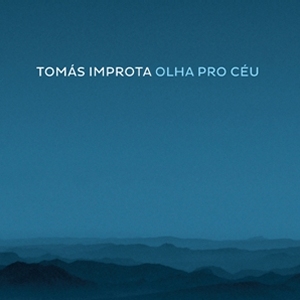
Tomás Improta
Olha Pro Céu


Por Anderson Nascimento
Com mais de 45 anos de carreira, o músico Tomás Improta chega ao seu 10° disco solo, gravado entre novembro de 2015 e abril de 2016, apresentando novas e velhas canções.
O pianista abre o disco com “Olha Pro Céu”, canção de Tom Jobim, também escalada para abrir o disco, enquanto a sequência traz “Risque” de Ary Barroso, em versão cativante. Entre os artistas relidos estão ainda Edu Lobo e Torquato Neto, Heitor Villa-Lobos e Cole Porter.
O disco se concentra no piano do Tomás, com poucas participações especiais, a saber, o contrabaixista Tony Botelho na canção “Silvestre: Nascente do Rio Carioca” (Tomás Improta) e Gabriel Improta, seu filho, em “I Concentrate on You” (Cole Porter). Este fato contrasta com o seu álbum anterior “A Volta de Alice” (2015), repleto de músicos e texturas diferentes.
Embora esbanje bom gosto ao longo de todo o álbum, alguns dos melhores momentos são a lindíssima “Poema Singelo” (Heitor Villa-Lobos) e “Karen B.” (Tomás Improta), faixa que fecha o disco transmitindo um clima radiante.
Com produção do próprio artista, “Olha Pro Céu” é um disco que vai agradar em cheio aos amantes do piano, já que neste disco ele reina soberano, juntamente com o talento de Tomás Improta, claro.


Gilson Peranzzetta
Tributo a Oscar Peterson


By Mauro Ferreira
Três meses após ter lançado em janeiro um álbum gravado ao vivo em show com Ivan Lins, Cumplicidade (2018), o pianista, compositor e arranjador carioca Gilson Peranzzetta já apresenta outro disco. Tributo a Oscar Peterson chega ao mercado fonográfico em abril pela mesma gravadora, Fina Flor, que editou o álbum ao vivo de Peranzzetta com Ivan.
Como o título Tributo a Oscar Peterson já explicita, o CD solo de Peranzzetta celebra o legado do pianista canadense de jazz Oscar Emmanuel Peterson (15 de agosto de 1925 – 23 de dezembro de 2007), músico prodígio celebrado pela destreza e velocidade no toque do piano.
Embora a extensa discografia desse pianista de técnica exuberante seja formada essencialmente por álbuns em que o músico priorizou a interpretação de obras alheias, Peterson também foi compositor, registrando eventualmente músicas próprias ao longo de obra fonográfica que atingiu picos de produção entre as décadas de 1950 e 1970.
Na capa do álbum Tributo a Oscar Peterson, Gilson Peranzzetta é visto em foto de Aloizio Jordão.

Friday, April 06, 2018

Cecil Taylor ( 1929 - 2018 )


By Ben Ratliff

Cecil Taylor, a pianist who challenged the jazz tradition that produced him and became one of the most bracing, rhapsodic, abstract and original improvisers of his time, died on Thursday at his home in Brooklyn. He was 89.
His death was confirmed by his legal guardian, Adam C. Wilner. No cause was given, but friends said he had been in failing health for some time.
Mr. Taylor wrote music, led bands and for decades worked, as many jazz musicians do, in nightclubs and at festivals. But from early on he seemed to have much greater goals.
He was a supreme example of an uncompromising artist, arguing — mainly through his work, but in principled and prickly interviews as well — against reductive definitions of what a musician of his training and background could or should do.
For Mr. Taylor, a small and vigorous man who in his prime wore athletic clothing onstage — as if to confirm the notion that the audience was watching a physical workout — albums weren’t merely recording sessions and performances weren’t merely gigs
At the center of his art was that dazzling physicality and the percussiveness of his playing — his deep, serene, Ellingtonian chords and hummingbird attacks above middle C — which held true well into his 80s.
But in concert he also recited his own poems, whose enjambed lines might describe Aztec architecture, paleoanthropology, crocodile reproduction or a woman’s posture. His motions around the instrument and the bandstand were a part of his performance too.
In his system of writing music, working with bands and performing, he was concerned with what he called, in a 1971 interview with the writer Robert Levin, “black methodology”: oral traditions, music as embodied celebration and spiritual homage.
Classically trained, he valued European music for what he called its qualities of “construction” — form, timbre, tone color — and incorporated them into his own aesthetic.
“I am not afraid of European influences,” he told the critic Nat Hentoff. “The point is to use them, as Ellington did, as part of my life as an American Negro.”
In a long assessment of Mr. Taylor’s work — one of the first — from “Four Lives in the Bebop Business,” a collection of essays on jazz musicians published in 1966, the poet and critic A. B. Spellman wrote:
“There is only one musician who has, by general agreement even among those who have disliked his music, been able to incorporate all that he wants to take from classical and modern Western composition into his own distinctly individual kind of blues without in the least compromising those blues, and that is Cecil Taylor, a kind of Bartok in reverse.”
Because his fully formed work was not folkish or pop-oriented, did not swing consistently (often it did not swing at all) and never entered the consensual jazz repertoire, Mr. Taylor could be understood to occupy an isolated place. Even after he was rewarded and lionized — he was given a Guggenheim fellowship in 1973, a National Endowment for the Arts Jazz Masters award in 1990, a MacArthur fellowship in 1991 and the Kyoto Prize in 2014 — his music was not easy to quantify.
If improvisation means using intuition and risk in the present moment, there have been few musicians who took that challenge more seriously than Mr. Taylor. If one of his phrases seemed of paramount importance, another such phrase generally arrived right behind it. The range of expression in his keyboard touch encompassed caresses, rumbles and crashes.
He was capable of performances full of stillness and awe, suggesting a kind of physical movement through musical phrases, as on the unaccompanied “Pemmican” (from the 1981 live recording “Garden”). Or he could go on full attack, as on “Taht” from the 1984 album “Winged Serpent (Sliding Quadrants)” — his fingers hammering and flying across the keys and breaking through the sound of a polytonal, polyrhythmic 11-piece band.
Some of his greatest musical relationships were with drummers, among them Max Roach, Elvin Jones, Sunny Murray and Ronald Shannon Jackson.
A Mother’s Influence:
Cecil Percival Taylor was born in Long Island City, Queens, on March 25, 1929, and grew up about four miles away, in Corona. His father, Percy, originally from North Carolina, was a chef for Dr. John Kindred, president of the River Crest Sanitarium in Corona. Growing up, Cecil revered his mother, the former Almeida Ragland, for her learning and her high standards. She spoke French and German, took him to see Bill Bojangles Robinson and Ella Fitzgerald, and suggested that he read Schopenhauer.
Acknowledging his desire to become a musician, rather than pursuing one of the careers she preferred for him — doctor, lawyer or dentist — his mother insisted that he practice the piano six days a week, then do what he wanted on Sunday. “That’s when the organization of my music began, when she wasn’t looking,” Mr. Taylor said in an interview in the literary journal Hambone.
She died of cancer when he was 14.
Mr. Taylor studied piano at the New York College of Music in Manhattan and, in the early 1950s, moved to Boston, where he had relatives, to attend the New England Conservatory.
While studying piano, arranging, harmony and solfège notation there, he started going to jazz clubs, which he said helped him develop ideas about his music more than anything he learned in school. He prized Ellington for his orchestral approach to the piano and Horace Silver for his rough, vernacular energy; he saw Charlie Parker, Bud Powell, Sarah Vaughan and the relatively little-known pianist Dick Twardzik, all of whom would contribute to his conception of music, as did Stravinsky.

(The answer to the question of what music gave rise to Mr. Taylor, and what he liked to listen to, would encompass all those names as well as Marvin Gaye, Gyorgy Ligeti, Betty Carter, Judy Garland and Thelonious Monk. The Spanish architect Santiago Calatrava and the flamenco dancer Carmen Amaya had also influenced him to think about structure, movement and time, he said.)
Back in New York, Mr. Taylor formed groups with the vibraphonist Earl Griffith and the soprano saxophonist Steve Lacy. In 1956, with a quartet rounded out by Mr. Lacy, the bassist Buell Neidlinger (who died on March 16) and the drummer Denis Charles, he made his first album, “Jazz Advance.” Featuring standards as well as his own compositions, it was produced by Tom Wilson, who later worked with Bob Dylan, the Mothers of Invention and the Velvet Underground. The quartet played at the Newport Jazz Festival the next year, a performance released by Verve Records as one side of an album. (The other side featured a group led by the alto saxophonist Gigi Gryce and the trumpeter Donald Byrd.)
Mr. Taylor’s music at that time was steadily swinging and fit recognizably within the modern jazz idiom — its spiky phrases had a clear connection to Monk’s — but it was also already moving beyond it. “Tune 2,” for example, from the Newport record, had an 88-bar form, a long way from the 32-bar song structure more commonly used in jazz.
He went further in that direction on the 1958 record “Looking Ahead!,” then recorded a session, originally issued as “Hard Driving Jazz,” with an ad hoc group, put together by Mr. Wilson, that included John Coltrane.
With renown came a particular kind of scrutiny. In 1959, Gunther Schuller devoted a long essay in The Jazz Review to the question of whether Mr. Taylor’s music was atonal.
“Listening carefully to his playing leaves no doubt of the fact that Taylor indeed does think tonally, but the result of his thinking most of the time cannot be analyzed on tonal terms,” he wrote.
Whitney Balliett of The New Yorker described a crowd reacting to Mr. Taylor’s performance at the Great South Bay Jazz Festival on Long Island in 1958: A few were mesmerized, he wrote, while others “fidgeted, whispered and wandered nervously in and out of the tent, as if the ground beneath had suddenly become unbearably hot.”
By 1961, given the chance to contribute half the music on an album under the arranger Gil Evans’s name (the other half showcased the composer Johnny Carisi), Mr. Taylor played only original music: striking pieces with shifting tempos and splintering melodic lines.
The next year he formed a bond with the alto saxophonist Jimmy Lyons, who would work with him for more than 20 years; the two were the core of the Cecil Taylor Unit, a group with an otherwise shifting membership. (Mr. Lyons died in 1986.)
By 1966, when he recorded the album “Unit Structures” for Blue Note, Mr. Taylor was forming a syntax where none had existed. He was using blues tonality and dissonance in his improvisations and original structures in his written music, organized in ways that were not traditional for jazz, even for the relatively new avant-garde sort with which he was generally associated.
In one piece on “Unit Structures,” titled “Enter Evening,” piano, oboe, alto saxophone and bass play staggered and unresolved melodic lines that refer to one another only in a distant sense, coming together loosely only in places. There is percussion, but no steady rhythm.
It wasn’t the technique and feeling of jazz that Mr. Taylor was rejecting, only its form: the 32-bar song, the theme-solos-theme progression.
Instead, his structures often proceeded sequentially, shifting among motifs and tonal centers. When he used written scores for his musicians, melodies were indicated by note letters, but there were no staves or bar lines; this gave musicians more freedom within his music, and, he decided, more investment in it.
“When you think about musicians who are reading music,” he said in “All the Notes,” a 1993 documentary directed by Chris Felver, “my contention has always been: The energy that you’re using deciphering what the symbol is is taking away from the maximum creative energy that you might have had if you understood that it’s but a symbol.”
There was no academy for what Mr. Taylor did, and partly for that reason he became one himself, teaching for stretches in the 1970s at the University of Wisconsin, Madison, and at Antioch College in Ohio. (He was given an honorary doctorate by the New England Conservatory in 1977.) Not until the mid-1970s, Mr. Lyons told the writer John Litweiler, did the Cecil Taylor Unit have enough work that the musicians could make a living from it — mostly in Europe.
Solos and Duos
During this time Mr. Taylor was giving a lot of solo-piano performances, a practice he started around 1967 and refined through albums like “Indent” (1973), “Fly! Fly! Fly! Fly! Fly!” (1980) and “For Olim” (1986).
He would occasionally perform in a duo with another improviser: pared-down and sometimes jarring situations if the other performer pushed too hard against Mr. Taylor. Those pairings led to a clashing concert with the swing-era pianist Mary Lou Williams in 1977; memorable performances with Max Roach in 1979, 1989 and 2000; and collaborations with the Japanese butoh dancer Min Tanaka. In 1979, he collaborated with the dancers Mikhail Baryshnikov and Heather Watts on a short ballet.
In the summer of 1988, Mr. Taylor played a series of concerts in East and West Berlin — solo, in duos and with groups of various sizes — which were released on the FMP label as an 11-CD set, “Cecil Taylor in Berlin ’88.”
Since 1983, Mr. Taylor had lived alone in a three-story home in the Fort Greene section of Brooklyn. During that time he would perform occasionally in nightclubs, but more often in theaters or even museums around the world.
In 2014, a contractor working on his house, Noel Muir, bilked him out of nearly all of the $500,000 that Mr. Taylor had received for the Kyoto Prize; Mr. Muir was sentenced to one to three years in prison.
No immediate family members survive.
As uncompromising as Mr. Taylor could be, many musicians bear his influence, directly or by general example; a list of pianists alone would include Marilyn Crispell, Vijay Iyer, Craig Taborn, Chucho Valdés and Jason Moran.
In 2016, the Whitney Museum of American Art in New York organized a two-week exhibition and residency dedicated to Mr. Taylor; it featured panel discussions, a play, films, dance performances, displays of his written scores and live music. He performed at the beginning and end of the event, playing piano and reading poetry, with Mr. Tanaka and with various ensembles. It was an ambitious attempt to take the full measure of Mr. Taylor as an artist who would not be held to the conventions of any one discipline.
“What I am doing,” he said in 1994, “is creating a language. A different American language.”

Saturday, March 31, 2018

1 Sem 2018 - Part Nine

Vein
Plays Ravel


By Dan McClenaghan 
Maurice Ravel (1875-1937), the classical French composer/arranger, was an early embracer of jazz. He included elements of the then new music into some of his own later compositions. Jazz has—since the 1940s, initially under the guise of what became called the Third Stream, pioneered in part by Gunther Schuller—often married classical stylings with the quintessentially American music that got its start down in New Orleans.
The Swiss trio VEIN has gone full immersion with the classical side, taking Maurice Ravel's music and treating it with a flexible reverence, applying their modern VEIN-ian stamp on the French composer's now near-century old music, with Vein Plays Ravel.
The group VEIN is a piano trio—twin brother Michael and Florian Arbenz—piano and drum, respectively—and bassist Thomas Lahns. The trio, in these particular hands, proves itself an exceptionally adept vehicle for interpretation of the classical canon. The three part "Le Tombeau de Couperin" brims with a majestic grandeur with Part 1, "Prelude;" the music shifts into a solemn, introspective mode on "Forlane," and closes on a fervid, jittery, percussive note on "Tocatta," all laid down with adept interplay and forward-leaning spirit. "Blues" has a melancholy hue, with some gorgeous and sporadic (rather than rhythmic) castanet-like percussion.
With Ravel's perhaps most famous composition, "Bolero," VEIN bolsters the ensemble with a quintet of reed and brass instruments, and creates the set's highlight. Andy Sheppard's saxophone takes the initial lead on this sixteen minute-plus jewel. Opening with a spare approach—the trio displaying a perfect cohesion—measured brass and reed solos follow, then multi-horn interplay as subtle (initially; it evolves into the gutsy and anthemic) and as inspired, arrangement-wise, as you'll hear, from Ellington through Gil Evans to VEIN and Company.
The music of Maurice Ravel proves itself a prime inspiration for the group VEIN and its guests.
Track Listing: 
Prelude; Forlane; Toccata; Blues; Bolero; Pavane Pour Une Infante Defunte; Movement De Minuet; 5 O'Clock Foxtrott
Personnel: 
Michael Arbenz: Piano; Thomas Lähns: Bass; Florian Arbenz: Drums;


Stefano Bollani Trio
Mediterraneo


By Peter Bacon
It’s a much bigger cast than just the trio. In addition to Italian pianist Stefano Bollaniand his pair of Danes, Jesper Bodilsen on bass and Morten Lund on drums, we hear Frenchman Vincent Peirani on accordion and accordina as well as 14 members of the Berliner Philharmoniker, all playing music arranged by Norwegian Geir Lysne.
This is the 17th in the Jazz at Berlin Philharmonic series of concerts which attempts “to put the ‘Sound of Europe’ on the big stage. This time Italy is the star, not just because of Bollani's charismatic presence at the centre of everything, but because the music delves deep into the riches of Italy’s past, from Claudio Monteverdi through Giacomo Puccini, Gioachino Rossini and Ruggero Leoncavallo to Nino Rota, Ennio Morricone and Paulo Conte/Michele Virano.
The trumpets and other horns of Berliner Philharmoniker herald the start of the concert, playing the Toccata from Monteverdi’s L’Orfeo, leading dramatically to powerful opening chords from the trio in the Sinfonia from the same opera with explosive solos from the Berlin Phil’s violist Martin Stegner, Bollani and Peirani, the 14-piece mini-orchestra giving them a good run for their money throughout.
The switch to a solo piano interpretation of Rota’s theme from Federico Fellini’s film Amarcord is a gorgeous contrast. Were any two musicians more perfectly suited than Rota and Bollani?
The party-like encore is more Rota, this time the marching theme from Fellini’s Fortunella, the orchestra giving its all in a jam-packed, rambunctious two minutes.
Before then we’ve heard Morricone’s Chi Mai given a Monty Alexander-style reggae treatment with lush orchestral support, The Good, The Bad And The Ugly with delicate expressiveness from Peirani, and a third Morricone piece adding tension and drama so that it can be blissfully undone in Conte/Virano’s cantering Azzurro. Bollani is as suited to Conte’s world as he is to Fellini’s, and there is a fine bass solo from Bodilsen.
The double whammy of Puccini’s O Mio Babbino Caro and Leoncavallo’s Mattinatagets the piano trio swing treatment leading to shimmering strings, the full orchestra and Peirani adding urgent interjections over the top before the horns and Bollani leads into a beautifully voiced, and beautifully measured, denouement and back to the start.
Rossini’s Largo al Factotum, from The Barber of Seville is the concert climax with everyone having a ball and Bollani offering a teasing cadenza.
This kind of big, celebrity concert with a grand sense of occasion and some kind of contrived overarching theme can, in subsequent recording, leave one responding: “Hmm, maybe you had to be there”. But when it works, one’s response changes to: “Damn! I wish I’d been there!” This album is definitely worthy of the latter response.


Tigran Hamasyan
An Ancient Observer


By Jeff Tamarkin
An Ancient Observer is two different kinds of solo album in one. Most of its tracks adhere to the traditional definition of one musician playing one instrument; Tigran Hamasyan’s is the piano, and he plays it extraordinarily well. The other tracks invite the listener to question the definition of “solo.” Although Hamasyan is still the only performer, he incorporates expansive, immersive colorings via choral-like ambient vocals, pronounced beats and layered orchestral foundations. The lattermost are at times so enveloping, with Hamasyan utilizing both piano and synths, you’ll swear the keyboardist brought a full band into the studio.
Then there are those tracks that flit between the two worlds, among them the opener, “Markos and Markos.” As it progresses, from pastoral piano meditation toward a darker, more bass-heavy space, the weight and drama snowball in intensity; then, a full stop and Hamasyan comes full circle. But he’s already given notice that he intends to move outside of the lines. Other standard piano solos, “Fides Tua” and “Nairian Odyssey” among them, find more in common with Hamasyan’s earlier solo outing, 2010’s A Fable, than with 2015’s Mockroot, the Armenian musician’s last full-band Nonesuch release, or his two recent projects for ECM.
Surprisingly, the more expansive pieces on An Ancient Observer don’t connect so directly to those recent, more contemporary releases either; they signify another course altogether. The hypnotically swirling “Egyptian Poet” and the solemn “New Baroque 2” suggest the composer is reaching into some deeper global folk-music well for his melodies, while “The Cave of Rebirth” and the title track—both of them simultaneously foreboding and bucolic—settle into a world marked only by its self-defined borders.


Gilson Peranzzetta
Como Vinho 70 Anos


By Mauro Ferreira
Nascido em 21 de abril de 1946 no bairro carioca de Braz de Pina, o pianista Gilson Peranzzetta subiu ao palco da Sala Cecília Meirelles, na cidade natal do Rio de Janeiro (RJ), seis dias antes de festejar 70 anos de vida. Na ocasião, em 15 de abril deste ano de 2016, o arranjador e produtor musical fez um show comemorativo das sete décadas de vida (sendo cinco dedicadas à música) com as participações de convidados como João Senise, Leny Andrade, Mauro Senise, Quarteto Radamés Gnattali e Valéria Lobão. Gravado ao vivo, o show gerou o primoroso álbum Como vinho – 70 anos, produzido pelo próprio Peranzzetta e lançado neste mês de dezembro de 2016 pela gravadora Fina Flor.
Como os vinhos das melhores safras, Peranzzetta se confirma no disco um dos maiores pianistas e arranjadores do mundo – dom superlativo já ressaltado pelo maestro norte-americano Quincy Jones, como conta o texto (não assinado) reproduzido no encarte da edição física em CD de Como vinho – enquanto celebra as origens cariocas ao tocar ao piano, com precisão, Braz de Pina, meu amor, entre outros temas autorais como Paisagem brasileira (música-título do álbum lançado por Peranzzetta em 1986, do qual vem também Como vinho, composição que batiza o atual disco), Cantos da vida (música-título de álbum de 1988) e Dois na rede (outro tema deste disco autoral de 1988).
Parceiro de Peranzzetta em série de discos gravados em dupla, o saxofonista e flautista Mauro Senise entra em cena quando o anfitrião toca o Prelúdio das Bachianas brasileiras nº 4 (Heitor Villa-Lobos, 1941). Cinco números depois, Mauro se encontra com o filho, o cantor João Senise, em Sorriso de luz (Gilson Peranzzetta e Nelson Wellington, 1997), canção que Peranzzetta gravou originalmente com a voz emblemática do cantor Djavan.
Ainda dentro do universo das canções, Leny Andrade faz As rosas não falam (Cartola, 1976) desabrochar com toda a beleza lírica do tema. Outra cantora, Valéria Lobão, entra em cena para interpretar Vivência (Gilson Peranzzetta, Dori Caymmi e Paulo César Pinheiro, 2011), música lançada pela própria cantora há cinco anos no álbum Chamada (2011). O número é um dos cinco feitos com a adesão do Quarteto Radamés Gnattali neste disco que reitera o requinte da obra de Gilson Peranzzetta como compositor, pianista, arranjador e produtor.

Friday, March 30, 2018

1 Sem 2018 - Part Eight

Mônica Salmaso
Alma Lírica


By Mauro Ferreira
"Meu Carnaval é desfilar poesia / Na melodia de uma canção", avisa Mônica Salmaso em verso de Carnalvazinho (Meu Carnaval), tema de Lisa Ono e Mario Adnet que abre seu álbum Alma Lírica Brasileira. Trata-se de disco de trio, assinado por Salmaso com Nelson Ayres e Teco Cardoso. A sublinhar o canto preciso de Salmaso - que dispara sutil arsenal percussivo ao longo das 14 faixas - há somente o piano de Ayres e os sopros de Cardoso. É o suficiente para realçar o lirismo de cancioneiro irretocável que pesca pérolas como Promessa de Violeiro (Raul Torres e Celino), embalada na forma de toada, com direito a um tambor de reisado percutido pela intérprete. É fato que faixas como a valsa Lábios que Beijei (J. Cascata e Leonel Azevedo) e Melodia Sentimental(Heitor Villa-Lobos) reiteram a solenidade que pauta, em maior ou menor grau, o canto preciso de Salmaso. Mortal Loucura - belíssima melodia posta por José Miguel Wisnik em poema de Gregório de Matos (1636 - 1695) - roça até a arquitetura de um tema sacro. Tal solenidade alcança seu pico em Derradeira Primavera (Tom Jobim e Vinicius de Moraes) - quase transformada numa peça de câmara - mas jamais desmerece um disco sedutor e refinado. Até porque há momentos mais descontraídos que deixam o álbum mais equilibrado. O piano de Ayres, as flautas de Cardoso e a frigideira de Salmaso sublinham a verve quase irônica do samba Meu Rádio e Meu Mulato (Herivelto Martins). Em Samba Erudito (Paulo Vanzolini), o mesmo piano de Ayres evoca gracioso o universo da música clássica em sintonia com o título do tema de Vanzolini, adaptador de Cuitelinho, o tema de domínio público recolhido por Antonio Xandó e regravado com lirismo por Salmaso. Além de tocar todos os pianos do disco, Ayres comparece como compositor da bela e inédita valsa Noite e do tema instrumental Veranico de Maio. Sempre entrosado, o trio consegue até recontar com suingue A História de Lily Braun (Chico Buarque e Edu Lobo) - ainda que Salmaso não traga na voz todo o molejo necessário para realçar o tom teatral dos versos do tema do balé O Grande Circo Místico(1983). Ao fim do álbum, quando o Trem das Onze (Adoniran Barbosa) passa mais silencioso por trilhos minimalistas, Alma Lírica Brasileira deixa a certeza de ser fiel à alma musical de uma das melhores cantoras brasileiras de todos os tempos. Com seu canto preciso solene, Mônica Salmaso faz folia ao desfilar poesia nas belas melodias reunidas no disco.


Paula e Jaques Morelembaum & CelloSam3aTrio
Live In Italia: Omaggio a Jobim


By Biscoito Fino
Gravado no Festival de Jazz de Padova, o CD “Paula e Jaques Morelenbaum – Live in Italia – Omaggio a Jobim”, que agora ganha edição no Brasil via Biscoito Fino, registra as emoções de uma noite que encantou a plateia italiana com um repertório que exalta as várias facetas do repertório de Tom, nosso maestro soberano, com o auxílio luxuoso do CelloSam3aTrio.
“Jaques e eu fomos convidados para participar do festival, e naquele ano todos os artistas fizeram uma homenagem ao Tom”, relembra Paula. “Dividimos o roteiro em uma parte instrumental, com meu violoncelo adicionado ao exímio e suingado violão de Lula Galvão e à sutil e calorosa bateria de Rafael Barata, interpretando as inúmeras composições do Tom que já fazem parte do repertório habitual de nossos concertos e turnês”, pontua Jaques.
A proximidade afetiva entre os públicos brasileiro e italiano valeu uma observação interessante do violoncelista: “A situação é realmente bastante parecida com a que encontramos aqui no Brasil. A diferença é que de uma maneira geral, nas 91 cidades italianas em que já toquei nos últimos 42 anos, a gente encontra um público mais ligado numa música de real profundidade e qualidade do que a encontrada mais cotidianamente no Brasil, atualmente.”
Paula lembra uma máxima de Tom – “menos é mais… e isso se percebe na sua música”, e Jaques completa: “O formato de trio, e o nosso é radicalmente minimalista, a ponto de em momentos em que o violão improvisa, o faz em contraponto apenas com a minha linha de baixo e o ritmo ditado pela bateria, então sabemos que para que o caminho musical fique bastante claro para o ouvinte, devemos ouvir com total foco o que está acontecendo.”
Os primeiros passos de Paula Morelenbaum como cantora foram exatamente com Jobim: “Aprendi muito com ele, e quando canto sempre penso no Tom, e de como gostaria que a canção fosse interpretada, sem maneirismos ou afetação. Tom foi quem abriu as portas do mundo para mim, sou muito grata por isso.”
Paula revela como é possível saudar o mestre em uma formação original: “Pode-se achar estranho homenagear o Tom numa formação musical sem piano, mas não nesse caso. Todas as linhas do piano dele estão presentes, e passeiam pelo violoncelo, pelo violão, pela voz e pela percussão. E sem querermos traçar linhas paralelas, acho que ficou bem interessante não cairmos no óbvio. Seguindo os arranjos originais, e com essa formação conseguimos uma sonoridade muito pessoal.”
E foi esta sonoridade que conquistou a plateia do Festival de Padova, que reagiu calorosamente a todas as faixas que compõem este belo CD, que traz para a obra de Tom Jobim um acento único.


Henrique Lissovsky
Tem Sambajazz Na Belazul


By Tratore
São temas, variações e improvisos com formas abertas, sendo todas as faixas de sua autoria. Esse trabalho, que foi muito bem recebido pela mídia especializada (henriquelissovsky.mus.br), conta com a participação de músicos como Mauro Senise, Paulo Russo, Ivan Conti Mamão, João Rebouças, Robertinho Silva, Joana Queiroz e Rafael Barata.


Tutty Moreno/Rodolfo Stroeter/André Mehmari/ Nailor Proveta
Dorival


By Silvio Osias
CD “Dorival” relê Caymmi muito bem com forte sotaque jazzístico.
O melhor intérprete de Dorival Caymmi é Dorival Caymmi.
Ele e seu violão.
Disso, creio que ninguém duvida.
Mas a lista dos que o interpretam muitíssimo bem é extensa.
Nem vou perder tempo em fazê-la.
Essa conversa é a propósito de um CD que me impressionou bastante.
Dorival é o título. Simples assim.
Caymmi desconstruído e reconstruído por quatro feras nos seus instrumentos:
O pianista André Mehmari, o saxofonista Nailor Proveta, o baterista Tutty Moreno e o contrabaixista Rodolfo Stroeter.
Dorival foi gravado um ano atrás num dos melhores estúdios do mundo, o Rainbow, em Oslo, na Noruega.
Tão lendário quanto o estúdio é o músico e engenheiro de som Jan Erik Kongshaug, que gravou e mixou o disco.
Os temas de Caymmi escolhidos pelo quarteto foram recriados com fortíssimo sotaque jazzístico. Mas a releitura conserva algo do espírito do autor, mesmo submetendo suas melodias a outras cores, a timbres e harmonias muito peculiares, à improvisação que marca a linguagem do jazz.
A compositora Joyce Moreno foi testemunha da gravação.
Casada com o baterista Tutty Moreno, ela também estava a trabalho no Rainbow, gravando um disco dedicado ao cancioneiro de Caymmi.
Na capa de Dorival, há um delicado texto dela.
E, nesse texto, tem uma coisa que desejo destacar:
“Dorival é uma daquelas provas de que o Brasil que o Brasil merece é possível”.
Se não for, Joyce, pelo menos a gente sonha, ouvindo esse quarteto arrebentar, tocando a grande música de Caymmi!

Sunday, March 04, 2018

1 Sem 2018 - Part Seven

Roma Trio
The Four Seasons


By ElusiveDisc
The Roma Trio puts their spin on the classic "The Four Seasons," a group of four violin concerti by Italian composer Antionio Vivaldi, each of which represented a season of the year.
Musicians:
Luca Mannutza, piano
Gianluca Renzi, bass
Nicola Angelucci, drums


Francisco Lo Vuolo
In Walked Francis


By Jakob Baekgaard
Sometimes the title of a record reveals that the music is something special. This is indeed the case with Argentinian pianist Francisco Lo Vuolo's solo piano album In Walked Francis.
Anyone who is slightly familiar with Justo Lo Prete's label Rivorecords knows what to expect: Pure quality releases in sophisticated packaging that focus on the sound made famous by Blue Note in the 1950s and 1960s. Lo Prete is interested in providing a contemporary take on jazz tradition and that is why the records on the label are often named after classic songs and standards, but In Walked Francis is an exception and an unusually bold title. It is a reference to pianist Thelonious Monk's classic composition "In Walked Bud" and suggests that Lo Vuolo doesn't need to play in the shadows of previous masters. He has his own walk, his own thing.
Lo Vuolo's originality isn't shown in the choice of material that still relies on the repertoire of standards like "Star Eyes" and "I'm Old Fashioned" and modern jazz classics like Monk's "Ruby My Dear" and, of course, "In Walked Bud." Instead, Lo Vuolo brings his superbly swinging sense of rhythmic surprise and melodic feel to the table and plays with a refreshing rebellious passion that would have made Monk proud.
Lo Vuolo also plays his own original "Arthur's Blues," a smoky ballad with a deep blue feeling and playful twists and turns. Here, it is easy to imagine the pianist sitting late at night in a little bar, playing his music while people are sipping wine. The piano sings and all ears are suddenly listening as Lo Vuolo walks around the keys and makes the notes bloom like beautiful flowers. For a moment, forget Bud Powell, forget Thelonious Monk. This is Francis Lo Vuolo taking his own musical walk.
Track Listing: 
How High the Moon; Arthur's Blues; In Walked Bud; Ruby My Dear; Star Eyes; Cry Me A River; Easy Living; I'm Old Fashioned; 'Round Midnight.
Personnel: 
Francisco Lo Vuolo: piano.


The Doug Johnson Trio
Live At The Royal Garden


Personnel:
Doug Johnson: Piano/ Edward Perez: Bass/ Harry Tanschek: Drums


Gary Peacock Trio
Tangents


By Karl Ackermann

Considering his nearly sixty-five years of recording, Gary Peacock has been relatively selective in his choice of leader projects. His association with luminaries Albert Ayler, Paul Bley, Bill Evans and Keith Jarrett have put him in the company of jazz history makers. When Jarrett's Standards Trio, with Peacock and drummer Jack DeJohnette, disbanded in 2014 after over twenty recordings, Peacock launched his own piano trio with pianist Marc Copland and drummer Joey Baron. Tangents is the follow-up to Now This (ECM, 2015).
Not surprisingly, given their long careers, these musicians have crossed paths before the trio was formed. Baron and Copland most recently played together on John Abercrombie's Up and Coming (ECM, 2017), while Copland and Peacock have collaborated on a number of the pianist's trio releases on the Pirouet label, including Modinha—NY Trios Vol. 1 (2006), with drummer Bill Stewart and Voices—NY Trios Vol. 2 (2007), with Paul Motian.
Peacock contributes five of the eleven compositions on Tangents, with Baron and Copland contributing two and one, respectively. The album also includes the Miles Davis (and/or Bill Evans) standard, "Blue in Green"; a striking version of Alex North's "Spartacus"; and one group composition. "Spartacus," in contrast to the collectively free-improvised "Empty Forest," makes for an effective snapshot of the diversity of styles covered. Beyond that, there is the not-quite-pastoral resourcefulness of "December Greenwings" and the sharply executed, bleeding- edge energy of "Tempei Tempo," with great improvisations from all.
At eighty-two years of age, one need only listen to "Rumblin'" to hear Peacock solo like the ageless wonder that he is. In the Tangents liner notes, he embraces a forward-thinking approach to composing at this late stage of his career. Rather than finding a comfortable position, Peacock is much more inclined to experiment with freer forms. He has found empathic partners in Baron and Copland, who he senses as "having the same experience in the moment, feeling the music together."
Tangents has to be considered a highlight in the careers of all three artists, as the too-often hyperbole of creative improvisation is exchanged for masterful and unequaled demonstrations of the art—and one of the best piano trio albums in some time.
Track Listing: 
Contact; December Greenwings; Tempei Tempo; Cauldron; Spartacus; Empty Forest; Blue in Green; Rumblin; Talkin’ Blues; In And Out; Tangents.
Personnel: 
Gary Peacock: double-bass; Marc Copland: piano; Joey Baron: drums.

Sunday, February 25, 2018

1 Sem 2018 - Part Six

João Mario Macedo
Só Na Multidão


By Sonora  
Primeiro CD autoral de João Mario Macedo, “Só na Multidão”, com composições autorais e ilustres participações especiais de músicos como Wilson Meireles, João Braga, Pedro Strasser (Blues Etílicos), Marcos Amorim, Marco Tommaso e Luana Moane.


John Stetch
Fabled States


By TheWholeNote
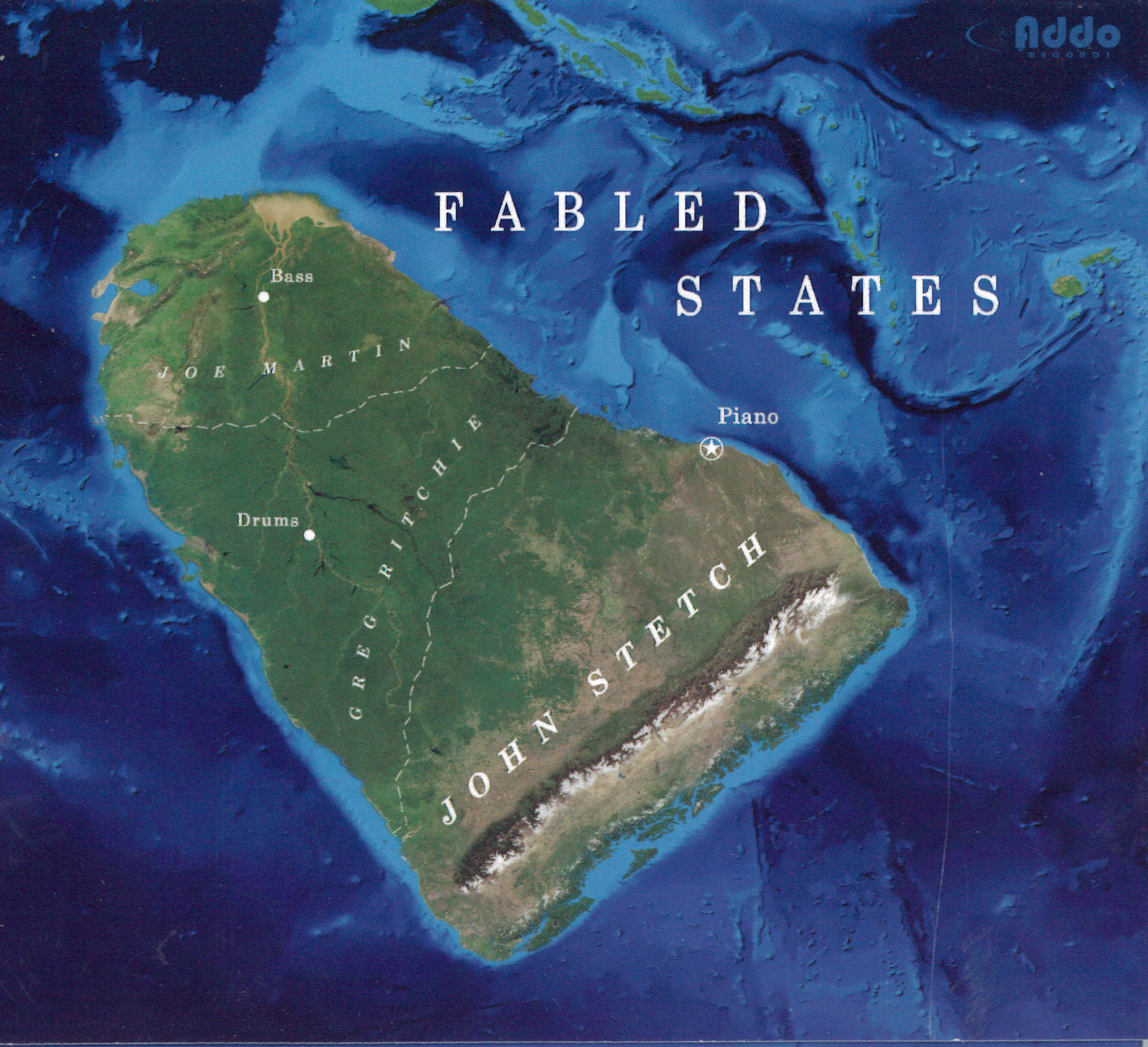
Pianist John Stetch is a seriously gifted musician whose presence unfortunately is rare in the GTA despite an international reputation. Edmonton-born but U.S.-based, his releases invariably are stunningly original and on the dozen tunes of John Stetch Trio - Fabled States (Addo Records AJR010 www.addorecords.com) he demonstrates his fluent skill at embracing a plethora of styles, rich textures and harmonic progressions. His virtuosic playing and arranging is a constant here, with the opening Oscar’s Blue Green Algebra an energetic, sweeping homage to Oscar Peterson with gospel underpinnings. The pulsating 12-minute Black Sea Suite is a brilliant fusion of world music and western jazz, Plutology (based on the indestructible I Got Rhythm) spins way out and What The McHeck conveys bracing hard bop. Fascinating considerations of jazz approaches continue with Do Telepromptu probing bluegrass, Gmitri reacting to a Shostakovich prelude and the title tune riffing on Benny Golson’s Stablemates. Bass Joe Martin and drummer Greg Ritchie contribute fluently to an often breathtaking disc.


Orquestra Atlântica


By Anderson Nascimento
A Orquestra Atlântica é um grupo de 11 músicos que se reuniu em 2012 com o intuito de formar uma espécie de Big Band para executar canções de linguagem jazzística, sobretudo para preencher uma lacuna deixada pelas antigas orquestras do Rio de Janeiro, recriando essa sonoridade com adição de um leve toque moderno.
Fazem parte da banda os músicos Aldivas Ayres (trombone), Danilo Sinna (saxofone), Elias Kibe Borges (saxofone), Geisel Nascimento (trompete), Jessé Sadoc (trompete), Marcelo Martins (saxofone), Sérgio Galvão (saxofone), Wanderson Cunha (trombone), Jorge Helder (baixo) e Glauton Campello (piano), Williams Mello (bateria), Dadá Costa (percusão).
Entre as releituras presentes no disco estão lindas canções como a faixa de abertura “Rio” (Roberto Menescal, Ronaldo Bôscoli), “De Volta ao Rio” (Marcelo Martins) e a deliciosa “Nós” (Johnny Alf). Também surpreendem pela qualidade dos arranjos canções como “Inútil Paisagem” (Tom Jobim, Aloysio de Oliveira), capitaneados pelo trio Marcelo Martins, Jessé Sadoc e Danilo Sinna.
Além de releituras que parecem ter como mote o deslumbrante cenário carioca, a banda também investe em canções próprias como a suingada “Chico” (Danilo Sinna), “De Volta ao Rio” (Marcelo Martins), “Passo o Ponto” (Jorge Helder), “A Viagem” (Marcelo Martins) e “Passeio Público” (Jessé Sadoc).
Compõem o disco também as participações especiais de Vittor Santos, Nelson Faria, além da a luxuosa e certeira participação de Mauro Senise em “Preciso Aprender a Ser Só” (Marcos Valle, Paulo Cesar Valle).
O disco é certamente uma boa pedida para quem curte música instrumental, sobretudo o Jazz.


Joey Alexander
Joey.Monk.Live!


By Dan Bilawsky
The late Thelonious Monk is most certainly the toast of the town these days. With the High Priest of Bop's centennial upon us, he's being saluted from all corners of the jazz world. Pianist John Beasley is leading the charge on the big band front with his MONK'estra, trumpeter Wadada Leo Smith is reflecting on the great pianist-composer all by his lonesome, and New York's Jazz Standard has given over Monk's birth month to a broad swath of tributes to mark this grand occasion. So is it any wonder that the positively precocious Joey Alexander would want to get in on the action?
The arrival of Joey. Monk. Live!, an album that documents Alexander's stand with his trio at Jazz at Lincoln Center's Appel Room in June of 2017, was something of a slap in the face to marketing norms. Rather than provide advanced notice of its approach to sweeten interest and rack up a string of preview pieces and pull quotes for advertisements, it came out of nowhere, a welcome surprise in a world short on such things. What's all the more pleasing is how the prodigious pianist addresses these oft-covered works: Alexander playfully dissects and reassembles Monk's classics, honoring one of our most iconic figures without letting legacy eclipse the present day. One need only hear the first two minutes of the "Round Midnight" opener—one of two solo tracks on the program, along with back-end bookend "Pannonica"—to realize that this is Monk on Alexander's terms. He paves the way toward the familiar melody with wide-eyed curiosity, calling to mind the act of people-watching at noon, not stargazing in the night.
The five tracks that rest between Alexander's solo piano efforts highlight his easy and expansive rapport with bassist Scott Colley and drummer Willie Jones III. "Evidence" swings, skulks, and struts, with all three men getting in on the action, and "Ugly Beauty"—anything but ugly, really—dazzles as Colley and Alexander engage in a pointed dance. Then "Rhythm-A-Ning" gives Jones his due, a marvelously morphing "Epistrophy" gives these three musicians a chance to feel out their spaces and throw a few elbows, and "Straight No Chaser" comes with swagger before Alexander takes charge and channels his idol.
Nobody should be questioning this teenager's jazz standing at this point, what with his previous albums, television appearances, and high profile performances making the case for his true arrival. But if anybody still has any lingering doubts, this one should lay them to rest. Plain and simple, Joey Alexander is the genuine article.
Track Listing: 
Round Midnight; Evidence; Ugly Beauty; Rhythm-a-Ning; Epistrophy; Straight No Chaser; Pannonica.
Personnel: 
Joey Alexander: piano; Scott Colley: bass; Willie Jones III: drums.

Saturday, February 03, 2018

1 Sem 2018 - Part Five

Shelly Berg & David Finck
The Deep


By Dr. Judith Schlesinger
So it happens that pianist Shelly Berg and bassist David Finck were hired by Chesky Records to play on a Livingston Taylor album. After they finished that session, with the high-end audiophile equipment still in place, David Chesky suggested the two stay and make a duo album themselves. And so they did, virtually on the spot.
Since Berg and Finck play so well together, and know a lot of tunes, it was easy to come up with a standards set list in which Miles Davis, Bill Evans and Johnny Mercer are all represented. And because producer Chesky requested some free improvisation, the two created six tracks of spontaneous musical conversation as well, although in these hands each was nearly a song. The result is The Deep, a relaxed interplay between two supremely gifted and experienced pros at the very top of their game.
It would require many pages to list all their accomplishments---the luminaries they've recorded and played with, their innumerable CDs, their nights on the world's great stages. Such resumes are readily available on the Web, leaving The Deep to express all that talent and taste without a word being said. (It's a good thing, too, since there are no liner notes, and the tiny text often disappears into the background color.)
But the music is wonderful. This marvelous album draws the listener in from the top, with the rarely-played and hauntingly beautiful "Fellini's Waltz." The arrangements are often intriguing: for instance, "Solar" goes on for two minutes before the melody appears, then snaps off about thirty seconds later. Other highlights include a revelatory eight-minute "Dindi" with a definitive Finck solo; the winsome "Whistling Away the Dark"; another gem from Jobim, "If You Never Come to Me"; and the lustrous "Why Did I Choose you?" Fans of thoughtful improvisation will treasure the free tracks, which highlight what makes this CD so unusual: the way the players listen and respond to each other, rather than going on a self-involved ego ride, intent on showing off their chops. Of course, it also helps that both men are such expressive and melodic players with a deep respect for each other.
In the final analysis, it's this deep listening and steady empathic connection that elevates The Deep above the pack. To hear Berg and Finck support and inspire each other is a rare treat: the sound of jazz at its best.
Track Listing:
Fellini's Waltz; Solar; For Gunther; Dindi; For John Lewis; Peri's Scope; Why Did I Choose You?; Glacier Love; 3rd Word; Whistling Away the Dark; Lunar; If You Never Come To Me; The Deep; Just You, Just Me
Personnel: 
Shelly Berg: piano; David Finck: bass.


Cyrus Chestnut
There's A Sweet, Sweet Spirit


By Mike Joyce at JazzTimes
When it comes time to record, Cyrus Chestnut has never been inclined to stay in his lane. The widely acclaimed jazz pianist, who once devoted an entire album to Elvis Presley’s legacy, has always had a healthy disregard for genre borders and biases. So it’s not surprising to find him charting his own curious course on There’s a Sweet, Sweet Spirit, with the help of three likeminded collaborators: bassist Buster Williams, drummer Lenny White and vibraphonist Steve Nelson.
Naturally, Nelson, who appears on three of the album’s 10 tracks, plays a crucial role when the band salutes Bobby Hutcherson by performing two compositions penned by the late vibraphonist, “The Littlest One of All” and “Little B’s Poem.” Both the former, with its insinuating pulse and melodic shimmer, and the latter, with its spiraling charms, consistently inspire Nelson and his closely attuned session-mates. “Little B’s Poem” gives way to poetry of another sort: Williams’ tender ballad “Christina,” a showcase here for Chestnut’s spacious, light-fingered lyricism. Of course, any album that also celebrates the music of Chopin, Miles Davis and the Stylistics is going to present Chestnut with myriad opportunities to display his talents in shifting lights and moods. Suffice it to say that “Rhythm-A-Ning” delightfully underscores his deep appreciation of Thelonious Monk’s singular legacy, while “Easy Living” proves a splendid and soulful vehicle for Nelson. The album’s title track is saved for last. One of two solo-piano performances here, it caps the session with a quiet, slowly unfurling “Amen!”


Enrico Pieranunzi/ Mads Vinding/ Alex Riel
Yesterdays


By Euan Dixon
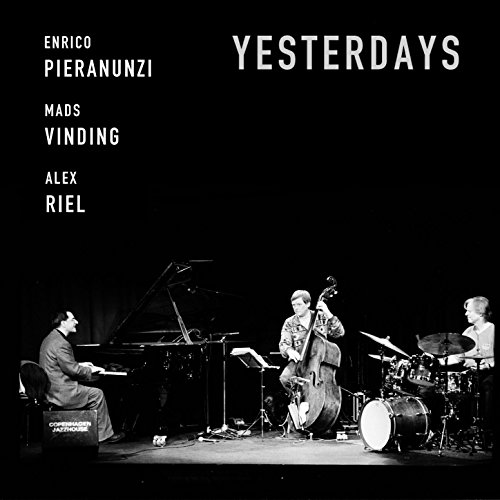
This live date, recorded some 20 years ago but issued now for the first time, gives equal billing to each of the participants but being a piano trio it is de facto Pieranunzi’s session. Like most contemporary piano trio jazz the music has lots of moving parts and the bass and drums contribute significantly to its inner complexity and the intricate melodic and rhythmic construction but the it pianist’s stylistic devices that set the tone hence my decision to give him pre-eminence.
It is said that Pieranunzi’s formative musical influence was Erroll Garner and echoes of this remain in the teasing preludes with which he launches his often febrile and over-wrought forays into the interpretation of the several songbook ballads he explores at great length. Add to this the sentimental romanticism he picked up from his work with Chet Baker in the later stages of the trumpeter’s career, his innate feeling for melodic classicism, a touch of rococo embroidery and you have a pianist who is capable of producing music of great beauty and power.
There are some gems in this set, notably a witty, off the wall version of Fats Waller’s `Jitterbug Waltz` but a tendency to ostentation and climactic pile driving overwhelms the ballads; for instance, `My Funny Valentine` gets a fair drubbing and emerges somewhat bedraggled and disfigured from the process as does the opening `Yesterdays`. Live dates do of course have the potential to dispose performers to overexcitement and the intervening years have shown Pieranunzi is still capable of grandstanding tendencies as the 2014 live date, also from the Jazz House, revealed in another somewhat prolix treatment of the unfortunate `Valentine`.
Notwithstanding my reservations I remain a committed enthusiast of Pieranunzi’s subsequent work, particularly the wonderful CamJazz recordings that remain as examples of a high point in the art of the piano trio equalling in technique and expressiveness anything by Jarrett and Mehldau and this disc, though slightly flawed by the aforementioned mannerisms, will happily take its place on my shelf alongside my prized copies of his superb Morricone interpretations.


Antonio Adolfo
Hybrido - From Rio To Wayne Shorter


By Roger Farbey

With well over thirty albums to his name, Brazilian composer and pianist Antonio Adolfohas now conjured up a really attractive paean to the master saxophonist and composer Wayne Shorter. The selection of tracks is excellent because it clearly demonstrates just how key a figure Shorter is to jazz. It doesn't replicate the 1988 Blue Note collection The Best Of Wayne Shorter but does include three numbers from that album.
"Deluge" offers a warm ensemble-led invocation of this enticing track taken from Ju Ju. Then there's a relaxed version of Shorter's classic "Footprints," embellished by Zé Renato's wordless vocals. "Prince of Darkness" from Miles Davis's 1967 album Sorcerer is lusciously percussion-rich (including a deep tabla-like Baião percussion introduction). "Black Nile" from 1964's Night Dreamer is a satisfying interpretation of the original with bright piano from Adolfo.
The elegance of "Beauty And The Beast" is encapsulated in its mixture of bossa and samba (Adolfo refers to it as SamBossa) and is one of two tracks taken from Shorter's "Native Dancer" album which he recorded with Milton Nascimento. The title track from Speak No Evil is a model of stately modality with its majestic and memorable theme and rich tenor solo from Marcelo Martins whilst the elegant "Ana Maria," again from Native Dancer, sports some nimble guitar from Lula Galvão.
To conclude the set, there's a lone self-penned number by Adolfo, "Afosamba," a perfect example of his first-rate talent as a composer. The arrangements throughout are strong and for those familiar with all the Shorter tracks it affords them a new and vibrant dimension. For those unfamiliar with the numbers, the album will serve as an excellent and enticing primer, prior to sampling the original source material. It's also a timely reminder of just how important Shorter is in terms of his illustrious back catalogue of compositions.
Track Listing:
Deluge; Footprints; Beauty and the Beast; Prince of Darkness; Black Nile; Speak No Evil; E.S.P.; Ana Maria; Afosamba.
Personnel:
Antonio Adolfo: piano; Lula Galvao: electric guitar; Jorge Helder: bass; Rafael Barata: drums; Andre Siqueira: percussion; Jesse Sadoc: trumpet; Marcelo Martins: tenor and soprano saxophones, flute; Serginho Trombone: trombone; Ze Renato: vocals (2); Claudio Spiewak: acoustic guitar (3).

Sunday, January 28, 2018

1 Sem 2018 - Part Four

Escalandrum
Vertigo


By Fernando Rios
Integrado por ocho composiciones nuevas y propias, tres del saxofonista Damián Fogiel y el resto del pianista Nicolás Guerschberg, este séptimo disco de Escalandrum, y primero en vivo en toda su carrera, renueva su enorme presencia en el escenario local, luego del excelente “Piazzolla plays Piazzolla”, con el que en 2012 ganaron el Gardel de Oro (máxima distinción de la industria musical argentina) y el Gardel al Mejor Album de Jazz.
Para Nicolás Guerschberg “Vertigo” es todo un desafío. “Después de revisitar la obra de Astor Piazzolla, retomar nuestra senda con composiciones propias no era fácil, pero salimos muy enriquecidos de la experiencia, con un lenguaje urbano y contemporáneo aplicado en la improvisación y una amalgama del grupo con todos estos años de experiencias juntos.
Para Mariano Sívori este “Vertigo” tiene que ver con el viejo anhelo del grupo de grabar en vivo en un club de jazz, pero también, dice, “es una apuesta a seguir proponiendo nuevas variaciones sobre nuestro sonido, luego del homenaje y riesgo de ‘Piazzolla plays Piazzolla”.Aquí además Guerschberg asume el doble desafio de la autoría en cinco de los temas “Como compositor siempre trato de dar mi mayor esfuerzo por lograr la mejor calidad posible en las obras y ‘Vértigo’, asegura, es el reflejo de todo esto con el plus de ser nuestro primer cd totalmente en vivo”.
Martín Pantyner también adhiere al concepto. Este disco cierra un año idílico para el grupo, en el que hicimos más de 60 conciertos por Argentina y por el mundo y ganamos el Gardel por el mejor disco de jazz y el Gardel de Oro. Como dirían en el barrio, el sueño del pibe”.
También desde doble sitial de saxofonista y autor, Damián Fogiel pronostica que el nuevo disco de Escalandrum será un punto de inflexión en la rica historia del grupo.
Este disco “sintetiza la búsqueda del sonido propio, sobre el cual venimos trabajando hace muchos años y refleja el crecimiento individual y colectivo que logramos tras nuestra intensa revisión de la música de Astor Piazzolla”, reseña Fogiel.
Escalandrum lleva 14 años como grupo con su formación original y han editado siete discos. Han actuado en más de 40 países y cosechado numerosos premios. En 2002 fueron distinguidos por la Fundación Konex como una de las cien figuras más importantes de la cultura argentina. En 2011 el grupo argentino fue nominado a los Grammy Latinos compartiendo terna nada menos que con Chick Corea y Al Di Meola.
Escalandrum:
Daniel “Pipi” Piazzolla, batería; Nicolás Guerschberg, piano; Mariano Sívori, en contrabajo.
Gustavo Musso, en saxo alto; Damián Fogiel, saxo tenor; 
Martín Pantyrer, clarinete bajo y saxo barítono.


Amaro Freitas
Sangue Negro


By Tratore
Sangue Negro, disco de estreia do pianista Amaro Freitas, produzido pelo gaúcho Rafael Vernet, acompanhado pelo baixista Jean Elton e pelo baterista Hugo Medeiros, com participações do saxofonista Eliudo Souza e do trompetista Fabinho Costa. O disco reinaugura uma linhagem de jazz autoral. Minimalismo, Bebop, Afrojazz, Samba, Frevo e Balada, estas são algumas das sonoridades que permeiam Sangue Negro.


Jerónimo Carmona
Lament


By Jakob Baekgaard

Jazz listeners familiar with the characteristic sound and aesthetic of Argentinian label Rivorecords will know the deep, swinging sound of bassist Jerónimo Carmona, who has been a strong presence on many releases on the label, including albums by pianists Ernesto Jodos and Paula Shocron. With Lament, Carmona gets the chance to step into the spotlight himself.
Lament is conceived as a duo album, but it isn't a duo album in the traditional sense. Instead, the album consists of a series of duets between the bassist and the musical voices of saxophonist Sebastián Loiacono, flugelhorn-player Mariano Loiacono, pianist Guillermo Romero and guitarist Marcelo Gutfraind.
Romero plays with the mournful sensitivity of pianist Bill Evans on "Lament" and the crisp chords of guitarist Gutfraind add an extra touch of sophistication on "Indian Summer" while Mariano Loiacono's warm flugelhorn swings fluorescently on a relaxed interpretation of Dizzy Gillespie's "Groovin' High" where the bassist's walking bass patterns and precise punctuations on the theme is a joy to behold.
Throughout the album, Carmona underlines why he is in demand as a sideman. It is primarily his sense of space that makes him such a good bassist. He makes the grooves grow organically out of the air.
The album ends with a strong solo interpretation of "I Fall in Love Too Easily" and indeed it is also easy to fall in love with the music on Lament.
Track Listing:
If I Should Lose You; Milestones; Groovin' High; You're My Everything; Lament; The Way You Look Tonight; Blue and Sentimental; Indian Summer; In Your Own Sweet way; I Fall in Love Too Easily.
Personnel:
Jerónimo Carmona: bass; Sebastian Loiacono: tenor saxophone; Mariano Loiacono; flugelhorn; Guillermo Romero: piano; Marcelo Gutfraind: electric guitar.


Fred Hersch
Open Book


By Dan McClenaghan
In the aftermath of his coma and very possible demise back in 2008, pianist Fred Herschblossomed from a status as a first rate jazz pianist into the rarified air of one of the handful of top practitioners of that art form. A series of post-illness albums, from Whirl(2010), to Alone At The Vanguard (2011) to Floating (2014), Solo (2015) and Sunday Night At the Vanguard (2016), all on Palmetto Records, are all solo and trio outings that reveal a heightened artistic clarity and unabashed vulnerability, alongside a deeper emotive approach, this in comparison to his uniformly excellent, but perhaps more cerebral output before his struggle with serious health problems.
Now we have Open Book, Hersch's eleventh solo piano outing.
Intimacy is a hallmark of Hersch's music, and "The Orb," the set's opener, taken from Hersch's autobiographical music/theater piece, My Coma Dreams, is the tenderest, loveliest of love songs, a look at a paramour through, with justification it seems, rose-colored glasses. "Whisper Not," Benny Golson's classic tune, takes things into a turn of the playful, via crisp, prancing piano notes singing over a serious and assertive left hand. Hersch visits an old friend, Antonio Carlo Jobim, with "Zingaro," a sublime reverie.
The centerpiece, "Through The Forest," is something unheard of on record by Hersch. It's a nineteen minutes-plus, stream-of-consciousness, improvised in-the-moment masterpiece. An ebb and flow dreamscape of sorts—the most fragile of delicacies and the most sacred and quiet moments slipped in beside emphatic percussive energy—music as enchanting as anything the pianist has ever created.
Then in walks Monk. Hersch includes a Thelonious Monk tune in most every set, most every recording. "Eronel" is a spritely interpretation by Hersch, who immerses himself the challenging music deeper than most anybody, peppering the stride-side with sparkling, water-splashing-off-the-rocks sounds, rolling into jagged eddies, leading into the closer, Billy Joel's "And So It Goes," solemn, simple, honest, beautiful.
Honesty—another hallmark of Hersch's art.
This is a recording that makes it seem as though Fred Hersch is the finest jazz pianist in the world. That's an impossible assertion, of course. There are a dozen, maybe more pianists who have achieved this level artistry. But for now, with Open Book, he can wear that title.
Track Listing:
The Orb; Whisper Not; Zingaro; Through the Forest; Plainsong; Eronel; And So It Goes.
Personnel:
Fred Hersch: piano