Estou tentando estimular os amantes do JAZZ, a ouvirem novos cd's e relembrar os esquecidos pelo tempo. A busca de um Top 10, tem a intenção de fazer o ouvinte da musica, a avaliar algumas certezas que temos e certos conceitos pré-estabelecidos. Quando fiz a minha lista, fiquei com a certeza que muitos dos baixistas que gosto, gravam pouco ( um grande exemplo: Eddie Gomez ), e outros que não percebi o quanto eram virtuosi ( exemplo: Hein Van de Geyn ). Então amigos, largem de preguiça, e escutem os cd's que vocês mais gostam, aqueles que faz tempo que não ouvem.
Vamos manter o JAZZ vivo e pulsante !!!!!
- Top 10 Baixistas de Jazz, vivos até esta data ( Alive ), em referência a enquete postada, todos reviews "All About Jazz":
Marc Johnson
Born: October 21, 1953
As a virtuoso bassist, versatile composer, and acclaimed bandleader, Marc Johnson has been a major innovator on the jazz scene for the past two decades.
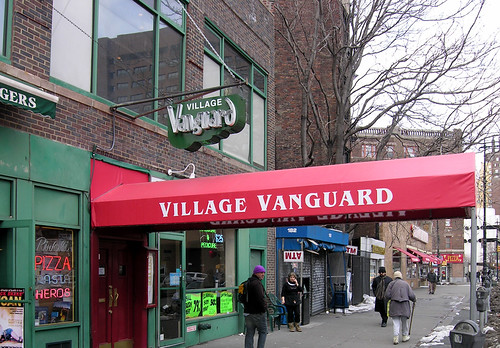
Born in Nebraska in 1953, Johnson took up bass at the age of 16, having already studied piano and cello. While completing his formal education in the celebrated music program at the University of North Texas, at age19, Johnson began performing professionally with the Fort Worth Symphony. In 1977, he was on the road with the Woody Herman Band. A stop with Herman in New York City marked a major turning point for Johnson, where he was invited to sit in with Bill Evans at the Village Vanguard. In 1978, he joined Evans' trio, remaining with him until the pianist's death two years later. Johnson appears on numerous albums recorded with Evans, including the Grammy-winning We Will Meet Again and released in 1997, a six-CD box set of live recordings, Turn Out the Stars, weaving his distinctively warm tones and melodic lines into the complex harmonies of the Trio. “I was still a very young player when I was with Bill,” Johnson says, “but by playing with him night after night I matured a lot.
My confidence grew, my ability to concentrate heightened, my sense of timing improved, and my knowledge of harmony expanded.” Over the past 20 years, Johnson has performed on more than 100 albums. Many have been with pianists, including Eliane Elias, Lyle Mays, and Enrico Pieranunzi, although Johnson has also recorded with saxophonists Stan Getz, Joe Lovano, and Michael Brecker, drummers Peter Erskine and Paul Motian, and Jack DeJohnette, vibist Gary Burton, and bandoneon master Dino Saluzzi. And many of his most notable recordings have been with guitarists. “In 1984, when I first had an opportunity to do something on my own,” Johnson explains, “I wanted to do something completely different from my previous association with Bill Evans, so as not to try to recreate the experience I had with that trio. When I was a kid, before I knew I was going to be a musician, I listened to all kinds of music, from the Beatles to Bob Dylan, Beethoven to Ravel, the Allman Brothers to Jimi Hendrix; I had rather eclectic taste. By the time I was seventeen, though, I was heavily into jazz, mainly Bill Evans and Miles Davis. Writing for a two guitar format brings together my earliest musical influences, my musical 'first loves'.” In addition to his long membership in guitarist John Abercrombie's trio, Johnson formed two guitar-oriented bands that rose to prominence in the late 1980s and early 1990s.
Bass Desires, with guitarists Bill Frisell and John Scofield, recorded two albums for ECM--a self-titled debut in 1986 and Second Sight in 1987; cut two trio albums for JMT--a self-titled disc in 1993 called Right Brain Patrol, initially with Ben Monder on guitar, later in 1995 with Wolfgang Muthspiel on guitar, an album titled Magic Labyrinth, both featuring Arto Tuncboyacian on percussion. Johnson also recorded an album of four duets, Two By Four (Emarcy) in 1991. On The Sound of Summer Running (on Verve records), his sixth recording as a leader, Johnson returned to the two-guitarist alignment inaugurated in Bass Desires. “I wanted to continue that idea,” Johnson explains. “Bill Frisell and I had played together, but neither of us had played with Pat Metheny, so this was a first. Joey Baron was a likely choice as the drummer because of his long association with Frisell and he's one of my favorite musicians.”
Marc currently divides his concert schedule performing with the Eliane Elias Trio, Charles Lloyd Quartet, Lee Konitz Trio, and Paul Motian Trio.
-----------------------------------------------------
Steve Swallow
Born: October 4, 1940
Steve Swallow was born in New York City in 1940, and spent his childhood in Fair Lawn, New Jersey. Before turning to the acoustic bass at age 14, he studied piano (with Howard Kasschau, who also taught Nelson Riddle) and trumpet. His otherwise miserable adolescence was brightened by his discovery of jazz. He took many of his first stabs at improvisation with Ian Underwood (who subsequently became a Mother Of Invention and an L.A. studio ace), with whom he attended a swank New England private school.
During his years at Yale University he studied composition with Donald Martino, and played dixieland with many of the greats, including Pee Wee Russell, Buck Clayton and Vic Dickenson. In 1960 he met Paul and Carla Bley, left Yale in a hurry, moved to New York City, and began to tour and record with Paul Bley, The Jimmy Giuffre Trio and George Russell’s sextet, which featured Eric Dolphy and Thad Jones. He also performed in the early ‘60s with Joao Gilberto, Sheila Jordan, and bands led by Benny Goodman, Marian McPartland, Chico Hamilton, Al Cohn and Zoot Sims, Clark Terry and Bob Brookmeyer, and Chick Corea.
In 1964 he joined The Art Farmer Quartet featuring Jim Hall, and began writing music. Many of his songs have been recorded by prominent jazz artists, including Bill Evans, Chick Corea, Stan Getz, Gary Burton, Art Farmer, Phil Woods, Jack DeJohnette, Steve Kuhn, Lyle Mays, Jim Hall and Pat Metheny. And he was recently sampled by A Tribe Called Quest.
He toured from late 1965 through 1967 with The Stan Getz Quartet, which also included Gary Burton (replaced in 1967 by Chick Corea) and Roy Haynes. In 1968 he left Getz to join Gary Burton’s quartet, an association he maintained, with occasional interruption, for 20 years. He has performed on more than 20 of Burton’s recordings, the most recent being Six Pack, released in 1992.
In 1970 he switched from acoustic to electric bass and moved to Bolinas, California, where he wrote music for Hotel Hello, a duet album for ECM with Gary Burton. Returning to the East Coast in 1974, he taught for two long years at the Berklee College of Music. In 1976 he was awarded a National Endowment For The Arts grant to set poems by Robert Creeley to music, which resulted in another ECM album, Home. He performed with such diverse soloists as Dizzy Gillespie, Michael Brecker, George Benson and Herbie Hancock, and recorded with Stan Getz (on an album featuring Joao Gilberto), Bob Moses, Steve Lacy, Michael Mantler and Kip Hanrahan. He also played on recordings produced by Hal Willner, on tracks featuring, among others, Carla Bley, Dr. John and James Taylor.
In 1978 he joined the Carla Bley Band. He continues to perform and record with her extensively, in various contexts.
He toured and recorded often with John Scofield from 1980 to 1984, first in trio with drummer Adam Nussbaum and then in duet. He has since toured often with Scofield, and has also produced many of his recordings.
He has also co-produced several albums with Carla Bley, including Night-GIo (1985), which she wrote to feature him, and Carla (1987), a collection of his songs featuring her. In 1978 he also produced the first of four albums for the British saxophonist Andy Sheppard. In the ensuing years he produced recordings for Karen Mantler, Lew Soloff and Niels-Henning Orsted Pedersen, and recorded and/or toured with, among others, Joe Lovano, Motohiko Hino, Ernie Watts, Michael Gibbs, Rabih Abou-Khalil, Paul Bley, Henri Texier, Michel Portal and Allen Ginsberg.
Since 1988 he and Carla Bley have performed duet concerts in Europe, the United States, South America and Japan. Duets, an album of their songs arranged for piano and bass, was released in 1988, and a second recording, Go Together, in 1993.
In December of 1989 he reunited, after 27 years, with Jimmy Giuffre and Paul Bley to record two discs for Owl Records entitled The Life Of A Trio. This trio toured frequently until Spring of 1995, and recorded for Owl and Soul Note Records.
In 1991 he composed and produced Swallow, a recording featuring his five-string bass and several of his long-time associates, including Gary Burton, John Scofield and Steve Kuhn.
He recorded often in 1993. John Scofield and Pat Metheny’s I Can See Your House From Here, on which he played with drummer Bill Stewart, was released on Blue Note Records; this quartet toured in the summer of 1994. Real Book, his third XtraWATT disc, was recorded in December of 1993 and released in 1994; its cast included Tom Harrell, Joe Lovano, Mulgrew Miller and Jack DeJohnette.
In Spring of 1994 he was featured at the London Jazz Festival in a concert of his compositions with lyrics written and sung by Norma Winstone. 1994 also contained concert appearances in Japan with Steve Kuhn and in Europe with The Very Big Carla Bley Band, Jimmy Giuffre and Paul Bley, The Paul Motian Electric BeBop Band, Niels-Henning Orsted Pedersen, and Carla Bley and Andy Sheppard. A live recording of this trio, Songs With Legs, was released on WATT in early 1995, at which time they again toured Europe. He also recorded in Spring of 1995 with Steve Kuhn, Michael Franks, John Taylor, Pierre Favre and Julian Arguelles. In July he and Carla Bley performed duets in Brazil, and in the fall returned to Europe for a lengthy tour.
In Spring of 1996 he found himself again touring Europe, first with Bley and Sheppard and then with John Scofield and Bill Stewart. He subsequently co-produced and played on Scofield’s first album for Verve Records, Quiet. He also co-produced and played on The Carla Bley Big Band Goes To Church, recorded live at Umbria Jazz in Perugia, Italy, and toured and recorded with Paul Motian.
In November of ‘96 he introduced The Steve Swallow Quintet, with Chris Potter, Ryan Kisor (subsequently replaced by Barry Ries), Mick Goodrick and Adam Nussbaum, to audiences in Europe, and recorded with this group after its tour. The resulting album, Deconstructed, features his compositions based on classic Tin Pan Alley song structures; it was released in early 1997.
He toured relentlessly in 1997 with Trio 2000 (with Paul Motian and Chris Potter), Carla Bley, John Scofield and several others, and recorded with several diverse artists, including Henri Texier (with Lee Konitz and Bob Brookmeyer), Glen Moore, Ettore Fioravanti and Michel Portal. He also produced the first of two recordings by French drummer/composer Christophe Marguet.
In the Spring of 1998 he toured and recorded with Lee Konitz and Paul Motian, and toured with Brazilian guitarist Paulo Bellinati. He also participated with Carla Bley in the Copenhagen Jazzvisits program, and was nominated for the 1999 Danish Jazzpar. In April he directed and performed his music for big band with the Harvard University Jazz Band, and in June recorded with pianist Christian Jacob. In July he participated in a tour presenting the concert version of Carla Bley’s Escalator Over The Hill, and toured in trio with Lee Konitz and Paul Bley. He toured in the Fall with Paul Motian’s Electric Bebop Band, and with John Scofield and Bill Stewart. He also toured in duo with Carla Bley, which resulted in a third Duets CD entitled Are We There Yet?
In March and April of 1999 he toured again with his quintet. Reviewing the band’s performance at Ronnie Scott’s Club in the Times of London, Chris Parker wrote “...this was as near a perfect display of small-group jazz - robust yet exquisitely poised, cogent but surprisingly delicate - as has been heard in London in recent years.” An XtraWATT CD entitled Always Pack Your Uniform On Top, recorded live at Ronnie’s, was released shortly thereafter.
Following a week in Tokyo with Carla Bley’s 4X4, he toured with Bobby Previte’s Bump The Rennaisance (which also featured Ray Anderson and Wayne Horvitz), and then returned to Europe for the July festival circuit with 4X4. In August he produced Karen Mantler’s Pet Project, his third collaboration with her. He continued a madcap year of touring in the Fall with John Scofield and Bill Stewart, Toots Thielemans with Kenny Werner, Norma Winstone with John Taylor and Ralph Towner, and finally with Carla Bley and Andy Sheppard.
2000 proceeded apace. After a return to Tokyo with Carla Bley, this time performing Fancy Chamber Music, and to Sao Paulo performing Duets, he traveled Europe again with Paulo Bellinati. European festival-goers found him with Bobby Previte in July, and with John Scofield in August. In September he reunited with Lee Konitz and Paul Bley for appearances in the USA, and then returned to Europe for further tours with Bobby Previte and Carla Bley.
2001 promises further adventures. He will tour again with Carla Bley and Andy Sheppard in the Spring and with John Scofield and Paulo Bellinati in the Fall. In November he will convene his own trio, Damaged In Transit, which includes Chris Potter and Adam Nussbaum. The trio will record following a European tour; this recording will be available on XtraWATT/ECM in the Spring of 2002.
He has placed first (electric bass) in the Downbeat International Critics Poll since 1983, and in the Downbeat Readers Poll since 1985. He has also won the Jazz Times poll (electric bass) for the past few years. He lives now in contented isolation with Carla Bley, in the mountains of upstate New York.
------------------------------------------------------------
Eddie Gomez
Born: November 4, 1944Eddie“ Gomez (born October 4, 1944) is a jazz bassist. He was born in Santurce, Puerto Rico; he emigrated with his family at a young age to the United States and grew up in New York. He started on double bass in the New York City school system at the age of eleven and at age thirteen went to the New York City High School of Music and Art. He went on to study with Fred Zimmerman. He played in the Marshall Brown-led Newport Festival Youth Band from 1959 to 1961, and was later educated at Juilliard.
His impressive resumé includes performances with jazz giants such as Miles Davis, Dizzy Gillespie, Bill Evans, Gerry Mulligan, Benny Goodman, Buck Clayton, Marian McPartland, Paul Bley, Wayne Shorter, Jeremy Steig, Herbie Hancock, Tony Williams, Chick Corea and Carli Muñoz. Time Magazine lauded: “Eddie Gómez has the world on his strings”. Eddie Gómez would spend a total of eleven years with Bill Evans Trio which included performances throughout the United States, Europe, and the Orient, as well as dozens of recordings. Two of the Trio's recordings won Grammy awards. In addition, he was a member of the Manhattan Jazz Quintet.
His career mainly consists of working as an accompanist, a position suited for his quick reflexes and flexibility.
In addition to working as a studio musician for many famous jazz musicians, he has recorded as a leader for Columbia Records, Projazz and Stretch. Most of his recent recordings as a leader, are co-led by jazz pianist Mark Kramer.
------------------------------------------------------------
Gary Peacock
Born: May 12, 1935Bassist Gary Peacock has played a major role in the development of avant garde jazz. He has worked with the likes of Miles Davis, Bill Evans, Albert Ayler, Don Cherry, Barney Kessel, Don Ellis, Terry Gibbs, Shorty Rogers, the Paul Bley Trio, Jimmy Giuffre, Roland Kirk and George Russell, among others. His recorded output is enormous -- ECM Records alone lists thirty CDs on which he is featured. He has collaborated frequently with Ralph Towner in duet format, and since the late '70s has played and recorded in a world-renowned trio with Keith Jarrett and Jack DeJohnette.
------------------------------------------------------
------------------------------------------------------
Hein Van de Geyn
born 18 July 1956
Is a jazz bassist, composer and band leader from the Netherlands. He is a critically acclaimed artist and performer, appearing on many jazz records, both as a sideman and solo. Van de Geyn won a North Sea Jazz award in 1998. He was also voted "Best European Acoustic Bass Player" in this year by a referendum by the Belgian radio stations RTBF and VRT. Van de Geyn is also an active teacher of bass and as well as music in general, and he is head of bass at the Royal Conservatory of The Hague.
Van de Geyn has played as a sideman for several well-known jazz artists, including Jean "Toots" Thielemans, Chet Baker, Lee Konitz, Tal Farlow and Dee Dee Bridgewater. He also has his own group, Baseline.
Van de Geyn has played as a sideman for several well-known jazz artists, including Jean "Toots" Thielemans, Chet Baker, Lee Konitz, Tal Farlow and Dee Dee Bridgewater. He also has his own group, Baseline.
-----------------------------------------------------------
George Mraz
Born: September 9, 1944
A native of the Czech Republic, George Mraz was born in 1944. He began his musical studies on violin at age seven and started playing jazz in high school on alto saxophone. He attended the Prague Conservatory in 1961 studying bass violin and graduating in 1966.
It is likely that his early exposure to these melodic instruments contributed to his mature lyric gifts as a bassist, an instrument he came to rather late in the game. “I was playing some weekend big band jobs,” Mraz recalls, “and this bass player wasn't very good. Either that or he was a genius,” he laughs, “because he seemed to always play the wrong notes. Every now and then you'd think he must play some of the right notes, just by accident. But, no. So I picked up the bass on a break and tried to find the notes. I thought, 'It's not that difficult.' So I got a bass and began playing a little bit. Next thing I knew, I was in the Prague Conservatory.”
During that time he was performing with the top jazz groups in Prague. After finishing his studies George went to Munich and played clubs and concerts throughout Germany and Middle Europe with Benny Bailey, Carmel Jones, Leo Wright, Mal Waldron, Hampton Hawes, Jan Hammer and others.
Yet at the same time Mraz was deeply moved by the Voice Of America radio broadcasts of Willis Conover, who was his connection to a vast new world of possibilities across the ocean. “The first jazz I ever heard was actually Louis Armstrong. They had an hour of his music on Sundays in between all these light operettas and stuff they play in Prague. Then the strange voice of Satchmo singing was quite a shock. 'How can he get away with a voice like that?' I thought. But by the time the hour was over I decided I liked it better than anything I heard that day, so I started looking into jazz.
“The Voice Of America came on midnight for an hour or so, and my listening equipment wasn't so great, and it was hard to make out the bass. So I was listening to all the instruments, and how it all worked together, rather than just focusing on the bass. I've really been influenced by everything I've heard, but of course I paid special attention to Ray Brown, Scott LaFaro, Paul Chambers, and Ron Carter.” Mraz just naturally gravitated towards the music, and became a seasoned veteran of the clubs where he could perform the music that consumed his imagination almost every night. “By some miracle I finished with school, and I began working in Munich with people like Benny Bailey and Mal Waldron. Meanwhile, I'd received a scholarship to Berklee, and when the Soviet tanks entered Prague, it seemed like the ideal time to use it.”
In 1968 George Mraz came to Boston on a scholarship to the Berklee School of Music and played at Lennie's on the Turnpike and the Jazz Workshop with such artists as Clark Terry, Herbie Hancock, Joe Williams and Carmen McRae.
In the winter of 1969 George got a call from Dizzy Gillespie to join his group in New York. After a few weeks with Dizzy, George went on the road with Oscar Peterson for about two years. After that he worked with the Thad Jones/Mel Lewis Orchestra for the next six years. In the late seventies George worked with Stan Getz, New York Jazz Quartet, Zoot Sims, Bill Evans, John Abercrombie and for over ten years with Tommy Flanagan.
George Mraz has a profound gift for the acoustic bass. And while this musician's musician has been a stalwart presence on the modern jazz scene practically from the moment he first landed on these shores from his native Czechoslovakia, in the eyes of the general public his work is still somewhat undervalued. Perhaps because the self-effacing qualities he brings to the bandstand mirror the quiet character of the man stage left-onstage or off, he eschews the spotlight.
With his customary selflessness, Mraz allows as how he never demurred from approaching projects as a leader. “I always wanted to do some kind of projects on my own,” Mraz insists, “I just never got around to it.” And given the who's who of jazz masters who've made him their first call bassist for three decades (including the Thad Jones/Mel Lewis Orchestra, Dizzy Gillespie, Carmen McRae, Clark Terry, Stan Getz, Slide Hampton, Elvin Jones, Joe Henderson, and Joe Lovano among many others), that's hardly surprising. “After I left Tommy Flanagan in 1992 I had a lot more time to do things,” George smiles, adding that “I wouldn't mind doing a few more.”
After leaving Flanagan, George went on to work with Joe Henderson, Hank Jones, Grand Slam (Jim Hall, Joe Lovano, Lewis Nash), DIM (Directions In Music with Herbie Hancock, Michael Brecker, Roy Hargrove), McCoy Tyner, Joe Lovano and Hank Jones Quartet, Manhattan Trinity.
He also has lead his own quartet with pianist Richie Beirach, drummer Billy Hart, and the lyrically riveting tenor man Rich Perry. (The quartet may be heard on Mraz's Milestone debut Jazz; Beirach and Hart are on the trio date My Foolish Heart, and Perry on Bottom Lines, the 1997 Mraz session featuring favorite works by fellow bassists Jaco Pastorius, Ron Carter, Marcus Miller, Charles Mingus, Buster Williams, and Steve Swallow, plus George himself.)
“George always plays the exact right note you want to hear,” says Beirach, “and he plays the bass as though he invented it.” But Mraz does so without drawing attention to himself, and while he is hardly an invisible presence, his sense of what's appropriate is so sure, he can make himself positively translucent. “Even when he's doing nothing more than walking four to the bar, his choice of notes is so perfect, it's like he's telling a little story in back of the soloist,” enthuses his producer Todd Barkan.
George Mraz has recorded with Oscar Peterson, Tommy Flanagan, Roland Hanna, Hank Jones, Charles Mingus, Thad Jones/Mel Lewis Orchestra, NYJQ, Lionel Hampton, Woody Herman, Toshiko Akioshi, Kenny Drew, Barry Harris, Tete Montoliu, Jimmy Rowles, Larry Willis, Richie Beirach, McCoy Tyner, Adam Makowicz, Jimmy Smith, Stan Getz, Zoot Sims, Pepper Adams, Art Pepper, Warne Marshe, Phil Woods, Grover Washington Jr., Archie Shepp, Dave Leibman, Joe Lovano, Jim Hall, John Abercrombie, Kenny Burrell, Larry Coryell, Dizzy Gillespie, Chet Baker, Art Farmer, Jon Faddis, Jimmy Knepper, Bob Brookmeyer, Jon Hendricks, Carmen McRae, Helen Merrill, Elvin Jones and many others.
His albums as a leader include: “Catching Up” on ALFA Records and “Jazz”, “My Foolish Heart” , “Bottom Lines”, “Duke’s Place” and “Morava”, all on Milestone Records.
Mraz's latest release is Moravian Gems, a collection of jagged rhythms, intriguing harmonies and colorful melodies developing out of the folk tradition of Moravá to merge with the drive, sophistication and inventiveness of jazz. Mraz spent formative portions of his childhood in his father’s native region, known in the west as Moravia. His memories of Moravá’s lush fields, the liveliness and warmth of its people, the songs they sang in their piquant dialect, thrive in Mraz’s performances here. Pianist Emil Viklicky? composed much of the music and arranged all but one of the pieces. The other partners are drummer Laco Tropp, who has long been featured in Viklicky’s trio, and the astonishingly gifted singer Iva Bittová.
Mraz and Viklicky met at a jazz festival in Yugoslavia in 1976, Mraz had moved to New York, become one of the most sought-after bassists in the world and was playing in Stan Getz’s quartet. Viklicky had returned from the Berklee School of Music in Boston and was establishing himself in Czech jazz as a member of Karel Velebny’s SHQ ensemble. Mraz played in Velebny’s band during his student years at the Prague Conservatory. More than two decades after their initial meeting, visiting Prague in 1997, Mraz suggested to Emil that they consider a project melding traditional Moravian music with jazz. This CD is an outgrowth of their collaboration.
The two considered the range of Moravian music, the lyricism and emotion it carries, and its potential to provide settings for improvisation.
Paul Vlcek, the album’s producer, pointed out that the strongly modal character of Moravian songs, especially those from Southern Moravia, has been preserved for centuries owing in part to its geographic isolation but “more so due to its folks’ love of singing and handing their songs down the generations in their original form largely unaffected by fashions and trends. Moravians’ instinctive ear for modal harmonies and the ease with which they inhabit them when playing and singing, makes their music spontaneous, even exotic perhaps, and for non-Moravians, often unpredictable.”
To sing the songs, Emil suggested Iva Bittová, a singer of uncommon vocal purity and flexibility, musicianship that encompasses advanced violin skills, and acting ability that has put her in leading film roles. She was born in the northern Moravian town of Bruntál in 1958. Her mother, Ludmila Bittová, was a teacher and singer. Her father, Koloman Bitto, was a multi-instrumentalist who concentrated on double bass.
“I love this material a lot,” Bittová said, “Before the recording, I spent some time going over the music with Emil and with Laco, who still has smiling eyes. But it was my first meeting with George and the first time I had recorded with a jazz band. I heard from George’s double bass the beat of my father Koloman’s heart. He was a great musician who died in 1984, just 53 years old. I was so deeply touched by George’s playing, I decided not to use headphones or monitors, just feel the vibration of the music in that moment, in that room. Such a strong inspiration for my singing.”
George and Iva Bittova will be performing some of the songs from Moravian Gems, as well as some originals, in a duo format in the near future.
--------------------------------------------------------------------
Christian McBride
Born: May 31, 1972
The finest musicians to spring from the world of jazz have clearly had an advantage when it comes to branching into other genres of music. Their mastery of composition, arranging and sight reading coupled with their flair for improvisation and spontaneous creation make them possibly the most seasoned and adaptable musicians in the art. Grammy Award winner Christian McBride, chameleonic virtuoso of the acoustic and electric bass, stands tall at the top of this clique. Beginning in 1989--the beginning of an amazing career in which he still has wider-reaching goals to attain - the Philadelphian has thus far been first-call-requested to accompany literally hundreds of fine artists, ranging in an impressive array from McCoy Tyner and Sting to Kathleen Battle and Diana Krall. However, it is his own recordings--albums that encompass a diverse canon of original compositions and imaginatively arranged covers--that reveal the totality of his musicianship. He currently leads one of the hottest bands in music--the propulsive Christian McBride Band (saxophonist Ron Blake, keyboardist Geoffrey Keezer and drummer Terreon Gully).
The most awe-inspiring thing about Christian McBride is that his prowess as a player is only half of what makes him such a respected, in-demand and mind-bogglingly busy individual. The portrait is completed by a mere mid-thirty-something man who carved out time to speak at former President Clinton’s town hall meeting on “Racism in the Performing Arts.” He holds Artistic Director posts at the Jazz Aspen Snowmass summer program and the Dave Brubeck Institute at the University of the Pacific in Stockton, CA. McBride participated in a Stanford University panel on “Black Performing Arts in Mainstream America.” He’s hosted insightful one-on-one “jazz chats” in Cyberspace on Sonicnet.com. He also scribed the foreword for pianist Jonny King’s book, What Jazz Is (Walker & Co., New York).
2005 witnessed his adding two more prestigious appointments to his resume. In January, he was named co-director of The Jazz Museum in Harlem. While assisting Leonard Garment and Loren Schoenberg in obtaining government grants and the participation of top flight historians/musicians, Christian will be focusing on a longtime concern: exposing jazz to young people.
“To a degree, jazz is non-existent in most major urban communities, which deeply saddens me,” McBride states. “Kids don't understand who our jazz greats were. My contribution towards rectifying this will be getting them to check out free events at the museum by inviting jazz and non-jazz musicians, athletes and speakers that they can relate to.”
While working for the museum in Harlem, McBride will be racking up frequent flyer miles as Creative Chair for the Los Angeles Philharmonic, giving him a degree of influence over commercial and educational programs at the Hollywood Bowl and Disney Hall. The position is being passed on to him by singer Dianne Reeves who held it for the last three years.
Naturally, there will be more collaborations and sideman gigs, which he scrutinizes extra carefully now due to his schedule. Most importantly, he will continue to lead the Christian McBride Band which, together with special guests, has recorded this live album for ropeadope. This album, ever revolutionary as only McBride would have it, was compiled from two nights--two shows apiece--recorded at the Manhattan/East Village hot spot, Tonic. A kinetic concert spirit was captured with both college students and hip hoppers in the crowd, resulting in a perfect atmosphere for experimentation. The first set each night featured just the band, but for the second sets, specials guests blessed the stage; DJ Logic, Scratch (The Roots), guitarists Charlie Hunter and Eric Krasno (Soulive), pianist Jason Moran, trumpeter Rashawn Ross and violinist Jenny Scheinman (Bill Frisell).
Addressing how he manages to effectively keep his hands in so many exciting though daunting projects, Christian states, “I’ve always believed in the art of working with people. I feel you can always compensate for whatever skills you don't have just learning how to get along with--and communicate with - people. Herbie Hancock is a master of that…and Quincy Jones is the ultimate master. The first time I met him, he hugged me then said, ‘I saw Ray Brown a couple of nights ago and told him we would be working together.’ I didn't know he knew who I was--the contractor called me for the gig! Q studies people and figures out what to do with them like a great basketball coach.”
Christian McBride was born on May 31, 1972 in Philadelphia. Electric bass was Christian's first instrument, which he began playing at age 9, followed by acoustic bass two years later. His first mentors on the instrument were his father, Lee Smith (a renowned bassist in Philly) and his great uncle, Howard Cooper (a disciple of the jazz avant-garde). While intensely studying classical music, Christian's love for jazz also blossomed. Upon his 1989 graduation from Philadelphia's fertile High School for the Creative and Performing Arts (C.A.P.A.), Christian was awarded a partial scholarship to attend the world-renowned Juilliard School in New York City to study with the legendary bassist, Homer Mensch. That summer, before making the move to the Big Apple, the already in-demand bassist got his first taste of touring going to Europe with the Philadelphia Youth Orchestra, and traveling the U.S. with the classical jazz fusion group, Free Flight.
McBride never had a chance to settle into his Juilliard studies. Within the first two weeks of the semester, he joined saxophonist Bobby Watson's band, Horizon. He also started working around New York at clubs such as Bradley's and the Village Gate with John Hicks, Kenny Barron, Larry Willis and Gary Bartz. After one year at Juilliard, McBride made a critical decision to leave school to tour with trumpeter Roy Hargrove's first band, electing “experience with as many musicians as possible” as the best teacher. In August of 1990, he landed a coveted position in trumpeter Freddie Hubbard's band until January of 1993.
In 1991, legendary bassist Ray Brown invited the young wunderkind to join him and John Clayton in the trio SuperBass. After being hailed “Hot Jazz Artist” of 1992 by Rolling Stone, Christian continued to prove it as a member of guitarist Pat Metheny's “Special Quartet,” which included drum master Billy Higgins and saxophonist Joshua Redman. While recording and touring with Redman the following year, McBride signed to Verve Records in the summer of 1994, recording his first CD as a leader, Gettin' to It. He also graced the big screen playing bass in director Robert Altman's 1940's period piece, Kansas City (1996).
Christian recorded three more career-shaping albums at Verve: Number Two Express (1996), the soul-jazz fusion project A Family Affair (1998 --featuring Christian’s first two songs as a lyricist), and the critically acclaimed SCI-FI (2000), marking the inaugural execution of Christian’s concept of music being boundless by genre. The following year, he continued to expand his audience with two endeavors. He dipped into hip hop with a side project dubbed The Philadelphia Experiment, a “jam band”-inspired CD that reunited Christian with his high school friend, drummer Ahmir “?uestlove” Thompson (leader of The Roots) and featured keyboardist Uri Caine and guitarist Pat Martino.
Later that year, pop star Sting invited Christian to become a key figure in his 2001 All This Time CD, DVD and tour. Then in 2002, Christian supported George Duke by becoming a member of his band and recording on his landmark album Face the Music: the legendary keyboardist’s first album on his own recording label, BPM. “Christian is a monster on that bass,” Duke states with pride. “It isn’t often these days to find a young musician so dedicated to his craft. Christian is my kind of musician, one that is open to new ideas, good at playing different styles, reads music prolifically and is dedicated to furthering the growth of music not only as a musician, but as a young representative of his profession. There isn’t anyone better. And besides that, he’s a great cat!”
In 2003, Christian released one album on Warner Bros. Records titled Vertical Vision, a blazing recording that introduced the current incarnation of the Christian McBride Band. Over the years, McBride has been featured on hundreds of albums, touring and/or recording with artists such as David Sanborn, Chick Corea, Chaka Khan, Natalie Cole, George Benson, and the late greats Joe Henderson, Betty Carter and Milt Jackson. He also undertook his first pop Musical Directorship at the helm of a Christmas show featuring gospel royalty BeBe Winans and pop star Carly Simon. The event marked stage-shy Simon’ first New York concert appearance in a decade and she expressly insisted that only McBride could be her MD.
Finally, as a composer, Christian has achieved several high watermarks. Among them is a commission from Jazz at Lincoln Center to compose “Bluesin' in Alphabet City,” performed by Wynton Marsalis with the Lincoln Center Jazz Orchestra. And in 1998, the Portland (ME) Arts Society and the National Endowment for the Arts awarded McBride with a commission to write “The Movement, Revisited,” Christian's dramatic musical portrait of the civil rights struggle of the 1960's written and arranged for quartet and a 30-piece gospel choir.
There have been very few artists who truly embody the genuine, heart-felt passion for music in all areas as has Christian McBride. By boldly continuing to leave his mark in areas of musical performance, composition, education and advocacy, he is destined to be a force in music for decades to come.
------------------------------------------------------------
Drew Gress
Born: November 20, 1959 Bassist/composer Drew Gress performs extensively with artists on the cutting edge of contemporary improvised music. His latest project as a leader, 7 BLACK BUTTERFLIES (Premonition Records), features 9 of Drew¹s newest original compositions and will be released in MAY 2005. This is the follow up to 2001's SPIN & DRIFT, which received widespread critical acclaim and also featured Drew's pedal-steel guitar playing. He also leads the quartet Jagged Sky; their debut recording, HEYDAY(Soul Note) was released in 1998 and is now considered somewhat of an underground classic. Previously, he was a founding member of the cooperative quartet Joint Venture, producing three albums in the early 1990s for Enja: Joint Venture, Ways, and Mirrors.
When Drew is not leading his own ensembles, he can be heard within those of Ralph Alessi, Tim Berne, Don Byron, Uri Caine, Bill Carrothers, Ravi Coltrane, Marc Copland, Fred Hersch, John Hollenbeck, Andy Laster, Tony Malaby, Mat Maneri, Simon Nabatov, Ben Perowsky, and Tim Ziesmer.
(In a previous musical life, he grounded the performances of Buddy Hackett, Phyllis Diller, Zoot Sims, Cab Calloway, and yes...Pia Zadora).
Drew has toured North, South, and Central America, Europe, and Asia, and has served as Artist-in-Residence at St. Petersburg Conservatory in Russia and at the University of Colorado-Boulder. The Gaurdian selected a concert given by his Spin & Drift quartet as London's Best Jazz Concert for 2002, and in the same year he received a SESAC Composer's Award; this in addition to previous grants from the National Endowment for the Arts and Meet the Composer. He currently resides in New York.
------------------------------------------------------------
Ron Carter
Born: May 4, 1937Ron Carter is among the most original, prolific, and influential bassists in jazz. With more than 2,000 albums to his credit, he has recorded with many of music's greats: Tommy Flanagan, Gil Evans, Lena Horne, Bill Evans, B.B. King, the Kronos Quartet, Dexter Gordon, Wes Montgomery, and Bobby Timmons. In the early 1960s he performed throughout the United States in concert halls and nightclubs with Jaki Byard and Eric Dolphy. He later toured Europe with Cannonball Adderley. From 1963 to 1968, he was a member of the classic and acclaimed Miles Davis Quintet. He was named Outstanding Bassist of the Decade by the Detroit News, Jazz Bassist of the Year by Downbeat magazine, and Most Valuable Player by the National Academy of Recording Arts and Sciences.
In 1993 Ron Carter earned a Grammy award for Best Jazz Instrumental Group, the Miles Davis Tribute Band and another Grammy in 1998 for Call 'Sheet Blues', an instrumental composition from the film 'Round Midnight. In addition to scoring and arranging music for many films, including some projects for Public Broadcasting System, Carter has composed music for A Gathering of Old Men, starring Lou Gosset Jr., The Passion of Beatrice directed by Bertrand Tavernier, and Blind Faith starring Courtney B. Vance. Carter shares his expertise in the series of books he authored, among which are Building Jazz Bass Lines and The Music of Ron Carter; the latter contains 130 of his published and recorded compositions.
Carter earned a bachelor of music degree from the Eastman School in Rochester and a master's degree in double bass from the Manhattan School of Music in New York City. He has also received two honorary doctorates, from the New England Conservatory of Music and the Manhattan School of Music, and was the 2002 recipient of the prestigious Hutchinson Award from the Eastman School at the University of Rochester. Carter has lectured, conducted, and performed at clinics and master classes, instructing jazz ensembles and teaching the business of music at numerous universities. He was Artistic Director of the Thelonious Monk Institute of Jazz Studies while it was located in Boston and, after 18 years on the faculty of the Music Department of The City College of New York, he is now Distinguished Professor Emeritus although, as a performer, he remains as active as ever.
-------------------------------------------------------------------------
Charlie Haden
Born: August 6, 1937“No other instrument in jazz is more essential than the bass, both backbone and heartbeat, and Haden is its master.” (Francis Davis /August, 2000 issue of The Atlantic Monthly)
Time Magazine has hailed jazz legend Charlie Haden as “one of the most restless, gifted, and intrepid players in all of jazz.” Haden's career which has spanned more than fifty years has encompassed such genres as free jazz, Portuguese fado and vintage country -- the last of which is featured on his latest album, Rambling Boy -- not to mention a consistently revolving roster of sidemen and bandleaders that reads like a list from some imaginary jazz hall of fame.
Born in Shenandoah, Iowa, Charlie Haden began his life in music almost immediately, singing on his parents’ country & western radio show at the tender age of 22 months. He started playing bass in his early teens and in 1956 left America’s heartland for Los Angeles, where he met and played with such legends as Art Pepper, Hampton Hawes, Dexter Gordon and Paul Bley.
In 1957, Haden met Ornette Coleman to form the saxophonist’s pioneering quartet with trumpeter Don Cherry and drummer Billy Higgins. As an original member of this ground-breaking Ornette Coleman Quartet that turned the jazz world on its head , Haden...” revolutionized the harmonic concept of bass playing in jazz. His ability to create serendipitous harmonies by improvising melodic responses to Coleman’s fee-form solos (rather than sticking to predetermined harmonies) was both radical and mesmerizing. His virtuosity lies…in an incredible ability to make the double bass ‘sound out’ and Haden cultivates the instrument’s gravity as no one else in jazz. He is a master of simplicity which is one of the most difficult things to achieve.” (Author Joachim Berendt in The Jazz Book)
Haden played a vital role in this revolutionary new approach, evolving a way of playing that sometimes complemented the soloist and sometimes moved independently. In this respect, as did bassists Jimmy Blanton and Charles Mingus, Haden helped liberate the bassist from a strictly accompanying role to becoming a more direct participant in group improvisation.
In addition to his hugely influential work with Ornette Coleman, Don Cherry, Billy Higgins, Ed Blackwell and Dewey Redman, throughout the ‘60s, and 70’s, Haden subsequently collaborated with a number of adventurous jazz giants, including John Coltrane, Alice Coltrane, Archie Shepp, Chet Baker and Joe Henderson.
From 1967-1976, Haden became a member of Keith Jarrett’s stellar trio, quartet and quintet which included drummer Paul Motian, percussionist Guilherme Franco and tenor saxophonist Dewey Redman. In 1976, he formed the band Old and New Dreams with fellow Ornette Coleman alumni Don Cherry, Dewey Redman and Ed Blackwell to perpetuate Coleman’s music as well as their own with musicians who knew and could perform Coleman’s improvisational concept.
In 1969, under the banner of Liberation Music Orchestra (MCA/Impulse), Charlie commissioned Carla Bley to arrange for a large cast of illustrious improvisers including Don Cherry and Gato Barbieri and Roswell Rudd and made a record that has become a milestone in recorded jazz. In 1970, it won among many awards, France's Grand Prix Charles Cros as well as Japan’s Gold Disc Award from Swing Journal. The group’s self-titled debut is a true milestone of modern music, blending experimental big band jazz with the folk songs of the Spanish Civil War to create a powerfully original work of musical/political activism.
A few years later he met Pat Metheny who was to become a life-long friend and collaborator and played alongside Dewey Redman, Michael Brecker and Jack DeJohnette in Pat Metheny’s 80/81 band.
In 1982, Haden established the Jazz Studies Program at California Institute of the Arts The program he developed is unique in that it emphasizes smaller groups and the spiritual connection to the creative process and helps students discover their individual sound, melodies and harmonies. For his educational work he was recently honored by the Los Angeles Jazz Society as “Jazz Educator of the Year”.
In 1986 he formed his acclaimed straight ahead band Quartet West with saxophonist Ernie Watts, pianist Alan Broadbent and drummer Larance Marable who because of illness was replaced by Rodney Green. “Haden's vision for Quartet West recognizes the beginning of modernism in jazz. Along with lush forties pop ballads and lilting originals by Haden or Alan Broadbent, the group's pianist, the Quartet’s elegant “noir” infused bop- oriented style and stellar instrumentalists perfectly evoke a sense of place like no other band. Beautiful melodies are given lush, lyrical interpretations that captivate with their sublime beauty and passionate delivery.” (Frances Davis, Atlantic Monthly) The Quartet has celebrated over twenty years together and it is one of the rare groups in jazz that has continued to perform as an ensemble over a long stretch of time.
Through the ‘90s and early 2000’s to the present, Haden continued to explore diverse streams of American popular music with both his acclaimed Quartet West and the Liberation Music Orchestra as well as on his inventive alliance with Michael Brecker, “American Dreams.” He produced recordings and performed with Pat Metheny, Gonzalo Rubalcaba, John Scofield, Tom Harrell, Hank Jones, Kenny Barron, Shirley Horn, Ginger Baker, Bill Frisell, Jack DeJohnette, Joe Lovano, Abbey Lincoln, Stan Getz, Alice Coltrane and his former student Ravi Coltrane among many others.
In 1997, the classical composer Gavyn Bryars wrote an extended adagio for Charlie Haden “By the Vaar” accompanied by strings, bass clarinet and percussion. Recorded with the English Chamber Orchestra on the album “Farewell to Philosophy” (Philips), the piece hauntingly echoes Haden's bass sound with its gut strings and resonant pizzicato notes in a wonderful synthethis of jazz and classical chamber music
Over the years Charlie Haden has received a Guggenheim Fellowship and several NEA grants for composition as well as three Grammy awards and more than fifteen Grammy nominations and countless international awards. In 1997 he was awarded a Grammy for his duet recording with Pat Metheny “Beyond the Missouri Sky” (Verve) which Haden dubbed “contemporary impressionistic Americana”. The chord voicings and harmonic sense the two musicians display is uncanny as they bend and flex the melody and solo lines to create expressive and contemplative musical statements.
in 2001 Haden received the Latin Grammy Award for Best Latin Jazz CD “Nocturne” (Verve) featuring luscious boleros from Cuba and Mexico. Following that triumph, he was again awarded a Latin Grammy for his follow- up cd “Land of the Sun” (Verve) which explores the compositions of the great Mexican composer Jose Sabre Marroquin “It’s an homage to Marroquin, to the beauty of Mexican music. It’s the ‘day’ to Nocturne’s ‘night’ ”, says Haden. With arrangements by Cuban pianist Gonzalo Rubalcaba, Haden weaves a gorgeous tapestry of sound reflecting the beauty of Mexico.
His love of world music has seen him teaming with a variety of diverse international players for many years, including Brazilian guitarist Egberto Gismonti, Argentinean bandoneon master Dino Saluzzi and Portuguese guitarist Carlos Paredes and even players outside the jazz genre such as Rickie Lee Jones, Beck, the Minute Men, James Cotton and Ringo Starr.
Along with a few rare concert reunions with Ornette Coleman- most recently in the summer of 2009 during the Southbank Festival’s Meltdown in London - Haden has made a specialty of performing and producing intimate duet recordings with such jazz greats as Hank Jones as on his album “Steal Away” (Verve) and with Kenny Barron on “Night and the City” (Verve) which are a perfect showcases for Haden's rich elegant tone.
As he continues to perform with his piers such as Lee Konitz as well as younger musicians such as Brad Mehldau and Ethan Iverson, “There may be no greater ambassador for jazz these days than L.A.'s adopted son Charlie Haden.” Chris Barton AAJ, 2009
In 2008 Haden brought his personal history full circle to record “Rambling Boy” (Decca) connecting the bluegrass music from his earliest childhood beginning at the age of two as a member of the Haden Family, a legendary Midwest music institution in the 1930s and 1940s which toured and sang on the radio, to the new generation of the Haden Family now reborn in the 21st century. Rambling Boy includes songs made famous by the Stanley Brothers, the Carter Family, and Hank Williams alongside fabled traditional tunes and some striking original compositions. The performing cast includes Haden, his wife and co-producer Ruth Cameron, all four of his children (the triplets Petra, Rachel and Tanya Haden, their brother Josh Haden), and his son-in-law Jack Black-- each of whom has his or her own career in music. In addition, “Rambling Boy” features guest appearances by some of the most illustrious names in contemporary Americana and popular music: Roseanne Cash, Elvis Costello, Vince Gill, Bruce Hornsby, Pat Metheny, Ricky Skaggs & the Whites, and Dan Tyminski and also includes such illustrious musicians as Jerry Douglas, Sam Bush, Stuart Duncan, Bryan Sutton and more.
To complement this Grammy nominated recording, Swiss film director Reto Caduff released a documentary film in 2009 about the Haden’s life also named “Rambling Boy”. It’s making the film festival circuit both internationally and in the U.S. and Canada including the 2009 Telluride and Vancouver International Film Festivals.
In October 2009, Haden will receive Bass Magazine’s Lifetime Achievement Award.
Charlie Haden truly is beyond category!