Saturday, November 29, 2014

2 Sem 2014 - Part Twelve

Gwilym Simcock
Perception


By John Kelman
It's rare when an artist emerges to accolades like "the most important new pianist on the British scene," and even rarer when such praise is justified. It's rarer still when it's an artist like Gwilym Simcock who, at twenty-six, has won a bevy of British awards despite coming to jazz from a classical background less than a decade ago. For an artist so young, Simcock has racked up a staggering array of accomplishments—a member of drummer Bill Bruford's Earthworks and co-member, along with Earthworks saxophonist Tim Garland, in bassist Malcolm Creese's trio Acoustic Triangle. Simcock is also a significant composer, writing for groups ranging from trios to a forty-piece ensemble featuring a gospel choir and strings.
Too many young artists step out as leaders far too soon. Still, Simcock has paid plenty of dues in a short time span, including Acoustic Triangle's sublime Resonance (Audio-B, 2005), drummer Spike Wells' intimate Reverence (Audio-B, 2007) and Garland's ambitious If the Sea Replied (Sirocco, 2005). With Perception, Simcock debuts as a leader, and it's every bit as ambitious and mature as one might expect—and hope.
Revolving around a core trio of bassist Phil Donkin (another youngster at twenty-seven) and drummer Martin France (an exceptionally flexible drummer who's become ubiquitous on the British scene over the past two decades), Simcock's front-and-center on this album of largely original material that also features a few high profile (at least, on the British scene) guest appearances. "A Typical Affair" opens on a demanding Latin-esque note but, with complex shifts in meter that make it a challenge to "find the one," it remains accessible nonetheless. Simcock builds his opening solo carefully, as much a function of rhythm as melody, but with a deep sense of harmony that swings through his tough-to-navigate changes.
Saxophonist Stan Sulzmann, guitarist John Parricelli and percussionist Ben Bryant (heard here on vibes) flesh things out to a sextet for "Sneaky," a buoyant tune that references the knotty yet groove-heavy writing of the late Michael Brecker, and features a robust solo from Donkin as well as a brief but gritty solo from Parricelli. The romantic classicism of "Time and Tide," with Paricelli's nylon-string guitar, Sulzmann's soprano and Bryant's percussion, feels like Oregon at times, but with France's strong backbeat propelling parts of the tune, it's more grounded, less rarified. The rubato "Almost Moment" is darker but no less beautiful, with Sulzmann's tenor and Parricelli's electric swells creating long tones over which Simcock and France layer more fluid expressionism.
Simcock closes the set with two standards—a 10/4, wildly contrapuntal take on "The Way You Look Tonight" and a solo version of "My One and Only Love" that proves Simcock as capable without accompaniment as he is with. It's a fitting closer to a debut that makes it clear just how far-reaching this young pianist is. While he's already delivering on promises suggested by his emergence earlier this decade, Perception augurs much more to come.
Track Listing: 
A Typical Affair; Sneaky; And Then She Was Gone; Time and Tide; Almost Moment; Voices; Affinity; Message; The Way You Look Tonight; My One and Only Love (live).
Personnel: 
Gwilym Simcock: grand piano; Phil Donkin: double-bass; Martin France: drums; Stan Sulzmann: tenor and soprano saxophones (2-5, 7); John Parricelli: acoustic and electric guitars (2, 4, 5, 7); Ben Bryant: tuned and untuned percussion (1, 2, 4, 5, 7).


Lili Araujo
Casa Aberta


By Mauro Ferreira
Cantora e compositora carioca, Lili Araujo descende da linhagem nobre de Joyce e Rosa Passos. Não é por acaso que Joyce avaliza o segundo álbum de Araujo, Casa Aberta, em texto escrito para o encarte do CD. O samba que abre o disco, exaltando a alma africana da Bahia, Negro Coração (Alegre Corrêa e Raul Boeira), poderia figurar no repertório de qualquer álbum mais recente de Joyce pelo balanço que remete de imediato ao cancioneiro desta conterrânea de Araujo. Quatro anos após lançar seu (bom) disco de estreia, Arribação (Oficina Records, 2008), trabalho em que filtrou o samba e o choro pela estética do jazz, a artista continua envolvendo a música brasileira em atmosfera jazzy, sem jogar nota fora, sem abrir espaço para improvisos exagerados. A boa influência do jazz é perceptível em todo o disco, mas notadamente em certas passagens de Até Quando Durar (Daniel Santiago e Mauro Aguiar) e da faixa-título Casa Aberta (Lili Araújo), destaques do disco produzido pela própria cantora (e cada vez melhor compositora) com o guitarrista Daniel Santiago. O piano de João Donato imprime em Não Tem Nada Não (João Donato, Eumir Deodato e Marcos Valle, 1973) o tom latino típico do músico. A faixa é outro trunfo de disco que reitera o apego de Araujo ao samba, ritmo recorrente ao longo das 11 faixas de Casa Aberta. Um desses sambas, Não Tem Perdão, é da safra inicial de Ivan Lins, parceiro de Ronaldo Monteiro de Souza no tema lançado por Leny Andrade no álbum Alvoroço (EMI-Odeon, 1973). Outro, Onde Estiver (Chico Pinheiro e Paulo Neves), é cantado em ritmo veloz por Araujo em fina demonstração de sua destreza vocal. Um terceiro, Vai Saber (Lili Araujo), confirma a evolução da compositora, que também assina Pra se Lembrar de Mim, balada interiorizada (e menos envolvente no confronto com outros temas do disco). No todo, Casa Aberta hospeda a boa influência do jazz (e de Joyce) na música brasileira, sinalizando a desenvoltura de Lili Araujo em gênero hoje mais recebido no Exterior do que na sua humilde residência. Entre com ouvidos abertos para o samba jazzy...


Janis Mann & Kenny Werner
Celestial Anomaly


By Christopher Loudon
Five years ago, L.A.-based vocalist Janis Mann paid exquisite tribute to timekeepers, alternating among a quartet of preeminent drummers on A Perfect Time. Now, two albums later, two of the four—Roy McCurdy and Joe LaBarbera—return for the equally sublime Celestial Anomaly. This time, though, co-billing is ascribed to pianist Kenny Werner. Bassist Hamilton Price, as impressive as his better-known bandmates, completes the rhythm section.
Astronomically speaking, the title refers to an apsis, the farthest point between two bodies in elliptical orbit, which seems an odd insinuation. If the two bodies are Mann and Werner, then their union couldn’t be closer—a masterful fusion of musical minds. And though Werner’s playing is expectedly brilliant, the entire ensemble, whether anchored by McCurdy or LaBarbera, is tight and interdependent.
Mann is often likened to Sarah Vaughan, and certainly shares Sassy’s dark, rich texture and her versatility. But Mann adds an enticing air of mystery, a dusky hint of veiled possibilities. She is not only one of the most skilled vocalists around, but one of the most alluring as well. Her excellent taste in standards here extends from a smoky “So in Love” and an intriguingly propulsive “Early Autumn” to an entrancing “Wild Is the Wind” and spellbinding “Throw It Away.” More contemporary material is as shrewdly interpreted, including gorgeous readings of Elton John’s “Come Down in Time” and Sting’s “Fragile.”


Andre Vasconcellos
+ Brasileiro


By Kees Schoof
This is bassist André Vasconcellos’ fourth album. 2, also reviewed on our site, easily gained international success. The bass style of André Vasconcellos (Brasília, 1979) attracts many jazz fans and critics. After 2 there was a live album in 2012. Now we’re pleased to hear + Brasileiro, on which the bassist is surrounded by a bunch of musicians who are all among the best and most promising in their field. On piano is David Feldman, who studied with the great Luiz Eça (1936-1992). The influence of Eça is quite noticeable in Feldman’s playing on this album. On drums is the promising rising star called Rafael Barata; he seems to be everywhere these days. On four tracks drummer Xande Figueiredo is in charge. We already know him from his work on the album Amicizia from the jazz group 8VB. Guitarist is Pedro Martins, whose striking album Dreaming High was recently reviewed on our website. Then there are the talented saxophonists Josué Lopez (Rio, 1980) on tenor and Danilo Sinna (Rio, 1987) on the alto. They all mean serious business on André’s recording date! Their eagerness is heartwarming. It’s how good friends make good music, with fun and dedication. The compositions of André Vasconcellos give space for each musician to show why they’re so in demand. They don’t shy away from complicated harmonic and rhythmic challenges, like in “Meio Sem Fim” and “Um Girassol da Cor do Seu Cabelo.”
The bassist is also know from his work with Hamilton de Holanda. Hamilton is guest on “Tempo de Partir.” “Sem Adeus” features another member of the Hamilton de Holanda group: Gabriel Rossi on harmonica. Third guest is flutist Eduardo Neves on the sunny “Bolero.”
On + Brasileiro André Vasconcellos gives us the confirmation that jazz is alive in Brazil. Jazz with an unmistakably Brazilian touch. The bassist/composer dedicates the music on this album to the musicians and composers from Brazil’s artistic fruitfully 1970s and 1980s. A mission that’s completed in a more than fantastic way.


Helge Lien Trio
Badgers and Other Beings


By Jakob Baekgaard
Since he signed to Dagobert Böhm's Ozella Music, Norwegian pianist Helge Lien has reached a new artistic plateau with his trio. Hello Troll (Ozella, 2008) was an immediate success that showcased the group's lyricism and tight interplay and the spacious beauty of Natsukashii (Ozella, 2010) added new colors to a wide musical vocabulary rooted in the Nordic aesthetic.
Badgers and Other Beings continues the trio's journey in sound and like the previous releases, it has been superbly sculpted by famous engineer Jan Erik Kongshaug in his Rainbow Studio in Oslo. However, there is a significant change. Drummer Knut Aalefjær, who has been with Lien for 13 years, has been replaced by Per Oddvar Johansen. In many ways, this signals a new era, just like it did when drummer Jorge Rossy left pianist Brad Mehldau's trio and was replaced by Jeff Ballard. But like the case of Mehldau, it is a matter of nuances and not a complete artistic transformation. There's still a sense of continuity, but of course, Oddvar Johansen, a highly skilled drummer who has played with pianist Christian Wallumrød and saxophonist Trygve Seim, brings something new to the table.
The most important thing is that he is a dynamic drummer, who is able to navigate in complex situations and change between introspective and expressionistic approaches. He is a sophisticated player who doesn't make the obvious choice in a given situation. For instance, when Lien builds a powerful crescendo with minor chords on "The New Black" where Frode Berg's buzzing bass adds to the drama, Oddvar Johansen doesn't emphasize the mood with thundering strokes on the kit, but plays contrapuntally with understated swing and light splashes on the cymbals. It is a perfect way to build tension and avoid the threat of a bombastic musical statement.
It is characteristic of Lien that he isn't afraid to move into highly emotional territory, but his great gift is that he avoids sticky pathos. Few pianists are able to write a composition about their mother without plunging into the depths of sentimentality, but Lien's bittersweet "Mor" ("Mother") balances the delicacy of a simple singing melody with a tinge of sadness, but most of all adds a warmth that reflects a love that is built like a gentle thread of memories.
While it is true that Lien plays in the great tradition of the piano trio, the trio has its own sound. There's a specific Norwegian sensibility where the folk-melodies of classical composer Edvard Grieg echo through the hills and mountains. Lien's dictum seems to be that he should be able to sing his compositions. This is also the case with a pianist like Keith Jarrett, but whereas the collective unconscious of Jarrett is based on the blues and the standards, Lien's sound is born out of a tradition that is distinctly Nordic. This doesn't mean that he avoids inspiration from outside his country. He knows standards, he knows the blues. The trio even has its own take on calypso on "Calypso in Five," but here the warm sounds of the West Indies are also filtered through the sweet melancholy of the North.
Underneath it all is a life-affirming rhythmic energy that confirms that Helge Lien's trio is here to stay and among the most exquisite proponents of the noble art of the piano trio. Badgers and Other Beings isn't the sound of a trio that has become tired, but rather the evidence of a group that has realized its enormous potential and is still hungry for more.
Track Listing: 
Mor; Joe; Hoggormen; Hvalen; Folkmost; Early Bird; Knut; Calypso in Five; The New Black; Badger's Lullaby.
Personnel: 
Helge Lien: piano; Frode Berg: bass, Per Oddvar Johansen: drums. 

Sunday, October 26, 2014

2 Sem 2014 - Part Eleven

Gary Peacock & Marilyn Crispell
Azure


By Thom Jurek
The release of Azure, a duo recording by bassist Gary Peacock and pianist Marilyn Crispell, may have been inevitable, but it sure was a long time coming. Peacock and Crispell have played together on tour for years, but this is their first opportunity to record as a pair. Under Crispell's leadership, they teamed with the late Paul Motian on two of the finest piano trio offerings of the last two decades: Nothing Ever Was, Anyway and Amaryllis. There are three tunes composed by each artist, three duo improvisations, and each has a solo track. Crispell's "Patterns" opens the proceeding on a lively note. A complex, knotty, muscle-flexing duet that is full of quick call-and-response motivic thought and counterpoint, it reveals the duo's considerable dialogic power. On the other end of the spectrum is Peacock's lovely, melodic "The Lea," which extends naturally from both the folk and blues traditions. He opens with his solo; it states its loose theme followed by his improvisation upon it for half the tune's length. When Crispell enters, she underscores the song-like nature of the piece, painting its frame with melancholy, minor-key chord voicings, and brief, luxuriant fills. The set's longest cut, "Waltz After David M," by Crispell, is elliptical and graceful with a gorgeous melody. Peacock's support offers avenues for more expansive -- yet subtle -- thought in the middle's long improvisational section. Though these pieces are quite satisfying, the duo's real poetic is displayed in their improvisations, especially the hypnotic "Blue," with Crispell's Monk-tinged chords and tight, angular lines. Peacock's playing reveals so much wood in his tone that it feels percussive -- despite his continual bluesy, swinging riffs and vamps. The title cut that closes the proceeding is crystalline, full of space, elegance, and grace. It sounds like the seamless interplay between the two is not improvised but composed and arranged. On Azure, the effortless communication between these players is like a conversation that is so intimate it can, at times, feel as if the listener is eavesdropping. Hopefully these two will be motivated to do this again.


Misha Tsiganov
The Artistry Of The Standard


By Edward Blanco
Veteran Russian pianist Misha Tsiganov has an extensive discography featuring original compositions and, like most musicians, blending a few standards for familiarity along the way. With The Artistry Of The Standard, the pianist presents an entire album of standards reprising the music of jazz greats Wayne Shorter, Charlie Parker, Wes Montgomery and John Coltrane among others. Jazz standards however, is not the only genre represented on the nine-piece repertoire as Tsiganov also includes music from the Great American Songbook drawing songs from Cole Porter, Richard Rodgers and Jerome Kern as well as an uncommon pop tune from Stevie Wonder ("Make Sure You're Sure").
Two elements that make this an exceptional outing are, Tsiganov's superb arrangements making much of the tunes sound like new instead of warn out renditions. The other obvious key to the success of this effort, is the collection of A-list players helping him interpret the standards. Performing with a quintet that features a horn section of saxophonist Seamus Blake and trumpeter Alex Sipiagin—both blowing the house down on the nine-minute version of "Get Out Of Town," is just one indication of how good this album is. The horns are silent on the Kern standard "The Song Is You" as Tsiganov takes charge with bassist Boris Kozlov and drummer Donald Edwards providing all the background support the pianist needs as he delivers one masterful performance providing one excellent treatment of a beautiful time-honored standard.
The pianist's affinity for the music of saxophonist Wayne Shorter is evident as he opens the music with a blistering read of the icon's "Fall" and continues with another lively read of the familiar "This Is All For Albert" showcasing another gorgeous piano solo, a Sipiagin push and more from tenorist Blake. With the pianist leading the way, the oft-recorded "Falling In Love With Love" is almost unrecognizable with terrific improvisational twists and changes disguising the melody and making this version quite unique. Tsiganov's talents as a bebop and post-bop player and interpreter are on display on the very boppish Coltrane tune "Mr. Day" as are the appreciable chops of saxophonist Blake with some steamy solos.
Jazz pianist Misha Tsiganov long ago cemented his place in the jazz world and certainly deserves recognition as one of the most celebrated jazz pianist of our time as the music of The Artistry Of The Standard truly attests. Leading an outstanding cadre of jazz musicians—all major players in their own right—this quintet is one formidable ensemble that plays tight and delivers the music with gusto. The standards have never sounded as robust and challenging as the way Tsiganov arranges and presents here, exemplary on all fronts.
Track Listing: 
Fall; Get Out Of Town; The Song Is You; Ah-LeuCha; This Is For Albert; Four On Six; Falling In Love; Mr. Day; Make Sure You're Sure.
Personnel: 
Misha Tsiganov: piano; Alex Sipiagin: trumpet, flugelhorn; Seamus Blake: tenor saxophone; Boris Kozlov: bass; Donald Edwards: drums.


Stan Getz & Kenny Barron
People Time - The Complete Recordings ( 7 CD's )


By Geoffrey Himes at JazzTimes
When a jazz musician crosses the boundary of 60, he or she must decide what to do with phrases already played thousands of times. Do you just keep playing them with less and less emotional force? Do you replace them with a whole new bag of tricks? Or do distill your playing like whiskey, getting rid of the superfluous notes so only the highest-proof music remains?
The last four years of Stan Getz’s life were devoted to such a distillation. Five months after he turned 60, the tenor saxophonist brought his quartet to Copenhagen’s Café Montmartre on July 6, 1987. No longer did Getz seem to be exploring for the right notes by sending out search parties in all directions; now he went directly to the right phrase at the right time. The sharp focus was reinforced by the forward push from drummer Victor Lewis, a master of the cymbals; bassist Rufus Reid, a master of melody; and pianist Kenny Barron, a master of turning single-note lines into harmony.
The radio broadcast from that evening was so fruitful that it yielded not just one of the Getz’s best albums but two: Anniversary, released in 1989, and Serenity, in 1991. The saxophonist began to think of the Danish nightclub as a good luck charm and returned there in March 1991, for four nights of duo performances with Barron, released a year later as People Time. Except for one night in Paris, these would be Getz’s last public performances, for he would die of liver cancer on June 6.
It’s unclear whether or not he knew he was dying. Barron says he talked to Getz in May about a summer tour that was to begin in July. It’s clear, however, that the saxophonist was very sick; he often had to pause to catch his breath and conquer his pain between tunes, and he cancelled the eighth show of the four-day run for health reasons. It’s also clear that the process of distillation had proceeded even further since the 1987 dates. Getz’s lines had grown even cleaner and leaner, sculpted by pauses into thin phrases of pure lyricism.
The original two-CD set, People Time, offered 14 of the week’s 48 performances. Now all 48 numbers (covering 24 different tunes) have been released as a seven-CD box set, People Time: The Complete Recordings, one disc for each of the seven sets. Also in the box is a long essay by Gary Giddins, making the argument that all 48 numbers deserve to see the light of day. It’s not, he concedes, that Getz and producer Jean-Philippe Allard made the wrong decisions in picking the 14 best tracks for the original release. Rather, Giddins argues, this is one of the unacknowledged high points of jazz history, and hearing it unfold over seven sets and four days is an unparalleled pleasure.
Perhaps it’s a matter of personal taste. The box set provides a superb listening experience, but neither it nor the original two-CD set would be a desert-island disc for me; in fact, I prefer the muscularity of the 1987 quartet sessions to the intimacy of the 1991 duo dialogues. One can’t deny Giddins’ argument, however, that the seven discs unfold like a story of two men growing closer and closer together until they reach a rare telepathic rapport on the final three sets.
On the first set of the third night, an ailing, dissatisfied Getz replaced the reed on his horn. He tested out the new reed on “You Stepped Out of a Dream,” and then threw off all concerns about health and equipment for a sublime reading of Benny Golson’s elegy for Clifford Brown, “I Remember Clifford.” Perhaps the autumnal twilight of this ballad fit Getz’s frame of mind, because his famously tender tone had seldom worn the bruise of loss so revealingly. And Barron was right there with him; his chording never fell into a repeating pattern but moved with the sax as if offering consolation to every painful phrase. The set ended with a spirited version of “The Surrey With the Fringe on Top”; Getz ratcheted up the tension by chopping out pieces of the familiar melody while Barron pursued a duet between his funky left hand and lyrical right.
Giddins calls the second set of that evening “one of the great Stan Getz sets, one of the great Kenny Barron sets, and arguably the best of the Getz-Barron sets.” Four of the six numbers wound up on the original album, and the other two are nearly as good. Getz’s distillation of his sound didn’t reduce the forcefulness or exuberance of his playing, but merely gave it better framing by clearing away the clutter, as he proved on “East of the Sun (and West of the Moon)” and “Night and Day.” But the highlight of the set, of the entire week, and perhaps of Getz’s career is the version of Charlie Haden’s “First Song.” Introduced by Barron’s spare, mood-setting piano, this ballad tribute to Haden’s wife, Ruth Cameron, became, in Getz’s emotionally naked, pause-punctuated solo, an admission of every regret and gratitude he has accumulated during his long life.
It’s worth noting that most of the highlights of this box set are neither show tunes nor Getz originals but rather compositions by distinguished jazz musicians: Haden, Dizzy Gillespie, Thad Jones, Eddie Del Barrio, Mal Waldron, Benny Carter (who wrote the title tune) and Golson, who contributed three different titles. Golson is a lovely saxophonist but he could never play like Getz, while Getz could never write like Golson. They needed each other, and jazz needs more such symbiotic relationships between writers and players.


Paul Bley
Play Blue - Oslo Concert


By Mike Shanley at JazzTimes
Paul Bley’s 1973 album, Open, to Love, set a precedent as both a document of the pianist’s skill in the solo setting and for the rich production that has become an expectation with ECM Records. Despite that artistic success, Bley wouldn’t release another solo album for ECM until 2007, when he returned with Solo in Mondsee. Thankfully, it wasn’t as long of a wait for this third solo piano recital, taken from a performance at 2008’s Oslo Jazz Festival.
Hearing Bley in action, applying his own sense of order to various approaches, still feels electrifying. In Way Down South Suite the blues shows up twice, just long enough for him to twist it around. In the early minutes, he plays a melody in the upper register, giving it a feeling of innocence. Later in the 15-minute piece, he interrupts a different blue line with a dissonant turn, as if to talk himself out of it.
In between, he creates drama with a pregnant pause and muffles piano strings with one hand while striking the keys with the other. The equally lengthy “Far North” springs from a simple chordal riff, where his hands chase one another and briefly lapse into an off-kilter stride; the energy is high even when Bley just lets chords resonate gently. Following a 90-second ovation, the set closes with a rapid upper-register version of Sonny Rollins’ “Pent-Up House,” to which Bley adds some avant-garde thunder for punctuation.


Larry Goldings, Peter Bernstein, Bill Stewart
Ramshackle Serenade


By Chris M. Slawecki
Like just about every historically great organ trio, these three expert musicians are strongly rooted in funk and jazz: Organ player Larry Goldings and drummer Bill Stewart both spent time smoking riffs for saxophonist Maceo Parker (not at the same time), while no less an authority than Jim Hall
once called Peter Bernstein the most impressive jazz guitarist he'd ever heard. These shared roots especially grow through this set's "Mr. Meagles," through which Goldings and Bernstein respectively move and groove like Jimmy Smith and Grant Green.
"Sweet and Lovely" is more than a standard lovingly rendered by these six capable hands—it's an accurate summation of this entire set. "We have developed a group sound in a completely natural way instead of having a sound that is dominated by the organ," Goldings suggests. "Maybe it's because of the respect we have for one another as musicians with strong personalities."
They respectfully open their Serenade with Goldings' tribute to drummer Max Roach. Organ and guitar riffs stroll into and then jump out of this leisurely glide, move to swap brassy chords (which sound like they'd be the horn chart in a larger ensemble) and then open up for increasingly long and complex drum rolls and cymbal splashes that honor this tune's namesake. In another namesake tribute, Goldings' chords wrap up and nestle Bernstein's opening guitar like luxurious bedclothes as it dances through all the beauty and romance of Antonio Carlos Jobim's ballad for his youngest child, daughter "Luiza." These three voices sing the title track "Ramshackle Serenade" in a truly singular voice that radiates the warmth of jazz from the American heartland nurtured by Pat Metheny, Bruce Hornsby and similar mainstream artists. "We all wanted it as the album's title," Goldings explains. "I think that sometimes we as a band let feelings of dissolution and chaos meet up with strength and beauty. It's fun to take something beautiful and harmonically and rhythmically turn it around so that certain darker shadows mix in. Tension is crucial when you want to make good music."
Stewart builds up "Blue Sway" upon guitar and organ chords that rock it back and forth, its melody and rhythm as perfectly titled as "Sweet and Lovely" and as the serene and floating rendition of Horace Silver's "Peace" which closes this set.
Track Listing: 
Roach; Luiza; Simple as That; Ramshackle Serenade; Mr. Meagles; Sweet and Lovely; Blue Sway; Useless Metaphor; Peace.
Personnel: 
Larry Goldings: Hammond organ; Peter Bernstein: guitar; Bill Stewart: drums


The Stanley Clarke Band


By Thom Jurek
The 2010 self-titled release by the Stanley Clarke Band is aptly titled; it actually feels more like a band record than anything he's done in decades. This isn't saying that Clarke's solo work is somehow less than, but when he surrounds himself with musicians that are all prodigies in their own right, the end results tend to be more satisfying. Produced by Clarke and Lenny White, his band is made up Compton double-kick drum maestro Ronald Bruner, Jr., Israeli pianist/keyboardist Ruslan Sirota, and pianist Hiromi Uehara (aka Hiromi) who plays selectively but is considered a member. There are guests, too, including a horn section, a couple of guitarists in Rob Bacon and Charles Altura, and saxophonist Bob Sheppard. Clarke plays his usual arsenal of basses. Sirota and Hiromi also contribute compositions to the album. They include the former's set opener "Soldier." While its intro is quiet and melodic enough, it evolves, first into a modal study with Clarke playing the melody before it kicks into jazz-rock overdrive with Altura playing a distorted rhythm guitar to Clarke's Alembic tenor bass. Dynamics shift and turn; they make the track a multi-faceted investigation with Sirota's piano solo sourcing both McCoy Tyner and Herbie Hancock. Hiromi's "Labyrinth" melds elements of "My Favorite Things" to modern post-bop and classical architectures; the breakbeats by Bruner add a funky touch, and Clarke's layered basses become a focal foil for the piano. There is also an updated reading of Chick Corea's "No Mystery," from Clarke's days with Return to Forever, that captures the tune's near transcendent curiosity without trying to re-create it. The drama brought by Clarke's bass is tense and declamatory. "Sonny Rollins" contains the theme from "Don't Stop the Carnival" and is Caribbean-flavored, but pays tribute to the saxophonist's entire career. Written by Clarke, it contains wonderfully knotty passages on acoustic as well as electric basses; Sheppard's fine soloing and fills make it a jumper. "I Wanna Play for You Too" is funkily self-explanatory for Clarke fans, while "Bass Folk Song #10" is a gorgeous solo piece. "Fulani" is an excellent piece of contemporary fusion, where "Larry Has Traveled 11 Miles and Waited a Lifetime for the Return of Vishnu's Report," dedicated to Joe Zawinul, is a clumsy, failed attempt at summing up the music's history to date. The ballads, including "Bass Folk Song No. 6," which closes the set, work less well, but these are minor complaints on an otherwise fine recording.

Sunday, September 21, 2014

2 Sem 2014 - Part Ten

Martin Wind Quartet & Orchestra Filarmonica Marchigiana
Turn Out The Stars: Music Written or Inspired by Bill Evans


By Mark Corroto
Has an artist ever been characterized as a hopeful romantic? If not, then let us nominate Martin Wind, not as hopeless, but a bullish and inspiring romantic. His quartet and the 36- piece Orchestra Filarmonica Marchigiana tribute to pianist Bill Evans Turn Out The Stars marries his talents, both as a jazz bassist/bandleader and orchestral arranger.
Besides leading his own quartet, and working in trio with Bill Mays and Matt Wilson, and in the guitar/bass duos with Philip Catherine or Ulf Meyer, Wind is an in-demand sideman featured in multiple projects, including Matt Wilson's Arts & Crafts and bands led by, Ted Nash, Gary Smulyan, and Pete Mills, to name just a few. He released two stellar recordings in 2013, the CD Ulf Meyer and Martin Wind At Orpheus Theater (Laika) and an audiophile LP Remember October 13th (Edition Longplay).
Recorded live at the Theatro Rossini in Pesaro, Italy, Wind's quartet includes his regular partners, saxophonist Scott Robinson and pianist Bill Cunliffe, plus drummer Joe LaBarbera, who was Bill Evans' drummer in the pianist's final trio (1978-1980). This homage to Evans is enhanced by the gorgeous and passionate arrangements Wind wrote for conductor Massimo Morganti's orchestra. The disc opens with the title track, an overture in full bloom that gives way to the quartet's recitation of melody with Robinson's saxophone laying down velvety notes. Each piece— such as the spry rendition of "The Days Of Wine And Roses," performed by the quartet or full orchestra—is dexterously accomplished. Wind has the knack for extracting the sweetest juice for each piece written by Evans or written in tribute to the great one. La Barbera's composition "Kind Of Bill" opens with a piano and bowed bass duo, then lingers in that romantic atmosphere Evans loved to reach for.
Even in full orchestra, the quartet is never overwhelmed. The luscious arrangement of "Blue In Green" plays off of the contrasts of lightness and dark, the orchestra a pastoral landscape for the quartet to rollick. The tricky "Twelve Tone Tune Two" pushes the orchestra into a challenging interchange with La Barbera's drums and the coughing horn of Robinson. At the center of this gorgeous evening is the stalwart bass of Wind, the infrastructure upon which both a quartet and a very large orchestra is held by his passionate zeal.
Track Listing: 
Turn Out The Stars; My Foolish Heart; The Days Of Wine And Roses; Jeremy; Memory Of Scotty; Kind Of Bill; Blue In Green; Twelve Tone Tune Two; Goodbye Mr. Evans.
Personnel: 
Martin Wind: bass; Scott Robinson: tenor saxophone, C melody saxophone; Bill Cunliffe: piano; Joe La Barbera: drums; Orchestra Filarmonica Marchigiana - Massimo Morganti: conductor.


Dena DeRose
We Won't Forget You... - An Homage to Shirley Horn


By DustyGroove
Dena DeRose serves up a tribute to the great Shirley Horn – and works here with the kind of hip jazzy combo that Horn definitely would have loved! Like Horn, DeRose both sings and plays piano – plus a bit of Hammond on a few tracks too – and in addition to core trio instrumentation on bass and drums,t he set also features tenor work from Eric Alexander, trumpet from Jeremy Pelt, and baritone from Gary Smulyan – each players who drop in on certain tracks and make things shine wonderfully – like those key instrumental solos on later Shirley Horn records for Verve. Dena's own vocals and piano are great, though – perfectly timed to replicate that soulful swing that always set Shirley apart – a richness of feeling that's never overdone, and which always knows how to groove even at the most expressive moments. Titles include "Sunday In New York", "Big City", "Don't Be On The Outside", "Quietly There", "A Time For Love", "The Great City", and "Wild Is Love".


Christian Jacob
Beautiful Jazz: A Private Concert


By Dan Bilawsky
There was a time when pianist Christian Jacob thought he'd be making his mark as a classical pianist. That's perfectly understandable considering the fact that he was playing piano at age four and studying at the Metz conservatory at age six. By the time he was in college, studying at the Paris Conservatory, he was winning awards and prepping for piano competitions.
Jacob was following the prescribed course that classical piano hopefuls typically follow, but his destiny was with jazz. Jacob was taken with the work of Dave Brubeck, Oscar Peterson and other jazz luminaries early on, but it took him some time to realize that this music was his true calling.
Nowadays, it's hard to imagine that Christian Jacob could've ever doubted that his fate was tied to jazz. As a sideman, Jacob has worked with a long list of greats, from trumpeter Maynard Ferguson to vibraphonist Gary Burton to arranger/bandleader Bill Holman. He's inextricably linked to the acclaimed Tierney Sutton Band, working side by side with the nominal leader on her incredibly well-received albums, and he's gained some traction as a leader through his work with the Christian Jacob Trio. He's even worked with symphony orchestras on occasion. In short, he's done a hell of a lot for a guy who didn't figure on a career in jazz, but he's never put out a solo piano disc; that is, until now.
Beautiful Jazz: A Private Concert is Jacob's love letter to the genre that whisked him away from the waiting arms of the classical world. He tackles old favorites here, revisiting and/or revising some of the very material that drew him toward jazz in the first place. Jacob brings a sense of wonder to "How Long Has This Been Going On?," tackles "That's All" in seven, muses on "My Romance," and delivers an information-dense "Surrey With The Fringe On Top." Jacob also tips his cap to pianist Bill Evans with "I'm Old Fashioned," references his classical upbringing through Stravinsky's "Etude No. 4 in F# Major," and delivers a wonderful "September Song" arrangement that's devoid of improvisation.
This whole program was recorded at a private concert at Zipper Hall in Los Angeles, with Jacob playing on a Hamburg Steinway Model D Grand. Both the scene and the instrument helped to shape this album, but it's Jacob who delivers on the promise of the title. Beautiful Jazz it is.
Track Listing: 
How Long Has This Been Going On; That's All; It Might As Well Be Spring; Etude No. 4 In F# Major; My Romance; Surrey With The Fringe On Top; Tea For Two; I'm Old Fashioned; One Note Samba; Body And Soul; September Song; Giant Steps; Till The Clouds Roll By.
Personnel: Christian Jacob: piano.


Jacob Young
Forever Young


By John Kelman
While all groups aim for the kind of collective chemistry that can make, for example, five people speak with a single voice, how they get there can vary significantly. In some cases there's instantaneous chemistry; in other cases, it comes from pre-existing relationships amongst various permutations and combinations of its members; in still other instances it is something that simply develops over time. On Forever Young, guitarist Jacob Young leverages both the relationships that have come before amongst the members of his quintet and a clear and immediate connection shared by its five members. A fine addition to an ECM discography that began with Evening Falls (2004) and continued with Sideways (2008)—two recordings that featured a completely different lineup—Forever Young leverages the strengths of what came before while simultaneously asserting its own independence.
If anything, Forever Young provides Young with even greater freedom than on his previous ECM outings, where he was the sole chordal instrument. Here, Young recruits pianist Marcin Wasilewski's trio—a group that, despite being on the shy side of forty, has been together for two decades and has, consequently, evolved both a chemistry and a language all its own, both in collaboration with trumpeter Tomasz Stanko on recordings including Suspended Night (ECM, 2004) and Lontano (ECM, 2006), as well as with its own triptych of superlative standalone releases (also on ECM), the most recent being Faithful (2011).
With a second chordal instrument in the mix, Young is relieved of the responsibility of constantly supporting his fellow band mates, though it's not as if he's abandoned the role entirely; in fact, one of Forever Young's biggest strengths is how Young and Wasilewski manage to continually complement each other without ever running into one another, a rare quality also shared by guitarist John Abercrombie and pianist Marc Copland on 39 Steps (ECM, 2013). On the deceptive "Sofia's Dance"—deceptive because, although it's largely based on a simple, two-chord Phrygian vamp with a theme that begins as a similarly straightforward melody, its conclusion adds an unexpected Mid-Eastern-tinged twist—Young's nylon-string guitar meshes empathically with Wasilewski's accompaniment during saxophonist Trygve Seim's characteristically taciturn solo, and gently underscores the pianist's own feature.
But the chemistry doesn't stop there. Seim—an ECM leader in his own right, with a slowly growing discography that includes the masterful large ensemble music of Sangam (2005) and more intimate duo date with pianist Andreas Utnem, Purcor: Songs for Saxophone and Piano (2010)—has a shared history with Young on the guitarist's pre-ECM recordings Pieces of Time (Curling Legs, 1997) and Glow (Curling Legs, 2001), as well as with Wasilewski and his trio's bassist, Slawomir Kurkiewicz, as members of drummer Manu Katche's quintet heard on Playground (ECM, 2007).
The intervening years since Sideways have seen Young demonstrate a much broader, more electrified purview, in particular in his collective trio with expat British keyboardist Roy Powell and Norwegian drummer Jarle Vespestad (Tord Gustavsen Quartet, Farmers Market), first with Anthem (PVY, 2011) and, more recently, with the trio renamed as InterStatic and releasing even more extreme music on the upstart British label RareNoiseRecords. But here, on Forever Young, while the guitarist does mix some electric guitar work with the acoustic instruments that have helped to define his previous two ECM recordings, like Evening Falls and Sideways, it's a warmer, hollow body tone that continues to assert the importance of the late Jim Hall on Young's formative years.
While there are hints of the darkness and melancholy that made his previous ECM outings so appealing, with Wasilewski's trio in tow Forever Young also demonstrates a more outgoing nature on tracks like "Bounce," where Young's muted electric guitar chords drive a change-heavy song with a brighter disposition. "We Were Dancing" follows, with Young employing a similar supporting approach before opening up into one of his most impressive solos of the set, a slightly tart-toned electric feature that allows the guitarist's virtuosic abilities freer rein.
If Forever Young proves anything, it's that the tendency to whitewash anything coming out of Norway as "Nordic Cool" is just that: whitewashing. Young may adhere to a generally sparer approach with his ECM recordings, but if there's a single word to describe his music it's warm, whether it's his own tone, the refined elegance of Wasilewski's trio or the patiently unfolding energy of Seim's playing throughout the set. It's also a recording whose language speaks clearly to at least some adherence to the American tradition, especially on pieces like the brighter "1970" and "Time Changes."
For those unfamiliar with Young's extracurricular activities, Forever Young demonstrates an ability to simmer in a way that his previous ECM recordings did not. It also represents a first outing by a quintet with plenty of potential; hopefully six years won't have to pass before this intimate yet delicately expressionistic quintet can once again reconvene.
Track Listing: 
I Lost My Heart To You; Therese's Gate; Bounce; We Were Dancing; Sofia's Dance; Comeback Girl; 1970; Beauty; Time Changes; My Brother.
Personnel: 
Jacob Young: guitars; Trygve Seim: tenor and soprano saxophones; Marcin Wasilewski: piano; Slawomir Kurkiewicz: double bass; Michal Miskiewicz: drums.
Saturday, September 20, 2014

2 Sem 2014 - Part Nine

Marc Copland
Some More Love Songs


By Dan McClenaghan
Pianist Marc Copland—who, oddly, began his jazz career as a saxophonist—took an artistic leap forward with his three New York Trio recordings on Pirouet Records. Employing a rotating crew of bassists with Gary Peacock, Drew Gress, and drummers Paul Motian and Bill Stewart, the pianist rose to a higher profile via his nearly unsurpassed musical excellence. The pianist interpreted standards (and some not-so-standards), along with his own top-flight original compositions, in conjunction with an astute marketing choice of releasing, over the course of three years, this triptych of similarly handsomely packaged outings, much in the fashion of Brad Mehldau's five Art of the Trio (Nonesuch Records, 2011) recordings.
Before the New York sets there was the perhaps overlooked Some Love Songs (Pirouet Records, 2005), that included transcendent explorations of tunes by Joni Mitchell, saxophonist Wayne Shorter, Richard Rodgers and Victor Young—a recording that rivaled almost any of iconic pianist Bill Evans' best work. Now Copland follows Some Love Songs with Some More Love Songs.
It's hard to imagine the success of Copland without Evans' ground-breaking, his strong contribution to trumpeter Miles Davis' classic Kind of Blue (Columbia, 1959), and the subsequent consistency of his superb trio recordings over a more-than twenty-year run, from the late fifties until the pianist's untimely death in 1980. Copland has taken Evans' approach of trio democracy, sonic luminosity and harmonic depth and created his own personal language on this—the high point for now—musical journey.
The set opens with Joni Mitchell's lovely and fragile "I Don't Know Where I Stand," a re-visitation of the tune Copland recorded solo on Alone (Pirouet, 2009). This version benefits from the nuanced accompaniment of his trio mates, bassist Drew Gress, and drummer Jochen Rueckert. The mood is floating and uncertain, mirroring the lyrical content of Mitchell's version, leading into an up-tempo, beautiful and brash take of the classic "My Funny Valentine," with its implacable momentum.
"Eighty One"—from the songbook of legendary bassist Ron Carter and Miles Davis' ESP (Columbia, 1965), the debut from what would become the trumpeter's second great quintet—is cool and mysterious, the interplay highly nuanced. "Rainbow's End," Copland's lone original composition, shimmers like late afternoon sunlight reflecting off the facets of wavelets on a wind-ruffled pond, while Cole Porter's ever-familiar "I've Got You Under My Skin"—a 1956 masterpiece by Frank Sinatra, who sounded supremely suave and confident on his take—gets a wandering and impressionist treatment by Copland's trio, with the heart of the melody slipping in and out of the shadows.
The set closes with one of its most tender moment, Victor Young's "When I Fall In Love," brimming with sparkling optimism and a fitting wrap-up to what may be Copland's finest trio outing to date.
Track Listing: 
I Don't Know Where I Stand; My Funny Valentine; Eighty One; Rainbow's End; I've Got You Under My Skin; I Remember You; When I Fall in Love.
Personnel: 
Marc Copland: piano; Drew Gress: bass; Jochen Ruekert: drums


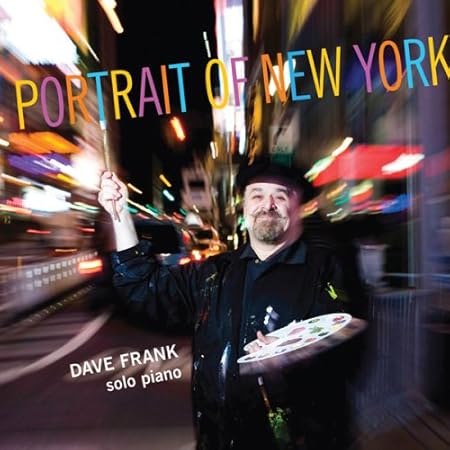
Dave Frank
Portrait Of New York


By Dan Bilawsky
Jazz and New York are like hot dogs and baseball, or peanut butter and jelly. The Big Apple has been the epicenter of so many important movements and moments in jazz, that it's hard to think of any other place—save perhaps New Orleans—that deserves the honor of being captured in song. Pianist Dave Frank, widely recognized as a premier jazz educator and performer, pays tribute to New York with solo piano paintings of various streets and locales, and four reworked standards, on Portrait Of New York.
Frank's steady and creative left-hand lines—juxtaposed against a right hand that can be alternately relaxed or off-the-charts fast—is his calling card. A strong blues-affinity resides within his creations, but his ability to modernize older forms with slight abstractions—be it an altered chord progression or oddly angular intervals in his steady bass lines—is what makes this music so engaging. "Full Force NYC" opens the album and Frank's right hand seems to represent the hustle and bustle of New York life, as he throws out some jaw dropping runs. "Broadway Boogie-Woogie" is a bit more traditional in nature, but Frank's faster-than-usual take on "Perdido" breaths some fresh air into that well-worn classic.
While most of the originals refer to places, Frank does pay tribute to two piano giants with "McKenna/McCoy." The forward momentum found on this particular piece makes it a winner, though it never hints at the percussive power in McCoy Tyner's playing. Frank's slow, bluesy-woozy "Lower East Side Shuffle" is a real treat, though this track could have also benefited from some heavy-handed heft.
While Frank's flashier tendencies occasionally come to the fore during the more excitable songs, he proves to be a masterful ballad sculptor as well. Pangs of sadness, loss and regret come through on his emotionally reflective performance of "This Nearly Was Mine." Mysterious melodic threads are sewn in the upper regions of the piano as "My Man's Gone Now" begins. Some depression sets into the music and rubato rears it's head here, though this track eventually takes on a more defined rhythmic direction than the Richard Rodgers tune. Frank's own "Manhattan Moonlight" is pretty and classy, in an unassuming way.
Portrait Of New York paints a wonderful picture of solo piano possibilities and Manhattan-themed melodies, but it also serves as a portrait of Dave Frank...one of the most creative pianists around today.
Track Listing: 
Full Force NYC; Broadway Boogie-Woogie; This Nearly Was Mine; Midtown 9 AM; Perdido; My Man's Gone; Lower East Side Shuffle; McKenna/McCoy; Manhattan by Moonlight; Bowery Blues; You And The Night And The Music; Times Square.
Personnel: Dave Frank: piano.


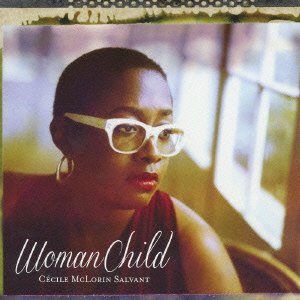
Cécile McLorin Salvant
Woman Child


By Alison Bentley
American singer Cécile McLorin Salvant's début album WomanChild reveals a voice with a deep, knowing side, as well as a childlike playfulness. Still in her early 20s, she was winner of the prestigious Thelonious Monk International Jazz Competition in 2010 and is already being fêted as the heir to the great jazz singers. Her repertoire and style are cool and modern as well as reaching back into jazz history.
There are two Bessie Smith covers: St. Louis Gal and Baby Have Pity on Me. McLorin Salvant sings with Smith's bluesy phrasing, laid-back but gentler, less raunchy. Every characterful detail is exposed by James Chirillo's lovely understated guitar- he plays on these two tracks only. There are two songs taken from popular early African American performers, which are full of humour. Nobody was sung by Bert Williams in the 1900s and is reworked with some excellent stride piano from Aaron Diehl. McLorin Salvant brings out the song's wry humour: 'When life seems full of clouds an' rain/ and I am filled with naught but pain,/ who soothes my thumpin' bumpin' brain ?/Nobody!'
Valaida Snow's You Bring Out the Savage in Me is sung with exquisite humour, over a fiery Afro-Latin groove. McLorin Salvant plays with vocal tones, from a Judy Garland drawl to a Blossom Dearie whisper. As McLorin Salvant puts it: 'I think you can make fun of the idea of jazz as “savage music” even while wanting to be primal'. Abbey Lincoln inspired her to 'go for it' as a singer, and she has a little of Lincoln's declamatory style in John Henry, a traditional song about the death of a railway worker. There's a toughness to the voice over the New Orleans-ish fast groove, with percussive piano.
Born in Miami to a French mother and Haitian father, McLorin Salvant’s first language was French. She's set Haitian poet Ida Faubert's poem Le Front Caché Sur Tes Genoux to music with a 6/8 jazz feel. She sings the emotive lyrics with a low, affecting vibrato. She's been studying Classical singing as well as jazz in France, and her own song Deep Dark Blue has long, beautifully-controlled vocal notes over Ravel-like dramatic piano. Her song WomanChild is autobiographical, 'Woman child falters/Clumsy on her feet/ Wonderin' where she'll go...', but it also, she's said, expresses her view of art- how it should be adult and childlike at the same time. The band moves from a McCoy Tyner-like swagger to compelling swing. Sarah Vaughan was an early influence on McLorin Salvant, and like Vaughan, her voice flickers between a full-powered tone and a mischievous, girlish sound.
The standards bring out the most modern aspects of McLorin Salvant's voice. I Didn't Know What Time it Was frames the voice with rhythmic stops, and McLorin Salvant sounds uncannily and beautifully like 60s Betty Carter. Her sense of swing is surefooted with a mixture of delicacy and confidence. There's a fine boppy melodic bass solo from Rodney Whitaker and sparkling piano solo from Diehl. There's a Lull in My Life is prefaced by Prelude, an instrumental section which displays the talents of the virtuosic and versatile piano trio. An excellent subtle backbeat and 12/8 feel from drummer Herlin Riley brings in the vocals. McLorin Salvant's said she wants '... to get as close to the centre of the song as I can,' and her expressive diction brings out the meaning brilliantly; as she sings 'the clock stops ticking' right behind the beat, you can almost hear the clocks slowing down. McLorin Salvant accompanies herself on piano on Jitterbug Waltz; she sings with such spontaneous, gamine glee, you feel you're waltzing with her.
Her rendering of What a Little Moonlight Can Do (much performed by Betty Carter) shows McLorin Salvant's full range- vocally and emotionally. She told one interviewer: 'When I sing I try not to think too much, and get into the story of the song...I get into that moment and just go.' There are swathes of long, improvised notes, haunting and intimate, over the piano trio's free-ish modern harmonies. They're interspersed with passages of fast swing, underpinned by Whitaker's immaculate bass. McLorin Salvant chokes comically and touchingly on the words '... all day long you'll only stutter, your poor tongue- it will not utter the words'.
McLorin Salvant matches playfulness with superb technique; devil-may-care performance with dedicated love of jazz. I can't wait for the next album.


The David Hazeltine Trio
Impromptu


The David Hazeltine Trio successfully undertakes well-known classical works and reinvents them through jazz. Joined by George Mraz on bass and Jason Brown on drums, Hazeltine is able to reformat these classics into high energy, sweet swinging, syncopated adaptations of their originals. The group tackles works by composers: Bach, Chopin, Debussy, Tchaikovsky, and Beethoven; restructuring their works all the while keeping them audibly recognizable.
This album was recorded in Binarual+ for both speaker and 3D headphone playback and has EXTREME dynamics, so please set your playback levels carefully.
Track Listings:
1. Clair de Lune
2. Jesu Joy of Man's Desiring
3. Impromptu No. 4
4. Moonlight Sonata
5. Waltz of the Flowers
6. Prelude
7. Reverie
8. Fur Elise

2 Sem 2014 - Part Eight

Spike Wilner
La Tendresse


By Mark Corroto
Joy.
But having been told that one word reviews aren't sufficient, how about this: Pianist Spike Wilner's disc La Tendresse is pure joy.
Wilner can probably best be described as an old soul occupying a modernist corpus. His foundations in ragtime and stride piano inform the music heard here, but like Thelonious Monk, he uses the tradition as the architecture for the anatomy of a modern player. Even his take on "Crepuscule With Nellie," the classic Monk expression of hesitation and suspension, is delivered as a tender blues. More importantly, he delivers it without the cartoon clichéd dawdling.
Wilner's approach is to brighten each piece with the energy of his playing. Like his hero, Willie "The Lion" Smith and other Harlem stride pianists, he makes the difficult seem quite simple. The speed at which the trio navigates "After You're Gone" is just short of tumult. Drummer Dezron Douglas
and bassist Joey Saylor chase, and then are chased by, the exuberance of Wilner's piano.
He is also quite comfortable carrying the day unaccompanied. As with his previous solo recording Live At Smalls (Smalls Live, 2011), Wilner performs several solo pieces here. The old Carol Burnett sign off tune "I'm So Glad We Had This Time Together" is rationed with the appropriate melancholy, and Harold Arlen's "If I Only Had A Brain" bounces and frolics with a campy stride fitting the dopey scarecrow.
The trio performs Irving Berlin's "Always," raising the bandstand much like early Bill Evans
would, interlacing a subtle and intellectual swing with a quasi-classical approach. The highlights of this disc might be Scott Joplin's "Solace" and Bernice Petkere's "Lullaby Of The Leaves." Both tracks beg for comparison to master musician Bebo Valdes' playing. With "Solace," Wilner mixes his ragtime approach with Valdes' Cuban-folk take on American jazz.
There is much rejoicing to be had—or heard—here.
Track Listing: 
La Tendresse; If I Only Had A Brain; Solace; Silver Cord; Always; Lullaby Of The Leaves; After You've Gone; Le Sucrier Velours; Little Girl Blue; Crepuscule With Nellie; I'm So Glad We Had This Time Together; Happy Ending.
Personnel: 
Spike Wilner: piano; Dezron Douglas: bass; Joey Saylor: drums.


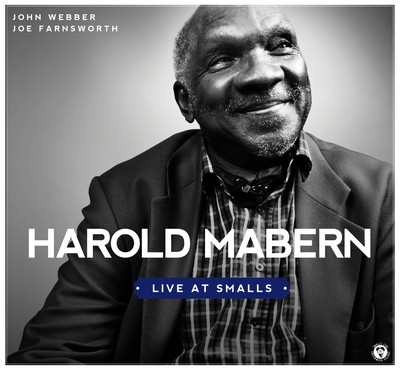
Harold Mabern Trio
Live At Smalls


By a jazz listener's thoughts.blogspot.com
First up is the veteran pianist Harold Mabern, with Joe Farnsworth on drums and John Webber on bass. Harold Mabern Trio "Live at Smalls" (SmallLIVE 2013) features a 77 year old pianist who has never gotten the full recognition he deserves for his catalogue of work but who is one of the truly outstanding veterans of this era, alongside, for example, a luminary like Kenny Barron. He dropped from the radar in the 90s and early 2000s when most of his catalogue was released on Japanese labels (and they are great CDs if you want to get them), but has come back strongly in the U.S. recently with "Mr Lucky" (High Note 2012) and now this outing. Seven tracks fill the CD with the kind of good old fashioned, driving mainstream jazz sound, sometimes straight ahead, sometimes soulful, sometimes bluesy, and always entertaining. They stretch out on some rousing great tunes like "I'm Walking" and the "Road Song," boogie on "Boogie for Al McShann", and do up "Sesame Street" very cleverly. First rate music from a first rate trio.


David Berkman
Live At Smalls


By Bill Milkowski at Theabsolutesound
Pianist Berkman’s seventh as a leader follows the straight ahead formula of his previous quartet recording, 2009’s Live at Smoke. While his crystalline touch on ballads and assured sense of swing on uptempo numbers define the terrain here, it’s trumpeter Tom Harrell who nearly steals the show. They open with an exuberant “Milestones” (John Lewis’ 1947 composition, not Miles Davis’ 1958 tune of the same name) with Harrell and Berkman striding in unison on the buoyant head before the trumpeter delivers a golden solo underscored by the pianist’s assertive hard-bop comping and paced by bassist Ed Howard’s insistent walking and drummer Johnathan Blake’s interactive swing feel. Berkman provides graceful accompaniment for Harrell’s achingly beautiful reading of “Body And Soul,” performed as a sparse, poignant duet. Berkman’s “Ghost Wife” travels from sparse introspection to florid rubato excursions to energized freebop while his jaunty “Small Wooden Housekeeper” has a syncopated spring in its step. The lone trio number, “For Kenny,” is the pianist’s heartfelt homage to the late, great Kenny Kirkland. This superb outing concludes with a fresh take on the standard “Sweet And Lovely” with Blake providing a “Poinciana” beat underneath and both Harrell and Berkman contributing more sparkling solos.


Larry Goldings
In My Room


By Carlo Wolff
How kind of keyboardist Larry Goldings to share such intimate music. A celebration of Americana in such tracks as a baroque “Take Me Out to the Ballgame” and a rococo “Beautiful Dreamer,” In My Room works subversive magic on other levels, too. Goldings, a Boston native, launches this sneaky album with the title cut, one of Brian Wilson’s most personal and lovely compositions. But he doesn’t restrict his affection for Americana to covers: Originals like “Crawdaddy,” swaggering with rubato, are redolent of New Orleans, and “All My Born Days” is a brief, embracing ballad. Above all, In My Room is warm.
Although Goldings is best known for his organ work, his pianism also is startling, as is his taste. His eclecticism spans Abdullah Ibrahim’s “The Wedding,” Joni Mitchell’s “All I Want” (treated with austere freshness) and, attesting to the depth of his knowledge of classic British rock, the gorgeous “A Rose for Emily,” a haunting Rod Argent tune from the Zombies’ 1968 masterpiece, Odessey and Oracle.
Goldings peppers this deceptively easygoing CD with “interludes” of mildly prepared piano; some twinkle, some shimmer, all delight. He caps this solo piano disc with “Here, There and Everywhere,” treating the Beatles’ beauty as a pastorale. This sweet album doesn’t rock, though it transforms rock. It is leisurely but never ponderous. Goldings always brings out the melody, letting the listener in on his emotive creative process along the way.


Bill Carrothers
Castaways


Castaways - a beautiful CD unusual in its coherent combination of pieces played by a trio with a special feeling for atmospheric depth. Bill Carrothers and friends play with precision and nuance, creating an excitingly coherent group sound. Music that renews and reinvents, performed with unusual warmth and intimacy.
Personnel:
Bill Carrothers piano; Drew Gress bass; Dré Pallemaerts drums

2 Sem 2014 - Part Seven

Natalie Dessay, Agnès Jaoui, Helena Noguerra, Liat Cohen
Rio Paris


By James Manheim
A major attraction of soccer's World Cup, and some would say the very best thing about it, is the musical component, with genre-crossing all-star vocal collaborations the norm. Who can forget Barcelona's unexpected and absolutely stunning duets between Montserrat Caballé and Freddie Mercury? This album may be the first in a flood of releases connected with the 2014 World Cup in Rio de Janeiro, Brazil, and if the games result in a new appreciation of Brazilian music they will have been well worth it from a musical standpoint. Brazilian music crosses over among classical, pop, and jazz without giving very much thought to the dividing lines, and the mix here touches on some of the major figures from each corner. The three singers and one guitarist are not Brazilian; singers Natalie Dessay and Agnès Jaoui are French; singer Helena Noguerra is Portuguese-Belgian; and guitarist Liat Cohen is French-Israeli. Some of the music is sung in Portuguese, some in French, but even in a French translation Dessay does not sound especially comfortable in Antonio Carlos Jobim's Waters of March (here, Les Eaux de Mars). Hearing her in Villa-Lobos, however, is an unexpected pleasure. Jaoui and Noguerra, both actresses as well as singers, have a reasonable feel for the material, although one wonders whether a Brazilian singer might not profitably have been included. Perhaps the album's best feature is Erato's studio engineering; the dimensions of the sound are ideal for the music, and the guitar is impressively well recorded. A reasonably satisfying souvenir of the World Cup.


Peter Erskine
As It Is


Peter Erskine's group is openly influenced by both Bill Evan's Vanguard trio and Paul Bley's trio circa "Footloose" and "Closer", and brings some of their values into the present tense. At the same time, it has its own distinct character and understanding of dynamics. "As it Is" features works written primarily by John Taylor, with Erskine also contributing material. The group has been heralded for their understated approach to music which is performed with a controlled sense of freedom and simple lyricism.
Personnel:
John Taylor piano; Palle Danielsson double-bass; Peter Erskine drums


Sheila Jordan & Harvie Swartz
Songs From Within


By Scott Yanow
Sheila Jordan is one of the few singers to record duets frequently with just a string bass, usually Harvie Swartz. Jordan and Swartz interpret a wide variety of standards on their CD along with two originals. Although the always-inventive singer is clearly the lead voice, Swartz is not restricted to merely an accompanying role; he often shares center stage in close interplay with Jordan and his lines are almost as unpredictable as Sheila's. Their versions of such veteran songs as "Waltz for Debbie," "St. Thomas," "My Shining Hour" and "In a Sentimental Mood" sound quite original and fresh. As is the custom with M-A, this CD concludes with a selection taken from another release on the label, a melancholy showcase for Marty Krystall's bass clarinet.


Spike Wilner
Solo Piano - Live At Smalls 


By Mark Corroto
After a few minutes talking with pianist Spike Wilner, Charlie Parker's quote about authenticity in music comes to mind: "If you don't live it, it won't come out of your horn..." Actually, the entirety of Bird's thoughts best captures the art of Spike Wilner. Bird goes on to state: "They teach you there's a boundary line to music. But, man, there's no boundary line to art."
Wilner doesn't seem to have any boundary lines these days. The pianist-turned-club owner, jazz scholar, record label entrepreneur, and internet presenter has embarked on an ambitious concept to present jazz to a worldwide audience, from a club with a capacity of just fifty persons. Smalls Jazz Club, in New York City's West Village, opened in 1994, and quickly became a musician hangout and a place to find great music until first light of morning. A regular performer from the start, the pianist called the club, "a wild place, sometimes a free-for-all." Because it had no liquor license, customers toted their own, and often the place was "not an optimal performing experience."
Today, with an affordable cover ($20 before midnight and $10 after), Small's has become a go-to listening spot in New York—much like, Wilner explains, "the former Bradley's or Village Gate, because we maintain a comfortable and informal atmosphere." Since Wilner became a co-owner in 2007, the club has upgraded the piano to a Steinway and begun recording and archiving all performances. Consider for a moment, the depth and the breadth of such an archive. Like old-time radio broadcasts, Small's documents the live performances from hundreds of artists such as JD Allen, Mark Turner, Fred Hersch, and Jon Irabagon, captured nightly for the past three years, with plans to archive all future shows.
Wilner explains that he is "a scholar and an archivist by nature," and it appears the musicians—about 95% of whom have given him permission to record, archive, and live-stream their performances via the internet—understand that, in the 21st century, the rules for recording and presenting jazz have been blown away. Listeners from around the globe, something like 27,000 per month, tune in nightly to listen to (and watch) live jazz or to search for an individual musician's bio and performance dates. Others can search the extensive database and audio stream unedited, live recorded performances from the archive.
Wilner has also founded the Smalls Live label, to make physical CDs available from the archive. He approaches an artist, say drummer Ari Hoenig(who led his group at the club in February 2010), and asks him to choose all the music from the date to be mastered by an engineer to a hard copy CD, or iTunes download. The 14 live discs produced so far—featuring artists like Jimmy Greene, Ben Wolfe
, Omer Avital, Eric Alexander, Ethan Iverson, Albert "Tootie" Heath, and Peter Bernstein—have received critical acclaim. There are several more in the works for 2011, including dates from Chris Potter and John Patitucci, and also Louis Hayes and Jeremy Pelt.
Interestingly enough though, and to his surprise, Wilner's own release, Solo Piano Live At Smalls (2010)—a recording culled from his performances this past summer—has been met with popular success. In fact, the first printing of the CD sold out. Wilner's performance is rooted in the stride piano tradition of James P. Johnson, Art Tatum, and Fats Waller. He describes the CD as a recording "off the beaten track as a concept recording." Wilner chooses to play with old tunes and ideas in an ageless, yet modern "straightforward and melodic manner," to just, as he states, "swing." Indeed, it does. The disc has the feel of the wee small hours, when a player is playing more for himself than the small crowd left in the club.
While amassing, perhaps, the best and most complete catalog of working New York City jazz musicians, Wilner is also forging a new path for jazz. This fall he met with several major record companies, who admitted to him that "everything is falling apart," as far as the traditional approach to marketing jazz recordings. Perhaps Wilner's approach—a universal concept of club performance, video and audio streaming, and producing select music CDs—may be the best way to capture a new audience for jazz, while satisfying the needs of audiophile collectors.


Peter Bernstein, Larry Goldings, Bill Stewart
Live At Smalls


By Mike Joyce
Here’s proof that guitarist Peter Bernstein, Hammond B3 organist Larry Goldings and drummer Bill Stewart excel at the art of the slow burn. Tempos aren’t rushed. Solos aren’t feverishly pitched. Call-and-response exchanges aren’t overheated. Instead, the trio shrewdly hews to a series of organ-combo grooves, turning this Manhattan club date into a simmering, soulful delight.
Nothing is more sublime than the performance of “Ev’ry Time We Say Goodbye.” Bernstein subtly embellishes the theme with Jim Hall-like finesse and, thanks largely to Stewart’s cushioning brushwork, it isn’t long before the melody is floating in the air. The burn factor rises on this track, and elsewhere on the album, when Goldings begins to pull out the stops, but don’t anticipate a lot of fuss and flash. Even Goldings’ performance on “Molto Molto,” which he wrote, isn’t molto busy. Look forward, instead, to Bernstein’s softly glowing rumination “Just a Thought,” and a slinky, blues-hued arrangement of Jerome Kern’s “Nobody Else But Me.” A 12-minute take on “Milestones” burns brightest, but there are times when even that track, with its bleeping sci-fi atmospherics, sounds more whimsical than wired.
Not to be overlooked, too, is the way the trio salutes Ray Charles via Percy Mayfield’s “The Danger Zone,” which is saved for last. Bernstein is in slow shuffle mode, fluidly mixing blues riffs with jazz chromaticism until Goldings adds touches of Southern gospel fervor—just the right note for the album’s closer. Amen.

Friday, September 19, 2014

2 Sem 2014 - Part Six

Denny Zeitlin
Stairway To The Stars


By Jeff Tamarkin
Since the turn of the century, pianist Denny Zeitlin’s recordings have fallen into two categories: solo projects and releases with this trio featuring bassist Buster Williams and drummer Matt Wilson. Stairway to the Stars—recorded at the Jazz Bakery in L.A. in 2001, the year that Zeitlin first teamed with the two—is another argument for more trio dates. These three are formidable together.
On the surface, there’s nothing that hasn’t been done a thousand times before. The title track goes back to the 1959 Marilyn Monroe vehicle Some Like It Hot, while other numbers come from the pens of such familiar tunesmiths as Harry Warren, Jimmy Van Heusen and Rodgers and Hart. Those standards are augmented by Sonny Rollins’ “Oleo” and a Wayne Shorter composition, “Deluge,” from 1964’s JuJu, the youngest track here save for the finale, a Zeitlin-penned blues that is the only original on the album.
What sets the Zeitlin-Williams-Wilson trio apart is its openness and ardor: They approach this material as if it’s never been played before, deconstructing the melodies and rebuilding them in their own image. Zeitlin, who had already been playing professionally for three-and-a-half decades at this point, favors a sensitive, inquisitive touch on ballads with which Williams and Wilson naturally empathize. They’re clearly in love with each other’s playing.
If there’s one complaint it’s that the ballads are too many. Only on “Oleo” do they seriously turn things up, and it’s such a kinetic, electrifying rush that you wait (in vain) for more music like it. Maybe next time.


Libby York
Memoir


By Christopher Loudon
While Diana Krall continues to top vocal polls and rack up platinum album sales, Chicagoan Libby York remains comparatively obscure. So consider this open invitation to all Krall fans to dip into York’s meager—just four albums across 15 years—but mighty oeuvre. Memoir, a terrific collection of standards, is an ideal place to start. What you’ll discover is an interpreter who is not only every inch Krall’s equal but also bears a strong vocal resemblance to the Canadian superstar: warm, intimate and imbued with a fogbound sexiness.
York has always demonstrated superb taste in both song selection and sidemen. Here, traveling from a tender “How Long Has This Been Going On?” and a sly “When in Rome” to a shimmering “My Little Boat” and sprightly “Walk Between the Raindrops,” she is seamlessly supported by pianist John di Martino (her co-arranger on all 11 tracks), bassist Martin Wind, drummer Greg Sergo and cornet player Warren Vaché. Guitarist Russell Malone joins on three tracks, including a misty “Thanks for the Memory,” and Vaché twice contributes vocal accompaniment, adding gravel-filled joy to “Let’s Call the Whole Thing Off” and a cleverly updated take on the Bing Crosby-Bob Hope chestnut “Put It There, Pal.”


Oliver Jones
Just For My Lady


By Mike Joyce
Pianist and Canadian national treasure Oliver Jones turns 80 next year—yet another reason to celebrate his artistry and appeal. Just for My Lady offers an early invitation to the party via a collection of mostly swinging performances that radiate a sunny vitality.
In a Count Basie state of mind, Jones opens with the self-penned, Southwest swing-flavored “Josee’s Blues,” a tribute to his special guest on this recording, violinist Josee Aidans. Aidans’ participation further influences the choice of tunes and moods, in ways that often evoke Stéphane Grappelli, Claude Williams and other jazz violin masters; a prime example, of course, is “Lady Be Good,” the album’s exuberant coda. But her soulful, Grappelli-tinged approach to “The Windmills of Your Mind,” underscored by bassist Eric Lagacé’s bowed lines, is similarly telling.
Punctuating the album (and also enhanced by Aidans’ lyricism and resourcefulness) is The Saskatchewan Suite. Written by Jones, it comprises three contrasting portraits: the pensive “Prince Albert Sunrise,” the expansive “Regina Sky” and the rhythmically charged “Saskatoon Spirit.” Suffice it to say that midway through the performance, it’s clear the Chamber of Commerce should cut the composer a check.
Jones’ longtime accompanists—bassist Lagacé and drummer Jim Doxas—are showcased in a variety of attractive settings, thanks to a string of well-crafted arrangements that eschew routine breaks and exchanges. That’s one of the reasons why the album’s midtempo highlights, including Jones’ lovely title composition, cast a spell.


Mike Longo
New York State Of The Art: Live From New York


By Owen Cordle
This album captures an electrifying evening at the John Birks Gillespie Auditorium in the NYC Baha’i Center. There is a feeling of elation in the performances. Pianist Mike Longo wrote all the big-band arrangements, and they range from his atmospheric originals “Afro Desia” and “Inner City Hues” to the jazz standards “Whisper Not” and “Wee.” Deep-voiced vocalist Ira Hawkins sings “I’m Old Fashioned” (backed by the trio of Longo, bassist Tom Hubbard and drummer Mike Campenni), “Over the Rainbow” and “Muddy Water” (backed by the full band). Longo’s writing is strongly rhythmic; you wouldn’t expect otherwise from someone who was once a member of Dizzy Gillespie’s quintet. He elicits stirring dynamics and fills by Campenni.
Benny Golson’s “Whisper Not” leads off, with soloists Brian Davis (trumpet), Lee Greene (alto saxophone), Longo and Frank Perowsky (tenor saxophone) setting high standards for the successive performances. On Longo’s “Yoko Mama,” Earl McIntyre’s blustery plunger-muted bass trombone is a highlight, and on “Muddy Water,” Perowsky’s throaty-toned tenor turns up the heat over Campenni’s infectious shuffle beat. The initially suspenseful “Inner City Hues” (reminiscent of arranger Gerald Wilson’s writing) features more speechlike trombone work, this time from Nick Grinder and Sam Burtis. There’s spirited ensemble work throughout the album, such as the Supersax-like solos on “Wee” and the exotic, hypnotic repetition of “Afro Desia.”


Quatuor Ébène
Brazil


It's Brazil as you've never heard it before in this new album from Quatuor Ebène. Bossa nova and samba are shaken up in an intoxicating multicultural cocktail with the score from Terry Gilliam's 1985 film Brazil, Argentinian tango, and numbers by songwriters from Stevie Wonder and Sting to Charlie Chaplin. Joining the Quatuor Ebène as special guests are eclectic French singer-songwriter Bernard Lavilliers and the stylish American jazz singer Stacey Kent.
Recording information: Studio Davout, Paris, France (08/20/2013-08/25/2013); Studio Davout, Paris, France (11/28/2013-11/30/2013). Editors: Pierre Colombet; Fabrice Planchat. Arrangers: Pierre Colombet; Mathieu Herzog; Gabriel Le Magadure; Raphaël Merlin. Personnel: Pierre Colombet, Gabriel Le Magadure (vocals, violin); Mathieu Herzog (vocals, viola); Raphaël Merlin (vocals, cello). Audio Mixers: Pierre Colombet; Fabrice Planchat.

2 Sem 2014 - Part Five

Keith Jarrett & Charlie Haden
Last Dance


By John Kelman
For the past 30 years—barring a few diversions into classical repertoire, unexpected instrumentation like 1986's Book of Ways and a couple of home-cooked solo albums that, as with the 1986 recording No End (ECM, 2013), were out-of-character recordings where he overdubbed all the instruments himself—pianist Keith Jarrett has been working two contexts and two contexts only: solo piano performances that, with the exception of the home-recorded The Melody at Night, With You (ECM, 1999), have all been recorded live; and his Standards Trio recordings—in all but one instance featuring bassist Gary Peacock and drummer Jack DeJohnette —that, with the exception of the first three recordings made in 1983 (ultimately collected together in the Setting Standards: New York Sessions (ECM, 2008) box) and 1993's Bye Bye Blackbird, have also been exclusively in-concert recordings.
Jarrett's prior years as a leader saw him engaged in a greater variety of settings, his earliest dating back to 1967's Life Between the Exit Signs (Vortex), a trio date featuring bassist Charlie Haden
and drummer Paul Motian, two players with whom the pianist would continue working when he formed his so-called "American Quartet" in 1974 with saxophonist Dewey Redman for a series of recordings that began with Treasure Island (Impulse!) and ended with Bop Be (Impulse!, 1977) (even though Eyes of the Heart was released by ECM in 1979, it was recorded five months prior to that final Impulse! date).
Both Jarrett's American Quartet and the European-based "Belonging Quartet" that featured saxophonist Jan Garbarek, bassist Palle Danielsson and drummer Jon Christensen were also distinguished from the pianist's subsequent recordings, both in his fully improvised solo recordings and the Great American Songbook explorations of his Standards Trio, in that they featured Jarrett's original compositions. Of course, in the right hands, improvisation is nothing less than in-the-moment composition, and so while Jarrett may appear to have deserted formal composition, both of his current projects are, it can be argued, still Jarrett in composition mode: one, in-the-moment with no preconceptions; the other, equally spontaneous but using the context of the jazz standard and Great American Songbook repertoires as its foundation.
All of which made Jasmine (ECM, 2010) a release worth celebrating. Recorded at Jarrett's home (in his Cavelight Studio), it was an intimate conversation between two old friends—Jarrett and Haden—who'd not recorded together in over three decades, and who were brought together when the pianist participated in Reto Cardiff's film about the bassist, Rambling Boy (2009). Some things are never lost, and if Jasmine proved anything, it's that the chemistry shared by Jarrett and Haden may have been on hiatus for 30 years, but was no less potent, no less profound, when they found themselves recording a series of standards at Jarrett's home with no rehearsals barring a few quick run-throughs of the changes. The collaboration must have been a fruitful one, because Last Dance comes from those same sessions, another full 76 minutes of music comprised, once again, of songs culled from jazz standards and the Great American Songbook.
The same strengths that made Jasmine such a wonderful—and welcome—diversion from Jarrett's solo and trio releases remain definitive on Last Dance. Haden demonstrates his usual unerring ability to find the absolutely perfect note—played with equally impeccable tone—whether it's in the spare yet ambling swing of his support for Jarrett's solo on the mid-tempo "Everything Happens to Me" or his own more intrinsically lyrical feature later in the same song; there's never a note wasted or a note out of place. As for Jarrett, while his career has been predicated on both virtuosity and an ability to spontaneously pull music from the ether, and as consistently superb as his solo and Standards Trio work has been over the past three decades, here in this context, he's never sounded so relaxed, so unfettered in a way that's different from his inimitable freedom in live performance. There is, of course, an energy that comes from an audience that feeds a musician and can make the difference between a good performance and a great one, but equally, there's something about the unconstrained freedom of playing at home with a longtime friend who shares your language. There's nothing to prove, only music to make, and while Jarrett has visited songs like Thelonious Monk's classic ballad "'Round Midnight" and Thomas Adair and Matt Denis' slightly brighter "Everything Happens to Me" before, they've never sounded this tender, this affectionate.
Two tracks from Last Dance are alternate versions of songs heard on Jasmine: while Victor Young and Peggy Lee's "Where Can I Go Without You" is taken at almost the same tempo, Gordon Jenkin's "Goodbye" is taken at a slightly slower pace, demonstrating how even such subtle differences can impact the way a song unfolds. In both cases, however, while the basic arrangements are the same, they also show how masterful improvisers can play the same song night after night (in this case, possibly even twice on the same day) and keep it sounding fresh and original.
Haden's health these days has made performance difficult, as he battles post-polio syndrome that can impair his hands—and his voice, because his vocal chords are at times paralyzed. It's impossible to know whether he will be able to continue touring or recording, but he's always been a fighter, so who knows what the future will bring. But if Last Dance were to be a title with particular significance—if it were to be the last recorded notes that Haden fans were to have the privilege of hearing, they'd be as confident, muscular and astutely intuitive as anything he's ever done. And while Jarrett, despite a run-in with Chronic Fatigue Syndrome that nearly scuttled his career in the mid-to-late '90s, seems to be in reasonable health (he's also, at 69, seven years younger than Haden)—and, consequently, has plenty of performances left in him—Last Dance will stand, alongside Jasmine, as two of his most beautiful and intimate recordings, played with a lifelong friend who, despite a thirty-year gap in their musical partnership, came back as if time had stood still and not a second had passed since they'd last collaborated.
Track Listing: 
My Old Flame; My Ship; 'Round Midnight; Dance of the Infidels; It Might As Well Be Spring; Everything Happens to Me; Where Can I Go Without You; Every Time We Say Goodbye; Goodbye.
Personnel: 
Keith Jarrett: piano; Charlie Haden: double bass.


Cyrus Chestnut
Midnight Melodies


By Jazz Messengers
This nearly perfect piano trio set by Cyrus Chestnut, captured at Smoke Jazz & Supper Club in New York, is his first live recording date. It retains all of the feeling and power of his thrilling live performances but also benefits from Smoke's Steinway B that Cyrus claims is the best piano in the city. “It's just my ticket.
We connect. It's warm and it's sharp at the same time with a lot of earth in it. I like clubs like the Jazz Standard or Smoke, where you can sit down at the piano and get down-home, because that's the kind of audience they attract.”.
PERSONNEL:
CYRUS CHESTNUT, piano; CURTIS LUNDY, bass; VICTOR LEWIS, drums

Recorded live at Smoke Jazz Club, November 22 & 23, 2013

TRACKS:
01. Two Heartbeats
02. Pocket Full of Blues
03. To Be Determined
04. Bag's Groove
05. Hey, It's Me You're Talkin' To
06. Chelsea Bridge
07. U.M.M.G. (Upper Manhattan Medical Group)
08. I Wanted to Say
09. Giant Steps
10. Naima's Love Song
11. The Theme


Marianne Solivan 
Prisoner of Love


Debut CD by New York jazz vocalist, featuring Jeremy Pelt, Christian McBride, Peter Bernstein, Xavier Davis, Michael Kanan, Ben Wolfe, and Johnathan Blake.

By Tom Pierce
This initial CD by a hypnotically captivating New York songstress had as strong an initial impression on me as almost any singer I've heard in recent years. Back in the day, she might have been called a “Torch Singer”; today currently some might label her a “Cabaret Singer, as most of the 11 songs are intimate and convincing ballads. However, none are the usual, overdone ones. She has more than enough natural rhythmic looseness & flexibility, without over-dramatizing her delivery, to strike me as an arresting JAZZ singer. She is superbly supported by Christian McBride & Ben Wolfe – bass; Michael Kanan – piano; Jonathan Blake – drums; Peter Bernstein – guitar and on one track by Jeremy Pelt, who also produced the CD.


Eliane Elias
I Thought About You: A Tribute To Chet Baker


By C. Michael Bailey
It is tempting to consider Chet Baker hommages like Jeff Baker's excellent Baker Sings Chet (OA2, 2004) or John Proulx's sublime Baker's dozen: Remembering Chet Baker (MAXJAZZ, 2009) superior to the real item. So fractured is our picture of Baker that our full appreciation of him is clouded by his extra-musical proclivities. But it is not exactly that. Baker's vibratoless trumpet and vocals, as well as, his limited technical abilities are acquired tastes, but once acquired are generally rewarding to the listener. It is not simply one thing, but the whole package that is Chet Baker. What better legacy to leave than a constant recapitulation of your famous book every-so-many years.
Today's vintage homage is pianist/vocalist Eliane Elias' I Thought About You: A Tribute to Chet Baker. Elias' reputation rests on her superior pianism, and beginning in 1990 with Eliane Elias Sings Jobim (Blue Note), her smooth, cool and perfectly nondescript vocals, which prove sonically and stylistically well suited for the Baker repertoire.
Like Proulx, Elias sings her Baker straight and uncomplicated, highlighting Baker's own emotionally frozen though thoroughly attractive delivery. The result captures Baker's dark and hiply sardonic singing personality. What Elias brings to the table is the breezy lilt of a Brazilian accent that increases the disc's sensuality to eleven on a scale of ten. "I Thought About You" and "Let's Get Lost" are like lovers' lips brushing one another.
Elias is supported by a grand cast that includes trumpeter Randy Brecker, guitarists Oscar Castro-Neves and Steve Cardenas. They provide, with bassist Marc Johnson and drummer Victor Lewis
that humid Caribbean infusion that colors every song. Is Chet Baker best experienced through other artists?
Track Listing: 
I Thought About You; There Will Never Be Another You; This Can't Be Love; Embraceable You; That Old Feeling; Everything Depends On You; I've Never Been In Love Before; Let's Get Lost; Start; You Don't Know What Love Is; Blue Room; Just Friends; Girl Talk; Just In Time; I Get Along Without You Very Well.
Personnel: 
Eliane Elias: vocals, piano; Marc Johnson: acoustic bass; Steve Cardenas: electric guitar; Randy Brecker: trumpet, flugelhorn; Oscar Castro-Neves: acoustic guitar: Victor Lewis: drums; Rafael Barata: drums; Marivaldo Dos Santos: percussion. 


Cyrus Chestnut
Soul Brother Cool


By Jeff Tamarkin
On the surface, Soul Brother Cool appears to draw direct lines to two other releases: the recent The Willie Jones III Sextet Plays the Max Roach Songbook (also reviewed in this issue) and drum great Roach’s own 1966 album Drums Unlimited, which, like many of pianist Cyrus Chestnut’s early albums, was issued by Atlantic Records. Jones and bassist Dezron Douglas provide the rhythm section on both Jones’ release and Chestnut’s (each album appears on Jones’ WJ3 label), while the cover art of Soul Brother Cool is a ringer for the Roach set.
But that’s about as far as the comparisons go. Soul Brother Cool doesn’t even have much in common with Chestnut’s previous (and only other) quartet recording, an eponymous 2010 set. With trumpeter Freddie Hendrix replacing soprano saxophonist Stacy Dillard, the new collection, featuring 10 Chestnut originals, feels like a welcome departure. This is one tasty little band.
For one thing, Hendrix is as much the star here as Chestnut. His solos proliferate, alternately brash and serene, always commanding and fluid. He presents a marked contrast to Chestnut’s more studied and intricate gospel- and blues-rooted breaks. They feed well off each other, and Jones and Douglas consistently provide the required pocket. In “Piscean Thought,” Hendrix takes the first half, Chestnut the next quarter, then Hendrix returns to finish what he started; it’s not an atypical strategy on the album, as solos on the more tranquil “Dawn of the Sunset” and other tracks are similarly allocated. But Hendrix is so good here it’s hard to imagine a listener having a problem with his dominance.
Chestnut is a remarkable pianist and composer though, and while he’s not always in the spotlight on his own record, his creative presence is always felt.

Old Jazz Cd's - Part Seven By Mr. Bob

Guido Manusardi Quintet
Lost In Space


Lost In Space. the renowned pianist leads here a quintet in which shines the richly colored voice of Rachel Gould.
Personnel:
Rachel Gould(vo), Giulio Visibelli(ts,fl, ss), Sandro Gibellini(g), Guido Manusardi(p), Lucio Terzano(b), Mauro Beggio(ds)
Recorded at MurecStudio, Milan, Italy, August 9&10, 2002
Tracks:
1. Leave Them Laughing
2. But Now I'm Not in Love Anymore
3. Long Forgotten Arms
4. The Face of the One That I Love
5. Lost in Space
6. Heart of Fire
7. Pierre
8. Miriam
9. The Garden in Your Mind
10. Had Enough
11. The Day You Wished Me Goodbye


Monica Zetterlund & Bill Evans
Waltz For Debby


By Thom Jurek
An oddity in Bill Evans' catalog, this 1964 date places the Swedish jazz vocalist Monica Zetterlund alongside the Evans Trio (with Chuck Israels on bass and Larry Bunker on drums). Still, the match is seemingly perfect. Evans' lyricism is well suited to a breezy, sophisticated songstress like Zetterlund. There is an iciness on this recording, but it is difficult to decipher if it is in the performance or in the engineering where she seems to be way out in front of the band, when she was really in the middle of all the musicians in the studio. This is a minor complaint, however, as the tune selection and decorum of these sessions are quite lovely. From the opener "Come Rain or Come Shine" through the Swedish ballad "A Beautiful Rose" and the achingly gorgeous delivery of "Once Upon a Summertime," it's as if Zetterlund were destined to sing with Evans for a career instead of an album. For his part, Evans is very relaxed, allowing the lyrics to feed his musing on the simple, yet elegant harmonics. The Swedish version of "Waltz for Debbie" is a true delight because Zetterlund's voice becomes another instrument, soloing over the top of Evans' stunning selection of comping chords. In all this is an odd but special item, one that is necessary -- for at least one listen -- by any serious fan of the pianist and composer.


Tierney Sutton
Blue In Green


By Ken Dryden
There have been a number of tributes to Bill Evans since the pianist's death in 1980, including a few by singers. But this CD by Tierney Sutton (only her third as a leader) is not only wide-ranging in its scope, as it draws songs from throughout his career, but the often innovative arrangements bring a freshness to the music. Sutton doesn't resort to loud theatrics but swings hard when necessary while focusing on the melody, and also gives her supporting trio (pianist Christian Jacob, bassist Trey Henry, and drummer Ray Brinker) space to play. Evans' songs include a haunting "Blue in Green" (a modal gem credited to Miles Davis but claimed by the pianist as his work) with a touching lyric by Meredith d'Ambrosio, the mournful "Turn Out the Stars," a magical deliberate take of "Very Early," and an enticing medley of two of Evans' ballads written in honor of two young ladies, "Waltz for Debby" (for his niece) and "Tiffany" (for drummer Joe LaBarbera's infant daughter, who later composed the lyrics to this song as a teenager; Joe takes over the drums on this one song). The brisk "Autumn Leaves" is given a dramatic facelift with some fine scatting by Sutton and a wonderful reworking of the chord structure, and the calypso-flavored introduction to "Someday My Prince Will Come" is a high point, too. Ken Wild takes over on bass for the enchanting piano-less arrangement of "Sometime Ago," playing an ostinato pattern and supplying a soft backing scat vocal on this catchy chart. This outstanding release by Tierney Sutton should be considered an essential acquisition by fans of jazz singers and music associated with or written by Bill Evans.


Judy Niemack
Long As You're Living


By Great Judy
Of all her CD's this one is by far the craziest and most complex. To Welcome the Day is my favorite track with a difficult but catchy melody. Each song is packed with meaning while still giving time for great solos.
Personnel:
Phil Klum Assistant Engineer; A.T. Michael MacDonald Engineer, Editing
Judy Niemack Arranger, Vocals, Producer; Scott Colley Bass; Billy Hart Drums
Fred Hersch Piano, Arranger, Producer; Joe Lovano Sax (Tenor)
Tracks:
1. Long As You're Living
2. Walz For Debby
3. The Maestro
4. Good Bye Pork Pie Hat/I Remember Clifford
5. Caribbean Fire Dance
6. The Island
7. Monk's Dream
8. You've Taken Things Too Far
9. To Welcome The Day
10. Out Of This World
11. I Should Have Told You Goodbye
12. Infant Eyes