Sunday, January 26, 2014

1 Sem 2014 - Part Two

Ethan Iverson, Lee Konitz, Larry Grenadier, Jorge Rossy
Costumes Are Mandatory


By Greg Simmons
Costumes Are Mandatory is very collegially advertised as a collaborative album featuring Ethan Iverson, Lee Konitz,Larry Grenadier, and Jorge Rossy. And while the music may indeed be collaborative, even multi-improvisational at times, it's Iverson's date and he's very clearly the leader.
The record is envisioned as an homage to—"a dialogue with," according to the liner notes—the late blind pianist Lennie Tristano, who in addition to generally being credited as a founder of the 'cool school' (an oversimplification, to be sure), and an early avant-garde pioneer, was also a primary teacher and influence on Konitz (as well as tenorist Warne Marsh). Though he is often thought of as being a somewhat separate musical line from bebop, he was nonetheless a great admirer ofCharlie Parker, playing on many of Bird's early recordings in the late 1940s, and later serving as a pallbearer in his funeral. Strangely, given its stated intent, there isn't a single composition credited to Tristano on the record.
Iverson is well represented though, opening with his "Blueberry Ice Cream take 2" a relatively conventional blues with a quick walking bass line and catchy melody. The direct connection to Tristano is, of course, Konitz who's own playing in recent years has become freer, with very little melodic structure. Iverson lays out for Konitz' compact solo which has an airiness to it that floats above the straight-ahead structure of the tune. Iverson's piano work is, in places, more reminiscent of Thelonious Monk than Tristano.
The intro to "Try A Little Tenderness" is very reminiscent of Tristano's melancholy "Requiem" featuring broad, well- sustained chords before Konitz and the rhythm section rejoin with the melody. Konitz' straight ahead statement of the tune is uncharacteristic of much of his recent playing, and he barely deviates at all leaving the improvisation to Iverson.
"It's You (Tempo Complex)" pulls a Tristano trick right out of the hat by overdubbing two pianos to psychedelic, effect. At only one minute long it's enough to convey the effect without overpowering the surrounding tracks. The following straight acoustic version of the song delivers some of Konitz' best most Konitz-like improvisations: loose and searching, endlessly inventive, but still melodic and delightful.
According to the liner notes Konitz declined to play on "Blueberry Hill" stating "Sounds like something The Bad Plus should play instead."
Costumes Are Mandatory might work best because the music and the musicians have either approached Tristano with completely different competing musical influences, or in the case of Konitz, having completely absorbed then transcended his former mentor. They're not trying to imitate Tristano, but they forge just enough of a connection to make a truly interesting record that's worth seeking out.
Track Listing: 
Blueberry Ice Cream take 2; Try A Little Tenderness; It's You (Tempo Complex); It's You; What's New; 317 East 32nd; Body And Soul; Blueberry Hill; A Distant Bell; Bats; Mr. Bumi; My New Lovers All Seem So Tame; My Old Flame; Blueberry Ice Cream take 1.
Personnel: 
Ethan Iverson: piano; Lee Konitz: alto saxophone, vocals (track 13); Larry Grenadier; Jorge Rossy.


Leandro Braga Trio
Fé Cega - A Música de Milton Nascimento  


By Divulgação
Em meio às comemorações pelos 50 anos de carreira de Milton Nacimento, o pianista, maestro e compositor Leandro Braga reúne temas consagrados de Bituca no delicado “Fé Cega”. Construído em formato de suítes, o CD traz versões instrumentais para sucessos como “Ponta de Areia”, “Maria, Maria”, “Fé Cega, faca amolada” e “Nada será como antes”, além da participação especialíssima de Milton em “Beco do Mota”. Como um dos mais requisitados músicos e arranjadores da atualidade, Leandro Braga participou de musicais como “Evita” e de inúmeros projetos de Ney Matogrosso, Chico Buarque, Edu Lobo, Adriana Calcanhotto, Marcos Valle, Simone e tantos outros. O CD “Fé cega”, sétimo na discografia de Leandro, termina com um tema composto pelo maestro, chamado “Sonho de Juventude”.
Tracks:
1. Suite 1 (Fé Cega / Faca Amolada / Maria Solidária / Noites Do Sertão / Ponta De Areia)
2. Cais
3. Suite 2
4. (Abertura / A Lua Girou / Encontros E Despedidas / Saudade Dos Aviões Da Panair / Cravo E Canela / Maria, Maria)
5. Beco Do Mota
6. O Que Será
7. Suite 3 (Milagre Dos Peixes / Nada Será Como Antes)
8. Sonho De Juventude


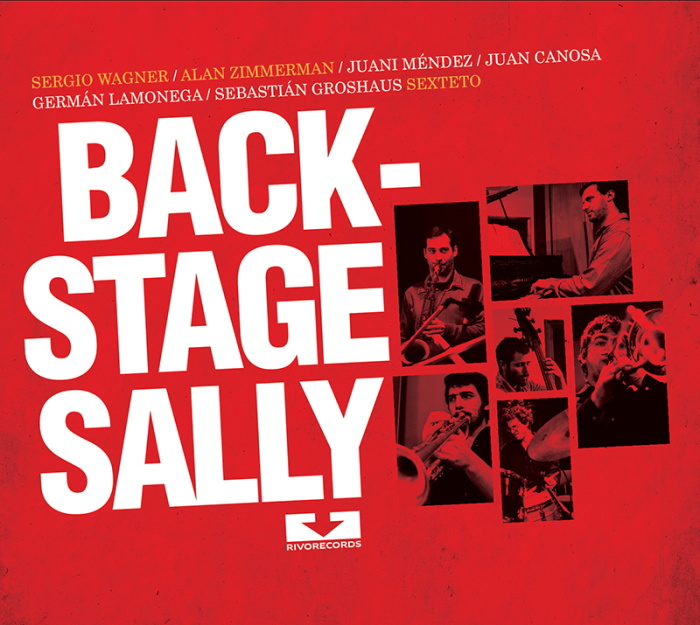
Sergio Wagner & Alan Zimmerman Sexteto
Backstage Sally


By Jakob Baekgaard
Those listeners enamored with the classic sound of hard bop modernism that Blue Note propelled in the '50s and early '60s will be well served by Argentinian label Rivorecords whose catalog basks in the swinging sounds of the past, but adds a contemporary touch of urgency.
Label boss Justo Lo Prete has found a winning formula: top-notch Argentinian jazz musicians playing hard bop classics and standards in sophisticated arrangements, with the occasional original thrown in for good measure. All packaged in luxurious digipacks with distinctive design and beautiful photos. This must be the dream of every collector and music lover who wants to relive the past in the present.
Backstage Sally is another classy entry in the catalog of Rivorecords. Trumpeter Sergio Wagner and pianist Alan Zimmerman lead a sextet that discovers new magic in old themes like Jimmy Van Hausen's "Darn That Dream" and Jimmy Mchugh's "On the Sunny Side of the Street."
It's a band that smokes and a tune like trombonist Curtis Fuller's "The Egyptian" is right in the moment, with fiery, razor-sharp brass exchanges between trombonist Juan Canosa, saxophonist Juani Méndez and Wagner. Trumpeter Kenny Dorham is also saluted on congenial interpretations of "Sao Paulo" (misspelled Sao Pablo) and "Lotus Blossom," but Backstage Sally isn't so much an homage to a particular artist as it is a revitalization of an entire sound and tradition. The spirit of hard bop lives on Backstage Sally.
Tracks:
1. Backstage Sally; 2. Sao Paulo; 3. Caravan; 4. Darn That Dream
5. Lotus Blossom; 6. On The Sunny Side Of The Street
7. The Egyptian; 8. So Sweet My Little Girl
Personnel:
Sergio Wagner(tp); Juan Canosa(tb); Juani Méndez(ts)
Alan Zimmerman(p); Germán Lamonega(b); Sebastián Groshaus(ds)


Mariano Loiacono
What's New ?


By Miguel Bronfman / Buenos Aires Herald
Mariano Loiácono is one of the newest personalities on the scene. I Knew It, his début album with original compositions, was releaed in 2008. Loiácono has an interesting voice in the neohard-bop style. What´s New? Works in that same direction too, evoking the formidable sound of groups form the late1950s and 1960s, like Art Blakely and the Jazz Messengers, or the combos led by Max Roach-Clifford Brown, and Julian Adderley. Here the group is made up of Gustavo Musso on tenor sax; Francisco Lo Vuolo, again, on piano; the ever inspiring Jerónimo Carmona; and Pepi Taveria, the master of modern jazz drummin here. Sebastián Loiácono and Ramiro Flores join the group onseveral tracks, both on alto sax. Together with the band, they play a superb version of Work Song , a classic from the hard-bop era, rendered at high speed and keeping the spirit needed by this emblematic tune, which sounds good and lifts up even the laziest soul.
Personnel:
Mariano Loiacono: Trompeta; Gustavo Musso: Saxo tenor; Francisco Lo Vuolo: Piano
Jerónimo Carmona: Contrabajo; Pepi Taveira: Batería
Sebastián Loiacono: saxo alto en 2,6 y 7; Ramiro Flores: saxo alto en 2; saxo soprano en 4
Grabado en estudios Sound Rec, Buenos Aires, el 9 de agosto de 2011
INGENIEROS DE GRABACIÓN: Ricardo Sanz y Carlos Melero
ASISTENTE DE GRABACIÓN: Ricardo Ortiz
ARTE DE TAPA: Juan Sbaraglia
FOTOGRAFÍAS: Horacio Sbaraglia
PRODUCCIÓN ARTÍSTICA: Mariano Loiacono, Sebastián Loiacono y Justo Lo Prete
PRODUCCIÓN GENERAL: Justo Lo Prete


6 In Jazz
Tributo a Lucio Battisti


By MiPiaceIlJazz
Per la serata inaugurale prevista la band campana 6 In Jazz con "Omaggio a Lucio Battisti".
Tutte le domeniche di febbraio, il prestigioso teatro salernitano vedrà avvicendarsi sul proprio palco grandi nomi del panorama jazzistico nazionale del calibro dei fratelli Deidda e Scannapieco, A.Vigorito, J.O.Mazzariello, P.Bisogno, Walter Ricci e Armanda Desidery, il tutto accompagnato dalle ottime specialità culinarie del posto.
La serata inaugurale del 5 Febbraio, vedra' sul palco la band campana 6 In Jazz che presentano "Omaggio a Lucio Battisti" con i musicisti Sandro Deidda, (sax tenore & soprano), Alessandro Castiglione (chitarra), Guglielmo Guglielmi (pianoforte),Pierpaolo Bisogno (vibrafono, vibrandoneon e percussioni), Aldo Vigorito(contrabbasso), Peppe La Pusata (batteria); un viaggio musicale e un omaggio alla canzone d'autore con un repertorio battistiano all’insegna dell’improvvisazione jazz.
In programma Emozioni, Perché no, I giardini di Marzo, Prendila così, Con il nastro rosa, Sì viaggiare, Aver paura di innamorarsi troppo, e tanti altri successi dell’indimenticabile cantautore, che hanno fatto epoca e che trovano nuova luce in una veste diversa dalle sonorità jazz.
Il progetto nasce dall’amore per la musica di due giovani musicisti, Daniele Borrelli e Anna Maria Fortuna, e dalla voglia di diffondere il jazz nella loro città:sogno realizzato grazie alla collaborazione con Pupi&Pupi Management, da anni protagonisti del by night salernitano.

1 Sem 2014 - Part One

Esperanza Spalding
Radio Music Society


By Mark F. Turner
If there's to be an unofficial ambassador for contemporary jazz then Esperanza Spalding could fit the bill nicely. The young bassist, singer, and composer brings a fresh exuberance marked by prodigious talent; honoring those who have paved the way, yet seeking to pursue her own path. Whether receiving the 2011Grammy for "Best New Artist" or shining bright at the 2012 Academy Awards , in an unusual yet memorable performance, she's riding a wave of deserved recognition.
Where 2011's Chamber Music Society (Heads Up International) fronted a jazz trio with classical strings and voice, its companion release Radio Music Society reveals Spalding's passion for pop music forms. There was a time when jazz and pop music sometimes shared the airwaves on the same program lists, but that's an entirely different topic. As already proven on previous releases, she's quite convincing in almost any setting, while bringing her own whimsical and sophisticated style to the program.
The set is a veritable songbook as Spalding delivers her dual threat of sublime singing and swinging basses, with some help from an impressive roster of artists. There's the ebullient "Radio Song" that spins an infectious arrangement with vocal harmonies in the vein ofThe Manhattan Transfer and Take 6, or pleasant surprises such as Michael Jackson's hit "I Can't Help It," written by Stevie Wonder, with raspy notes from saxophonist Joe Lovano.
Yet there are multilayered qualities at work in Spalding's compositions. Contrapuntal harmonies are present in "Cinnamon Tree," which switches from balladry to dark toned funk provided by guitarist Jef Lee Johnson. But there's also awareness of social issues in the uplifting words of "Black Gold," dedicated to young boys of color, or the bittersweet irony of "Land Of The Free"—sweetness found in Spalding's supple voice yet bitter truths heard in lyrics that speak about injustices in the criminal justice system.
If there's one song that stumbles, it's the lighthearted tale of an inevitable breakup in "Let Her." But there are also moments of weightier brilliance such as "Vague Suspicions," whose video provided in the deluxe edition is simply riveting, as the music is brought to life in scenes of serenity and war casualties from opposing views. There's a plethora of good music throughout the set: funky horn vamps; an '80s electronic fusion-like grooves in Wayne Shorter's "Endangered Species," where Spalding shows here electric bass skills; and some Lena Horne-like glam on "Hold On Me," in a swanky big band setting.
Not fitting neatly into either a jazz or pop music box can present a conundrum for some fans and critics, but Spalding's interests are clearly diverse. She's more than just another pretty face who can sing and play what everyone wants. Her words and music, as continued in Radio Music Society, are telling new stories in her own voice.
Track Listing:
Radio Song; Cinnamon Tree; Crowned & Kissed; Land of the Free; Black Gold; I Can't Help It; Hold On Me; Vague Suspicions; Endangered Species; Let Her; City of Roses; Smile Like That.
Personnel:
Esperanza Spalding: vocals, electric and acoustic bass; Leo Genovese: piano, Rhodes, guembri, keyboards (1-3, 6,8-12); Terri Lyne Carrington: drums (1-3, 5,9, 11); Anthony Diamond: saxophone (11); Q-Tip: vocals, glockenspiel (11); Jamie Haddad: percussion (1); Gretchen Parlato: background vocals, spoken word (1, 6, 10); Raydar Ellis: spoken word, sounds (10); Leni Stern: background vocals (10, Becca Stevens: background vocals (1, 6); Justin Brown: background vocals (1, 6); Alan Hampton: background vocals (1); Chris Turner: background vocals (1); Darren Barrett: trumpet (1, 2, 3, 9, 10, 12); Jeff Galindo: trombone (1,3,8,10, 12); Daniel Blake: saxophones, flute, (1, 2 ,3 ,8 ,9, 10); Jef Lee Johnson: guitar (2, 9); Olivia Deprado: violin: (2); Jody Redhage: viola (2); James Weidman: organ (4); Algebra Blessett: vocals (5); Savannah Children's Choir: choral voices (5); Lionel Loueke: guitar, voice (5); Raymond Angry: organ (5); Tivon Penicott:tenor saxophone(5); Igmar Thomas: trumpet (5); Corey King: trumpet (5); Joe Lovano: tenor saxophone (6); Ricardo Vogt: guitar (6, 8, 10); Lyndon Rochelle: drums (6); Janice Scroggins: piano (7); Billy Hart: drums (7); Jack DeJohnette: drums (8, 10, 12); Lalah Hathaway: vocals (9); Gilad Hekselman: guitar (12).
American Music Program (Big Band): 
Kama Bell: clarinet (1, 7, 11); Andrew Olsen: alto saxophone (1, 7, 11); John Carey: alto saxophone (1, 7, 11); Adam Reihs: tenor saxophone (1, 7, 11); Kyle Zimmerman: alto saxophone (1, 7, 11); Renato Caranto: alto saxophone (1, 7, 11); Stanley Matabane: tenor, alto saxophone (1, 7, 11); Nicole Glover: tenor saxophone (1, 7, 11); Jeff Rathbone: baritone saxophone (1, 7, 11); Benjamin C. McDonald: trumpet (1, 7, 11); Benjamin Seacrest: trumpet (1, 7, 11); Sam Seacrest: alto saxophone (1, 7, 11); Noah Conrad: trumpet (1, 7, 11); Hayden Conrad:tenor saxophone (1, 7, 11); Tre Palmedo: trumpet (1, 7, 11); Noah Hocker: trumpet (1, 7, 11); Kiran Bosely: trumpet (1, 7, 11); Stan Bock: trombone (1, 7, 11); Dan Brewster: trombone (1, 7, 11); Jerry Stalnaker:bass trombone(1, 7, 11); Ian Garner: trombone (1, 7, 11);Javier Nero: trombone (1, 7, 11); Matt Warming: trombone (1, 7, 11); Ashton Summers: trombone (1, 7, 11); Aaron Reihs: tenor saxophone (1, 7, 11).


Bobby McFerrin
Spirit You All


By Steve Leggett
Bobby McFerrin will always be remembered for his 1988 omnipresent hit "Don't Worry, Be Happy," which is fine, really, because that song perfectly reflects McFerrin's belief that music should calm, heal, soothe, and redeem, and all of his recorded work before and after that breakaway hit fits right in line with that philosophy. On spirityouall, McFerrincenters things around black spirituals, a genre he sees as at the epicenter of American music, full of a kind of musical strength that puts joy, persistence, redemption, and a belief in personal and collective freedom up against the horrors, pressures, marginalization, and pure evil the world can generate in our lives. The album is also a tribute to his father,Robert McFerrin, whose 1957 album Deep River brought black spirituals into the world of the concert hall and high art, and like that groundbreaking release, this album opens with the same song, an easy rolling "Everytime." In all, there are seven traditional spirituals here, including "Joshua" (full of McFerrin's jazzy scat singing), a joyous and syncopated "Whole World," and the pulsing, nuanced, and flowing "Wade," alongside an intimate cover of Bob Dylan's "I Shall Be Released" and five McFerrin originals, and the whole sequence adds up to the audio version of a warm comforter blanket. By the time the closing track, "Rest/Yes, Indeed," a two-step spiritual hoedown, rolls in, the world seems not only bearable but better in all dimensions. Music can soothe the savage soul, goes the old adage. McFerrin believes it does even more than that, providing a bridge and a gateway to joy and redemption in a world that all too often seems to want to sweep all of our souls over a cliff. On spirityouall, McFerrin does what he has always done as an artist -- he makes this troubled world shine bright as a diamond.


Mané Silveira
Quinteto


By WorldJazz
Tracks:
1-Samba pro Mozar, 2-Choro para Omara, 3-A Dança do Arminha
4-Luazul, 5-Lumen, 6-Viagem a Saturno, 7-Viva Julia
8-Gira e roda, 9-Despretenciosa
Personnel:
Mané Silveira - Alto, Tenor, Soprano Sax/ Flute; Tiago Costa - Piano; Ricardo Matsuda - Guitars;
Zé Alexandre Carvalho - Bass; Cleber Almeida - Drums.


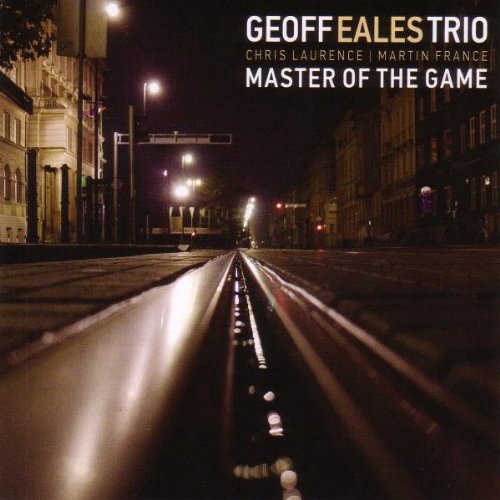
Geoff Eales Trio
Master OF The Game


By Ian Mann at TheJazzMann
Welsh born pianist Geoff Eales has been on the scene since the 1970’s but only started recording as a leader in 1999. He has mainly recorded in the piano trio format, most notably with bassist Roy Babbington and drummer Mark Fletcher, but there have also been a couple of solo piano ventures.
For “Master Of The Game” Eales has assembled a stellar new trio. Bassist Chris Laurence and drummer Martin France are among the very finest exponents of their respective instruments and it comes as no surprise that this album is probably Eales’ finest to date.
Classically trained and with an encyclopaedic knowledge of jazz piano Eales is a wonderfully versatile player. He has been a regular performer at Brecon Jazz Festival and it was here in 2007 that I saw him pay homage to the greats of jazz piano by playing in a myriad of styles from Art Tatum through Bill Evans to Keith Jarrett. “Master Of The Game” sees him stepping out of the shadows of his influences and truly stamping his own identity on an all original programme.
Given Eales’ jazz lineage the first thing that strikes the listener about “Master Of The Game” is just how modern and contemporary it sounds. The opening “Iolo’s Dance” features the implacable drum grooves of France, piano that changes from percussive to lyrical in the blink of an eye and masterful bass playing from Laurence, whether locking in with France or soloing fluently. The piece is a dedication to the Welsh poet and scholar Iolo Margannwg. It’s a splendid way to start the album.
“Magister Ludi” was inspired by writings of the German author Herman Hesse. The “Magister Ludi is the central character of Hesse’s final work “The Glass Bead Game”. Latin for “Master Of The Game” this is effectively the album’s title track. This richly dramatic piece opens with France’s eerie drum intro, building through Laurence’s rich, dark arco bass to Eales’ rhapsodic piano. The piece, like many others on the album is very much a musical journey, here cinematically travelling from minimalist beginnings to wide-screen magnificence. It’s something of a feature for Laurence who solos in both arco and pizzicato formats but the piece is best viewed as a complete entity, the writing and the performances are simply excellent.
“Awakening” initially explores a freer aspect of playing but achieves dramatic effect through Eales’ ghostly piano tinklings and Laurence’s low register arco flourishes. The trio later emerge from the darkness to lay down some joyous grooves that nod in the direction of e.s.t. (the later “Lachrymosa” is a more formal dedication to the late, great Svensson) France’s scintillating drum breaks are particular delight.
“Song For My Mother” opens with a lengthy passage for solo piano. The mood of the piece is celebratory and the trio play the beautiful, gospel tinged melody straight and with the minimum of ornamentation. There’s a typically lyrical solo from Laurence and France’s drums are subtly assertive, always pushing the music forward but never imposing too much. There are echoes of Keith Jarrett’s “My Song” in the style and feel of the piece but ultimately this is Eales’ song or , perhaps more accurately his mother’s.
Less dolorous than it’s title might suggest “The Saddest Journey” also has a beautiful melody, one that emerges from an improvised intro in the style of “Awakening”. Laurence once again impresses both with and without the bow and his pizzicato style is featured extensively in a lengthy solo. The bassist is the perfect foil for Eales and the pair sometimes perform concerts as a duo.
“Inner Child” opens with solo piano and evolves into a suitably airy melody sketched by Eales’ gently lyrical piano supported by Laurence’s purring bass undertow and France’s delicate brushwork. The trio embellish the melody with a number of dazzling runs from Eales and yet another fine solo from Laurence. Behind the relaxed atmosphere is a performance of consummate technical skill.
Next comes “Lachrymosa”, Eales’ dedication to the great Swedish composer and pianist Esbjorn Svensson who tragically died as the result of a diving accident in June 2008. Suitably reverent in tone the tune occasionally hints at e.s.t.‘s style on slower pieces but is not an overt attempt to mimic their approach. In the end “Lachrymosa” stands both as a fitting tribute and as a convincing piece of music in it’s own right.
“Sudden Departure” brings the album full circle, placing Eales’ Bill Evans influenced piano stylings into a contemporary rhythmic setting. It’s an invigorating way to close a marvellous album, a recording Eales can be very proud of. His writing is consistently imaginative and each item has a strong narrative thread that makes each composition unique.
The playing too, is excellent throughout with Laurence and France playing key roles. The bassist is brilliant with or without the bow, and functions both as a superb accompanist and a consistently interesting soloist. France too, is a master of his craft, his subtly propulsive style is just right for the music and his rhythmic shading and attention to detail exquisite. The interaction between the three players makes for genuine musical conversation. “Master Of The Game” is a great team effort.
However the ultimate credit must go to Eales for his masterful writing and excellent playing Like the great John Taylor (with whom France and Laurence have also worked) Eales just seems to get better with age. “Master Of The Game” is a highly distinctive album in an overcrowded field. It deserves to propel Eales into the piano premier league.


Dave Stapleton
Flight


By Chris May
Dave Stapleton is a multi-tasker of Olympian energy and talent. That is not a new observation, but as the pianist and record company director's outputs increase, it bears repeating. As well as operating the Edition label, which has released 30 albums of immaculately-recorded British and European jazz since he founded it in 2008, Stapleton has maintained his own career as a musician. Flight is his seventh album for the label as leader or co-leader, and is his most ambitious outing to date. It employs a jazz quartet and a string quartet—but is a long way from being a routine with-strings album.
As with most of Stapleton's albums, Flight is as much about his composing and arranging as it is about performance. The writing here conjures a serious atmosphere: sometimes wistful, sometimes somber; sometimes seeming to reach back into memory, at others forward towards resolution, or, perhaps, the unattainable—but always reaching. The melodies are strong and sharply turned; the harmonies tonal but flecked with astringency and flashes of dissonance, at times variously suggesting the chamber music of Antonin Dvorak, Benjamin Britten and Dmitri Shostakovich. To this pleasingly complex ambiance, the jazz soloists add another dimension.
The collective personnel is made up of young lions from across Britain, Europe and Scandinavia. Two are Edition artists in their own right: Danish tenor saxophonist Marius Neset and British double bassist Dave Kane have both released debut albums on the label, Neset's Golden Xplosion (2011) and Kane's Eye Of The Duck (2009). Alongside Matthew Bourne and drummer Steven Davis, Kane is also one-third of the Bourne Davis Kane trio, who released Lost Something on Edition in 2008. Neset, the chief soloist on Flight, more than justifies the excitement which greeted Golden Xplosion.
Finnish drummer Olavi Louhivuori is a less familiar name. Stapleton heard him playing with saxophonist Tore Burnborg at Jazzahead in Germany in 2011, got along well with him at a post-performance meal with the band, delved into his back catalogue and liked what he heard. Louhivuori has also performed and/or recorded with trumpeter Tomasz Stanko, bassistMats Eilertsen and pianist Alexi Toumarila. Violinist David Brodowski, born in Poland and brought up in Germany, formed the Brodowski String Quartet in London in 2005, with three British players. The quartet is an up-and-coming item on the country's chamber music scene.
Jazz/classical mixes are fiendishly difficult to pull off, and few of them are as deeply synthesized as the music on Flight. It is an album whose elegant surface sits atop real depth and substance. Highly recommended.
Tracks:
Before; Polaroid; Flight; Henryk Part 1; Henryk Part 2; Unity; OTS; Whisper; Running East; North Wind.
Personnel: 
Dave Stapleton: piano, electric piano; Marius Neset: tenor saxophone; Dave Kane: double bass; Olavi Louhivuori: drums. Brodowski String Quartet: David Brodowski: violin 1; Catrin Win Morgan: violin 2; Felix Tanner: viola; Reinoud Ford: cello.

Monday, December 30, 2013

THE FINAL BALANCE OF 2013


By Claudio Botelho

Among the many CD’s I’ve listened this year, one was especially superlative. By enhancing said CD to 24 bit/196 kHz, it sounded wonderful.
(I’ve been listening to CD’s for 99,999% of my time and, for me, turntables, cartridges, alignment protractors, extreme leveling of turntable, careful adjustment of cartridges and the like are things of the past, no matter how often the vinylists insist on saying there’s no intelligent life out of a preamplifier phone stage. If one decides (as I like to do) to investigate this matter in the light of its technicality, he will fail to find objective reasons to justify said vinyl sound superiority. For me, the innumerate mechanical variables one deal with when assembling a complete LP reproducing system is so gargantuan that it is almost impossible to get a faithful reproduction of real life.
But, on this endeavor, after all sorts of struggles, he’ll most certainly arrive at a point that will please well (or extremely well, for that matter) his taste: now the sound is tailored for him and nothing will beat it! Euphony rules...
I keep on thinking turntables is akin to car carburetors and see no reason to find it better than digital players and, so, be in a different league, for instance, than digital photography and television!)
Now, let’s go back to my first sentence. Last Sunday afternoon, while listening to a bunch of CD’s (with assurance of a generous intake of electric energy to my rig), I decided to listen to Ahmad Jamal’s latest “Saturday Morning: La Buissanne Studio Sessions”. Man, what an excellent recording! What a natural sound! What a Steinway! Wow! Can a recording get any better than this? If your perspective is three dimensionality, tonal purity and full frequency response, you’d have to work very hard to find a better recording. I, being an ordinary music lover and not golden eared at all, couldn’t find any of the shortcomings usually associated with CD playing; my experience bordered the epiphany! This was the CD above mentioned.
To sum it up, the musical presentation was nothing short of remarkable. Jamal’s pianism, infused with great confidence as always, was the most natural extension of a grand Steinway to be found anywhere this side of the classical world. No jazz pianist I know has his easy-casual style of playing. Jamal is an energy-saver player; one who, even during fortissimos, plays effortlessly, in the most natural way. He’s extremely in tune and the sound he extracts from the piano (always first-rate grand concert Steinways) is on par with the best anyone can extract from this fantastic instrument.
Some jazz aficionados, including some of my “jazz-friends”, have taken him for granted for long, saying he’s been repeating himself. Of course, these people expect something new each time an artist releases a new recording. I’m more humble in my expectations; I just wanna have some more stuff of the same piece of cloth. For me, each musician has his comfort zone and any time he tries to leave it behind he does a lesser job. So, 99% of the time, a bit more of the same thing is the best deal, especially if we’re leading with the unexpectedness nature of jazz. Here, the simple matter of handling this form of art puts monotony out of the equation. Sometimes, too much of a good thing can sink the ship, you know…
A compulsive jazz listener, I have my own comfort zone as anyone else and it stays firmly inside piano-jazz trios, although I frequently listen to different groups of musicians, large ensembles and even a plethora of some many false-jazz singers we have these days, some of them, by the way, earning valuable prizes as jazz accomplishers.
The Jamal we have today is the same we had in, say, 1958 and, irrespective of his somewhat advanced age, keeps on refining his craft: his sometimes sparse playing (his hallmark), incisive attacks, riffs and unexpected changes remain, but time has given them much more assertiveness and polish. His beliefs, likes and dislikes are unchanged and he’s still the same original stylist of yore.
He’s not a musician for frantic listeners; he must be savored slowly, like a good old wine. Always effortlessly playing, sometimes the entireness of his playing passes by unnoticed by those a little less attentive, but the real game is that, although exhilarating many times, he’s a musician of many subtleties which are mixed with his frequent riffs.
Those in search of novelty playing must look elsewhere, as his playing is well established; he’s found his way long ago and most certainly will keep on tracking it without detours, always masterfully conceiving sounds of great expressiveness and ease. I’ve listened his last outing for days in a row now and find it is much difficult this happen with works of other players. This, in my view, can only attest the timelessness of his music.
One thing that escapes to the awareness of many is that when we search for the work of an artist we want “more of the same thing”, just like when we look for a bottle of Coke: we know, beforehand, what we’ll be getting; anything different will make our effort a failure! So, please, don’t ask Jamal to be any different and be pleased to find he’s the same old chap that has been making music of the highest level all these years!
So, this is my CD of this year. The remaining nine are:

2- ROSARIO GIULIANI & FRANCO D’ANDREA – “DUETS FOR TRANE”. As I’ve already written about, this is a tour-de-force recording done by two outstanding musicians. Strongly stated throughout, this is a recording as organic as one can get.

3- VINCE MENDOZA – “BLAUKLANG”. This is a work of an arranger which always transcends the pop music world and borders the highest echelon of this art. Subtly and multilayered, his arrangements are a statement of elegance.

4- BOBO STENSON – “INDICUM”. The capsule rendering of a Bill Evans song (Your Story) which opens the album sets the mood of the whole work: simplicity, sensitivity, elegant understatement and symbiosis. This is the recipe of a work that can be listened times and times again; relentlessly…

5- CLAUDIO FILIPPINI TRIO – “FACING NORTH”. The young pianist Filippini has been of my acquaintance since the end of 2011. As of now, this is the fifth or sixth of his albums that I have the pleasure to listen. Some fresh air in his playing! In this endeavor, he is mated by Nordic players of Palle Danielson renown and finish drummer Olavi Louhivouri, a departure from his all-Italian musicians of his former works. Due to the great admiration he has to these northern musicians, he conceded them a little more space to stretch and, as such, his pianism shrank a bit. This is the reason I find some of his earlier works more to my liking, but not to the point of leaving this CD out of my list of this year.

6- NICO CATACCHIO T(TH)REE – “THE SECOND APPLE”. Certainly, not one more Ray Brown trio! Here, you have meticulous and complex arrangements of original songs in which everybody has a distinct role and no one overshadows any other. Comprised of piano, bass and drums, the group follows a program of somewhat darkish songs of great inspiration, with little space for spontaneous playing, which makes the renderings not all that jazzy, but, otherwise, richly enchanting. Catacchio is a bass player and has chosen to make an album of great expressiveness.

7- ALESSIO MENCONI – “SKETCHES OF MILES”. As you may have gathered, the repertory is Miles Davis’. The combination of guitar, organ and drums is a winner one and, here, you have a very tight trio where the organ admirably fills the spaces left by the guitar and the drums work a little behind, rounding off everything. All you have to do is relax and listen to the songs.

8- TIM LAPTHORN – “SEVENTH SENSE”. Richly focused, recorded out of first takes, this work of the young Lapthorn shows he’s one of the best pianists of his generation. As much as it was easy for them to record it, it is to savor it. You go from the first song to the last one without noting the passing of time. Who can ask for more?

9- JOE DE FRANCESCO – “WONDERFUL! WONDERFUL!” Captured by the great engineer Rudy Van Gelder, the sound of this CD is pristine, as pristine is the performance of its musicians. The mood is always optimistic, the interplay faultless and the pleasure of listening to the octogenarian Jimmy Cobb playing like hell is enough to make this work a great diversion.

10- FRED HERSCH & JULIAN LAGE – “FREE FLYING”. Unfortunately marred by a lousy recording, this is one of the most meaningful works of Hersch. The young guitarist Lange (already an experienced musician) is up to the task of playing with such a talented pianist as Hersch. Except songs of Sam rivers (Beatrice) and Thelonius Monk (Monk’s Dream), the program is comprised of Hersch originals, which makes things tougher for Lage, but the young player was not challenged by this and plays in the same level of that master. The presentation (a live recording) is eclectic and ranges from Bach’s to rag time modal playing, passing to almost any other kind of music extant. A natural show-off of interplay this is!

Some other albums deserve mention; they are:
11- DOMINIC J. MARSHALL TRIO – “ICAROS”;
12- PHRONESIS – “WALKING DARK”;
13- ORRIN EVANS – “…IT WAS BEAUTY”; and
14- STEVE KUHN – “THE VANGUARD DATE”.

One last thing I couldn’t let unnoticed: this was a poor year for jazz recorded music. It was certainly more difficult for me to make this list and the result is wanting indeed. Let’s wait that the coming year will be better, that the Italians give us more of their fabulous musicianship and that, at the end of it, we don’t have to search so hard to make a list of albums to be reckoned.
I wish for all of you a better year than this one.

Corrigendum.
This article was published in 31.12.2013. I have committed a gross mistake in my list of the best of the year: I’ve forgotten mentioning Alan Broadbent’s “Heart to Heart” solo outing. I could never have missed it for the simple reason it is one of the very best albums of the last year. So consider it in my premium list and displace Joe DeFrancesco’s “Wonderful! Wonderful” to the “deserve to mention” group. Broadbent’s album was covered to some extent in my former article, making it unnecessary to do it again here.

WORLDJAZZ TOP 10 - 2013

Best Jazz 2013 by WORLDJAZZ

Jazz Record of 2013
- Alan Broadbent - Heart To Heart 

Top 10 Jazz Records of 2013
- Joey DeFrancesco - Wonderful ! Wonderful ! 
- Nico Catacchio T(th)ree - The Second Apple
- Di Stéffano - Outros Mares
- Charles Lloyd & Jason Moran - Hagar's Song

- Claudio Fillipini Trio - Facing North
- Marcos Valle & Stacey Kent with Jim Tomilson - Ao Vivo
- Rosário Giuliani & Franco D'Andrea - Duets For Trane
- Tim Lapthorn - Seventh Sense
- Ahmad Jamal - Saturday Morning


Artiste du Jazz 2013
Hamilton de Holanda & Ahmad Jamal

FRIENDS TOP 10 JAZZ CD's - 2013

By Claudio Botelho

01- AHMAD JAMAL - SATURDAY MORNING
02- ROSARIO GIULIANI & FRANCO D'ANDREA - DUETS FOR TRANE
03- VINCE MENDOZA - BLAUKLANG
04- BOBO STENSON - INDICUM
05- CLAUDIO FILIPPINI TRIO - FACING NORTH
06- NICO CATACCHIO T(TH)REE - THE SECOND APPLE
07- ALESSIO MENCONI - SKETCHES OF MILES
08- TIM LAPTHORN - SEVENTH SENSE
09- ALAN BROADBENT - HEART TO HEART
10- FRED HERSCH & JULIAN LAGE - FREE FLYING
Menções honrosas:
01- DOMINIC J. MARSHALL TRIO - ICAROS
02- PHRONESIS - WALKING DARK
03- ORRIN EVANS - ... IT WAS BEAUTY
04- STEVE KHUN - THE VANGUARD DATE
05- JOE DEFRANCESCO - WONDERFUL! WONDERFUL!


By Dr. Marcílio Adjafre

Ano sem lançamentos extraordinários, mas que propiciou a avaliação de algumas coisas antigas graças ao Itunes, ferramenta que utilizei bastante. De forma que alguns CD da relação só estão disponíveis, ou eu só os tenho, na forma digital. Os três primeiros da lista foram realmente os que mais me impressionaram e deram margem a repetidas audições:

1) The Second Apple, Nico Catacchio T(h)ree 
2) Tributo a Lucio Battisti, 6 in Jazz 
3) The Endless Mysteries, George Colligan 
4) Giro-vago, Paolo Paliaga e Ares Tavolazzi 
5) Steppin'out, Roberto Olzer Trio 
6) Ivan Paduart Trio Live 
7) Thank You, Mario Nappi feat. Javier Girotto 
8) Inni D'Italia, Paolo Di Sabatino & Renzo Ruggieri 
9) Quasar, Geraldo Henrique Bulhões 
10) Icaros, Dominic J Marshall Trio 
11) Odd Man In, Ettore Carucci 

 Menções honrosas: 
1) DVD Chick Corea & Stefano Bollani Duet - Umbria Jazz 2009 
2) Hope, Giovanni Scasciamacchia Trio with Fabrizio Bosso 
3) Überjam Deux, John Scofield - Para quem gosta de guitarra, um CD extraordinário, mas não é jazz. No máximo, fusion.


By Renato Medeiros Barroso

Relação dos melhores de 2013:

1 - Joe DeFrancesco - Wonderful! Wonderful!
2 - Bob Stenson Trio - Indicium
3 - Marian McPartland with strings - Silent Pool
4 - Andrea Pagani Trio - Le Storie D'Amore
 
Abraço a todos e um bom 2014,
Renato


By Prof. Dr. Carlos Couto

1. FÉ CEGA - Leandro Braga Trio ( CD excepcional-imperdível-fantástico: MARAVILHOSO )
2.Edu Lobo & Metropole Orchestra - Edu Lobo
3.Um Olhar sobre Villa Lobos - Mario Adnet & Orquestra
4.Mata Atlântica - Alberto Rosemblit & Orquestra
5.Marcos Valle & Stacey Kent - M.Valle & S.Kent
6.Entre Elle & Lui - Michel Legrand & Natalie Dessay
7.Saturday Morning - Ahrmad Jamal
8. Caminhos - Bob Cupini Quinteto
9. Let's Dance - US Air Force Big Band
10.Back-Stage Sally - S. Wagner Sexteto

MELHOR DVD: HOMENAGEM A BERT KAEMPFERT
CANTORA DO ANO: ANITA O'DAY ( in memorium)
HOMENAGEM POST MORTEM: OSCAR CASTRO NEVES, MARIAN McPARTLAND, PAUL SMITH


By Márcio Távora

CDS:
BOB SNEIDER & JOE LOCKE (2007) - NOCTURNE FOR AVA – FILM NOIR PROJECT
DAN NIMMER & SAYAKA TSURUTA (2012) [2 CDS] - ALL THE THINGS YOU ARE
EDU LOBO (2011)  –  EDU LOBO & METROPOLE ORKEST  
HENRY JEROME (1959...1961) [2 CDS] – BRAZEN BRASS FOUR COMPLETE ALBUMS
HENRY MANCINI (1962) –  HATARI – COMPLETE ORIGINAL MOTION PICTURE
HENRY MANCINI (1963) –  CHARADE – COMPLETE ORIGINAL MOTION PICTURE
JOHNNY MERCER (1973-1974) [2 CDS] – MOON RIVER – JOHNNY MERCER SINGS
MARCOS VALLE (2013) – MARCOS VALLE & STACEY KENT AO VIVO 50 ANOS
MARIA MARKESINI (2011) – CINEMAPASSIONATA – A MOTION PICTURE SONGBOOK
MARIO ADNET (2012) – AMAZONIA – NA TRILHA DA FLORESTA
NATALIE DESSAY & MICHEL LEGRAND (2013) – ENTRE ELLE ET LUI
NEW ROMAN TRIO (2008) – BACH JAZZ
SID RAMIN (1963) – NEW THRESHOLDS IN SOUND & THE BIG BAND SOUND
TINA MAY (2010) – TINA MAY SINGS PIAF – CELEBRATING A LEGEND
TSUYOSHI YAMAMOTO TRIO (2013) – GENTLE BLUES 

DVDS:
ANITA O’DAY (1963-1970) – JAZZ ICONS – LIVE IN ’63 & ‘70 
BURT BACHARACH (2008) – B.B. & THE BBC CONCERT ORCHESTRA 
DON FRIEDMAN (2006) – D.F. MEETS CEDAR WALTON & BENNY GOLSON {RMB}
JOE LOCKE & BOBBY HUTCHERSON (2007) – HOMAGE TO MILT JACKSON {RMB}
MICHEL LEGRAND (2010) – M.L. AND FRIENDS – 50 YEARS OF MUSIC & MOVIES 
STEFANO BOLLANI & CHICK COREA (2009) – DUET {RMB}
STEVE KUHN TRIO & JOE LOVANO (2008) – REMEMBERING JOHN COLTRANE {RMB}

OBSERVAÇÕES / CRÉDITOS:
A apresentação está em ordem alfabética, pois todos que aqui constam CDs e DVDs,
me agradaram muito. Os destaques maiores são para os DVDs, principalmente, DON
FRIEDMAN, JOE LOCKE & BOBBY HUTCHERSON, STEFANO BOLLANI & CHICK COREA e
STEVE KUHN TRIO & JOE LOVANO.
O melhor de todos sem a menor dúvida é o do STEFANO BOLLANI & CHICK COREA, sendo assim o DVD do ano de 2013.
Acuso o responsável pelos DVDs selecionados o Sr. RMB {Roberto Medeiros Barroso}.
Na relação de CDs apresentada constam alguns que pela primeiríssima vez foram lançados em formato CD, e que foram muito marcantes na minha estrada musical, que são:
HENRY JEROME & THE BRAZEN BRASS {METAIS EM BRASA} [4 LPs]
SID RAMIN BIG BAND {Co-Arranjador de Leonard Bernstein} [2 LPs]
HENRY MANCINI {HATARI & CHARADE} {Eu já tinha os 2 CDs, mas nesses estão inseridas mais músicas e outros arranjos para as que existiam} {Talvez o HANK não gostasse}


By Augusto Cesar Costa

O MELHOR JAZZ DE 2013:
1. Ahmad Jamal - Saturday Morning
2. Keith Jarrett - Somewhere
3. Eldar Djangirov - Breakthrough
4. Alessio Menconi - Sketches of Miles
5. Maria Baptist - Music for Jazz Orchestra
6. Tomasz Stanko - Wislawa
7. Kenny Wheeler - Six for Six
8. Charles Lloyd & Jason Moran - Hagar's Song
9. Ralph Towner - Travel Guide
10. Andy Bey - The World According to Andy Bey

Menções Honrosas (CDs lançados em 2012):
1. Dino & Franco Piana Septet - Seven
2. Nico Catacchio T(h)ree - The Second Apple
3. Claudio Filippini Trio - Facing North

Saturday, December 14, 2013

Jim Hall 1930 - 2013


By John Fordham at TheGuardian
The jazz guitarist Jim Hall, who has died aged 83, was a modest maestro with immense influence. Hall played an electric instrument often prone to hyperbole with an irresistibly quiet delicacy, and his improvisations were as shapely as fine songs. He was still performing and initiating new projects in his 80s. When he played at the London Jazz festival in November 2012, he won the audience over before he had even played a note by declaring with characteristic understatement: "It's great to be … any place, actually."
On that occasion he performed with a trio: his ingeniously lyrical music sounded just as engaging as it had when his gently weaving lines and coaxing chord-playing with Jimmy Giuffre's trio graced the title sequence of Bert Stern's documentary about the 1958 Newport Jazz festival, Jazz on a Summer's Day.
Hall wound up his London set with a vivacious version of his old sparring partner Sonny Rollins's calypso St Thomas, demonstrating his alertness to contemporary technology by sparingly applying a steel-pan effect to the guitar. His gig had probably been one of the quietest shows at the 2012 festival, but – typically – it was one of the most heartwarmingly memorable.
Hall spent half a century collaborating with some of jazz's greatest originals. He toured Europe with Ella Fitzgerald in 1960; played improvised duets with the pianist Bill Evans; imaginatively shadowed the thundering saxophone lines of Rollins in the trio that recorded Rollins's landmark post-sabbatical album The Bridge (1962); worked with the composer and saxophonist Paul Desmond (1959-65); and, in his later years, put his classical training to use in mixed-genre compositions for jazz groups and string quartets, and orchestral works including the guitar concerto Peace Movement.
Born in Buffalo, New York, Hall was raised in Cleveland. After taking up the guitar at the age of 10, he was playing professionally as a teenager. Although influenced by Benny Goodman's pioneering young guitar star Charlie Christian, he listened to saxophonists as much as guitarists, for their rounded voice-like tone and their conception of melody.
Hall studied theory and piano at the Cleveland Institute of Music in the early 1950s (guitars were not on the programme), as well as classical guitar in Los Angeles, and worked with the the drummer Chico Hamilton's quintet – a significant presence in the reserved new "cool jazz" movement – in 1955-56. He made Jazz Guitar, his first album as a leader, in 1957, and worked until 1959 in a trio with the sophisticated reeds player and composer Giuffre – an experience Hall later credited with training him to keep flawless time without drums. He also taught at the forward-thinking Lenox School of Jazz in Massachusetts, and performed with Rollins, Desmond, Evans, Fitzgerald, Lee Konitz and Ben Webster during a busy freelance period in the 1960s.
Hall later moved to New York, where he performed as a sideman, co-led a group with the trumpeter Art Farmer and formed a trio including the pianist Tommy Flanagan. He briefly joined a talented studio band for Merv Griffin's TV show in 1965, began his remarkable run of duo explorations with Evans (1966) and Ron Carter (1972), and showed how punchy, affectingly bluesy and melodically succinct his calm improvisations could be, on the album Jim Hall Live! (1975).
In 1981, Hall recorded with both the swing piano star George Shearing and the classical violinist Itzhak Perlman, and throughout the 1980s and 90s he continued to lead sympathetic bands featuring acclaimed younger partners such as the keyboardists Gil Goldstein and Larry Goldings, the saxophonist Chris Potter and the drummer Bill Stewart. In 1986, he partnered the saxophonist Wayne Shorter and the pianist Michel Petrucciani for gigs at the Montreux Jazz festival and the Village Vanguard in New York. Four years later he hosted a guitar concert at the JVC Jazz festival in New York, at which he performed with John Scofield, Pat Metheny and John Abercrombie.
In 1991, Hall and Metheny played four duo concerts and later co-led a quartet with the saxophonist Joe Lovano. Hall also began to give unaccompanied shows, aided by electronics that allowed him to play contrapuntally, but without ever blurring the motivic logic and discreet pungency of phrasing that always shaped his signature.
For the 1995 album Dialogues, Hall wrote almost all the music, designed to steer intimate conversations with partners including Lovano and the guitarists Bill Frisell and Mike Stern. For Textures, in 1996, he moved closer to classically inflected chamber music. His jazz quartet was augmented by strings on the album Jazzpar Quartet + 4 (1998), which was recorded to celebrate the guitarist's receipt of Denmark's prestigioushis receiving the Danish Jazzpar prize and which included Hall's classical piece Thesis and a version of Jimi Hendrix's Purple Haze.
Composition and teaching played significant parts in Hall's later career. He taught at the New School for Social Research, in New York (1990-95), and wrote the instructional book Exploring Jazz Guitar (1991). Transcriptions of his playing have guided aspiring guitarists everywhere.
In his 70s, Hall seemed to get even better as a performer. The live albums Grand Slam: Live at the Regattabar (2000) and Magic Meeting (2004) found him sometimes sounding more animated and carefree than he had in his circumspect youth. In 2004 he received a Jazz Masters award from the National Endowment for the Arts, and though health issues troubled him later in the decade, he continued to compose and perform. In 2013 he began releasing new live recordings through ArtistShare, a platform financed by fans' contributions. In the summer of 2013 Hall returned to the Newport Jazz festival to play with the 25-year-old guitarist Julian Lage, a musician of comparable melodic grace and fertility of ideas.
After the announcement of Hall's death, Rollins declared: "I don't know anybody who didn't love him, including myself. He was the consummate musician, and it was a privilege to work with him."
Hall is survived by his wife, Jane, whom he married in 1965, and by his daughter, Devra, who was also his manager.
• James Stanley Hall, guitarist, born 4 December 1930; died 10 December 2013

Sunday, December 01, 2013

Chico Hamilton 1921 - 2013


By PETER KEEPNEWS at The NewYork times
Published: November 26, 2013
Chico Hamilton, a drummer and bandleader who helped put California on the modern-jazz map in the 1950s and remained active into the 21st century, died on Monday in Manhattan. He was 92.
His death was announced by April Thibeault, his publicist.
Never among the flashiest or most muscular of jazz drummers, Mr. Hamilton had a subtle and melodic approach that made him ideally suited for the understated style that came to be known as cool jazz, of which his hometown, Los Angeles, was the epicenter.
He was a charter member of the baritone saxophonist Gerry Mulligan’s quartet, which helped lay the groundwork for the cool movement. His own quintet, which he formed shortly after leaving the Mulligan group, came to be regarded as the quintessence of cool. With its quiet intensity, its intricate arrangements and its uniquely pastel instrumentation of flute, guitar, cello, bass and drums — the flutist, Buddy Collette, also played alto saxophone — theChico Hamilton Quintet became one of the most popular groups in jazz. (The cellist in that group, Fred Katz, died in September.)
The group was a mainstay of the nightclub and jazz festival circuit and even appeared in movies. It was prominently featured in the 1957 film “Sweet Smell of Success,” with Burt Lancaster and Tony Curtis. (One character in that movie, a guitarist played by Martin Milner, was a member of the Hamilton group on screen, miming to the playing of the quintet’s real guitarist, John Pisano.) And it was seen in “Jazz on a Summer’s Day,” Bert Stern’s acclaimed documentary about the 1958 Newport Jazz Festival.
Cool jazz had fallen out of favor by the mid-1960s, but by then Mr. Hamilton had already altered the sound and style of his quintet, replacing the cellist with a trombonist and adopting a bluesier, more aggressive approach.
In 1966, after more personnel changes and more shifts in audience tastes, Mr. Hamilton, no longer on top of the jazz world but increasingly interested in composing — he wrote the music for Roman Polanski’s 1965 film, “Repulsion” — disbanded the quintet and formed a company that provided music for television shows and commercials.
But he continued to perform and record occasionally, and by the mid-1970s he was back on the road as a bandleader full time. He was never again as big a star as he had been in the 1950s, but he remained active, and his music became increasingly difficult to categorize, incorporating elements of free jazz, jazz-rock fusion and other styles.
He was born Foreststorn Hamilton in Los Angeles on Sept. 21, 1921. His father, Jesse, worked at the University Club of Southern California, and his mother, Pearl Lee Gonzales Cooley Hamilton, was a school dietitian.
Asked by Marc Myers of the website JazzWax how he got the name Chico, he said he wasn’t sure but thought he acquired it as a teenager because “I was always a small dude.”
While still in high school he immersed himself in the local jazz scene, and by 1940 he was touring with Lionel Hampton’s big band. After serving in the Army during World War II, he worked briefly with the bands of Jimmy Mundy, Charlie Barnet and Count Basie before becoming the house drummer at the Los Angeles nightclub Billy Berg’s in 1946.
From 1948 to 1955 he toured Europe in the summers as a member of Lena Horne’s backup band, while playing the rest of the year in Los Angeles. His softly propulsive playing was an essential element in the popularity of Mulligan’s 1952 quartet, which also included Chet Baker on trumpet but, unusually, did not have a pianist. The group helped set the template for what came to be known as West Coast jazz, smoother and more cerebral than its East Coast counterpart.
The high profile he achieved with Mulligan emboldened him to try his luck as a bandleader, something fairly unusual for a drummer in the 1950s. His success was almost instantaneous.
He went on to record prolifically for a variety of labels, including Pacific Jazz, Impulse, Columbia and Soul Note. Among the honors he received were a National Endowment for the Arts Jazz Masters Award in 2004 and a Kennedy Center Living Jazz Legend Award in 2007.
Although slowed by age, Mr. Hamilton continued to perform and record beyond his 90th birthday. He released an album, “Revelation,” in 2011 on the Joyous Shout label, and had recently completed another one, “Inquiring Minds,” scheduled for release in 2014. Until late last year he was appearing at the Manhattan nightclub Drom with Euphoria, the group he had led since 1989.
Mr. Hamilton is survived by a brother, Don; a daughter, Denise Hamilton; a granddaughter; and two great-granddaughters. His brother the actor Bernie Hamilton, and his wife, Helen Hamilton, both died in 2008.
Mr. Hamilton was highly regarded not just for his drumming, but also as a talent scout. Musicians who passed through his group before achieving stardom on their own include the bassist Ron Carter, the saxophonists Eric Dolphy and Charles Lloyd and the guitarists Jim Hall, Gabor Szabo and Larry Coryell. In a 1992 interview with National Public Radio, the saxophonist Eric Person, a longtime sideman, praised Mr. Hamilton for teaching “how to work on the bandstand, how you dress onstage, how you carry yourself in public.”
Mr. Hamilton taught those lessons as a bandleader and, for more than two decades, as a faculty member at the New School for Jazz and Contemporary Music in New York. Teaching young musicians, he told The Providence Journal in Rhode Island in 2006, was “not difficult if they realize how fortunate they are.”
“But,” he added, “if they’re on an ego trip, that’s their problem.”
Daniel E. Slotnik contributed reporting.

Sunday, November 10, 2013

2 Sem 2013 - Part Fifteen

Alex Wilson
Trio


By Bruce Lindsay
Combining live and studio recordings, original and classic tunes, up-tempo grooves and reflective ballads, the Alex Wilson Trio is a punchy, energetic, album. This is the ninth album from Wilson, but it's his first with a piano trio lineup. Wilson has released all of these albums on his own label, fitting in other projects such as his role as musical director for Rodrigo y Gabriela and his work with guitarist Ernest Ranglin between releases.
A quick scan of Wilson's discography reveals repeated references to Latin music and especially to salsa. Alex Wilson Trio has a much broader range than this: although Latin grooves are plentiful the influences of straight-ahead jazz, pop-rock and the American Songbook are also apparent. Wilson is accompanied throughout by the excellent Davide Mantovani on bass. For three tunes the drum chair is taken by Tristan Banks: for the rest it's occupied by Frank Tontohwhose lightly swinging style, inspired by pop, soul and Highlife, contrasts well with Banks' more muscular, straight-ahead, approach.
Wilson's "Kalisz," inspired by the Polish jazz piano festival, is a full-on, intense, display of his musical ability. Miles Davis' "Solar" gets a re-working inspired by Cuban danzón: the result is a slinky, sensual, version that showcases Mantovani's equally slinky bass solo. Tontoh's "Jasmina" is another delightfully danceable tune rooted in Mantovani's bass lines. "The Quest," another Wilson original, is slow and moody, a contrast to the upbeat drama of Mantovani's "Arab Spring."
Most of the tunes on Alex Wilson Trio were recorded live at Warwick Arts Centre and the Pizza Express Jazz Club in London. The band's sound is captured well. Unfortunately the audience enthusiasm on display on these live tracks is rather muted and sparse, even with its occasional whoop and whistle, diminishing rather than enhancing the live music experience. It may have been wiser to edit those responses out, leaving the trio's energy and verve to speak for itself.
Track Listing: 
Fly; Kalisz; Remercier Les Travailleurs; Solar; We Work The Black Seam Together; Jasmina; The Quest; Arab Spring; What Is This Thing Called Love.
Personnel: 
Alex Wilson: piano; Davide Mantovani: bass; Frank Tontoh: drums (1-3, 6-8); Tristan Banks: drums (4, 5, 9).


Edgar Knecht
Dance On Deep Waters


By Stuart Nicholson
Conceptually this album is faultless - some of the tunes are refracted through the prism of bebop, 'Froiing', or the latin inspired 'Gedankenfreiiheit', but the album's centre is Knecht's interperetive mastery, eloquent musicianship and sheer creativity that makes this album sing. In Europe, the critics have been falling over themselves with delight since this album came out a few months ago, "Sometimes it's so good, it makes you cry," said Hessische Allgemeine, and you can understand where the reviewer is coming from. Edgar Knecht is a special talent.
On their new album 'Dance on Deep Waters', the brilliant quartet continue their forage through the 'Old German Songbook'. As a result, some of the most popular songs of the romantic era are turned into works of spine-tingling, mesmerising ­intensity, including Latin-flavoured 'Gedankenfreiheit' or lightning-speed bebop-piece 'Frühling'.
With his unique and refreshing approach, Edgar Knecht has both raised the bar for those following in his trail and opened up new gateways to long-lost traditions. Thanks to their airy, playful magic, his songs are suspenseful spaces for the imagination to run wild and seeming paradoxes to co-exist; 'Der wilde Wassermann' ('Wild Aquarius') is both minimal and classically rich, while tragic love story 'Es waren zwei Königskinder' ('Once there were two king's children') seems to ­dispense with time and space altogether.
Piano, bass and drums are dancing on the waves of deep waters, rhythms and melodies are rising like ecstatic fireworks. 'And all of this', according to newspaper Hessische Allgemeine, 'is done with plenty of Innigkeit, a boisterous joy of playing, a love for improvisation and spontaneity. Sometimes it's so good, it makes you cry.'
Produced by Dagobert Böhm for Ozella Music
Recorded and mixed 2012 by Stephan van Wylick, fattoria musica, Osnabrück
Mastered by Hans-Jörg Maucksch, Pauler Acoustics, Northeim


Orrin Evans
"...It was beauty"


By Mike Shanley at Jazztimes
Orrin Evans works with one drummer and four different bassists on ...It Was Beauty, all of whom have played with the pianist in different ensembles. While Eric Revis plays on most of the tracks, Luques Curtis and Alex Claffy each get their turn and Ben Wolfe joins Revis on two tracks that manage to flow easily and avoid getting too busy in the low end. All of this is significant because the album’s mood shifts with nearly every track, emphasizing how equally adept Evans sounds in different situations.
The album’s programming bears this out, since only two of the 10 tracks were written by Evans. Evans turns Ornette Coleman’s “Blues Connotation” into a New Orleans groove; reveals his deep spirituality in Andraé Crouch’s hymn “My Tribute,” with Claffy’s assistance; and slows Hoagy Carmichael’s “Rockin’ Chair” down to a crawl to give it a deeper examination. The dual basses of Revis and Wolfe work as an anchor and a countermelody, respectively, in “African Song,” leaving plenty of space for drummer Donald Edwards to cut loose. “Commitment,” an excerpt from a longer Evans original, never gets overly heavy either, and shows the deep variety of moods inherent in Evans’ piano work, by turns weighty and gentle but always enthralling. If anyone released an album this year that’s more diverse yet coherent, I’d like to hear it.
Tarbaby is a collective trio consisting of Evans, bassist Revis and drummer Nasheet Waits that began seven years ago. They’re joined on Ballad of Sam Langford by alto saxophonist Oliver Lake (back for a second time with the trio) and trumpeter Ambrose Akinmusire. (Evans’ son Matthew also plays finger piano on one track.) The album’s title subject was a boxer from the 1900s known as the “the greatest fighter nobody knows,” who also had the unfortunate nickname “the Boston Tarbaby.” Aside from opening and closing with tracks called “Title Bout,” this strong set of music doesn’t exactly come off like a concept album, not that it needs a concept.
All five musicians wrote songs individually for the set. Akinmusire might seem like the wild card among the group but he sounds at home, whether adding wild growls and vocal squawks on “Korean Bounce,” or delivering the delicate ballad “Asiam” in a duet with Evans. Lake, whose fire and passion seem to grow with age, blends effectively with the trumpeter on “When” and “MBBS,” both of which have a ’60s Miles vibe about them. Then there is the core trio, which can easily take the music from straight-ahead to free and back. Waits’ lyrical “Kush” is a highlight among highlights. With the younger Evans joining them on “August,” they also engage in a little AACM fun, with Waits on recorder and Revis also on finger piano. All parties sound uninhibited, and the feeling is infectious.


The Impossible Gentlemen
Internationally Recognised Aliens


By John Kelman
When you come out of the gate as strongly as The Impossible Gentlemen (Basho, 2011), you create a pretty high set of expectations for the follow-up. Of course, when it's a quartet of musicians this accomplished—a transatlantic, trans-generational group consisting of a living legend (bassist Steve Swallow), a less-known but equally active American cohort (drummerAdam Nussbaum), a rising British star (pianist Gwilym Simcock and fellow Brit deserving far greater recognition (guitarist Mike Walker—there's an intrinsic recipe for a sophomore effort that can (and does) easily transcends their superlative debut. Add to that—based on the self-penned liner notes and photos—a group of players that don't just get along, but whose collective chemistry is clearly as much about joy and fun as it is serious music-making, and it means Internationally Recognisable Aliens is a record that, like its predecessor, is destined for year-end "best of" lists.
Bumping into Simcock in Montreal this past summer, he described The Impossible Gentlemen as "music written for what we hoped the group would be" while, with more touring under its belt,Internationally Recognised Aliens was "for what we know the group can be." On the road, the Impossible Gentlemen's members also discovered that they got along like gangbusters, and their joie du vivre is all over this record, from the unexpectedly gritty opener, "Heute Loiter"—its John Scofield-esque funk less than a total surprise, perhaps, given Swallow and Nussbaum's history with the guitarist on early 1980s albums like Shinola (Enja, 1982)—to the buoyant,Keith Jarrett-tinged "Modern Day Heroes" which, also co-composed by Simcock and Walker, grooves along amiably despite a tough set of changes and knotty yet singable melody that lead into a fiery trade-off between the clean-toned Walker and similarly irrepressible Simcock.
Internationally Recognised Aliens also ups the ante by recruiting producer Steve Rodby. A longtime member of the seemingly forever-on-hiatus Pat Metheny Group, In addition to being a fine bassist, Rodby has proven himself an astute producer on recordings by Eliane Elias, the late Michael Brecker and Metheny himself, as recently as The Orchestrion Project (Nonesuch, 2013). Here, in addition to helping bring the Impossible Gentlemen's effervescent personality to greater life, Rodby contributes some acoustic bass to Simcock's gentle, Latinesque "Just to See You," and "Barber Blues," an extended 16-bar blues also imbued by the spirit of Samuel Barber and a reminder that, not much more than a decade ago, the 32 year-old pianist was immersed in classical studies and had yet to make the leap over to the dark side.
Throughout, Swallow and Nussbaum provide the kind of support of which many bands dream, the bassist's five-string instrument allowing him, at times, to cross paths with the low end of Walker's guitar, as he does on his closing "Ever After," its piano/guitar intro ultimately assuming greater shape when bass and drums enter. It's a gentle ending to Internationally Recognisable Aliens, an even more exceptional record than the Impossible Gentlemen's debut, and evidence of the power and value of evolving friendships—musical and otherwise—that unequivocally influence how a group lives and, consequently, plays together.
Track Listing: 
Heute Loiter; Just to See You; Modern Day Heroes; The Sliver of Other Lovers; Crank of Cam Bay; Love in Unlikely Places; Barber Blues; Ever After.
Personnel:
Mike Walker: guitar; Gwilym Simcock: piano; Steve Swallow: electric bass; Steve Rodby: acoustic bass (2, 7); Adam Nussbaum: drums.


Joey Calderazzo Trio
Live


By Mike Shanley
This new document of live-action jazz did not originate at the Village Vanguard, or anywhere near New York City for that matter. Joey Calderazzo’s trio is heard stretching out at Daly Jazz in the relatively remote locale of Missoula, Mont. If this set offers any indication, the venue is just as inspiring a room as some of its big-city counterparts. Pianist Calderazzo, also a member of Branford Marsalis’ quartet, takes his time on these six tracks, stretching out for an average of 10 minutes per tune. Bassist Orlando le Fleming and drummer Donald Edwards fill out the group and give their leader a foundation that is alternately steady or reactive; they often punctuate solos with a gallop that pumps up the energy leading into the next chorus.
“To Be Confirmed” begins with a funky groove based on a New Orleans second-line feel, but rather than simply sticking to a crowd-pleasing romp, the trio shifts into a walking 4/4 tempo that inspires the pianist to create several choruses that flow seamlessly into one another. Calderazzo spends a fair amount of time exploring his lyrical side with Keith Jarrett’s “Rainbow,” Bill Evans’ “Time Remembered” and Bobby Troup’s “The Meaning of the Blues.” But the highlight of the album is the 17-minute reading of Paul Motian’s “Trieste.” Beginning with a gentle 5/4 riff, it turns into a wave of chords that Le Fleming and Edwards build into cascades of sound. The performance comes off as both a unique interpretation and a musical profile of the composer.
Tracks:
1. The Mighty Sword (Calderazzo); 2. Rainbow (Jarrett); 3. To Be Confirmed (Calderazzo)
4. The Meaning of the Blues (Troup/Worth); 5. Time Remembered (Evans); 6. Trieste (Motian)
Personnel:
Joey Calderazzo - piano; Orlando Le Fleming - bass; Donald Edwards - drums


Dominic J. Marshall Trio
Icaros


By Bruce Lindsay
Just who is Dominic J Marshall? A little bit of George Shearing, a spot of Esbjorn Svensson, a modicum of Robert Glasper and a smidgeon of Neil Cowley are all present on Icaros, the second trio album from the young pianist. Lest this sounds like Marshall is a man who has yet to find his own voice, it's worth stating at the outset that such a combination has blended together to create an individual sound: Marshall is Marshall.
Marshall comes from Bannockburn, a village in Scotland best know for a battle in 1314 which saw the Scots vanquish Edward II's invading army. After studying at Leeds College of Music, Marshall relocated to Amsterdam, where he is now based. He released his debut trio record,The Oneness (Self Produced) in 2011, while in his parallel career as a beatmaker he's released a series of recordings. Clearly, a busy musician. Just as clearly, as his playing and writing onIcaros demonstrate, a talented musician with an ability to mix contemporary hip-hop and electronic influences with those from recent decades of jazz history.
The pianist is blessed with a genuinely exciting rhythm section. Dutch bassist Tobias Nijboer and Latvian drummer Kaspars Kurdeko are tough, dynamic and imaginative players and deserve recognition for their part in creating the Trio's distinctive sound. Kurdeko is readily able to contribute punchy and powerful beats, but he's also a very melodic player. Nijboer is a fluid and creative pizzicato bassist while his arco work— heard all-too-briefly—is delicate. The pair can also swing with old school style, underpinning Marshall's playing on "Sphere"—perhaps inspired by Thelonious Monk—with a rare elegance that matches the pianist's own.
In the company of this excellent rhythm section, Marshall's contributions as a writer—all of the compositions on the album are his—and as a player are consistently enjoyable. His solo opening to "Smile For Us" has grace and melancholy; on "The Basement," he shifts from hard-hitting percussive phrases to jagged chords to funk with ease (and the help of Kurdeko and Nijboer's superb rhythm playing) before ending with a minute or so of gentle classically-influenced playing; "Pointer" highlights the confident energy in his lower register work.
Marshall had just turned 23 years of age when he recorded Icaros in June 2012. He's a precocious talent, still absorbing influences and experimenting with his approaches to playing and composition. Exactly where he'll end up is not yet clear but he certainly has an approach to the piano trio that shows real promise for the future— particularly in the company of Nijboer and Kurdeko. Icaros is a fine album, a promise of even greater things to come.
Track Listing: 
Loose In Your Atmosphere; Pointer; Smile For Us; Sphere; Ojos De La Pastora; Makarska; The Way Of The Dinosaurs; Alongside Aliens; No Umbrella; The Basement.
Personnel: 
Dominic J Marshall: piano; Tobias Nijboer: double bass; Kaspars Kurdeko: drums.

2 Sem 2013 - Part Fourteen

Stefano Bollani & Hamilton de Holanda
O Que Será


By Thom Jurek
Recorded live just a year before its release, O Que Será pairs Italian postmodernist jazz pianist Stefano Bollani with one of Brazil's great musical innovators, Hamilton De Holanda playing bandolim (a ten-string mandolin). The pair met on-stage in 2009 and played just two numbers, but it was enough; they realized what was possible. They played a full show in 2011, and in August of 2012 they appeared together at the Jazz Middleheim Festival and made this recording. Despite the stark instrumentation, this program is lively and full of risky moves. Of the ten pieces here, seven are from the Brazilian canon. Each participant contributed one composition and there is a haunted, heartbreaking read of Astor Piazzolla's "Oblivion." The classically trained De Holanda is well known in his own country, having recorded several albums both solo and orchestral. He has also collaborated with everyone from Mike Marshall and Béla Fleck to Richard Galliano and the Preservation Hall Jazz Band. Bollani has, in recent years, become well known as a stylist, recording material by everyone from Prokofiev and Scott Joplin to the Beach Boys and Thelonious Monk. He has employed Brazilian music on numerous recordings, among them Orvieto with Chick Corea and on his own fine Stone in the Water. O Que Será commences with a limpid, graceful reading of Edú Lobo's "Beatriz." The duo demonstrate their intimate communication skills, moving through the melody with elegance and restraint yet chock-full of emotion. Next up is Bollani's fiery yet dryly humorous "Il Barbone Di Siviglia," which employs a brisk tempo that quotes the opera, but via the pulse of baião and his high-register arpeggios, the improvisational quotient is high. The effect is knotty and slightly dissonant, yet deeply intuitive. This contrasts beautifully with De Holanda's "Caprichos de Espanha," which weds flamenco, bolero, Middle Eastern modal music, choro, and Western classical musics in a dazzling, labyrinthine journey. The tender reading of Jobim's "Luiza" engages bossa but shifts the focus toward jazz in order to reveal another musical possibility for this simple song. "Canto de Ossanha" is a burner that weds choro, samba, and syncopated modernist jazz in a fiery display of near symbiotic interaction with electrifying solos. O Que Será is a one of a kind dialogue between two musicians who understand that music is an adventure; they submit themselves to it fully with a wealth of ideas and bring out the heat, intimacy, and humor in these tunes. 


Tim Lapthorn
Seventh Sense


By John Fordham at TheGuardian
Tim Lapthorn is a young UK pianist who is very much absorbed in standards, and the 40-year-old piano trio legacy of the late Bill Evans. How much he favours the Evans trio's conversational approach is firmly declared in the opening account of Thelonious Monk's clangy Bright Mississippi, which becomes a conversation between all three members ( Arnie Somogyi is the bassist, Stephen Keogh the drummer ) almost as soon as the theme appears. Lapthorn has the long-line vision of the best improvisers, which he often sustains within pieces that have contrastingly fragmented rhythmic identities, and he uses references to familiar jazz-piano licks sparingly. Three out of the nine tracks are his own, with the quiet title track having a little of Brad Mehldau's inclination to develop slowly-blooming melodic possibilities from a simple vamp-like start. The Bark and the Bite merges a contemporary rhythmic feel, a classic-bop melody and a long, uptempo improvisation against Keogh's cymbal beat and Somogyi's emphatic walk. Lapthorn's touch, flow and fresh ideas suggest a lot of music to come, and in all probability it won't always be as close to the tradition as this is.
Tracks:
1. BRIGHT MISSISSIPPI (MONK) 6:45
2. SEVENTH SENSE (LAPTHORN) 9:09
3. COME RAIN OR COME SHINE (ARLEN / MERCER) 7:40
4. THE BARK AND THE BITE (LAPTHORN) 4:07
5. SKYLARK (CARMICHAEL / MERCER) 7:32
6. LAURIE (EVANS) 7:11
7. WALKING WOUNDED (LAPTHORN) 5:51
8. IF I SHOULD LOSE YOU (RAINGER / ROBIN) 7:36
9. I’M IN THE MOOD FOR LOVE (MC HUGH / FIELDS) 4:17


Fred Hersch & Julian Lage
Free Flying


By Victor L. Schermer 
This album is the latest of several recordings in which pianist Fred Hersch solos or joins forces with some highly intelligent, advanced musicians to provide jazz renditions with a sophisticated, chamber music quality. Others are Hersch's Alone at the Vanguard (Palmetto, 2011); Leaves of Grass (Palmetto, 2005)—an ensemble composition based on Walt Whitman's poems—and two additional solo albums: Fred Hersch plays Jobim (Sunnyside, 2009) and In Amsterdam: Live at the Bimhuis (Palmetto, 2006). He also collaborated with trumpeter Ralph Alessi on Only Many (Cam Jazz, 2013). On Free Flying, Hersch collaborates with guitarist Julian Lage , who, at 25, has already achieved a performance level which makes a good match for Hersch and challenges him in some respects. Lage was hailed as a guitar prodigy when, at age eight, he was playing with Carlos Santana . He was early attracted to jazz, and by the time he was 13, he had performed with Gary Burton and Herbie Hancock. Since then, he has developed into a top-flight guitarist both as a leader and sideman, and has released his own albums, including Sounding Point (Emarcy, 2009) and Gladwell (Emarcy, 2011) The fate of a musical prodigy depends on whether he can transcend the "genius" stereotype and become a working musician, evolving his own musical idiom; Mozart accomplished this and became a composer for the ages.
Closer to home, guitarist Pat Martino —a slow developer compared to Lage—was playing with top groups in his teens, and went on to become an icon because of his innovative and instantly identifiable approach and sound. Lage has reached the point of mature competence and is now striving to evolve into a true guitar master. This album shows that he has the potential to join that venerated pantheon, along with the likes of Martino. Doing so will depend on live and studio encounters that give him an opportunity to fully develop his own influential idiom. Here, he has already demonstrated his superb craftsmanship and ability to step up and work closely with a master like Hersch; his job is to blend and, in doing so he succeeds supremely well. Only the future will determine whether or not he adds a unique stamp to his guitar playing.
The key element of this outstanding album is the seamless interplay of piano and guitar. Historically, and instrumentally speaking, if you combine a piano and guitar, you get a harpsichord, a keyboard that plucks the strings rather than hammering them. This was the primary keyboard instrument of the Renaissance and Baroque eras, soon to be supplanted, in Bach's time, by the pianoforte—the modern piano. Moreover, Bach owned and wrote several compositions for lauten work, a harpsichord with the softer sound of a lute, a precursor of the guitar.
The historical connection between lute, harpsichord and guitar hovers around this duet collaboration between Hersch and Lage. Moreover, as an important basis of jazz counterpoint, highlighted in the bebop era, it derives from Bach as well. Thus, the musical sensibility of this recording is not unlike Bach's tightly textured yet exploratory "Goldberg Variations," except that Hersch and Lage carve out jazz motifs and modern harmonics. The delight of the music comes from its contrapuntal weaving of themes, and variations so well integrated that, except for the different sonorities, they seem to emanate from one player and instrument. Like Bach and the harpsichord, Hersch and Lage vary dynamics and intensity sparingly. The listening pleasure, of which there is plenty here, comes from the mutual brilliance of execution and the architecture and development of musical ideas. This is co-improvisation taken to the highest level.
The compositions on this album are largely Hersch originals previously recorded in other contexts by the pianist. The two exceptions are "Beatrice" by Sam Rivers and "Monk's Dream," from Thelonious Monk
. The setting is the Kitano jazz club in New York—a small, intimate space with a Steinway piano that has been fingered by some of today's best contemporary jazz pianists, among them Don Friedman , Bill Mays, Roberta Piket and Jim Ridl. The result is studio quality sound with a live ambiance and a touch of emerging jazz history.
The initial track is Hersch's "Song without Words #4: Duet," which evokes a madrigal-like quality, as if it could have been performed on period instruments from the Renaissance. The development has a modal feel, as the lilting melody soon lends itself nicely to a rumba-like dance development. (Hersch often mimes the mix of Latin and stride piano heard in the radio days of the 1920s and '30s.) Lage picks up on Hersch's phrasing, so that piano and guitar interact seamlessly. A natural follow-up is "Down Home," which relaxes into syncopated vaudeville with a ragtime twist. The emphasis on rhythmic patterns characterizes the whole set.
The mood changes significantly with "Heartland," a reflective ballad whose melody is introduced by Lage, providing a contrast to the driving quality of most of the tracks. Hersch gives a sampling of romantic lounge piano playing at its best, with an open, lyrical quality that owes something to the ethereal beauty achieved by the great Bill Evans.
The title tune,"Free Flying" first appeared on Fred Hersch Pocket Orchestra Live at the Jazz Standard (Sunnyside, 2009). The percussive, four-bar theme and variations clearly illustrate the Bach influence, as does the repetitive drone-like bass and alternation of unison and counterpoint between the two instruments. Hersch and Lage work so tightly together that sometimes the only way to tell who's playing is by the sound of the instruments.
"Beatrice" a post-bop song by the late great saxophonist Sam Rivers, is one of the most swingable ballads in all of jazz. Here, Hersch and Lage take it at a lively pace, alternating off-beat syncopation with straight-ahead rhythms, releasing themselves from the tight contractions of the other tracks. The rhythm work is more playful, yet a certain tension and holding back of the beat pervade the piece.
As the album proceeds, Hersch gives Lage more room for his own improvisations, and the guitarist is clearly up to the challenge. "Song Without Words #3: Tango" is vaguely reminiscent of "Midnight Sun," with its descending lament motif. It features Lage, and is a perfect foil for him. He develops a blend of tango and blues in single lines resembling some of Pat Martino's best ballad playing, represented for example in the latter's memorable performance of "What Are You Doing the Rest of Your Life."
"Stealthiness" is dedicated to guitarist Jim Hall, possibly with some reference to the ingenuity of his playing, and the duo engages in rough-hewn Monk-ish rhythmic shifts and quizzical phrases. In this track, each player takes solos with the other comping, in contrast to the contrapuntal playing featured elsewhere. Eventually, Hersch leads up to an energetic coda, a quiet release, and a punctuated end. In turn, "Gravity's Pull" continues with the focus on Lage, showing his melodic style. After a quiet beginning, there is a gradual "pull" that develops into some brilliant Bach-inspired counterpoint.
The set ends with "Monk's Dream," with the duo using the Monk tune as a way to play their own version of Monk's punctuations; arrhythmias, and playful use of the upper register. They outdo Monk in eccentricity.
To sum up, Hersch and Lage mesh superbly and have put together a coherent and listenable set of sophisticated improvisations which fuse baroque counterpoint, punctuated rhythms, and diverse jazz motifs in a disciplined yet exciting way. Simply by virtue of the close coordination of piano and guitar and tightness of performance, the album points up the continuity of music from Bach to bop to modernity, and in this respect represents something of a measuring rod for the development of jazz forms.
Track Listing: 
Song without Words #4: Duet; Down Home; Heartland; Free Flying; Beatrice; Song Without Words #3: Tango; Stealthiness; Gravity’s Pull; Monk’s Dream.
Personnel: 
Fred Hersch: piano; Julian Lage: guitar.


Tomasz Stanko New York Quartet
Wislawa


By John Kelman 
Since returning to the ECM fold in 1994 to record Matka Joanna(1995), Tomasz Stańko has virtually rebooted a career that demonstrated significant promise back in the 1970s, when he released Balladyna (1976) for the label, and worked with others including Finnish drummer Edward Vesala and American bassistGary Peacock. The Polish trumpeter was far from dormant in the period between 1981 and 1994, releasing a slew of recordings in Poland, but none—with the exception Bluish (Power Bros, 1992) and Bosonossa (Gowi, 1993)—came close to his work for the German label. That those last two recordings were made with stalwart ECM artists—Bluish, with bassist Arild Andersen and drummer Jon Christensen, and Bosonossa with the same group that would go on to record bothMatka Joanna and Leosia (ECM, 1997) (pianist Bobo Stenson, bassist Anders Jormin and drummer Tony Oxley)—may well have something to do with rekindling ECM headManfred Eicher's interest in Stańko.
Whatever the reason, the trumpeter's career has been refreshed and renewed over the past two decades, even as he's fronted a variety of projects ranging from his tribute to fellow Pole, pianist/composer Krzysztof Komeda (1997's Litania) to grooming a young Polish trio that, beginning with 2000's darkly melancholic Soul of Things, would ultimately continue as a standalone entity on ECM (Marcin Wasilewski Trio, last heard on 2011's Faithful), even as the trumpeter formed a new group for Dark Eyes (2010), which brought together a stunning Danish/Finnish collaboration whose 2009 performance at Norway's Molde Jazz Festival was but a warm-up for the quintet's incendiary closing show at the TD Ottawa International Jazz Festival a year later.
Now splitting his time between New York City and Warsaw, Stańko may well have put together the best group of his career with his New York Quartet and its debut recording, Wislawa. Over the past decade, bassist Thomas Morgan and drummer Gerald Cleaver have shaped growing presences on the label, Morgan for his collaborations with guitarist John Abercrombie and pianist Masabumi Kikuchi, and Cleaver for his work with reed multi-instrumentalistRoscoe Mitchell, and bassist Miroslav Vitous and Michael Formanek.
Pianist David Virelles is the wildcard here, just as he is on saxophonist Chris Potter's outstanding leader debut for the label, The Sirens (2013). With Continuum (Pi, 2012), the Cuban expat was already breaking free of the shackles that confined his early work with Canadians including bassist Roberto Occhipinti and saxophonist/flautist Jane Bunnett. Not that he's deserted his Latin/Afro-Cuban roots, which Virelles combines with classical studies and a penchant for more idiosyncratic jazz pianists like Andrew Hill and Thelonious Monk, but with The Sirens and, quite possibly even more so here on Wislawa, Virelles is now able to more freely explore all points in this unique constellation and, despite still being on the shy side of thirty, has quickly proven himself worthy of mention in the same breath as Jason Moran, Craig Taborn andBrad Mehldau, three other American-based pianists who've caught Eicher's ear in a big way in recent times.
What makes Wislawa stand out amongst Stańko's consistently impressive ECM discography is that the trumpeter seems to have found a group that, from the get-go, is capable of the broader purview his recordings have always shown, but each in more specific, individualistic ways. Here, Stańko's quartet is capable of moving from effortless demonstrations of purer freedom ("Faces"), fiery swing ("Asssassins") and indigo balladry ("Metafizyka") to rubato tone poems ("Song for H"), episodic raptures ("Tutaj—Here") and pensive melancholy ("A Shaggy Vandal"). Two versions of the title track move from unfettered elegance ("Wislawa") to incendiary displays of power that are virtuosic without ever resorting to self-congratulatory pyrotechnics ("Wislawa, var."). The rewards of this quartet are plenty good enough without relying on the kind of back-patting gymnastics that all-too-often unnecessarily define whether or not a group is succeeding.
Instead, while every member of this group clearly shines individually and collectively—has there been a more imaginative bass/drums pairing, in recent years, than Morgan/Cleaver, who effortlessly groove when necessary, but with ears ever-open to respond to or push against what their partners are up to?—and there are impressive solos aplenty, it's always in service of Stańko's insidiously recognizable writing. Stańko's tone, with its characteristic grit, speaks of a lifetime of experiences good and bad; and his ability to levy visceral moments almost instantly contrasting with passages of revealing vulnerability remain unparalleled to this day.
Every one of Stańko's groups since Matka Joanna has been exceptional—each with its own definitive strengths—but none has afforded the trumpeter the breadth of freedom heard over the course of Wislawa's two discs, twelve songs and one hundred minutes. Stańko's quartet with Wasilewski slowly grew into freer playing over the course of seven years but never lost its innate lyricism; despite the occasional moment of departure, his Dark Eyes quintet was very much about time; and his Leosia quartet, even with players as capable of motivic melody as Stenson and Jormin, couldn't help but interpret those qualities in the context of Oxley's more liberated approach to time.
With Wislawa, Stańko has it all, with a group whose possibilities already seem limitless. With an unmistakable allegiance to the tradition, even as it twists, turns and occasionally collapses its supporting structures and introduces incidental contextual ideas from beyond, Stańko's New York Quartet feels like the group he's been searching for all along.
Track Listing: 
CD1: Wislawa; Assassins; Metafizyka; Dernier Cri; Mikrokosmos; Song for H. 
CD2: Oni; April Story; Tutaj - Here; Faces; A Shaggy Vandal; Wislawa, var.
Personnel: 
Tomasz Stańko: trumpet; David Virelles: piano; Thomas Morgan: double bass; Gerald Cleaver: drums.


Manu Katché


By John Kelman
Since joining ECM for Neighbourhood (2005), Manu Katché has carved out a very specific niche for himself at a label whose purview continues to broaden—with this French-Ivorian drummer, perhaps surprisingly so. Contemporary? Yes, Katché has fashioned a nearly four-decade career as a superb groove-meister, whether in the rock world with artists Sting or Peter Gabriel, or with more decidedly jazz-centric artists like saxophonist Jan Garbarek, on Dresden (ECM, 2009), or keyboardist Herbie Hancock, on his (admittedly more pop-oriented) The Imagine Project (Herbie Hancock Music, 2010). But with his now four ECM recordings defined by accessible grooves and singable melodies, they're still absolutely players' recordings, and certainly nowhere near "smooth jazz" sphere to which some folks attribute them.
Manu Katché follows Third Round (2010), but returns to the slightly longer song lengths of Playground (2007), allowing his quartet, which brings back Third Round's Tore Brunborg, more maneuvering room. The saxophonist first appeared on the international stage with ECM and Masqualero, the now-legendary Norwegian quintet, led by bassist Arild Andersen and drummerJon Christensen, that also included a young Nils Petter Molvaer, here making his recording debut with Katché. The trumpeter has garnered significant attention, beginning with the paradigm shift of his electro-centric, pan-cultural 1997 ECM debut, Khmer, through to the present, his current trio continuing to bust down borders of orthodoxy, style and culture on Baboon Moon (Sula, 2011).
Manu Katché represents, then, a reunion of sorts for Molvær and the equally busy Brunborg—whose star has been on its own ascendancy for recent ECM work with pianists Ketil Bjornstad (2010's Remembrance) and Tord Gustavsen (2012's The Well). Katché rounds out his bass-less quartet with British pianist/organist Jimmy Watson, for a program that ranges from the post-bop swing of "Short Ride" and soulful, tom-driven vamp of "Bliss" to the modal funk of "Beats & Bounce," and "Loving You," a ballad at its core but possessing, with Watson's intervallic-leaping Hammond, considerably more forward motion.
Molvær expands Katché's soundstage, for the first time, with his technology-driven approach; harmonized, with copious reverb and other effects, the trumpeter's solo on the propulsive "Walking By Your Side" is a sonic tour de force, though he adopts a more burnished, acoustic tone in the front line melodies with Brunborg on tracks like "Short Ride" and "Loose," but with an immediately recognizable embouchure.
As ever, Brunborg solos with effortless aplomb, weaving melodic yet change-aware lines through Katché's writing, while Watson demonstrates similarly unfettered imagination on piano, whether it's on the soft ballad, "Loving You" or "Beats & Bounce," where he channels his inner Herbie Hancock.
Katché rarely solos, though when he does near the end of "Short Ride," it's quickly clear that he's got plenty of jazz chops to spare. Katché made the right decision to leave more space on Manu Katché, because it would be an absolute mistake to constrain a quartet this good to just three or four minutes. Still, not a note is wasted with what may be his best group yet. Manu Katché may be ECM's most vital, booty-shaking record ever—and live, this group must be positively nuclear.
Track Listing: 
Running After Years; Bliss; Loving You; Walking By Your Side; Imprint; Short Ride; Beats & Bounce; Slowing the Tides; Loose; Dusk on Carnon.
Personnel: 
Jim Watson: piano (, Hammond B3 organ; Nils Petter Molvær: trumpet, loops; Tore Brunborg: tenor and soprano saxophones; Manu Katché: drums, piano solo (10).