Sunday, July 13, 2008

1 Sem 2008 - Part 1

Sam Yahel Trio
Truth and Beauty


Este eh o segundo Cd deste trio, o primeiro foi o "Yaya 3". Acho o Joshua um grande sax-player, mas o unico CD em que vejo este musico bem, e nesse trio. Belissimo trabalho de um bom trio.

by Scott Yanow
As pianist BM mentions in his lengthy and well thought-out liner notes, organist Sam Yahel, tenor saxophonist JR and drummer BB each have the ability to sound like themselves no matter what the setting or the dominant style. Yahel is one of the most original organists of his generation for even when his tone recalls JIMMY SMITS, his choice of notes does not. JR and BB also have original sounds and the three have played together on numerous occasions, often under the saxophonist's leadership. On Truth and Beauty, they perform six of Yahel's originals and three obscurities including ORNETTE COLEMAN's challenging "Check Up" and PAUL SIMON's relatively lightweight but lyrical "Night Game." JR and Yahel blend together particularly well, with the ensembles logically leading to the solos and lots of close interaction. While none of the individual originals have memorable themes, the set of complex post-bop has a definite charm that grows.


Freddy Cole with The Bill Charlap Trio
Music Maestro Please


Para aqueles que gostam da voz do Freddy Cole com companhia de um bom mas burocratico trio.

By Michael G. Nastos
Jazz singer Freddy Cole has accompanied himself on piano for decades, but here he turns that task over to the quite able Bill Charlap on a program of well-worn standards and a handful of lesser-known tunes. Cole's sweet, soulful, robust voice has held him in good stead over the years, and continues to retain that refined, aged yet timeless texture. He plays pretty piano in primarily balladic mode, while the famed Washington rhythm team (bassist Peter and drummer Kenny) is as reliable as any. Quite a few of the compositions are plucked from the '30s, like "If I Love Again," "Once in a While," and "You Leave Me Breathless." There are two midtempo numbers, including a scatted intro on "There Are Such Things," and two voice/piano duets, the downhearted blues "Why Did I Choose You?," and the equally blues-trodden medley "Don't Take Your Love from Me/I Never Had a Chance." Another obscure song, "You Could Hear a Pin Drop," evokes a mood apropos of its title, written by Bobby Cole (no relation). The finale — the old Johnny Mercer novelty "How Do You Say auf Wiedersehn?" — could be Heidi Klum's Project Runway closing theme song. There are no real sparks flying here, just palpable empathy among the supportive backup participants, evidence of a low, slow, steady blue flame that burns forever in everybody's heart, kept quite alive and well by troubadour Cole.This CD was nominated for a Grammy award in 2007 for Best Jazz Vocal Album.


Fleurine
San Francisco


A esposa do Brad Mehldau fez um bom Cd, mas não foi pelo maridão chapadão, e sim pelo nosso Chico Pinheiro, com quase todos arranjos e duo vocal. Eh bom o Brad tomar cuidado! ha ha ha !

by Scott Yanow
Fleurine is an important jazz singer who was originally from Holland. She attended the Amsterdam School of High Arts Music Conservatory during 1990-1994. A versatile performer, she toured Cuba with trumpeter Roy Hargrove in 1996, recorded a ballad-oriented duo album with pianist Brad Mehldau, recorded her lyrics to songs by top jazz musicians (including those of Monk,Redman, and Harrell) in 1995, and moved to the United States in 1998. One of her albums, Fire, features her turning pop-oriented material into jazz. San Francisco differs from her previous work in that it is an exploration of Brazilian music, including the songs of Chico Buarque, Chico Pinheiro, and Francis Hime plus a lone number ("Memories in Black and White") from Jobim. Some of the selections feature her English lyrics though she also sings in Portuguese. Fleurine has a soft and haunting voice that is well suited to this material. Her backup group, which never includes more than four musicians and has a duet number apiece with guitarist Freddie Bryant and pianist Brad, is quite sympathetic with Chris Potter's three appearances (each on a different instrument) adding to the date's variety. San Francisco is a program of subtle music that is quietly infectious.


Riccardo Arrighini Trio
Garota de Ipanema


Só posso dizer uma coisa.......... eargasm !!!!

by Ken Dryden
The second volume in a series of Antonio Carlos Jobim songbooks by Italian pianist Riccardo Arrighini concentrates more on some of the composer's most popular works. With bassist Amedeo Ronga and drummer Stefano Rapicavoli providing capable support, Arrighini dives head first into such frequently recorded hits, attempting to bring a fresh outlook to each of them. This is tougher than it seems, given the number of times most of his selections have been heard in a jazz setting. Ronga's bass vamp provides a change of pace introduction to "Wave," while Arrighini frees himself from the theme fairly quickly. "A Felicidade" benefits from a rather brisk setting with Rapicavoli providing aggressive percussion which rivals the leader's piano in the mix. The leader also surprises with his very deliberate approach to "Once I Loved." While it is nearly impossible to create groundbreaking charts of these popular Jobim songs, Riccardo Arrighini has made an excellent effort to keep them from being run-of-the-mill.


Franco D'Andrea Trio
Prez and Brix


Qualquer trio do Franco D'Andrea e muito bom, este não eh diferente, talvez o unico ponto fraco sejam as musicas pouco conhecidas.

by Ken Dryden
Don't be fooled by this CD's title! Even though it is a tribute to Lester Young and Bix Beiderbecke, pianist Franco D'Andrea's rather modern approach to the songs the two greats played is full of surprises. Featuring bassist Ares Tavolazzi and drummer Massimo Manzi, D'Andrea's angular setting of "Lester Smooths It Out" gets a bit far out in spots, though it never loses track of its bluesy theme. The trio's jaunty take of "East of the Sun" (a standard recorded by Young on just one occasion) can best be described as a post-bop roller coaster. Manzi introduces "At the Jazz Band Ball" in march tempo, though this classic jazz favorite gets a considerable facelift once the leader makes his entrance. In the two takes of Beiderbecke's "Davenport Blues," D'Andrea begins with a playful, dissonant introduction before reverting to some delicious stride piano and eventually swing as well. The pianist's "Pres and Bix" incorporates excerpts of pieces like Beiderbeck's "In a Mist" and Young's "Jumpin' with Symphony Sid" in a compelling solo piano collage. This recording is a delight from start to finish.


Makoto Ozone
Spring Is Here


Um bom CD do japones Makoto Ozone, mas o motivo eh de 1987 ! Velho mas bom !!!

By CDJapan
After graduating from Berklee College of Music, the first Japanese jazz pianist, signed a contract with Columbia / CBS Records in the U.S. in 1983, Makoto Ozone. Ozone is currently active in the Universal / VERVE label, and recorded four albums to Columbia / CBS in the 1980s, the late September release, and piano solo album in 13 years from the Universal "Tokyo Jazz" Cast to celebrate the decision, the latest reissue in DSD mastering! this work, a piano trio formation of the top musicians in New York and took up work noted jazz standard. Attention as one album became a huge growth as a jazz pianist chopped pretend.


Eddie Gomez Trio
Palermo


Bom, mas continuo com saudades do nosso grande Eddie Gomez, talvez gravando mais, adquira sua excelente musicalidade.

By Andrew Rigmore
To listen to the doublebass sound of one of the most historical jazz-players in the world is always moving: after playing for several years in Bill Evans' trio, and also being in the Charles Mingus' last band when the bass master’s illness made himself to rely just even on a bassplayer too, Eddie Gomez is a walking piece of the jazz history indeed. His intense double bass ever echoes the perfection reached in his own previous experience, which here comes to flow into the present recording, titled Palermo: an homage to the beautiful Italian city where the releasing label, Jazz Eyes, resides. The fluent music, its intensity and his romantic touch color this album with a particular atmosphere, thanks to the presence of both the precise pianist Stefan Karlsson, who shares with Gomez a long time artistic companionship, and the drummer Nasheet Waits, who refines the rhythmic textures of this trio. With this lineup, the bassplayer releases creative lines with his instrument: this happens on "Missing You", a ballad written by himself, where he provides for a brilliant solo with his bow. But he also lets his bandmates express their own inspired improvisations, where a close interplay among the three comes out. A precious gift is the reprise of Evans' "We Will Meet Again", dedicated by the famous piano player to his dead brother, and featured on the posthumous "You Must Believe in Spring": it is Gomez's very touching tribute to that great jazz master. This is only a sample of what it's possible to find on this cd, where the passionate bassist of jazz greats likes of Chick Corea, Michael Brecker, and great himself, shows once more that his masterful touch is as elegant and vivid as ever, and it will leave surprised the lovers of old masterliness combined with modern stream hints.
Tracks:
Palermo, Illusion, Missing you, On Green Dolphin Street, Smilin’ Eyes, We Will Meet Again, If I Should Loose You, My Foolish Heart


Marcin Wasilewski Trio
January


Belissimo trabalho destes poloneses, faltou um pouco mais de punch. Vale ouvir !!

by Thom Jurek
On their sophomore effort for ECM, the Marcin Wasilewski Trio (pianist Marcin Wasilewski, bassist Slawomir Kurkiewicz, and drummer Michal Miskiewicz — who are also Polish trumpet maestro Tomasz Stanko's rhythm section) reflect the true sign of their maturity as a group of seasoned jazz musicians and risk-takers. Their debut album, simply called Trio, merely reflected to American and Western European audiences the wealth of talent, vision, and discipline that Polish and Eastern Europe's audiences had known for over a decade. (The group recorded five previous albums in its native country between 1993 and 2004.) They came together in 1991 as teenagers: Wasilewski and Kurkiewicz were only 16 and had already been playing together for a year when they met up with Miskiewicz. In 1993 they began playing behind Stanko, and eventually became his recording group as well. They were first heard on his 2001 album The Soul of Things, as well as his subsequent ECM outings, Suspended Night and Lontano. But all of this is history and history only. It doesn't begin to tell of the magic and mystery found in this beautiful album. There are four Wasilewski compositions in this ten-cut set. They range from the lovely songlike opener, "The First Touch," with its romantic melody that suggests Bill Evans' late "Song for Evan" period, as well as elliptical European improvisers like Bobo Stenson. But it's that inherent sense of dimension and space that is in all the best Polish jazz that makes this is such a stellar tune. The utterly lyrical brush and cymbal work by Miskiewicz and present yet uncluttered bassline of Kurkiewicz allow the full range of Wasilewski's reach from melodic invention to gently ambiguous modal exploration to come to the fore. The group's reading of Ennio Morricone's "Cinema Paradiso" underscores the deep and inseparable relationship between Polish jazz and the cinema that has existed since the collaborations between director Roman Polanski and Stanko's first boss, pianist and composer Krzysztof Komeda. The sense of dynamic that the trio goes for on this piece is perhaps less forcefully pronounced than the composer's, but it is almost a reading of its other side, where the brooding aspects of the original give way to something fuller and more picaresque, while allowing its sense of nostalgia and memory free rein inside the narrative of the tune. This is followed by one of the set's true highlights, a killer jazz reading of Prince's "Diamonds and Pearls," led by a tough little three-note bass intro by Kurkiewicz; he proceeds to underscore every note in the melody with a fill. It's difficult to know for the first couple of minutes exactly what the trio is getting at here, but just before the extrapolation of the harmony and its inversion it becomes clear and it gains a more aurally recognizable quality. The tune is soulful and romantic, and contains all of the inherent lyricism that Prince employs in its chord structure, adding just a little of jazz's sense of adventure in the final third of the tune and wrapping it all together into something new. This is a worthy interpretation if there ever was one. Interestingly, the trio tackles some tunes by ECM standard-bearers as well. There are innovative, challenging, and very fresh-sounding versions of Gary Peacock's "Vignette," Carla Bley's "King Korn" (which retains all of its knotty humor and then adds some of its own), and Stanko's gorgeous and enduring "Balladyna"— the title cut from his own ECM debut back in the 1970s. Three longer Wasilewski compositions — "The Cat," the title track, and another crack at the relationship between Polish film and jazz in "The Young and the Cinema" — dominate the second half of the record by giving the band a chance to really stretch and fly. All of these tunes, but particularly the last one, reveal the trio members' ability to swing effortlessly together no matter how complex the music gets as it moves from post-bop to angular impressionistic jazz. The final cut is a muted improvisation that is, if anything, all too brief. This is terrific second effort by a band that, despite the fact that its members have been together for 17 years, is only really coming into its own in the present moment.


Larry Willis
The Offering


by Thom Jurek
On his third date for Highnote, pianist Larry Willis makes only one personnel change, replacing Joe Ford's alto with Eric Alexander's tenor, leaving the rhythm section of Eddie Gómez and Billy Drummond intact. As is his wont, Willis explores a program of unusual tunes, both covers and originals that offer a wonderfully idiosyncratic view of both jazz and pop music. For starters, there's the title cut by bassist Santi Debriano (who recorded it on his own Obeah album on Free Lance in 1987). The knotty Afro-Cuban pulse and melodic line are opened up toward the modal from the inside by Willis with his wonderful two-chord attack, and the pianist's solo is followed directly by a tight drum solo from Drummond. This is followed by Willis' own "TD's Tune," with a slightly angular dissonance that becomes a romantic ballad tinged with Spanish flamenco modalities before transforming itself into a killer midtempo noir-ish groover. Willis' fills and trills around Alexander's head before Gómez solos in the first minute and a half are remarkable. His "Ethiopia" is sparse and haunting, with its spacious, hovering lyric line played arco by Gómez as he paints the frame with dark and somber colors. It is immediately followed by the knotty post-bop of "The Rock," another original that showcases Alexander coming right out of the head into a taut yet loping solo. Willis' own playing behind Alexander is equal parts harmonic counterpart and rhythmic counterpoint, as he moves against the rest of the rhythm section. It's a breathtakingly complex and hard swinging tune. Perhaps the biggest surprise is the finger-popping version of "Theme from Star Trek," with Willis adding all sorts of harmonic extensions onto the familiar lines as Alexander plays it somewhat straight before they turn the thing inside out without losing any of its swing. Once more Willis proves that he is not only a truly gifted pianist of complexity and depth, but one with a startling array of tools at his disposal as an arranger and bandleader. While jazz fans may know his work well, he should be recognized as one of the consistently great soloists of our time. Among musicians, Willis is considered a true master, and it's time the general jazz populace discovered that as well. The Offering is another high-class, musically arresting date by an innovator.


Franco D' Andrea Trio
Duke Ellington Suites 1931-1974 Chapter 1 - Creole Rhapsody


Outro belo Cd de trio, com musicas pouco conhecidas, o que prova da enorme produção do Duke e sua turma.

by Ken Dryden
Franco D'Andrea put himself to the test by performing excerpts of a number of Duke Ellington's suites, works written from 1931 to 1974, without the benefit of having a large orchestra to help add color to his arrangements. He captures the exotic flavor of "Afrique" (from The Afro-Eurasian Eclipse), the elegance of "Apes and Peacocks" with his understated approach, and the dark humor within "Bourbon Street Jingling Jollies" (from The New Orleans Suite). In fact, half the fun (which is also a work played during these sessions, written for Such Sweet Thunder) is D'Andrea's choice of material from the many suites heard, usually avoiding the expected selections in favor of less familiar pieces. Bassist Ares Tavolazzi and drummer Massimo Manzi provide outstanding support throughout the disc, which should prove of great interest to serious fans of Duke Ellington's compositions.

Sunday, March 23, 2008

Reviews CD's 2008 - Happy Easter, Feliz Pascoa

CARLA BLEY
The Lost Chords find Paolo Fresu 


A nice CD with good music and well played, best Carla in years.

By Thom Jurek
Composer and pianist Carla Bley has been very consistent, if not exactly prolific, for most of her 40 years in jazz. When she and bassist/life partner Steve Swallow hired British saxophonist Andy Sheppard — then one of his country's young lions as both a composer and as a reedman — in 1989, they hired him on and he's been with the group ever since. The recorded evidence was heard on Sheppard's first appearance with Bley on the utterly beguiling Fleur Carnivore, and later on the fine trio recording Songs with Legs in 1995. Drummer Billy Drummond joined the unit as a permanent member in the early part of this century, and on 2004's Lost Chords debut, locked in with a unit that seemed to be evenly weighted all around. This quartet has been responsible for some astonishing gigs, and conceivably, Bley could record this group over and over. But she's a restless composer, whether writing for big band or smaller units. The silly but delightful story in the liner notes tells us that she'd been hearing the sound of a trumpet when writing, and found the perfect foil in the sounds coming from Sheppard's headphones. Closer to the truth is it was Sheppard who encouraged Bley to enlist Paolo Fresu for this recording. Simply put, after the great Enrico Rava there is no finer Italian trumpeter than Fresu, an intensely lyrical, warm-toned player who is capable of speedy bebop runs, to be sure (check his early sides for proof), but who favors a more lyrical approach to the music as many Italian jazzers do. Evidenced by Bley's compositions here, hiring Fresu for this outing was an inspired idea. The combination of Sheppard's big, raw-edged tenor with Fresu's rich and textured approach to both in-line exchange playing and as a soloist is perfect. The disc opens with the six-part "Banana Quintet." (It's obvious that Bley hasn't lost any of her dry ironic wit since her last outing.) It begins slowly on "One Banana," with Fresu's trumpet playing a six-note line, and is joined by the band repeating it with either extra or fewer notes from the same sequence to keep Bley's bars clean. They trade like this for three repetitions before the ballad unfolds with Fresu's solo, as lyrical and pastoral as a warm summer rain in the country. His long solo is followed by a gorgeous one by Swallow before the tune begins to wind down with Swallow coloring the lead line on his high strings in the high register. It's one of the most beautiful songs she has ever composed. The blues enters on "Two Banana," and the listener is treated to the utterly striking and beautiful contrast to this two-horn line. Sheppard solos first on tenor, as the band shuffles along and Bley colors his phrasing with elegant chords that nonetheless contain the hint of something darker in their force. Fresu picks up on the tail end of that solo with his own after twinning on long sustained notes, and he slides into the opposite chair, articulating something more graceful, but no less emotive. "Third Banana" reveals some of Bley's humor. Its odd phrasing, with Drummond punching in Sheppard's solo with accents, is belied by the sparseness of Bley's own comping, which certainly swings but is also highly idiosyncratic. "Four" is introduced by a bass and piano ostinato line that deeply resembles the Beatles' "I Want You/She's So Heavy." The coolest thing about the cut is the way Drummond comes on more forcefully as it unwinds. He's driving it whether it's from the bell of his cymbal, his snare, his oddly punctuated bass drum accents, or the entire kit, and that force begins to push the other players to meet him. Sheppard finally does, blowing right out of the blue with a deep dark blues line. It becomes apparent about two thirds of the way through that Bley is using that Beatles line verbatim, but it leads somewhere else before the tune empties itself out. There's a subtle yet groovy Latin vibe on "Five Banana" that has some very compelling and tighter, hotter solo work from Fresu. The rhythmic interplay between Swallow and Drummond is utterly entrancing and remarkable. The gorgeous chord voicing that underscore the solo lines by both Fresu and Sheppard are among some of Bley's tastiest yet. It's a kind of pronounced rhythmic counterpoint that uses the dynamic shapes and shades to offer something a little darker to the mix. There are three cuts outside "The Banana Quintet." There's the languid, sloping swing of "The Liver of Life," with some wonderful harmonic head playing by Sheppard and Fresu. "Death of Superman/Dream Sequence, No. 1: Flying" begins with another deeply song-like bass solo by Swallow and opens onto a limpid palette with breezy tones, at a ballad tempo. Sheppard's solo is spare but exquisite. Finally, "Ad Infinitium" offers Bley's post-bop composition at its best with a fine swinger that walks a line between mid- and quick tempo, gaining in both musculature and a chameleon-like set of changes that are negotiated wonderfully — especially by their notation in Drummond's skittering breakbeats. Once more, Fresu rises to a faster, tighter flight solo and is answered by Sheppard, the distance between those two sounds breached by the shifting of Bley's big chords, giving them both a wonderful chromatic line to walk. With all of her strengths on display here, from humor and a strict reliance on substance over her own considerable instrumental virtuosity, to her canny compositional skill at writing balanced and nuanced, elegant works that add to the actual literature of the music, this baby trumps the Lost Chords quartet date (it's sort of amazing that's even possible) in all the right places, making it arguably the finest small group record Bley's ever made.


ELIANE ELIAS
Something For You 


I do love Eliane's playing, but when she sings..... oh my god !!! It's awful, terrible !!
the instrumental tracks are superb, and just forget the one she sings.

By Ken Dryden
Eliane Elias' return to the Blue Note label after a decade working elsewhere is a triumph. This salute to the late pianist Bill Evans, one of her favorite players, explores a number of songs he recorded, including both standards and originals. Evans' bassist from his final trio, Marc Johnson, is not only a long-time collaborator with Elias but also her husband; drummer Joey Baron rounds out the band. While Elias is influenced by Evans' playing style, his arrangements are only a launching pad for her approach to each tune; never does she sound like an obvious Evans clone. Her lush take of "My Foolish Heart" features Johnson on the late Scott LaFaro's bass (the talented Evans sideman who died in a 1961 car wreck just ten days after recording the landmark sets with the pianist at the Village Vanguard). "Evanesque" is a newly discovered work that came from a cassette given to Johnson by Evans, so Elias adjusted the work by incorporating new material with his conception. The freewheeling take of "Solar" is a masterful group improvisation upon the Miles Davis theme. Elias' moving ballad "After All" is a sincere tribute to Evans. She has also built confidence in her singing over time; always gifted with a tender, sensuous voice, Elias glides gently over Johnson's walking introduction to "A Sleepin' Bee" and offers an equally delicate "Walt for Debby." She wrote words to Evans' previously unknown "Here Is Something for You," which was also discovered on the cassette given to Johnson. It is heard in two versions, a solo version with voice and piano where Elias mostly closely mirrors Evans' playing, then the original rehearsal by Evans, which segues into an excerpt of Elias' new version. The Japanese version of this delightful CD features an added track, "Re: Person I Knew."


LYNNE ARRIALE TRIO
Live 


Her best CD in a long time, good tracks great playing and it comes with a DVD with the full program.

By Jeff Tamarkin
Like 2000s Live at the Montreux Jazz Festival, Lynne Arriale's first live album, her second, Live, brings out the best tendencies in her trio's playing. Arriale has long been established as one of the most creative and thoughtful pianists in jazz, and after ten years together she and her band — bassist Jay Anderson and drummer Steve Davis — know where one another is heading long before they get there, making for playfully intuitive and often unexpected interactions. Arriale's nimble-fingered, graceful excursions display both technique and heart, and though she rarely veers too far from the melody at a song's core, she's not finished with a piece until she's explored all of its possibilities. Much of the material performed here at the 2005 Burghausen Jazz Week in Germany appeared first on Arriale's studio recordings, including two very hip covers, the Beatles' "Come Together," which Arriale deconstructs and reconstructs in a most inventive manner, and the New Orleans standard "Iko Iko," which opens the recording. Arriale also enjoys tripping to the tropics, and both "Braziliana" and "Flamenco" (which, like the two aforementioned covers, appear on her 2004 Come Together album) are bold statements, the former a rhythmic tour de force and the latter a stunning example of Arriale's seamless fusing of classical and jazz elements. The trio's take on Abdullah Ibrahim's "Mountain of the Night" manages to remain absorbing even after 11-plus minutes without so much as a tempo change, and the set-closing take on Thelonious Monk's "Bemsha Swing" leaves little doubt that these musicians are more than willing to venture into deep and difficult waters. A DVD of the performance in 5.1 surround sound is also included in the package, adding a version of the standard "Alone Together" to the program.

Monday, February 04, 2008

Primeiros Reviews de 2008

Kim Richmond Ensemble
Live at Café Metropol


Um cd que necessita atenção, a primeira vez achei estranho, e depois ouvi boas execuções. Bom.

by Scott Yanow
The first live CD by Kim Richmond's sextet is full of extended performances (five of the seven numbers clock in between 9:46 and 16:08) and dynamic solos. When the song is a standard, such as a lengthy exploration of "You Don't Know What Love Is" or "Invitation," the renditions are episodic, benefiting from Richmond's arranging skills. The originals (of which the explosive "Fuzzy Wuzzy" is a high point) are inside/outside, allowing the soloists to stretch out and take the music on inspired flights. Richmond (mostly on alto but doubling on soprano) is heard at his very best, and trumpeter John Daversa recalls Kenny Wheeler in spots, while Joey Sellers makes one wonder why he is not mentioned when one discusses the top trombonists around today. Rich Eames and Brian Friedland (heard on separate dates) do an equally fine job on piano while bassist Kristin Korb and drummer Erik Klass offer alert and tasteful support. The music is complex but the playing is colorful and the results are quite logical and a joy to hear. Highly recommended.


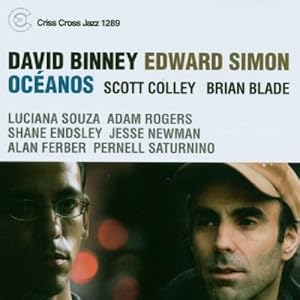
David Binney & Edward Simon
Oceanos


O E.Simon e um belissimo pianista, mesmo sendo da Venezuela(ha! ha!). Vale ouvir.

by Ken Dryden
David Binney and Edward Simon have appeared together on a number of earlier recordings, but this 2004 session for Criss Cross may very well be the best of the lot. Focusing exclusively on compelling original works for this release, the alto saxophonist and pianist are joined by a core group including bassist Scott Colley and drummer Brian Blade, with a number of other musicians augmenting the quartet on selected tracks. Binney's potent opener, "We Dream Oceans," is briskly paced with a Latin undercurrent, adding Luciana Souza's wordless vocals as an additional instrument. Simon's impressionistic ballad "Govinda" utilizes guitarist Adam Rogers' spacious solo and a haunting line sung by Souza. Colley contributed the quirky, effective "Amnesia," which, in spite of its title, proves to be quite memorable, with a catchy front line of alto sax, piano, and trumpeter Shane Endsley over the composer's challenging bassline. Highly recommended.


Jackie Ryan with Red Holloway
You and the Night and the Music


Uma cantora madura, bom para ouvir, porem um pouco longe do que considero uma cantora de jazz.

by Scott Yanow
Jackie Ryan is a talented jazz singer who has a strong, attractive voice and a subtle improvising style. On her third recording, she is heard in prime form interacting with the great tenor saxophonist Red Holloway (who is on five of the 14 selections) and some of Los Angeles' top musicians. The instrumentation changes from track to track with Ryan excelling on tender duets with harpist Carol Robbins ("You Are There") and guitarist Larry Koonse ("While We're Young"). She swings hard on "You'd Be So Nice to Come Home To," puts plenty of feeling into "Besame Mucho" and sounds joyful on "I Just Found out About Love." No matter the setting or the mood expressed, Ryan shows that she is a force to be reckoned with. Recommended.


Mark Murphy
Love Is What Stays


Well...um bom disco, a primeira faixa Stolen Moments eh muita boa, aproveite o CD sem pensar no Kurt Elling ( ha ha ).

by Thom Jurek
Mark Murphy's 2005 Verve album, Once to Every Heart, focused on the veteran jazz vocalist's rare, even singular ability with ballads and torch songs. Produced by Till Brönner, the great flügelhorn player, it was an album that brought Murphy's name back toward — if not into — the jazz mainstream and offered another side of his work to the ever hip European DJs who revere his catalog. Love Is What Stays is a deeply satisfying and, in places, even astonishing reflection on time and its passage. Memory, reverie, regrets, victories, hipster mysticism, and wonderfully canny theatrically poetic wordplay all come to bear in these songs. Released 50 years after his debut — when he was already being hailed as one of the music's great singers — it is more adventurous and downright wily in its aims than anyone could have hoped for. And those aims? They are reached with relative ease. The group of players is no less wide ranging: Lee Konitz makes an appearance on the one tune one might expect in such a collection, "My Foolish Heart." Elsewhere, however, Don Grusin shows up on Fender Rhodes; the Deutsches Symphonie Orchester Berlin appear on several tracks; and Chuck Loeb, Sebastian Merk, and others contribute as well. Murphy's version of the aforementioned track outdoes Kurt Elling's recent version; in his bass-baritone, full of smoke and ether, Murphy paints the entire scene as the strings and orchestra swell and back off. Konitz contributes a beautiful solo to boot. And while jazz fans can take comfort in the fact that Murphy reads standards such as "Angel Eyes" and the Lane/Lerner nugget "Too Late Now," he also digs deep into Johnny Cash with a stellar, off-the-wall, and deeply soulful version of "So Doggone Lonesome," writes killer words to Oliver Nelson's "Stolen Moments," and completely reinvents the Michel Legrand classic "Once Upon a Summertime." Inside some of these tunes, and in others of his own composition such as the title track written with Brönner, "Blue Cell Phone," and "The Interview," Murphy's beat poetry — he's the last of the originals in jazz — and cosmic sense of intellectual inquiry make many of these tunes something entirely other: reinventions, redirections, and re-creations. There's also a big surprise here in that Murphy takes on "What If," the Coldplay single. Is it a pop song? It was. It is again in a new genre, thanks to Brönner's arrangement. In Murphy's golden throat it becomes a deeply intimate ballad with hushed and brushed cymbals and a tasteful atmospheric orchestral arrangement by Nan Schwartz. It's a jazz tune, and Brönner's fills make it dramatic. It's so soulful and utterly moving, with Murphy reaching into his lower register to get the emotion through the lyric, it could become a pop classic. Love Is What Stays is not simply another Mark Murphy album. It's a Mark Murphy event in the manner in which Rah! was in its day, or perhaps Midnight Mood, Bop for Kerouac, or his Savoy sides were. Those who are currently deeply into Elling should give a listen to his mentor; those who don't like jazz vocals in particular would do well to check this out; and others, looking for true authenticity and artfully made American popular music, should snap this up as quickly as possible. Time will be the judge, but Love Is What Stays may become a Murphy masterpiece and — let's face it — the man embodies the very essence of "hip." And always will.


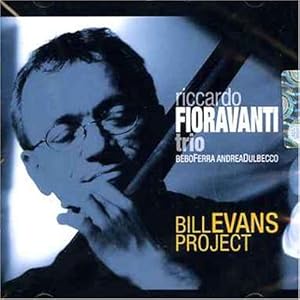
Riccardo Fioravanti Trio
Bill Evans Project


Excelente, um trio diferente, bons arranjos para as belas melodias do meu sempre inspirador Bill Evans, este eh muito bom !!!!

By Ron Wynn at JazzTimes
Bill Evans' writing and piano solos marvelously combined passion and lyricism. The Riccardo Fioravanti trio has crafted an ideal tribute to Evans, one that honors every aspect of his compositions yet smartly reconfigures them by eliminating the piano from the session. Instead, Fioravanti's deep, rich bass playing and the light, lush style of guitarist Bebo Ferra are a prime reminder of Evans' compositional sensibility, while vibist Andrea Dulbecco's splintering lines and phrases reaffirm an underrated component in the Evans' sound: intensity.
The trio is also careful not to forget about rhythmic flow and texture. Dulbecco is the most animated and percussive of the three players, while Fioravanti constantly shifts responsibilities throughout the 13 selections. Each ensemble member alternates between feature and complimentary roles. Some pieces are duets and others are more individual spotlights than trio works, but the overall presentation highlights a cohesive and unified group salute. The menu includes poignant, well-played renditions of "B Minor Waltz," "Peace Piece" and "In April."


Marco Castiglioni, Mauro Grossi, Attilio Zanchi
Distanze


Um belo cd, muito inspirado, e todos musicos eram desconhecidos, bela surpresa.

by Marco De Masi per JazzItalia
Un disco eterogeneo, ricco di scenari a volte contrapposti – come nel caso di D.E.B. e Jazz Folk (J.Abercrombie) – che rivela però un sound preciso e ben caratterizzato. Ascoltando via via le tracce non si resta sorpresi dei numerosi cambiamenti di umore perché, al di là del differente respiro di ciascuna composizione, emerge un comune denominatore che riesce a cementare sottilmente tra loro tutte le composizioni. Dalla sognante D.E.B. (A.Zanchi) che apre il disco, ai toni più accesi del brano successivo Jazz Folk; fino a un pezzo tradizionale piemontese Rusignol passando per La Fille Aux Cheveux De Lin, malinconico preludio di Claude Debussy rivisitato con accenti jazzistici.
Senza soffermarsi sui singoli brani, esercizio che richiederebbe maggiore tempo e spazio, sembra però giusto porre in evidenza la straordinaria fluenza del discorso musicale di questo trio: agili sono le intersezioni strumentali, dove basso e batteria, più che "accompagnare" la voce solistica del piano, dialogano con questo stimolandolo ritmicamente, caratterizzando l'insieme sonoro con un intreccio solido e bene amalgamato.
Emerge con forza la compattezza del sound e l'intesa tra questi ottimi musicisti, sia nelle atmosfere rarefatte e sognanti che in quelle più energiche e tirate.
Un trio che in questo disco, "Distanze", dimostra un altissimo grado si maturità conferendo al proprio linguaggio un sapore attuale che riesce contemporaneamente a riflettere colori e sfumature del passato. I soli strumentali non sono mai gli unici protagonisti – come quello, bellissimo, del pianoforte, in Rusignol – incorniciati da un partecipazione più che mai viva degli altri strumenti.
Musica che va al di là degli steccati stilistici per abbracciare una concezione "totale" in cui tutto è lecito, pur che sia ispirato dal cuore.


Dan Tepfer Trio
Oxygen


Bela surpresa, muito bom trio, e duas faixas produzidas pelo grande Fred Hersch.

By Martin Longley
Tepfer leads his trio on Oxygen, its title track emblematic of the entire disc's approach. Angular and twisting, it grasps its groove cautiously, as Jorge Roeder and Richie Barshay's bass and drums briefly sit out while Tepfer wanders alone. All three are continually investigating the melody's forward path, until an emphatic climax is eventually reached, everything subsequently breaking down into dispersal. There's a low level of incidence as the three move into "Sweet Talk," with its brushing balladry. A few months ago, "Billie Jean" would have been a crass tune-choice, but now it's a crass tune-choice with an unexpected topicality. Anyway, Tepfer manages to perform a thorough dissection. Each tune (there are pieces penned by John Coltrane, Joe Henderson and Steve Lacy, besides Tepfer's majority of originals) is subject to a flowing motion, a gentle shifting of time's sands. Superficially, this is quite conventional piano trio music, but the participants usually push towards a slight tilt or gentle twist of the tune.
Tracks: Oxygen; Sweet Talk; Billie Jean; Moment's Notice; Inner Urge; Not for Sissies; Equivalence; Every Day; Bone.
Personnel: Dan Tepfer: piano; Jorge Roeder: bass; Richie Barshay: drums.


Alessandro Lanzoni & Ares Tavolazzi
I Should Care


Um pianista de apenas 14 anos em 2006. Considero ser um nome para ninguem esquecer, toca com uma paixão, com um conhecimento que so os mais velhos(alguns) conseguem. Devem ouvir outro CD "On the Snow" Alessandro Trio Lanzoni "

by Ken Dryden
Pianist Alessandro Lanzoni is one of a number of talent teenaged jazz prodigies discovered and recorded by producer Paolo Piangiarelli for his Philology label. The young man is paired with veteran bassist Ares Tavolazzi for a session that delves into a number of standards from the Great American Songbook and timeless jazz compositions. For a musician who doesn't look old enough to be shaving, Lanzi not only has formidable chops but often shows a surprising degree of restraint in holding back his volcanic technique. The teenager is at his best romping through Cole Porter's "I Love you." Tavolazzi introduces the famous jazz waltz "Someday My Prince Will Come" alone, with Lanzoni swinging along with him once he enters. The pianist seems a bit hesitant with his complicated introduction to a decidedly Latin arrangement of "Caravan" but quickly regains his focus. Another talented player, alto saxophonist Francesco Cafiso (who was also first recorded by Philology while barely in his teens), is Lanzoni's capable duet partner for an extended concert performance of "Just Friends," though Cafiso shows more than a degree of the influence of Phil Woods. Alessandro Lanzoni obviously is still developing his own style at this point in his career, but he demonstrates plenty of potential on this promising debut as a leader.

Tuesday, January 15, 2008

Back to the real life

Vacation is over,
Happy 2008 Friends,
Our great friend Dr. Marcilio(the world biggest JazzCD buyer), has given me the job(with guru Claudio) to review 27 new CD's. Soon there's going to be some reviews.

NEW VIDEOS AT THE SIDE-BAR: Pat Metheny & Brad Mehldau

Here is the 2007 CD of the Year List(again):

CD DO ANO 2007 - Ettore Carucci " Forward "
VOCAL 2007 -The Tierney Sutton Band"On the other Side"
TRACK 2007 -"I Wanna Hold Your Hand" by Roger Cicero & After Hours,album"Here I Go"

"HONORABLE MENTION 2007:
- Pieranunzi,Johnson,Baron - "Live In Japan"
- Bill Carrothers - "Keep Your Sunny Side Up"
- Fred Hersch Trio - "Night & The Music"

SURPRISE 2007 - Anthony Wilson Nonet - "Power of Nine"
HORS CONCOURS 2007 - Kurt Elling "Nightmoves"
MINHA PISADA NO TOMATE 2007 em 2006 -Manu Katché "Neighbourhood" and Nancy King & Fred Hersch" Live At Jazz Standard"
ARTIST OF THE YEAR 2007 - Marcin Wasilewski & Stefano Bollani

Sunday, December 16, 2007

Stefano Bollani Brasilia 2007

Well friends,

First here are some great cd's that Dr.Marcilio bought, you should all check it out :

- Giovanni Guidi Trio - Tomorrow Never Knows
- Vladimir Shafranov Trio - Portrait In Music
- Alessandro Lanzoni Trio - On The Snow
- Olivier Antunes Trio - Introducing
- Michele Di Toro - Il Passo del Gatto


None of the artist above I've heard before. Jazz is Alive and very well !!!!!!!!!

Well here in Brasilia, we had the chance to meet Stefano Bollani "Solo".
This one is THE MAN.
Beside playing great Jazz, he is a superb entertainer, and he truly knows more than 2000 songs.

STEFANO BOLLANI - SOLO IN BRASILIA/ BRASIL


Happy 2008 and Merry Christmas !!!!!!!!!!!!
To remember on You Tube at the sidebar, the late AND GREAT MCHEL PETRUCCIANI

Thursday, November 22, 2007

First CD's Reviews 2007

These are some reviews from others about my 2007 jazz-election. Good reading !!!!
Don't forget to check out Bollani's Video
Leonardo

Judy Niemack
Blue Nights

Cover (Blue Nights:Judy Niemack)

By Ken Dryden
Judy Niemack has released so many outstanding CDs that it seems unfathomable that this 2007 release for Blujazz is her first U.S. recording since Heart's Desire and only her third U.S. album overall. But she makes up for lost time with a typically adventurous outing, backed by guitarist Jeanfrançois Prins (her husband), pianist Jim McNeely, bassist Dennis Irwin, and drummer Victor Lewis, with guest appearances by saxophonist Gary Bartz and trumpeter/flügelhornist Don Sickler on selected tracks. Niemack's sassy take of Duke Ellington's "I Ain't Got Nothin' But the Blues" and her scatting in unison with Prins' guitar in a romp through "Bluesette" open the disc with a bang, but she cools things down with her intricate interpretation of Bill Evans' "Interplay," for which she supplied delightful lyrics. "A Crazy Song to Sing" has more of a vocalese quality, describing the appeal of performing Thelonious Monk's "Mysterioso," punctuated by Bartz's smoldering alto sax solo. "In a Sentimental Mood" is set up by an intriguing blend of guitar, flügelhorn, and alto sax, with Niemack delivering a captivating performance. Judy Niemack has been one of the most underrated jazz vocalists of her generation, and this brilliant effort should awaken critics who have unjustly overlooked her consistently excellent work.


Kurt Elling
Nightmoves

Cover (Nightmoves:Kurt Elling)

By Thom Jurek
When Kurt Elling issued Man in the Air on the Blue Note label in 2003, it showcased his expansive, dream-weaving stage persona, though the album was recorded in the studio. Nightmoves arrives at a time when Elling has left Blue Note for the hopefully greener pastures of the Concord kingdom, and has been both directing and hosting festivals while also performing like crazy. For a guy who is as busy as he is, there's no doubt he has also been working on expanding his particular gift with discipline and breathtaking adventure. For starters, there is a wider array of musicians on Nightmoves. Along with longtime pianist Laurence Hobgood (an underrated and underappreciated artist of high order), players like Bob Mintzer, Christian McBride, Rob Mounsey, Willie Jones III, the Escher String Quartet, Rob Amster, Guilherme Monteiro, and Grégoire Maret are here, assisting in this ambitious set of tunes in all manner of configurations, from duet to septet. The title cut, written by Michael Franks, opens the set, with Mintzer on tenor and a pair of pianists in Hobgood on acoustic and arranger Rob Mounsey on electric, with Jones and McBride serving as the rhythm section guides. Elling keeps all the gorgeous mystery of the original and deepens it as he more assertively states the lyrics. He's got soul, blues, and the grain of the jazzman in his vocal. Hobgood underscores every line while Mounsey adds depth and dimension to the tune atmospherically, and Mintzer's solo is brief but full of the deep blues. There is a weave at work here that Elling follows in Betty Carter's "Tight." And it is. The notion of song gets stretched to the point of breakage here, and rhythmic interplay happens between Elling and the band. While keeping Carter's tune's integrity, he also pushes the lines to slip into the circular beat provided by Jones. McBride's arrangement is a swinging hard bop delight. The sense of freedom in Carter's original is captured in Elling's solo. There is a gorgeous nocturnal smoke-and-fog medley of Irving Berlin's "Change Partners" and Antonio Carlos Jobim's "If You Never Come to Me." Howard Levy adds some painterly harmonica to the tune's frame, and the band — courtesy of Hobgood's subtle and moving arrangement — plays to Elling's strength. The sense of longing and heartache is evident from outside the lyric; it comes from the pit of the belly and speaks its need before Monteiro's acoustic guitar introduces the Jobim song. Elling slips right into that rhythmic change, extending the story of the original, speaking under the gentle breeze and night sky. There is another medley here as well: Keith Jarrett's "Leaving Again" woven into the Mann and Hilliard tune (and Frank Sinatra classic) "In the Wee Small Hours." Elling extrapolated — via transcription most likely — Jarrett's original improvisation (and his extra lines in the latter tune) and wrote a vocal and lyrics for it. The performance is full of surprise and delight. Listeners will have to discover that one for themselves. One of the greatest surprises here is in Elling's reading of Randy Bachman's (of Bachman-Turner Overdrive and the Guess Who, the latter band having recorded the original) pop hit "Undun" (better known as "She's Come Undun"). The tune is transformed with help from Mounsey's arrangement. It always had a jazz backdrop, and Elling and his pals pull it over the line. The man croons and startles with the raw emotion in his voice, as Hobgood's fills offer support for the sense of drama in Elling's voice. Mintzer enters and plays between the lines and through them. Elling just seems to climb with the intensity of the band and goes over the top. Elling's composition of a song to Theodore Roethke's poem is a deeply moving duet between his voice and Amster's bass. His full range is at work here, but the feel is effortless, spiritual, dreamy, shimmering. This track offers the complete evidence of this vocalist's true gift. The set ends with a reading of Duke Ellington's "I Like the Sunrise." Backed by a trio of Hobgood, Amster, and Jones, the reverence the singer feels for the tune is evident from the moment he opens his mouth. This is a gospel song in Elling's voice, with a vocalese performance that is as moving and on the money as anyone has ever delivered. The lyric is adapted from Rumi, and Ellington's melody is in perfect balance with the lyric and rhythm. It's simply inspiring. After Man in the Air it was difficult to imagine Elling expanding further on his spirit of song. But on Nightmoves, he has not only met but exceeded all expectations.


Fred Hersch
Night and the Music

Cover (Night & the Music:Fred Hersch Trio)

By Matt Collar
His first trio album since the '90s, Night & the Music finds journeyman jazz pianist Fred Hersch, along with bassist Drew Gress and drummer Nasheet Waits, delving into an atmospheric and intimate mix of originals and standards. Hersch has always been a tasteful, harmonically adventurous, and deeply emotive musician, and that is certainly the case here. As he states in the liner notes, seven of these songs are first takes, and not surprisingly a sense of spontaneity and sensitive group interplay permeates the album. To these ends, Cole Porter's "So in Love" is given a deeply expansive touch that finds Hersch washing various harmonic colors around the melody. Similarly engaging, his takes on such lesser-played standards as Thelonious Monk's "Boo Boo's Birthday" and Irving Berlin's "Change Partners" are gleefully playful and adventurous. However, it is on the darker, more melancholy moments that Hersch truly shines, and his brooding version of "How Deep Is the Ocean" and his own "Heartland" are devastatingly moving ballads.


Manu Katché
Neighbourhood

Cover (Neighbourhood:Manu Katché)

By Richard S. Ginell
The superb French/Ivory Coast drummer Manu Katche, long a backing force on many ECM sessions, steps out on his own for the first time on this label and comes up with a gem — with a little help from some of the ECM stars. Indeed, "Neighbourhood" is a very appropriate title, for there are several interlocking orbits of personnel within this album. For a start, the CD marks another collaboration between trumpeter Tomasz Stanko and saxophonist Jan Garbarek, the latter whom Katche has been backing on and off since the early '90s. Moreover Stanko brought along part of his Polish rhythm team, pianist Marcin Wasilewski and bassist Slawomir Kurkiewicz, for the session. Michel Petrucciani is clearly on Katche's mind, for not only is the album dedicated to the late pianist, the reflective, ardently lyrical mood of Katche's compositions — and Wasilewski's piano work — are quite reminiscent of Petrucciani at his most relaxed. And Katche can write; his tunes are often wistful and thoughtful, his percussive backing crisp yet subtle, carefully filling in the cracks while keeping just enough of a gentle pulse. The best of the lot, the simple angular tune of "Good Influence," grabs you by the throat, tugs at your heart, and doesn't quit the memory — sure signs of greatness. By contrast, "Lovely Walk" kicks up the tempo behind an ostinato bass while "Take Off and Land" brings in a touch of fatback funk. If there is a single wellspring behind this music — besides Petrucciani of course — Herbie Hancock's acoustic combo recordings of the late '60s come closest in terms of ambience and harmony. Call this album an inspired descendant two generations and an ocean away.


Roger Cicero & After Hours
There I Go

Cover (There I Go:Roger Cicero)

By Hermann Mennenga
Auf seiner bei JAZZsick erschienenen CD „There I go“ ist Roger Cicero im Verbund mit der Gruppe After Hours zu hören, und dieses Zusammentreffen kann man getrost als reinen Glücksfall bezeichnen. Im Gegensatz zur CD „Good morning midnight“ mit der Pianistin Julia Hülsmann, hat Cicero hier die Möglichkeit sich nach Herzenslust in seinen Ausdrucksmitteln frei zu bewegen...
Roger Cicero & After Hours - "There I go"
War „Good morning midnight“ eher ein Konzeptalbum mit Gedichtvertonungen, so ist „There I go“ gerade das Gegenteil: von Hardbop à la Clifford Brown über die Beatles bis Abdullah Ibrahim, alias Dollar Brand, über Jean „Toots“ Thielemans bis Kurt Elling ist hier ein Stilmix vorhanden, von dem man auf den ersten Blick meinen könnte, das passe nicht zusammen.
Es liegt aber an den großartigen Musikern um Roger Cicero, aus diesem Silberling mehr zu machen als ein Schaulaufen durch die Jazzgeschichte. Dass dies gelingt, ist – wie schon gesagt – ein Glücksfall und eine Sternstunde für den deutschen Jazz zugleich.

Biography
By Jason Ankeny

German jazz vocalist Roger Cicero interpreted the sound and spirit of the swing era for contemporary audiences, upholding the family traditions established by his father, renowned jazz pianist Eugene Cicero. Born in West Berlin on July 6, 1970, Cicero grew up surrounded by jazz and its practitioners, and at age 11 made his professional debut in support of singer Helen Vita. He later studied voice, piano, and guitar at the Hohner Conservatory, and from 1989 to 1992 served as a regular member of the Eugene Cicero Trio while moonlighting with the German youth jazz orchestra Bundesjugenjazzorchester. After his father's 1997 death, Cicero joined the groups Jazzkantine and Soulonge, making his recorded debut on the latter's 2003 release The Essence of a Live Event. That same year, he founded the Roger Cicero Quartet as well as an 11-member big band, both of them adherents to traditional jazz idioms but with lyrics in their leader's native German tongue. After releasing the 2006 album Good Morning Midnight in collaboration with pianist Julia Hülsmann, Cicero issued his solo debut, Männersachen, later that same year. Buoyed by the hit single "Ich Atme Ein," the LP reached number three on the German charts.


Anthony Wilson Nonet
Power Of Nine

Cover (Power of Nine:Anthony Wilson)

By Scott Yanow
Anthony Wilson is a superior straight-ahead guitarist who is also a very talented arranger-composer. His nonet plays in the Los Angeles area, performing his arrangements and mostly Wilson's compositions. Filled with some of Southern California's best and most versatile musicians, the Anthony Wilson Nonet interprets his colorful and atmospheric charts flawlessly. On Power of Nine there is a four-part suite ("Quadra") which has guest mandolinist Eva Scow interacting with Wilson's guitar on two of the sections. That moody work, dedicated to Brazil, has its intriguing moments but some of the other individual pieces are actually the high points. An infectious version of Duke Pearson's "Make It Good," Diana Krall's guest vocal on a nostalgic waltz by Jimmy Rowles ("Looking Back"), a stirring tenor solo by Matt Otto on "Amalgamation," the jubilant "Melatonin Dream" and the gradual building up of passion on "Hymn" are memorable. In addition there is a "hidden" twelfth selection, a Monk-ish "Bird in a Basket" which has an intense baritone solo by Adam Schroeder. Other solo stars along the way include trumpeter Gilbert Castellanos, and pianist Donald Vega. Recommended.


Nancy King & Fred Hersch
Live At Jazz Standard

Cover (Live at Jazz Standard:Nancy King)

By Ken Dryden
It's no wonder that Fred Hersch had the confidence to tape his initial meeting with Nancy King. King is one of the best jazz vocalists of her generation, though she is unjustly not as widely recognized as a number of major-label artists who don't begin to compare with her. King and Hersch put together a wide-ranging program at the Jazz Standard, frequently extending their interpretations well beyond the expectations for a vocal/piano duo. Hersch, who has long since proved his abilities as a solo accompanist for singers (especially Janis Siegel), is never less than brilliant throughout the evening, though the singer is equally impressive, an adventurous spirit who is unafraid of taking chances. King's expressive voice is full of humor in the swinging take of "Ain't Misbehavin'," while she scats up a storm in Antonio Carlos Jobim's neglected gem "If You Never Come to Me." She's equally inspired as she revives once popular standards that have fallen out of favor like "There's a Small Hotel" and "Everything Happens to Me." But the finale clearly steals the show as King devours "Four" whole, throwing caution to the wind as she playfully adds her own twists to Jon Hendricks' vocalese setting of Miles Davis' famous tune. This beautifully recorded set is a tribute to the musicianship of both artists, as well as the foresight of Fred Hersch to request that the soundboard operator record it without notifying Nancy King in advance.

Sunday, November 18, 2007

Dear Friends,

New at the sidebar, the great Stefano Bollani.


What are your 2007 favorites ?

I think E. Pieranunzi's CD is going for the most "best 2007" votes.

Tchau,

Leonardo

Thursday, November 08, 2007

New at the sidebar, vocal of the year Judy Niemack.

Sunday, November 04, 2007

WORLDJAZZ TOP 10 2007

Dear Friends & Caros Amigos,
Following a ancient tradition these are the winners of "Jazz 2007":

CD DO ANO 2007 - Ettore Carucci " Forward "
VOCAL 2007
- Judy Niemack "Blue Nights"
TRACK 2007
-"I Wanna Hold Your Hand" by Roger Cicero & After Hours "Here I Go "

HONORABLE MENTION 2007:

- Pieranunzi,Johnson,Baron - "Live In Japan"
- Bill Carrothers - "Keep Your Sunny Side Up"
- Fred Hersch Trio - "Night & The Music"

SURPRISE 2007 -
Anthony Wilson Nonet - "Power of Nine"
HORS CONCOURS 2007
- Kurt Elling "Nightmoves"

MINHA PISADA NO TOMATE 2007 em 2006 -

Manu Katché "Neighbourhood"
Nancy King & Fred Hersch" Live At Jazz Standard"


ARTIST OF THE YEAR 2007
- Marcin Wasilewski & Stefano Bollani


Greetings to all my Jazz Friends: Roberto,Claudio,Augusto,Dr.Leo,Lucius,Marcilio,Carlinhos,Marcio,Renato
Feliz resto de 2007 e que venha 2008
São Paulo eh Penta
Não esqueça de ver os Enrico Pieranunzi's videos no side-bar.Leonardo

Thursday, August 02, 2007

Hi folks,


Sorry but so little time left !
I did receive some new cd's, and as soon as I finish listen, a review will be written.
For the moment, check the new videos from Brad Mehldau.

See you soon.

Tuesday, June 19, 2007

Metheny and Mehldau 2007

Have a nice week !!!
Well, on the sidebar there's Eliane Elias on YouTube !!!!
Last year there was a new Cd:
It was not a good release from both musicians, I was not happy with the results.

Metheny & Mehldau


Cover (Metheny Mehldau:Pat Metheny)

by Thom Jurek
The collaboration between Pat Metheny and Brad Mehldau is something that must have been written in the stars. Fans of both men have wondered if it would ever take place, and the end result on the Nonesuch release of Metheny/Mehldau is the confirmation that it was destined. Hyperbole? Put it on and listen before you offer that remark seriously. Of the ten cuts here, eight are duets; the other two feature Mehldau's rhythm section, bassist Larry Grenadier and drummer Jeff Ballard. Metheny wrote seven of these tunes, and Mehldau wrote the other three. Each man's compositional style is evident from the word go. There's the luxurious counterpoint that extends form the haunting melody of "Unrequited." Further, there is the natural extension of rhythm and swing on "Ahmid-6." But the real accomplishment here is the ease with which these men play such sophisticated and engaging music that is, perhaps on paper, difficult. But its expansive sense of lyricism and yes, rhythmic interplay, is continually surprising; there is no competition in these tunes, they flow, one into the other with a language being made on the spot. On the quartet tunes, such as Metheny's "Ring of Life," the influence of postmodern drum'n'bass -- à la electronica -- is heard in the tough breakbeats played by Ballard and the counter-rhythmic invention of both Mehldau and Grenadier. It is Metheny's melodic voice, his continually approaching the euphoric, that holds it all together and makes something utterly moving out of it. The gentle swing of "Say the Brother's Name" (also by Metheny) takes Mehldau's sense of the phrase and expansive left-hand technique as it finds harmonic invention in the middle register as the key to unlocking the track's mystery. Mehldau's typically understated solo splits the seam and allows the genuine intensity of the cut to come through. Rhythmically there are breaks here too, but not as pronounced or as forceful as on the earlier selection. Indeed, when all is said and done, the listener is left wanting -- more that it. One wishes that a double album would have been made, one with the duet -- so full of startling moments it's impossible to list them all -- and quartet, whose genuine sense of extrapolative swing is not only inherent, but infectious.

This year came out the rest of the tracks from that session:
What a good CD !!!!
How can I explain the difference ?? Who cares ???
Just enjoy !!!!!!!


Metheny/Mehldau - Quartet


Cover (Quartet [2007]:Pat Metheny)


by Thom Jurek
Guitarist Pat Metheny and pianist Brad Mehldau created a stir in 2006 with their wonderful duet recording. On that set, two of the album's ten cuts featured Mehldau's rhythm section of bassist Larry Grenadier and drummer Jeff Ballard. Quartet is a mirror image: seven of these 11 cuts are full quartet sides. The musical magic established by that collaboration sets the stage for the pair to dig deeper here. It's true that melodic and harmonic invention is the root of each of the tunes here, though that doesn't mean there isn't room to move.Metheny's Way Up recording offered ample of evidence of how compositional sophistication could accomplish virtually anything. There, the players had written parts, but also had room for improvisation within that framework. The same happens here, though the pieces are shorter. Partial evidence of this is the disc's second selection, "The Sound of Water," which has a nearly pastoral theme. But Metheny uses counterpoint on a 12-string guitar to meet Mehldau's chordal investigation. One need only go one cut further in on "Fear and Trembling," by Mehldau, to see how quickly the two can step outside their bonds while retaining their commitment. The knotty playing with distortion by Metheny moves toward the rhythm section, which establishes the kind of fluidity his sense of time requires.Mehldau's own post-bop modal solo works through the lyric frames in the tune's structure and cuts through them, finding their densities and spaces. Grenadier's elasticity as a bassist allows the time to float and shift -- seemingly -- without ever losing the harmonic thread even when Metheny moves outside toward the end of the cut.
The duet ballad "Don't Wait," with Metheny on acoustic guitar, comes together with all the warmth and textured lyric sensibility that their debut displayed. These two men are not at all self-conscious here; they seem to hear each other in both solo and chorus with equally gentle ears. The shimmering piano on "Towards the Light" finds Mehldau exploring those gorgeous multi-note phrases he loves so much, with Metheny reacting sparely and creating a virtual shimmering in the cut. Ballard is very impressive here as he shades his beats with cymbals and rim shots, and gives the entire cut something earthy to hang onto. There are two Latin-tinged (barely) tunes, "En la Terra Que No Olvida" (Metheny) and "Santa Cruz Slacker" (Mehldau). The former is knottier and less obvious, but the meter is one Brubeckemployed a lot in the early '60s and perhaps it serves as a model here. The latter cut is more languid on the surface, but Ballard's drumming is simply out of this world as he skitters and scampers all over and in front of the band throughout. There is perhaps no surprise at how well these two communicate -- especially with a rhythm section as wonderful as this one is. If there is a feeling that some tunes run together, they don't; this is not a suite, but a solid amalgam of brilliant musicianship, with a humble approach that is elegant and dignified. These guys have come up with a gorgeous and sexy creation, and listeners should be delighted to spend some time with it.

Sunday, June 10, 2007

Don't forget to check my favorite singer KURT ELLING, on youtube,it's on the sidebar.

Grant Stewart / Marc Johnson 2007

Well nothing new inside my CD player.
I've received yesterday the recent release of tenor sax:

Grant Stewart
In The Still Of The Night  - SharpNine Records 1038-2.


Cover (In the Still of the Night:Grant Stewart)


At first hearing a good strong session. He is a very good sax player, no bull shit involved.

by Ken Dryden
This is hardly tenor saxophonist Grant Stewart's first recording as a leader, but his earlier CDs were for various European labels. In the Still of the Night is the release that set his career afire, as he joins forces with three of New York's in-demand musicians in his rhythm section: the hard-driving pianist Tardo Hammer, everyone's first call bassist Peter Washington and the talented drummer Joe Farnsworth. Right of the box, the big-toned Stewart makes his presence known with an up-tempo rendition of "In the Still of the Night" that makes one stand up and take notice. Stewart and Hammer dive head first intoThelonious Monk's "Work" (not exactly one of the pianist's more frequently recorded numbers), with Washington and Farnsworth fueling their spirited solos. But Stewart is also no slouch playing ballads, as his dreamy take of "Autumn in New York" and haunting treatment of "Lush Life" display a profound lyricism. Stewart's astute choice of Richard Rodgers' "Loads of Love" uncovers another gem that is rarely recorded, his sizzling solo will invite comparisons to Dexter Gordon. Even Burt Bacharach's often blandly played "Wives & Lovers" is rejuvenated with Stewart's lighthearted but aggressive interpretation. Highly recommended!


Marc Johnson
Shades of Jade " ECM 1894. 


YOU MUST HEAR IT !!! IS SIMPLY A MASTERPIECE !

Cover (Shades of Jade:Marc Johnson)

I do love Eliane Elias playing, but I do Hate when she sings. STOP SINGING !!!!!!!!
A friend(Lucius) burned this CD ( soulseek, e-mule ) with no indication of whom the players were,
but one thing was sure, it was Eliane's beautiful playing; but then came a fantastic tenor sax
but I didn't know who it was, my surprise, JOE LOVANO.
This recording is very good, two masters at their prime, but wait the CD is not from any of them, is from another master MARC JOHNSON(ex-Bill Evans Trio, Eliane's husband ).

By Michael McCaw
Marc Johnson long ago cemented his abilities as a bassist since his involvement in Bill Evans' final trio. His career as a leader in his own right, though, has been a lttle more questionable. Released periodically over the span of a quarter century, his albums have run the gamut in quality from his excellent early ECM dates featuring Bill Frisell and John Scofield to the somewhat lackluster feel of Sound of Summer Running (Verve, 1998). Nonetheless, all this changes with Shades of Jade. Here, Johnson and his longtime collaborators have cultivated a sound that listeners will find themselves coming back to over the years for well more than a simple cursory listen.
Johnson's concept hasn't necessarily changed over the years. He has tread similar ground on his previous albums in various forms, but what has changed are the results he elicits from everyone—including here the stunning Eliane Elias. Recorded and presented in absolute pristine color, the two account for nine of the ten compositions and share a rapport based on their consistent involvement in each other's projects that the rest of the musicians are able to balance their own performances upon. Completing the equation are Joey Baron (drums), Alain Mallet (organ on a few songs, including the dirge-like closer), Scofield (guitar), and
Joe Lovano (tenor saxophone).
This group cultivates a warm sound that carries the album through its many moods, but the pervasive quiet beauty is the real sound stage for the musicians. Lovano's tenor in particular sounds even more subdued and relaxed than on his recent songbook albums with Hank Jones, and although Scofield or Lovano's name may inspire a majority of listeners' attention when they first listen to Shades of Jade, Elias will certainly usurp it.
Elias performs with an understated beauty that belies expectations. While her output as a leader commonly focuses on themes that have tended to pigeonhole her as an interpreter of Brazilian jazz crossovers, here her talents are laid bare. An incomparable asset to this recording, she guides the momentum and feel of the music throughout, just as she does on her own "Aparecu, where she builds and embellishes the melody behind Lovano, accenting his spaces and keeping pace with every turn of phrase. With a sound reminiscent of Evans, she hardly needs to prove her talents, but it is also impossible not to notice them.
Marked by the measured nuances in every phrase, these pieces are songs more than anything else, and to call them tunes would seem almost insulting. And while the title of Shades of Jade is a reference to Evans' first great trio bassist, Scott LaFaro, the results are more in line with Evans' trio as a whole, where everyone contributes individual characteristics to create a sound that's greater than the sum of its parts. Finally Johnson has created an album with a timeless feel, one that marks a highpoint in the ECM catalog, and something listeners will undoubtedly come back to explore time and again.
Track Listing:
Ton Sur Ton; Aparaceu; Shades of Jade; In 30 Hours; Blue Nefertiti; Snow; Since You Asked; Raise; All Yours; Don't Ask of Me.
Personnel:
Joe Lovano: tenor saxophone; John Scofield: guitar; Eliane Elias: piano; Marc Johnson: double-bass; Joey Baron: drums; Alain Mallet: organ.

See you soon,

May the force of jazz be with you !!!

Sunday, June 03, 2007

The Jazz CD of May 2007

After Battaglia, Bollani & Rea there is a new pianist from Italy,

ETTORE CARUCCI
Ettore Carucci Trio - Forward
Dodicilune Dischi ed. 224 - 2006

Forward, Ettore Carucci Trio

This is a very good recording, made in Lecce, with Ben Street/bass & Adam Cruz/drums.
You must hear this.

There is an italian( French ? ) drummer that has been around for a long time, was ( is ?) married to Dee-Dee Bridgewater, and has released two very good CD's:

André Ceccarelli Trio
Avenue des Diables Blues

Cover (Avenue des Diables Blues:André Ceccarelli)

by Ken Dryden/ All Music Guide
During his long career, André Ceccarelli has recorded sporadically as a leader, but this studio affair should open a few doors. Accompanied by the talented Gypsy guitarist Bireli Lagrene and organist Joey DeFrancesco, the drummer puts together a wide-ranging set, delving into standards, swing, bop, jazz fusion, and more. His approach to Duke Ellington's gorgeous "Sophisticated Lady" is soft, as he provides minimal brushwork to back his musical partners. The decades-old chestnut "Summertime" slowly simmers in a thoughtful arrangement honoring the organist's mentor, the late Jimmy Smith. The leader finally cuts loose with the brief "Prelude," which segues into a romp through "April in Paris," while Jaco Pastorius' "Three Views of a Secret" showcases both Lagrene's lyrical side and his virtuosity.


The other one is a new CD:

André Ceccarelli
Golden Land

Cover (Golden Land:André Ceccarelli)

with our great Enrico Pieranunzi, Hein Van de Geyn, Dvaid el-Malek.

By Ken Dryen
André Ceccarelli has long been one of Europe's premiere jazz drummers and since the new century began he is getting additional opportunities to showcase his talent as a bandleader and composer/arranger as well. His band includes the brilliant pianist Enrico Pieranunzi, veteran bassist Hein Van De Geyn and the promising tenor saxophonist David El-Malek.Ceccarelli excels at driving a band and is equally at home in driving post-bop numbers like the pianist's "Five Plus Five," his own angular "Free Three" and his solo feature "1er Novembre." Van De Geyn contributed the haunting ballad "Though Dreamers Die," which features El-Malek's emotional solo. Vocalist Elisabeth Kontomanou is added for "Golden Land" (which she co-wrote with the leader, while it is also heard in instrumental form) and the standard "I'm Through with Love." This rewarding session will easily stand the test of time.

Thanks to my friend DR. Marcilio for showing all these CD's.
Great Jazz !
Question: Is Jazz dead ?????
I don't think so !!!!!!!!!!!!!!!!!!!!!!!!!!!!!!!

News 2007 - Is Jazz Dead ?

Sorry I've been away so long.
But I'm back.
2006 had some good jazz music:

- Danilo Rea
- Francesco Cafiso

and some good reading:

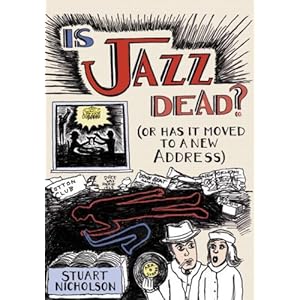
Is Jazz Dead? (Or Has It Moved to a New Address) 
By Stuart Nicholson 


By Thomas Conrad 
This book should not be judged by its ugly cover, its clumsy title or its numerous typographical and other errors. Nicholson's thesis is important, and he supports it persuasively. His argument is that all the significant changes in jazz have come out of the United States--until now. Nicholson claims that today, "it is non-Americans who are taking the lead." A corollary argument is that "the people who are not discussing the effects of globalization on jazz are Americans."
Nicholson believes that the pendulum began to swing away from America in the 1980s, when "neoconservativism" stifled innovation. His book contains one of the most devastating indictments of the "Young Lions" fad in jazz literature. But Nicholson also acknowledges that, in the new millennium, the art form has become fresh and restless and diverse again (notwithstanding its economic challenges), both inside and outside U.S. borders. As jazz globalizes, new tributaries enrich the mainstream, and influences flow in all directions, including back and forth across the Atlantic.
It is in explaining this globalization (and "glocalization," wherein artists incorporate their own national imagery and folklore and culture into the language of jazz) that Nicholson is best. For ethnocentric Americans who need help finding great, style-making jazz beyond our shores, Nicholson's guidebook is invaluable.

By Chris Kelsey
I'm sure Stuart Nicholson didn't intend to make me want to hang myself. Unfortunately, his writings on jazz's recent reactionary past, fragmented present and uncertain future have practically that effect. Nicholson's thesis--that America's inclination to treat jazz primarily as a business has resulted in artistic petrifaction--hits the mark. Case in point: the recent plethora of pretty boys and girls singing Tin Pan Alley tunes, and a concomitant decline in industry resources devoted to nurturing originality. Rampant conformity in the guise of Wynton Marsalis, Jazz at Lincoln Center and cookie-cutter jazz education are also taken to task.
On the bright side, Nicholson finds much to like about jazz overseas; he clearly believes (with good reason, perhaps) that the European cultural tradition makes the continent a more fertile ground for growth. In the process, however, he underestimates the state of the music in the U.S. Nicholson has a superficial grasp of American jazz: If it ain't on a major label or otherwise a part of the mainstream jazz biz, it essentially doesn't appear on his radar.

By Mike Shanley
Gary Giddins once opined in these pages that "Jazz is dead" ranks as one of two stories that jazz scribes can easily sell to glossy magazines--second place going to "Jazz is back!" So naturally turning the first statement into a question offers the perfect starting point for a book that supposedly "is bound to be controversial among jazz purists and musicians."
Stuart Nicholson actually devotes more time to his subtitle, concluding that this American-born music is stagnating at home while, around the world, it continues to follow its natural course and evolve, thanks to musicians who add their regional influences to the musical brew and governments that put artistic merit before profit. Two chapters are devoted to an honest critique of Wynton Marsalis: one for his music, the other for his work with Jazz at Lincoln Center. Nicholson also explains the shortcomings of jazz education and the way European musicians "glocalize" jazz, by adapting it through local influences.
The book makes some valid points, but many of them get lost among the laundry lists of European players and longwinded sentences that seem like Nicholson is still working through ideas. Further, the answer to the title is never in doubt from page one, making it seem like a cheap publicity ploy than a serious question.

Monday, February 06, 2006

new jazz

There are some new jazz musicians out there. I think everyone should take a look( and an ear )
on to these kids:

- Eldar Djangirov
- Taylor Eigsti
- Marcin Wasilewski Trio
- Tord Gustavson
- Stefano Bollani

I had some prejudice among two trumpet players: Tomasz Stanko and Enrico Rava. Well, I was very wrong, they really made some bad albums in the '70 and '80, most of them went out by ECM. Something must have happened, their latest cd's are very good, hear them and buy it.
At an interview Rava said he is doing more trumpet pratice in the last decade, maybe that's one of the reasons he is playing better.


Good Jazz !!!!

Leojazz

Friday, February 03, 2006

Bill Evans's Box Sets - 2006

Welcome to worldjazz 2006,
Well, the jazz world is fine, lots of new cd's to come out until April.
My number one jazz musician is Bill Evans, and since 1989 I'm buying his cd's. But I always
wished to buy his complete recordings at Riverside Records( 1958-1963 ), and this January, I did so. It is just wonderful.
If you wish to start on Bill Evans, I can recommend the following below:

The Complete Riverside Recordings 12 cd's

Cover (The Complete Riverside Recordings:Bill Evans)

The Complete Fantasy Recordings 9cd's ( 1969-1977 )

Cover (The Complete Fantasy Recordings:Bill Evans)

Turn Out The Stars/ Final Village Vanguard Recordings ( June 1980 ) 6 cd's

Cover (Turn Out the Stars: Final Village Vanguard Recordings:Bill Evans)

With these three box sets, you'll have almost everything he ever recorded.

great jazz,
Worldjazz