Thursday, September 18, 2014

Kenny Wheeler 1930 - 2014


By Peter Hum at Ottawa Citizen
Trumpeter and composer Kenny Wheeler, who was raised in Toronto and beloved in Canada despite having lived in London, England, for the last 60 years, died Thursday. He was 84.
For the last month or so, jazz musicians in the United Kingdom, Canada and elsewhere were hopeful that Wheeler, a towering if extremely humble influence on so many musicians, would get the better of health difficulties.
Some months ago, Wheeler was moved to a nursing home. More recently, he was hospitalised. His friend and long-time collaborator Norma Winstone emailed me earlier this week, after visiting Wheeler last week: “News of Kenny is not too good. He is back in hospital, after being in a nursing home for a while. I went to see him last Friday and he is very frail. I am sure he is grateful for all the messages of love and support he has received.”
Wheeler played numerous times in Ottawa over the years, most recently in 2011 at the Ottawa Jazz Festival. Before he came to Ottawa, I interviewed him — not easy, because he was so self-effacing — I wrote this profile of him:
In the last 30 years, no one has influenced Canadian jazz more than trumpeter and composer Kenny Wheeler.
Not that he will own up to it. A generation of Canadian musicians consider Wheeler, 81, not only an inspirational beacon when it comes to playing and writing music, but also one of their own, even if the Toronto-born, musician did leave Canada for Britain in 1952.
In the summers of the 1980s and 1990s, Wheeler regularly taught at the Banff Centre’s jazz workshops, and although he is renowned for being self-effacing, a generation of aspiring Canadian and international jazz musicians fell hard for his unique, adventurous, romantic music, such that Canadian jazz would not sound the same without him.
“I think Kenny is the most influential player/composer that this country has produced,” says Toronto pianist Brian Dickinson.
“It’s impossible to hear Kenny play and not be influenced by him,” says Don Thompson, the Toronto bassist, pianist and vibraphonist whose 2008 disc is called For Kenny Wheeler. “I’ve heard people say it was a ‘life-changing experience’ or a ‘religious experience.’ With me, it was both. He has set the standard of excellence that I am continually striving to achieve. His attention to detail is such that there is never a note written that doesn’t mean something and every note is the best possible note.”
Meanwhile, Wheeler, who gives a TD Ottawa International Jazz Festival concert on July 2, has referred to his music as “soppy romantic melodies with a bit of chaos.”
And if you tell Wheeler that so much Canadian jazz resonates with his distinctive compositional voice, he replies: “That’s very flattering if it does.” And that’s it.
Born in Toronto but raised in St. Catharines, Wheeler began playing the cornet when he was 12, and took to jazz soon after. In the late 1940s and 1950s, he became interested in bebop, the then-new, fast-paced and harmonically daring style.
“What happened was I met a group of friends in St. Catharines and they were very much into bebop,” Wheeler says. “I got to like this music because of my new friends. Gradually I got to like it very much.”
He left Canada after opting not to pursue studies in Montreal that would have led to him becoming a high school teacher. “I realized I couldn’t do that. I felt I wanted to go somewhere,” he says, explaining that he did not go to the U.S., the home of jazz, because he feared he might be drafted to fight in the Korean War.
“So I thought it would be nice to go to England because they speak English there. I thought first of something exotic like Cuba or Brazil, but I thought that England might be safer.” He bought a ticket for a boat, and began playing in London’s big bands.
The first recording under Wheeler’s name – a big-band recording called Windmill Tilter – was not released until he had spent 15 years in London, growing as a musician. All of its pieces were dedicated to the great fictitious would-be adventurer Don Quixote.
Wheeler had gone to the library, borrowed Don Quixote, the 17thcentury Spanish novel by Miguel Cervantes, and “liked it very much. I’ve always liked people who I would call losers, and he seemed to be one of the great losers to me.”
Wheeler’s debut album clearly demonstrates the signature facets of his music – direct but novel and distinctive, harmonically rich and daring. His improvising is poised and dramatic, with large leaps in its melodies and a full, yet sometimes melancholy, sound.
How did Wheeler develop into a true original? “You just become the sum of your influences. I just listened to some of the good players I liked and hopefully I could come up with something different.”
He has released 30 or so albums under his name, including wordplay-titled classics called Gnu High, Double Double You and Deer Wan, his favourite. The discs have featured renowned collaborators, including pianists Keith Jarrett and John Taylor, saxophonists Michael Brecker and Jan Garbarek, and guitarists John Abercrombie and Ralph Towner.
In the 1970s, Wheeler began playing free jazz, notably with saxophonist Anthony Braxton and the Berlin-based Globe Unity Orchestra. Utterly spontaneous, free jazz is the antithesis of rigorous, structured bebop and of Wheeler’s own meticulous, lyrical creations. “First I didn’t like it, but gradually I got to like it. It had to do with meeting new friends that I liked very much,” he says. “I find it kind of therapeutic to play it. You get something out of your system.”
Wheeler says he still tries to compose every day. “I usually have some kind of routine. First, I would play some music by someone like Bach, or maybe even a more adventurous composer like Debussy or Ravel, and then I would hope that would suggest something to me and then I would begin to try and write something, not always with too much success.”
Wheeler has cut back a bit on his playing, which is not surprising given the physical demands that the trumpet makes. Still, there are plans for him to record a new big-band record this fall.
“I’m not so active these days as I used to be,” he says, “but I enjoy it when I do play.”
In the last month, benefit concerts were held in London, Vancouver and Montreal to raise money to help the Wheeler family with the financial burden of Kenny’s declining health, as well as that of his wife, Doreen. Their son, Mark, was overseeing the collection of funds from around the world via a PayPal account.
Last night in Ottawa, guitarist Roddy Ellias, myself, trombonist Mark Ferguson, bassist Alex Bilodeau and drummer Michel Delage — musicians ranging in age from the mid-60s to the mid-20s — got together to rehearse for our own benefit concert for Wheeler, slated for Friday night at Zola’s restaurant in Bell’s Corners. We absolutely loved rolling up our sleeves and getting into Wheeler’s impeccably crafted, imaginative, evocative music.
There was some reminiscing as well as practicing. I for one remembered taking Wheeler’s disc Gnu High out of the Nepean Public Library when I was in Grade 11, circa 1979. I was confused and enthralled at the same time. Thirty-five years later, I’m less muddled, and even more enchanted by Wheeler’s music. I don’t think the magic of it will never wear off.
We’ll play together Friday night just the same — timeless, brilliant compositions such as Everybody’s Song But Not My Own, Heyoke, Smatter, Sea Lady, Foxy Trot and more — surely saddened, but heartened by the beautiful gifts that Wheeler left us.
Rest in peace, Kenny Wheeler.

Sunday, September 14, 2014

Joe Sample 1939 - 2014


By Eli Rosenberg - NEW YORK DAILY NEWS
Joe Sample dead at 75: 
The piano star was known for pushing boundaries of jazz
Sample collaborated with artists like Miles Davis, B.B. King, Marvin Gaye and Steely Dan and was best known as the founder of the Crusaders. The musician passed away Friday night in his hometown of Houston at the age of 75, his family announced.
Legendary pianist Joe Sample, who was known for pushing the boundaries of jazz music, passed away Friday night in his hometown of Houston at the age of 75, his family announced on Facebook.
The keyboardist, who collaborated with artists like Miles Davis, B.B. King, Marvin Gaye and Steely Dan, was best known as the founder of the Crusaders, a quartet that popularized a soulful, funky sound in the 1960s and ’70s.
Sample’s ear for grooves resulted in the sampling of many of his songs by hip-hop artists, the most famous of which, “In All My Wildest Dreams,” was sampled by Tupac in his track, “Dear Mama.”
Sample said he made up his mind at age 14 to be a musician.
“Music was the only fun anyone had in their life at that time,” Sample told the magazine Wax Poetics, describing how his upbringing in Segregation-era Houston made his genre-bending music second nature. “Everything about the history of my family has always been mixed: the races, the food, the language — everything. It’s very natural.”
Joseph Leslie "Joe" Sample (February 1, 1939 – September 12, 2014)

Tuesday, September 09, 2014

Gerald Wilson 1918-2014


By DERRIK J. LANG - AP
Gerald Wilson, the dynamic jazz musician whose career spanned more than 75 years, has died. He was 96.
Wilson's son, Anthony Wilson, said his father died Monday at his Los Angeles home from pneumonia.
The big band leader began his career in the 1930s as a trumpeter for Jimmy Lunceford's band before forming his own group in 1944. He played and composed music with the likes of Duke Ellington, Count Basie and Dizzy Gillespie, and he arranged music for Ella Fitzgerald, Ray Charles, Sarah Vaughan and Bobby Darin.
Wilson, who was born in Shelby, Mississippi, bought his first trumpet at age 11. During his tenure with Lunceford, he arranged the hit tunes "Hi Spook" and "Yard Dog Mazurka."
After four years with Lunceford and a stint in the U.S. Navy during World War II, Wilson settled in Los Angeles in the 1940s. His adventurous big-band approach endured throughout decades of the genre's evolution.
With his long white hair in later years, Wilson became famous for his dance-like style of conducting, which he said helped listeners know what they were hearing.
"I choreograph the music when I conduct," he told the Jazz Times in 2011. "Accent everything — all the high points."
Wilson, a constant presence at events such as the Monterey Jazz Festival, received six Grammy nominations throughout his career, including nods in 1999 and 2004 for best large jazz ensemble for "Theme For Monterey" and "New York, New Sound." He later taught jazz at California State University, Northridge; California State University, Los Angeles; and University of California, Los Angeles.
He is survived by his wife, son, two daughters and four grandchildren.

Saturday, August 09, 2014

2 Sem 2014 - Part Four

PJ Trio
New Steps


By JazzItalia
"New Steps" ... è questo il titolo del nuovissimo album realizzato da Pino IODICE in trio con Dario Rosciglione al C/basso e con Pietro Iodice alla batteria.
Le registrazioni sono state effettuate a Roma, presso l'Alfa Music Studio, e la produzione è stata curata da Fabrizio Salvatore ed Alessandro Guardia (ingegnere del suono) per l'etichetta discografica ALFAMUSIC.
L'Album è stato registrato missato e masterizzato utilizzando strumenti musicali e recording equipment, sia analogica che digitale di alta qualità (vedi scheda tecnica allegata) ed avvalendosi del prezioso coordinamento tecnico di Gianni Nocenzi (Grisby Music).
Il progetto è acustico ed è composto da sei brani originali (composti dal M° Pino IODICE) e tre brani famosi (cover) quali "Michelle" dei Beatles, "Well you needn't" di T.Monk e un brano preso in prestito dalla musica classica "Pavane" di Faurè.
Ascoltando l'album risalta la Bonus track "The last Station" composizione vincitrice del Concorso Internazionale di Composizione "2 Agosto Edizione 2001" eseguito dal vivo in Piazza Maggiore (Bologna) dal noto Artista francese Richard Gallianò (Dreyfus) con l'orchestra Arturo Toscanini e trasmessa in diretta mondovisione dalla RAI (radio e televisione).
Il trio in questione è già da molti anni ritmica della "Corvini e Iodice Roma Jazz Ensemble" e trae da questa esperienza la compattezza e l'affiatamento utili per portare avanti un prodotto indipendente e di sperimentazione, rispettando la tradizione jazzistica tipica di questa formazione.
L'interplay, il gusto della melodia e l'arrangiamento sono gli elementi principali che animano il materiale utilizzato in questo CD.
Buon ascolto ...


Enrico Pieranunzi
Stories


By Paola Parri
Quando pensiamo di averlo raggiunto e afferrato, ecco che Enrico Pieranunzi si sposta ancora un po’ oltre la nostra portata, in un’evoluzione continua in cui la creatività genera felici invenzioni musicali e lo conferma come uno dei nostri più importanti artisti. Enrico Pieranunzi è un narratore e, proprio come fanno il letterato o il poeta, ha appreso la difficile arte di creare, da un vocabolario e una grammatica noti a tutti, inedite sintassi che ci stupiscono ogni volta. Nella narrazione delle sue “Stories” lo ritroviamo con il trio che già ci aveva regalato lo splendido “Permutation” (2012 CAM JAZZ), trio formato da Scott Colley al contrabbasso e Antonio Sanchez alla batteria.
Il lavoro discografico è frutto di una session del febbraio 2011 presso l’Avatar Studio di New York. La firma di questi brani è quella di Enrico Pieranunzi, fatta eccezione per “The Slow Gene” di Scott Colley, a confermare e dare risalto a uno degli aspetti che maggiormente contraddistingue l’arte del pianista, quella necessità di invenzione, di ricerca, di espressione personale che trova voce nell’atto compositivo. Questa musica contiene in sé tutti i tratti peculiari delle tre personalità che le danno vita, la loro formazione, le loro differenti culture, differenze che il parlare la stessa lingua musicale compie il miracolo di azzerare a livello comunicativo pur preservandone le qualità migliori.
“Stories” trasmette la naturale gioia del suonare insieme, è un collage di conoscenze che creano un racconto omogeneo eppure denso di sfumature. L’attacco, con “No Improper Use”, è vigoroso e incisivo, una sorta di affermazione dell’identità del trio, un soffio energico che contraddistingue anche “Detrás Más Allá” e “Blue Waltz” in cui ci sembra di percepire eco di atmosfere alla Nino Rota dei migliori passaggi felliniani. L’immaginazione e la creatività si esprimono compiutamente nell’improvvisazione quasi astratta di “Wich Way Is Up”. L’altra anima di Enrico Pieranunzi, quella dell’appassionato creatore di storie, di evocatore di atmosfere poetiche, quella che ci fa chiudere gli occhi e ascoltare noi stessi attraverso la musica, emerge al centro del disco, in “Where Stories Are”, ballad delicata e quasi evanescente nella sua grazia in cui il fraseggio melodico del pianoforte di Pieranunzi è perfettamente sostenuto da una sezione ritmica che per l’occasione si fa persino lirica. Chiude “Stories” un brano in cui Pieranunzi sembra attingere a piene mani dalla sua formazione classica. “The Real You” è colma di suggestioni, evoca a tratti il romanticismo a tratti l’impressionismo, un dolcissimo brano che oscilla fra essenzialità e slancio, la saggia chiusura di un racconto straordinario.
Questo lavoro è uscito in concomitanza all’assegnazione a Enrico Pieranunzi del «Best International Piano Player» all’edizione 2014 degli «Echo Jazz Awards», importante premio a cura dell’industria discografica tedesca.


The Inventions Trio
Life's A Movie


By Michael J. West
Squeezing four discrete sections into a 55-minute album is ambitious stuff, even if three of those sections are tributes to other pianist-composers. But with Life’s a Movie, pianist Bill Mays’ Inventions Trio, a quirky chamber group featuring trumpeter Marvin Stamm and cellist Alisa Horn, prove themselves up to it by end of the second track.
The track in question is “Interplay,” from the album-opening “Homage to Bill Evans” section. Horn opens the tune with cleverly plotted double-stops: one low note, one high, simultaneously evoking bassist Percy Heath and guitarist Jim Hall (from Evans’ original 1962 recording). Stamm and May follow her with impressive solos and then a spectacular duel. And that’s just the beginning; a scintillating “Waltz for Debby” comes soon after, featuring beautiful arco lines from Horn and a dancing collective improvisation from all three.
“Life’s a Movie,” the second (Mays-penned) section, is the centerpiece; subtitled “4 Cues in Search of a Film,” it duly evokes the flow and thematic architecture of film scores (especially the kinetic “Chase”). The disc’s highlight, though, is in the following, unnamed section: a Chick Corea homage, comprising his signature mash-up of Rodrigo’s “Concierto de Aranjuez” and his own “Spain.” The latter features an endlessly fruitful Mays solo, with descending motifs and some rhythmic spanners-in-the-works, and a curvaceous bravura run from Stamm. Horn’s showcase is her 10 choruses of the closing Monk tribute’s “Straight, No Chaser,” on which she reworks some of Miles’ solos on the piece but also inserts her own expansive jazz vocabulary. Yes, it’s an ambitious, even sprawling disc, but a fine one.
Track Listing:
Homage to Bill Evans: My Bells / Interplay / Turn out the Stars / Waltz for Debby; Life’s a Movie: Cues in Search of a Film (Main Title / Love Theme Bittersweet / Chase / End Credits); Concierto de Aranjuez; Spain; Monk Tribute: Trinkle Tinkle / Pannonica / Straight, No Chaser.
Personnel:
Bill Mays: pianoforte; Marvin Stamm: tromba; Alisa Horn: violoncello.


Gwilym Simcock
Instrumation


By John Fordham
Pianist/composer Gwilym Simcock previewed the second of these two suites – Simple Tales, for a quintet featuring violin, cello and jazz trio – in London in January, and its intricate classical contrapuntalisms and diverse themes delivered with a punchy jazz freedom were impressive then, and are all the more so here. Thomas Gould is once again the violinist, joining cellist Will Schofield, bassist Yuri Goloubev and drummer Martin France on themes that join romantic yearnings, percussive twisters reminiscent of Chick Corea's Spain, and joyous barn-dancing knees-ups. The suite Move! (for jazz quartet and chamber orchestra) sounds more like jazz-inflected classical music. But if its tight structure, melodic latticework and elegantly harmonised orchestration might appear to evict jazz, the chords and brass parts sometimes suggest Kenny Wheeler, while Simcock's solo-piano interludes are contrastingly loose and abstract, and the stridently marching Industrial, with its clamouring horns and funky-Jarrett piano break, bustles with spontaneous life.

Friday, August 08, 2014

2 Sem 2014 - Part Three

George Colligan
The Endless Mysteries


By John Kelman
While music fans often think of the artists they love as gifted people whose lives are consumed by the pursuit of their art, all-too-often they ignore equally important, if seemingly more mundane, needs: making a living, perhaps having a family...things to which most people aspire. With music sales on the decline, most musicians pay the rent by touring and, in some cases, teaching, but for those who've failed to achieve greater recognition, that needn't imply they're anything less than top-tier.
Count pianist George Colligan amongst that group of musicians who may support themselves and their families through teaching and touring with bigger names, but are as deserving of attention as any with whom they play. That Colligan is a triple threat—not just a terrific pianist, but a great drummer (amply demonstrated on pianist Kerry Politzer's overlooked Labyrinth, Polisonic, 2005), and trumpeter of worth (on his own Runaway, Sunnyside, 2008)—only means a musical breadth that makes him an even more valuable recruit for artists like Don Byron, who enlisted Colligan in the studio and on the road for his Junior Walker tribute, Doin' the Boomerang (Blue Note, 2006).
Colligan has also been a key member of veteran drummer Jack DeJohnette's touring band, heard in Ottawa in 2012 and on the download-only Live at Yoshi's 2010 (Golden Beams, 2011). DeJohnette returns the favor by playing on Colligan's The Endless Mysteries, and the chemistry built over the past four years is in clear evidence throughout this set of ten Colligan compositions, where the pianist's intrinsic virtuosity ranges from cool to simmering to flat-out boiling over.
While a purely acoustic set, contrasting other Colligan outings like his fully electrified Mad Science trio, heard on Realization (Sirocco, 2005), and the dual-casted acoustic and electric mix on Blood Pressure (Ultimatum, 2006), The Endless Mysteries still represents an expansive cross-section of Colligan's multifarious interests, even if it doesn't contain the mix of cover material heard on Living For The City (Steeplechase, 2011), where he drew on diverse sources ranging from Stevie Wonder and Bonnie Raitt to Wayne Shorter, Burt Bacharach and Antonio Carlos Jobim. Still, with bassist Larry Grenadier fleshing out the trio, The Endless Mysteries traverses similarly broad territory, from Latinesque and lyrical ("Waiting for Solitude") to modal and hard-swinging ("Song for Tarahumera").
Between the similarly Latin-tiinged bossa pulse of "Her Majesty" and more harmonically oblique, bass riff-driven "It's Hard Work!," Colligan moves away from the piano for "Liam's Lament," which begins with the firm attack of Grenadier's a cappella intro but ultimately turns into a rubato trio piece, with Collligan featured on melodica. DeJohnette plays more colorist than groove-meister here, though his unmistakably loose yet unshakable feel is stamped all over the recording—locked, tongue-in-groove, with the similarly rock-steady Grenadier—as is his ability to play in totally free contexts, as he does on the aptly titled "Outrage," where the drummer's sharp punctuations are matched by Colligan's own aggressive stance.
But Colligan is capable of elegant beauty as well. The haunting miniature, "Thoughts of Ana," is more than enough to suggest that it might be time for another solo piano album; his website suggests a new trio record is in the works for Steeplechase this year, but with more than a decade since his last solo outing, Return to Copenhagen (Steeplechase, 2002)...perhaps in 2015?
Irrespective of what's to come, Colligan continues to grow as a performer, composer and bandleader. In a market flooded with piano trio records, The Endless Mysteries stands out as the confluence of collective chemistry, individualistic strength and compositional breadth. Still in his mid-40s, Colligan's career has been a slow build, but it seems only a matter of time before he reaches critical mass and the larger audience he so deserves discovers what the higher profile leaders, who continue to employ him, already know.
Track Listing:
Waiting for Solitude; Song for Tarahumera; Her Majesty; Liam's Lament; It's Hard Work!; Thoughts of Ana; Outrage; The Endless Mysteries; When the Moon is in the Sky; If the Mountain was Smooth, You Couldn't Climb It.
Personnel: 
George Colligan: piano, melodica; Larry Grenadier: acoustic bass; Jack DeJohnette: drums.


Rufus Reid
Quiet Pride: The Elizabeth Catlett Project


By Dan Bilawsky
The beauty of art is often in the taking rather than the making. The art may come to life in the mind of the artist but it often flourishes when the ink dries, the chisel is withdrawn, the dust has settled, or the final brushstrokes have been applied. At that point, the preparation ends and the consumption begins. Creation then begins to fuel creation and a closed inspiration loop is born. This project is the perfect representation of that ideal.
Bassist Rufus Reid's most ambitious project to date was born out of his love for the sculptures of Elizabeth Catlett, a talented African American artist and civil rights activist. Catlett's work triggered something deep within Reid's being so he yearned to capture or reflect the meaning of her sculptures through music.
The four-movement suite that he came up with, delivered by an augmented big band, won the Raymond and Beverly Sackler Composition Competition Prize and was premiered in 2006; later on, Reid added a fifth movement—"Tapestry In The Sky." Since completion, the expanded version of the suite has been performed as part of a multi-media presentation at several colleges, with Catlett's work and the documentary Betty And Pancho, which focuses on the life of Catlett and her husband, being shown in tandem.
The suite itself, when taken as a whole, is a study of contrasts. Refined and noble thoughts, earthy episodes, weighty-and-ominous suggestions, and graceful notions all take hold at one time or another. Plenty of high-powered players get to step into the spotlight, but the real magic has less to do with the individual personalities than with the way Reid stitches this music together. Sure, much can be said about the stinging guitar work of Vic Juris, the mutable and mesmerizing vocals of Charenee Wade, the beyond-category trumpet work of Ingrid Jensen, and the contributions of numerous others, but better to focus on the work itself.
In this music, chamber-esque civility can give way to a feeling of uncertainty which, in turn, can morph into swing. Focus shifts from the textural to the rhythmic, the background to the foreground, and the subtle to the obvious. The music is mutable and multifaceted but that's not really surprising; sculptures can take on different meaning when viewed from different angles so the music should certainly do the same.
Quiet Pride speaks with dignity, class, curiosity, and ingenuity. It stands tall and speaks volumes about the passion that art can bring to art.
Track Listing: 
Prelude To Recognition; Recognition; Mother And Child; Tepstry In The Sky; Singing Head; Glory.
Personnel: 
Rufus Reid: bass; Steve Allee: piano; Herlin RIley: drums; Vic Juris: guitar; Dennis Mackrel: conductor; Tanya Darby: trumpet; Tim Hagans: trumpet; Ingrid Jensen: trumpet; Freddie Hendrix: trumpet; Michael Dease: trombone; Jason Jackson: trombone; Ryan Keberle: trombone; Dave Taylor: trombone; John Clark: French horn; Vincent Chancey: French horn; Steve Wilson: alto saxophone, soprano saxophone, flute, clarinet; Erica Von Kleist: alto saxophone, flute, clarinet; Scott Robinson: tenor saxophone, clarinet; Tom Christensen: tenor saxophone, clarinet; Carl Maraghi: baritone saxophone, bass clarinet; Charenee Wade: vocals.


Claudio Filippini Trio
Breathing In Unison


By Thomas Conrad at JazzTimes
It should no longer be news that there are so many world-class Italian piano players. But in the United States, we keep getting startled when yet another hits the radar, usually when they move from record labels distributed only in Europe to companies like ECM or CAM Jazz. To a list that includes Stefano Bollani, Enrico Pieranunzi, Danilo Rea, Stefano Battaglia and Giovanni Guidi, add another name: Claudio Filippini.
Compared to his countrymen above, he is a less clearly differentiated voice and a more cautious improviser. But his virtues are seductive. They include poise, taste, a flowing elegance that sounds innate and an ability to just touch a melody and bathe it in new golden light. Sometimes those melodies are his own, like “South Michigan Avenue,” a slow, dramatic hovering. Often they are old standards or songs on the margins of pop culture, like Rufus Wainwright’s “Poses.” With minimal improvisation, Filippini turns Wainwright’s introverted, twisted little tune into something large and lush. “As Time Goes By” seems an improbable choice. But Filippini parts with it so reluctantly, a phrase at a time, that each hesitation is taut with emotional suspense. The resolutions arrive like revelations.
Palle Danielsson and Olavi Louhivuori come from deep within this album’s intimate atmosphere. Danielsson’s counterlines are concurrent alternative poetry. As a bass soloist he can freeze you in your chair, pizzicato (Louhivuori’s “Night Flower”) or arco (Filippini’s “The Sleepwalker”). Luohivuori, one of the most exciting young drummers in jazz, usually works in louder, edgier settings. He is sensitive and subtle here, placing accents with his brushes in unexpected perfect places.
Johnny Mandel’s “A Time for Love” is rapt. Filippini lets the melody chime out again and again, releasing it from where it has long resided, in the heart. You keep changing your mind about your favorite track on Breathing in Unison.

Wednesday, August 06, 2014

Kenny Drew, Jr. 1958 - 2014


By Jeff Tamarkin at JazzTimes
Kenny Drew Jr., a prolific pianist raised on classical music and steeped in blues and bop alike, died Aug. 3 in his home in St. Petersburg, Fla. The cause was not reported but Drew’s death was confirmed by Scott Elias of Random Act Records, the last label for which Drew recorded. Drew was 56 and was known to have had a toe amputated last year due to diabetes.
The son of Kenny Drew, himself a famed pianist active from the 1950s-’90s, Kenny Drew Jr. was born in New York City on June 14, 1958, and studied classical piano in his youth. He began playing jazz in his teens and turned professional upon graduating from college in 1978. Drew released his debut album, The Flame Within, in 1987 and in 1990 he won the Great American Jazz Piano competition in Jacksonville, Fla. In all, he recorded more than 20 albums as a leader during the course of his career. In addition he performed or recorded with Stanley Jordan, the Mingus Big Band, Sadao Watanabe, Stanley Turrentine, Slide Hampton, Steve Grossman, Smokey Robinson, Frank Morgan and others.
Drew also performed classical music concerts and gave master classes and private lessons.

Friday, August 01, 2014

Idris Muhammad 1939 - 2014


By Nick DeRiso
Idris Muhammad, a funk, R&B and jazz drummer of the first order, has died at 74. His cause of death was not immediately known, but Muhammad had been receiving dialysis since retiring to his native New Orleans in 2011. In accordance with his conversion to the Muslim faith, Muhammad was immediately buried after dying on Tuesday (July 29).
Born Leo Morris, Muhammad made an early name for himself in soul and R&B circles. At just 16, he played drums on Fats Domino’s 1956 smash ‘Blueberry Hill.’ Other early highlights included work with Sam Cooke, a turn on Curtis Mayfield‘s timeless ‘People Get Ready‘ and a stint with a group called the Hawkettes, which featured his neighbor Art Neville (later of the Meters and the Neville Brothers) on piano.
But there was much more to come from Muhammad, who had a keen ear for the rhythms of his hometown. “He was eclectic in terms of his playing,” family friend Dan Williams told NOLA.com. “He mixed the New Orleans sound, that sound of the street music, with jazz music and rock ‘n’ roll, and had all that intertwined.”
Muhammad’s big jazz break came at the turn of the ’70s when, while serving a theater stint, he was contacted by the Prestige jazz label with an offer to join their house band. That led to a series of memorable dates alongside soul-jazz, bop and free-jazz artists like Lou Donaldson, Grant Green, Johnny Griffin and Pharoah Sanders, a former bandmate with John Coltrane.
He continued to work across a broad genre spectrum, however. Stints with Herbie Hancock, Grover Washington Jr., Ahmad Jamal and David Sanborn were balanced by tours with art rockers Emerson Lake and Palmer, and a turn on Roberta Flack on 1973′s charttopping ‘Killing Me Softly.’ He played with Larry Williams, dabbled in disco with the titanic ‘Could Heaven Ever Be Like This,’ and saw his ageless ‘Turn This Mutha Out,’ from 1977, rise to No. 21 on the Billboard R&B chart.
By the 1990s, Muhammad had been remade into a leading light of the acid-jazz movement — a reputation originally built on a pair of CTI albums, ‘House of the Rising Sun’ and, his masterpiece, ‘Power of Soul.’ The latter, a 1974 release, became fodder for countless hip hop tracks.
Over the years, his beats were sampled by many hip-hop artists including Tupac-Shakur, Notorious B.I.G., Beastie Boys, Nas and Eminem, among many others.
Rest in peace to Idris Muhammad and condolences to his family and friends.

Sunday, July 20, 2014

2 Sem 2014 - Part Two

Antonio Adolfo
O Piano de Antonio Adolfo


By Deck
A Deck comemorou em 2013 os seus 15 anos de existência. Como parte dessa grande celebração, a sua sede no Rio de Janeiro passou por uma série de reformas, ampliando e modernizando seus estúdios. Nesse período, foi adquirido um Gran piano acústico, diretamente da fábrica Yamaha C6X, no Japão. Para estrear a chegada desse instrumento, desejado há muito tempo, a gravadora lança esse ano uma série na qual grandes pianistas são convidados a gravar discos instrumentais. O primeiro deles é “O Piano de Antonio Adolfo”.
O disco é composto por 14 versões de Antonio para canções suas, como “Teletema” e “Chora Baião”, e de outros mestres da música brasileira, como Tom Jobim e Vinicius de Moraes (“Insensatez”, “A Felicidade”), Jacob do Bandolim (“Doce de Coco”), Pixinguinha e Benedito Lacerda (“Ingênuo”), entre outros.


Michael Wollny Trio
Weltentraum


By Bruce Lindsay
The inventive German pianist Michael Wollny combines a delight in exploration with an impressively high work rate. As a result, he's become one of the European jazz scene's most prolific and most unpredictable performers. Weltentraum is the debut recording from the Michael Wollny Trio, a piano, bass, drum collaboration that on the surface at least bears a striking resemblance to [em], Wollny's previous piano, bass, drums collaboration. Given that [em] was one of the most enjoyable and talented bands on the circuit, that's no bad thing.
Like [em], the Michael Wollny Trio records for ACT Music, features the excellent Eric Schaefer on drums, mixes original tunes with selections from classical, rock, and pop composers and favors acoustic instrumentation. So what's the difference between [em] and the Michael Wollny Trio? The bottom end. [em] featured bassist Eva Kruse. The Michael Wollny Trio features bassist Tim Lefebvre. The variation may be marginal, but overall swapping Kruse for Lefebvre seems to give the Trio a lighter touch—not better, but different.
Only two tunes are Wollny originals—"When The Sleeper Wakes" and "Engel." The rest of the collection is gathered in from across the world and across the centuries. The Flaming Lips, Paul Hindemith, Alban Berg and Edgard Varèse all add to the track list—even dear old Friedrich Nietzsche gets in on the act with "Fragment An Sich" parts 1 and 2.
"Little Person," composed by Jon Brion for the movie Synecdoche, New York (2008) is the prettiest tune on Weltentraum—a delicate, gentle, number on which all three players make beautifully-judged contributions. Berg's "Nacht" runs it a close second, but Schaefer's emphatic drumming gives it a harder edge. Wollny's own "Engel" is just as pretty to begin with, developing a tougher vibe as it progresses.
The album's only vocal number is also one of its most intriguing interpretations. Wollny takes Pink's "God Is A DJ" and strips it bare of the original's sass and funkiness. Guest vocalist Theo Bleckmann takes over the role of lead singer. Wollny slows things down, spooks things up and gives the song a darker, more downbeat and rather psychotic undertone (helped by some judicious use of harpsichord). Pink's 'third eye' sounds like a throwaway line, Bleckmann sings about it like he actually has one.
If God really is a DJ, then this is just the kind of song He might slip on to the turntable at the end of the night to clear the dancefloor. The revellers are likely to make frequent furtive glances over their shoulders as they walk nervously home. It's the kind of adventurous, slightly tongue-in-cheek interpretation that makes Wollny such a joy—and makes Weltentraum such an exciting and constantly rewarding album.
Track Listing:
Nacht; Be Free, A Way; Little Person; Lasse!; Fragment An Sich 1; In Heaven; Rufe In Der Horchenden Nacht; When The Sleeper Wakes; Hochrot; Mühlrad; Engel; Un Grand Sommeil Noir; Fragment An Sich 2; God Is A DJ.
Personnel: 
Michael Wollny: piano, harpsichord (14); Tim Lefebvre: double bass; Eric Shaefer: drums; Theo Bleckmann: vocals (14).


Tardo Hammer
Simple Pleasure


By Pierre Giroux at audaud.com
In his JazzWax Blog of September 30, 2007, Marc Myers described Tardo Hammer as follows: “ Hammer 49 (then), is an old soul and knows his way around a keyboard—having played with Lou Donaldson, Bill Hardman, Junior Cook, Annie Ross, Art Farmer…. among others.” Now several years on, Hammer offers a new album in a trio setting, recorded live by Cellar Live in New York City in March 2013 at Klavierhaus Recital Hall and called Simple Pleasure.
For the most part Hammer is self-educated on the piano, started playing at five, and was performing professionally when he was fifteen. Such is the unpredictable nature of being a jazz musician that while not generally well-known much beyond the boundaries of New York City, Tardo is a bebop-oriented player along the lines of Bud Powell with flashes of Tommy Flanagan and Barry Harris. In this session, he offers a set list of an eclectic nature, using the composing talents Kenny Dorham, Ahmad Jamal, Miles Davis, and Horace Silver among others.
With thoughtful support from Jimmy Wormworth on drums, and the ever adaptable Lee Hudson on bass, Hammer starts the proceedings with a Kenny Dorham composition “Asiatic Raes” and fully demonstrates his exploratory instincts. The Jerome Kern chestnut ”The Folks Who Live On The Hill” has been done to death by numerous artists, but Tardo has managed to avoid the usual clichés with his thoughtful rendition. Ahmad Jamal’s “New Rhumba” gained currency when Miles Davis included it on his album Miles Ahead. Now Hammer, following a strong introduction from bassist Hudson and a subsequent solo, gives the wonderful stop-time melody a fresh approach.
Fulfilling an early promise, is often a challenge in an overly-competitive musical environment. Perhaps that may help to explain why Hammer has perhaps not received the kind of recognition his talent deserves. But clearly in this recital he exhibits that he is a harmonically confident pianist, whether it’s on Cedar Walton’s title tune “Simple Pleasure” where he shows his poised technique, or the Miles Davis composition “Fran Dance” as he gives free rein to his probing instincts. This is a sparkling album that deserves wide recognition.
TrackList: 
Asiatic Raes; The Folks Who Live On The Hill; New Rhumba; Uranus; I’ll Wait And Pray; Kay Dee; Short Story; Simple Pleasure; Fran Dance; My Conception; No Smokin’


Ralph Alessi
Baida


By John Kelman
With 2013 heading into fall, it's a good time to take stock of a label that has all too often been (falsely) accused of minimizing the country where jazz began. Excluding reissues, this year's ECM regular series releases represent about thirty percent American leadership; given jazz's increasingly global nature, hardly a bad number—and better still, when considering ECM's qualitative consistency. From Chris Potter
's impressive label debut as a leader, The Sirens, to Craig Taborn's boundary-stretching Chants, and Steve Swallow's career-defining Into the Woodwork, ECM's emphasis has never been about geographic location; it's simply been about good music being where you find it. This year, in addition to superb music from Britain, Norway, Italy, the Netherlands and Poland, there's clearly been plenty of great music coming from the lower 48—and especially from New York City.
Add to that list Baida, Ralph Alessi's ECM leader debut. The trumpeter's first—and, until now, only—label appearance was on Michael Cain's below-the-radar Circa (1997), but he's gradually built a small but significant discography as a leader and been in-demand on recordings by everyone from Uri Caine and Scott Colley to Drew Gress and Joel Harrison. Gress is, in fact, Alessi's bassist of choice for Baida, which reconvenes the same quartet responsible for all but two tracks of Cognitive Dissonance (Cam Jazz, 2010), an album that raised a very germane question: why is Alessi not as established a name as contemporaries like Dave Douglas(the two literally born 19 days apart)?
The primary answer is likely Douglas' forward-thinking business acumen with his Greenleaf imprint, resulting in a considerably higher profile; Alessi, on the other hand, seems strictly about the music. But what wonderful music it is. Alessi can, at times, lean towards the cerebral, as he does on "Gobble Gobblins," revolving around pianist Jason Moran's relentless chordal pulse, with drummer Nasheet Waits(making his label debut) entering tightly with Gress, a military march slowly opening up to greater expressionism beneath Alessi's virtuosic tendencies and bright, burnished tone. Things unfold even further when Moran—who, in the past half decade, has delivered some of his best performances on ECM recordings by Charles Lloyd, Paul Motian...and now, Alessi—expounds on his written part with furious aplomb, Gress assuming a relentlessly contrarian role that somehow glues the whole thing together.
Alessi proves capable of greater melodism with a gently contrapuntal trumpet/piano duo that introduces the balladic "Maria Lydia." Still, slow doesn't always mean lyrical, as the two versions of "Baida" that bookend the record are delicate but dark and ever-so-angular, with Alessi's embouchure, mute and plunger creating near-vocal articulations, even as Moran's pointillism ebbs and flows over Gress and Waits' rubato support. "Chuck Barris," on the other hand, grooves with rhythmic complexity, Alessi's brighter tone engaging empathically with Moran's blockier responses.
Moving to ECM and relinquishing the producer's chair to Manfred Eicher both contribute to Baida representing Alessi's long overdue arrival. More open, more translucent and somehow more intrinsically pure, Baida welcomes Alessi to a label whose instinctive ability to find and draw out good music where it lives remains both unparalleled and fundamental to its ongoing success and reputation.
Track Listing: 
Baida; Chuck Barris; Gobble Goblins; In-Flight Entertainment; Sanity; Maria Lydia; Shankl; I Go, You Go; Throwing Like a Girl; 11/1/10; Baida (reprise).
Personnel: 
Ralph Alessi: trumpet; Jason Moran: piano; Drew Gress: double bass; Nasheet Waits: drums.


Joey DeFrancesco
One For Rudy


By Jack Bowers 
The "Rudy" singled out for favor on this new CD by organist Joey DeFrancesco's admirable trio is the legendary recording engineer Rudy Van Gelder who engineered, mixed and mastered the album at his studio in Englewood Cliffs, NJ. DeFrancesco, whose mastery of the Hammond B3 is universally recognized and unquestioned, wrote the groovy homage to van Gelder that wraps up the album, elsewhere stepping aside to make room for such able tunesmiths as Miles Davis, Eddie Heywood, Gordon Jenkins, Freddie Hubbard, Sonny Rollins, Thelonious Monk and Hoagy Carmichael. Resting surely and snugly in the small-group format that suits him best, DeFrancesco serves as comrade and confidant to his colleagues, guitarist Steve Cotter and drummer Ramon Banda.
DeFrancesco can always be counted on to unearth an offbeat song selection or two, and this he does at the outset with Hal Spina's "I Don't Wanna Be Kissed," a mid-tempo charmer on which the organ is made to sound at times like a piano. Miles' "Budo" bounces along at a lively clip, setting the stage for a pair of memorable ballads, Jenkins' "Goodbye" and Heywood's "Canadian Sunset." Hubbard's "Up Jumped Spring," one of the more impressive jazz themes ever written (reframed melodically by DeFrancesco and Co.), precedes Rollins' playful "Way Out West" and the scurrying standard "After You've Gone." The tempo slows moderately for "Monk's Dream" and substantially for "Stardust" before the trio dig in hard to deliver "One for Rudy" (on which the listener can briefly hear van Gelder's directive to commence recording).
DeFrancesco brandishes his gargantuan chops throughout, while Cotter and Banda lend sympathetic support and Cotter solos effectively when called upon. Even though DeFrancesco's name is on the marquee, this is clearly a group effort in which everyone plays an essential role. Needless to say, the recording itself is first-class, playing time respectable at just under an hour. For fans of organ trios in general and Joey DeFrancesco in particular, a charming and readily endorsed session.
Track Listing: 
I Don’t Wanna Be Kissed; Budo; Goodbye; Canadian Sunset; Up Jumped Spring; Way Out West; After You’ve Gone; Monk’s Dream; Stardust; One for Rudy.
Personnel: 
Joey DeFrancesco: Hammond B3 organ; Steve Cotter: guitar; Ramon Banda: drums.

Saturday, July 19, 2014

Charlie Haden 1937 - 2014 : My Farewell


Charles Edward "Charlie" Haden (August 6, 1937 – July 11, 2014)

By Leonardo Barroso
In 1990, as I began my personal journey through jazz, one of my early favorite record from 1991 was Charlie Haden’s Quartet West “Haunted Heart” (My wife’s favorite jazz cd), and until this moment one of my great cd’s to listen to.
But my decision to hear it, was that C.Haden was already giving us great albums with Enrico Pieranunzi, Gonzalo Rubalcaba’s two first cd’s, Kenny Barron, Carla Bley and many more.
Several of my beloved recordings of piano & bass, has Haden on the helm with masters like Kenny Barron, Chris Anderson, Laurence Hobgood, Paul Bley, and Pat Metheny (guitar).
I couldn’t end this thank you article, without expressing my gratitude, from a truly thankful jazz maniac, and I’ll be truly on his debt for showing me one of the greatest underrated piano master: Alan Broadbent.
Thanks for the journey Charlie Haden lead me, and for showing jazz greatest treasure: the possibility of playing anything!

Sunday, July 13, 2014

2 Sem 2014 - Part One

The Bad Plus
The Rite Of Spring


By Dan Bilawsky
Calculation and risk, bombast and glory, a complete shunning of expectations, and a penchant for the provocative, percussive and dramatic. It's hard to know if that description is meant to be applied to Igor Stravinsky's most heralded work or the collectively-operated trio known as The Bad Plus; it's hard to make that distinction because it rings true for both.
One hundred years separate the premiere of The Rite Of Spring, which caused a riot, and the recording of this album. In the interim, everything has changed and nothing has changed. Listeners still get lulled into and out of comfort zones, they confront music that's accepting of conventions and music that challenges them, and they use the weight of history and the pull of the present and future as counterbalancing forces in viewing art. Audiences nowadays won't likely be stirred into a frenzy over this music, but it remains potent and intoxicating, both in its original form and as presented here.
The idea of (re)interpreting this work came about several years before the album actually did. Duke Performances at Duke University and Lincoln Center Out of Doors commissioned The Bad Plus to create an "evening-length work." The group had already dealt with Stravinsky's music, having recorded "Variation d' Apollon" on For All I Care (Heads Up, 2009), so that success encouraged these three men to take a crack at the famed composer's most celebrated work for this commission. And that was just the beginning. The hard part, no doubt, came with score studies, practice, and distillation of ideas and themes. The Bad Plus had to break down this complex work and build it back up again, so as to realize the composer's intentions with only piano, bass, and drums.
The work premiered in March of 2011, and it saw more than a dozen performances the following year. By the time The Bad Plus recorded it, in June of 2013, the band was fully at peace and at war with the music; in short, this trio was dealing it out the way it should be dealt. Instead of creating a slapdash version or a "jazz" take on this work, The Bad Plus simply performs this not-so-simple piece. Sure, some liberties were taken and adjustments were made. That's a given just based on instrumentation alone. The end result, however, is largely loyal to what Stravinsky put on paper. The familiar graceful gestures from the "Introduction" are still there, the pounding accents of "The Augurs Of Spring" still make an impact, and the divinely grotesque nature of "Glorification Of The Chosen One" remains. But plenty of changes are also in the air; the pulsating heartbeat that ushers in the album and the steady groove that introduces "Dance Of The Earth" are but two of the many firm indications that this isn't a paint-by-numbers reduction of the score.
There's much to enjoy and admire here. Pummeling ordinances and schizophrenic gestures take hold, a basic back-and-forth connection between pianist Ethan Iverson and bassist Reid Anderson is established during "Spring Rounds," repetitive cycling ideals take "Procession Of The Sage" toward its end, and the timpani-esque rumblings of drummer David King cause a stir during "Evocation Of The Ancestors." This is history and modern day life coming together as one. It's a recording for the ages.
Track Listing:
First Part: Adoration Of The Earth-Introduction; The Augurs Of Spring; Ritual Abduction; Spring Rounds; Games Of Two Rival Tribes/Procession Of The Sage; The Sage/Dance Of The Earth.
Second Part: The Sacrifice-Introduction; Mystic Circle Of The Young Girls; Glorification Of The Chosen One; Evocation Of The Ancestors/Ritual Action Of The Ancestors; Sacrificial Dance.
Personnel: 
Reid Anderson: bass, electronics; Ethan Iverson: piano; David King: drums.


Carlos Franzetti
In The Key Of Tango


By Jeff Tamarkin
Tango music has been around for approximately two centuries, and although significant permutations have expanded its parameters—Nuevo Tango has broken it open to new elements over the past few decades—it’s still, at heart, a dance music played by a group. Other pianists have recorded solo piano tango albums before this one by the Argentinean Carlos Franzetti, stripping the music to its essence, but few could possibly have matched the depth, charm and power exhibited here.
Franzetti, 65, is a composer and arranger whose career has taken him into classical music, film and big-band jazz as well as tango. He brings that larger worldview to his improvisation-based renderings of these 14 standards of the genre (plus one original). Broadening the definition of tango isn’t something he dwells on, it just comes naturally to him.
Franzetti’s a dramatic player—a trait essential to tango—and a fan of flair and flourish. In “Boedo,” written by Julio De Caro, he spends the opening seconds flying high, reaching outward and beyond the melody, then drops back quickly to a shadowy and somber place: low, single notes sparingly tapped out. This is where he stays throughout most of the piece, alternating space with sound, creating a rhythm out of those juxtapositions until, once again, he steps it up, heading toward a gallant denouement.
Of the two Astor Piazzolla numbers included (and, honestly, it’s refreshing that Piazzolla doesn’t dominate), “Revirado” is the revelation. Franzetti’s independent left- and right-hand lines, fluctuating from frantic to simple, will have the listener convinced that one musician can’t possibly be making all of that sound. It’s stunning, really, as is the up-close recording itself, produced by Allison Brewster Franzetti in studios located in New Jersey and Buenos Aires.


Alfio Origlio invite André Ceccarelli/ Remy Vignolo
Ricordo


By Cristal Records
Alfio Origlio has followed the path of an eclectic career which has allowed him to play with international artists such as Henri Salvador or Salif Keita or more recently with the famous Paris Jazz Big Band (also available on Cristal records) He is now accompanied by one of the best rhythm section of the moment : Rémy Vignolo and... Mr André Ceccarelli himself who drives the drums with its typical touch.
Recording information: Studio 26, Antibes, France (07/2000).
Tracks:
1. Jacomo (5:43); 2. Zebulon (7:27); 3. Lola (8:24); 4. Per Alfio (7:01)
5. How deep is your love (4:00); 6. Mauresque (4:37); 7. Didonade (5:54)
8. 12 mesures pour un cagnard (4:13)


Everybody Wants To Be A Cat
Disney Jazz: Volume 1


By Ken Dryden
It's nothing new for jazz musicians to record songs written for Disney films. Dave Brubeck was already playing a number of them prior to recording Dave Digs Disney in 1957, so it is hardly surprising for him to take part in this 2011 release, which covers a wider scope of songs and features a baker's dozen of jazz artists or groups. Brubeck shines with his rollicking trio treatment of "Some Day My Prince Will Come," a piece he has performed as part of his concert repertoire for decades. He's joined by the expressive vocalist Roberta Gambarini (who joined him to sing the premiere of his "Cannery Row Suite" in 2006), who demonstrates why she has been a favorite of critics with her playful scatting in a swinging performance, while Brubeck proves himself once more as one of the most underrated vocal accompanists. Vocalist Dianne Reeves delivers a soulful rendition of "He's a Tramp" in an unusual, sensual arrangement featuring pianist Peter Martin, while vocalist/bassist Esperanza Spalding sings an enchanting wordless duet of "Chim Chim Cher-Ee" with Gil Goldstein (who is overdubbed on piano and accordion). Nikki Yanofsky was only 15 when she recorded a breezy arrangement of "It's a Small World," scored by bassist Rob Fahie for a swinging septet. Violinist Regina Carter's exotic setting of "Find Yourself" includes Gary Versace on accordion and kora player Yacouba Sissoko combining elements of Eastern and Western music. Guitarist Kurt Rosenwinkel's intense workout upon the normally low-key "Feed the Birds (Tuppence a Bag)" takes it into unfamiliar territory, while trumpeter Roy Hargrove's hip hard bop scoring of "Ev'rybody Wants to Be a Cat" will be an immediate favorite with Disney fans young and old. With the vast amount of memorable original music written for Disney films, this promising CD series could easily continue for a long time.

Saturday, July 12, 2014

Old Jazz Cd's - Part Six

Enrico Pieranunzi, Marc Johnson, Joey Baron
Deep Down


By C. Katz
I must admit not every outing of Pieranunzi has been a favorite of mine (some of the European themed LP/CD's).And I wouldn't say Marc Johnson or Joey Baron would be among my top five on a list of bass players or drummers.But here it just plain works. Pierenunzi is obviously heavily influenced by Bill Evans (here he penned "Evans Remembered" and "Don't Forget The Poet") and plays Evans "TTT".This and Evans associated material "We'll Be Together Again" and "Someday My Prince Will Come".though rotted in Evans the influence of others who followed or were influenced by his path are here.But what makes this a GREAT session id the interplay of the three members.They are in sync the way Evans,Lafaro,and Motian were.And it's the synthesis as opposed to the sum of it's parts that makes this a wonderful CD.You won't be disaponted if you have ever enjoyed a Pieranunzi CD.
Cheers, Chazz


Sarah Vaughan
After Hours


By Mary Whipple
In this most unusual album, Sarah Vaughan conjures up images of after hours performances in smoke-filled clubs, where a few sad and lonely people nurse their drinks and listen to a solitary singer crooning softly. Here Vaughan sings "pure," without a big band behind her, without sharing the stage with a jazz superstar, and without any restrictions on her own interpretations. Accompanied only by a guitar (Mundell Lowe) and a bass (George Duvivier), both of which play quietly in the background, Vaughan turns in a remarkable performance, recording her most intimate album, one in which she makes the listener feel as if each song is sung for him/her and no one else.
Her famous versatility is on display here, but it is far more subtle than in most of her other albums, since nearly all these songs are slow and lacking in pyrotechnics. Changes in mood are controlled totally by Sarah and not by her accompanists. In "My Favorite Things," a surprising introduction to this album, she sounds like an ingénue, singing in a light soprano without any hint of the deeper register for which she is famous--until halfway through, when the beat picks up and the real Sarah starts to emerge. "Every Time We Say Goodbye," a melancholy song, has a swing beat, and "Easy to Love" is sung almost a capella, with her finger snapping audible in the background. In "Sophisticated Lady," slowly paced and contemplative, she sounds like the great jazz singer we know, but quieter than usual, and in "Great Day," the fastest song on the album, she dances across her notes, improvising as she goes.
The "real" Sarah Vaughan is totally in charge here, singing the mellowest, smoothest, and most intimate album ever, but it is a moody, blue Sarah in many songs--and the album is for quiet times, not celebrations. If you are a lover of Sarah Vaughan and ever fantasized about having her sing a private concert for you alone, this is your chance.


Warne Marsh with Hank Jones, George Mraz and Mel Lewis
Star Highs


By Scott Yanow
Tenor saxophonist Warne Marsh and pianist Hank Jones had not performed together before they met up in the studio to make what would be the second release for the Criss Cross label. With bassist George Mraz and drummer Mel Lewis completing the quartet, plenty of sparks fly between the two lead soloists. Marsh plays with more fire than one would expect from the cool-toned tenor; the material (four lesser-known tunes by the leader, one by Jones, "Moose the Mooche," and "Victory Ball") is fresher than usual, and the album can be easily recommended to straight-ahead jazz collectors.


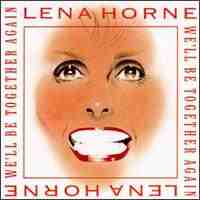
Lena Horne
We'll Be Together Again


By Stephanie De Pue
"We'll Be Together Again" was one of the last records made by the great singer Lena Horne: it was originally released by Blue Note in 1994. The diva, who was born in Brooklyn in 1917, had had an extremely long career, as a pop/jazz/Broadway/cabaret diva, that ran from 1938, when she was discovered singing and dancing at the famous Cotton Club in Harlem, to 2000. She'd been famous since 1943, on the after stream of her worldwide hit "Stormy Weather," from the movie of the same name (Stormy Weather) that was made at 20th Century Fox, while she was a young beauty on loan from Metro-Goldwyn-Mayer. (Although it must be said, at that time and place, her career was greatly limited by her color.)
Horne, who was blacklisted in the 1950's for her political beliefs, has won many awards in her long career. Several Grammies, including a Lifetime Achievement Award; an NAACP Image Award for her civil rights work, and a Kennedy Center Award. She has headlined at the Sands Hotel in Las Vegas, the Cocoanut Grove in Los Angeles, Carnegie Hall in New York, and the Hotel Waldorf-Astoria in New York - her 1957 live album, "Lena Horne at the Waldorf-Astoria" was the largest selling record by a female artist in RCA history. She has made many, many television appearances. But, as she is now well into her nineties, she no longer appears in public.
Horne recorded the record at hand following her 1993 performance at a tribute to the musical legacy of Strayhorn. To coincide with its 1994 release, she made her last two public appearances, at Carnegie Hall, and the New York Supper Club. But its genesis was much earlier, to quote from the liner notes of David Hajdu:
"It's a prayer: "We'll Be Together Again"--a private, sacred promise to a lost love. And it's fitting: the last time they [Horne, Strayhorn, and Ellington] were together on stage, December 26, 1965, Lena Horne and Billy Strayhorn were praying in song. Duke Ellington, presiding grandly over lavish proceedings at the Fifth Avenue Presbyterian Church in New York, hushed down the assemblage of 14 musicians, 8 singers and one tap dancer. `And now there will be a change in programming,' Ellington said, announcing, with no further explanation, `Billy Strayhorn and his pretty little friend.' A spotlight popped on, and there, snuggled together on a piano bench, the pianist and his friend made music for 1,800 churchgoers exactly as they'd been doing for some 25 years, alone all night at one or the other's home."
Horne married elsewhere twice, but often told interviewers that Strayhorn was her closest friend, her "soulmate," and the love of her life, and she had wanted to marry him. However, Strayhorn was basically homosexual, and, the 1940's being what they were, he was said to be tormented about it. His relationship with Ellington, otherwise an enthusiastic heterosexual, is ambiguous; as were the relationships among the three musicians. Be that as it may, Strayhorn's musical gifts were tremendous. In addition to playing piano and arranging, he was a composer of note, and is represented on this record by "Maybe," "Something to Live For," "Love Like This Can't Last," "A Flower is a Lovesome Thing," and "You're the One." Oddly enough, his perhaps most famous songs, "Chelsea Bridge," "Take the A Train," "Satin Doll," and perhaps also his most beautiful, "Lush Life," are not presented here. (Incidentally, I understand you never will find a Strayhorn song available on karaoke, as he wrote only for trained voices.)
What is here is packed with emotion, sung by a great singer at the end of her performing career. There can be no better way to remember these performers.


Claus Ogerman featuring Jan Akkerman
Aranjuez


By Michael Killen 
This CD is a must have for fans of Claus Ogerman. While Akkerman is up to the task of fronting Ogerman's orchestra, it is the arrangements that pull you in and stay with you. A gorgeous recording with a timeless feel, get this one and marvel at how amazing music can be.
Tracks:
1. Adagio From 'Concierto De Aranjuez' ; 2. Nightwings; 3. Modinha (Preludio)
4. Espanoleta; 5. Pavane Pour Une Infante Defunte; 6. Love Remembered
7. Seed Of God (From 'Magdalena'); 8. Bachianas Brasileiras No. 5

Friday, June 27, 2014

THE GLOBALISM EFFECT (Or THE IMPORTANCE OF BEING UNIMPORTANT)


By Claudio Botelho

Everything has its pros and cons. In our case, the absence of news from us passes unnoticedly. We can go anywhere without being bothered by fans, so our pens always remain conveniently kept in our pockets. Besides, we don’t have any urge to write according to the mainstream thinking. After all, what is the importance of our opinions and what dependence of them we have?
By this token, we feel much at ease to say we didn’t understand why DownBeat found Vijay Iyer’s last recording – “Mutations” - should earn four stars and, so, urged us to spent good money on a bad product. DB should refund us. Want another fake? Check Aaron Parks’ “Arborescence." Again, DB is the culprit. (Well, I admit: “fake” is too much of a bad thing. I’m pushing up a little, but his last outing is a little more than boring elevator music; that kind of product to play the role of sleeping pills, maybe?)
Anyway, it should be stated that ECM is not exactly a Blue-Note-style jazz label, isn’t it? Sometimes it is, some other times it isn’t. The fact that Mr. Iyer and Mr. Parks are known to be jazz players doesn’t mean they have to be it all the time, as much as it is difficult for me to accept the fact that someone, grabbed by this language of extreme freedom, can go “backwards."
I think that jazz is a very incremental art: if you are in grade one, it’s easier to go back, but if you belong to grade ten, things get tougher. VY is a post graduate jazzman and sits firmly in the top echelons of this art, as per his fame in the jazz circles. I, as one, know some three or four of his works and, to my taste, his “Solo” recording is the only one to confirm the recognition he’s earned. Would it be on account of its more palatable taste? Maybe… The others are “different”, but are this enough to distinguish them as outstanding?
You know what? I think that, among the realms of this art, the best tunes were already composed, the best musicians were already born (and, unfortunately, the majority aren’t with us anymore) and it is extremely unlikely we’ll ever have such charismatic geniuses as Bill Evans, Duke Ellington and Satchmo, just to name three. Will we ever hear the likes of Carmen McRae, Ella Fitzgerald, Sarah Vaughan, Betty Carter or Shirley Horn, again? Not a single chance, at least within the next two hundred years! Chances are this reality rules over DB new evaluation yardsticks, so that, to keep on granting four or five star grades, it had to lower its standards.
The reason behind the decrease in quality may lie on the simple matter that life is very different these days and doesn’t allow certain individualities to grow any more. Today, everybody sees, listens and talks to everybody so that each one’s characteristics are public domain. This leads to a great homogenization that prevents us from discovering anything really distinctive.
As you know, I’m a reader of Down Beat magazine, mostly on account of their straight star verdicts on CD reviews. It’s mathematic, scientific, precise… I don’t know about you, but, when reading reviews by other magazines, it’s not that uncommon my finishing without knowing the REAL opinion of the reviewer. Purposefully or not, this frequently happens. So, the stars are unquestionable indicators of the judgment. Of course, not every five-star work was created equal, but, in the least, their number expresses the reviewer mood of that moment…
So, I‘ve become used to go straight to the stars anytime I have a chance to peruse that magazine, and this has been a habit of mine for long.
On the subject about the CDs here nominated, see this: Reader Paul Weidman, from Santa Fe, NM, USA, under the title “Flurry of 4-star CDs”, stated, in DB’s issue of March, that, in the February issue of that publication, there were 27 albums “ranked 4 stars and above." In May, I counted 19 out of a sum of 41 reviews.
As far as I know, DB reviews whatever it comes across, so, around 50% of 4-stars-and-above CDs in a single issue is sheer evidence of jazz good health, isn’t it? At least Mr. Weldman feels accordingly.
I won’t give them an agreement. Jazz golden era – at least in the United States – is over for a generous amount of time now. So, to get, at random, 41 disks and find 19 of them to be more than OK these days is a real lucky strike. But if this keeps happening every month? Then, I’ll be forced to say my standards are out of fashion, maybe. Possibly, I’ve become an old goat whose musical taste remained rooted in the romanticism of the past, so to speak.
This may be a reality for me, as I keep on enjoying works like “Pure Pleasure for The Piano”, by Ellis Marsalis and Makoto Ozone, “Internationally Recognised Aliens”, by Gwilym Simcock’s The Impossible Gentelmen and Christine Jensen’s “Habitat”; all of them contemporary with the outings here criticized.
For one, talking about globalization, I think that the amalgamation of piano playing started by the time Herbie Hancock came into prominence and remained a strong active voice in jazz for some ten years or so. Although he never was as easily recognizable voice as, say, Oscar Peterson, Ahmad Jamal, George Shearing or John Lewis; all of these having unique styles, he’s got a great following as he’s, unquestionably, an excellent player whose compositions and arrangement skills play a second role to none. So, his works, taken as a whole, were some of the most memorable of jazz history. By then, everybody wanted to play like him and it became increasingly difficult to tell one young pianist from the other. So, it started a new trend: the Hancock-alike pianists. Of course, there were some voices like Keith Jarrett, for instance, who, having very personal playing (in this very instance, some very loooong intros to a song) was not prone to being copied without seriously suing its agent for plagiarism.
For some ten or fifteen years now, another trend has emerged: the me-too-Brad-Mehldauish players. Everybody wants to play like him and, for my money, they’ve arrived late, as the heyday of that player belongs to the past. I’ve said this here: Mr. Mehldau has been copying himself a lot lately and his compositional skills have lost their freshness. So, the novelty he once was is now commonplace, due, mainly, to his own self. Of course, within certain constraints, everybody imitates himself, this being a hallmark witch lets us pick one from the other, but Mehldau has gone further, to the point of being just too much repetitive. And particularly melancholic… It’s sort of tough to listen to his CD’s to their ends. One has to give himself a break to rest before striving to arrive at the last chord.
The emergence of so much me-too players is the price to pay for the so-called “globalism.” It’s plain evident that today players know everything about technicalities (another byproduct of globalism) and can easily emulate anybody, but voices hitherto heard have increasingly becoming a thing of the past. Maybe here lays the reason which underpins DB critics: Is it unordinary? So, it’s good and must be heralded as five-star art. But, tell me: Would you rather listen to these two ECM’s outings in place of, say, anything pianist Antonio Faraò plays for the sake of sheer listening pleasure? Would you? His music is filled with the ups and downs of life, being, so, deeply enticing, as it always tells a story which, many times, sends frills down one’s spine.
I don’t see any reason in art if it is not to tingle our feelings, to bring us tears of emotion.
Maybe all that’s left to me is to be an old goat…

Monday, June 23, 2014

Ralph Penland 1953 - 2014


By Janelle Gelfand
Ralph Morris Penland was a modest virtuoso of the drums who loved to teach, but performing was his life. The prolific jazz drummer and Cincinnati native worked with a Who’s Who in the jazz world.
Mr. Penland died on March 13 from complications of a stroke. He was 61.
Despite the many superstars with whom he performed, from Frank Sinatra to Miles Davis, Mr. Penland remained quiet, humble and a devoted Jehovah’s Witness, his family said. He was an active performer, clinician and faculty member at Pasadena City College in California.
“His love was playing his drums and that was first and foremost,” said his sister, Yvonne Berry of Finneytown. “He left Cincinnati at 18 and went to the New England Conservatory of Music for two years, and got picked up by Miles Davis and went to California. That was it. He loved that.”
Mr. Penland was born and raised in Cincinnati’s West End. He started playing the drums at age 9 and felt an instant kinship. “I related to the beats and rhythms,” he once said.
He graduated from Taft High School, where he studied drums and performed in many ensembles – including a program with the Cincinnati Symphony Orchestra, which he recalled in an interview years later. As a teen, he played with some of the best of Cincinnati’s jazz community, which laid the foundation for a life in jazz.
“A line of drummers went to Taft, and one thing we had in common was (band teacher) Oscar Gamby, who played in the Count Basie Band,” said Art Gore, a friend and nationally known drummer, who is faculty member at the University of Cincinnati College-Conservatory of Music. “The guys who came out of Taft are all well-known outside of Cincinnati. He left some history here.”
Jon Ridley, who hosts a Sunday jazz program on WAIF 88.3 FM radio, remembers Mr. Penland as a “world class” musician, even as a teen.
“He was electrifying,” he said. “The world has lost a good ambassador for jazz.”
In Boston, while studying and teaching at the New England Conservatory, Mr. Penland began making a name for himself on the East Coast. At age 19, while gigging in New York, he met jazz trumpeter Freddie Hubbard, who invited him to join his band. They recorded five albums together, including the groundbreaking “Keep Your Soul Together” and “High Energy.”
But it was Davis who drew Mr. Penland to the West Coast.
“He was an artist he looked up to, and got him to move to California and get involved in the music scene in L.A.,” said Mr. Penland’s niece, Rhonda Berry of Finneytown. “Miles remained his iconic hero.”
Mr. Penland settled in North Hollywood, and his artistry grew to include all genres. He worked and recorded with artists such as Herbie Hancock, Carlos Santana, Sarah Vaughn, Etta James, Dianne Reeves, The Coltrane Family, Stan Getz, Marvin Gaye, The Supremes, Wynton and Branford Marsalis, Joshua Redman, Chaka Khan and many others.
Last year, he appeared on “The Queen Latifah Show.”
“He played with so many greats and was influenced by many,” his niece said. “He played for Quincy Jones and so many people. He did movie soundtracks, and he’d call us at home to tell us. One was ‘Throw Momma from the Train.’”
Sinatra recruited Mr. Penland for his year-long Diamond Jubilee World Tour in 1991. The same year, Mr. Penland toured with Latin-rock guitarist Santana. Two years later, he played drums in Hancock’s piano trio (1993-94), which he told the Los Angeles Times was one of the highlights of his life.
To find his own musical voice, Mr. Penland formed his own jazz ensemble called the Penland Polygon.
“I like dealing with many different sides of music,” Mr. Penland told the Times in 1995. “The bulk of my music is acoustic, straight-ahead jazz, but I also like fusion, funk, calypso. I’m always trying to expand.”
In the early ’90s, his niece went to hear her uncle play in a club in Louisville. His performance style, she said, was “like a very smooth singer. He just made the drums sing. But the drums never overpowered the ensemble.”
While he lay in the hospital, his niece and the extended “family” of musicians played his favorite Davis tune, “Seven Steps to Heaven,” “and we watched as the emotion of his love for music covered his face,” his niece said.
His sister, Yvonne Penland Berry, and niece, Rhonda Berry, are his only survivors. He was preceded in death by his wife, Ramona. Mr. Penland later married jazz singer Lynda Laurence. They were later divorced.