Sunday, January 17, 2016

1 Sem 2016 - Part One

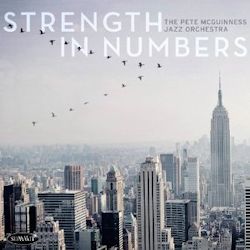
The Pete McGuinness Jazz Orchestra
Strength In Numbers


By Pierre Giroux
While the days of taking a 16-piece band on tour are long over, fortunately record companies and producers continue to issue albums of that genre. Falling into that category is the Pete McGuinness Jazz Orchestra’s Strength In Numbers and it is an acknowledgement that there is a market for a big band that is venturesome and can play with power and precision.
Even before dropping the laser beam on the disc, a reading of the liner notes offered encouragement. One of the producers of the album is John Fedchock who was one of the stalwarts of Woody Herman’s latter bands and is a leader of his own New York based big band and knows a thing or two about the need for swinging arrangements. The Send-Off is the send-off for the album and, while not a barn-burner, it does offer tenor-saxophonist Tom Christensen and drummer Scott Neumann a chance to deftly show their chops. The Michel Legrand chestnut What Are You Doing The Rest Of Your Life?is done up as an easy-going waltz with some smart expressiveness and then part way through, for some unexplained and unfathomable reason, Pete McGuinness offers a vocal. McGuinness does the same vocal thing with You Don’t Know What Love Is justifying it on the basis that Chet Baker was one of his vocal heroes. Sometimes such adulation is best left unrequited.
The balance of the album confirms that McGuinness is a composer and arranger with an invigorating original style who can take advantage of the full palette of a large orchestra as shown on the Stephen Foster ballad Beautiful Dreamer which is turned into a swaying samba with the soprano sax of Dave Pietro layered in over the band. Nasty Blues is a swinger of the first order with the saxophone section laying down the melody in the manner of Count Basie and then the soloists take over, firstly with Dave Pietro on alto, followed by an exchange of choruses by trombonists Mark Patterson and Matt Haviland. The band’s blazing “shout chorus” is led by trumpeter Jon Owens. Finally Bittersweet opens with an extended piano offering from Mike Holober after which McGuinness carries the load on trombone, showing he can deliver the goods in a brusque but evocative style.
This is an invigorating release from a solid outfit.
Tracks:
1. The Send-Off; 2, What Are You Doing The Rest Of Your Life?; 3. Trixie’s Little Girl
4. The Swagger; 5. Beautiful Dreamer; 6. Spellbound; 7. You Don’t Know What Love Is
8. Nasty Blues; 9. Bittersweet; 10. You Don’t Know What Love Is (radio version)
Personnel:
Pete McGuinness - Composer, arranger, vocals, trombone
Dave Pietro, Marc Phaneuf, Tom Christensen, Jason Rigby, Dave Reikenberg - Woodwinds
Bruce Eidem, Mark Patterson, Matt Haviland, Jeff Nelson - Trombones
Jon Owens, Tony Kadlek, Bill Mobley, Chris Rogers - Trumpets 
Mike Holober - Piano; Andy Eulau - Bass; Scott Neumann - Drums


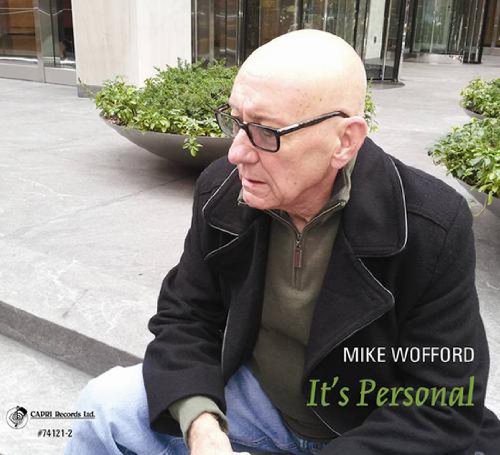
Mike Wofford
It's Personal


By Amazon
Mike Wofford has a long history of playing piano with great jazz musicians over the past 50 years including long stints with Shelly Manne, Bud Shank and many others. He is probably best known for his work as accompanist and musical director for Ella Fitzgerald and Sarah Vaughan. His latest recording, It's Personal features Wofford on solo piano playing some of his personal favorite tunes. There are 4 original compositions from Wofford and 8 other pieces by a range of composers from Jackie McLean, Dizzy Gillespie and Duke Ellington to the Talking Heads.


Claudio Filippini Trio
Squaring The Circle


By Robin Arends
One of Italy's most talented young jazzpianists, Claudio Filippini, turns back to the jazzstandards in his new album "Squaring the Circle". The album is recorded in october 2013 in Cavalicco and released july this year. Flippini uses unexpected instrumentation. Filippini has left his Nordic Trio (consisting of Palle Daniellson and Olavi Louhivuori) and now takes his comfortable freedom with the artistic soulmates he started his professional carreer with a decade ago.
The album starts with a number called "Impressions" and is subscribed to John Coltrane. It could also be a version of the (frequently by Coltrane interpreted) Rodgers and Hammerstein-composition "My Favorite Things". After a bassintro Filippini's piano and electronics are taking over.
An abundance of echoes and strings do believe that Filippini is going a completely different (let us say: more commercial) direction. Fortunately this proves not to be the case as the next piece testifies.
What follows is a surprising version of "Autumn Leaves", introduced by Di Leonardo and Bulgarelli which turns slowly in a beboptune led by Filipinni. There is little that is reminiscent of the original standard. It is clear that with this second song the trio declares originality is more important than an exact representation of the standard. The other pieces proof us why.
Part of the intro of 'Round Midnight' turns into a Portisheadpiece and could suggest we are in the wrong room but later it turns out that we still sit in the right place. Filippini's Grand Piano is in the centre and plays the wellknown Monktune. After a digital interlude, Monk is put in the closet and Filippini proofs his skills while he is accompanied by samples. Also Filippini's version of the Oliver Nelson-classic "Stolen moments" is a complete remake. It starts as a discosong and ends up as a Brazilian carnivaltune.
The trio distances itself not completely from the originals. The uptempo Hart and Rodgers composition "I Dont' Know What Time It Was" keeps pretty near the original version. Also Mancini's "Moon River" stays mainly intact. And the trio Filippini leave us in silence with a breathtaking version of the evergreen "What a Wonderful World".
All together "Squaring the Circle" is not just about qualities. It is about inventive creativity. It is alluring to compare the pieces on this album with the music on the other Filippini-albums or versions of other pianists. Why fits "As Time Goes By" better on "Breathing in Unison" and what makes the presented standards unique? What is the difference between Filippini's version of Jitterbug Waltz and Errol Garners 1949- version? Can we compare Autumn Leaves or 'Round Midnight as played by the master of standardspecialist Keith Jarret? Yes, we can and we'll hear different voices, unique souls playing unique tunes. All together Squaring the Circle is too short. There are many other tunes which could be included in this selection. "Impressions" should be left to McCoyTyner and maybe Marc Copland and Dave Liebman (and compare it with the Copland-trio version of My Favourite Things). But there is so much more we have a right to. Where are the compositions of Kern, Berlin, Gershwin and Hammerstein? The qualities of Filippini and his trio should not be limited to the numbers on this album. We want more!
Tracks:
1. Impressions (J. Coltrane) 5:53
2. Autumn Leaves (F. Prévert – J. Kosma) 4:55
3. 'Round Midnight (B. Hanighen – T. Monk – C. Williams) 7:59
4. I Don't Know What Time It Was (L. Hart – R. Rodgers) 4:32
5. Moon River (J. Mercer – H. Mancini) 5:19
6. Stolen Moments (O. Nelson) 4:00
7. Jitterburg Waltz (F. Waller) 6:09
8. A Night In Tunisia (D. Gillespie) 6:15
9. What A Wonderful World (B. Thiele – G. D. Weiss) 7:06
Personnel:
Claudio Filippini, piano & keyboards
Luca Bulgarelli, bass
Marcello Di Leonardo, drums


Fred Hersch
Solo


By Fred Kaplan
With Solo, his 49th album as a leader (or co-leader) and 10th as a soloist, Fred Hersch nails his standing as one of the premier jazz musicians of our time, a pianist of subtle touch and propulsive flow, something like Keith Jarrett but more focused, less rhapsodic—Ravel to KJ's Liszt or Rachmaninoff (not that there's anything wrong with either).
Recorded live last year at the Windham Civic Center Concert Hall, in New York's Hudson Valley, Solo (on the Palmetto label), features, like most of Hersch's albums, a mix of originals and standards—the latter by Jobim, Ellington, Monk, and Joni Mitchell, four composers who have no finer interpreters in jazz today.
Monk is a particularly knotty composer to cover. Most pianists who try either come off as merely imitative (and usually stiff) or go for an original approach that doesn't sound remotely Monkish. Hersch, as he first demonstrated on Thelonious (a 1997 album on Nonesuch), is among the few who mines Monk's essence while refining it in an original voice. He embroiders Jobim with newfound layers of beauty, adds a Latin flavor to Ellington's "Caravan," and lays down Mitchell's "Both Sides Now" with loving (but not at all sentimental) elegance.
I'd say this is Hersch's best solo album since In Amsterdam (2006) or maybe Let Yourself Go (1999).
About the sound quality. A reviewer in one of the other audio magazines (not Stereophile) gave this album 5 stars for sonics, which, I must report, is absurd. It was recorded on a standard 44.1kHz/16-bit CD-R by the Windham Civic Center's sound man (unnamed in the credits), who gave Hersch the disc after the concert. Hersch hadn't planned to release it as an album, but he was so taken by his performance—and so unmoved by a studio session he'd laid down around the same time—that he decided to put out the Windham session, despite the so-so sound. He gave the disc to Mark Wilder, one of the top mastering engineers around, who brought out his bag of tricks and made it sound as good as possible—but good is the best he could do. It's a bit reverberant and a bit muffled, but better than you'd expect from a raw feed off a soundboard. Let's call it 4½ stars for music, 3 stars for sound.
Don't let this put you off, though. The beauty of Hersch's playing shines through.


Dino & Franco Piana Ensemble
Seasons


By TraccediJazz Magazine
Dino e Franco Piana, a circa due anni di distanza presentano un nuovo lavoro. A differenza del precedente questo è costruito su una sequenza di nove brani uniti tra loro da modulazioni e cadenze di largo respiro.
Franco Piana con questo lavoro si rivela compositore ed arrangiatore di altissimo livello, la sua scrittura per sei fiati (flicorno, tromba, trombone, saxalto, saxtenore, flauto) pianoforte, contrabbasso e batteria è costruita, in modo da ottenere quei risultati che solo un orchestratore/arrangiatore di valore riesce a realizzare.
Alla scrittura di Franco può, agevolmente, adattarsi quanto il critico accademico Winthrop Sergeant disse a proposito di Gil Evans: “grande senso della poesia sonora e puntigliosa attenzione ai colori timbrici”. Ma ciò che maggiormente sorprende è la capacità di Franco Piana nel creare “masse di suono” con solo sei strumenti a fiato, lui stesso al flicorno, la tromba Fabrizio Bosso, Dino Piana, trombone, Ferruccio Corsi e il giovanissimo figlio Lorenzo Corsi, rispettivamente saxalto e flauto e Max Ionata, sax tenore, insieme a Enrico Pieranunzi, pianoforte, Giuseppe Bassi, contrabbasso e Roberto Gatto, batteria e produttore artistico, vale a dire in questo “nonet”, alcune fra le più belle realtà del Jazz di oggi.
Nel primo dei nove brani “Opening” eseguito da tutti i fiati, vengono già enunciati gli spunti tematici dei brani che seguiranno. Nel secondo, “Just a Reflection”, dopo un tema molto articolato seguono i primi quattro assolo dovuti a Max Ionata, Fabrizio Bosso, Dino e Franco Piana. Dopo un ensemble e ad Enrico Pieranunzi segue un “collettivo tematico” prima delle parti solistiche di Roberto Gatto e Franco Piana.
Dopo la ripresa del tema e una modulazione che porta ad una cadenza splendidamente eseguita al flauto da Lorenzo Corsi, viene introdotto il terzo brano “A Light in the Dark”. Già in “Just a Reflection” la parte in assolo di Fabrizio Bosso appare in tutta la sua versatilità, così quella di Pieranunzi che esplora ogni peculiarità della composizione.
Il tema di “A Light in the Dark” è esposto magistralmente da Dino Piana e Ferruccio Corsi, cui segue Enrico Pieranunzi la cui personalità stilistica originale è qui in tutta evidenza. Dopo una modulazione, una cadenza di Dino Piana ne introduce una ulteriore di pianoforte le cui ultime note sono quelle del nuovo tema “Five Generations”, brano che si sviluppa tra la prima parte modale e l'inciso costruito su giro armonico.
Le parti solistiche sono riservate a Max Ionata sempre espressivo nel suo bel fraseggio, Fabrizio Bosso e Enrico Pieranunzi. La composizione si chiude con una bella “chase” fra Giuseppe Bassi solido e swingante e Roberto Gatto sempre elegante ed efficace. Gli assolo di Ionata, Bosso e Pieranunzi in sequenza sono straordinariamente inventivi e di grande impulso ritmico.
Nel quinto brano ”After the Winter” dopo un’introduzione che riprende il tema finale del “movimento” precedente, Lorenzo e Ferruccio Corsi, flauto e saxalto, espongono, dopo la modulazione, questa splendida melodia di Franco Piana lasciata per l'intera esecuzione al lirismo di Lorenzo e Ferruccio. “After the Winter” termina con intervalli di un tono e ½ tono e annuncia il brano seguente “Ostinato” in cui si notano una sequenza di assolo splendidi: Pieranunzi, Ionata, una chase superba eseguita da Dino Piana e Lorenzo Corsi, Fabrizio Bosso, Giuseppe Bassi e infine Franco Piana che con la tromba sordinata, chiude questa sesta composizione anticipando “Only Now”.
Il brano si apre con un dialogo fra i fiati ed un assai brillante Roberto Gatto, che è anche produttore artistico del cd, prosegue poi con una sequenza di assolo, Bosso e Ionata prima dell’ensemble, Dino e Franco Piana, Enrico Pieranunzi prima del collettivo che precede il tema. L’ottava composizione “Why Not” è, anche in questo caso, un tema melodicamente di grande efficacia, esposto con intensità da Franco al flicorno e da Dino, seguiti da Enrico Pieranunzi. La modulazione finale con flauto, flicorno e trombone prevede intervalli che anticipano
il 9° movimento finale, un blues veloce, “CdJ Blues” (dedicato alla Casa del Jazz di Roma). “CdJ” è impostato secondo la classica struttura jazz di sempre, ma sempre efficace, tema-assolotema, quando, come in questo caso, i solisti sono di altissima classe e capacità.

Wednesday, January 06, 2016

Old Jazz CD's 2016 - Part Two

Denise Donatelli
In The Company Of Friends


By Ken Dryden 
Jazz vocalist Denise Donatelli is a breath of fresh air in a market seemingly saturated with female singers. Her debut recording, In the Company of Friends is a stunning effort. Donatelli has a warm, sensuous voice and doesn't resort to histrionics to get her message across. She is a natural, not a trained musician, who effortlessly responds to anything that arranger/pianist Tom Garvin threw at her during the making of the CD. She coasts throughout Garvin's 5/4 arrangement of "On Green Dolphin Street" (a great standard too often subjected to hackneyed renditions) as if she had always sung it in that setting. "'Round Midnight" is full of traps for young singers, yet Donatelli proves herself by avoiding them and also serving as an effective storyteller, backed by Clay Jenkins' tasty muted trumpet. Neither is she fazed by Garvin's unusually brisk, dissonant Latin treatment of the ballad "You Don't Know What Love Is," never missing a beat. She also responds rather well to Garvin's reharmonization of "Send in the Clowns," recast as a light samba with many musical twists. Donatelli shows off her chops by scatting in unison with Jenkins and tenor saxophonist Bob Sheppard in a rapid-fire arrangement of "This Is New." Wrapping this brilliant debut CD is Donatelli's effective interpretation of "When Summer Turns to Snow," beautifully scored by Garvin. Phil Woods, never one to couch his opinion, states, "This is too good a record to win anything, but if there is any justice it should." This is one of the most striking debuts by a jazz vocalist in recent memory.


Ann Hampton Callaway
Easy Living


By Michael G. Nastos
This is Ann Hampton Callaway's seventh recording, Easy Living, is one of her very best. It's a program of well-known standards and fairly stock arrangements, but in the middle is her pristine, well-defined, flexible voice. She retains a lower-end range in her style that suggests only one singer: Sarah Vaughan. She's joined by several different rhythm sections and soloists, including pianists Benny Green (six cuts), Bill Charlap (five), and Kenny Barron (two); bassists Peter Washington or Neal Miner; drummers Clarence "Tootsie" Bean and Lewis Nash; percussionist Jim Saporito; saxophonists Andy Farber, Nelson Rangell, and Gerry Niewood; and on three selections, trumpeter Wynton Marsalis. A collection of love songs sung convincingly and with no frills, Callaway shows great depth in ballad singing. Hard evidence is presented in her takes of "Skylark" and "The Very Thought of You," with Charlap's glistening piano tones ringing bells for the singer and Farber's tenor sax replies. "'Round Midnight" is the penultimate interp with Barron's wistful piano and Marsalis' spare trumpet offering advice on ol' midnight. Callaway can swing well when she chooses; "Easy to Love" brings home her lower dulcet tones, while Farber's tenor cops a Stan Getz-Joe Henderson type plea bargain. Green's intro to "Nice Work If You Can Get It" has a "Giant Steps" quote before the singer digs into this lyric. She scats a little during the middle of the program, on the melody line, and the coda, of "Bluesette," and more in the improvised bridge during "It Had to Be You." Bossa nova is always a sidebar for singers, and Callaway uses this Brazilian rhythm on an interesting arrangement of "You Don't Know What Love Is" spiked with high drama, Saporito's Latin percussion, Barron's deft piano, and Niewood's flavorful tenor. The lone composition of the vocalist "Come Take My Hand" is also bossa, with Rangell's flute chirping on this definitive love anthem. Marsalis is also bolder on the stark ballad title track and a nice version of "In a Sentimental Mood," while it's the singer getting brash and daring in a lower tone than normal for perhaps the highlight "All of You," Green's piano matching the depths of Callaway's yearnings. It's not hyperbole to understand this is the perfect singer with a perfect voice that sounds so effortless, mature, and flowing. Though the others six recordings are just fine, this one really hits the spot, especially instrumentally. Callaway proves up to the challenge with every measure, phrase, and inflection.


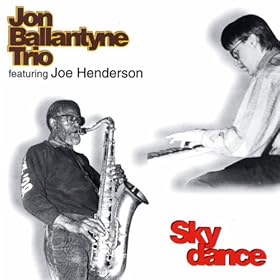
Jon Ballantyne Trio
Skydance


By Ozzie 
Canadian pianist Jon Ballantyne, a native of Saskatoon, SK, made his debut as a leader with this 1989 album, which was recorded in Montreal, PQ, for the local Justin Time label. Tenor saxophonist Joe Henderson was still a few years away from being rediscovered by the general jazz-community, but plays with absolute mastery on this CD, which is a reissue of the original album with a bonus track added (Ornette Coleman's "Blues Connotation"). Henderson's powerful playing seems to inspire all involved, as they run through a set of standards ("You and the night and the music", "You don't know what love is", and the Coleman-track) and Ballantyne-originals. These latter tunes are excellent launching pads for Henderson and Ballantyne alike, but they also stand firm as compositions in their own right. The band plays with fire and invention and never seem to run short of ideas. The opening-track ("Oh what I've been thru") runs for over 12 minutes and never gets repetitive. Beautifully recorded, with a slight reservation for Jerry Fuller's drums perhaps, which at times seem a bit tinny.
A more than convincing debut for Ballantyne to say the least !


Claire Martin
Old Boyfriends


By Alex Henderson
Many jazz singers young and old make the mistake of arbitrarily avoiding the pop, rock, and R&B songs of the 1960s, '70s, and '80s, but for Claire Martin they're fair game. This outstanding CD finds her demonstrating the jazz potential in such unlikely vehicles as Rupert Holmes' incisive "Partners in Crime" and Tom Waits' "Old Boyfriends" -- not exactly songs jazz singers are usually quick to embrace. True to form, she unearths her share of wrongly neglected classics, including Artie Shaw's "Moon Ray" (a major hit for him during the swing era) and Burt Bacharach's "Out of My Continental Mind" (associated with Lena Horne). As daring as Martin is in her choice of material, her vocal style is actually quite straightforward and lucid and not overly abstract. Martin consistently uses subtlety and restraint to maximum advantage and -- like Chris Connor and Julie London before her -- makes it clear that cool jazz certainly doesn't have to be cold.


Carol Kidd
The Night We Called It a Day.....


By Amazon
Originally released in 1990 The Night We Called It A Day has been reissued as part of Linn's ECHO series which offers a second chance to enjoy the best of the label's award-winning catalogue.
Upon release the album was voted 'Best Jazz Recording' at the U.K. Musical Retailer's Awards in the same year that Kidd was named 'Best Vocalist' at the Cannes International Jazz Awards.
'How Little We Know' is one of two songs Kidd chose that refer back to Frank Sinatra's Capitol years, the other being 'I Could Have Told You So'; upon hearing the album Sinatra arranged for Kidd to perform with him in Glasgow and stated 'Carol Kidd is the best kept secret of British jazz'.
Kidd explores the highs and lows of love; 'Gloomy Sunday' reflects the despair that results when your lover has gone, whereas 'How Little We Know' and 'The Glory Of Love' concern themselves with the upside of boy meets girl.
Kidd also includes tracks by some of the best songwriters: Richard Rogers, Cole Porter and Randy Newman.
The trio of David Newton (piano), Dave Green (bass) and Allan Ganley (drums) provide the perfect accompaniment to Kidd's vocals. 

Tuesday, January 05, 2016

Old Jazz CD's 2016 - Part One

René Marie
Live At Jazz Standard


By Matt Collar
Idiosyncratic jazz vocalist Rene Marie makes her presence unequivocally apparent on her second MaxJazz release, Live at Jazz Standard. Recorded over three nights in 2003 at the New York City club, the album features Marie's usual mix of standards and originals. Stylistically resting comfortably somewhere between Betty Carter and Shirley Horn, Marie digs into such classics as "Where or When," "Nature Boy," and "A Foggy Day," making each song different from the next and utterly unforgettable. You may never hear another version of "It Might as Well Be Spring" sang as spritely as the one that appears early on, and her take of "I Loves You Porgy" is as heartbreaking as her a cappella turn on "How Can I Keep From Singing?" is dramatic. Backed sensitively by pianist John Toomey, bassist Elias Bailey, and drummer T. Howard Curtis III, Marie just gets better with each solo release.


Jill Seifers & Michael Kanan
Birdland Sessions


By Scott Yanow
Jill Seifers, a singer from Portland who was 32 at the time of Birdland Sessions in 1998, was originally a bop-based scatter. Since that time, she has learned to love lyrics and ballads to the point where everything on this CD is taken at a fairly slow tempo. Accompanied by the sympathetic and supportive piano of Michael Kanan, Seifers displays a voice touched by jazz and folksingers alike. With the exception of Alec Wilder's "Moon and Sand," all of the material is quite familiar (including "Never Let Me Go," "Everything Happens to Me," and "The Talk of the Town"), but the vocalist's sincerity, warmth, and pure joy at singing (even if a lot of the material is downbeat) gives some of the songs a fresh perspective. But do not expect much variety here.


Monica Borrfors
Slowfox


Recorded 1995 at Polar Studios - Sweden
Produced by Lasse Andersson
Engineered by Robert Wellerfors

Tracks:
1 Polka Dots and Moonbeams; 2 I Get Along Without You Very Well; 3 Soon
4 Don't Go to Strangers; 5 Dindi; 6 I Can't Get Started; 7 Folks Who Live on the Hill
8 Masquerade Is Over; 9 Nu Tas Ater Ljusen I Min Lilla Stad; 10 Marionette
11 August Wishing; 12 Everthing Happens to Me; 
13 What Are You Doing for the Rest of Your Life.


Melody Gardot
Worrisome Heart


By Michael G. Nastos
Melody Gardot's debut recording, released in 2006, came two years after she suffered a near fatal automobile accident, the differently able Gardot triumphing in accomplishing what many others, including her, could only dream of. This project has her singing and playing guitar and a little piano, but more so presenting this project of all original material. Gardot has an interesting personal story, but even more intriguing music that straddles the line between lounge jazz, folk, and cowgirl songs. She's part sophisticated chanteuse, college sophomore, and down-home girl next door. Her innocence, sweetness, and light are very alluring, much like the persona of tragic songbirds Eva Cassidy and Nancy LaMott. Feel empathy for Gardot, but don't patronize her -- she's the real deal much more that many of her over-hyped peers. "Quiet Fire" is definitely her signature tune, as it speaks volumes of where her soul is at, in a jazz/blues mode, yearning for true love. The title track follows a similar tack, a slow, sweet, sentimental slinky blues that will melt your heart. A finger-snapping "Goodnite" leaves you wanting that night to continue, but also exudes a hope that permeates the entire recording. She might be a bit down on men during the nonplussed "All That I Need Is Love," but her subdued optimism glows cool. "Sweet Memory" might possibly parallel Feist or perhaps KT Tunstall in a rural country mode, while "Gone" is clearly folkish, and the slow "Some Lessons" expresses a contemporary Nashville precept. The laid-back music behind Gardot is basically acoustic, incorporating hip jazz instrumentation, especially the trumpet of Patrick Hughes and occasional organ, Wurlitzer, or Fender Rhodes from Joel Bryant, but with twists including violin, lap steel, and Dobro. The concise nature of this recording and these tunes perfectly reflects the realization that life is precious, every moment counts, and satisfaction is fleeting. Likely to be placed in the Norah Jones/Nellie McKay/Madeleine Peyroux pseudo jazz/pop sweepstakes, Gardot offers something decidedly more authentic and genuine. She's one-upped them all out of the gate.


Karen Mantler's
Pet Project


By Stewart Mason
Over the course of her first three albums, the ongoing narrative thread of Karen Mantler's music concerned her beloved cat Arnold. 1996's Farewell, written and recorded following her pet's death, concerned the young singer and pianist's grieving process, but life does go on, and four years later, Karen Mantler's Pet Project is a far more lighthearted affair covering the decision to get a new pet. This is by some distance Mantler's most playful and musically accessible album; indeed, it's easy to imagine a parent of some fairly hip and musically aware children using it to introduce their kids to modern creative jazz. As a result, some will likely find the album too whimsical for words. A song cycle discussing the pros and cons of adopting an increasingly unlikely series of animals, Mantler's faux-naïf lyrics are sung by herself and members of her band (including vocalist Eric Mingus, guitarist Hiram Bullock, and for a few lines, her mother Carla Bley) with the utter guilelessness they demand, over settings that range from small-band progressive jazz to Brazilian rhythms to something almost akin to straightforward pop music. Karen Mantler's Pet Project is the sort of album that must be recommended with caveats, as the more self-important jazz fan may well find it unbearably cutesy, and Mantler's musical interests don't lie in the same experimental range as her mother or her equally legendary father Michael Mantler. This is more for fans of the quirkier end of art rock and modern jazz, along the lines of Laurie Anderson or perhaps Nellie McKay.

Monday, January 04, 2016

Paul Bley 1932 - 2016


By Peter Hum, Ottawa Citizen

"Dear Friends,

I’m deeply saddened to tell you that my father passed yesterday. Below is our official statement. He was at home and very comfortable with family at his side.

Thank you,
Vanessa Bley"

“PAUL BLEY OBITUARY:
“Paul Bley, renowned jazz pianist, died January 3, 2016 at home with his family. Born November 10, 1932 in Montreal, QC, he began music studies at the age of five. At 13, he formed the “Buzzy Bley Band.” At 17, he took over for Oscar Peterson at the Alberta Lounge, invited Charlie Parker to play at the Montreal Jazz Workshop, which he co-founded, made a film with Stan Kenton and then headed to NYC to attend Julliard.
“His international career has spanned seven decades. He’s played and recorded with Lester Young, Ben Webster, Sonny Rollins, Charles Mingus, Chet Baker, Jimmy Giuffre, Charlie Haden, Paul Motian, Lee Konitz, Pat Metheny, Jaco Pastorious and many others. He is considered a master of the trio, but as exemplified by his solo piano albums, Paul Bley is preeminently a pianists’ pianist.
“He is survived by his wife of forty three years, Carol Goss, their daughters, Vanessa Bley and Angelica Palmer, grandchildren Felix and Zoletta Palmer, as well as daughter, Solo Peacock. Private memorial services will be held in Stuart, FL, Cherry Valley, NY and wherever you play a Paul Bley record.”
In 2008, Bley was named a member of the Order of Canada, the official announcement said, for “his contributions as a pioneering figure in avant-garde and free jazz, and for his influence on younger jazz pianists.”
…which was, in fact, understating things. It’s true that everyone from Keith Jarrett to Frank Kimbrough to Aaron Parks has been influenced by Bley, but non-pianists have been similarly struck too. Pat Metheny told my colleague Doug Fischer some years ago that his life was changed by Bley’s All the Things You Are solo on Sonny Rollins’ 1963 album Sonny Meets Hawk. “When I heard Paul Bley’s piano solo, a whole new universe of harmonic possibilities opened up from me,” Metheny said. “All these decades later, I still of it as one of the greatest solos in jazz history.
“Even a non-musician can sense something amazing is happening,” Metheny continued. “On one level what he’s doing is very complex, but it’s also completely accessible, very open. Bley simply allows each musical idea to go to its natural conclusion — and in the end, something very personal becomes very universal.”
A legendary raconteur who witnessed and was involved with the greatest jazz players over the last 60-plus years, Bley was also a famously quotable philosopher of improvisation and life: For now, just these choice quotes:
1) “Practice makes perfect. Imperfect is better.”
2) “Music paper is senile. Recordings do a better job.”
3) “Rehearsals are counterproductive. Repetition is a downward spiral.”

A quick appreciation by Hamilton-based pianist Adrean Farrugia on Facebook:
“Rest in peace Paul Bley.
“To me, Paul Bley is the greatest and most historically significant jazz pianist Canada has ever produced. Never putting public approval ratings and record sales before his commitment to his honest development as an artist Paul Bley carved out a sound and style that was truly unique, mysterious and beautiful.
“He was an important influence on many of history’s greatest forward looking improvising artists, such as Keith Jarrett and many others.
“I met him at the Blue Note in NYC in 2008 while on my honeymoon with my wife Sophia. His duo performances that night with Charlie Haden were deep and personal and stayed with me for a long time.
“I’ll always be grateful for your music Mr. Bley. Thank You.”

Rest in peace, Paul Bley.

Saturday, January 02, 2016

Lee Shaw 1926 - 2015


By Steve Barnes
Lee Shaw, a tiny, gentle woman who produced a huge, aggressive sound as a jazz pianist, died Sunday at age 89. She was under hospice care at Eddy Memorial Geriatric Center and had suffered from medical issues including chronic obstructive pulmonary disease and related complications. Until January, when she had a stroke, Shaw had lived in the same house along the Mohawk River in Colonie that she and her late husband, Stan, bought in 1971 when they moved to the Capital Region from New York City.
Despite her health difficulties, Shaw was an indefatigable performer. Oxygen tank in tow, as it had been for several years, Shaw played her last regular gig in early September at Grappa '72 Ristorante in Albany. It was but one of many area restaurants and nightspots over the years where local audiences could hear world-class talent for free in an intimate setting.
"She was a phenomenal force on the piano," said Rich Syracuse, who as the bass player in The Lee Shaw Trio for the past 23 years performed thousands of shows with Shaw.
"Sometimes we'd get to a place and the piano would be out of tune, but she would play it with such force and musicianship that the damn thing would suddenly be in tune," Syracuse said Sunday evening. "It was as if she willed it into being in tune by the strength of her playing."
Born June 25, 1926, in Oklahoma, Shaw as a child learned to play piano by ear, pecking out popular tunes of the era after hearing them on the radio. She later studied piano classically at Oklahoma College for Women and, for her master's degree, at the former American Conservatory of Music in Chicago, where she met and married her husband, Stan, in 1962. They would play together for the next 39 years. Throughout her classical studies she maintained a large repertoire of pop standards and earned a living playing at restaurants and nightclubs. Shaw claimed never to have heard jazz until seeing the Count Basie Orchestra in Chicago. She later studied with jazz great Oscar Peterson, who is said to have invited Shaw to be his student after hearing her play just once, and Shaw herself was a teacher of renown, with students including John Medeski of the jazz-funk band Medeski Martin & Wood. A recording of a Shaw-Medeski concert at The Egg in Albany was released as the album "Live at The Egg."
"She had a tremendous classical technique underlying the jazz, and she was always studying, recording gigs and listening to them after, always learning and trying to improve, even in later years," said Jeff Siegel, the drummer for The Lee Shaw Trio for the past 14 years.
"The way she played American standards was so fresh, so authentic, that if you heard her play one, you'd think that was what Cole Porter or Gershwin would have wanted," Siegel said.
The Lee Shaw Trio performed extensively throughout the greater Capital Region and across the country, including in her native Oklahoma, where Shaw was inducted into the Oklahoma Jazz Hall of Fame in 1993. In 2007, 2008 and 2009, the trio toured Europe each year; a concert in Austria, recorded by the Austrian Broadcast Co., was the basis for the trio's 2008 album and DVD, "Live in Graz."
In contrast to the intensity she brought to jazz, Shaw was gracious, even genteel, and warm with friends and fans alike.
"She was so appreciative as a person," said Tess Collins, who got to know Shaw in the late 1980s and 1990s, when Collins managed the Albany restaurant Justin's, then a jazz hotspot. "We'd carry her things for her, and she'd come back with a thank you, brownies or some other food. She was just so genuine," said Collins, who now owns McGeary's pub in Albany and DiCarlo's lounge in Colonie.
"She was so caring and interested in other people that when you asked about her, she'd always turn it around and somehow you'd be talking about you," said Diane Reiner, who was a neighbor and close friend of Shaw's for three decades and recently had been helping her with legal and medical decisions.
Shaw was also a composer.
"She had a great lyricism evident in her songwriting," Siegel said. "You could feel and hear her expressing herself so beautifully."
Although she was hospitalized multiple times this year, Shaw was determined to continue playing.
"Music was why she was staying here," said Siegel. "At one point her arm was paralyzed, but she said she'd play again, and she did. What she went through to continue to play" — including, earlier in life, three bouts of cancer — "was unbelievable."
Siegel and Syracuse, who had played alongside Shaw for a combined 37 years, visited Shaw's bedside on Saturday, the day before she died. Morphine limited her ability to speak, they said, but she acknowledged their presence with a strong squeeze of their hands. Talking wasn't necessary among the three, who communicated through music, and so they played recordings of some of the trio's tunes. One of them was a Shaw composition, "Song without Words."
A funeral observance later this week will be private, Reiner said. Siegel and Syracuse said they hope to organize a memorial concert and celebration in Shaw's honor in the coming months.

Thursday, December 31, 2015

MY FRIENDS TOP 10 JAZZ CD's - 2015

Dr. Leandro L. Rocha
Segue minha seleção:
 01. 50 anos - FRANCIS HIME 
 02.Memória Afetiva - LUIZ PIÉ 
 03.What is this thing called love - LAURA THEODORE 
 04.Viva Hermeto - ANDRÉ MARQUES 
 05.Uneração Vital - THIAGO ALMEIDA TRIO 
 06.Tamarear - MILTON NASCIMENTO E DUDU LIMA TRIO 
 07.Ná e Zé - NÁ OZZETTI E ZÉ MIGUEL WISNIK 
 08.Samba Sujo - ALFREDO DEL PENHO 
 09. Cordão - ADRIANA MOREIRA 
 10.Transparente - FÁTIMA GUEDES 
 11.Vidas pra contar - DJAVAN 
 12.EDUARDO GUDIN E NOTICIAS DUM BRASIL 4 
 13.CHICO BUARQUE ARTISTA BRASILEIRO - VÁRIOS- Trilha Sonora do Filme 
 14.Partir - FABIANA COZZA 
 15.CAETANO VELOSO E GILBERTO GIL 
 Abraço, Léo


F.Claudio B. Botelho
Amigos do Jazz,
Abaixo, aquilo que mais gostei de ouvir no ano de 2.015. Como sempre tenho assinalado, o critério único que adotei foi o de “gostar de ouvir”, independentemente dos galardões que este ou aquele possam ter.
A escolha foi trabalhosa e me trouxe certa inquietação, pois, me parece, naquele ano, a quantidade foi bem maior do que a qualidade. Ou fiquei mais exigente (acho que não).
Bem, sem mais delongas, vamos ao que escolhi.
01- JOEY ALEXANDER - MY FAVORITE THINGS.
Bem, já falei até demais sobre esse menino. Sugiro que o assistam no Youtube, numa apresentação ao vivo em Copenhagen, acompanhado por dois famosos jazzistas locais. Ali, vocês verão que se trata, de fato, de uma criança que, quando senta no piano, recebe o "cabôco tocador" que o transforma numa outra coisa que pode ser tudo, menos criança. Para simplificar: a introdução da faixa inaugural desse CD (que dura mais de dez minutos) é coisa de jazzista passado na casca do alho. Assim, naqueles trinta segundos iniciais, o sujeito toma um susto danado e fica certo de que existe mesmo alma!...Aquela criança, do alto dos seus onze anos, consegue INTERPRETAR músicas, arranjando-as DE FORMA CONCATENADA, sem que, em nenhum momento, o ouvinte se esqueça da música que está sendo executada. Isso tem nome: milagre!
02- GLEN ZALESKY - MY IDEAL.
Nunca tinha ouvido falar. Rapaz novo que, interpretando alguns batidos estandardes, traz arranjos bastante originais, sem, no entanto, descambar para terrenos inóspitos que desagradariam a conservadores como eu. Tem a vibração da juventude e ela está bem presente nesse CD. Indicação indiscutível de 2.015, desde quando o ouvi pela primeira vez.
03- ALAN BROADBENT & NDR BIG BAND - AMERICA THE BEAUTIFUL.
Alan, meu velho amigo! O homem que chorou ao ouvir Bill Evans pela primeira vez! Ele está certo; eu faria o mesmo. Aqui, num retorno a trabalho pesado de orquestração, desfila algumas de suas melhores composições, junto com algumas outras bem conhecidas de diferentes autores. Orquestrações densas, bem trabalhadas e faixas longas demandam uma atenção maior. Não se deve ouvir esse CD como música de fundo, pois ele não se presta a esse papel. Destaques para o próprio AB e para um saxofonista que dá todo o sangue que tem. Gravação esquisita e baixa, o que é um crime que se comete. CD para ser ouvido em duas seções, pois é longo e tem muita informação que poderá, eventualmente, sobrecarregar os mais inquietos.
04- KENNY WERNER - THE MELODY.
Kenny Werner voltando à sua velha forma. Creio que já deve ter se recuperado um pouco de seu drama familiar (se é que isso é possível). Aqui, exibe seu estilo um tanto fragmentado de tocar que, no final, como sempre, acaba fazendo todo o sentido do mundo. É, sem dúvida nenhuma, um dos pianistas mais originais do jazz. Não é aconselhável para iniciantes. Acho que não me enquadro nessa turma, pois, afinal, estou nessa há algumas décadas...
05- DAVE SLONAKER BIG BAND - INTRADA.
Líder desconhecido que, em 2.015, se constituiu numa gratíssima surpresa para mim, pois, nos dias atuais, trabalhos orquestrais desse tipo geralmente pendem para a mesmice. Aqui não! Cada faixa é uma exibição de arranjos em múltiplos planos que trazem excepcional dinâmica ao conjunto. O homem é agitado e não gosta de deixar espaço em branco! Uma espécie de Renato Sellani às avessas... CD muito bem gravado. DS é da costa oeste dos EUA e trabalha mais em estúdios de cinema, sendo, mais ativo como músico de trilhas sonoras cinematográficas.
06- ELLIS MARSALLIS TRIO - ON THE FIRST OCCASION.
Eis outro dos meus heróis! Pena que seja um homem de múltiplos afazeres, o que nem sempre lhe permite nos presentear com seu talento. Conheço vários de seus CDs, mas poucos são tão consistentes como esse! Felicíssima combinação de repertório com interpretação. Jazz de largo espectro que só não agrada a quem... não gosta do babado.
07- AVISHAI COHEN TRIO - FROM THE DARKNESS.
No começo, assusta um pouco, mas, depois, você acostuma. Brincadeiras à parte, esse é um CD que, sem enveredar por caminhos obscuros que, muitas vezes, encobrem a falta de inspiração, consegue ser original, inspirado e instigante. Aqui o papo é cabeça. Do meio em diante, fica 100% palatável. Esse recado final é para os mais recatados...
08- MARCIN WASILEWSKI TRIO WITH JOAKIM MILDER - SPARK OF LIFE.
Melancolia polonesa que, nem sempre, me disponho a ouvir. Tem, no entanto, diversas qualidades. Talvez a mais importante: a perfeita integração do convidado soprador! Aqui, ninguém é prima-dona e todos se completam com perfeição. Palmas para o Marcin; ele conseguiu o que muito poucos conseguem nesse particular, especialmente os nossos amigos do norte! Gravação com muita espacialidade (pensei até que tivesse sido feita no famoso Rainbow Studio), agudos translúcidos e acabamento flawless. Esse, de fato, não podia ficar de fora e, a bem da verdade, só entrou porque o titular do Worldjazz me lembrou dele ao colocá-lo em sua lista que, como sabem, antecede a esta. Thanks, Leo II!
09- MICHAEL WOLLY TRIO - WELTENTRAUM LIVE PHILARMONIE BERLIN.
Todo o entorno técnico do CD acima se aplica a este. O artesanato musical é tão bom quanto! Michael é, sem dúvida, um perfeccionista e o arranjo geral está acima de qualquer crítica. A inspiração é bem diversa daquela do outro no entanto, sendo mais, digamos, germânica, chegando, em alguns momentos, a inquietar. Mas, independentemente do gênero musical, temos aqui um dos trios mais competentes da Europa e, provavelmente, o mais acertado da Alemanha. O pianista é novo e, tudo indica, tem um grande futuro. Não é um CD “popular”.
10- MICHEL CAMILO - WHAT'S UP.
Nem ele sabia que ia estar na minha lista. Eu muito menos! Mas, de cara, se percebe um piano expansivo e bastante explícito. Michel não é um homem de meios toques; vai com força. mas, também, sabe ser lírico, como mostra em umas três faixas do CD. Apesar de algumas "cubanadas" (como não poderia deixar de ser), o saldo é muito positivo. O CD passa rápido, o que sempre é bom, pois atesta bem sua palatibilidade. Jazz de amplo espectro, também. Para todas as idades.
11- BOB JAMES AND NATHAN EAST - THE NEW COOL.
Este entrou pela absoluta e total finesse desse pianista chamado Bob James. Leve e facilmente assimilável. Recomendo a todos, indistintamente.


Dr. Marcílio Adjafre
Minha relação do que ouvi de melhor em 2015 Melhores CD 2015:
1. Antonio Faraò - Boundaries - Verve 
2. Ellis Marsalis Trio - On The First Occasion
3. Mario Nappi Trio - Vela 
4. Luigi Martinale - Face the Music 
5. Joey Alexander - My Favorite Things 
6. Alessandro Galati Trio - On a Sunny Day 
7. Alan Broadbent & NDR Big Band - America The Beautiful 
8. Antonio Figura - A Journey With a Small Red Car 
9. Alessandro Collina - Michel on Air 
10. Thomás Ehnco - Firefiles 
11. Pawel Kaczmarczyz Audiofeelig Trio - Something Personal 
12. Writing 4 Trane - Living Coltrane 
13. Romero Lubambo - Setembro 
14. Justin Kauflin - Introducing 
15. Manu Katché - Live in concert 
Menção honrosa: Maria Schneider - The Thompson Fields.


Márcio Távora
CAROS AMIGOS AUDIÓFILOS - 2016,
AUGUSTO, CARLOS, CLÁUDIO, LÉO, LEONARDO, MARCÍLIO, PAULO E RENATO.
Estes são os melhores CDs DVDs BLU-RAYs que tive o prazer de ouvir e assistir em 2015.
CDS:
- AHMAD JAMAL (CD + DVD) – LIVE IN MARCIAC {2014}
- ELLIS MARSALIS – ON THE FIRST OCASSION {1998}
- JOEY ALEXANDER – MY FAVORITE THINGS {2014}
- JOHNNY (JOHN) WILLIAMS ORCHESTRA – RHYTHM IN MOTION {1961}
- MANHANTTAN JAZZ ORCHESTRA – BOLÉRO {2014}
- NATALIE DESSAY & MICHEL LEGRAND – ENTRE ELLE ET LUI {2013}
- RICHARD GALLIANO – SENTIMENTALE {2013}
- ROYAL BOPSTERS PROJECT WITH VERT SPECIAL GUESTS (2013) – AMY LONDON (SOPRANO),
- HOLLI ROSS (ALTO), DARMON MEADER (TENOR) & DYLAN PRAMUK (BASS)  GUESTS: MARK MURPHY, SHEILA JORDAN, JON HENDRICKS, ANNIE ROSS & BOB DOROUGH
DVDS & BLU-RAY:
- BURT BACHARACH (DVD) – THE GERSHWIN PRIZE – AT THE WHITE HOUSE {2012}
- TRIBUTE WITH FRIENDS (STEVIE WONDER, DIANA KRALL, MICHAEL FEINSTEIN….)
- MARIO ADNET (DVD) – JOBIM JAZZ AO VIVO
OBS:
– SAFRA MUITO FRACA, O MELHOR FOI O DO JOEY ALEXANDER (EXCELENTE).


Prof.Dr. Carlos Couto de Castelo Branco
MINHA LISTA - 2015
CD:
- 1. DJAVAN - Vida Prá Contar
- 2. LUIZ PIÉ - Memória Afetiva
- 3. ROBERTO MENESCAL - Balansamba
- 4. MARIO ALBANESE - Jequibau
- 5. DENA DeROSE - We Won't Forget You...An Homage to Shirley Horn
- 6. KRISTIN KORB - Finding Home
- 7. BILLY STRAIHORN - Lush Life
- 8. JOE HANDERSON - Lush Life
- 9. MICHEL CAMILO - Live at the Blue Note
- 10. JOEY ALEXANDER - My Favorite Things
- 11. ALAN BROADBENT & NDR BIG BAND - America The Beautiful
- 12. DAVID NEWTON - Big Screen Take One
DVD:
- 1. MARIO ADNET - Jobim Jazz
- 2. MAKOTO OZONE & GARY BURTON - Live at Montreux
OBS: gostaria de esclarecer que, para chegar a tal, contei com dicas dos amigos Dr. Slab Rock, Ricardo Albuquerque, Zé Airton Viana, Marcio Távora, Claudio Botelho e Mauricio Matos.

Wednesday, December 30, 2015

WORLDJAZZ TOP 10 - 2015

WORLDJAZZ TOP 10 - 2015

Best Jazz 2015 by WORLDJAZZ

Jazz Record of 2015
- Joey Alexander - My Favorite Things

Top 10(9) Jazz Records of 2015
- Sachal Vasandani - Hi-Fly
- Alan Broadbent & NDR BigBand - America The Beautiful
- Louis Armstrong - The Complete Decca Sessions 1935-1946
- Avishai Cohen Trio - From Darkness
- Ellis Marsalis Trio - On The First Occasion
- Chick Corea Trio - Trilogy
- Joona Toivanen Trio - November
- Marcin Wasilewski Trio w/Joakim Milder - Spark Of Life
- Tony Bennett & Bill Charlap - The Silver Lining

Artiste du Jazz 2015
Tony Bennett

Monday, December 28, 2015

Dave Pike 1938 - 2015


By Elaine Woo LATimes
Dave Pike, a bebop-style jazz musician who pioneered the amplified vibraphone, died Saturday, October 3,2015 - in Del Mar. He was 77.
A smoker since his teens, Pike had emphysema, said his wife, Brooke Eisenberg-Pike.
Influenced by the sounds of Milt Jackson and Lionel Hampton, Pike began playing drums when he was 8 and later taught himself the vibraphone. He added an amplifier to the instrument in 1960 and spent the next four years touring with Herbie Mann.
He then moved to Europe, where his band, the Dave Pike Set, gained popularity in Germany and Belgium. He returned to the United States in the early 1970s and talked the owner of Hungry Joe’s, a tiny Huntington Beach hangout for bikers and surfers, to let him play there. With pianist Tom Ranier, guitarist Ron Eschete and bassist Luther Hughes, Pike and his group became regulars and turned the establishment into a lively jazz club.
Noted jazz historian Leonard Feather wrote in 1973 that Pike played the amplified vibraphone with “ingenuity, dynamism and improvisational energy," extracting from it “a resonance on top of resonance, to which at certain points he adds a grating but sometimes attractive fuzz tone.”
Pike made more than two dozen recordings during his career, including “Times Out of Mind,” “Carnaval” and “Jazz for the Jet Set.” He stopped touring in 2010 when his illness worsened, his wife said.
Born in Detroit on March 23, 1938, Pike moved to Los Angeles with his family when he was 15 and within a year was playing professionally. Among the musicians he performed with in the early years of his career were Curtis Counce, Elmo Hope, Dexter Gordon and Paul Bley.
Besides his wife, Brooke, whom he married in 2004, he is survived by a son from a previous marriage, Jesse, and three grandchildren.

Sunday, December 27, 2015

Larry Rosen 1940 - 2015


By Charles J. Gans - October 10, 2015
Larry Rosen, one of the most influential and tech-savvy modern jazz producers who co-founded GRP Records with Dave Grusin, died Oct. 9, 2015 at his home in Park Ridge, N.J. He was 75.
The cause was brain cancer, publicist Sheryl Feuerstein said.
Against the advice of their financial advisers and lawyers, Mr. Rosen and Grusin mortgaged their homes to borrow money to launch GRP as an independent label in 1982.
“It was two musicians who just believed in the music and merging technology with quality product,” Mr. Rosen recalled in a 2012 interview with Billboard magazine on the 30th anniversary of the label’s founding. “We wanted to see if audiences would like it, and they did.”
GRP, which embraced the jazz-fusion sound and enjoyed crossover success, was voted Billboard’s No. 1 contemporary jazz label for five consecutive years and won 33 Grammys. Its catalogue included albums by many top jazz artists such as Chick Corea, Lee Ritenour, Diana Krall, Diane Schuur, Patti Austin, Dr. John and Ramsey Lewis.
On the technological side, GRP was noteworthy as the first record label to use digital recording technology for all its releases and issue every release on the new CD format.
More recently, Mr. Rosen’s main focus was on producing concerts. In 2008, he created Jazz Roots, a popular jazz concert series with an education and mentoring program for music students, at the invitation of the new Adrienne Arsht Center for the Performing Arts in Miami. The series, which has presented world-class jazz artists such as Dave Brubeck, Sonny Rollins, Wynton Marsalis and Dee Dee Bridgewater, expanded to performing arts centers in Atlanta, Dallas, Las Vegas and other cities.
Larry Rosen was born Mary 25, 1940, in the Bronx, and performed as a drummer with the Newport Jazz Festival Youth Band in 1959. He got to know Grusin, a pianist, when they worked together in singer Andy Williams’s band.
In 1972, the two formed the freelance production team Grusin/Rosen Productions, discovering and producing artists such as Earl Klugh, Austin and Ritenour. Six years later, GRP signed a production deal with Clive Davis’s Arista Records. Mr. Rosen engineered Grusin’s album “Mountain Dance,” the first digitally recorded non-classical album.
After enjoying success as an independent label, Grusin and Mr. Rosen sold GRP to MCA Records in a multimillion-dollar deal, with Mr. Rosen remaining as president and chief executive of the label until 1995.
Mr. Rosen went on to found N2K, which not only released CDs but became one of the first online music sites with a music store and genre-based community sites, making available in early 1996 some of the first digital downloads.
For television, Mr. Rosen created and produced the PBS series “Legends of Jazz” with pianist Ramsey Lewis in 2006. He also established the annual Sarah Vaughan International Jazz Vocal Competition in 2012 at the New Jersey Performing Arts Center in Newark.

Sunday, November 29, 2015

2 Sem 2015 - Part Ten

Joey Alexander
My Favorite Things


By Matt Collar
The debut album from jazz piano prodigy Joey Alexander, 2015's My Favorite Things showcases the 11-year-old's stunning keyboard virtuosity. Joining Alexander here is a mix of older and younger associates, including journeyman bassist Larry Grenadier and drummer Ulysses Owens, Jr. Also backing Alexander on various tracks are bassist Russell Hall, drummer Sammy Miller, and up-and-coming firebrand trumpeter Alphonso Horne. Working with Grammy-winning producer Jason Olaine, who previously helmed albums by such jazz luminaries as Roy Hargrove, Chris Potter, Kurt Rosenwinkel, and others, Alexander delivers a handful of jazz standards and songs culled from the American Popular Songbook in adroit, acoustic, swinging fashion.


Juarez Maciel Grupo Muda
Jazzidas


By Tratore
Com influências e referências de diversos estilos e ritmos musicais, como os ritmos afro-caribenhos e os brasileiros, samba, xote e outros. Com uma técnica apurada e uma sonoridade contagiante, o naipe de metais, sax tenor, sax barítono, trompete e trombone, se revezam nas improvisações jazzísticas, desenvolvendo diferentes linhas melódicas e conduzindo o ouvinte ao universo único da música instrumental.
Personnel:
Juarez Maciel
piano, arranjos e composições;
eduardo campos – bateria e vibrafone <> felipe fantoni - baixo acústico <> bill lucas - percussão <> paulo thomaz - violino <> jonas vitor - sax tenor <> wagner souza - trompete / flugelhorn <> marco daniel - trompete naipe ( faixa 1 – 5 - 6 ) <> juventino - trompete ( 1 – 3 – 5 – 6 ) <> roberto jr. sax barítono <> leonardo brasilino – trombone e arr. sax barítono <> fabio gonçalves - guitarra ( faixa 1 -3 - 5 ) <> pablo passini - guitarra ( faixa 2 - 4 – 6) <> improvisos safira – jonas vitor /sax <> wagner souza / trompete <> fabinho gonçalves / guitarra <> improvisos origami – wagner souza / trompete <> breno mendonça / sax tenor <> improvisos fora do tempo – jonas vitor / sax tenor <> wagner souza / trompete surdina <> improvisos funk estrela – breno mendonça / sax tenor <> wagner souza / trompete <> improviso náufragos - breno mendonça / sax tenor <> imrpovisos diadorim – brasilino / trombone <> pablo passini - guitarra
Recording:
gravação e mixagem - bruno corrêa estúdio murillo corrêa belo horizonte - minas / brasil -
março a julho de 2011.
Masterização - andré cabelo


Karin Krog & Steve Kuhn
Break Of Day


By Marlbank/SG

The appeal of this album of standards from veteran Norwegian jazz vocals star Karin Krog and pianist Steve Kuhn, who, as a 21-year-old in 1960 found himself in John Coltrane’s quartet, is largely nostalgic.
At the heart of it all the duo tantalise and glimmer, guest appearances broadening the palette added from tenorist Eric Alexander and from trumpeter Lew Soloff who sadly died earlier this year. ‘I’m Old Fashioned’ is the opener of the album recorded in New York over the last two days of October 2013 and that old fashioned thing Krog conjures so matter-of-factly from the Jerome Kern/Johnny Mercer song could be the subtitle of an album that shelters under the welcoming canopy of the Great American Songbook.
Krog has written lyrics to several of the songs, contributing effortlessly to the mournful atmosphere of Carla Bley’s ‘Break of Day in Molde’ a performance that comes complete with a heartbreaking trumpet part from Lew Soloff who also later crops up on Tadd Dameron’s ‘You Do Something to Me’ and bluesman Jimmy Witherspoon’s ‘Time’s Getting Tougher than Tough’.
Krog might be thought of as the Norwegian equivalent of Annie Ross but really she stands unique as a legend in her own land, her fame understandably reaching far beyond Nordic climes, that lilt of hers and empathy with classic jazz so distinctively conveyed on dozens of records over a long career to date.
There’s no sense of hurry or quick fixes here at all and if like Krog you’re old fashioned too you’ll like this mid-tempo album a good deal. Kuhn is an ideal accompanist, not showy at all, with a great way of choosing and accenting just the right chord and interpreting even the most subtle of Krog’s hints. Eric Alexander is also a very retro kind of player in the Scott Hamilton school and he’s perfect casting here breaking through on Kenny Dorham tune ‘Scandia Skies’ Krog has written lyrics to.
In her liner note to Break of Day Krog writes: “I heard ‘Scandia Skies’ played by the wonderful trumpeter Kenny Dorham in the Montmartre jazz club in Copenhagen at some time in the late 60s… Kenny gave me a copy of the music and later I wrote some words to it. I thought that it was quite appropriate to include this tune as Steve Kuhn had played in Kenny’s band earlier on in his career.”
And ‘appropriate’ in other respects (history, respect for the tradition, timing, acute sensibility) is a word that recurs so often on this tasteful album, everything is just so. A very late night and definitely quietly affecting set: Krog and Kuhn pull out all the stops on ‘Everytime We Say Goodbye’ as they themselves say goodbye on the final track.


Bob James & Nathan East
The New Cool


By Andy Kellman
Recorded in five studios in Nashville and nearby Franklin, Tennessee, The New Cool is something of a follow-up to Nathan East's self-titled 2014 album, though it's billed to the bassist and his fellow Fourplay member, Bob James. Like Nathan East, The New Cool is a Yamaha release. The label wing of the manufacturer also supplied the duo with instruments and enabled them to make this predominantly acoustic set of eight originals and three interpretations. Drummer Scott Williamson, percussionist Rafael Padilla, and an orchestra -- with David Davidson as concertmaster -- are all involved, yet they're employed sparingly and leave the spotlight to East and James. The album sounds like it was easy and fun to make -- one can sense joy and deep focus in the interplay -- as the material is predominantly amiable and laid-back. It's almost entirely instrumental, with East adding some occasional soft scatting, while Vince Gill drops by for the lone "proper" vocal inclusion on an elegant recasting of Willie Nelson's "Crazy." Just when it seems as if The New Cool will end as it began, in sunny and mellow form, the closing "Turbulence" develops into what's easily the album's most active cut. Composer James lets loose with some athletic electric piano, East's bass is at its taut and melodic best, and Williamson, known most for his work on contemporary country and Christian sessions, shows that he can also hang with two crucial jazz rhythm-section dignitaries. This is a pleasant, if inessential, addition to the catalogs of the two musicians.


Tony Bennett & Bill Charlap
The Silver Lining: The Songs Of Jerome Kern


By Stephen Thomas Erlewine
The Silver Lining: The Songs of Jerome Kern functions as something of an answer to its predecessor, Cheek to Cheek. That 2014 duet album with Lady Gaga was suitably brassy and snazzy, relying on well-loved standards and pizzazz -- the kind of thing designed to stoke nostalgia vibes -- but The Silver Lining is a purer jazz record, an intimate songbook collaboration with pianist Bill Charlap; the difference can be heard simply in comparing the versions of "I Won't Dance" that pop up on the two albums -- the Gaga swings boldly, the Charlap rendition carries a wry resignation. Songbooks have been a standard item for Bennett throughout the years but if The Silver Lining recalls any specific album in the vocalist's discography, it's The Tony Bennett/Bill Evans Album, a record released in 1975 when Bennett dropped off the major-label radar and his name was perhaps as well-known to record buyers as that of Evans. While there may be a slight wattage differential between Bennett and Charlap, the difference is due to scale: Bennett is a household name; Charlap is a star among modern mainstream jazz fans. Accordingly, Bennett treats the pianist as an equal, giving him plenty of room to spin out long, liquid solos, passages that seem to glide out imperceptibly from his understated support. Often, The Silver Lining features little more than just the singer and the pianist -- when they're augmented by other musicians, it's just bass and drums, offering a bit of rhythm and color -- and this sparseness never seems austere due to the inherent warmth of the musicians' easy interplay, not to mention their individual voices. Both aspects are subtly showcased on The Silver Lining, and it's that delicate dance, where Bennett and Charlap enjoy playing together and apart, that makes this so charming.

Sunday, November 15, 2015

2 Sem 2015 - Part Nine

Antonia Bennett
Embrace-Me


By Tony Augarde
I had quite high expectations of this album, because it is by the daughter of renowned singer Tony Bennett. Mind you, that can have its problems as children of famous parents often get preferential treatment - it’s called nepotism. Yet Tony Bennett says of his daughter: “Antonia’s got the gift. She has good time. She sings in tune. She has a good spontaneous feeling for phrasing”.
In fact Tony’s assessment is a fair summary of Antonia’s gifts, although I’m not too sure about her phrasing. In fact her sound and style remind me of Stacey Kent, who has the same shake in her voice, and a similar pleasing tunefulness - despite this sometimes falling into blandness. Antonia sings in tune but her enunciation is poor, leaving off some final consonants which ought to be heard to get the thrust of the lyrics.
The lyrics are another point of contention. In an interview, Antonia praised the lyrics of the Great American Songbook, which makes up the entirety of the material on this CD. But if she so admires the words of the songs, why does she often change them unnecessarily? She garbles the lyrics ofI Can’t Give You Anything But Love, changing “That's the only thing I've plenty of” to “That’s the only thing I’m dreaming of”. In Nice Work if You Can Get It, she omits “anything” from “anything more”. And in The Nearness of You, she adds the word “Darling” before “if you’ll grant me”, similarly upsetting the balance of the words.
The backing trio is generally very acceptable, although the pianist has a way of ending tunes with upward tinkling notes that sound attractive the first time he uses them but which become irritating when used too frequently. And the drummer is one of those people who plays random rimshot clicks which add nothing to the rhythm. To cap it all, the album lasts for only about 35 minutes – not exactly generous. There are hosts of lady vocalists around at present, and listening to Antonia gives me the same feeling as watching The X Factor on television: do we really need more singers?
Tracks:
1. All of You; 2. But Not For Me; 3. Embraceable You; 4. All the Things You Are
5. I Can’t Give You Anything But Love; 6. The Man I Love; 7. Teach Me Tonight
8. Nice Work if You Can Get It; 9. Yesterdays; 10. The Nearness of You
Personnel:
Antonia Bennett – Vocals; Jon Davis – Piano; Paul Nowinski – Bass; Rafael Barata –Drums


Michel Camilo
What's Up?


By Thom Jurek
Though he has recorded in many different contexts before, from duets to trios to big bands, Michel Camilo has released only one solo piano outing in his long career up to now, 2005's Solo, which revealed in intimate detail his tactile, technical facility. What's Up? is a few steps down the road. Comprised of seven originals and four covers, this date showcases the composer and pianist's love of harmony, texture, color, and rhythmic invention in performing solo jazz piano. Camilo is a wily and rangy player; he embraces the jazz piano tradition throughout this date, and extends it with Latin and classical music He opens with boogie and stride in the title cut; it's punchy, knotty, joyous, and swinging -- a fine ride through Camilo's blues imagination. Following this energetic opener is the moodier "A Place in Time," with its classical nocturne feel that explores varied hues and timbres inside a minor-key arrangement. Given its ethereality and shimmering nuance, it's a fine contrast to the opener. Camilo's love of rhythms is evident in his sprightly reading of Paul Desmond's "Take Five" and his own charging Latin powerhouse "Paprika," with its wide harmonic exploration in the right-hand chord voicings and his rumbling left hand that shifts accents every chorus. His version of "Love for Sale" is playful, elegant, and canny in its deep inquiry into the melody's possibilities for extrapolation -- his solo winds it out entirely without losing its essence. His reading of Compay Segundo's "Chan Chan" is rife with Afro-Cuban rhythmic accents even as it exposes both blues and son. "On Fire" is an exercise in pure technical mastery yet despite its intense right-hand arpeggios and ostinatos, its intricate lyric statement remains amid athletic rhumba, mambo, and salsa rhythms. In his closing ballad "At Dawn," one can hear traces of both Bill Evans and Keith Jarrett, as space, and lyricism -- both direct and implied -- send the recording off with an elegant whisper. What's Up? is a commanding performance by a truly masterful, wildly creative jazz pianist and composer.


Pérez/ Patitucci/ Blade
Children Of The Light


By Manuel Grosso Galvan 
Three excellent musicians in his best moment. The music is clear and beautifully, full of elegance . Acoustic sound with some electric touchs , simple but also majestic but in essential acoustic. Perez is a excellent pianist, Patitucci is a great bass player and Blade is one of the best drummer in this moment. All the CD is impregnate of some kind of special light, the light of his mentor Wayne Shorter is present in every note. Great trio album, a complete lesson of how make something simple and in the same time some deep a full of beauty.


Rosa Passos
Canta Ary, Tom e Caymmi


By Mauro Ferreira
De 1997 a 2000, Rosa Passos lançou quatro álbuns pela Lumiar Discos, gravadora do violonista e produtor musical carioca Almir Chediak (1950 - 2003). Três foram songbooks dedicados pela cantora baiana às obras dos compositores Ary Barroso (1903 - 1964), Antonio Carlos Jobim (1927 - 1994) e Dorival Caymmi (1914 - 2008). Lançada pela gravadora Biscoito Fino neste mês de agosto de 2015, a coletânea Rosa Passos canta Ary, Tom e Caymmi compila 13 fonogramas destes álbuns. De Letra & Música - Ary Barroso (Lumiar Discos, 1997), álbum assinado por Rosa com o violonista Lula Galvão, o CD rebobina Morena boca de ouro (Ary Barroso, 1941), Pra machucar meu coração (Ary Barroso, 1943), Camisa Amarela (Ary Barroso, 1939) e Isto aqui o que é? (Ary Barroso, 1942). Do álbum Rosa Passos canta Antonio Carlos Jobim - 40 anos de Bossa Nova (Lumiar Discos, 1998), a coletânea inclui Inútil paisagem (Antonio Carlos Jobim e Aloysio de Oliveira, 1964 - e não Newton Mendonça, como creditado no álbum original em erro reproduzido na coletânea), Garota de Ipanema (Antonio Carlos Jobim e Vinicius de Moraes, 1962), Vivo sonhando (Antonio Carlos Jobim, 1963) e Samba de uma nota só (Antonio Carlos Jobim e Newton Mendonça, 1960). Por fim, do álbum Rosa Passos canta Caymmi (Lumiar Discos), a compilação reapresenta Samba da minha terra (Dorival Caymmi, 1940), Vestido de bolero (Dorival Caymmi, 1944), Marina (Dorival Caymmi, 1947), Só louco (Dorival Caymmi, 1955) e Vatapá (Dorival Caymmi, 1942). Detalhe: os fuxicos que ilustram a capa e o encarte do CD Rosa Passos canta Ary, Tom e Caymmi - em projeto gráfico criado por Flavia Oliveira - foram confeccionados pela própria artista.

Saturday, November 14, 2015

2 Sem 2015 - Part Eight

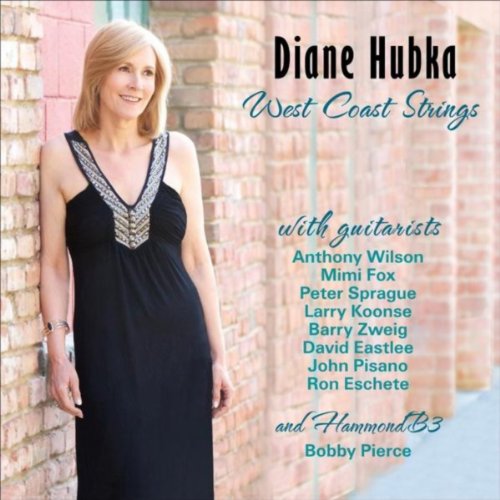
Diane Hubka
West Coast Strings


By Cdbaby
On this captivating new album, Diane has assembled a West Coast jazz guitar summit, with eight West Coast master guitarists; each of the all-star groupings providing the perfect setting for her soaring vocals.
I can still remember the enthusiastic response I had the first few times I heard Diane Hubka in action, around the start of the new millennium. In one of my Los Angeles Times reviews of her performances, I mentioned “the sweet-toned timbres” of her singing, and the “coolly articulate qualities of her interpretations.” In another, I described the way “the sweet sound of Hubka’s voice blends perfectly with her 7-string guitar.”


Lara Iacovini
Right Together


By Abeat
Take a stellar cast of European and American musicians, add the presence of Steve Swallow, who is artist, and composer now entered on the elite of the contemporary scene, include a beautiful female voice, insert some lyrics specially composed basing on Steve Swallow’s instrumental songs: you get this marvellous cd, titled " Right together featuring Steve Swallow” ; a disc where the immense class of the musicians, the power of the compositions, the lyrics representing a historical exception in the Swallow's repertoire, at last but not least important, the poetry, the mastery and magic of Steve Swallow as soloist ... The result is a high quality production that combines the two shores, European and American ones, closer to each other through a process of melting of musical and artistic elements, which is in place for some time.
Personnel:
Paolino Dalla Porta : doublebass; Andrea Dulbecco : vibe on tracks 1.3.6.7.10
Lara Iacovini : vocal, lyrics; Giovanni Mazzarino : piano, Fender Rhodes on track 8.9
Adam Nussbaum : drums; Roberto Soggetti : piano; Stewe Swallow : bass


Jeremy Fox
With Love


By Edward Blanco
Dr. Jeremy Fox has certainly made his mark in the jazz world but, not as a singer or musician but rather, as an educator/clinician, vocal coach and arranger, and on his inaugural album With Love, Fox offers an inspirational vocal album of jazz standards deserving serious attention. Assembling a group of ten world-class vocalist with varied combos, studio orchestra, a big band and a string section, Fox presents eleven newly-arranged standards from the likes of Sammy Cahn, Cole Porter, Neil Hefti and Artie Shaw among others. Writing custom arrangements for a host of top-notch singers was, in part, based on his Doctoral project in Jazz Composition at the Frost School of Music at the University of Miami, the beautiful music found on this album, is the result of that creative effort.
Based in Miami, FL, the Doctor draws from many area singers with national reputations like fellow alumnus Kate Reid, Kevin Mahogany, Wendy Pedersen as well as drawing international artists like Peter Eldridge and Lauren Kinhan —both members of the renowned New York Voices—along with Brazilian singer Rose Max vocalist and Swedish vocalist Anders Edenroth. Opening the music is a brand new arrangement of the time-honored Lew Brown/Sammy Fain standard "That Old Feeling" with Professor Reid providing the smooth vocals befitting such a tune. Essentially, book ending the album by appearing one more time on the finale, Reid—with the accompaniment of the String section—provides a truly inspiring version of the Sergio Mendes staple "So Many Stars."
Grammy-nominated singer Kate McGarry graces the recording with a tender treatment of the Cahn/Van Heusen standard "All My Tomorrows" followed by one of the highlights of the disc with baritone vocalist Kevin Mahogany's superb voicing of "Three Little Words." Not to be outdone, Derek Fawcett—founding member of the Chicago-based pop group Down The Line—delivers a fantastic version of "Get Out of Town," featuring Alex Weitz on tenor saxophone with some of the best instrumentals of the recording. Versatile jazz singer Sunny Wilkinson provides a warm and gentle take of the Stephen Sondheim song "Not While I'm Around" followed by a terrific arrangement of the Hefti/Bobby Troupe classic "Girl Talk," delivered by the sensational Wendy Pedersen with a little help from alto saxophonist Neil Carson.
Two beautiful soft spots on the recording come from first, the Edenroth original "Friendship" complete with cello, flugelhorn and flute solos, and the Jimmy Dorsey immortal "I'm Glad There Is You" voiced with emotion by Eldridge. Fellow New York Voices member, Kinhan gets to swing a bit on the big band arrangement of Shaw's perky "Moonray" assisted by pianist/keyboardist Daniel Strange, director of an All-Star Jazz ensemble in Coral Gables, FL. Cleverly crafted for some of arranger Jeremy Fox's favorite singers, With Love is a treasure trove of gorgeous arrangements, outstanding vocal performances and stellar instrumentals—all defining this charming recording as one of the best vocal albums on the jazz landscape.
Track Listing:
That Old Feeling; All My Tomorrows; Three Little Words; Get Out of Town; Not While I'm Around; Girl Talk; Dindi; Friendship; I'm Glad There Is You; Moonray; So Many Stars.
Personnel: 
Jeremy Fox: piano (5), keyboards (6); Kate Reid: vocals (1, 11); Kate McGarry: vocals (2); Kevin Mahogany: vocals (3); Derek Fawcett: vocals (4); Sunny Wilkinson: vocal (5); Wendy Pedersen: vocals (6); Rose Max: vocals (7); Anders Edenroth: vocals (8); Peter Eldridge: vocals (9); Lauren Kinhan: vocals (10); Daniel Strange: piano, keyboards; Rene Toledo: guitar; Geoffrey Saunders: bass; Michael Piolet: drums; Ramatis Moraes: guitar (7); Lindsey Blair: guitar (6); Zach Larmer: guitar (6); Steve Lewis: drums (6); Angelo Versace: piano (4); Tim Jago: guitar (4); Daniel Susnjar: drums (4); Ryan Chapman: trumpet, flugelhorn; Paul Equihua: trumpet, flugelhorn; Jared Hall: trumpet, flugelhorn; Derek Ganong: trumpet, flugelhorn; Eric Bowman: trombone; Stephen Szabadi: trombone; Chris Gagne: trombone; Major Bailey: bass trombone; Neil Carson: alto saxophone; Dan Andrews: tenor saxophone; Alex Weitz: tenor saxophone; Matt Burchard: tenor saxophone; Derek Smith: tenor saxophone, clarinet, bassoon; Matt Small: clarinet; Ernesto Fernandez: flute; Erin Fishler-Branam: background vocals (8); Sherrine Mostin: scratch vocals; Pedro Fernandez: percussion; Nathan Skinner: vibraphone; Maria Chlebus: vibraphone (6); Vivek Gurudutt: table; Phuttaraksa Kamnirdratana: harp; Cassandra Eisenreich: flute; Allison Hubell: flute; James Drayton: oboe; Rachel Lueck: English Horn; Peter Bianca: clarinet; Carlos Felipe Vina: bassoon; Julia Paine: bassoon; Mathew Shefcik: flugelhorn; Stanley Spinola: horn; Larysa Pavecek: horn; Jon Lusher: horn; Sarah Williams: horn; Adam Diderrich: concertmaster; Michelle Godbee: violin; Patricia Jancova: violin; Karen Lord-Powell: violin; Zachary Piper: violin; Katrina Schaefer: violin; James Schlender: violin; Arianne Urban: violin; Steffen Zeichner: violin; Amanda Diaz: viola; Emily Jones: viola; Robyn Savitzky: viola; Kathryn Severing: viola; Joy Adams: cello; Sarah Gongaware: cello; Cecelia Huerta: cello; Chris Young: cello.


Mark Elf
Returns 2014


By Joe Williams
A terrific Return! I was really excited to see this new release by Mark Elf after his time away, and now I find myself going back to this album often. A nice collection of straight ahead jazz and hard bop, technically sharp and precise as always. I found these tunes more accessible and swinging than some of his other releases I've heard. Worth it. 


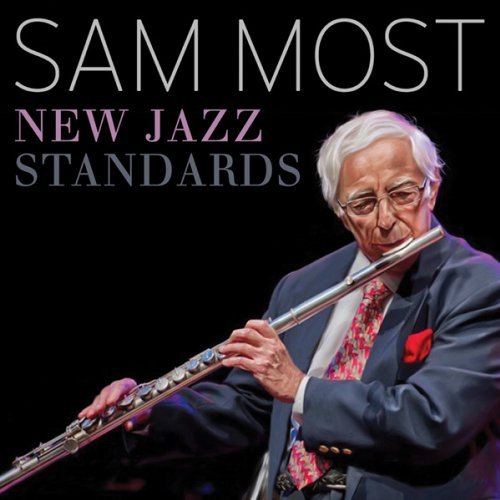
Sam Most
New Jazz Standards


By Carl Saunders

Sam Most's very last recording, featuring all new compositions from
the multi-talented Carl Saunders, was recorded and finished just a month
prior to Most's passing on June 13, 2013.
One of the most beloved figures in jazz, best known for being a
pioneering jazz flute soloist.
Full of spirit, with catchy toe-tapping originals that include Sam scatting
perfectly, this is really great stuff!
One of the most gifted jazz musicians I ve ever met.

Sunday, November 08, 2015

2 Sem 2015 - Part Seven

Vanessa Perea
Soulful Days


By Raul Da Gama
Vanessa Perea might have a particular flair for the theatrical. This is suggested by the manner of her phrasing. Ms. Perea is able to pace herself and tell stories with each song she sings. In the case of this album, Soulful Days her range is grand and her ability to hold high notes as well as low ones is so utterly convincing that she could easily be on stage telling her story on Broadway, for instance. She also sings to the limits of the instrumentation which is small in this case and it would be interesting to listen to and watch her perform with a much bigger ensemble, with a big band. It is almost certain that she could clearly take on the size of even a full orchestra. She has that presence. Here, stripped down to one trombone with the trumpet for company there is a part of the ear that misses an ensemble of Ellingtonian proportions although Ms. Perea sometimes enunciates the lyric suggesting in the manner of another woodwind or a brass instrument creating breathtaking counterpoint for those with which she is already singing wordlessly or with words. And these are wonderful arrangements made it would seem, to fit Ms. Perea’s personality as well. She takes on the songs as if they were written for her as well.
As William Blake put it, fire will find its form, Soulful Days is a perfect convergence of content and form. Woodwind, brass and piano conjure the playful fantasy world of the music in which Vanessa Perea becomes a minstrel who almost slips back in time to the date and time of the characters’ encounters in these folk tales. Ms. Perea’s tremendous vocalising of Anthony Newley and Lesley Bricusse’s “Who Can I Turn To” is a case where the lyric makes the heartbreak and elemental loneliness come hauntingly alive. In “Jim” there is another beautiful rendition of a song that is emotively strong and requires the vocal efforts to be more evocative than in a simple song. Ms. Perea draws out her word-endings with beautiful anguish in the classic “Tenderly” and it is here that she seems to suggest the narrative palette of Broadway. Her Portuguese is also on form as she sings Antonio Carlos Jobim’s “Triste” and Caetano Veloso’s “Luz do Sol”. This is a greater test of strength and ability in a manner of speaking as vocal skills must be matched here with the ability to dream in another language and this Ms. Perea does very convincingly. But there is a surprise waiting in store for the listener and it is in none of the above.
Vanessa Perea outdoes herself as she is pitted against the trombone of Robert Edwards on Bud Powell’s classic bebop chart, “Celia”. The singer carries herself through magnificently here and it is almost worth the entire album just to get to her scatting solo on this wonderful track. Bebop, as Sheila Jordan tells her pupils in a master class, requires just as much emotion as it does speed. In the case of this Bud Powell song Ms. Perea displays this with such monumental control that it is almost too tempting to suggest, at the risk of being too presumptuous, perhaps a bebop recording next.
Track List: 
Devil May Care; Soulful Days (These Are Soulful Days); Who Can I Turn To; Too Marvelous For Words; Jim; December Blue (Martha’s Prize); Triste: Let Me Tell You; Luz do Sol; Tenderly; Celia
Personnel: 
Vanessa Perea: vocals; Robert Edwards: trombone; Matt Jodrell: trumpet; Dave Lantz: piano; Dylan Shamat: bass; Evan Sherman: drums.


Andy Bey
Pages From An Imaginary Life


By Matt Collar
Coming off his Grammy-nominated 2013 album, The World According to Andy Bey, vocalist/pianist Andy Bey delivers the equally compelling 2014 release Pages from an Imaginary Life. As with its predecessor, Pages finds the jazz iconoclast returning to his roots with a set of American Popular Song standards done in a ruminative, stripped-down style. This is Bey, alone at the piano, delving deeply into the harmony, melody, and lyrics of each song. But don't let the spare setting fool you. Bey is a master of interpretation. In his seventies at the time of recording, and having performed over the years in a variety of settings from leading his own swinging vocal trio, to working with hard bop pioneer Horace Silver, to exploring the avant-garde with Archie Shepp, Bey has aged into a jazz oracle who doesn't so much perform songs as conjure them from somewhere in the mystical ether of his psyche. Famously blessed with a distinctive, sonorous baritone warble, Bey's voice has only ripened over the years to a warm, burnished, woody resonance; a sound perfectly suited for these poignant, romantic songs. In his hands, songs like "My Foolish Heart," "How Long Has This Been Going On?," and "Everything I Have Is Yours," take on new hues of gorgeous devastation. And yet, there's still something hopeful, swinging, and urbane about Bey's performances, and songs like "Lover Come Back to Me" and "Take the 'A' Train," are, as with all of the music on Pages from an Imaginary Life, joyous, earthy celebrations of life and love.


Carol Fredette
no sad songs for me


By C. Michael Bailey
We last heard from vocalist Carol Fredette on her first Soundbrush recording, Everything in Time (2009). Her repertoire was replete with, "Light latin jazz, humid islands, and secure mainstream treatments." Fredette remains fairly true to this mix of styles on No Sad Songs For Me, specifically addressing all songs of upbeat content, if not tempo. The singer calls upon much the same band as on the previous recording, specifically pianists Helio Alves, Dario Eskenazi and Andy Ezrin.
It is notable that No Sad Songs For Me is executive produced by Pablo Aslan and Roger Davidson, two names closely associated with Latin jazz and bossa nova, styles that potently inform Fredette's repertoire here. Fredette is serious about the title and title tune for this recording. It is surprising she included Jobim's "Double Rainbow" and not his "No More Blues." These songs are upbeat and the universal mood of this recording is supercharged positive.
Fredette commands Bob Merrill's "It's Good to be Alive" and Irving Berlin's "The Best Thing for You." The former she treats as a delicate ballad and the later Latin-infused and simmered on high heat, Kevin Winard's percussion being particularly effective. The Cahn-Van Heusen chestnut "To Love and Be Loved" is gently rendered as a perfect cocktail hour ballad. Fredette's support is solid and competent, providing the singer an environment for her pristine vocal delivery of this most attractive recital.
Track Listing: 
I Am In Love; No Sad Songs For Me; The Best Thing for You; To Love And Be Loved; You’d Better Love Me; Double Rainbow; You’re Getting to be a Habit With Me; Havin’ Myself a Time; This is Always; Dancing In The Dark; Long Ago and Far Away; You Better Go Now; No Regrets.
Personnel: 
Carol Fredette: vocals; Helio Alves: piano (1, 7, 11); Dario Eskenazi: piano (4, 5); Andy Ezrin: piano (2, 3, 6, 8, 9, 10, 12, 13, 14); David Finck: bass; Kevin Winard: drums, percussion; David Mann: saxophones, flutes; Tony Kadleck: trumpet; Michael Davis: trombone; Bob Mann: guitar.


Hal Galper Trio
O's Time


By Dan McClenaghan
It's hard to be innovative in the piano trio format. The last big change happened in the late fifties and early sixties, with pianist Bill Evans' groundbreaking trio featuring bassist Scott LaFaro and drummer Paul Motian. The democratization of input and interplay changed the trio game, and countless groups have worked on refining that Evans approach ever since. A more recent development has been bombast and the inclusion of rock and poplar tunes into the jazz piano trio endeavor—with varying degree of success. Rubato playing, the stretching of the varying of tempos, in a three way improvisational way, is pianist Hal Galper's contribution to piano trio innovation.
O's Time is Galper's fifth recording in the rubato style on Origin Records. His trio, with bassist Jeff Johnson and drummer John Bishop, perfected their approach with 2011's Airegin Revisited. The current offering rolls that artistic peak out on a high plateau, twsiting the familiar ( John Coltrane "Like Sonny," Charlie Chaplain's "Smile") into different shapes, revealing different sides to the melodic threads.
"Coltrane's "Like Sonny" opens the set. The three voices bounce off each other like a cocktail party conversation, synchronous and discordant at the same time. And like that party, as the drinks flow, the volume rises toward the raucous, without, on this tune at least, actually going there. Then there's the Zen serenity of a Johnson bass solo, sparely comped by Galper.
Saxophonist Wayne Shorter's "Wildflower" has a "fractured then put back together" feeling, turbulent drums from Bishop behind Galper's relative restraint. "O's Time," written by Galper in honor of alto saxophonist/free jazz pioneer Ornette Coleman, moves away from the concept of restraint. It rolls and tumbles and sounds like, at its peak, a piano trio stuffed into a burlap bag and pushed down the stairs, with the players hanging on tight and still keeping the tune from chaos. And Charlie Chaplain's much-covered smile sounds like they're set up on the back of a flatbed truck, careening ninety miles an hours down a winding mountain road.
Exhilarating! The Hal Galper Trio shows the others guys what innovative is all about.
Track Listing:
Like Sonny; Wildflower; O's Time; Moonglazed; Smile; Our Waltz.
Personnel: 
Hal Galper: piano; Jeff Johnson: bass; John Bishop: drums


Richard Galliano
Sentimentale


By Thom Jurek
Sentimentale is accordionist Richard Galliano's debut as a leader for Resonance Records. This date marks his return to jazz after a three-album sojourn with Deutsche Grammophon recording the music of Bach, Piazzolla, and Vivaldi. His multi-national quintet here includes Israeli-born pianist and arranger Tamir Hendelman, American guitarist Anthony Wilson, Cuban bassist Carlitos Del Puerto, and Brazilian drummer Mauricio Zottarelli. The program is as diverse as the personnel. Things kick off on the spirited side with a galloping reading of Chick Corea's "Armando's Rumba," with Wilson and Galliano twinning the head as Hendelman lays down shiny chords and spirited montunos with a killer bass solo from Del Puerto before the accordionist launches into a combination of tango and jazz. Duke Ellington's "In a Sentimental Mood" opens with a near pastoral reverie before the melody is introduced by Galliano and Wilson. Hendelman's illustrative fills and comps are gorgeous without being flowery. The funky groove in Horace Silver's "The Jody Grind" is derived from Dee Dee Bridgewater's vocal version, despite Hendelman's finger popping pianism. Galliano crosses harmonic lines between both Zottarelli's drum break, spiky blues from Wilson, and soul-jazz swagger from Del Puerto. On John Coltrane's "Naima," Wilson adopts a near sitar-like sound while Galliano's crystalline, glass bead sound enters into the melody and opens it onto the accordion's higher register, offering a bright harmonic flourish in his solo. Brazilian music makes its appearance on Sentimentale as well. This take on Ivan Lins' evergreen "The Island" is equally based on the composer's earliest, Bahia-informed version rather than his post-bossa take from later years as well as singer Patti Austin's. Likewise "Verbos Do Amor," by João Donato and Abel Silva, finds Galliano's quintet engaging in inspired, multi-textured samba. There are two familiar originals here as well: "Ballade Pour Marion" is magical in this bal musette-cum-lyrical jazz setting as Hendelman's voicings twin with the accordionists', offering different timbral statements and underscoring its lush colors. Closer "Lili" is trimmed to a languid, tender duet between the accordionist and Wilson -- both of whom display their enormous gifts for lyricism (which is why they are oft-chosen accompanists for singers). Sentimentale is not only classy in its choice of material, it's canny and expert in its arrangement, interplay, and articulation. Like the best of Galliano's recordings, it displays not only his iconic signature on the accordion, but the commanding presence, communicative inquisitiveness, and elegant creativity of his spirit.

Saturday, November 07, 2015

2 Sem 2015 - Part Six

Jane Ira Bloom
Sixteen Sunsets


By Dan McClenghan
Sidney Bechet pioneered the use of the soprano saxophone in jazz in the early 20s. John Coltrane
saxophone brought that "straight horn" out of a relative dormancy of use in 1959 with his anthem-like take on Rodgers and Hammerstein's "My Favorite Things" on his Atlantic Records album of the same name. Steve Lacy took the soprano "out there," and Dave Liebman continues to stretch its boundaries.
The name Jane Ira Bloom can be added to that list of icons. For thirty years Bloom has used the soprano saxophone to give voice to fertile and uncompromising artistic spirit. She's broken ground on the introduction of live electronics into her music and has created a singular sound on a variety of multi-faceted projects—including a commissioned work by the NASA Art Program. And (talk about "out there") the International Astronomical Union named an asteroid for her: 6083janeirabloom.
Bloom's work in a quartet setting shines the brightest, on 2003's Chasing Paint (Arabesque Records), a nod to painter Jackson Pollock, 2008's Mental Weather (Outline), or the CD at hand, Sixteen Sunsets, an examination of the ballad form.
For such a forward-looking artist, this is something of a surprise. Bloom explores the standards here, along with four of her own standard form songs, with an extraordinary aplomb and patience. Her tone on the soprano is the purest, richest of sounds—as if her horn were made of gold; and her quartet, featuring Matt Wilson on drums, bassist Cameron Brown and pianist Dominic Fallacaro, play with a delicacy and restraint that gives the sound a feeling of depth and a subdued grandeur.
Bloom says she knows the words to all these songs: "I Loves You Porgy," "The Way You Look Tonight," "For All We Know," "Good Morning Heartache." These are tunes that dip down deep into longing, heartache, loneliness, tender love. Bloom's soprano saxophone is her voice. It's a voice that tells these song's stories with an exquisite grace and understanding of the vicissitudes of the human condition.
Bloom's backing trio rolls mostly in the mode of subtle accompaniment, but when she lays back the trio steps out with a jewel- like elegance, as pianist Fallacaro, with the supplest of touches, wrings every teardrop out of the melody of "Good Morning Heartache," or injects a hopeful counterpoint to the angst of the temptations on "I Loves You Porgy."
Sixteen Sunsets is, arguably, Jane Ira Bloom's most compelling recording. It's certainly her loveliest—no argument there. And the sound quality is out of this world. An asteroid is nice, but it seems a rather small celestial body for an artist that can create something as perfect as this disc. Perhaps a star, a bright one, can be found.
Track Listing:
For All We Know; What She Wanted; Gershwin's Skyline/I Loves You Porgy; Darn That Dream; Good Morning Heartache; Out of This World; Ice Dancing; Left Alone; The Way You Look Tonight; But Not For Me; Primary Colors; My Ship; Too Many Reasons; Bird Experiencing Light.
Personnel: 
Jane Ira Bloom: soprano saxophone; Dominic Fallacaro: piano; Cameron Brown: bass; Matt Wilson: drums.


Jon Davis Trio
live at the bird's eye


By Challenge
Pianist, composer, Jon Davis from New York has been performing and touring with many of the finest jazz musicians around world for more than 25 years. He has appeared on over 50 recordings. Jon Davis met with Swiss musicians Isla Eckinger and Peter Schmidlin some 15 years ago.
He appeared already on TCB 22142 ‘George Robert-Bobby Shew Quintet’, released in 2002. 
In 2013 he played a few concerts in December 2013 in Switzerland with this trio where the evening at the Bird’s Eye Jazz Club in Basel was recorded live.
Jaco Pastorius, longtime friend of Jon, said: ”Jon is my third favorite pianist…after Joe (Zawinul) and Herbie (Hancock)” and Jazz Japan mentioned that: “Jon Davis is the ultimate story teller.”
A relaxed, swinging Session in probably the best Jazz club in Switzerland with a very nice selection of great tunes from the American songbook plus a composition written by Jon Davis. Fans of the piano/bass/drums format will love this CD.


Mark Winkler & Cheryl Bentyne
West Coast Cool


By C. Michael Bailey
In 2010, jazz vocal specialists Cheryl Bentyne and Mark Winkler began a collaboration that resulted in a live show entitled West Coast Cool that they presented at different venues on the West Coast and beyond. Summit Records commits this show to digital with an album of the same title that is something special. While programming a recording is always a major production responsibility, that responsibility is lessened when the recital is one well practiced and part of a previously conceived show. Such is West Coast Cool, and this collection is the better for it.
Cheryl Bentyne is best known as the soprano voice of the Janis Siegel, Tim Hauser and Alan Paul. She has several solo recordings to her credit, her most recent being: Let Me Off Uptown (Telarc, 2005), The Book of Love (Telarc, 2006), The Gershwin Songbook (ArtistShare, 2010) and Let's Misbehave: The Cole Porter Songbook (Summit, 2012).
Mark Winkler has been a West Coast fixture for the past thirty years, releasing eleven recordings and composing dozens of songs recorded by himself and the likes of Liza Minnelli, Randy Crawford, David Basse, Jackie Ryan and Dianne Reeves. Winkler's most recent recording, The Laura Nyro Project (Cafe Pacific Records, 2013) was well received in critical corners. Together, the pair have rekindled the fire of cool circa the Eisenhower '50s, when the songwriting was exceptionally smart and stylistically razor sharp, martinis were cold and cigarettes filterless.
Some very sharp programming is employed in pairing songs in audio diptychs. The recording opens with a mash up of Paul Desmond's and Iola Brubeck's "Take 5" and Winkler's wonderfully off-kilter "Drinks On The Patio." The piece(s) are introduced with a straight salvo from pianist Rich Eames
and tenor saxophonist Bob Sheppard. Then the groove changes decidedly into the 5/4 time made famous by Dave Brubeck and his quartet in 1959. The piece transforms into Winkler's aural photograph of hipsters listening to jazz while mixing martinis, smooth ones if we judge by the precise admixture of Bentyne's and Winkler's pipes.
This same programming intelligence brought together "Talk Of The Town" and "Girl Talk" from the respective Bentyne and Winkler songbooks: drawing from Bentyne's Talk Of the Town (Telarc, 2003) and Winkler's Sings Bobby Troup (Rhombus Records, 2003). Bentyne displays her exquisite treatment of ballads juxtaposed against Winkler's perfect presentation of 1950s too cool. The two are sexy beyond belief.
The vocal pair demonstrate their potent vocal styles on the Nat King Cole medley of "Route 66/Alright, Okay, You Win/Straighten Up And Fly Right." Bentyne and Winkler weave these three classics together into a finely wrought cloth. Bentyne's smooth, perfectly balanced soprano mixes with Winkler's friendly, approachable and playful voice like cream stirs into coffee, rich and aromatic. The two skillfully slide song lyrics over one another, juxtaposing melodies until the music is ataxic with the shared joy of being sung by these voices. The duet highlight of the collection is the semi-original "West Coast Cool." Winkler shows off his lyrical wares by penning words to Neal Hefti's classic "Lil' Darlin.'" The pair pay homage to a who's who of West Coast Jazzers while their accompanying quartet lay down the Hefti silk beneath their words.
Each singer also gets solo space. Bentyne purrs on the infrequently heard "An Occasional Man" where she dances with Sheppard's slippery tenor. Bentyne brings together "All About Ronnie" and "Trouble With A Man" in a jaded lament of love lost, while drawing the sensual humidity from Horace Silver's "Senor Blues." Winkler recalls two more Troup pieces in "Lemon Twist" and "Hungry Man." He updates these pieces with his trademark user-friendly delivery, sense of humor, and exemplary musicianship. Pianist Jon Mayer kills on "Hungry Man" while organist Joel Bragg and guitarist Anthony Wilson lay out an organ jazz red carpet.
West Coast Cool is artistry that is beyond words. Wow. Just Wow.
Track Listing: 
Take 5/Drinks On The Patio; The Occasional Man; Let’s Get Lost; Talk Of The Town/Girl Talk; West Coast Cool; Something Cool; Route 66/Alright, Okay, You Win/Straighten Up And Fly Right; Senor Blues; Lemon Twist; This Could Be The Start Of Something Big; Hungry Man; All About Ronnie/Trouble Is A Man; In A Lonely Place; Cool.
Personnel: 
Cheryl Bentyne: vocals; Mark Winkler: vocals; Rich Eames: piano (1, 2, 4-8, 10); Tim Emmons: bass (1, 2, 4-8, 10); Dave Tull: drums (1, 2, 4- 8, 10); Bob Sheppard: saxophones, flute (1, 2, 4-8, 10, 11); Nolan Shahead: trumpet (3); Anthony Wilson: guitar (9); Joe Bragg: Hammond B3 organ (9); Mark Ferber: drums (9); John Mayer: piano (11); Kevin Axt: bass (11); Ron McCurdy: drums (11); Eli Brueggeman: piano: (14); George Koller: bass (14); Mark Kelso: drums (14). 


Tina May
Divas


By Dave Gelly, The Observer
"Tina May waited a long time to record this collection of songs associated with great female singers of the last century - Billie Holiday, Sarah Vaughan, Lotte Lenya, Edith Piaf et al - but it was worth it. Not only has her own singing matured, she has found the perfect arranger for the job in Frank Griffiths. To each of these dozen pieces she succeeds in imparting a delicate flavour of the original while remaining her inimitable self. Her version of Peggy Lee's Why Don't You Do Right? is particularly good, aided by Griffiths's beautifully poised clarinet."
Track list:
1. Why Don't You Do Right; 2. There's A Lull In My Life; 3. Forgetful
4. Can't Get Out Of This Mood; 5. When The World WAs Young
6. Where You At; 7. Surabaya Johnny; 8. Baltimore Oriole; 9. Let's Get Lost
10. You Don't Know What Love Is; 11. All Through The Night
Personnel:
Tina May - vocals; Winston Clifford - vocals; John Pearce - piano
Dave Cliff - guitar; Freddie Gavita - trumpet; Adrian Fry - trombone
Frank Griffith - tenor sax, clarinet; Bob Martin - alto saxophone
Andy Cleyndert - double bass; Bobby Worth - drums