Sunday, April 10, 2016

Bill Henderson 1926 - 2016


By Mike Barnes
Bill Henderson, a well-respected jazz vocalist and actor, died Sunday of natural causes in Los Angeles, according to Lynne Robin Green, president of LWBH Music Publishers. He was 90.
A native of Chicago, Henderson sang with the Ramsey Lewis Trio, Dizzy Gillespie, Count Basie, Frank Sinatra, Tony Bennett, Quincy Jones, the Charlie Haden Quintet and many others. His 1963 album, Bill Henderson With the Oscar Peterson Trio, is considered a classic in the jazz vernacular.
Henderson was a fixture on the Playboy circuit in the 1970s and appeared often at many festivals, including Playboy Jazz at the Hollywood Bowl, Monterey Jazz and the Litchfield Jazz Festival in Connecticut. Later, he performed at The Kennedy Center and in New York at the Hotel Algonquin’s Oak Room and at Lincoln Center.
“Henderson’s phrasing is virtually his own copyright,” music journalist Leonard Feather once said. “He tends to space certain words as if the syllables were separated by commas, even semicolons, yet everything winds up as a perfectly constructed sentence.”
At the suggestion of his friend Bill Cosby, Henderson pursued an acting career and in 1967 relocated to Hollywood.
He appeared in such films as The Adventures of Buckaroo Banzai Across the 8th Dimension(1984), Clue (1985) — as the cop who is killed by a lead pipe in the library — City Slickers (1991),White Men Can't Jump (1992), Maverick (1994), Lethal Weapon 4 (1998) and Smiling Fish & Goat on Fire (1999) and on television in ER, Hill Street Blues, Happy Days, Sanford and Son, The Jeffersons,Good Times, MacGyver, Benson, NYPD Blue and My Name Is Earl.
Henderson made his show business debut as a singer and dancer at age 4. A stint in the Army led to him working with crooner Vic Damone, and in 1956, Henderson made his way to New York.
A year later, Horace Silver hired him to record a vocal version of the popular instrumental song “Senor Blues” for Blue Note Records. It was a jukebox hit and remains one of the biggest-selling singles in the label’s history.
Between 1958-61, Henderson recorded for the Vee-Jay label and recorded his first album, Bill Henderson Sings. Most recently, he released a self-produced live album, Beautiful Memory, co-produced by Green.
Survivors include his daughter Mariko, granddaughter Mya, son-in-law Marc, nephew Finis and niece Henreene.

Sunday, April 03, 2016

Gato Barbieri 1932 - 2016


By Peter Keepnews and Christopher Mele

Gato Barbieri, a saxophonist whose highly emotional playing helped expand the audience for Latin jazz, and whose music for the film “Last Tango in Paris” won a Grammy Award, died on Saturday in New York. He was 83.
His death was confirmed by Jordy Freed, the vice president for marketing and communications at the Blue Note Entertainment Group, parent company of the Blue Note nightclub in Greenwich Village, where Mr. Barbieri often performed. Mr. Barbieri’s wife, Laura, told The Associated Press that the cause was pneumonia.
Mr. Barbieri recorded dozens of albums in a career that began in the late 1940s in his native Argentina, and continued recording and performing into the 21st century.
Although he was heavily influenced by John Coltrane and other saxophonists, his big, lush sound was distinctly his own and instantly recognizable.
Reviewing a performance by Mr. Barbieri in 1983, Jon Pareles of The New York Times wrote that he “makes some of the most raucous sounds ever to emerge from a tenor saxophone,” adding: “His horn screams, grunts, honks, bleats, groans. Even in ballads, he works up to a hefty, throbbing tone that sounds like it could burst at any moment.”
Early in his career Mr. Barbieri was a prominent member of the jazz avant-garde, making records with the trumpeter Don Cherry, the pianist and composer Carla Bley and others that challenged the music’s harmonic and rhythmic conventions. He later developed a more melodic approach that acknowledged his Latin American heritage, and that won him a large and loyal worldwide audience.
His first taste of international fame came when he was asked to write and perform the music for “Last Tango in Paris,” the director Bernardo Bertolucci’s sexually explicit 1972 film starring Marlon Brando and Maria Schneider. Mr. Barbieri’s theme won a Grammy Award for best instrumental composition.
“It was like a marriage between the film and the music,” Mr. Barbieri said of his soundtrack in a 1997 interview with The Associated Press. “Bernardo told me, ‘I don’t want the music to be too much Hollywood or too much European, which is more intellectual. I want a median.’”
He went on to write several more film scores.
Leandro Barbieri was born on Nov. 28, 1932, in Rosario, Argentina, and moved to Buenos Aires in 1947. He earned the nickname Gato (Spanish for cat) in the 1950s because of the way he scampered from one Buenos Aires nightclub to another with his saxophone to make it to his next gig.
Drawn to music at an early age, he studied clarinet as a child and played alto saxophone with the Argentine pianist and composer Lalo Schifrin before switching to tenor.
“Music was a mystery to Gato, and each time he played was a new experience for him, and he wanted it to be that way for his audience,” Laura Barbieri told The Associated Press.
The success of his “Last Tango” soundtrack led to a contract with Impulse Records, the label for which John Coltrane had made some of his most celebrated recordings. His four Impulse albums, titled “Chapter One” through “Chapter Four,” blended jazz with various strains of Latin American folk music and, in the words of the jazz writer Ashley Kahn, “served as a virtual South American tour.” Later albums, for A&M and other labels, maintained the Latin elements of his music while exploring a more commercial, pop-oriented approach.
Despite health problems, Mr. Barbieri, still sporting his trademark black fedora, had been appearing monthly at the Blue Note, where he first performed in 1985. His last public performance was there on Nov. 23, Mr. Freed said.
“He was a worldly free spirit, a really sweet man,” Mr. Freed said. “He really was a pioneer.”
In addition to his wife, Mr. Barbieri’s survivors include their son, Christian, and a sister, Raquel Barbieri. His first wife, Michelle, died in 1995.
Last year Mr. Barbieri received a lifetime achievement Grammy Award from the Latin Recording Academy. The citation credited him with covering “virtually the entire jazz landscape” in his long career and with creating “a rebellious but highly accessible musical style, combining contemporary jazz with Latin American genres and incorporating elements of instrumental pop.”
Looking back on his recording career in 2006, Mr. Barbieri expressed pride in his embrace of different styles.
“In those days,” he said, referring to the 1970s, “the jazz people they don’t consider me a jazz musician. If I am Latin, they don’t consider me Latin. So I am here in the middle.”
“It’s a good thing,” he added. “You know why? Because they say, ‘What do you play?’ I say, ‘I play my music — Gato Barbieri.’”

Saturday, April 02, 2016

1 Sem 2016 - Part Five

George Cables
In Good Company


By Michael J. West/JazzTimes
George Cables’ title refers first to the pianist-composers he covers—John Hicks, Kenny Barron, Ellington and Strayhorn—and second to his trio with bassist Essiet Essiet and drummer Victor Lewis. The album’s a cheery swinger, an exemplar of mainstream piano jazz. In short, the kind of record Cables always makes. But it’s his accompanists, and Victor Lewis in particular, that earn the titular salute.
Essiet records semi-regularly with Cables, and evinces an ability to disappear inside the pianist’s rich left-hand chords and the architecture and tenderness of his touch, as on Hicks’ “After the Morning” and Ellington’s “Love You Madly.” But Lewis has been with Cables for 15 years, and the album’s second track, Cables’ “Mr. Anonymouse,” plainly shows why. A bass ostinato bears down as Cables barrels over it with speedy single-note lines; underneath, Lewis lays out a cymbal-and-kick locomotion that’s preternaturally steady. If the pianist is a runaway train, the drummer lays down tracks for it in real time.
Lewis’ fingerprints are everywhere on In Good Company. His frequent accents shape Cables’ “EVC” almost singlehandedly, and the upshot of rendering Strayhorn’s poignant “Lotus Blossom” midtempo is to establish the ride cymbal as a playful foundation for Cables’ improvisation. (It also gives Essiet a chance to shoot the breeze.) Lewis gets his own snappy solos on “It Don’t Mean a Thing” and Kenny Barron’s “Voyage,” and space for his brushwork on “Lush Life” and “Day Dream.”
The pianist shouldn’t get short shrift; his lithe but thoughtful fingerings uplift every corner of In Good Company, and provide occasional surprises like the Monk-esque glissandi on “Lotus Blossom” and subtle syncopation breakdowns on “Naima’s Love Song.” Lewis simply shows himself to be Cables’ equal—surely the best of company.


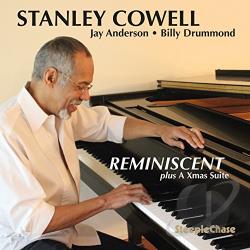
Stanley Cowell
Reminiscent: Plus A Xmas Suite


By Parsifal
'Reminiscent' includes a featured program of Christmas melodies ("A Xmas Suite") as well as Stanley Cowell originals and compositions by Brahms, Thad Jones and Richie Powell. His trio includes the acclaimed bassist Jay Anderson and drummer Billy Drummond.
Since his retirement in 2013 from the professorship at the prestigious Rutgers University, where he led its jazz department, pianist/composer Stanley Cowell has been increasingly active on the scene both in concerts and recordings.
In a glittering career Cowell has recorded for labels such as Strata-East - the cult jazz label he started with Charles Tolliver, ECM, Galaxy, and as a sideman on Blue Note, Atlantic, Muse, Impulse! and many others. He has recorded with an array of jazz stars, including Bobby Hutcherson, Stan Getz, Johnny Griffin, Art Pepper, Max Roach, Charles Tolliver and Clifford Jordan.
Track Listing:
1. Intermezzo - 4:11 2. Re-Confirmed - 6:05 3. A Child Is Born - 7:55 4. A Xmas Suite - 10:03 5. Peace - 6:44 6. Midnight Diversion - 9:06 7. Hear With Me - 3:34 8. Time - 6:48 9. Reminiscent - 5:11 10. Sweet Song - 5:22
Personnel:
Stanley Cowell (piano, thumb piano) , Jay Anderson (bass) , Billy Drummond (drums)


Mirko Signorile
In Full Life


By Jazzos
Gia' da piccolo manifesta una passione per la musica ed in particolare per il pianoforte.
All'eta' di 6 anni prende le prime lezioni di strumento e solfeggio entrando dopo qualche anno nell'Accademia musicale diretta dal m° Battista Bia.
Il luogo e' molto stimolante perche' gli permette di conoscere gli altri strumenti a tastiera come l'organo Hammond, i sintetizzatori; strumenti che per molto tempo...
Personnel:
Fabio Accardi ( Drums ); Fabrizio Bosso ( Trumpet ); Gaetano Partipilo ( Percussion )
Gianluca Petrella ( Trombone ); Giorgio Vendola ( Double Bass ); Mirko Signorile ( Piano )
Stefano Jacoviello ( Electronics )


André Ceccarelli/ Jean-Michel Pilc/ Thomas Bramerie
20 - Twenty


By Catfish
To become a co-star for 20 years, Andre Ceccarelli (1945~), Jean-Michel Pilc (1960~), Thomas Bramerie (1965~), Recorded by the powerful All-Star trio of. Piano nice sharp hard touch crisp in the clearing is, sing the middle. Undulating vigorously emotion in dynamic and bluesy, explosive power and mobility to the rich drums and bass of attacking a touch also showed an antagonistic the first time in the thrilling , some crunchy, and taste of even enough fighting bravely content. Such as rhythm form and tempo, while also a variety of creative is one after another note to arrange plane, extremely high realistic improvisation degree in total, a rich sharp "serious, lyrical-action" type of high-tension bravely continued, while Watariai a guerrilla invasion of Ceccarelli and Bramerie, of Pilc to carry through the valiant resolute down as being in high spirits - complete combustion in the seat of the protagonist, the narrative of a certain deep in the furious playing, indescribably. It stands out. → by the hard touch of Me percussive, while exhibiting the underlying strength of the large-action offensive of irregularities some aggressive with an emphasis on swordfight ish mechanics properties, to truly expertness, or was more meditative, introspective or was aesthetic (or chic such of lyricism-oriented approach of bluesy Dattari ditty wind), thoroughly there like the depth of rich poetic that sitting of the waist is also in the rarity, while traffic to the extremes in an instant, only discussions and exhilarating Millionaires entertainment tone of storytelling to show finish in the road (good support of Ceccarelli and Bramerie also shining) is, indeed wonderful masterpiece.
Tracks:
1. All Blues; 2. Cry Baby Cry; 3. On Green Dolphin Street; 4. Twenty; 5. Opus #3
6. Ne Me Quitte Pas; 7. Old Devil Moon; 8. Returning; 9. Things Are
10. Straight No Chaser; 11. L'Auvergnat; 12. Solar
Personnel:
Jean-Michel Pilc(p); Thomas Bramerie(b); Andre Ceccarelli(ds)

Friday, March 18, 2016

Frank Sinatra, Jr. 1944 - 2016


By Althea Legaspi

Frank Sinatra Jr., the son of legendary singer Frank Sinatra and an artist himself, has died. He was 72.
The Sinatra family said in a statement that he died of cardiac arrest while on tour in Daytona, FL, and that they mourn the untimely passing of their son, brother, family, and uncle.
Though his father may have discouraged his son from going into the music business due to its challenges, Sinatra Jr. followed in the footsteps of his famous father as well as worked by his side. Gifted with a voice similar to his father's, Sinatra Jr. began performing at clubs as a teen. When he was 19, he was kidnapped and held for ransom, though he was released a few days later and the kidnappers were caught and convicted. He later became his dad's music director and at the age of 44 began serving as his father's conductor. His debut album, 1965's Young Love for Sale, was understandably influenced by his father and was also released on Reprise, which was also his father's longtime label home.
In an interview with Express in the UK last year, Sinatra Jr. opened up about his early aspirations. He originally wanted to be a pianist and composer, but singing became a necessity. "It was the only way I could get a job," he said. "I was hired as a novelty by the Tom Dorsey band and it was total exploitation but it gave me a job."
Sinatra Jr. was also candid about the state of his career, which had relied heavily in recent years on performing tributes of his father's work. Last year was the 100th anniversary of his dad's birth. "I haven't had a hit record or starred in a hit movie and since that's how the entertainment business measures success, I don't consider myself successful," he said.
Despite living in his father's shadow for much of his career and covering other songs from his father's era, he did write the original composition "Spice" on his most recent album, 2006's That Face!, which was his first album of new material in a decade. It was recorded live and released on Rhino. Last year, Sinatra Jr. sang The Star-Spangled Banner at Yankee Stadium and also delivered the National Anthem at Dodgers Stadium in September.
He was scheduled to perform at The Peabody Daytona Beach on Wednesday, which was billed as "Frank Sinatra Jr.: 'Sinatra Sings Sinatra' The Centennial Celebration," according to Ticketmaster.

Saturday, March 12, 2016

Ernestine Anderson 1928 - 2016


By Associated Press
Ernestine Anderson, the internationally celebrated jazz vocalist who earned four Grammy nominations during a six-decade career, has died. She was 87.
The King County Medical Examiner's Office said Sunday that it received a report that Anderson died of natural causes Thursday at a nursing home in Shoreline.
The jazz and blues singer performed all over the world, from the Kennedy Center and Carnegie Hall to festivals in South America, Japan and Europe, The Seattle Times reported.
She toured widely and sang with bands led by Los Angeles R&B singer Johnny Otis and swing-band leader Lionel Hampton. She performed at the presidential inauguration of Dwight D. Eisenhower.
Childhood friend and producer Quincy Jones once described her voice as the sound of "honey at dusk."
Anderson, who was born in Houston to a construction worker and homemaker, began singing in church when she was 3 years old. She won a talent contest when she was 12 and sang at Houston's Eldorado Ballroom once a week for about four months.
Her family moved to Seattle in 1944 where she attended Garfield High School and began singing with the Bumps Blackwell Junior Band, featuring Jones, saxophonistBuddy Catlett and others. She left home at 18 to hit the road with Otis' band. She recorded her first single "K.C. Lover/Good Lovin' Babe" in 1948 and also married for the first time.
Over the decades, she moved between Los Angeles, New York and Europe but often returned to Seattle.
While in New York, Anderson recorded with Jones, Russell Jacquet, tenor saxophonist Clifford "King" Solomon and others, the newspaper reported.
Frustrated with her slow career growth in New York, Anderson joined Swedish bandleader Rolf Ericson to tour Europe. While there, she recorded an album, "Hot Cargo," that was later released by Mercury Records in 1958 to rave reviews.
Time Magazine at the time called her "the best-kept jazz secret in the land" and critics of the country's leading jazz magazine, Down Beat, celebrated her as a "new star" of the year, The Seattle Times reported.
Anderson released six albums on Mercury Records, including the much-praisedMoanin,' but her career subsided in the 1960s. In 1966, she returned to Seattle from London and quit singing.
She re-emerged, however, in the 1970s and signed with the Concord Jazz label. Anderson released Hello, Like Before in 1977. More than a dozen albums followed over the next 15 years.

1 Sem 2016 - Part Four

Caterina Zapponi
Romantica


By Christopher Loudon/ JazzTimes
Though Caterina Zapponi was born in Rome and raised among Italy’s artistic cognoscenti (her mother is a singer of French origin, her screenwriter father crafted both Roma and Satyricon with Federico Fellini), it was a viewing of the Cole Porter musical High Society that ignited her desire to study jazz in America. She earned a scholarship to Berklee and subsequently finished fourth in the 1994 Monk vocal competition. But her biggest break came later in the ’90s, when she met pianist Monty Alexander, who, as her husband, manager and frequent accompanist, has facilitated her musical maturation.
Alexander was the cornerstone of her multilingual debut album, 2001’s Universal Love Songs, and is again for this long-overdue sophomore release. While the first album provided a lovely introduction, Zapponi’s ease and assuredness have since grown exponentially. Favoring a smoldering style that is equal parts Julie London and Françoise Hardy, she again opts for a cross-cultural playlist, venturing from a shimmering “Stardust” sung in Italian and sweltering “Estate” to a breathy “Que reste-t’il de nos amours” and lazily inviting “Non Dimenticar.” The mood is mellow and seductive (even when she salutes Count Basie in a clever French reworking of “L’il Darlin’”), much enhanced by all-star support that includes dual Pizzarellis (guitarist Bucky and bassist Martin), guitarist Frank Vignola, violinist Kristian Jorgensen and Etienne Charles on the lute-like cuatro.


Luiz Pié
Memória Afetiva


By Cleo Oshiro
Luiz Pié: Cantor grava “Memória Afetiva”, seu primeiro CD. Pouco depois de se mudar para o Rio, em 2012, aos 24 anos, para continuar os estudos musicais, Luiz Pié foi a um show de Marcos Valle e Roberto Menescal e, pela primeira vez, fez contato ao vivo com a Bossa Nova. Encantado com a qualidade musical da dupla, Pié não se fez de rogado: ao final da apresentação se aproximou de Menescal e pediu para que o mestre produzisse uma gravação sua.
Dono de uma voz grave, de timbre aveludado, que entra macio nos ouvidos, Luiz Pié é cantor de formação jazzística, gênero pelo qual se apaixonou quando ainda era um adolescente. Dedicado, ganhou uma bolsa para freqüentar a Groove, escola de jazz em São Paulo por onde passaram nomes como Mariana Aydar, Criolo e Marina Lima, entre outros. Pedido feito, Menescal conheceu a voz do cantor e, claro, aceitou. Foram pro estúdio e de lá saíram com “Sabe Você” (Carlos Lyra e Vinicius de Moraes).
Vamos retroceder para alguns anos antes na história do cantor. A música já era íntima de Pié, que a conhecia na voz de Caetano, seu primeiro ídolo, e o responsável por à MPB aos seus ouvidos quando fazia suas pesquisas musicais numa lan house do centro de São Paulo. Eram tempos difíceis em que o artista, logo após sair de um orfanato na cidade de Poá/ na Grande São Paulo, onde foi entregue com apenas 3 anos de idade e teve de sair ao completar 18 anos, trabalhava como lanterninha num dos cinemas da cidade e vivia com uma renda diária de apenas R$20 reais. Com esse dinheiro, Piê conseguia pagar a modesta pensão onde dormia e usava o resto para se alimentar e usar a internet.
Sem nunca abandonar a música, sua meta era usar o tempo disponível na lan hose para conhecer a vida e a obra de um artista por dia. Do site de Caetano, foi para o de Dorival Caymmi, dali para o de Nana, deste para o de Emílio Santiago, Lenine, Gilberto Gil, e assim por diante, incluindo Milton Nascimento, que logo depois veio a conhecer pessoalmente através de um amigo, o ator Diego Tresca, afilhado do consagrado cantor. Milton logo se interessou pelo talento daquele rapaz de voz doce e potente e o convidou para participar de ensaios e reuniões musicais. “Ele me ajudou muito a escolher o que eu queria ser. Foi nesses encontros musicais que confirmei minha vocação e decidi que seguiria a carreira de intérprete”, revela o artista sobre o duro período em que vivia de bicos, chegando até a morar na rua, fato que tentava esconder de todos na época. “Quase ninguém sabia, mas eu freqüentava a escola de jazz, as rodas de música, e quando acabava a fantasia eu voltava pra rua… isso durou uns três anos…”, relembra.
Ao retomar o contato com a família norte-americana que lhe presenteou com o primeiro violão, aos 12 anos, ainda no orfanato, Pié se mudou para o Rio, onde fixou residência e felizmente encontrou condições para se dedicar integralmente à música.
Com o resultado da gravação de “Sabe Você”, que agradou muito a ambos, e isso deu coragem a Pié para pedir que Menescal produzisse uma nova ida ao estúdio… depois uma outra… e então, outra… mais outra… e mais outra vez, assim por diante… O produtor foi aceitando e trabalhando o perfil de intérprete do cantor, de quem se tornou padrinho musical levando-o, inclusive, para uma turnê no Japão. Ao final de quase três anos de idas e vindas ao estúdio, eles perceberam que tinham nada menos que 10 músicas prontas, material suficiente para juntar num disco, que nasce agora. A música que empresta título ao CD, “Memória Afetiva”, inédita de Menescal com Paulinho Mendonça, foi gravada no final deste processo.
E para fechar seu primeiro trabalho com chave de ouro Pié convidou o amigo Milton para gravar “Pai Grande”, composta pelo próprio, coroando uma amizade que nasceu vários anos atrás, e que aponta para um futuro onde ‘nada será como antes, amanhã’.
Memória Afetiva (selo Fina Flor) é, portanto, o resultado de uma história de força, perseverança, superação pessoal, e de um profundo amor à música. Com 12 canções sob arranjos e regência do próprio Menescal, o CD de estréia de Luiz Pié passeia por clássicos da Bossa Nova que atravessam gerações e que estão, justamente, na memória afetiva de muita gente. Além das citadas acima, “O Bem e o Mal” (Danilo Caymmi / Dudu Falcão), “Fim de Caso” (Dolores Duran), “Último Desejo” (Noel Rosa), “Ciúmes” (Carlos Lyra), “Tristeza” (Niltinho / Haroldo Lobo), “A Volta” (Menescal /Bôscoli), “Dorme Profundo” (Marcos Valle / Pigarrilho), “Abajur Lilás” (Rosa Passos / Ivan Lins / Fernando de Oliveira), e “Manhã de Carnaval” (Luiz Bonfá / Antonio Maria) completam o repertório de um trabalho que representa uma entrega total e irrestrita a um sonho, apesar de quaisquer dificuldades.


Bianca Gismonti Trio
Primeiro Céu


By Mauro Ferreira
Embora assinado pelo trio de Bianca Gismonti, formado pela pianista carioca com o baixista mato-grossense Antonio Porto e com o baterista e percussionista gaúcho Julio Falavigna, o álbum Primeiro céu - lançado em edição da gravadora Fina Flor neste mês de outubro de 2015 - pode ser ouvido como o segundo disco solo desta artista que também é cantora, compositora e atriz. Aberto por Olhos fechados, tema composto por Bianca para celebrar o baixista do trio e gravado no álbum em tons introspectivos, Primeiro céu sucede Sonhos de nascimento (Biscoito Fino, 2013), primeiro CD solo da pianista, metade do Duo Gisbranco, com o qual debutou no mercado fonográfico há sete anos com a edição do álbum Duo Gisbranco (Delira Música, 2008). Em Primeiro céu, o Bianca Gismonti Trio transita entre a vivacidade solar de Para Inês acordar sorrindo, a alegria jazzy de Folia e o lirismo de Cristal, tema composto pela artista em Garobapa, no litoral de Santa Catarina. Nascido como tema instrumental, o ijexá Dança, Mandela - composto sob o impacto da notícia da morte do líder africano Nelson Mandela (1918 - 2013) - ganhou posteriormente versos de Paulo César Pinheiro, tendo sido gravado em Primeiro céu com a letra do compositor e poeta carioca. Ainda dentro do terreno autoral, o disco apresenta Glaucia do samba - samba composto por Bianca para sua amiga Glaucia Nasser, cantora mineira radicada em São Paulo - e A luz sem o véu, tema gravado no disco com a adesão vocal de Jane Duboc. De lavra alheia, Primeiro céu apresenta apenas a releitura do afro-samba Água de beber (Antonio Carlos Jobim e Vinicius de Moraes, 1961).


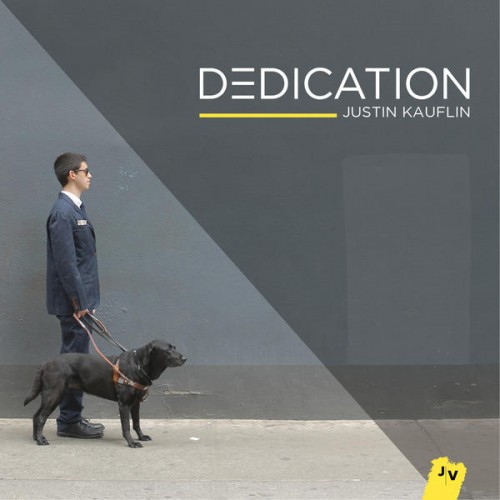
Justin Kauflin
Dedication


By Byandyjoon
Justin Kauflin is a splended performer, having great musicianship, creativity and composing skills. Owning this CD is a wonderful complement to owning the DVD of the film he's featured in, "Keep on Keepin' On" about him and his relationshiip with the extraordinary Clark Terry.


Fabio Giachino
Balancing Dreams


By CDBaby
“Balancing Dreams” is a piano solo album by the young and talented pianist from Turin. After the successful albums in trio
with Ruben Bellavia and Davide Liberti, he shows all his skill as a piano soloist, in a project full of outstanding musical
ideas: new compositions, some standards and a collaboration with the renowned rapper ENSI , mixing jazz and hip hop.
Balancing his desires and his dreams, Giachino sets his expressiveness free and leads us into an enthralling space through
an uninterrupted, intimate dialogue. where his love for jazz, and music in general , reaches its highest aesthetic value.
Class of 1986, Fabio Giachino is considered one of the most promising talents to appear on the Italian music scene in the past few years.
Born in Alba, but taking Turin as his home town, he was awarded important Italian and European prizes, gaining recognitions both nationally and internationally. As a soloist he won the “Premio Internazionale Massimo Urbani 2011”, the “Premio Nazionale Chicco Bettinardi 2011”, and the “Revelation of the year 2011”JazzUp Channel Red Award. With his trio he was awarded Special Prize as “Best Band” at the “Bucharest International Competition 2014”, the “Fara Music Jazz Live 2012” prize (as best soloist and best band), the “Barga Jazz Contest 2012” prize and the “Premio Carrarese Padova Porsche Festival 2011”. In 2013, 2012 and 2011 he was among the best 10 Italian pianists according to the “JazzIT Awards” referendum, organized by the magazine JAZZIT. In 2013 his trio was also among the best 10 Italian bands.
His debut album “Introducing Myself”, recorded with his trio and featuring the sax player Rosario Giuliani, was included in the 2012 “100 Greatest Jazz Album” selection, compiled by the magazine JAZZIT. In parallel with his accademic classical studies, which led to a Music Diploma in Organ in 2006 and a second level Music Degree in 2009, he also sudied jazz, through private lessons and workshops with the following musicians: A.Faraò, D.Moroni, R.Zegna, D.Rea; F.D’Andrea, S.Battaglia,G.Trovesi, P.Tonolo, F.Di Castri (Siena Jazz 2007, where he was awarded a scholarship for 2008); B.Harris (Felt Club Roma), J.Calderazzo, K.Rosenwinkel, S.Colley, J.T.Watts, S.Bonafede (Saint Louis College Rome).
In 2012 he got a Master of Jazz Music Degree at the “G.Verdi” Conservatory of Turin, with F.Di Castri e D.Moroni . In 2011 he flew to Detroit with Emanuele Cisi on a study exchange trip between the Jazz Department of the Conservatory of Turin and the Wayne State University of Michigan, where he performed with the University’s big band and their professors.
In 2012 and 2009 he took private lessons from Fred Hersh e Hal Crook. He has performed in festivals and clubs in France, Belgium, Switzerland, England, the Czech Republic, Poland, Turkey, Rumania, U.S.A. and in innumerable places in Italy.

Thursday, March 10, 2016

Naná Vasconcelos 1944 - 2016


By ChicagoTribune

Acclaimed Brazilian percussionist Nana Vasconcelos has died at age 71.
The eight-time Grammy Award-winner worked over the decades with well-known musicians such as Milton Nascimento.
Vasconcelos died of lung cancer on Wednesday in the northeastern city of Recife where he was born.
He was a master of the single-string percussion instrument known in Portuguese as the berimbau.
The American jazz magazine DownBeat named Vasconcelos percussionist of the year every year from 1983 to 1991.
He started learning music with his musician father and by the time he was 12 he was playing a drum kit, performing at bars with local groups.
Nana rose to national prominence after he moved to Rio de Janeiro in the 1960s and started playing with Nascimento.

Saturday, February 27, 2016

1 Sem 2016 - Part Three

Jeff Hamilton Trio
Great American Songs: Through The Years


By Dr. Judith Schlesinger
In a sonic climate full of studio fixes, it's always refreshing to hear something real—especially when it's executed with this level of excellence. At this point the Jeff Hamilton Trio has been together for over a decade, and it shows in their relaxed and seamless interplay. On this CD, a limited reissue of a 2013 Japanese release, the trio gives new life to ten classics from the American songbook, showing the fine bone structure that made each tune a classic in the first place.
Pianist Tamir Hendelman is increasingly known for stellar arrangements that put a fresh spin on the familiar. For example, one standout track here is "Thou Swell," a song with a staid Quaker lineage that is not usually rendered as a burner. But leader/drummer Jeff Hamilton had the initial inspiration of using "partido alto," that joyful and complex Brazilian rhythm, and the result is delightful and surprising, complete with signature Hamilton solo. Aside from his impeccable time and swing, he is arguably the world's most musical drummer.
"Someone To Watch Over Me" becomes a feature for bassist Christoph Luty, which includes his thoughtful meditation on the verse and some luscious arco on the melody. "You Took Advantage of Me" sparkles with humor; "I Thought About You" is a lazy blues that still manages to swing. Another highlight is the short and definitive "All Or Nothing At All," propelled by Hendelman's blistering solo.
All told, "Great American Songs Through The years" is simply that: nearly 53 minutes of timeless music, polished to a lustrous sheen.
Track Listing:
Falling In Love With Love; Tenderly; The More I See You; It Could Happen to You; Someone To Watch Over Me; Thou Swell; You Took Advantage Of Me; I Thought About You; All Or Nothing At All; How Long Has This Been Going On?.
Personnel:
Jeff Hamilton: drums; Tamir Hendelman: piano; Christoph Luty: bass.


Roseanna Vitro
Clarity: Music Of Clare Fischer


By C. Michael Bailey 

Roseanna Vitro is a "singer's singer." What does that mean? It means she is so excellent and still warranting much more attention. Her deep and precise alto is perfectly tuned and balanced. Her phrasing is textbook. This is what a jazz singer sounds like.
But Vitro's skill set does not stop at vocal prowess. She is also a crack arranger, programmer and music journalist. That is a wealth of grace and talent from Hot Springs, Arkansas. Vitro's projects are also well-considered and assembled. Throughout her career, she has been intelligently judicious in selecting artist and artistic themes for her recordings. This is evidenced in her more focused recordings that concentrate on a single musical source. In 1997, Vitro released the gutsy Catching Some Rays: The Music of Ray Charles (Telarc, 1997) with the support of frequent collaborator pianst Kenny Werner and tenor saxophonist Eddie "Cleanhead" Vincent.
Vitro followed that recording with Conviction: Thoughts of Bill Evans (A Records) in 2001, where she is joined by Evans sideman, bassist Eddie Gomez and progeny pianists Fred Hersch and Allen Farnham. Again, Vitro produced a well-focused and executed recording date where she re-cast several Evans instrumentals as vocal offerings. In 2011, Vitro almost scared into a Grammy Award with The Music of Randy Newman (Motema Records), where her musical daring and intelligence showed no bounds.
Vitro returns now with a collection of pieces by the late composer and arranger Clare Fischer, who is best known for his championing of all things Latin Jazz, much of which is well represented on the present Clarity: Music of Clare Fischer Vitro keeps her Randy Newman band intact for the recording.
Vitro attends to both the common and obscure of Fischer's work. The oft-covered "Morning," "Seagull" and "Pensativa" appear alongside the lesser known "Take Your Breath and Sing." Vitro's husband and producer, Paul Wickliffe pens the lyrics for the latter piece. Pianist Mark Soskin looms large on songs like "Pensativa" and "Swingin' with the Duke," while violinist Sara Caswell provides a distant, echoing continuo to all on which she contributes.
Vitro sings squarely from between Ella Fitzgerald and Betty Carter. Her scat chops are the most certain of any singer expelling air today. Even a bit of her home-state twang may be detected in the bluesy "Swingin' with the Duke," providing this writer a warm spot in this approaching Autumn. Honor Roseanna Vitro.
Track Listing: 
Morning; Web of Love (Inquiet Ac Ao); Love’s Path (Love’s Walk); Seagull (Gaviota); Swingin’ with the Duke (The Duke); Pensativa; Life’s Journey (Pavillion); Sleep My Child (Sleep Sweet Child); Take Your Breath and Sing (O Canto); I Remember Spring. 
Personnel: 
Roseanna Vitro: vocals and arrangements; Mark Soskin: piano and arrangements; Sara Caswell: violin; Dean Johnson: bass; Tim Horner: drums; Mino Cinelu: percussion; Brett Fischer: vibraphone (9).


Mark Egan
Direction Home


By James Poore
Electric bass guitar player Mark Egan and drummer Danny Gottlieb first played together in the Pat Metheny group back in the 1970s and were subsequently colleagues in the Gil Evans Orchestra for a time, as well as co-founding the jazz fusion band, Elements, in the early 1980s. They are joined here by pianist and keyboards maestro Mitchel Forman. Forman is another musician with an illustrious track record, having played with a cohort of jazz greats, including Gerry Mulligan, Wayne Shorter and John McLaughlin's Mahavishnu Orchestra. It was when with the latter outfit that Forman first used electronic keyboards.
All the music on this album was composed and arranged by Egan and the tunes are of a high standard. The trio have an intuitive understanding of one another and each is allowed space to flourish. A classic example of their close collaboration would be on Small Town Blues with its vigour, feeling and dexterity. After The Storm, the longest track, again features sterling interaction between the threesome, with Egan's empathetic reading of the theme matched by some expansive support by Forman and Gottlieb. Definitely easy on the ear. Mountain People is a lilting number with real impact, enhanced by a rising wave of sound. After Math sees a contemplative beginning by Forman, then changes tempo and takes us on an exciting ride. Gratitude, by contrast, remains a gentle and mellow experience throughout.
These are just some of the pleasures that await the listener on this recording. Time and again, I was impressed by Mark Egan's reach, imagination and technique. Mitchel Forman is like a force of nature, robust but lyrical, too. Danny Gottlieb is the perfect complement to his fellow musicians. This album is highly recommended and should have wide appeal.
Tracks:
Summer Fun, Small Town Blues, Mountain People, After The Storm, After Math, Direction Home,
Jungle Walk, Gratitude, The Path Home
Personnel:
Mark Egan - Bass; Mitchel Forman - Keyboards; Danny Gottlieb - Drums


Tony Foster
In Between Moods


By CD Baby
"In Between Moods" was recorded entirely at the CBC (Canadian Broadcasting Corporation) studios in Vancouver, Canada, for the Jazzbeat and Hot Air radio programs. The material features four of Foster's compositions, and combined with the other tracks, take the listener on a trip through different moods and musical colors. The album is very much about "influence"- both musical influence and the influence of places Foster has visited which left strong impressions. 
He is joined by two great friends and musicians: bassist Russell Botten and drummer Joe Poole.

"Mr. J." and "Jamal" both pay tribute to pianist Ahmad Jamal, while "Cakewalk" is an Oscar Peterson tune which is certainly NOT a cakewalk to play!
Foster's arrangement of "Take the 'A' Train" was inspired by the great arrangements of the Ahmad Jamal Trio (particulary the group with Israel Crosby on bass and Vernell Fournier on drums).
"Colors of Siena" was written as the result of a visit to Siena, Italy. As a city Foster was inspired by the different moods and colors...from the red bricks of Il Campo to the Middle Ages feel of the streets.
"How I Miss the Rain" is definitely a Vancouver tune. Many would find it difficult to believe but sometimes, one can actually miss those gray rainy Vancouver days.
"In Between Moods" (the title track) has two main parts. The primary melody is minor, and somewhat classical sounding, but transitions into an open solo section which is based on a series of major chords. These sections each provide a very different mood.
"Someone to Watch Over Me" and "You've Changed" are combined in a ballad medley to give a release for the listener, and slow things down a little.
The album closes with bassist John Clayton's "Serious Grease"- a natural fit for bassist Russ Botten and Joe Poole to lock in on a groove with Foster!
Tony Foster was born and raised in North Vancouver, BC, Canada. He received his initial musical training early on, in the form of classical piano lessons privately. In school bands, his main instrument became the trumpet. His studies on the trumpet continued until college, and it was not until this time that his focus changed to piano. Foster began playing with various university ensembles on the piano (highlighted by performances with guests such as jazz saxophone legend Phil Woods), and graduated in 1996 from UBC (University of British Columbia) with a Commerce Degree. Eventually choosing to pursue a musical career, he was a 1998 recipient of the Fraser MacPherson Scholarship. Foster then participated in a residency at the Banff Jazz Workshop in 2000 where he studied jazz piano and performed with notable jazz artists including saxophonist David Liebman, multi-instrumentalist Don Thompson, pianist Kenny Werner, and bassist Ray Drummond.
Foster has been featured with his own trio on CBC’s nationally broadcast JAZZBEAT as well as the CBC program Hot Air hosted by Neil Ritchie.
Foster has performed with such notable jazz legends as Ernestine Anderson, Red Holloway, Sheila Jordan, Kenny Colman, Dee Daniels, Jeff Hamilton, and Peter Washington.


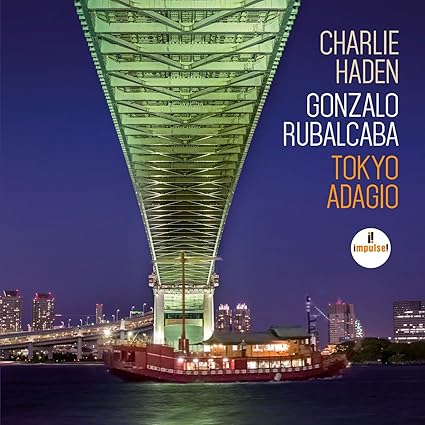
Charlie Haden & Gonzalo Rubalcaba
Tokyo Adagio


By Richard C. Ferris
This is a 2015 Impulse Music release containing six tracks totaling fifty-two minutes playing time. The CD captures a live Tokyo Blue Note club date which occurred March 16-19, 2005.
The audio quality is exceptional, thanks to the mixing magic of Jay Newland and the mastering efforts of Mark Wilder.
The album title of Adagio is apt since Charlie and Gonzalo’s musical alchemy emphasizes a slow ever evolving creative musical expression. Together, they explore somewhat familiar work but constantly add new colors to each unique arrangement.
In order to appreciate this performance, one has to consider that by 2005, these artists had worked together periodically for twenty years. They recorded several albums together during the nineties which include The Montreal Tapes, Discovery and The Blessing
During the early 2000s; their studio collaborations resulted in the critical and commercial successful releases of Nocturne (2001) and Land of the Sun (2004).
The play list for this 2005 club performance consisted of material that Charlie and Gonzalo had previously recorded. “En La Orilla Del Mundo” first appeared on their Nocturne CD. The club arrangement is minus the strings, Joe Lavano’s tenor sax and the superb violin of Uruguayan musician Federico Brittos Ruiz. It seems to play out in more intimate terms then the studio rendition.
“My Love and I” was included in Charlie’s 201"Sophisticated Ladies” album. This live interpretation between Charlie and Gonzalo minus the Cassandra Wilson vocal and Ernie Watts’s sax, takes on a fresh, bare vibrant approach which brings a spare, but instrumentally soulful interpretation. The bass and keys enable a deeper exploration of the melody.
“When Will the Blues Leave”, an Ornette Coleman composition. Originally recorded by Charlie on Coleman’s 1958 album debut. This live 2005 performance has Charlie providing the constant tasteful underpinnings while Gonzalo takes off on the keys chasing Coleman’s muse.
The Charlie Haden classic composition “Sandino” sounds entirely new when contrasted with the original tune recorded with Geri Allen and Paul Motain. From the 1988 Album “Etude” Long time fans will appreciate and enjoy the 2005 arrangement. This performance also departs from the “Sandino’ arrangement recorded on Gonzalo’s 1991 album titled” The Blessing” (recorded with Charlie and Jack DeJohnette).
“Solamente Una Vez” is a 1940 classic Bolero composition from the legendary Mexican writer, Lara Agustin. Charlie and Gonzalo originally recorded this number on the 2004 album,” Land of the Sun”. This 2005 live version excludes the brush strokes creatively applied by Cuban drummer Ignacio Berroa in the studio session. Regardless, the musical interweaving between piano and bass establishes new dimensions to an eternally beautiful song.
Gonzalo’s composition” Transparence” also gets a new outing from the one recorded for the 2001”Nocturne” CD. This version is stripped down to its musical essentials, excluding the strings and Joe Lavano’s marvelous tenor sax contribution which appeared on the studio recording. It’s a fitting coda to a glorious musical collaboration.
Fans will also appreciate the information liner notes prepared by Ned Sublette, and Ruth Cameron-Haden.

Saturday, February 06, 2016

1 Sem 2016 - Part Two

George Garzone
Crescente


By Bill Beuttler/ Jazztimes


Harry Allen & Friends
For George, Cole and Duke


By Dan Bilawsky
There is no greater paragon of tenor saxophonist taste than Harry Allen. While the fickle winds of prevailing styles continue to blow this or that way, Allen stands tall like the mighty oak, unswayed by fad fashions and firmly rooted to the music of the Great American Songbook.
On this appealing date, Allen visits the music of George Gershwin, Cole Porter, and Duke Ellington. It's not a novel concept, and Allen has gone here countless times, both with single song nods to these men and, on at least two occasions, album-length tributes—Cole Porter Songs (BMG, 2001) and Plays Ellington Songs (RCA Victor/RCA, 2000). But does that really matter? Allen continues to find inspiration in the work of these masters—men whose respective compositional wells never run dry—and his interpretations of their music are things of beauty. You could even go so far as to call them gifts to the ears.
For George, Cole, and Duke finds Allen working with a classy crew of like-minded traditionalists. Pianist Ehud Asherie delivers twinkling and sparkling solos, light and comforting comping, and beautiful beds of sound; Nicki Parrott provides balmy vocals ("In A Mellow Tone," "How Long Has This Been Going On?," and "Mood Indigo"), pleasing solos, and sturdy walking bass lines that act as the heartbeat of this music; and Chuck Redd proves to be a master of feel and economy whether providing a cheery swing pulse from behind the kit or gliding over his band mates with his vibes ("Who Cares?). The majority of the album is a quartet affair, pairing those three with Allen's attractive tenor, but percussionist "Little Johnny" Rivero drops in for the occasional guest shot, adding Latin seasonings to lively numbers ("Love For Sale") and slow roaming episodes of Ellingtonia ("Mood Indigo").
Harry Allen isn't likely to win any originality contests with this one, but that doesn't seem to bother him, nor should it. He's got his sublime saxophone, a group of top-notch musicians, and the music of the masters to work with. In this case, and throughout his career, that's proven to be a formula for success.
Track Listing: 
Always True To You In My Own Fashion; In A Mellow Tone; Happy Reunion; Silk Stockings; Purple Gazelle; How Long Has This Been Going On?; I Love You Samantha; Shall We Dance?; By Strauss; Love For Sale; They All Laughed; Who Cares? (So Long As You Care For Me); Mood Indigo.
Personnel: 
Harry Allen: tenor saxophone; Ehud Asherie: piano; Nicki Parrott: acoustic bass, vocals; Chuck Redd: drums, vibraphone; "Little Johnny" Rivero: shakere, conga, bongo (5, 10, 13).


Ralph Bowen
Standard Deviation


By Glenn Astarita
Tenor saxophonist Ralph Bowen (Out Of The Blue, Horace Silver, Michel Camillo) is a highly regarded New York-based artiste and an idea man who can stand with the best of them. With his fifth solo venture for Posi- Tone Records Bowen tackles standards, and as the title intimates, he often deviates from the norm.
Jerome Kern's "Yesterdays" receives a Latin uplift, sparked by venerable pianist Bill O'Connell's topsy-turvy opening statements and bristling unison choruses with the rhythm section. From this point onward, they spring into a buoyant romp as Bowen stokes the coals via a ferocious series of choruses. He adds enough bite to impart a distinct edge, yet interweaves his melodic flair into ultra-fluid lines and improvises within the lower to medium registers. But he doesn't waste any notes and injects a few emphatic honks and squeaks into the upper-registers to raise the pitch with a stirring climatic assault while also infusing brevity into O' Connell's flavorful arrangement. Ultimately, Bowen and his first-class ensemble ruffle a few feathers and take matters into their own hands by not tendering literal readings of these rather shopworn works. (Zealously recommended...).
Track Listing: 
sn't It Romantic; No Moon At All, Yesterdays; You Don't Know What Love Is; You Stepped Out Of A Dream; Spring Is Here; Dream Dancing; By Myself
Personnel: 
Ralph Bowen: tenor saxophone; Bill O’Connell: piano; Kenny Davis: bass; Donald Edwards: drums. 


Julie Kelly
Happy To Be


By Dan Bilawsky 
Over the past thirty years, vocalist Julie Kelly has established and cemented her sterling reputation via seven highly praised albums. Her eighth, a beauty in every way, is likely to garner her some more rave reviews.
After tackling a diverse program with able support from pianist Mike Wofford on Everything I Love (Chase Music Group, 2006), and grafting her own personality onto cool school vocalist June Christy's work with some help from pianist-arranger Tom Garvin on Kelly Sings Christy: Thou Swell (Chase Music Group, 2002), Kelly reunites with pianist Bill Cunliffe for this trip through lesser-known and highly agreeable material.
Cunliffe manned the piano and put the arrangements together for Kelly's Stories To Tell (Chase Music Group, 1994) and Into The Light (Chase Music Group, 2001), so both come to this project with a strong connection already firmly in place. Here, Cunliffe provides sensitive support when needed, kicks things up a few notches when the music calls for it, and effortlessly locks in with the two veteran rhythm men who were on board with him for the aforementioned albums—bassist Tom Warrington and drummer Joe LaBarbera. Together, these three establish relaxed and swinging scenarios ("Harpo's Blues"), light a fire under Kelly and the rest ("You're The Dangerous Type"), sway along with middleweight ("Corcovado") and lightweight ("I Never Went Away") bossa nova grooves, and bop along in high-spirited fashion ("High In The Sky"). Man-of-all-moods guitarist Anthony Wilson, vibraphonist Nick Mancini, and a collection of accomplished horn players also make notable contributions throughout.
While Kelly's companions help to set the scenes, it's the singer who's left to work within them. Yes, most of the aforementioned players get to step out and solo at one time or another, but all eyes remain on this sublime vocalist throughout. Her supple and well-trained pipes can match wits with horns, effortlessly traveling the curves and contours of this music, but she never fails to also pay great attention to the meaning of lyrics and the emotional direction of a song: "Our Love Rolls On" and "I Have The Feeling I've Been Here Before" make that much clear.
Out of eleven songs, "Corcovado" is the only one that's covered with extreme regularity, and even that comes out sparkling and new in Kelly's hands. Happy To Be has it all: fine instrumental solos, a Rolls-Royce rhythm section, sharp arrangements, choice material, and a stellar singer who makes great use of it all.
Track Listing: 
Harpo's Blues; Happy To Be; Our Love Rolls On; You're The Dangerous Type; Corcovado; I Have The Feeling I've Been Here Before; The Blues According To Orpheus; I Wish I Could Go Traveling Again; I Never Went Away; High In The Sky; For Joni.
Personnel: 
Julie Kelly: vocals; Bill Cunliffe: piano, synthesizer; Anthony Wilson: guitar; Tom Warrington: bass; Joe LaBarbera: drums; Walter Rodriguez: percussion; Bob Sheppard: saxophone, flute; Clay Jenkins: trumpet; Ron Stout: flugelhorn; Bob McChesney: trombone; Kim Richmond: saxophone; Nick Mancini: vibraphone.


Joe Locke
Love Is A Pendulum


By Troy Collin
Since the late '80s vibraphonist Joe Locke, an artist who defies categorization, has performed and recorded with a diverse array of musicians, including Eddie Henderson, Cecil Taylor, and The Beastie Boys. Love Is A Pendulum, his fourth release on the Harlem-based Motema label, features some of Locke's most compelling music to date, the centerpiece of which is a five movement suite based on a poem by musician and writer Barbara Sfraga.
Culled from Sfraga's Subway Series, Locke explains in the liner notes that "Each verse begins with a metaphor describing love—its properties and tendencies—and how (possibly) to navigate them." Far from a one-sided affair, the suite encompasses a wide range of emotions, keenly interpreted by Locke's highly responsive working quartet with pianist Robert Rodriguez, bassist Ricky Rodriguez, and drummer Terreon Gully, who are subsequently joined by occasional guests, including alto and soprano saxophonist Rosario Giuliani, tenor saxophonist Donny McCaslin, guitarist Paul Bollenback, steel pan virtuoso Victor Provost and vocalist Theo Bleckmann.
The through-composed fanfare "Variation On Wisdom" introduces the suite in magisterial fashion, setting the stage for "Love Is The Tide," which emulates surging power through ebbing rhythms and fluid solos, whereas "Love Is A Planchette" features Bleckmann's ethereal vocalese floating spectrally, like a planchette across a ouija board. The episodic title track and the rubato ballad "Love Is Letting Go" similarly explore myriad moods, while the climactic final movement, "Love Is Perpetual Motion," opens with a series of heated alto and tenor exchanges between Giuliani and McCaslin before spotlighting the beguiling kaleidoscopic interplay of vibes and steel pan.
The album concludes with three compositions that are stylistically comparable to the main program: the tunefully introspective dedication "For Jesse Mountain"; a blazing hard-bop work-out on "Last Ditch Wisdom"; and "Embrace," based on George Gershwin's "Embraceable You," which was conceived by Locke as a vehicle for Provost's melodic ingenuity.
The quartet's intuitive rapport and the invited guests' spontaneous contributions impart soulful verve to Locke's written notation, collectively bringing the leader's multifaceted charts to life. One of the most ambitious efforts in Locke's discography, Love Is A Pendulum is a captivating example of today's finest creative mainstream jazz.
Track Listing: 
Variation On Wisdom; Love Is The Tide; Love Is A Planchette; Love Is A Pendulum; Love Is Letting Go; Love Is Perpetual Motion; For Jesse Mountain; Last Ditch Wisdom; Embrace.
Personnel: 
Joe Locke: vibes; Robert Rodriguez: piano; Terreon Gully: drums; Ricky Rodriguez: acoustic and electric bass; Rosario Giuliani: alto saxophone (2, 5-8) and soprano saxophone (4); Donny McCaslin: tenor saxophone (6, 7); Victor Provost: steel pan (6, 9); Theo Bleckmann: voice (3); Paul Bollenback: guitar (1, 7).

Saturday, January 30, 2016

Frank Collett 1941 - 2016


By Doug Ramsey - 26/01/2016
Producer Dick Bank reports that pianist Frank Collett died of liver failure yesterday in Pasadena, California. Collett was 74. He led his own trio and in the course of his career worked with Louis Armstrong, Zoot Sims, Shelly Manne, Dizzy Gillespie, Benny Carter, Freddie Hubbard and a list of vocalists that included Carmen McRae, Sarah Vaughan, Ernestine Anderson, Helen Merrill, Jon Hendricks, Diane Reeves and Barbra Streisand.
Born in Brooklyn as Frank Taglieri, his talent as a prodigy won him a scholarship to the Juilliard School of Music—at the age of six—and study with the prominent piano instructors Paul Gallico, David LeVita and Herbert Stessin. In the late 1950s he decided to become a jazz musician and changed his professional name to Collett. Following military service in the West Point Military Academy Band, he joined Sarah Vaughan and moved west. In Las Vegas and Los Angeles, his career took off. After the Vaughan period, Collett formed a trio with the other members of her trio, bassist Monty Budwig and drummer Donald Bailey. His Los Angeles recording and television work included recordings and appearances not only with mainstream jazz artists but also with pop performers, among them Elvis Presley, Perry Como, Keely Smith, Glenn Campbell and Bette Midler.
Hearing of Collett’s death, fellow pianist Jan Lundgren today referred to him as “a fantastic player.” Recalling Collett’s modesty, Dick Bank said, “Frank hid his light under a bushel.” Bank produced Collett’s last three albums.

Sunday, January 17, 2016

1 Sem 2016 - Part One

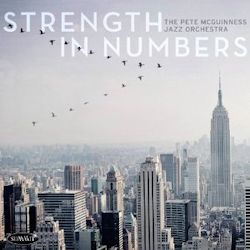
The Pete McGuinness Jazz Orchestra
Strength In Numbers


By Pierre Giroux
While the days of taking a 16-piece band on tour are long over, fortunately record companies and producers continue to issue albums of that genre. Falling into that category is the Pete McGuinness Jazz Orchestra’s Strength In Numbers and it is an acknowledgement that there is a market for a big band that is venturesome and can play with power and precision.
Even before dropping the laser beam on the disc, a reading of the liner notes offered encouragement. One of the producers of the album is John Fedchock who was one of the stalwarts of Woody Herman’s latter bands and is a leader of his own New York based big band and knows a thing or two about the need for swinging arrangements. The Send-Off is the send-off for the album and, while not a barn-burner, it does offer tenor-saxophonist Tom Christensen and drummer Scott Neumann a chance to deftly show their chops. The Michel Legrand chestnut What Are You Doing The Rest Of Your Life?is done up as an easy-going waltz with some smart expressiveness and then part way through, for some unexplained and unfathomable reason, Pete McGuinness offers a vocal. McGuinness does the same vocal thing with You Don’t Know What Love Is justifying it on the basis that Chet Baker was one of his vocal heroes. Sometimes such adulation is best left unrequited.
The balance of the album confirms that McGuinness is a composer and arranger with an invigorating original style who can take advantage of the full palette of a large orchestra as shown on the Stephen Foster ballad Beautiful Dreamer which is turned into a swaying samba with the soprano sax of Dave Pietro layered in over the band. Nasty Blues is a swinger of the first order with the saxophone section laying down the melody in the manner of Count Basie and then the soloists take over, firstly with Dave Pietro on alto, followed by an exchange of choruses by trombonists Mark Patterson and Matt Haviland. The band’s blazing “shout chorus” is led by trumpeter Jon Owens. Finally Bittersweet opens with an extended piano offering from Mike Holober after which McGuinness carries the load on trombone, showing he can deliver the goods in a brusque but evocative style.
This is an invigorating release from a solid outfit.
Tracks:
1. The Send-Off; 2, What Are You Doing The Rest Of Your Life?; 3. Trixie’s Little Girl
4. The Swagger; 5. Beautiful Dreamer; 6. Spellbound; 7. You Don’t Know What Love Is
8. Nasty Blues; 9. Bittersweet; 10. You Don’t Know What Love Is (radio version)
Personnel:
Pete McGuinness - Composer, arranger, vocals, trombone
Dave Pietro, Marc Phaneuf, Tom Christensen, Jason Rigby, Dave Reikenberg - Woodwinds
Bruce Eidem, Mark Patterson, Matt Haviland, Jeff Nelson - Trombones
Jon Owens, Tony Kadlek, Bill Mobley, Chris Rogers - Trumpets 
Mike Holober - Piano; Andy Eulau - Bass; Scott Neumann - Drums


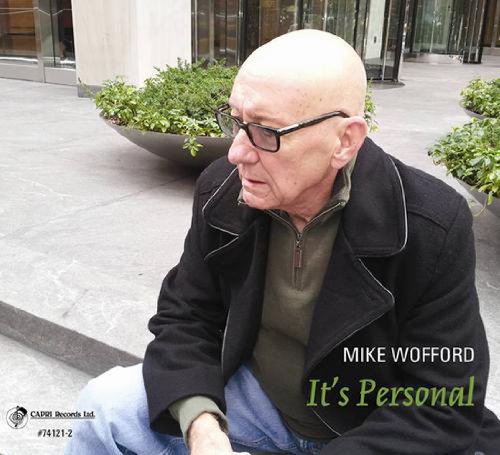
Mike Wofford
It's Personal


By Amazon
Mike Wofford has a long history of playing piano with great jazz musicians over the past 50 years including long stints with Shelly Manne, Bud Shank and many others. He is probably best known for his work as accompanist and musical director for Ella Fitzgerald and Sarah Vaughan. His latest recording, It's Personal features Wofford on solo piano playing some of his personal favorite tunes. There are 4 original compositions from Wofford and 8 other pieces by a range of composers from Jackie McLean, Dizzy Gillespie and Duke Ellington to the Talking Heads.


Claudio Filippini Trio
Squaring The Circle


By Robin Arends
One of Italy's most talented young jazzpianists, Claudio Filippini, turns back to the jazzstandards in his new album "Squaring the Circle". The album is recorded in october 2013 in Cavalicco and released july this year. Flippini uses unexpected instrumentation. Filippini has left his Nordic Trio (consisting of Palle Daniellson and Olavi Louhivuori) and now takes his comfortable freedom with the artistic soulmates he started his professional carreer with a decade ago.
The album starts with a number called "Impressions" and is subscribed to John Coltrane. It could also be a version of the (frequently by Coltrane interpreted) Rodgers and Hammerstein-composition "My Favorite Things". After a bassintro Filippini's piano and electronics are taking over.
An abundance of echoes and strings do believe that Filippini is going a completely different (let us say: more commercial) direction. Fortunately this proves not to be the case as the next piece testifies.
What follows is a surprising version of "Autumn Leaves", introduced by Di Leonardo and Bulgarelli which turns slowly in a beboptune led by Filipinni. There is little that is reminiscent of the original standard. It is clear that with this second song the trio declares originality is more important than an exact representation of the standard. The other pieces proof us why.
Part of the intro of 'Round Midnight' turns into a Portisheadpiece and could suggest we are in the wrong room but later it turns out that we still sit in the right place. Filippini's Grand Piano is in the centre and plays the wellknown Monktune. After a digital interlude, Monk is put in the closet and Filippini proofs his skills while he is accompanied by samples. Also Filippini's version of the Oliver Nelson-classic "Stolen moments" is a complete remake. It starts as a discosong and ends up as a Brazilian carnivaltune.
The trio distances itself not completely from the originals. The uptempo Hart and Rodgers composition "I Dont' Know What Time It Was" keeps pretty near the original version. Also Mancini's "Moon River" stays mainly intact. And the trio Filippini leave us in silence with a breathtaking version of the evergreen "What a Wonderful World".
All together "Squaring the Circle" is not just about qualities. It is about inventive creativity. It is alluring to compare the pieces on this album with the music on the other Filippini-albums or versions of other pianists. Why fits "As Time Goes By" better on "Breathing in Unison" and what makes the presented standards unique? What is the difference between Filippini's version of Jitterbug Waltz and Errol Garners 1949- version? Can we compare Autumn Leaves or 'Round Midnight as played by the master of standardspecialist Keith Jarret? Yes, we can and we'll hear different voices, unique souls playing unique tunes. All together Squaring the Circle is too short. There are many other tunes which could be included in this selection. "Impressions" should be left to McCoyTyner and maybe Marc Copland and Dave Liebman (and compare it with the Copland-trio version of My Favourite Things). But there is so much more we have a right to. Where are the compositions of Kern, Berlin, Gershwin and Hammerstein? The qualities of Filippini and his trio should not be limited to the numbers on this album. We want more!
Tracks:
1. Impressions (J. Coltrane) 5:53
2. Autumn Leaves (F. Prévert – J. Kosma) 4:55
3. 'Round Midnight (B. Hanighen – T. Monk – C. Williams) 7:59
4. I Don't Know What Time It Was (L. Hart – R. Rodgers) 4:32
5. Moon River (J. Mercer – H. Mancini) 5:19
6. Stolen Moments (O. Nelson) 4:00
7. Jitterburg Waltz (F. Waller) 6:09
8. A Night In Tunisia (D. Gillespie) 6:15
9. What A Wonderful World (B. Thiele – G. D. Weiss) 7:06
Personnel:
Claudio Filippini, piano & keyboards
Luca Bulgarelli, bass
Marcello Di Leonardo, drums


Fred Hersch
Solo


By Fred Kaplan
With Solo, his 49th album as a leader (or co-leader) and 10th as a soloist, Fred Hersch nails his standing as one of the premier jazz musicians of our time, a pianist of subtle touch and propulsive flow, something like Keith Jarrett but more focused, less rhapsodic—Ravel to KJ's Liszt or Rachmaninoff (not that there's anything wrong with either).
Recorded live last year at the Windham Civic Center Concert Hall, in New York's Hudson Valley, Solo (on the Palmetto label), features, like most of Hersch's albums, a mix of originals and standards—the latter by Jobim, Ellington, Monk, and Joni Mitchell, four composers who have no finer interpreters in jazz today.
Monk is a particularly knotty composer to cover. Most pianists who try either come off as merely imitative (and usually stiff) or go for an original approach that doesn't sound remotely Monkish. Hersch, as he first demonstrated on Thelonious (a 1997 album on Nonesuch), is among the few who mines Monk's essence while refining it in an original voice. He embroiders Jobim with newfound layers of beauty, adds a Latin flavor to Ellington's "Caravan," and lays down Mitchell's "Both Sides Now" with loving (but not at all sentimental) elegance.
I'd say this is Hersch's best solo album since In Amsterdam (2006) or maybe Let Yourself Go (1999).
About the sound quality. A reviewer in one of the other audio magazines (not Stereophile) gave this album 5 stars for sonics, which, I must report, is absurd. It was recorded on a standard 44.1kHz/16-bit CD-R by the Windham Civic Center's sound man (unnamed in the credits), who gave Hersch the disc after the concert. Hersch hadn't planned to release it as an album, but he was so taken by his performance—and so unmoved by a studio session he'd laid down around the same time—that he decided to put out the Windham session, despite the so-so sound. He gave the disc to Mark Wilder, one of the top mastering engineers around, who brought out his bag of tricks and made it sound as good as possible—but good is the best he could do. It's a bit reverberant and a bit muffled, but better than you'd expect from a raw feed off a soundboard. Let's call it 4½ stars for music, 3 stars for sound.
Don't let this put you off, though. The beauty of Hersch's playing shines through.


Dino & Franco Piana Ensemble
Seasons


By TraccediJazz Magazine
Dino e Franco Piana, a circa due anni di distanza presentano un nuovo lavoro. A differenza del precedente questo è costruito su una sequenza di nove brani uniti tra loro da modulazioni e cadenze di largo respiro.
Franco Piana con questo lavoro si rivela compositore ed arrangiatore di altissimo livello, la sua scrittura per sei fiati (flicorno, tromba, trombone, saxalto, saxtenore, flauto) pianoforte, contrabbasso e batteria è costruita, in modo da ottenere quei risultati che solo un orchestratore/arrangiatore di valore riesce a realizzare.
Alla scrittura di Franco può, agevolmente, adattarsi quanto il critico accademico Winthrop Sergeant disse a proposito di Gil Evans: “grande senso della poesia sonora e puntigliosa attenzione ai colori timbrici”. Ma ciò che maggiormente sorprende è la capacità di Franco Piana nel creare “masse di suono” con solo sei strumenti a fiato, lui stesso al flicorno, la tromba Fabrizio Bosso, Dino Piana, trombone, Ferruccio Corsi e il giovanissimo figlio Lorenzo Corsi, rispettivamente saxalto e flauto e Max Ionata, sax tenore, insieme a Enrico Pieranunzi, pianoforte, Giuseppe Bassi, contrabbasso e Roberto Gatto, batteria e produttore artistico, vale a dire in questo “nonet”, alcune fra le più belle realtà del Jazz di oggi.
Nel primo dei nove brani “Opening” eseguito da tutti i fiati, vengono già enunciati gli spunti tematici dei brani che seguiranno. Nel secondo, “Just a Reflection”, dopo un tema molto articolato seguono i primi quattro assolo dovuti a Max Ionata, Fabrizio Bosso, Dino e Franco Piana. Dopo un ensemble e ad Enrico Pieranunzi segue un “collettivo tematico” prima delle parti solistiche di Roberto Gatto e Franco Piana.
Dopo la ripresa del tema e una modulazione che porta ad una cadenza splendidamente eseguita al flauto da Lorenzo Corsi, viene introdotto il terzo brano “A Light in the Dark”. Già in “Just a Reflection” la parte in assolo di Fabrizio Bosso appare in tutta la sua versatilità, così quella di Pieranunzi che esplora ogni peculiarità della composizione.
Il tema di “A Light in the Dark” è esposto magistralmente da Dino Piana e Ferruccio Corsi, cui segue Enrico Pieranunzi la cui personalità stilistica originale è qui in tutta evidenza. Dopo una modulazione, una cadenza di Dino Piana ne introduce una ulteriore di pianoforte le cui ultime note sono quelle del nuovo tema “Five Generations”, brano che si sviluppa tra la prima parte modale e l'inciso costruito su giro armonico.
Le parti solistiche sono riservate a Max Ionata sempre espressivo nel suo bel fraseggio, Fabrizio Bosso e Enrico Pieranunzi. La composizione si chiude con una bella “chase” fra Giuseppe Bassi solido e swingante e Roberto Gatto sempre elegante ed efficace. Gli assolo di Ionata, Bosso e Pieranunzi in sequenza sono straordinariamente inventivi e di grande impulso ritmico.
Nel quinto brano ”After the Winter” dopo un’introduzione che riprende il tema finale del “movimento” precedente, Lorenzo e Ferruccio Corsi, flauto e saxalto, espongono, dopo la modulazione, questa splendida melodia di Franco Piana lasciata per l'intera esecuzione al lirismo di Lorenzo e Ferruccio. “After the Winter” termina con intervalli di un tono e ½ tono e annuncia il brano seguente “Ostinato” in cui si notano una sequenza di assolo splendidi: Pieranunzi, Ionata, una chase superba eseguita da Dino Piana e Lorenzo Corsi, Fabrizio Bosso, Giuseppe Bassi e infine Franco Piana che con la tromba sordinata, chiude questa sesta composizione anticipando “Only Now”.
Il brano si apre con un dialogo fra i fiati ed un assai brillante Roberto Gatto, che è anche produttore artistico del cd, prosegue poi con una sequenza di assolo, Bosso e Ionata prima dell’ensemble, Dino e Franco Piana, Enrico Pieranunzi prima del collettivo che precede il tema. L’ottava composizione “Why Not” è, anche in questo caso, un tema melodicamente di grande efficacia, esposto con intensità da Franco al flicorno e da Dino, seguiti da Enrico Pieranunzi. La modulazione finale con flauto, flicorno e trombone prevede intervalli che anticipano
il 9° movimento finale, un blues veloce, “CdJ Blues” (dedicato alla Casa del Jazz di Roma). “CdJ” è impostato secondo la classica struttura jazz di sempre, ma sempre efficace, tema-assolotema, quando, come in questo caso, i solisti sono di altissima classe e capacità.

Wednesday, January 06, 2016

Old Jazz CD's 2016 - Part Two

Denise Donatelli
In The Company Of Friends


By Ken Dryden 
Jazz vocalist Denise Donatelli is a breath of fresh air in a market seemingly saturated with female singers. Her debut recording, In the Company of Friends is a stunning effort. Donatelli has a warm, sensuous voice and doesn't resort to histrionics to get her message across. She is a natural, not a trained musician, who effortlessly responds to anything that arranger/pianist Tom Garvin threw at her during the making of the CD. She coasts throughout Garvin's 5/4 arrangement of "On Green Dolphin Street" (a great standard too often subjected to hackneyed renditions) as if she had always sung it in that setting. "'Round Midnight" is full of traps for young singers, yet Donatelli proves herself by avoiding them and also serving as an effective storyteller, backed by Clay Jenkins' tasty muted trumpet. Neither is she fazed by Garvin's unusually brisk, dissonant Latin treatment of the ballad "You Don't Know What Love Is," never missing a beat. She also responds rather well to Garvin's reharmonization of "Send in the Clowns," recast as a light samba with many musical twists. Donatelli shows off her chops by scatting in unison with Jenkins and tenor saxophonist Bob Sheppard in a rapid-fire arrangement of "This Is New." Wrapping this brilliant debut CD is Donatelli's effective interpretation of "When Summer Turns to Snow," beautifully scored by Garvin. Phil Woods, never one to couch his opinion, states, "This is too good a record to win anything, but if there is any justice it should." This is one of the most striking debuts by a jazz vocalist in recent memory.


Ann Hampton Callaway
Easy Living


By Michael G. Nastos
This is Ann Hampton Callaway's seventh recording, Easy Living, is one of her very best. It's a program of well-known standards and fairly stock arrangements, but in the middle is her pristine, well-defined, flexible voice. She retains a lower-end range in her style that suggests only one singer: Sarah Vaughan. She's joined by several different rhythm sections and soloists, including pianists Benny Green (six cuts), Bill Charlap (five), and Kenny Barron (two); bassists Peter Washington or Neal Miner; drummers Clarence "Tootsie" Bean and Lewis Nash; percussionist Jim Saporito; saxophonists Andy Farber, Nelson Rangell, and Gerry Niewood; and on three selections, trumpeter Wynton Marsalis. A collection of love songs sung convincingly and with no frills, Callaway shows great depth in ballad singing. Hard evidence is presented in her takes of "Skylark" and "The Very Thought of You," with Charlap's glistening piano tones ringing bells for the singer and Farber's tenor sax replies. "'Round Midnight" is the penultimate interp with Barron's wistful piano and Marsalis' spare trumpet offering advice on ol' midnight. Callaway can swing well when she chooses; "Easy to Love" brings home her lower dulcet tones, while Farber's tenor cops a Stan Getz-Joe Henderson type plea bargain. Green's intro to "Nice Work If You Can Get It" has a "Giant Steps" quote before the singer digs into this lyric. She scats a little during the middle of the program, on the melody line, and the coda, of "Bluesette," and more in the improvised bridge during "It Had to Be You." Bossa nova is always a sidebar for singers, and Callaway uses this Brazilian rhythm on an interesting arrangement of "You Don't Know What Love Is" spiked with high drama, Saporito's Latin percussion, Barron's deft piano, and Niewood's flavorful tenor. The lone composition of the vocalist "Come Take My Hand" is also bossa, with Rangell's flute chirping on this definitive love anthem. Marsalis is also bolder on the stark ballad title track and a nice version of "In a Sentimental Mood," while it's the singer getting brash and daring in a lower tone than normal for perhaps the highlight "All of You," Green's piano matching the depths of Callaway's yearnings. It's not hyperbole to understand this is the perfect singer with a perfect voice that sounds so effortless, mature, and flowing. Though the others six recordings are just fine, this one really hits the spot, especially instrumentally. Callaway proves up to the challenge with every measure, phrase, and inflection.


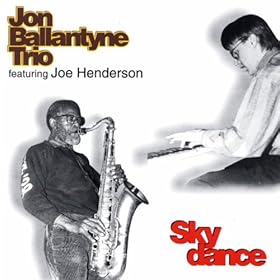
Jon Ballantyne Trio
Skydance


By Ozzie 
Canadian pianist Jon Ballantyne, a native of Saskatoon, SK, made his debut as a leader with this 1989 album, which was recorded in Montreal, PQ, for the local Justin Time label. Tenor saxophonist Joe Henderson was still a few years away from being rediscovered by the general jazz-community, but plays with absolute mastery on this CD, which is a reissue of the original album with a bonus track added (Ornette Coleman's "Blues Connotation"). Henderson's powerful playing seems to inspire all involved, as they run through a set of standards ("You and the night and the music", "You don't know what love is", and the Coleman-track) and Ballantyne-originals. These latter tunes are excellent launching pads for Henderson and Ballantyne alike, but they also stand firm as compositions in their own right. The band plays with fire and invention and never seem to run short of ideas. The opening-track ("Oh what I've been thru") runs for over 12 minutes and never gets repetitive. Beautifully recorded, with a slight reservation for Jerry Fuller's drums perhaps, which at times seem a bit tinny.
A more than convincing debut for Ballantyne to say the least !


Claire Martin
Old Boyfriends


By Alex Henderson
Many jazz singers young and old make the mistake of arbitrarily avoiding the pop, rock, and R&B songs of the 1960s, '70s, and '80s, but for Claire Martin they're fair game. This outstanding CD finds her demonstrating the jazz potential in such unlikely vehicles as Rupert Holmes' incisive "Partners in Crime" and Tom Waits' "Old Boyfriends" -- not exactly songs jazz singers are usually quick to embrace. True to form, she unearths her share of wrongly neglected classics, including Artie Shaw's "Moon Ray" (a major hit for him during the swing era) and Burt Bacharach's "Out of My Continental Mind" (associated with Lena Horne). As daring as Martin is in her choice of material, her vocal style is actually quite straightforward and lucid and not overly abstract. Martin consistently uses subtlety and restraint to maximum advantage and -- like Chris Connor and Julie London before her -- makes it clear that cool jazz certainly doesn't have to be cold.


Carol Kidd
The Night We Called It a Day.....


By Amazon
Originally released in 1990 The Night We Called It A Day has been reissued as part of Linn's ECHO series which offers a second chance to enjoy the best of the label's award-winning catalogue.
Upon release the album was voted 'Best Jazz Recording' at the U.K. Musical Retailer's Awards in the same year that Kidd was named 'Best Vocalist' at the Cannes International Jazz Awards.
'How Little We Know' is one of two songs Kidd chose that refer back to Frank Sinatra's Capitol years, the other being 'I Could Have Told You So'; upon hearing the album Sinatra arranged for Kidd to perform with him in Glasgow and stated 'Carol Kidd is the best kept secret of British jazz'.
Kidd explores the highs and lows of love; 'Gloomy Sunday' reflects the despair that results when your lover has gone, whereas 'How Little We Know' and 'The Glory Of Love' concern themselves with the upside of boy meets girl.
Kidd also includes tracks by some of the best songwriters: Richard Rogers, Cole Porter and Randy Newman.
The trio of David Newton (piano), Dave Green (bass) and Allan Ganley (drums) provide the perfect accompaniment to Kidd's vocals. 

Tuesday, January 05, 2016

Old Jazz CD's 2016 - Part One

René Marie
Live At Jazz Standard


By Matt Collar
Idiosyncratic jazz vocalist Rene Marie makes her presence unequivocally apparent on her second MaxJazz release, Live at Jazz Standard. Recorded over three nights in 2003 at the New York City club, the album features Marie's usual mix of standards and originals. Stylistically resting comfortably somewhere between Betty Carter and Shirley Horn, Marie digs into such classics as "Where or When," "Nature Boy," and "A Foggy Day," making each song different from the next and utterly unforgettable. You may never hear another version of "It Might as Well Be Spring" sang as spritely as the one that appears early on, and her take of "I Loves You Porgy" is as heartbreaking as her a cappella turn on "How Can I Keep From Singing?" is dramatic. Backed sensitively by pianist John Toomey, bassist Elias Bailey, and drummer T. Howard Curtis III, Marie just gets better with each solo release.


Jill Seifers & Michael Kanan
Birdland Sessions


By Scott Yanow
Jill Seifers, a singer from Portland who was 32 at the time of Birdland Sessions in 1998, was originally a bop-based scatter. Since that time, she has learned to love lyrics and ballads to the point where everything on this CD is taken at a fairly slow tempo. Accompanied by the sympathetic and supportive piano of Michael Kanan, Seifers displays a voice touched by jazz and folksingers alike. With the exception of Alec Wilder's "Moon and Sand," all of the material is quite familiar (including "Never Let Me Go," "Everything Happens to Me," and "The Talk of the Town"), but the vocalist's sincerity, warmth, and pure joy at singing (even if a lot of the material is downbeat) gives some of the songs a fresh perspective. But do not expect much variety here.


Monica Borrfors
Slowfox


Recorded 1995 at Polar Studios - Sweden
Produced by Lasse Andersson
Engineered by Robert Wellerfors

Tracks:
1 Polka Dots and Moonbeams; 2 I Get Along Without You Very Well; 3 Soon
4 Don't Go to Strangers; 5 Dindi; 6 I Can't Get Started; 7 Folks Who Live on the Hill
8 Masquerade Is Over; 9 Nu Tas Ater Ljusen I Min Lilla Stad; 10 Marionette
11 August Wishing; 12 Everthing Happens to Me; 
13 What Are You Doing for the Rest of Your Life.


Melody Gardot
Worrisome Heart


By Michael G. Nastos
Melody Gardot's debut recording, released in 2006, came two years after she suffered a near fatal automobile accident, the differently able Gardot triumphing in accomplishing what many others, including her, could only dream of. This project has her singing and playing guitar and a little piano, but more so presenting this project of all original material. Gardot has an interesting personal story, but even more intriguing music that straddles the line between lounge jazz, folk, and cowgirl songs. She's part sophisticated chanteuse, college sophomore, and down-home girl next door. Her innocence, sweetness, and light are very alluring, much like the persona of tragic songbirds Eva Cassidy and Nancy LaMott. Feel empathy for Gardot, but don't patronize her -- she's the real deal much more that many of her over-hyped peers. "Quiet Fire" is definitely her signature tune, as it speaks volumes of where her soul is at, in a jazz/blues mode, yearning for true love. The title track follows a similar tack, a slow, sweet, sentimental slinky blues that will melt your heart. A finger-snapping "Goodnite" leaves you wanting that night to continue, but also exudes a hope that permeates the entire recording. She might be a bit down on men during the nonplussed "All That I Need Is Love," but her subdued optimism glows cool. "Sweet Memory" might possibly parallel Feist or perhaps KT Tunstall in a rural country mode, while "Gone" is clearly folkish, and the slow "Some Lessons" expresses a contemporary Nashville precept. The laid-back music behind Gardot is basically acoustic, incorporating hip jazz instrumentation, especially the trumpet of Patrick Hughes and occasional organ, Wurlitzer, or Fender Rhodes from Joel Bryant, but with twists including violin, lap steel, and Dobro. The concise nature of this recording and these tunes perfectly reflects the realization that life is precious, every moment counts, and satisfaction is fleeting. Likely to be placed in the Norah Jones/Nellie McKay/Madeleine Peyroux pseudo jazz/pop sweepstakes, Gardot offers something decidedly more authentic and genuine. She's one-upped them all out of the gate.


Karen Mantler's
Pet Project


By Stewart Mason
Over the course of her first three albums, the ongoing narrative thread of Karen Mantler's music concerned her beloved cat Arnold. 1996's Farewell, written and recorded following her pet's death, concerned the young singer and pianist's grieving process, but life does go on, and four years later, Karen Mantler's Pet Project is a far more lighthearted affair covering the decision to get a new pet. This is by some distance Mantler's most playful and musically accessible album; indeed, it's easy to imagine a parent of some fairly hip and musically aware children using it to introduce their kids to modern creative jazz. As a result, some will likely find the album too whimsical for words. A song cycle discussing the pros and cons of adopting an increasingly unlikely series of animals, Mantler's faux-naïf lyrics are sung by herself and members of her band (including vocalist Eric Mingus, guitarist Hiram Bullock, and for a few lines, her mother Carla Bley) with the utter guilelessness they demand, over settings that range from small-band progressive jazz to Brazilian rhythms to something almost akin to straightforward pop music. Karen Mantler's Pet Project is the sort of album that must be recommended with caveats, as the more self-important jazz fan may well find it unbearably cutesy, and Mantler's musical interests don't lie in the same experimental range as her mother or her equally legendary father Michael Mantler. This is more for fans of the quirkier end of art rock and modern jazz, along the lines of Laurie Anderson or perhaps Nellie McKay.

Monday, January 04, 2016

Paul Bley 1932 - 2016


By Peter Hum, Ottawa Citizen

"Dear Friends,

I’m deeply saddened to tell you that my father passed yesterday. Below is our official statement. He was at home and very comfortable with family at his side.

Thank you,
Vanessa Bley"

“PAUL BLEY OBITUARY:
“Paul Bley, renowned jazz pianist, died January 3, 2016 at home with his family. Born November 10, 1932 in Montreal, QC, he began music studies at the age of five. At 13, he formed the “Buzzy Bley Band.” At 17, he took over for Oscar Peterson at the Alberta Lounge, invited Charlie Parker to play at the Montreal Jazz Workshop, which he co-founded, made a film with Stan Kenton and then headed to NYC to attend Julliard.
“His international career has spanned seven decades. He’s played and recorded with Lester Young, Ben Webster, Sonny Rollins, Charles Mingus, Chet Baker, Jimmy Giuffre, Charlie Haden, Paul Motian, Lee Konitz, Pat Metheny, Jaco Pastorious and many others. He is considered a master of the trio, but as exemplified by his solo piano albums, Paul Bley is preeminently a pianists’ pianist.
“He is survived by his wife of forty three years, Carol Goss, their daughters, Vanessa Bley and Angelica Palmer, grandchildren Felix and Zoletta Palmer, as well as daughter, Solo Peacock. Private memorial services will be held in Stuart, FL, Cherry Valley, NY and wherever you play a Paul Bley record.”
In 2008, Bley was named a member of the Order of Canada, the official announcement said, for “his contributions as a pioneering figure in avant-garde and free jazz, and for his influence on younger jazz pianists.”
…which was, in fact, understating things. It’s true that everyone from Keith Jarrett to Frank Kimbrough to Aaron Parks has been influenced by Bley, but non-pianists have been similarly struck too. Pat Metheny told my colleague Doug Fischer some years ago that his life was changed by Bley’s All the Things You Are solo on Sonny Rollins’ 1963 album Sonny Meets Hawk. “When I heard Paul Bley’s piano solo, a whole new universe of harmonic possibilities opened up from me,” Metheny said. “All these decades later, I still of it as one of the greatest solos in jazz history.
“Even a non-musician can sense something amazing is happening,” Metheny continued. “On one level what he’s doing is very complex, but it’s also completely accessible, very open. Bley simply allows each musical idea to go to its natural conclusion — and in the end, something very personal becomes very universal.”
A legendary raconteur who witnessed and was involved with the greatest jazz players over the last 60-plus years, Bley was also a famously quotable philosopher of improvisation and life: For now, just these choice quotes:
1) “Practice makes perfect. Imperfect is better.”
2) “Music paper is senile. Recordings do a better job.”
3) “Rehearsals are counterproductive. Repetition is a downward spiral.”

A quick appreciation by Hamilton-based pianist Adrean Farrugia on Facebook:
“Rest in peace Paul Bley.
“To me, Paul Bley is the greatest and most historically significant jazz pianist Canada has ever produced. Never putting public approval ratings and record sales before his commitment to his honest development as an artist Paul Bley carved out a sound and style that was truly unique, mysterious and beautiful.
“He was an important influence on many of history’s greatest forward looking improvising artists, such as Keith Jarrett and many others.
“I met him at the Blue Note in NYC in 2008 while on my honeymoon with my wife Sophia. His duo performances that night with Charlie Haden were deep and personal and stayed with me for a long time.
“I’ll always be grateful for your music Mr. Bley. Thank You.”

Rest in peace, Paul Bley.