Sunday, April 26, 2015

1 Sem 2015 - Part Eight

Sergio Rossoni Grupo
Pescadores


By Dicionáriompb
Grupo fundado em 1997 por Sérgio Rossoni (guitarra), juntamente com Aldo Barreto (bateria e percussão), Mário Carvalho (piano e teclado), Marcelo Mainieri (contrabaixo) e José Penna (flauta). Lançou nesse ano o CD “Sérgio Rossoni Grupo”. O disco recebeu indicação para o Prêmio Sharp.
Em 2000, gravou o CD “Pescadores”. Em 2003, lançou o CD “Fogo Cerrado”, que teve show de lançamento no Supremo Musical (SP), com a participação especial do percussionista Jorge Marciano.
Tracks:
1-Um Passo; 2-Três Marias; 3-Pescadores; 4-Catedral; 5-Serra da Canastra
6-O pequeno circo do sertão; 7. Reflexos; 8-Olhos de Deborah; 9-Folia de Reis


John Stetch
Off With The Cuffs

Off With the Cuffs

By Tom Twain 
This Cd is simply amazing. It combines great classical works with improvisation and jazz and keeps your interest every moment.
It stimulated my mind, body, emotions, and soul. Each composition is like going on a journey where the beginning is somewhat known but then you take a road never traveled and that is where the mystery, intrigue and excitement begins.
On another level this music can be meditative and relaxing to the mind and body....John's TOUCH and inflections on the piano a first rate and professional. He is a classical AND jazz pianist. So he knows how to play the instrument and improvise on a high level.
I highly recommend this CD to pianist, classical musicians, jazz musicians, and anyone who loves music. 


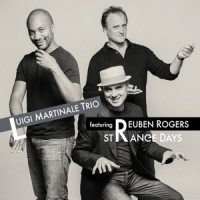
Luigi Martinale Trio
Strange Days

By Amazon
“Bitter-elegant touch, communicative fluent melodies on perfect harmonization, and a pinch of Soul Music” – The next Piano Trio Masterpiece by Turinese pianist Luigi Martinale, accompanied by international top bassist Reuben Rogers and his old friend Paolo Franciscone on drums.
Tracks:
Strange Days; Bewitched, Bothered and Bewildered; The Electric Blue Flight Case;
Christmas Eve; Oops, A Pop One; Passaggio Ad E.S.T.; Invitation;
Gentle Touch; What Is This Thing Called Love; The Magic In Looking Back;
Anyway A Good Day.
Personnel:
Luigi Martinale (p); Reuben Rogers (b); Paolo Franciscone (ds)


Jimmy Cobb
The Original Mob


By C. Andrew Hovan 
As the Smoke Sessions list of titles continues to grow, so too do we get to check out some of the country's greatest drummer. The much in-demand Joe Farnsworth has been featured on the label's releases by Harold Mabern and David Hazeltine. Furthermore, one of the most recent titles is a headlining date for the legendary Louis Hayes. Now, comes along a new set that puts the spotlight on renowned drummer Jimmy Cobb, a gentleman that for most of his career worked almost exclusively as a sideman. However, since the late '90s, Cobb has had more than several occasions to step out as a leader with several versions of an ensemble he calls Cobb's Mob.
So the story goes, the original line up of Cobb's Mob mentioned in the title goes back some 20 years when the drummer worked with pianist Brad Mehldau, bassist John Webber, and guitarist Peter Bernstein at The Village Gate. Since each musician is a leader in their own right and quite busy, it's no surprise that the opportunities to work with Cobb have been limited in the ensuing years. That's what makes this album so special.
It should be noted that unlike all the previous releases from Smoke Sessions, this date was not recorded before a live audience. Instead, the tables were removed and things were set up like a studio session. Cobb mentions in the liners that it reminded him of recording in the home of Rudy Van Gelder back in the '50s when the living room served as the studio. The overall sound seems lazar etched, but with a sense of warmth and just the right amount of reverberation to make things sound natural. In fact, Cobb's drums have rarely sounded better.
The repertoire is nicely balanced between choice standards and originals by Cobb, Bernstein, Mehldau, and Webber. There are also some fine solos from Cobb and he trades fours on occasion, sounding particularly musical on "Sunday in New York." It is also a treat to hear Mehldau away from the introverted type of performances that constitute much of his work as a leader. On his original piece, "Unrequited," Bernstein drops out and the pianist delivers a piquant bossa that ever so tastefully integrates bebop lines with classically-inspired runs.
Bernstein finds his own time in the spotlight, sounding particularly fine on "Composition 101," where he delivers the melody in the Blue Note style of Grant Green, then goes on to weave some wonderful lines that span the upper and lower registers of the guitar. The guitarist's own "Minor Blues" is the type of engaging waltz tempo that has become somewhat of his own trademark. It is set off nicely against the rest of the program, which is made up of medium to brisk swingers.
Much has been made lately of the idea that jazz has to somehow eschew key elements of its identity to mature and advance itself. Cobb and crew create the kind of timeless and rewarding jazz that satisfies on so many levels and yet is accessible enough for even the most neophyte listeners. If that isn't advancing the art form, then I don't know what is.
Track Listing: 
Old Devil Moon; Amsterdam After Dark; Sunday in New York; Stranger in Paradise; Unrequited; Composition 101; Remembering U; Nobody Else But Me; Minor Blues; Lickety Split.
Personnel: 
Peter Bernstein: guitar; Brad Mehldau: piano; John Webber: bass; Jimmy Cobb: drums. 


Clovis Nicolas
Nine Stories


By Gabriel Medina Arenas
Ron Carter's judgment regarding the talent of a fellow double bassist can't be wrong. The acclaimed musician, who has recorded more than 2,500 albums and was a fundamental member of the Miles Davis Quintet, highly praises the sound and compositions of Clovis Nicolas.
Carter wrote the liner notes to Nicolas' Nine Stories, the first solo album from a young but experienced double bassist born in the Ivory Coast, who earned a Bachelor's and a Master's degree in Music at the distinguished Juilliard School.
Before recording his individual debut, Nicolas cultivated a good reputation after playing with eminent musicians like Branford Marsalis, Brad Mehldau, Andre "Dede" Ceccarelli, Michel Legrand, Stephane Belmondo, Baptiste Trotignon and, more recently, at the tribute show "Ron Carter at 75" on March 2012 at the Alice Tully Hall of Juilliard School.
The musician who has proven his impressive skills at world famous jazz festivals like Montreux, Marciac, Montreal and Vienne makes a brilliant arrangement of "The Bridge," a 1962 melody from celebrated tenor saxophonist, Sonny Rollins. If the listener closes his or her eyes it is not so difficult to imagine the Williamsburg Bridge in New York City, where Rollins practiced day and night before the birth of his comeback album, also titled The Bridge.
Nicolas and his men do a respectful but exciting homage to the sax giant by playing with their heart and soul. The double bassist masters his instrument and creates a perfect atmosphere for young Seattle trumpeter Riley Mulherkar and Swiss saxophonist Luca Stoll to show why they were handpicked by Nicolas for this record.
"Thon's Tea" is another of the album's stimulating themes. Its speed and rhythm changes seem to be linked to the mood of the band. Alex Wintz melancholic tone on the guitar is contrasted by energetic drummer Jimmy Macbride.
"Pisces," the first melody of the album, sets the bar high with its impeccable sound and flawless double bass execution. Riley Mulherkar also shows his depurated trumpet technique. It's a perfect melody to listen to live at Birdland, Blue Note, Dizzy's or any other noted New York City jazz club in which Nicolas has played for more than a decade.
"You and the Night and the Music," a 1934 standard composed by Arthur Schwartz and Howard Dietz, is dusted off, reinvented and included in Nine Stories by the young jazz band and its leader, who grew up in Provence, France. One of the piece's most interesting moments comes when guitarist Alex Wintz, saxophonist Luca Stoll and Nicolas play the same notes and chase each others' sound.
"Sweet Lorraine" is the last theme of the album and it's an emotive duo between Clovis Nicolas and Alex Wintz, who studied first at the renowned Berklee College of Music in Boston and then at the Juilliard School.
Nine Stories is a formidable album for double bass enthusiasts and music lovers alike. Clovis Nicolas is a young but mature jazz artist who's ready to fly high.
Track Listing: 
Pisces; None Shall Wander; Juggling; Mothers and Fathers; Thon's Tea; The Bridge; Tom's Number; You and the Night and the Music; Sweet Lorraine.
Personnel: 
Clovis Nicolas: bass; Riley Mulherkar: trumpet; Luca Stoll: tenor and soprano saxophone; Alex Wintz: guitar; Tadataka Unno: piano; Jimmy Macbride: drums.

Sunday, April 05, 2015

1 Sem 2015 - Part Seven

Vijay Iyer Trio
Break Stuff


By Thom Jurek
Though Break Stuff is Vijay Iyer's third appearance on ECM in less than year, it is the debut offering from the longstanding trio on the label. The pianist and composer has been working with bassist Stephen Crump and drummer Marcus Gilmore for more than a decade. They've issued two previous recordings together. Iyer usually works conceptually, and Break Stuff is no exception. In the press release he states that "a break in music is still music: a span of time in which to act." We hear this all the time in modern music, whether it be the sounds that emerge from composer Morton Feldman's extended silences, breakbeats by funky drummers or hip-hop samples of them, or instrumental breakdowns in heavy metal and bluegrass -- they follow a moment where everything previous seems to stop. The Iyer Trio illustrate their concept in a 71-minute program that works from a suite of the same title: three works named for birds were adapted from his multi-media collaboration with author Teju Cole on Open City (illustrating in performance the novel of the same name), three standards, and works that deliver directly on the premise, including the stellar "Hood," which was inspired by Detroit techno DJ Robert Hood. The head patterns are all single-note and chord pulses, fractioned by Gilmore's precise skittering beats, breaks, and martial fills, and accented, stretched, and fragmented again by Crump. Despite its staggered parts and shifting dynamics, it is quite organic. The reading of Thelonious Monk's "Work" commences straightforwardly, following head-solo-head formula, but moves toward the margins in both the pianist's and bassists's solos. The trio's interplay offers a very pointillistic illustration of the composer's coloristic and rhythmic invention. John Coltrane's "Countdown" is taken further afield. While it retains the composer's sense of energy and flow, the pianist breaks down and reassembles its melody and sections with funky snare drops, stop-and-start legato runs, and an exceptionally syncopated bassline. The tune remains utterly recognizable despite their liberties. While opener "Starlings" is the most consciously lyric of the bird pieces, and the band begins to open up into a decidedly internal sense of swing, "Geese," with its arco basslines, intermittently placed choirs, and brushed snares is almost wholly abstract until its lyric side comes into view little more than half-way through. Billy Strayhorn's "Blood Count" is performed as a piano solo and played with a lyricism, spaciousness, and taste that would make the composer smile. The title track opens briskly with fleet statements, yet gradually reveals an inherent lyricism via Crump's solo. Break Stuff is modern jazz on the bleeding edge, a music that not only asks musical questions but answers them, and it does so accessibly and immediately, no matter the form or concept it chooses to express. This trio aims at an interior center, finds it, and pushes out, projecting Iyer & Co.'s discoveries.


Ellis Marsalis Trio
On The First Occasion


By Jim's Jazz Notes
Anytime Ellis Marsalis releases a new CD it’s likely to get my attention. This brand new release was no exception, but it wasn’t until I started reading thru the liner notes that I fully understood. This CD is being released on ELM music, the resurrection of a self-made label dating back to 1974 when Marsalis self-released a solo piano recording. Now, close to 40 years later his youngest son and resident drummer Jason has produced this CD, but the featured music was actually recorded in 1998 and wasn’t mixed until five years later, in 2003. And now it is finally being reissued on ELM. What I’m not sure of is whether this music was actually released in some other format previously, thus making this a reissue, or whether it sat dormant all this time. The liner notes are sort of hard to figure out. Ellis talks about this CD being the second chapter of the resurrected ELM label. But then Jason talks about reissuing old masters under the ELM label and also mentions ELM releasing new recordings as well. Yet the liner notes clearly list the recording date as October 5-6, 1998 and he never makes it entirely clear if this is a reissue, and if so, what and when the original release was.
So enough of the background. This is a collection of standards and in his typically refined manner the senior statesman of the New Orleans Jazz world gives us an impeccable performance with trio members who provide a very tight, cohesive and smooth sound. This kind of music really is pretty timeless… and for an older recording, the sound quality is quite nice. Jason was still in his early twenties at the time of this recording but already displays a very light touch that is just perfect a repertoire that goes from lush ballads to uptempo bop with irresistible elements of swing and New Orleans second line. New or old, this music is welcome in my home any day!
Personnel:
Ellis Marsalis: piano; Bill Huntington: bass; Jason Marsalis: drums


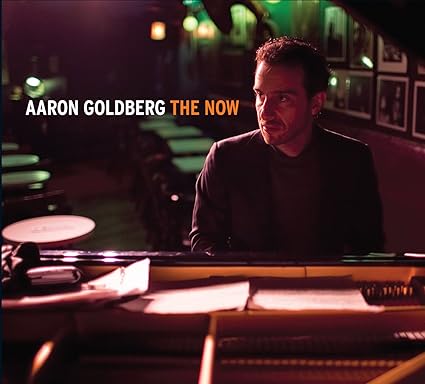
Aaron Goldberg
The Now


By Ivan Hewett, The Telegraph 
Aaron Goldberg is one of that younger generation of super-aware and self-conscious American jazz pianists. They’re terribly serious, and tend to harp on about things we know already, such as the fact that jazz "lives in the moment". They know the tradition inside out, but can’t help coming at it from a distance because they know so many other things too.
The PR blurb tells us Goldberg graduated from Harvard, "with a focus on Mind, Brain and Behaviour". There are signs Goldberg knows the tougher end of classical music as well, such as the strict canon he inserts in Parker’s Perhaps. When he takes a familiar chord-change pattern, like the one from Joe Henderson’s Serenity, he cuts one bar from it just to keep us on our toes, and makes a whole new number out of it.
So for all Goldberg’s stated emphasis on ‘risk’ this is a very polished album, divided between his own compositions, a few jazz standards, and some delightful reworkings of Brazilian songs. The best of these is Chico Buarque’s gently sad Trocando Em Miudos Buarque, which Goldberg makes into something interestingly dark. Like everything on the disc it shows a fleet quality which goes beyond a delicate touch, though Goldberg has that too. It's a speed of both finger and brain, which in Warne Marsh’s Background Music in particular is astounding.
Bassist Reuben Rogers and drummer Eric Harland are old sparring partners, and they can certainly more than keep up. On the final track guitarist Kurt Rosenwinkel joins the trio for Goldberg’s own One Life, a beautifully sad, subtle number that only reveals its heart on a second or third hearing.
It’s a marvel in so many ways, but if only there were more sign of the risk Goldberg prizes so much. There’s a certain coolness about everything, partly due to the oppressively beautiful recorded sound, but also Goldberg’s constantly soft touch gets frustrating. This oyster would have made a better pearl, with some grit inside.
Track List:
1. Trocando Em Miudos; 2. Yoyo; 3. The Wind In The Night; 4. E-Land
5. Perhaps; 6. Triste Baía Da Guanabara; 7. Background Music; 8. Francisca
9. One\'s A Crowd; 10. One Life
Personnel:
Aaron Goldberg - piano; Reuben Rogers - bass; Eric Harland - drums
Kurt Rosenwinkel - guitar (track 10)


João Donato
Live Jazz In Rio, Vol. 1


By Galeria Musical
Com o mote de celebrar os 80 anos de João Donato – que serão comemorados em 17 de agosto de 2014 -, acaba de sair pelo selo Discobertas os discos “Live Jazz In Rio Vol.1” e “Live Jazz In Rio Vol. 2”, que juntos trazem a apresentação feita por Donato em dezembro de 2013, que encerrou o “Festival Jazzmania 30 Anos” em Ipanema.
A forma como os discos foram lançados é bem interessante. Ao invés de acomodar a apresentação em um CD duplo, o que seria o natural na maioria dos casos, Donato colocou no mercado, para ser vendido em lojas, apenas o disco chamado “Vol.1”, enquanto o “Vol.2”, só poderá ser adquirido nos shows do artista, conforme sugere a inovação criada pelo diretor da gravadora Discobertas, Marcelo Fróes.
Tal fato é ainda motivado por um convite presente em ambos os encartes dos CDs, ou seja, no “Vol.1” há o convite para ir comprar o “Vol.2”, enquanto no “Vol.2” há o convite para adquirir o “Vol.1” nas lojas.
Em ótima forma ao piano, João Donato é acompanhado por seu trio, composto por Robertinho Silva (Bateria), Luiz Alves (Contrabaixo) e Ricardo Pontes (Sax e Flauta), e juntos divertem os presentes com canções como as divertidas “Bananeira” (João Donato, Gilberto Gil), “Nasci Para Bailar” (João Donato, Paulo André Barata) e “Suco de Maracujá” (João Donato, Martinho da Vila), além dos ótimos números instrumentais como “Song For My Father” (Horace Silver), “Paradise Found” (Shorty Rangers), todas do primeiro CD, apelidado de “O Couro Tá Comendo”.
Já o segundo disco, alcunhado de “O Bicho Tá Pegando”, traz como destaques as instrumentais “Minha Saudade” (João Donato, João Gilberto), “No Clube do Choro” (João Donato), além de “Bolero Digital” (João Donato, Nelson Motta) , “Por Aí...” (João Donato, Moacyr Luz) e “Menina do Cabelão” (João Donato, Gabriel Moura), mas cabe também apontar “Amazonas” (João Donato, Lysias Enio), faixa de incríveis dez minutos, como apropriado encerramento (antes da faixa bônus) do segundo volume.


Paulo Francisco Paes
Chão de Nuvens


By: Isabella Pedreira at Conexão Jornalismo
A música instrumental brasileira ganha um sopro de renovação: Paulo Francisco Paes. Pianista e compositor de apenas 30 anos já ganhou alguns prêmios e concursos, como o "Magda de Tagliaferro" e o título "Melhor intérprete de Bach". Além disso, está se destacando como autor de trilhas sonoras originais para o cinema e teatro. O lançamento do seu primeiro Cd, "Chão de nuvens", aconteceu na quarta-feira (10) no Espaço Tom Jobim no Rio de Janeiro.
A paixão pela música começou aos 11 anos, quando ao escutar seus tios tocando piano, decidiu estudar o instrumento. Aos 15 já estava decidido internamente que seria músico profissional. A composição veio só mais tarde, depois de um longo período de estudo para se formar como instrumentista.
"As composições todas sempre vieram de uma maneira muito natural enquanto eu tava tocando ou estudando alguma coisa. De repente vinha uma melodia, eu parava para escrever, desenvolvia para uma peça para piano, ou uma canção. É muito difícil dizer de onde vem a fonte de inspiração, acho que vem da paixão pela música mesmo", explica Paulo Francisco.
Alguns músicos consagrados estão no repertório de influência do pianista: Betthoven, Villa lobos, Tom Jobim, Piazzola, Egberto Gismonti, Chico Buarque, entre outros. Paulo Francisco mistura os ritmos de uma forma natural criando seu próprio estilo. "É engraçado como essas influências aparecem de uma maneira muito inconsciente, é muito interessante porque não é uma coisa racional. Eu vou compondo e de repente quando eu vou ver aparece um ritmo de baião, que eu não tinha pensado ou um tango."
Tracks:
1. Poema; 2. Giz; 3. Chão de Nuvens; 4. Quem Dera; 5. Valente; 6. Naquela Tarde
7. Improviso; 8. Chora Coração; 9. Madrid; 10. Marés; 11. Sempre Perto; 12. Sens

Sunday, March 08, 2015

Lew Soloff 1944 - 2015


By Jeff Tamarkin at JazzTimes
Lew Soloff, a fixture on the New York jazz scene for a half-century, and best known for his association with Blood, Sweat and Tears, died this morning, March 8, in New York City. His daughter, Laura Solomon, confirming Soloff’s death, stated on her Facebook page that he suffered a massive heart attack while returning home after eating dinner with his family. Soloff was 71.
Soloff was best known for his five-year stint with jazz-rock pioneers Blood, Sweat and Tears, which he joined in 1968. He was present on the group’s Grammy-winning self-titled second album, performing at Woodstock with the group and contributing prominently to the hit “Spinning Wheel.” He remained with BS&T until 1973, recording five albums in all with the band. He also contributed regularly to recordings by Gil Evans and Carla Bley and served as a sideman for many other artists, as well as recording several albums as a leader.
Born Lewis Soloff in Brooklyn, N.Y., on Feb. 20, 1944, Soloff was raised in Lakewood, N.J., where he first studied piano. He switched to trumpet at age10 and developed an interest in jazz. He attended Juilliard Preparatory, then the Eastman School of Music beginning in 1961, followed by a year in graduate school at Juilliard.
Soloff’s first professional association was with the Latin bandleader Machito, and in 1966 he joined Maynard Ferguson’s outfit. Soloff also played during this time in a big band co-led by Joe Henderson and Kenny Dorham, as well as with pianist/arranger Gil Evans, with whom Soloff would continue to collaborate until Evans’ death in 1988. Soloff also spent time during the late ’60s working with Tito Puente, Clark Terry, Eddie Palmieri and others, but it was his role as a core member of Blood, Sweat and Tears during that band’s commercial peak that brought him his greatest and most lasting recognition.
During the 1980s, Soloff was a member of the group Members Only and, beginning in 1983, the Manhattan Jazz Quintet, with which he recorded more than 20 albums (most for the Japanese market, where the group was extremely popular). He recorded nine albums as a leader, beginning with Hanalei Bay in 1986; the last was 2004’s Air on a G String.
Soloff’s contributions to the discography of Carla Bley occurred between 1988 and 2008. Other artists with whom Soloff record or played, according to a bio on his website, were Roy Ayers, Bob Belden, George Benson, Benny Carter, Stanley Clarke, Paquito D’Rivera, Miles Davis/Quincy Jones, Mercer Ellington, Grant Green, Lionel Hampton, Bob James, Herbie Mann, Tania Maria, Carmen McRae, Laura Nyro, Jaco Pastorius, Mongo Santamaria, Little Jimmy Scott, Wayne Shorter and Stanley Turrentine. The site also states that Soloff accompanied many well-known vocalists, including Tony Bennett, Elvis Costello, Marianne Faithfull, Aretha Franklin, Lou Reed, Frank Sinatra, Paul Simon and Barbra Streisand, and also appeared on projects by Phillip Glass, Kip Hanrahan, John Mayall and Dr. John. Soloff also contributed music to numerous film soundtracks.
As an educator, he was on the faculty of the Manhattan School of Music for nearly 20 years and served an adjunct faculty member at Julliard and New School.

Orrin Keepnews 1923 - 2015


By Rolling Stone
Orrin Keepnews, an NEA Jazz Master, Thelonious Monk producer, record exec and four-time Grammy winner, passed away today at his home in El Cerrito, California at the age of 91, one day shy of his 92nd birthday. Keepnews' son Peter, an editor for the New York Times, confirmed his father's death to the newspaper. No cause of death was given.
After starting out his career as a journalist and editor while moonlighting as the head of the jazz magazine The Record Changer, Keepnews teamed with Bill Grauer to form Riverside Records in 1953. Jazz legend Thelonious Monk, one of the musicians that Keepnews profiled while at Record Changer, soon joined the label in 1955.
It was on Riverside that Monk, with Keepnews serving as producer, crafted some of his most revered albums like 1956's Brilliant Corners and 1957's Monk's Music and Thelonious Monk With John Coltrane. Ironically, trumpeter Clark Terry, one of the two surviving musicians (Sonny Rollins being the other) to appear on the Grammy Hall of Fame-inducted and Keepnews-produced Brilliant Corners, also passed away last week.
Keepnews' Riverside Records would also be home to essential jazz recordings from the Bill Evans Trio, Cannonball Adderley, Randy Weston and Charlie Byrd. Following Riverside's bankruptcy midway through the Sixties, Keepnews was briefly the head of Milestone Records before he segued into an A&R position at Fantasy Records. He would later found Landmark Records, home to artists like Kronos Quartet, Buddy Montgomery and Yusef Lateef.
Keepnews frequently returned to his writing roots, penning album notes for some of the LPs he had worked on; the compilation Thelonious Monk: The Complete Riverside Collection earned Keepnews a pair of Grammys – Best Album Notes and Best Historical Album. Keepnews would win another Best Historical Album Grammy in 1999 for The Duke Ellington Centennial Edition: The Complete RCA Victor Recordings (1927-1973).
In 2011, Keepnews was named a Jazz Master by the National Endowment of the Arts for his "significant contributions" to the field of jazz. He also received a lifetime achievement award from the National Academy of Recording Arts and Sciences in 2004.

Saturday, March 07, 2015

1 Sem 2015 - Part Six

Chick Corea Trio
Trilogy


By Bill Meredith
After half a century as a preeminent jazz composer and musician, 73-year-old keyboardist Chick Corea is in a rare place as an artist who can release practically whatever he wants. In recent years, his incredibly prolific output has included everything from solo-piano outings to duos to sets by reshuffled iterations of Return to Forever. Even the releases themselves, like this three-CD live collection clocking in at nearly three and a half hours, are bursting with material. Overkill? Perhaps. But fortunately Corea’s band here features bassist Christian McBride and drummer Brian Blade, forming a trio worthy of comparison to Corea’s great acoustic threesomes from Miroslav Vitous and Roy Haynes to Eddie Gomez and Paul Motian.
Five years ago, McBride played electric bass and Blade subbed for Vinnie Colaiuta on tour in Corea’s Five Peace Band, co-led with guitarist John McLaughlin and also featuring saxophonist Kenny Garrett. So the chemistry within this trio is evident from the outset. Corea’s opening composition, “You’re My Everything,” immediately spotlights the interactive ears of the swinging Blade, who answers the pianist’s phrases with both drumsticks and brushes as McBride provides the glue with accents and walking lines.
Corea then covers four pieces: Joe Henderson’s “Recorda Me,” Thelonious Monk’s whimsical “Work” and delightful new reads of “The Song Is You” and “My Foolish Heart,” the lattermost captured in Madrid with Spanish guest stars Niño Josele (guitar) and Jorge Pardo (flute). They both return for a barnburning 18-minute version of Corea’s “Spain.
The recording sites are as wide-ranging as the songwriting credits, from Washington, D.C., and Oakland, Calif., to Switzerland, Austria, Slovenia, Turkey and Japan. Disc two intersperses American Songbook material (“Alice in Wonderland,” “It Could Happen to You,” “How Deep Is the Ocean”) with another rousing Monk number (“Blue Monk”), Corea’s lone original, “Armando’s Rhumba,” and a couple of surprises. Kurt Weill’s “This Is New” is a highlight thanks to Corea’s exquisite touch, McBride’s take-no-prisoners break and Blade’s melodic approach. And Scriabin could never have imagined this trio’s take on his “Op. 11, No. 9,” a democratic call-and-response showcase for all three musicians.
Disc three closes with something old after two very long pieces of something new. Corea’s “Homage” is dedicated to the late flamenco guitar genius Paco de Lucía, and the pianist captures his essence through a darting unaccompanied intro and sections ranging from somber to spirited. And Corea’s previously unrecorded “Piano Sonata: The Moon,” clocking in at a half-hour, is a shell-game of written and improvised sections filled with starts and stops, crescendos and space. Its impeccable follow-up is the chestnut “Someday My Prince Will Come,” sung by Corea’s wife, Gayle Moran, which causes the crowd in Sapporo, Japan, to erupt. The couple starts the tune as a duet before McBride and Blade enter, playfully accenting Corea’s subtleties before Moran sustains a 22-second upper-register note to close (she was, some may forget, a vocalist and keyboardist for both Return to Forever and the Mahavishnu Orchestra in the 1970s).
This expansive three-CD set offers a lot to digest, and may even come across as self-indulgent on paper. Then again, chances are that nearly every listener at these concerts left the venue wanting more. With Trilogy, they don’t have to.


Baptiste Trotignon
Hit


Posted by Irwin Block 
There is an overwhelming sense of joy and playfulness in this latest album by French pianist Baptiste Trotignon, who has never sounded better.
Perhaps it’s the recurring company on this all-original outing: the big tone and melodic voice of French compatriot Thomas Bramerie on bass, and the tuneful ears, experience and technique of American drummer Jeff Ballard.
Ballard gives just the right touch to enhance and accentuate the verve in Trotignon dynamics, as he has done so effectively with pianist Brad Mehldau. Trotignon roams over the keyboard with purposeful abandon on the tone poem Choral, closing with a revisit to that theme.
Abracadabra is a more percussive and up-tempo excursion, more rhythmically complex, while Paul is lyrical in varying tempi and modes, with even an Eleanor Rigby reference! It defies definition.
This CD is a lot of fun to listen to and an uplifting musical session.


David Hazeltine
For All We Know


By C. Andrew W Hovan
While many of today's jazz pianists are looking to make a name for themselves by morphing their jazz chops with shades of hip hop, the avant-garde, or world music, David Hazeltine avoids these pitfalls altogether. His individuality is achieved through commitment to his craft and an immediately recognizable composing and arranging style that has a clear and refreshing sense of purpose. Even while he pays tribute to Cedar Walton on For All We Know, Hazeltine's music speaks with a decisive quality that marks him as one of the true piano greats of his generation.
There's much to be said for the cohesiveness that comes from musicians sharing the stage together on a regular basis and in the case of Hazeltine, bassist David Williams, and drummer Joe Farnsworth, you'd be hard pressed to find a rhythm section that is more in tune with itself. Providing the 'yin' to the trio's 'yang' is tenor saxophonist Seamus Blake, making his first appearance here with Hazeltine and crew.
If you're familiar with Hazeltine's music, you know that he's become somewhat of an icon when it comes to rearranging standards. He has a knack of making everything he touches sound like his own work, breathing new life into standards like "My Ship," "Imagination," and "For All We Know." His own pieces are no less interesting, with him doubling melody lines with Blake on "Pooh" or reprising the funky excitement of "Eddie Harris," a tune first heard several years ago on a One For All set. All in all, this is another solid addition to Hazeltine's catalog and his first live recording as a leader.
Tracks: 
Et Cedra; My Ship; Pooh; Lord Walton; For All We Know; Eddie Harris; Cheryl; Imagination; A.D. Bossa.
Personnel: 
David Hazeltine: piano; Seamus Blake: tenor sax; David Williams: bass; Joe Farnsworth: drums.


Diana Krall
Wallflower


By Stephen Thomas Erlewine
Diana Krall paid tribute to her father on Glad Rag Doll, the 2012 album sourced from his collection of 78-rpm records, and, in a sense, its 2015 successor Wallflower is a companion record of sorts, finding the singer revisiting songs from her childhood. Like many kids of the 20th century, she grew up listening to the radio, which meant she was weaned on the soft rock superhits of the '70s -- songs that earned sniffy condescension at the time but nevertheless have turned into modern standards due to their continual presence in pop culture (and arguably were treated that way at the time, seeing cover after cover by middlebrow pop singers). Krall does not limit herself to the songbook of Gilbert O'Sullivan, Jim Croce, the Carpenters, Elton John, and the Eagles, choosing to expand her definition of soft rock to include a previously unrecorded Paul McCartney song called "If I Take You Home Tonight" (a leftover from his standards album Kisses on the Bottom), Bob Dylan's "Wallflower," Chantal Kreviazuk's "Feels Like Home," and Neil Finn's "Don't Dream It's Over," a song from 1986 that has been covered frequently in the three decades since. "Don't Dream It's Over" slides into this collection easily, as it's as malleable and timeless as "California Dreamin'," "Superstar," "Sorry Seems to Be the Hardest Word," or "Operator (That's Not the Way It Feels)," songs that are identified with specific artists but are often covered successfully. Krall's renditions rank among those successes because she's understated, never fussing with the melodies but allowing her arrangements to slink by in a deliberate blend of sparseness and sophistication. It's an aesthetic that helps transform the Eagles' "I Can't Tell You Why" and 10cc's "I'm Not in Love," singles that are as successful as much for their production as their song, into elegant torch songs, yet it doesn't do much for Kreviazuk's pedestrian "Feels Like Home," nor does it lend itself to the loping country of "Wallflower," which may provide the name for this album but feels like an uninvited guest among these majestically melodic middle-of-the-road standards. These stumbles are slight and, tellingly, they put into context Krall's achievement with Wallflower: by singing these songs as sweet and straight as the dusty old standards on Glad Rag Doll or the bossa nova on 2009's Quiet Nights, she demonstrates how enduring these once-dismissed soft rock tunes really are.

Sunday, March 01, 2015

1 Sem 2015 - Part Five

Billy Childs
Map To The Treasure: Reimagining Laura Nyro


By Matt Collar
A technically adroit pianist with an ear for sensitive, emotive accompaniment, Billy Childs has built a career primarily around backing other artists, including trumpeter Freddie Hubbard, vocalist Dianne Reeves, and trumpeter Chris Botti. Although he's recorded a number of superb solo dates, on 2014's Map to the Treasure: Reimagining Laura Nyro, Childs once again sets himself just outside of the spotlight as he gathers various musical friends to pay homage to his longtime idol, the late singer/songwriter Laura Nyro. Having discovered Nyro's emotive and lyrically thoughtful genre-crossing folk recordings in his teens while studying jazz and classical music at the University of Southern California's Community School for the Performing Arts, Childs would eventually get to work with Nyro prior to her death from ovarian cancer in 1997. One gets the sense that in an ideal world, Childs might have recorded this album with Nyro herself as a kind of retrospective anthology. In lieu of that poignant fantasy, here Childs, along with producer and former USC Community Schools classmate Larry Klein, have reinterpreted a handful of Nyro's songs, taking an ambitious, cross-genre approach that balances the intimate folk of her original recordings with a layered jazz and symphonic pop sound. Along with the aforementioned Reeves and Botti, Childs is joined by such like-minded luminaries as vocalist Renee Fleming, cellist Yo-Yo Ma, singer/songwriter Rickie Lee Jones, bassist/vocalist Esperanza Spalding, saxophonist Wayne Shorter, and others. Ultimately, with Map to the Treasure, Childs doesn't simply reimagine Nyro's songs as elevate them in a spiritual and heartfelt celebration of her life and music.


Peter Zak
The Disciple


By C. Michael Bailey
Pianist Peter Zak had a transcontinental shift from Los Angeles to Columbus and Kent Ohio and, finally, to New Your City, where he has remained since 1989. He has released critically well-received CDs for the Danish SteepleChase label: The Eternal Triangle (2012), Nordic Noon (2011) and Down East (2011). He returns with the present trio recording, The Disciple.
The jazz market is a small land finicky one. It is really no longer possible to simply put together a piano trio recording of original and standards that stands out from the battlefield clotted with the same. The smarter artists, like Zak, add a program or theme to their recordings, something that gives an otherwise disparate collection of pieces some continuity or integrity. In the The Disciple, this integrating factor are compositions by pianists Zak has be influenced by, and that list is impressive.
Zak opens The Disciple with a circular performance of Chick Corea's "The Loop." He follows this with one of three originals he peppers the recording with. Representing Elmo Hope, Zak selects "Barfly," Hope's "'Round Midnight." Zak and his responsive trio of bassist Peter Washington and drummer Willie Jones III give the piece its necessary crepuscular after-hours spirit.
Horace Silver's "Nutville" is provided a solid minor-key accompaniment over which Zak waxes poetic with hard bop riffs and roars. Truly inspired is Zak tossing in a Scriabin Prelude (Op. 35 #2) into the mix making this quite an interesting collection. Performances of Herbie Hancock's Requiem," Hampton Hawes' "Jackie" and Thelonious Monk's "Criss Cross" amp up the drama.
Track Listing: 
The Loop; Montserrat; Barfly; Nutville; Prelude, Op. 35 #2; Requiem; Jackie; Criss Cross; Nightfall in Kandy; The disciple.
Personnel: 
Peter Zak: piano; Peter Washington: bass; Willie Jones III: drums.


Geoffrey Keezer
Heart Of The Piano


By Stephen Thomas Erlewine
The title Heart of the Piano makes it plain: after over a decade of collaborations, pianist Geoffrey Keezer has returned with a solo acoustic piano session. Perhaps the title also suggests something sentimental -- and he does dedicate four of the songs to individual members of his family -- but this isn't a collection of sticky love songs. Keezer takes some happy, subtle risks with his material, opening the album with Rush's classic rock warhorse "Limelight," working his way to moody selections from Peter Gabriel ("Come Talk to Me") and Alanis Morissette ("Still"), and finding time for KT Tunstall's joyous "Suddenly I See" and Christian McBride's "Lullaby for a Ladybug" while still working in a couple of originals as well. Keezer lets all of these songs breathe -- sometimes speeding up, sometimes drawing things out either with tension or a luxurious, lax sense of dreaminess -- dancing around the melody without neglecting it, gliding up and down the keys but skirting a sense of indulgence. It's a sweet, slyly mischievous set that truly lets Keezer show a full range of emotions without ever seeming like he's showing off.


George Colligan
Ask Me Tomorrow


By Brent Black / www.criticaljazz.com
The artistic evolution of George Colligan, Ask Me Tomorrow is a stunning triumph!
Next to a solo piano release, the piano trio may be the most unforgiving ensemble presentations in improvisational music. The harmonic equivalent of tap dancing in a melodic minefield. This is an easy statement to make when you are an admittedly cynical critic that has reviewed more piano trios in four years than most people have heard in their lifetime. This is also a primary reason that George Colligan's Ask Me Tomorrow is a wondrous look into the cerebral vision of an artistic journey that has come full circle. There is a syncopated synergy of harmonic movement that some of Colligan's contemporaries have ignored, perhaps forgetting the piano originated as a percussive instrument. George Colligan pulls an ambient almost ethereal like quality while pushing what is normally considered the "straight ahead" sound into the next dimension.
To focus on the minutia of Ask Me Tomorrow in terms of critical analysis would be doing an injustice to this amazing collective that is rounded off with the fabulous Linda Oh on bass and the lyrical finesse of drummer Ted Poor. While Colligan would seem to favor minor keys, odd meters and an organic pulse, the overwhelming beauty of his melodies only seem stronger for his approach. Open, warm, deceptively subtle in nuanced texture is the embodiment of what can best be referred to as capturing lighting in a bottle as this is a live studio recording, three hours in the studio and no rehearsal. The results include the percussive insistence and odd metered groove of "Insistent Linda." We are also graciously served up an intimate "Jesper's Summer House." The richness of flavor is fortified with the dynamic tension of the free formed "Two Notes, Four Chords." The hauntingly beautiful "Denmark" may well be the jewel in this amazing collection. These are all original compositions, no standards...Ask Me Tomorrow is predictable by embracing an open ended unpredictable nature.
I have been hard on George Colligan and not because I know more about music or because I have some pseudo-intellectual axe to grind but because I knew this was an artist that could go deep. We all can pull from a deeper place; artists, listeners and especially critics. This is the George Colligan I have been waiting for. While the year is still relatively young, Ask Me Tomorrow may be one of the very best recordings I have heard in my four hundred plus reviews thus far and easily one of the most memorable piano trios that I have heard in the last decade.

Sunday, February 22, 2015

Clark Terry 1920 - 2015


By David La Rosa at TheJazzLine.com
After a long bout with diabetes, Jazz legend Clark Terry has died at the age of 94.
The highly influential musician and educator’s wife Gwen confirmed his passing with a message on his official Facebook page, which read: “Our beloved Clark Terry has joined the big band in heaven where he’ll be singing and playing with the angels. He left us peacefully, surrounded by his family, students and friends.”
Terry was first diagnosed with diabetes almost 40-years ago, and despite suffering physical challenges that would be insurmountable for less dedicated performers, including the amputation of both his legs, he kept the music alive and well and continued to perform well into his 90th year on this earth. And even when he couldn’t play he continued to dedicate much of his time to providing education and encouragement to the countless musicians, both young and old, that were inspired by the path he led in life.
Born on December 14, 1920 in St. Louis, MO, Terry had a rough upbringing after his mother died while he was young and his abusive father kicked him out of the family’s home at just 12 years of age. Music served as Terry’s only sanctuary from a very young age, and after standing out in his high school band a local musician encouraged him to take music more seriously; which sparked the start of a whirlwind career that would see Terry appear as a pivotal figure in the ongoing development of jazz as a genre.
After working with various travelling bands, and the U.S. Navy Band during World War II, Terry’s career took off when he performed with Count Basie’s big band between 1948 – 1951. Immediately after leaving Basie’s band, he enjoyed an 8-year stint as a central figure in Duke Ellington’s orchestra before becoming the first black musician on The Tonight Show’s house band in 1962.
During this period Terry became a fixture on the jazz scene. In addition to recording more than 80 albums as a bandleader he also worked with an incredible list of fellow jazz legends that includes Dizzy Gillespie, Miles Davis, Ella Fitzgerald, Sonny Rollins, Cannonball Adderley, Louis Armstrong, Charles Mingus, Stanley Turrentine, Yusef Lateef, Quincy Jones, and countless others.
In a career spanning seven decades, he is listed as a performer or producer on over 900 different recordings.
His impact on music today is incalculable, and according to his recently published autobiography Terry has received more than 250 accolades for his contributions to music. In addition to receiving a Grammy Lifetime Achievement Award in 2010 and being named an NEA Jazz Master in 1991, he was also the recipient of sixteen honorary doctorates at universities across the globe.
And despite all of his musical achievements, education always remained his greatest passion. In addition to mentoring jazz icons like Miles Davis, he also taught at many universities over the years and organized countless camps and classes for aspiring musicians to learn more about jazz. On his website, Terry wrote: “Teaching jazz allows me to play a part in making dreams come true for aspiring musicians.”
Terry’s recent mentorship of 23-year-old blind pianist Justin Kauflin was the subject of an award-winning 2014 documentary titled Keep On Keepin’ On.

Sunday, February 15, 2015

1 Sem 2015 - Part Four

Joona Toivanen Trio
November


By CamJazz
The bond between Scandinavian jazz and CAM JAZZ is becoming increasingly closer and stronger. The new work of Joona Toivanen Trio is an additional outcome of their common vision, which has given rise to a sizable number of remarkable projects and records. The Finnish pianist, still accompanied by Tapani Toivanen on double bass and Olavi Louhivuori on drums, composed an album that strikes a balance between the modern and the traditional, and between quiet, distinctively Nordic jazz moods and openness to new sounds and new expressive forms. This all is made even more intriguing by the outstanding empathy among the three musicians, who are able to cleverly back one another and, through refined mutual listening, reach a remarkable degree of interplay and responsiveness. Thus, each of them plays a leading role, in turn, and bears the responsibility for steering his band-mates towards new directions, new vibes, new melodic insight. The “liaison” between the Finnish trio and CAM JAZZ began in 2010, when the album At My Side was released. Of course, many things have happened from that time to this “November” release (including Joona Toivanen’s solo experiments and Olavi Louhivuori’s fruitful association with Claudio Filippini and Palle Danielsson), which this trio benefited from, as one realizes when listening to this new album. Eleven tunes, the authorship of which is equally shared between the bandleader and Louhivuori, also saving space for the title track by the double bass player. From the opening track “Moon Illusion” to the closing track “Open, Closed”, there is a quiet feeling in the air: time drawn out, a soft touch and sober, balanced arrangements. A journey in search of a clear, pure, crystalline sound. An elegant, refined tone. A thoughtful album, that never stops looking for new inspirations, between skillful song-making and moments of intriguing improvisation.
Personnel:
Olavi Louhivuori ( Drums ); Joona Toivanen ( Piano ); Tapani Toivanen ( Bass )
Recorded in Gothenburg on 21-23 February 2014 at Svenska Grammofonstudion
Recording engineer Oskar Lindberg
Mixed in Helsinki on 27, 28 February 2014 at Studio Kekkonen 
Mixing engineer Mikko Raita


Nenê Trio
Inverno


By SESC/SP
O Nenê Trio surgiu em 2001, do encontro do baterista Nenê com o contrabaixista Alberto Luccas. Depois de uma sessão de improvisos na casa de um dos músicos, os dois resolveram que seria um bom momento para desenvolver boa música instrumental, com grande variedade de estilos rítmicos, neste que atualmente é “o momento mais feliz” da carreira de Nenê, como ele mesmo diz. Alberto reafirma o sentimento, dizendo: “é um trabalho sem palavras, eu adoro. Realmente é um lugar que a gente pode se expressar ao máximo, no limite como músico”.
Para completar, desde 2008 eles contam com a participação do pianista Írio Jr., que comenta sua participação no trio: “para mim tem sido liberdade de expressão total, a gente faz o que quiser, sai criando o que dá na cabeça”.
Com tamanha liberdade criativa, o trio lançou o CD Inverno pelo Selo Sesc, segundo da formação atual. O projeto é continuidade do trabalho que vem sendo realizado, e da tetralogia que começou com Outono, lançado anteriormente.
Por conta da variedade de referências musicais mundiais com as quais cada um deles já teve contato, o trio usa da mistura de ritmos, mas nunca de maneira óbvia: “você não vai ouvir um maracatu claramente como é tocado em um grupo regional. Mas ele está dentro da música, lá no meio ele aparece também” explica o baterista.
Para que se mantenham prontos e com repertório para gravar a qualquer momento, o trio se encontra regularmente para ensaios a cada 15 dias. O compromisso em proporcionar boa música para o público é claro nas composições, na seriedade dos ensaios, e pode ser conferido no CD, todo captado de maneira analógica. Na captação digital, os músicos podem substituir partes das músicas que não deram tão certo, ou contar com ajustes técnicos de pequenos erros. No caso da captação do CD Inverno, a gravação foi feita como em um show, sem recortar as músicas ou ajustar nada.


Jaques Morelenbaum & CelloSam3aTrio
Saudade do Futuro, Futuro de Saudade


By Carlos Calado
Muitos trios instrumentais brilharam na história da bossa nova e do samba-jazz, mas nenhum com a singular formação do CelloSambaTrio. Criado em 2004 pelo violoncelista e arranjador Jaques Morelenbaum, esse grupo, que destaca também o violão de Lula Galvão e a percussão de Rafael Barata, parece já ter nascido clássico.
No esperado álbum de estreia do trio, "Saudade do Futuro, Futuro da Saudade" (lançamento Mirante),
o violoncelista carioca e seus parceiros fazem uma viagem sentimental pelo passado do samba: do gingado choro de Jacob do Bandolim, “Receita de Samba”, ao sestroso “Eu Vim da Bahia” (de Gilberto Gil), em versão calcada na gravação de João Gilberto, cujo “álbum branco” (lançado em 1973) inspirou a criação do próprio CelloSambaTrio.
Faixas autorais, como a lírica “Maracatuesday” (de Morelenbaum) ou o samba “Abaporu” (do violonista Lula Galvão), indicam que esse trio tem um futuro promissor à sua frente.


Eric Reed
Groovewise

By C.Michael Bailey
Eric Reed has fully established himself in the forefront of jazz pianists. Additionally, he has proven to be a gifted composer whose vision is as acute as it is compassionate. Reed's Smoke Sessions recital was performed on September 6 and 7, 2013. He led a saxophone-fronted (Seamus Blake) quartet secured by bassist Ben Williams and drummer Gregory Hutchinson. Reed composed eight of the ten selections performed, covering Clifford Jordan's "Powerful Paul Robeson" and Christian McBride's "The Shade of the Cedar Tree."
Reed's playing has matured into a deeply wrought hew, orchestral and expansive. His playing is of a unique vintage with notes of McCoy Tyner and Gene Harris. But Reed's voice is bigger than any influence. His playing is tactile, like that played behind Blake on "Ornate," where he incorporates Latin shades with bold Cecil Taylor-like statements and accents. "Bopward" is a circuitous and air theme for Blake to blow soprano in an Eastern vein. The tour de force is the title cut with its introductory vamp on "Lean on Me." Reed summons all of the church at his disposal, in the spirit of Gene Harris, the master of such. Reed turns it all upside down at the hinge between the introduction and song. Simply put, he rocks and so does his band.

Saturday, February 14, 2015

1 Sem 2015 - Part Three

Janis Siegel
Nightsongs: A Late Night Interlude


By C. Michael Bailey
Vocalist Janis Siegel is the mezzo-soprano/alto quarter of the Manhattan Transfer as well as half of the female contingency of the same with soprano Cheryl Bentyne. Like Bentyne, Siegel has managed a very successful solo career, releasing ten recordings since 1981. Nightsongs: A Late Night Interlude follows 2006's A Thousand Beautiful Things (Telarc, 2006) and 2004's Sketches of Broadway (Telarc). Siegel is a wholesale master of jazz vocals subgenre: ballads, scats, bop, she competently does them all. Nightsongs endeavors a theme of breezy Caribbean evenings, comfortably humid and crepuscular.
Sonically, this is an exceptional hearing. The engineer is impeccable, and the production is top notch without being overdone. There is a comfortable balance between the shiny and organic in this music. "Love Saves," "Slow," and "Marie" smell like salt and spray in the islands. "A Flower is a Lovesome Thing" is given a measure of funk among other piquant Latin delights, John di Martino modulates time and space over Christian McBride's muscular electric bass. Siegel shares a duet with Peter Eldridge on Jobim's "If You Never Come To Me" that is as provocative as it is simply elegant. Siegel continues to inhabit an upper echelon of jazz vocalist few can aspire to. Siegel wins with this fine band and material.
Track Listing: 
Love Saves (Salva Pantallas); Slow; Love and Paris Rain; If You Never Come to Me (Inutil Paisgem); Marie; You're Mine, You; Sweet September Rain; A Flower Is a Lovesome Thing; Midnight Sun; Lover; Say You'll Go; Clair De Lune. 
Personnel: 
Janis Siegel: vocals; John Di Martino: piano, arrangements; Rob Mounsey: keyboards; Christian McBride: bass; Martin Wind: bass; Paul Meyers: guitar; Steve Khan: guitar, guiro; Dominick Farinacci: flugelhorn, trumpet; Joel Frahm: tenor and soprano saxophones; Alain Mallet: Melodica; Luisito Quintero: Percussion; Joel Rosenblatt: Drums; Peter Eldridge: Vocals; Roger Treece: vocals.


Stefano Bollani
Joy In The Spite Of Everything


By John Fordham
When the Italian virtuoso Stefano Bollani plays piano, the word play applies in its widest senses, and the title of this fine transatlantic session (Americans Bill Frisell and Mark Turner augment Bollani’s Danish rhythm section) could hardly be a better description of his methods. While it would be difficult for the whole album to live up to the delicious opening calypso, Easy Healing, (in which Turner’s sax floats over Frisell’s softly skewed chords, and the melody is formed by a lovely piano-guitar unison), this is a warmly expressive encounter between a close-knit trio and two guests they’d never previously met, and the frequently genre-hopping Bollani freely revels in his straight-ahead jazz. The beboppish No Pope No Party is like a Monk tune played by a cool–school band. In the impressionistic 12-minute Vale, Bollani is in Bill Evans mood and Turner is at his most probing, while, in the piano-guitar duet Teddy, Frisell shows his skill with harmonics and his early schooling as a quiet jazz swinger. Bollani’s vivacious soloing provides many of the highlights, never more so than in the quicksilver title track.
Track Listing: 
Easy Healing; No Pope No Party; Alobar e Kudra; Las Hortensias; Vale; Teddy; Ismene; Tales from the Time Loop; Joy in Spite of Everything.
Personnel: 
Mark Turner: tenor saxophone; Bill Frisell: guitar; Stefano Bollani: piano; Jesper Bodilsen: double bass; Morten Lund: drums.


Tierney Sutton
Paris Session


By Thom Jurek
One need listen no further than "You Must Believe in Spring," the opening track of Tierney Sutton's Paris Sessions, to grasp that something quite special is taking place between the musicians. This collection of standards and originals recorded in duos and trios between the singer, guitarist Serge Merlaud, and bassist Kevin Axt is a bare-bones journey into the depths of musical intimacy. Recorded over two days at Val d'Orge Studio, these 12 tunes are the product of minimal rehearsal on the day before recording. The arrangements, such as they are, are simple, transparent; the considerable depth comes from the well of the song allowing itself to be expressed so nakedly. The aforementioned cut is a duet, with Merlaud's nylon-string acoustic guitar introducing it. When Sutton enters, the emotional frame is already in place; she fills it with commitment and hope derived from earned wisdom, not wishful thinking. It's a striking contrast to the dusky wordless vocals she provides to the guitarist's own tunes, including "Asma," where Axt's bass bridges the center as singer and guitarist engage in an ethereal and sensual dialogue. Of the other standards here, "Beija-Flor" by Nelson Cavaquinho and Noel Silva is introduced by a long wordless duet with the guitar before Axt enters on an acoustic bass guitar and coaxes surprising harmonic nuances from the familiar bossa nova. The other bossa here, Bruno Martino's "Estate," is perhaps more conventional in articulation, but Sutton sinks so deeply into the grain of the lyric that she owns its emotional expression. Merlaud uses an electric guitar on "Body and Soul," reflecting the multi-harmonic influence of Jim Hall. Sutton draws out the words slowly, purposefully, each syllable infused with a generosity absent of artifice or affect. She's sung this song many times before, but not like this. The resonance in "Don't Worry 'Bout Me" is dialogic. Merlaud's electric guitar doesn't merely comp and fill, but is the other equal voice in a difficult conversation. Axt enters with gorgeous chord voicings providing an equanimity that illustrates the emotional dimension shared between the conversants. Sutton's delivery is even, but far from detached. It affirms the beloved even as a glimpse of romantic pain is betrayed by the ends of her lines. Two of these cuts, "Don't Go to Strangers" and "Answer Me, My Love," will be familiar; they were recorded for and appeared on After Blue, but they fit this context just as well. Paris Sessions is a gem, so elegant, sparse, and intimate in its directness that it is as arresting as it is lovely.
Track Listing: 
You Must Believe In Spring; llm; Don't Go To Strangers; Beija-Flor; You're Nearer; Estate; All Too Soon; Asma; Body And Soul; Izzat; Don't Worry 'Bout Me; Answer Me, My Love.
Personnel:
Tierney Sutton: vocals; Serge Merlaud: acoustic guitar, electric guitar; Kevin Axt: acoustic bass guitar.


David Feldman
Piano


By Galeria Musical
O piano é um instrumento fascinante tanto para quem o toca quanto para quem o ouve sendo bem tocado. E é mais que justa a homenagem ao instrumento e ao seu som feito por David Feldman ao batizar o seu álbum singelamente de “piano”. David resolveu chamar o disco de “piano” com “p” minúsculo por querer transpassar ao ouvinte o clima intimista, sereno e suave que o piano pode oferecer.
O músico estreou em CD no ano de 2009 com o elogiado “Som do Beco das Garrafas”, e agora retorna com um álbum onde sessenta por cento das canções são autorais e inéditas, o que reafirma o momento de dedicação ao instrumento e de criatividade deste músico que acumula importantes feitos, como o de ter ficado entre os 10 maiores pianistas do mundo na competição de piano-solo do Festival de Jazz Montreaux, evento curado por ninguém menos que Quincy Jones.
Dessa forma, David vai dando vida a canções como “Conversa de Botequim” (Noel Rosa, Vadico), que ganha leveza sem perder a sua ginga original, e a inédita “Chobim” (David Fieldman), que funde Chopin e Tom Jobim com melancolia e lirismo.
No currículo de David também está o fato de já ter trabalhado com diversos ressonantes nomes de nossa MPB, como Maria Rita, Leny Andrade, Leila Pinheiro, Wilson Simoninha, dentre tantos outros.
“Piano” é um disco sofisticado e certeiro quando o assunto é o elegante som do piano, e momentos como “Sabiá” (Tom Jobim, Chico Buarque), que encerra o disco, e a dobradinha feita com ele mesmo em “Esqueceram de Mim no Aeroporto”, por si só já valem o disco.

Sunday, January 11, 2015

1 Sem 2015 - Part Two

RdT
Antídoto


By Souza Lima
Trio reforça sua atuação baseada no equilíbrio entre a improvisação e a composição.
Guto Brambilla (baixo), Fernando Baggio (bateria) e Walter Nery (guitarra). Essa é a formação do RdT, grupo criado há seis anos que lança em agosto o segundo cd, intitulado Antídoto. Neste cd, o trio evolui em suas composições trazendo músicas dos três integrantes, tornando um trabalho mais heterogêneo. Inicialmente o grupo era conhecido como Rapazes do Trio, nome também do primeiro cd lançado em (ano 2008),bastante elogiado pela crítica especializada não só do Brasil, mas também de outros países, como o site europeu Jazz Rytmit, que considerou um dos melhores cds do ano. Para o grupo, "a mudança do nome marca uma transição para uma nova fase de maior cumplicidade e amadurecimento do trabalho".
Os músicos, também professores do Conservatório Souza Lima, definem o som que executam como música instrumental contemporânea, voltada para o equilíbrio entre a improvisação e a composição. A influência vem dos grandes nomes do jazz europeu e norte-americano, além dos compositores brasileiros, seguindo portanto, a tendência do jazz atual com elementos da música brasileira.
Os temas presentes no cd Antídoto trazem uma linguagem atual da música e do cotidiano vivido numa grande cidade. Um trabalho com uma sonoridade e estilo bem particulares, que acompanha a música que acontece agora nos outros grandes centros, como Nova Iorque, Boston, Los Angeles, Paris, Londres. Ou seja, uma música contemporânea, moderna, que preza por experimentações, sofisticações, improvisos, mas acima de tudo, pela estética da composição como elemento chave.


Marcin Wasilewski Trio w/ Joakim Milder
Spark Of Life


By John Kelman
What do you do when you've released three albums as a trio (more, if you include albums released in Poland, prior to coming to the label) for a producer who traditionally seems to like shaking things up after that magic number? For Polish pianist Marcin Wasilewski and his longstanding trio—first coming together in their teens, they've been together more than two decades, and first recorded for ECM with trumpeter Tomasz Stanko for a triptych of evolutionary albums that began with 2002's Soul of Things and concluded with the far maturer Lontano (2006)—there have been two moves in 2014: first, show up as Norwegian guitarist Jacob Young's band (along with saxophonist Trygve Seim ) on Forever Young, and now, follow that appearance with another set under the trio's own name, but with guest saxophonist Joakim Milder in tow. Spark of Life is another stellar collection from a trio predicated on the value of longevity and leveraging the opportunities this now late-thirty-something trio has been afforded to build a language all its own.
The Swedish-born Milder is no stranger to either the Polish scene or to ECM, though it's been 17 years since he last made an appearance on the label on one of Tomasz Stańko's most lauded sessions since the trumpeter's fruitful return to the label in 1994, 1997's Litania: Music of Krzystof Komeda. Here, in a smaller, more intimate context, the saxophonist helps make Spark of Life an album that, while rich with the profound lyricism that has imbued Wasilewksi's trio since it first emerged in Poland as the Simple Acoustic Trio, with its own tribute to the great film and jazz composer, Komeda (GOWI, 1995), simmers at a higher temperature...even, at times, approaching (if not exactly reaching) a full boil.
Not that Spark of Life doesn't possess the same elegance, the same rarefied, song-like melodism of previous albums including 2008's January and 2011's Faithful, nor does it fail to capitalize on the innate strength of the trio, which performs six out of Spark of Life's eleven tracks on its own. Wasilewski's "Austin," is as soft and lyrical as the trio has ever been, an inviting opener that creates a strong sense of continuity with what's come before. And if "Austin" seems redolent of the American music town for which it might be named, despite it actually being a dedication to fellow pianist Austin Peralta, Wasilewski's "Sudovian Dance"—which follows and introduces Milder to the mix—turns to a more appropriately Baltic sense of folkloric melody, even as bassist Slawomir Kurkiewicz
and drummer Michal Miskiewicz begin to turn the heat up during the saxophonist's solo, hinting at more muscular interaction to come.
Still, Wasilewski's title track—presenting in two variations, first with Milder, but closing the album with a trio-only take—demonstrates that Milder does more than simply light a fire. A rubato tone poem where Miskiewicz's textural support is particularly noteworthy, Milder engages in a piece where interpretation and tone are everything. The saxophonist demonstrates similar developmental patience on his own irregularly metered "Still," while on a by now de rigueuer look at a Komeda piece, in this case, "Sleep Safe and Warm," the saxophonist demonstrates his attention to detail on a track that simmers with a slow-burning pedal point before breaking the tension into its familiar changes, with Kurkiewicz and Miskiewicz treading a very fine swinging line between the implicit and the explicit.
While Wasilewski contributes five of the album's compositions, the trio makes clear that its musical touchstones range far and wide on a series of covers that range from a luxurious look at "Do Rycerzy, do Szlachty, do Mieszcan," from the Polish rock group Hey, that features Milder at his sparest and most refined, to a trio reading of Jazz Police's "Message in a Bottle. Heavily deconstructed and reconstructed, Kurkiewicz delivers his most potent solo of the set, while Wasilewksi demonstrates just how many rounded surfaces he can find in the relatively square corners of such a simple construct—having, in the past, found similar freedom in the music of Björk and Prince. And while he's long been a personal reference for Wasilewski, Spark of Life is the first time the pianist has taken the leap to actually perform a song by Herbie Hancock. In this case, the bright and bubbly "Actual Proof"—performed often by Hancock but first heard on the Headhunters' Thrust (Columbia, 1974)—and here turned into a more liberated and open-ended version that comes as close to incendiary heat as this trio gets, also providing Miskiewicz a rare moment in the spotlight.
ECM has, in its 45-year history, created a number of particular emphases amongst its massive breadth of musical offerings, and one of them has been to take that most conventional of jazz ensembles, the piano trio, and push it into different directions that respect the tradition of American greats like Bill Evans, Herbie Hancock and, looking further back, Lennie Tristano, while encouraging it to incorporate music of other genres and cultures as, at the same time, it strives to assert a clear sense of modernity. Of the young piano trios it has encouraged over the years, the Marcin Wasilewski Trio may well be its longest-standing, and for good reason. Clearly, Wasilewski, Kurkiewicz and Miskiewicz are capable of working in other contexts—Wasilewski and Kurkiewicz, for example, working together on drummer Manu Katche's first two ECM dates, 2006's Neighbourhood and the 2007 followup, Playground—but it's equally clear that it's in the context of this trio that these three young Poles find the most freedom to explore as they please.
With the addition of Milder on roughly half of this 74-minute program, the Marcin Wasilewski Trio has managed to retain its core strengths while adding something new to avoid any pitfalls of predictability. If the at once sublet yet intense Spark of Life is any evidence (along with Forever Young), it's a sure thing that this simpatico trio still has plenty up its collective sleeve to ensure no risk of that ever happening.
Track Listing: 
Austin; Sudovian Dance; Spark of Life; Do Rycerzy, do Szlachty, do Mieszcan; Message in a Bottle; Sleep Safe and Warm; Three Reflections; Still; Actual Proof; Largo (from Sonata #2 for piano); Spark of Life (var.).
Personnel:
Joakim Milder: saxophone (2-4, 6, 8); Marcin Wasilewski: piano; Slawomir Kurkiewicz: double bass; Michal Miskiewicz: drums.


Itiberê Orquestra Família 
Contrastes 


By Editio Princeps
A Itiberê Orquestra Família comemora seus 10 anos de existência com o lançamento de seu terceiro CD, intitulado "Contrastes". Integralmente composto por músicas inéditas, de autoria do baixista/multi-instrumentista Itiberê Zwarg (com exceção da faixa "Feitinha para Nós", escrita por Hermeto Pascoal exclusivamente para a Orquestra), este é o trabalho mais maduro da Orquestra Família, apresentando seu já tradicional repertório eclético, interpretado por formações camerísticas de duos, trios e quartetos, além da orquestra completa, seguindo sempre a escola Hermeto Pascoal de liberdade total de criação, arranjos complexos e rompimento de fronteiras estéticas e estilísticas.
Tracks:
1. Interiores 9'43; 2. Clássico Romântico Moderno 5'33; 3. Depois da Arrebentação 5'12
4. Batera 3'46; 5. Atualidades 7'34; 6. Flora Lis 2'35; 7. É Pra Você, Arismar 5'40
8. Na Calada da Noite 4'37; 9. Feitinha pra Nós 8'08; 10. Já Fui 4'27
11. Do Chão à Cumeeira 13'37.
Todas as faixas de autoria de Itiberê Zwarg, exceto por "Feitinha pra Nós", de Hermeto Pascoal.
Personnel:
Itiberê Zwarg: Piano, melodica, voz, baixo elétrico, Direção Musical, composição, arranjos e regência; Carol Panesi: Violino, piano, voz; Beto Lemos: Viola caipira, rabeca, zabumba, violão; 
Mariana Zwarg: Flauta, piccolo, voz, percussão; Karina Neves: Flautas, percussão: 
Letícia Malvares: Flautas; Ana Carolina D'Ávila: Flautas, cavaquinho, guitarra, voz;
Ajurinã Zwarg: Bateria, percussão, sax soprano; Ranier Oliveira: Piano e acordeon.
Extra:
Produção Executiva: Felipe Ábido e Mariana Maia; Produção Musical: Itiberê Zwarg; Gravado, mixado e masterizado em março e abril de 2009 no Tenda da Raposa - Rio de Janeiro - RJ; Gravação: Daniel Vasques e Carlos Fuchs; Mixagem: Daniel Vasques, Carlos Fuchs e Itiberê Zwarg; Masterização: Carlos Fuchs.


Zéli Silva
Una


By JazzB
O baixista, arranjador e compositor Zéli Silva é conhecido na cena instrumental brasileira pelo virtuosismo e sofisticação nas composições e arranjos.
Tem vasta experiência no jazz e na música brasileira. Sua música tem como referências, além do jazz, o samba, o choro e o cancioneiro brasileiro. O músico faz desses elementos uma música criativa e comunicativa, rica em melodias, ritmos e harmonias.
Zéli fez parte do grupo Terra Brasil, com o qual foi indicado ao Grammy Latino pelo CD “Atlântico”. Atuou ainda ao lado de Zé Menezes, Rosa Passos, Badi Assad, Virgínia Rosa, Nuno Mindelis, Oswaldinho do Acordeon, MPB-4, entre muitos outros.
Os arranjos e o talento dos músicos improvisadores são destaque em sua música, registrada em 4 CD’s: “Voando Baixo” (2002), “Em Movimento” (2006), “Duo” (2010), com o saxofonista Vitor Alcântara, e “UNA – Zéli Silva Convida”, que apresenta hoje.
“UNA” tem o conceito de união de gerações de instrumentistas e está representado pelas participações especiais de João Donato, Arismar do Espírito Santo, Lulinha Alencar, Léa Freire, Chico Pinheiro, Cléber Almeida, Renato Consorte, Gil Reyes, Da Do e Tatiana Parra.
Vitor Alcântara (sax), Fernando Corrêa (guitarra), Moisés Alves (piano), Zéli Silva (baixos acústico e elétrico), Gabriel Guilherme (bateria).


Albert Heath/ Ethan Iverson/ Ben Street
Tootie's Tempo


By Manuel Grosso Galvan 
The great Albert Tootsie Heath on drums, Ben Street on bass and Ethan Iverson on piano had made one of more lovely album of the year. Have a very special type of sound, is not simple retro is pure vintage. Tootie is part of the history of jazz, and this record confirm the reasons. A collection of songs from "The Charleston" to the incredible Motian's "It should have happened a long time ago", from a great version of "How Insensitive" to"Violets for your Furs", and not forget a incredible solo "Tooties Tempo" five magic minutes of pure drumming feeling. Is the soundtrack of another times, thanks to Iverson to get it. I's so nice, so beautiful that you can't believe it. Only one suggestion; the next time please put the booklet inside, print not digital
PS. If you like this very special album, please hear "Live at Smalls" from 2009 with the same musician

Saturday, January 10, 2015

1 Sem 2015 - Part One

Annie Lennox
Nostalgia


By Matt Collar
Annie Lennox's 2014 covers collection, Nostalgia, finds the former Eurythmics vocalist soulfully interpreting various pop, jazz, and R&B standards. In many ways, Nostalgia works as a companion piece to her similarly inventive 2010 album, the holiday-themed Christmas Cornucopia. As with that album, Lennox eschews predictability by picking an unexpected set of songs and producing them with detailed care. While Nostalgia certainly fits nicely next to any number of other standards albums by veteran pop stars, it does nothing to diminish Lennox's distinctive style. On the contrary, working with producer Mike Stevens, Lennox has crafted an album that brings to mind the sophisticated, contemporary sound of her original studio releases while allowing her to revel in the grand popular song tradition. Moving between evocative piano accompaniment, orchestral numbers, moody synthesizer arrangements, and even some rollicking small-group swing, Lennox takes a theatrical -- yet always personal -- approach to each song, finding endlessly interesting juxtapositions and stylistic combinations to explore. She references Miles Davis' plaintive take on the Porgy and Bess classic "Summertime," tenderly evinces a combination of Billie Holiday and Sade on "Strange Fruit," and draws on both Aretha Franklin and Screamin' Jay Hawkins for "I Put a Spell on You." Elsewhere, tracks like "I Cover the Waterfront" and "Mood Indigo" bring to mind similar recordings from Carole King and Bryan Ferry. Ultimately, even without Nostalgia's impeccable production, in the end it's Lennox's burnished, resonant vocals that steal the focus here, and just like the songs she's picked, their beauty will likely stand the test of time.


Jason Moran
All Rise : A Joyful Elegy For Fats Waller


By Steve Leggett
Yeah, All Rise: A Joyful Elegy for Fats Waller is a tribute to the great stride pianist, but in Jason Moran's hands, it's not what one would expect. This album isn't full of stride piano, but it is full of Fats Waller's larger persona as a performer. Waller mixed jokes and comic routines, and did whatever he could to connect with his audience in his act, and if his piano playing was the hinge, it sat on a door that opened straight to the dancefloor. This album had its beginnings when Moran was commissioned by the N.Y.C. performing arts venue Harlem Stage Gatehouse to create a tribute to Waller as part of its Harlem Jazz Shrines series. Moran came up with a unique combination of piano, vocal jazz, and dance that used Waller's signature songs as springboards. Collaborating with singer Meshell Ndegeocello, wearing a large papier-mâché mask of Waller's head created for him by Haitian artist Didier Civil, and adding interpretive dancers, Moran called his conceptual tribute The Fats Waller Dance Party, and All Rise is the studio-recorded rendition of the project. It's a stunning mix of piano jazz with moody, winsome late-night vocals, and it has plenty of get-up-and-go when it's time for it. If it doesn't sound much like Waller, one could imagine Waller would love it, and his signature songs are well represented, including "Ain't Misbehavin'," which Ndegeocello sings with a wistfully sultry edge, "The Joint Is Jumpin'," which is just that, a joyous and yet graceful romp, and a ethereal take on "Ain't Nobody's Business," which in Moran and Ndegeocello's hands becomes a dark, moody, and elegantly defiant statement in modal jazz. This set manages to be reverent to Waller's original recordings, but since facsimile was never the goal, it also manages to create a completely new veneer for them, and the end result is a marvelous tribute that still retains its own shape and coherency.
Track Listing: 
Put Your Hands on It; Ain't Misbehavin'; Yacht Club Swing; Lulu's Back in Town; Two Sleepy People; The Joint Is Jumpin'; Honeysuckle Rose; Ain't Nobody's Business; Fats Elegy; Handful of Keys; Jitterbug Waltz; Sheik of Araby / I Found a New Baby.
Personnel: 
Lisa Harris: vocals; Charles Haynes: drums, vocals; Stephen Lehman: saxophone; Tarus Mateen: bass; Jason Moran: Rhodes, piano, Wurlitzer; Charles Haynes: drums, vocals; Meshell Ndegeocello: vocals; Josh Roseman: trombone; Leron Thomas: trumpet, vocals; Nasheet Waits: drums


Kenny Barron & Dave Holland
The Art Of Coversation


By Shaun Brady at JazzTimes
There are conversations meant solely for the ears of those involved, full of jocular camaraderie and inside references. And then there are those designed to be overheard, where the dialogue is meant to engage and enlighten anyone who is listening in as well as the speakers themselves. With a musical relationship dating back nearly three decades, pianist Kenny Barron and bassist Dave Holland could certainly engage in the former, but The Art of Conversation is a vivid example of the latter. These 10 tracks all showcase the profound mastery of two artists who share an easy rapport and elegantly restrained expressiveness.
The warmth of their collaboration beams through on Holland’s opening, “The Oracle,” where Barron spins buoyant melodic variations around his partner’s buoyant bassline; and on their brisk tandem spin on Charlie Parker’s “Segment,” which contains the disc’s most engaging back-and-forth. But the album features a wide range of moods: the wistful lyricism of Barron’s “Rain,” on which Holland leads with the heartfelt melody; the simmering groove of Holland’s “Dr. Do Right”; and the presciently elegiac “Waltz for K.W.,” a dedication to Kenny Wheeler recorded six months before the trumpet great’s death. Monk, as always, is a touchstone, with a breezy take on “In Walked Bud” and the sharp-angled, Monk-meets-Ellington stroll of Barron’s “The Only One.” Holland’s achingly beautiful “In Your Arms” is an indelible highlight, with both articulating simultaneous melodies with breathless delicacy.


Dave Holland
Prism


By Dan Bilawsky 
Bassist Dave Holland first became a leader-on-record with Conference Of The Birds (ECM, 1973), a now-classic outré quartet session. That initial leader date portrayed Holland as a restless seeker, willing and eager to explore the inner workings of group dynamics and the outer reaches of convention, and he's done little to alter that perception of himself in the intervening years. Holland has, with band after band and album after album, continually broadened his outlook, creating a vast and enviable body of work along the way. Now, he celebrates four decades of leadership by introducing another potent foursome to the world.
On Prism, Holland reunites with three musical spark plugs from his past: guitarist Kevin Eubanks, who appeared on the bassist's Extensions (ECM, 1989), drummer Eric Harland, who worked side-by-side with Holland in The Monterey Quartet and then joined him for Pass It On (Dare2 Records, 2008), and pianist/Fender Rhodes man Craig Taborn, who's shared the stage with the bassist on a number of occasions over the past few years. As individuals, these gentlemen rank high on many a critic and fan's list of players; together, they form the most exciting and awe-inspiring quartet to debut on record this year.
The music this band delivers on Prism is like a vortex, sucking in everything within earshot. Interlocking patterns, excoriating lines, killer grooves and blazing solos are par for the course. Democracy prevails in all aspects, as each band member contributes music, muscle and more along the way. "The True Meaning Of Determination" is the perfect example of this one-for-all and all-for-one philosophy. Holland draws focus with his bass introduction, melodic delivery is a joint venture between two band mates, Eubanks' guitar singes everything in sight, Taborn takes the spotlight and has a blast chopping up the time with Harland, and everybody comes together to drive it home. It's nine-plus minutes of pure, heart-pounding bliss, and it doesn't even stand above the other tracks; nearly every performance here has a similar endorphin-producing effect. The band does operate in other areas, from the bluesy and soulful ("The Empty Chair (For Clare)") to the contemplative and free floating ("Breathe"), but they retain a group identity no matter where the music takes them. They sound best when they burn, but they still sound like the same unit when they simmer or stay put.
Prism isn't simply a great album by a great band; it's as good as jazz records come. Four months may separate this album's release and the close of 2013, but this one may have already sealed it up for "Album Of The Year" honors.
Track Listing: 
The Watcher; The Empty Chair (For Clare); Spirals; Choir; The Color Of Iris; A New Day; The True Meaning Of Determination; Evolution; Breathe.
Personnel: 
Dave Holland: bass; Craig Taborn: piano, Fender Rhodes; Kevin Eubanks: guitar; Eric Harland: drums.


Pedro Araujo
Raiz


By Jota Carlos – produtor e crítico musical 
Em pouco mais de dez anos de carreira, grande parte dedicada à música instrumental, com dois discos autorais e o reconhecimento de músicos consagrados, Pedro Araujo vem conquistando seu espaço entre os grandes nomes da guitarra brasileira.
No seu segundo disco, RAIZ, Pedro interpreta composições inéditas e faz releituras de músicas do cancioneiro popular da sua terra natal, São Luís do Maranhão. Sendo também arranjador, Pedro usa de variadas formações instrumentais para colorir os arranjos dando às canções atmosferas diversas, destacando-se “Cheiro do Jasmim”, um arranjo orquestral, e “Tsunami”, arranjada pra big band.
Do disco, inteiramente instrumental, participam músicos como Rui Alvim, Cassius Theperson, Dudu Viana, Danilo Sinna, Eduardo Neves, Carol Panesi, e muitos outros...
“Suas composições têm algo de refinamento, linhas melódicas bem definidas e apreciação pelo detalhe nos arranjos. Raiz, o presente álbum, é recheado de motivos sonoros, um passeio pelo universo de ritmos e canções que apontam para o caminho de maturidade do artista.”