Wednesday, June 06, 2012

The Ups and Downs Of Life


By Claudio Botelho
“Every jazz musician will say to any interviewer that you’ve got to tell your own story. I love when this story is full of things. Our lives are full of nice moments – there’s a funny situation, then one of us is dying on the floor so it’s suddenly tragic, you call the police but they aren’t coming, so that’s funny again. Life is changing all the time. Some jazz music today is like the Sea of Tranquility, trying to develop the same feeling for 60 minutes. My life is not like that; I cannot tell this kind of story.”
This was stated by Stefano Bollani – a great jazz piano player from Italy – in the May 2.012 issue of Downbeat, as reported by Ted Panken.
Why did I decide to reproduce his saying? The reason is simple: I heartily agree with him, although my perspective is another; I see this fact through the eye (or ears) of a music consumer which, in front of a never-changing mood, feels bored to the point of interrupting the listening.
If Mr. Bollani feels like me and he’s a musician and, as such, always strives to give his works different colors (and that is true, as I think I know most of his commercial recordings), I now have a great assurance this matter is really an important issue.
Now another important issue arises: what if a musician, in doing a single-mood presentation, feels like doing like this? What if all he knows is to express himself in such a way as to render his work one-dimensional; something so similar to itself all along as to lose its breath on the way?
This question have been bothering me for a long time now, so I‘ve decided to share it with you.
Of course if we are talking about jazz, the subject of the conversation is, above all, creativity and if someone can only be inspirational through some kind of mood, should he try to do something about it?
Suppose he’s aware of his predicament which, as it is, will keep him from garnering wider audiences. Should he stay still and let things flow unattended? Or should he try to move over his problem? And, once deciding to change things, wouldn’t he betray himself? By this token, wouldn’t it be more honest to keep his musicality intact and pose with the lack of recognition?
I’m talking about top echelon musicians, many of whom have done extensive agenda of musical studies and practices and, most certainly, know that a symphony, for instance, as along piece of music, must include movements which should encompass different tempi. So, authors like Mozart used slow, medium and fast tempi, usually repeating one of them in the fourth movement. So these are the so called allegro, andante or adagio and scherzo intertwining the presentations, exactly to avoid that sameness more prone to those needing a good night sleep.
This has become the practice since long, long ago and it bothers me a lot to listen to so many otherwise very good jazz albums filled with just one-tempo songs. Things get even worse if one considers there are so many almost-seventy-minute albums, today. I can’t stand more than three or four songs in a row if there’s no mood switch and I’ve come across so many all slow-pace CD’s, especially from certain frozen areas of Europe, many of which by some of the most respected musicians around! It’s a pity having such a bunch of unknown (for me) music as I do!
Conversely, as alluring as some up-tempo music may seem to be, the excess of it also turns the attention down in the long run. Those all conga-punctuated Caribbean sounds, to name one example, especially of the kind of repetitive beats (unfortunately, the great majority of the presentations I’ve listened to) tires one even more, as the songs, in general, are not that polished and, thus, the dominant force is the unchanging rhythm...
I have come to think these trends have something to do with the sun: the more sunlight, the more kinetic energy, the faster the beats. Conversely, less sunlight means less kinetic energy and its consequent slow-beat songs. I don’t know if this is the right connection to be made, but, in some way, one fact is the resultant of the other…
But a second question arises: should a musician just let his inner inspiration rule with iron fists his production, irrespective of its repercussion among his fans? If it’s the case, should he let loose his musical outing in respect, for instance, to himself as an artist, instead of “blemishing his musicality”?
Another question: he may be, as well, unaware of this issue, never even considering it exists. In this case, there’s nothing to do. Of course I know this is also a reality, but how often it happens? Also, it does, here and there, with many musicians and, sometimes, even on purpose. I’m not talking here about these occasional instances, however.
About this last hypothesis, to illustrate, I can remember a CD of an artist which I praise very much and who, in any conceivable way, does one-beat albums, but, once and to the best of my knowledge, did it: I’m talking about Ahmad Jamal and his “I Remember Duke, Hoagy & Strayhorn” (Telarc, 1995). Although filled with his ever fabulous pianism, that CD was sort of boring to listen: out of the great respect Jamal certainly devotes to these great composers, he forgot himself and did a one-note-samba rendering of their songs. I’ve never forgotten the experience of listening to a Jamal so UnJamal…
On the other side of things, listen to João Bosco’s “Senhoras do Amazonas”; a release of this extraordinary artist who, along with the NDR Big Band and musical arrangements of the great Steve Gray, did an exceptional balanced album. I very heartedly recommend this presentation of some of the best Brazilian music!
Of course no one can’t deny the right of anybody to do whatever he wants with his artistic career, but, if the latter wants his art to get wider attention, maybe he’d better consider what Blasé Pascal, by the way, stated, in his “Pensées”, about the subject here discussed:
"We seek rest in a struggle against some obstacles. And when we have overcome these, rest proves unbearable because of the boredom it produces."
That’s all.

Friday, May 25, 2012

VARIETIES


By Claudio Botelho
Due to a different way of working (provisory, it seems to me) of our customs, we have not received any CD for more than two months now. So, we’ve been forced to live with the ones acquired and received up to the beginning of the current year. Of course we have many things to listen and, here and there, there appears some surprise, some good music which had passed unnoticed in front of us.
Last Saturday, I rediscovered one treasurable CD which I had at home, last month, and had decided to not to keep with me. It was necessary our editor to call my attention, so that I could decide to give it a second trial. Following our phone call and some raving messages of his about it, we met and, together, appreciated it on that weekend.
He was right: there’s another great jazz pianist in the Italian scene (sorry, guys, but here we are in Italy again. I just can’t help…): his name is Dario Carnovale and he has debuted internationally through an album called “Exit for Three”. Along with his cohorts Youry Gouloubev (a classically trained Russian bass musician) and Luca Colussi on drums, he has done this excellent outing: a work released in 2010, with 13 ORIGINAL SONGS, 11 of them of his own pen and the two remaining of Gouloubev’s.
The recording is translucent and – the better part – the renderings are as varied as I have ever seen; a great feature, almost unheard of these days, as everybody, as a rule, trying their own songs, usually come out with one composition disguised as many, i.e.: in the long run, the author’s signature turns the songs boring. In general, I’d rather listen to albums with compositions of various authors, exactly to avoid boredom. As an unspoken rule, one-composer-albums tend to be poor songwise and the improvisational skills of the performer must be really strong to overcome this fragility. In other words: the jazz must be stupendous in order to balance the work.
In this case, the young pianist (with a little help from his bassist) has avoided this one-note samba with aplomb and, for this, must be heralded as one of the best of his breed to come to the international jazz scene.
Much more than not, I give up listening to a CD before it ends for its lack of appeal. Sometimes, I spot one, two or three good presentations, but, even though, I’m not able to reach its end. The common trend of choosing an up-tempo initial song many times ends in choosing a poor performance and the consequent first bad impression may be fatal!
Some choose fast tempo music just for the sake of its… tempo! The hurried listener, in front of this “false start”, may give up listening and, so, loses, many times, some good music which might be in the sequence. I’ve seen this with astonishing frequency and, if you want, I can name an excellent CD, which, to these ears, may cheat many: Antonio Faraò’s “Domi”. You can divide it in two parts: part one, the first and second songs; part two the following ones. The whole of the album is no less than magnificent, as much as I have always expected from this great pianist, but part one is definitely not on par with the second…
But, back to Carnovale: listen to this CD and witness what can be as well the rising of a new star.
For those who didn’t notice the already published review of this CD in these pages, here goes some additional info:

Dario Carnovale Trio
Exit For Three


Dario Carnovale (piano)
Yuri Goloubev (bass)
Luca Colussi (drums)
Release Date: 12/15/2010
Recorded at Artesuono Recording Studio, Cavalicco (Udine), Italy. 


Toots Thielemans with The Shirley Horn Trio
For My Lady

Cover (For My Lady:Toots Thielemans)

The rarefaction of novelties has forced us to go astern and to listen again to some oldies. Last Saturday, I tried Toots Thieleman’s “For my Lady”, a CD he made with the much missed Shirley Horn. This time, save for one song, she was just accompanying that master in her unmistakably way. To listen, together, the most “harmonic” harmonist extant backed by that diva was a delight. In this case, “ no news”(CD’s) was “good news”…


Hal Galper Trio
Trip The Light Fantastic

Cover (Trip the Light Fantastic:Hal Galper Trio)

Hal Galper Trio latest “Trip the Light Fantastic” sports a not so new trend he’s been following lately: perfunctory promenades through the music themes, followed by some very diffuse improvisations. Gone are the days of his very incisive and vigorous playing, now succeeded by some very loose improvisations, lending pale colors to his renderings. I miss a lot his good old days. A pity…


I’m a great fan of Stefano Bollani. What has he been doing lately? I’ve been missing works like his “Stone in the Water”, “Gleda”, “Concertone” and others of the genre. His “Big band!” album was a disappointment for me…


I also miss a lot the Criss Cross days of Bill Charlap. Since he left that company, the adventurousness he used to have left him and he has become a sort of “plain Jane” pianist. His “Souvenir” (1995) and “Distant Star”(1997) remain unchallenged by anything he has done afterwards. In this sense, Charlap is, today, a “distant star”… Unbelievable…

Sunday, May 13, 2012

Bernardo Sassetti 1970 - 2012


By RTP
Bernardo Sassetti morreu, aos 41 anos. O corpo foi encontrado pela Polícia Marítima, na quinta-feira, na zona do Abano, no Guincho.
O pianista e compositor tinha cancelado recentemente um espetáculo na Culturgest por motivos de saúde, mas, de acordo com o semanário Expresso, Bernardo Sassetti terá morrido depois de cair acidentalmente de uma falésia na zona de Cascais, onde se encontrava a tirar fotografias. Entretanto, esta informação foi confirmada à agência Lusa pelo pianista Mário Laginha.
Nascido em Lisboa a 24 de junho de 1970, Bernardo Sassetti era bisneto do antigo Presidente da República Sidónio Pais. Casado com a atriz Beatriz Batarda, Sassetti tinha duas filhas.
O site da Clean Feed, a sua editora, refere que Bernardo Sassetti foi influenciado por Bill Evans e Keith Jarrett. Com formação clássica desde os nove anos, Sassetti acaba por destacar-se aos 18 anos no campo do jazz, com o Quarteto de Carlos Martins e o Moreiras Jazztet.
Bernardo Sassetti viria a atrair atenções internacionais com a composição de bandas sonoras para cinema, participando na longa-metragem “O Talentoso Mr. Ripley”, de Anthony Minghella. Assinou ainda bandas sonoras de filmes portugueses como “Alice”, de Marco Martins, “Um Amor de Perdição”, de Mário Barroso, ou “A costa dos Murmúrios”, de Margarida Cardoso.
“Nocturno”, o seu disco de 2002, foi distinguido com o Prémio Carlos Paredes. Viria ainda a gravar “Índigo” e “Livre”. Ao longo do seu percurso musical, Sassetti trabalhou com músicos jazz, do fado, do pop rock e do hip hop.
Em 2010, Bernardo Sassetti juntou-se a Carlos do Carmo para fazer um trabalho inédito, que reúne músicas nunca antes cantadas, tocadas ou gravadas por qualquer um dos dois. Entre os compositores escolhidos para este disco estavam José Afonso, Sérgio Godinho, Fausto, Rui Veloso, Violeta Parra, Léo Ferré e Jacques Brel. O álbum incluía ainda um original de Sassetti com poema original de Mário Cláudio. No site da editora Universal é recordada uma apresentação deste disco na RTP.
Os últimos trabalhos de Sassetti foram uma participação no disco “Mútuo Consentimento”, de Sérgio Godinho, e “3 Pianos”, com Mário Laginha e Pedro Burmester.

Sunday, May 06, 2012

1 Sem 2012 - Part Twenty

Tõnu Naissoo Trio
My Back Pages


By EastWind
Performed by:
Tõnu Naissoo (piano)
Taavo Remmel (bass)
Ahto Abner (drums)

Release Date: 08/26/2011 
The latest piano trio CD from Atelier Sawano features Tonu Naissoo, the extraordinary Estonian pianist who has become a household name in Japan thanks to the label's past efforts. Naisso's ninth CD features brilliant renditions of pop tunes (the title track by Bob Dylan, "You've Got A Friend" by Carole King), standards and original compositions.
The trio seems to sound more powerful, propulsive and creative as they gain confidence over the years. A very special piano trio album! Recommended!


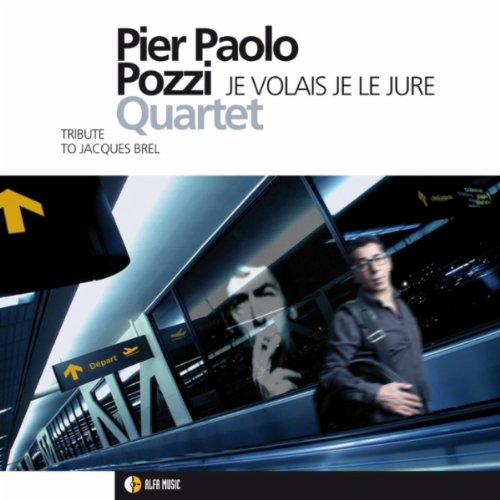
Pier Paolo Pozzi Quartet
Je Volais Je Le Jure - Tribute To Jacques Brel


Péniche L'Improviste, 23 mars 2012 tarif préférentiel
L'Improviste est un espace convivial de diffusion, de découverte et de création autour du jazz. Tout fraîchement arrivée sur le bassin de la Villette, la péniche vous offre de découvrir le vendredi 23 mars à 21h, Pier Paolo Pozzi Quartet dans un hommage à Jacques Brel.
« Ce nouveau projet est né d’un travail collectif d’arrangements, dont l’ ambition finale était de restituer autant que possible, l’intensité de l’interprétation de Jacques Brel, en utilisant les moyens à notre disposition : la tessiture harmonique et rythmique qui dans le jazz contemporain jouissent d’une plus grande liberté. C’est ainsi qu’est né notre hommage à Jacques Brel. J’ai la nette impression , qu’au delà des qualités techniques de chacun, transparaît dans ce disque, au moins en partie, la charge émotive que nous avions éprouvée, la gorge serrée et les larmes aux yeux à l’écoute de ses chansons. » Pier Paolo Pozzi
Pier Paolo Pozzi : Batteur, compositeur, arrangeur. Né à Varese en 1964. En 1997, il crée le Pier Paolo Pozzi Quartet avec Paolo Fresu trompette, Fabio Zeppetella guitare, Jean-Jacques Avenel contrebasse, groupe avec lequel il enregistre son premier disque comme leader « Greetings from... Challenge Records 2000. Nombreuses sont les collaborations comme session-man dans différentes formations: Daniel Mille, Jean-Jacques Avenel, Pierre de Bethmann, Michel Graillier, Jean-Loup Longnon, Richard Clemens, Gimmy Gourley, Denis Le Loup, Barend Midelhoff (CD - Barend Middelhoff Quintet « City lines » B. Middelhoff sax, Denis Leloup trombone, Olivier Ker Ourio armonica, Stephane Kerecki contrebasse Challenge Records 2001), Olivier Ker Ourio, Gilda Solve (CD - Gilda Solve « the best is yet to come » G. Solve voix, Patrice Galas, Marc Fosset Gus Nemeth ) Paula West, Giovanni Mirabassi, Patrice Galas (CD - Patrice GALAS "A time for jazz trios" – P. Galas piano, Gus Nemeth, Brian Hurley,), Harold Singer, Daniel Mille, Joe Chindamo, Joshua Redman et d’autres.
Avec : Sébastien Jarrousse : saxophone, Yoni Zelnik : contrebasse, Pier Paolo Pozzi : batterie, Rémy Decormeille : piano


Guido Santoni, Danilo Gallo, U.T. Gandhi
Inside A Dream


By EastWind
Guido Santoni (piano)
Danilo Gallo (bass)
U.T. Gandhi (drums)
 Italian pianist Guido Santoni was classically trained but gravitated towards jazz after he encountered electric jazz of Miles Davis and Weather Report in the 1970s. He began his professional career in the 1990s playing a wide spectrum of jazz as well as soul music.
Over time and with experience, he has become a more improvisational acoustic piano player whose impressionistic and sonorous style and solid technique are used to create music from the inside, inspired by his emotions and feelings. Inside A Dream is Santoni's debut CD from Italy's hot new independent label Artesuono, which has become famous among Japanese audiophiles for the great sound produced by producer and engineer Stefano Amerio in his own studio equipped with a Fazzioli piano.
Santoni had never met his bandmates (bassist Danilo Gallo and drummer U.T. Gandhi) before he went into the studio, and without any rehearsal they started to make music. The program consists entirely of Santoni's originals plus two short improvisational pieces. The music is impressionistic, lyrical, and often melancholic, reminiscent of the Enrico Pieranunzi trio. The beautiful collective improvisation -- musical conversations and spontaneous creation -- by the three musicians and superb sonics make this CD special.
Recorded by Stefano Amerio at Artesuono Recording Studios, Cavalicco, Italy.


Dario Carnovale Trio
Exit For Three


By EastWind
Dario Carnovale (piano)
Yuri Goloubev (bass)
Luca Colussi (drums)

Release Date: 12/15/2010
 This is a brilliant international debut of Dario Carnovale, extraordinarily talented young Sicilian pianist. His tough and highly completed pianism has already brought a great applause and excellent reviews, prompting one reviewer to call him "one of the greatest surprise after Stefano Bollani."
Born in 1979, Carnovale studied composition, percussion and piano at Conservatory of Palermo. He began his career by playing in various orchestras but later turned to jazz and studied with Enrico Rava, Franco D'Andrea and Stefano Battaglia.
On his second CD as a leader, Carnovale is accompanied by outstanding Russian bassist Yuri Goloubev, who also began his career as a classical double-bass player (and a great one at that), and drummer Luca Colussi.
The proram consists entirely of original compositions (11 by Carnovale and two by Goloubev) which are lyrical, pensive and muscular. The sound quality of the CD, recorded at Artesuono Studio known for its many recordings for ECM, is also superb. A wonderful trio album by a major talent in Europe!
Recorded at Artesuono Recording Studio, Cavalicco (Udine), Italy.


Leszek Mozdzer
Komeda


By Bruce Lindsay at AllAboutJazz
Krzysztof Komeda, the Polish musician and composer who died, age 38, in 1969, was a key figure in the emergence of European jazz, and remains a major source of inspiration for musicians across the continent. On Komeda, his ACT solo album debut, pianist Leszek Możdżer pays his own beautifully crafted tribute to his fellow countryman.
Despite his early death, Komeda's body of work is extensive and influential—showing that it was possible to take the ideas and themes of American jazz and create something that had its own uniquely Old World atmosphere. In the 21st century trumpeter Tomasz Stańko is probably the best-known exponent of Komeda's work, while the New York based Komeda Project, led by expat Polish musicians Andrzej Winnicki and Krzysztof Medyna, flies the flag for Komeda in the New World.
Możdżer is a classically-trained pianist, born in Gdansk, who discovered jazz as an 18 year-old and now moves comfortably between the classical concert stage and jazz performance, garnering numerous awards along the way. He's played with Stańko and has recorded with bassist Lars Danielsson. His classical background strongly influences the sound of Komeda—especially on the opening bars of "Svantetic," where he introduces the tune with some sparklingly delicate upper register flourishes.
Many of Komeda's best-known compositions were written for Roman Polanski movies such as Rosemary's Baby (1968) or Knife In The Water (1962), films whose air of suspense and fear was heightened by the tension and darkness in Komeda's music. While Możdżer's choice of compositions includes some of this music, he focuses firmly on the more lyrical and romantic side of Komeda's work. Still, "Sleep Safe And Warm," the lullaby from Rosemary's Baby, still retains some of that darkness—however beautiful the melody may be—while"Cherry" finds Możdżer developing a funkier, more aggressive, groove, and "Crazy Girl" and "Moja Ballada" both have an edgier tone.
Komeda's cover art is a piece by German artist Martin Noël. Its soft pastel tones are perhaps a little more restrained than the usual ACT cover images, but its calm and gentle beauty perfectly reflects the restrained loveliness of Możdżer's playing and Komeda's writing. ACT's selection of solo piano albums has another excellent addition in Komeda.
Track Listing:
Svantetic; Sleep Safe And Warm; Ballad for Dernt; The Law And The Fist; Nighttime, Daytime Requiem; Cherry; Crazy Girl; Moja Ballada.
Personnel: Leszek Możdżer: piano.

1 Sem 2012 - Part Nineteen

Jeff Hamilton Trio
Sparkle


by Rick Anderson
Here is the genius of drummer and composer Jeff Hamilton: in the middle of a program that consists almost entirely of standards like "Laura" and "A Sleepin' Bee" and "Too Marvelous for Words," he takes his trio through a seven-minute version of Stephen Bishop's 1970s schlock-pop hit "On and On." And he turns it into a quiet, softly polished gem of a jazz ballad by doing two things: having pianist Tamir Hendelman keep the melodic elaborations minimal (ensuring that the occasional bluesy flourishes will be all the more effective) and playing almost all of his accompaniment on the tom-toms and on the bells of his ride cymbals. It's the drumming that makes the tune, but unless you pay close attention you won't even notice it. That's what a genius drummer does. Hamilton is also a gifted writer, as the thrilling blues-bop excursion "Red Sparkle" demonstrates, and a very fine interpreter of jazz classics. His arrangement of the Ray Brown composition "I Know You Oh So Well" (which features unusually lovely arco bass playing by Christoph Luty) and a hard-swinging version of "Too Marvelous for Words" are both highlights, and his take on Thelonious Monk's "Bye-Ya" is very interesting: here he simultaneously squares up and dislocates the rhythms of Monk's Carribbean-flavored composition, creating a version that may not be completely successful but is nevertheless lots of fun -- and it's always good to hear someone with the confidence to make a Monk tune his own. Fans of contemporary straight-ahead jazz won't be disappointed.


Gregory Porter
Be Good


by Chris Nickson
Gregory Porter's sophomore effort confirms the talent that was so apparent on his debut. He's developed greater technique and subtlety in his impressive singing. The '70s soul is still quite apparent in his voice, with shades of Donny Hathaway and Bill Withers, but he's also the vocal heir to Nat King Cole. He's becoming a major talent, not just as a singer but also as a composer, with a unique, elliptical style, both for melodies and lyrics, which is quite evident when held up against the covers here. Porter is also acutely aware of dynamics, able to move smoothly from the softness of "Imitation of Life" to the almost atonality of the raucous "Bling Bling," which also features some excellent scat singing. His own material isn't immediately memorable, but insinuates itself into the brain after a few hearings, sophisticated and often beautiful. He keeps his soul/blues credentials alive with a version of "Work Song" that allows him to go full-throated against some honking sax. To finish, there's an a cappella version of "God Bless the Child," a song forever associated with Billie Holiday. It's a daring move, and one that works as it showcases the tenderness in his voice, with an almost liquid quality in the singing, the emotions hinted at rather than laid out. It's a superb climax to a disc that should certainly help Porter's star rise even further. 


Matt Slocum
After The Storm


By Bill Milkowski at JazzTimes
As a followup to his outstanding debut as a leader, Portraits, drummer-composer Matt Slocum settles into a rare telepathy with pianist Gerald Clayton and bassist Massimo Biolcati on this enchanting trio outing. A tastefully polyrhythmic drummer with a penchant for melodicism on the kit (as he demonstrates with mallets on the pensive opener “Jacaranda”), Slocum establishes an intimate, interactive vibe with his mates on these nine tracks. They swing blithely through “The Catalyst,” then turn in walking-on-eggshells renditions of “It’s Easy to Remember” and the elegant title track. “Passaic” is a loose three-way conversation, while their politely swinging take on Cole Porter’s “Everything I Love” is strictly old-school. Other highlights include a brilliant arrangement of Maurice Ravel’s “La Vallee des Cloches” and Slocum’s urgently burning closer, “Pete’s Place.”


Andrea Ferrario Quartet
The Mask


By Blackenin' Alice
Cari ascoltatori di RadioEmiliaRomagna stiamo ascoltando il brano dal titolo Blackenin' tratto dall’ultimo cd del Andrea Ferrario Quartet.
Andrea Ferrario è laureato in filosofia e in discipline musicali a indirizzo jazz con lode. Ha studiato presso la Scuola Civica di Jazz di Milano e ha partecipato ai seminari estivi di Siena Jazz e di Nuoro Jazz. Con la Jazz Band della scuola ha partecipato a innumerevoli concerti con ospiti come Max Roach, Kenny Barron, Eddie Daniels , Paolo Fresu, Enrico Pierannunzi. al quintetto di Enrico Rava.
Inoltre ha seguito i corsi di perfezionamento tenuti da Dave Liebman, Steve Grossman, Bobby Watson, Wes Anderson, Paolo Fresu, Buster Williams e Ben Riley.
Ha fatto parte della sezione sassofoni della Civica Jazz Band di Milano, con cui ha svolto diversi concerti e rassegne in collaborazione con l'Orchestra Sinfonica "G. Verdi" di Milano e numerosi ospiti di fama internazionale( tra cui Max Roach, Kenny Barron, Eddie Daniels, David Murray, Paolo Fresu, Antonio Faraò, Franco Ambrosetti, Enrico Pieranunzi, Franco Cerri, Mauro Negri).
Ha suonato nel Jazz Mirror Saxophone Quartet. Ha collaborato a un progetto con l’Orchestra Sinfonica Fondazione Toscanini di Parma, diretta dal M° Paolo Silvestri, associata al quintetto di Enrico Rava.
Andrea Ferrario Quartet è un progetto con il quale nel 2006 realizza il cd "Volo Notturno" (etichetta J-Digital). Con il quartetto composto da Mauro Gallo, Giannicola Spezzigu e Marcello Molinari ha inciso nel 2011 il Cd "The Mask" per la Caligola Records che porta la prefazione di Paolo Fresu e Piero Odorici.
Dirige e scrive gli arrangiamenti per la Bidibop Big Band, orchestra latin-jazz di 18 elementi, con la quale nel 2009 ha realizzato il cd "Verso Sud".
Dal 2005 fa parte della band di Andrea Mingardi, con cui ha partecipato a molti festival.
Ha partecipato al "Fenice Day 2009" con Andrea Mingardi, Katia Ricciarelli e l'Orchestra del Teatro La Fenice di Venezia.
Ha collaborato con Loretta Goggi e i cantautori Claudio Lolli (cd "La Scoperta dell'America", tour 2006) e Mirco Menna (cd "Ecco").
Durante gli anni 2000 ha suonato nelle fila di diverse formazioni jazz: BLUE MIDNIGHT ORCHESTRA (swing degli anni ’30 e ’40), THE SWINGERS ORCHESTRA (Count Basie, Frank Sinatra, Ella Fitzgerald e altri), ORCHESTRA SPAZIALE, VILLAGE BIG BAND e la DAMS JAZZ ORCHESTRA. Collabora con Vincenzo Serra e le Edizioni Musicante in veste di compositore.
Cari ascoltatori di RadioEmiliaRomagna entriamo ora nel vivo della musica del Andrea Ferrario Quartet ascoltando il brano The Mask che da il titolo al cd.


L.Necciari,A.Cohen,M.Addabbo,F.Petreni
Progetto Original


By Jazz&More
Avishai Cohen is a leading figure on the international jazz scene and one of the most sought-after players oh his generation.This CD, titled "original project" shows a collaboration between a close-knit Italian trio and flighty Israeli-American trumpet player. Jazz last frontier, compositions of great originality. this cd is taking jazz in new direction, Though deeply rooted in tradition yet able to interpret and define new horizons. Classic example of brilliant artistic collaboration between new and old world according according to a custom of the italian label Abeat. The evocative power of the compositions, the class of interpreters, the artistic sensibility and the intensity of expression offer a very compelling experience of listening.

Artisti:
Necciari Luca - doublebass
Cohen Avishai - trumpet
Matteo Addabbo - piano
Petreni Francesco - drums

Monday, April 30, 2012

International Jazz Day 2012


Martin Luther King Jr. once said that “jazz speaks for life.” This is the spirit of the
first International Jazz Day.
Jazz has defied almost every attempt at definition. The music critic John Fordham
may have captured it best when he described the music of Miles Davis as “the
sound of the skipped heart-beat, the caught breath, the sudden smile.”
Jazz is music of boundless creativity. Mixing composition and improvisation, the
formal and informal, it renews itself every time it is played. Born in the United
States, jazz is owned by the world. Rooted in African traditions and drawing on
European musical forms, it has taken on new shapes in cultures across the globe.
Jazz makes the most of the world’s diversity, effortlessly crossing borders and
bringing people together.
Jazz has been a force for positive social transformation throughout its history, and it
remains so today. This is why UNESCO created International Jazz Day. From its
roots in slavery, this music has raised a passionate voice against all forms of
oppression. It speaks a language of freedom that is meaningful to all cultures. The
same goals guide UNESCO in its efforts to build bridges of dialogue and
understanding between all cultures and societies. We work with governments and
societies and also with artists, including Herbie Hancock, UNESCO Goodwill
Ambassador. Making the most of cultural diversity is a task we all share.
This is why this first International Jazz Day will be celebrated with concerts across
the world, from Muscat to Moscow, Yerevan to Havana, Paris and New York to New
Orleans. Each of these concerts will display the power of jazz to enhance human
Message from Ms Irina Bokova,
Director-General of UNESCO
on the occasion of the International Jazz Day 30 April 2012 


Why International Jazz Day?
Jazz breaks down barriers and creates opportunities for mutual understanding and tolerance;
Jazz is a vector of freedom of expression;
Jazz is a symbol of unity and peace;
Jazz reduces tensions between individuals, groups, and communities;
Jazz fosters gender equality;
Jazz reinforces the role youth play for social change;
Jazz encourages artistic innovation, improvisation, new forms of expression, and inclusion of traditional music forms into new ones;
Jazz stimulates intercultural dialogue and empowers young people from marginalized societies.

PROGRAMME:
Friday, 27 April 2012 - UNESCO Headquarters, Paris
This programme may be subject to modification

Opening of the first International Jazz Day:
10.00 – 10.30, Miró Halls
By Irina Bokova, Director-General of UNESCO, and Herbie Hancock, UNESCO Goodwill Ambassador
Events all day long
Live coverage by French Paris TSF JAZZ radio
Photo exhibitions by the Smithsonian’s National Museum of American History and Philippe Lévy-Stab (Miró Halls)
Duke Ellington photo exhibition by the Maison du Duke in partnership with the Académie du jazz, France (Foyer)
Screening of photo montage by Blue Note Records (Foyer)
Montreux Jazz Lounge
Hosted by the Montreux Jazz Festival, with screening of legendary performances (Pas Perdus Room)

PERFORMANCES:
10.15 – 14.00, Miró Halls
10.15 Tigran
11.00 Swan Berger
11.30 Riccardo Del Fra
12.00 Raphael Gualazzi
12.30 Hamid El Kasri
13.30 Paris Conservatory Sextet
14.00 – 17.00, Miró Halls
14.00 Berklee Global Jazz Institute
14.30 Ilham Al Madfai
15.00 Giovanni Mirabassi
16.00 Paul Lay and Helene Arntzen
16.30 Dominique Fillon

MASTER CLASSES/”RENCONTRES” AND DANCE DEMONSTRATION
Master Classes: morning
Room I
10.30 Herbie Hancock
11.00 Dee Dee Bridgewater
Room IV - LIMITED ACCESS (150 seats)
10.15 Ibrahim Maalouf
11.00 Hugh Masekela
12.00 Barbara Hendricks
Japanese Garden
11.15 Nicole Slack Jones "I Sing" for Babies
"Google Jazz Experiment"
12.00, Room II
Software programmers share their latest music inventions for recording, composition and visualization
Master classes: afternoon
Room II
14.30 Klaus Doldinger
16.30 Nicole Slack Jones "I Sing"
Room IV - LIMITED ACCESS (150 seats)
14.00 Marcus Miller
16.30 Biréli Lagrène and Lionel Loueke
Jazz and Dance Demonstration
14.30, Foyer
By Fabien Ruiz, choreographer of the film "The Artist"
Hosted by the Académie du jazz (France)

JAZZ TALKS

10.30 – 12.30, Room II
“Jazz and Cinema: Great Stories of an Old Couple”
Hosted by the Académie du Jazz, featuring:
Bertrand Tavernier, Film Director
Vladimir Cosma, Soundtrack Composer
François Lacharme, President of the Académie du Jazz, Paris
Julien Delli Fiori, Director of FIP radio station
Thierry Jousse, Radio Producer, Director and Film Critic
John Edward Hasse, Curator of American Music, Smithsonian Institution

14.30-15.30 Room X
“Jazz as a Voice of Liberty – its Role in the Struggle for Democracy” Hosted by the Permanent Delegation of Germany to UNESCO, featuring:
Martina Nibbeling-Wrießnig, Ambassador, Permanent Delegate of Germany to UNESCO - Moderator
John Edward Hasse, Curator of American Music at
the Smithsonian Institution’s National Museum
of American History
Daniel Konrad, Jazz Expert (Czech Republic)
Rainer E. Lotz, Jazz Expert (Germany)
Nicolas Pflug, President Blue Note Records
Tomasz Tluczkiewicz, Jazz Expert (Poland)

15.30, Room IV - LIMITED ACCESS (150 seats)
“Global Jazz and Peace”, by Danilo Perez and Wayne Shorter
Live from New York City
Organized by the Berklee Global Jazz Institute

FILMS AND SCREENINGS

13.00, Room II
“ Round Midnight” by Bertrand Tavernier

13.00, Room IV - LIMITED ACCESS (150 seats)
Film and Jazz Performance
"Latif", silent film, with the Salman Gambarov & Bakustic Jazz

15.30, Room II
Projection of the 1976 concert of Nina Simone in Montreux
Presentation by Claude Nobs

REHEARSAL FOR THE EVENING CONCERT

12.00 – 16.00, Room I - LIMITED ACCESS
Open for observation
Tania Maria
Marcus Miller
Hugh Masekela
Biréli Lagrène

EVENING CONCERT: "HERBIE HANCOCK & FRIENDS"
20.00 – 21.30, Room I - LIMITED ACCESS

Live retransmission by Arte Live Web on www.unesco.org

Saturday, April 28, 2012

Some More Italians


By Claudio Botelho
I can’t help but talking about Italians again. Through the good services of a good friend (veeery gooood services, to say it better…), I came across three new albums I will talk here about. It seems to me the air which is flowing through the Italian jazz scene is fresher, these days. The musicians from that country seem to have complete control on this musical language, as much as any other people and this includes the Americans.
As much as many say the piano trio format is exhausted and nothing more new can come any more, the reality is showing us otherwise. But, before going further, I think we must determine what is “new”. What is “new”, after all? I don’t know how can it be described in musical language, but, for me, new is something that can call attention to itself; something different from the mainstream, which, by its nature, force us to pay attention to it.
The new can be a good thing, but can be just “different” and this condition of being so does not, indeed, justifies its existence, as, at the end, it doesn’t enrich the human experience in any way and its inevitable future will be oblivion. I’m not here to despise the searchers of new sounds; new ways of musical expression in any way, as I understand the human progress has also relied upon the dreams and works of these visionaries, but, conversely, one cannot grant as inferior the works of someone who, through more commonplace ways, decides to express himself.
What advantage has the music of any contemporary composer/musician as compared to the music of, say, Bach, Beethoven or Chopin? The “Goldberg Variations” of fame was, recently, recorded by American pianist Dan Tepfner, in an album of himself alone. I must say that, some hundreds of years after it was composed, listening to this new version, I was not able to find anything new, in that sense of establishing any real contrast with the original work as done by its author. It’s just a jazzy version of the work of Bach as was, in my opinion, the rendition of the celebrated Canadian pianist Glenn Gould, done in the second half of last century. And, please, don’t misunderstand me: Tepfner is a master; he is one of the best American jazz pianists of the new breed and I’m not saying his work on Bach music deserves obscurity; far from it: it’s one of best releases of piano jazz of late and it has received its due recognition by critics.
It seems to me, this composition, through minor continuous changes, is pure jazz. If you try to put apart its main theme, you’ll find it’s a short one which goes with a nonstop sequence of mini arrangements which, as such, don´t ever go far from the main idea. Surely it was on purpose, as it should fulfill a task given by the king which suffered from insomnia. It had to have a boring atmosphere and, so, should help the king to sleep. Can a work of a genius be boring? Of course, if so he wants it to be. And, to me, it’s a boring song, although a work of greatest art…
But I’m not intending to write about Bach; I want to talk about some new Italians musicians and give you some suggestions I think you’ll certainly approve.

1- Take, for instance, an album called URBAN FABULA, from a trio led by pianist Serby Borgio which, along with bassist Alberto Fidone and drummer Peppe Tringali, recorded a ten-song album, mixing works of their own with some American standards. And these standards are “On Green Dolphin Street” and “Round Midnight”. These two songs has been an ever present part of the jazz repertory for many years now and have been explored inside out by an incommensurable number of musicians time and time again. Many wouldn’t dare to record it any more, afraid of having nothing new to bring, but not these kids: They not only included them on their first recorded album, but did their work in a most entertaining way. Nobody would be sore listening to these songs for the nth time here, I assure you. Here, and not only through these songs, these young musicians have brought novelties to the jazz scene; out of pure inspiration, although using the very same old language used by everyone. Fresh air, really! It’s a proof that there’s much to be done and it will ever be, provided one has the RIGHT means to do so!

2- Get, if you can, an album by drummer Lorenzo Tucci called “Tranety”(reviewed elsewhere, in these pages, by Marco Lorenzo Faustini). Inspired from compositions by or associated with the late great saxophone player John Coltrane (AGAIN, surely more than “abused” songs…), Trucci and his companions Claudio Filippini on piano and Luca Bulgarelli on bass did a job of great impact and his drumming, on the forefront (as opposed to many works which seem to leave the percussion out of the studio…), sets the mood of every song. His iron fisted blasts are perfectly joined by the excellent Filippini, who, today, is one of the topmost piano players in Italy and these, along with Bulgarelli, present Coltrane’s repertory in a fashion which may border the fierce, sometimes and, in the least, vibrant. Excellent interplay! Try it!

3- You may also get an album named “Serenity” by another great Italian pianist; someone named Pierro Frassi. Along with cohorts Filippo Pedol, on bass and Andrea Melani on drums (CD already mentioned in these pages) and joined by the venerable alto sax player Lee Konitz (now in his eighties), they indulge on music by famous American jazz composers, such as Bill Evans, Thad Jones, Dizzy Gillespie and Horace Silver, joined by some other compositions from the classic American pop songbook , including a music from Burt Bacharach (“A House is not a Home”). Mr. Konitz plays on three songs, including Jones’ “A Child is Born”. Contrasting to the reported CD above, the mood here is more controlled, but no less excellent. If, in the former album, you find organicity and vigor, here you’ll find a very sensitive work of seasoned artists, full of that someway more reticent emotion which is the hallmark of those with more time on the road. Excellent arrangements throughout. Great integration and very good taste spice the whole work!
To round off for now, let me quote the words of Argentinean sax player Javier Girotto who, writing in the booklet of “Urban Fabula”, stated:
“I Thought also that a group composed of piano, bass and drum would have very little to offer. Instead, listening to this trio, I totally changed my mind. There is something yet to be discovered and new routes to be followed, like those taken by Urban Fabula…”

Mr. Girotto has changed his mind. How about you?

Thank you very much, Mr. Marcílio…

Friday, April 27, 2012

AUDIÇÕES DE ABRIL 2012


By Dr. Carlos Couto Castelo Branco
Acontecida, parte dela, num determinado apto. da Av. Beira Mar, caixas PSB, e os adjuvantes essenciais: whisky, gelo, etc. Ausência sentida: GRETA.
Registro ainda dois eventos no Teatro GEO-SP e no Teatro Via Sul- Ce.
O melhor que rolou:

CD’s :

1.MARIA MARKESINI – excelente cantora Greco- holandesa acompanhada por um octeto de excelentes e desconhecidos batavos. Some-se ainda a qualidade do áudio deste trabalho. Este CD beira as raias da perfeição. Podem crer. O Mr. X não conhece a menina.

2.AHMAD JAMAL – Blue Moon. O velho Jamal esbanja saúde nos seus mais de 80 e qualidade neste seu último CD. Em formação de quarteto incorporando o experiente e muito bom Manolo Badrena na percussão. É a volta as origens do Jamal, dando destaque a percussão. Destaco I Remember Italy, Laura e Blue Moon. As faixas são muito longas, o que certamente não agradaria ao Edilberto, irmão do Renato. Mas isto não compromete.

3.WESLA WHITFIELD - Septuagenária e muito boa cantora. Acompanhada pelo Mike Greensill Octet. Destaco East Of The Sun e This C’ant Be Love.

4. CARLA WHITE - A Voice in The Nigth., 2005. Último trabalho da excelente Karla White, falecida em 2007. Acompanhada de quarteto composto por guitarra, baixo, bateria e o trumpete/flugelhorn do brasileiro Claudio Roditi que também é o arranjador. Muito bom CD, no qual destaco I Still Love You(Retrato em Preto e Branco de Jobim & Chico) gravada por outros músicos estrageiros como Zíngaro. E ainda May I Come in ? dentre outras.

5. TANIA MARIA – Tempo. Tania ao piano solta a voz acompanhada apenas do baixo de Eddie Gomez. Curiosissimo CD onde destaco Estate, Sentado a Beira do Caminho ( Roberto & Erasmo) e uma composição muito bonita do A C Jobim de título A Chuva Caiu. Será que o Dr. Leo conhece ?

6.MONICA BORRFORS - Lil Darlin. Estes suecos são demais. O excepcional pianista Gosta Nielson acompanha-se por Jasper Kruberg –drums e Filip augustson – bass. Monica arrasa na interpretação de Lil Darlin. Destaco Take Five; Regret Säng; I Coud’t Write a Book.

DVD’s:

1.Brad Mehldau – Live in Marcilac. Simplesmente fantástico. Recomendo ao Léo Barroso que adquira este DVD com a maior urgência. Peço desculpas se já tiver adquirido. Piano solo fantástico do Mehldau, que ultrapassa os limites da sensibilidade na interpretaçãoo de Secret Love. EXCEPCIONAL TRABALHO principalmente por se tratar de piano solo.

2. Joe Lovano & Steve Kuhn Trio – excelente desempenho dos dois. Aliás, este foi uma colaboração enviada pelo Roberto Barroso diretamente de SC para esta audição.

AO VIVO:

Stefano Bollani & Hamilton de Holanda – performance excelente de ambos. Não sei qual dos dois é melhor músico. O certo é que a parceria foi perfeita. Músicas brasileiras belíssimas mas, a interpretação do Barbone de Sevilla por piano e bandolim ficou na memória. INCRÏVEL.

Marcos Valle & Stacey Kent & Jim Tomlison – excelente show. Marcos Valle repaginou de forma bem bossa nova, suas belas composições. Em formação de sexteto com arranjos maravilhosos destacando o Jesé Sadock e o guitarrista Sergio Brasil. Junte-se a estes a razoável Stacey Kent que, no contexto, apareceu muito bem cantando bossa nova. Destaco Seu Encanto, Samba de Verão, Preciso aprender a Ser Só ( nesta o Tomlinson arrasou no sax). Foi muito bom reouvir Um Sonho de Lugar( O Dr.Leo teve um orgasmo), Pigmaleào 70, Azimuth etc, etc. O marcus Valle é o único bossanovista que continua ativo.

Mês muito movimentado !

Sunday, April 22, 2012

1 Sem 2012 - Part Eighteen

Claudio Filippini Trio
Love Is The Thing...And The Blues Too


Claudio Filippini (Piano)
Massimo Moriconi (Bass)
Massimo Manzi (Drums)

Recorded Sep. 11, 2003

1 St. Louis Blues (Handy) 5:16
2 Besame Mucho (Velazquez) 4:28
3 Free Love Blues (Filippini, Moriconi, Manzi) 5:56
4 I Love You (Porter) 3:57
5 There Is No Greater Love (Jones, Symes) 4:20
6 I Fall in Love too Easily (Styne, Cahn) 6:41
7 Anato-Love (Filippini, Moriconi, Manzi) 3:52
8 You Don't Know What Love Is (Raye, DePaul) 9:46
9 Cool Blues (Parker) 5:01
10 Beautiful Love (Young) 4:47
11 Secret Love (Parish, Sherwood) 5:16


Lars Danielsson & Leszek Mozdzer
Pasodoble


By Thierry Quénum 
Swedish bassist Lars Danielsson is a great bass player in the Nordic tradition: virtuosic, musical and lyrical. On this track the bass actually carries the melody alone in the first few bars and continues doing so, alternating roles with the piano, throughout the tune. In the hands of Polish virtuoso Leszek Mozdzer, the piano likewise takes a very lyrical approach to the melody . Nevertheless, the 6/8 rhythm of this beautiful tune is not neglected, giving the melody a mellow dancing twist that adds much to its romantic charm.

Year Of Release: 2007
Label: ACT Music
Total Time: 55:24

Tracklist:
01. Praying
02. Fellow
03. Entrance
04. Prado
05. Pasodoble
06. Daughter's Joy
07. It's Easy With You
08. Hydrospeed
09. Reminder
10. Innocence 91
11. Follow My Backlights
12. Eja Mitt Hjarta
13. Berlin
14. Distances


Giovanni Ceccarelli Trio
Météores


By Jessica Di Bona
Giovanni Ceccarelli: pianoforte, tastiere
Ferruccio Spinetti: contrabbasso
Francesco Petreni: batteria
David Linx: voce
Fausto Mesolella: voce, chitarre

L'inquietudine esistenziale spinge i viaggiatori, meteore vaganti e libere, a percorrere la via, ora onirica ora realistica, breve o molto lunga, dell'intensità musicale. Non per niente il tema di Météores di Ceccarelli è dominato da un entusiastico smarrimento, delineato da verdi sensazioni di vitalità ritrovata. Sembra di assistere al franare di innevate vette di tecnica e rigore, non perché questi ultimi non siano presenti, bensì perché l'approccio è fresco e primaverile, gioiosamente salubre. Non v'è mai accenno a forme di emotività stucchevole.
Difficile far straripare il flusso del sentimento dai saldi e gretti argini del grossolano, improprio e comune utilizzo delle emozioni, quindi ancor più apprezzabile. Si tratta di un romanticiscmo che punta all'essenza, all'aleatoria, vitalistica e mai immobile creatività artistica di chi cerca sublimi impressioni da inventare piuttosto che schemi da seguire. Non mancano i momenti in cui l'attenzione alle sensazioni ha profondità più ampie, ad esempio nel brano Ti Odio, con il deciso monologo di Mesolella (già chitarrista degli Avion Travel), che nell'ultimo brano, un'esilarante versione di Chameleon, manifesta una ruvida grazia che riecheggia il virtuosismo di Hendrix. Il piano gentile e vellutato di Ceccarelli è la speculare metà dell'elegante vigoria del contrabbasso di Ferruccio Spinetti, duo che incorpora armonicamente l'attenta batteria di Petreni.
Il trio, e la compagine tutta, mai cessa d'irradiare il crepuscolare calore di un cielo rosato (evocato anche da Oceano e Chega de Saudade) che scalda il percorso degli ascoltatori, pellegrinaggio musicale trainato da meteore erranti, capaci di elargire, tra movimento e stasi, note piacevolmente evanescenti, punti di forza ed attrazione dei nostri musicanti.


Piero Frassi Trio with special guest Lee Konitz
Serenity


1. Beautiful Love
2. Serenity
3. I'll Remember April
4. How Deep Is The Ocean
5. Have You Met Miss Jones
6. A Child Is Born
7. Night In Tunisia
8. A House Is Not A Home
9. Beautiful Love Alt.
10. Time Remembered
11. I'll Remember April Alt.

Piero Frassi(p), Filippo Pedol(double b), Andrea Melani(ds), Lee Konitz(as)
Recorded at Mu Rec Studio, Milano on September 11, 2008. 


Lorenzo Tucci
Tranety


By Marco Lorenzo Faustini
Finalmente posso parlare bene, senza timore di cadere in retorici sciovinismi, di un progetto di jazz italiano. Mi riferisco a “Tranety” di Lorenzo Tucci, cd incentrato sulla poetica di John Coltrane (1926-1967). Freschezza, intensità e feeling caratterizzano i dieci brani del trio che vede, oltre a Lorenzo alla batteria, l’ottimo Claudio Filippini al piano e Luca Bulgarelli al contrabbasso.
Una scelta felice, quella del batterista abruzzese, di concentrarsi sulla formazione a trio (tre è il numero perfetto, nella musica ed anche in altro) e nel tentare una rilettura, in questo caso felicissima, di brani dell’immenso Coltrane. Così “Equinox“, “Moment’s Notice” e compagni scorrono via rivitalizzati da un’interpretazione che tenta di districarne l’intima complessità.
Coltrane fu, in vita, personaggio carismatico, profondo innovatore del linguaggio jazzistico, ed anche personaggio caratterizzato da crescente bisogno di spiritualità (per la cronaca: la African Orthodox Church lo dichiarò Santo nel 1982). Certo è che il personaggio, a tanti anni ormai dalla sua prematura dipartita, continua ad esercitare un incredibile fascino su tanti musicisti.
Piacevole, per tornare al CD, anche “Afro Blue” del grande Mongo Santamaria (1917-2003), sulla quale sono stati apportate notevoli variazioni ritmiche rispetto alla divisione ternaria originaria. Anche “Afro Blue” fu, comunque, tema assai caro a Coltrane e dunque i nostri eroi non sono andati, come si diceva una volta a scuola, fuori tema. Tutt’altro. Piacevoli anche i tre brani originali di Tucci e Filippini. Indubbiamente un bel prodotto che prosegue il discorso bebop/hard bop iniziato, da Lorenzo Tucci, con “DruMonk” riuscendo a sfuggire al sempre incombente pericolo di cerebralità e di freddezza.

LORENZO TUCCI (ds),
CLAUDIO FILIPPINI (p),
LUCA BULGARELLI (b)

1. MOMENT’S NOTICE (J. Coltrane)
2. AFRO BLUE (M. Satamaria)
3. HOPE (L. Tucci)
4. EQUINOX (J. Coltrane)
5. SOLSTICE (L. Tucci)
6. WISE ONE (J. Coltrane)
7. IVRE A PARIS (C. Filippini)
8. LONNIE’S LAMENT (J. Coltrane)
9. COUSIN MARY (J. Coltrane)
10.AFTER THE RAIN (J. Coltrane)

Music directed by Lorenzo Tucci
Executive producer : Satoshi Toyoda
Recorded at Icarus Recording Studio Roma, Italy, on November 28 - 29, 2010
Recording engineer : Stefano Del Vecchio
Mixing & Mastering Engineer : Luca Bulgarelli
Photographer : Andrea Boccalini


Eugenio Macchia
Living In A Movie


1. Pinocchio (W. Shorter) 3:38
2. You Two (E. Macchia) 4:32
3. Ursa Minor (E. Macchia) 8:23
4. Living In A Movie (E. Macchia) 6:40
5. Herbie's Tune (E. Macchia) 5:39
6. Histeria (E. Macchia) 3:40
7. 7.'Round Midnight (T. Monk) 3:02
8. Once Again (E. Macchia) 4:41
9. Before It's Time To Say Goodbye (K. Kirkland) 5:26

Eugenio Macchia - piano
Furio Di Castri - contrabbasso
Gianlivio Liberti - batteria
Auand Records AU3001 (2011)
Recorded at Artesuono Recording Studio, Cavalicco (Ud), 7-8-9/7/2009

By Vincenzo Fugaldi/ Jazzitalia
L'elenco dei pianisti italiani emergenti si accresce di un nuovo talento: Eugenio Macchia, giovane vincitore della Luca Flores Piano Competition 2010 e miglior pianista del Jimmy Woode Award 2010. In questa sua prima incisione, Macchia si cimenta con tre brani altrui (Pinocchio di Shorter, 'Round Midnight di Monk e Before It's Time To Say Goodbye di Kirkland) e mette in gioco sei proprie composizioni. Pianista dallo stile encomiabile, asciutto, senza orpelli né una nota di troppo, interessante anche come compositore, è qui assecondato al meglio da un senatore del contrabbasso jazz come Di Castri, che suona con grande impegno, e dalla solerte e affiatata batteria di Liberti, pronta a sottolineare accenti e dinamiche dei brani.
L'ombra del miglior Hancock si staglia sullo sfondo di questa musica, sin dalla composizione shorteriana e dal conseguente You Two. Ursa Minor è un brano in ¾ a tempo medio, Herbie's Tune una ballad dedicata alle progressioni armoniche hancockiane, con un assolo di Di Castri da antologia. Notevole anche la rielaborazione del celeberrimo brano di Monk per pianoforte solo.

1 Sem 2012 - Part Seventeen

Enrico Pieranunzi
Permutation


by Ken Dryden
Enrico Pieranunzi is among the top echelon of European jazz pianists. For this session he plays his originals with veteran bassist Scott Colley and the rising young drummer Antonio Sanchez. "Strangest Consequences" is a tense post-bop opener with terrific interplay by the trio. "Critical Path" alters between a jaunty, playful air and intricate bop, showcasing Sanchez's considerable chops as a soloist. The pianist's "Permutation" has the vibe of a busy urban setting, with Colley laying down an infectious groove. Pieranunzi is at his most lyrical in the bittersweet ballad "Distance from Departure," with spacious playing and terrific, sensitive support by his sidemen. The pianist's breezy, lighthearted "Every Smile of Yours" suggests a clear spring day, played as a brisk waltz. The lonely air of the ballad "Within the House of Night" couldn't be more direct, conveying its sense of longing without a lyric. Enrico Pieranunzi is long overdue to be recognized among the jazz greats of his generation on a worldwide basis. Permutation provides ample justification for his inclusion.


Matt Slocum
Portraits

Cover (Portraits:Matt Slocum)

by Michael G. Nastos
Drummer/composer Matt Slocum's debut album as a leader has him sharing good company. The Wisconsin native takes full advantage of his residency in California by employing the rising star pianist Gerald Clayton, adding bassist Massimo Biolcati (on loan from Lionel Loueke), and adds saxophonists Walter Smith III, Dayna Stephens, or Jaleel Shaw on four select tracks. As a trio with Clayton, Slocum's music is taken over by the pianist's deft touch, holistic ideas, and beautiful, spontaneous inventions that supersede the written notes, while there's a better feeling of composition on the tracks featuring the saxes. It's all done quite beautifully, with the tasteful reserve many young mainstream jazz artists prefer rather than bebop bombast. "Averida Del Paraiso" is a truly gorgeous as Clayton's chiming piano moves in 4/4 time within 6/8, while the wonderful spirit song, "Cambria," also exudes the absolute resolve of a lovely persona. Alto saxophonist Shaw and Stephens on tenor team up for "Seven Stars" in modernistic parallel to the standard "Alone Together," while Smith's biting tenor goes alone with the bass and drums à la Sonny Rollins on "Homage" and the classic Billy Strayhorn ballad "Daydream" sans Clayton. Everything here is played meticulously, as these young musicians employ savvy tones far beyond their years. It seems drummers like Slocum, Dan Aran, and Daniel Freedman are coming to the forefront these days as performers who concentrate on writing their own music, proving that rhythm navigators are just as musically original as anyone. This auspicious debut should put Matt Slocum's name firmly on the jazz map of artists deserving wider recognition. 


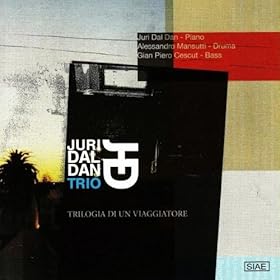
Juri Dal Dan Trio
Trilogia Di Un Viaggiatore

Trilogia di un viaggiatore

By Luca di Varmo

1. Dosti riscopre la luna
2. Going to Portugal
3. Viaggiando con te a notte fonda
4. Tornando a casa
5. Dosti Blues

Juri Dal Dan-piano
Piero Cescut-bass
Alessandro Mansutti-batteria
Federico Missio-sax track 3
Ermes Ghirardini-batteria track 3

Nuovo disco dello Juri Dal Dan Trio pubblicato per artesuono. "La luna era appena spuntata come un’enorme ruota di pietra calcarea, ed era leggera come fosse stata riempita d’aria. Sembrava staccarsi da tutto e da tutti. Chissà quante persone la stavano guardando in questo momento, e quante, come me, la stavano scoprendo”. Con queste parole - tratte dal libretto allegato al cd - si chiudono i diari di viaggio di Dosti Kudret, protagonista semi-inventato, e in parte autobiografico, di una serie di racconti che ispirano e integrano la Trilogia di un Viaggiatore, opera in tre parti realizzata dal pianista pordenonese Juri Dal Dan, al suo primo disco Artesuono. Dosti, prima di essere il fulcro intorno al quale ruotano i tre momenti musicali centrali del disco (preceduti da un’introduzione e seguiti da un blues finale), è un nome, un suono su un campanello di casa. Un personaggio reale prima di tutto, amico immaginario all’inizio, poi addirittura “fratello mai avuto”, come lo definisce Dal Dan stesso. “Quando sono venuto a vivere a Pordenone - continua -, sulla targhetta del campanello di casa ho trovato il nome di questo Kudret. E’ capitato persino che mi scambiassero per lui. E’ stata l’occasione buona affinché la mia fantasia decidesse che Dosti poteva essere un personaggio vuoto da riempire. Era un alter ego perfetto per rappresentarmi in situazioni fittizie, partendo da episodi di vita vissuta. Verso un qualunque viaggio”. Si potrebbe dire che nel jazz, la tematica del viaggio sia alla base di tutto. Viaggio come diaspora del popolo africano in schiavitù, verso l’America, viaggio dalla campagna alle “big cities”, quando il blues e altro ancora diventavano jazz urbano, viaggio come momento compositivo ideale per uno come Duke Ellington che, accompagnato perennemente dal fido Harry Carney - autista nonché sax baritono -, scrisse sul sedile posteriore della vettura pagine preziosissime della musica di tutti i tempi. “Nel periodo in cui ho cominciato a scrivere la Trilogia, ero appena uscito dall’ospedale per una malattia seria. Ero molto provato fisicamente, e l’ascolto di Ellington - uno sempre in viaggio, che con le sue composizioni ti faceva rivivere i posti in cui era stato - accentuava quella voglia di viaggiare che ti viene quando sei costretto a letto. Sentivo anche la necessità di dare sfogo a molte tensioni interiori. Dovevo scavare in profondità, dentro me stesso. E il viaggio era il mezzo giusto”. Un alter ego quasi reale, che compie un viaggio parzialmente autobiografico dunque, come pretesto per scendere nell’io più profondo: questa è Trilogia di un Viaggiatore. Quella che ritroviamo accanto al piano di Juri Dal Dan, nel disco si conferma una vera e propria famiglia musicale. Prima di tutto, c’è un trio rodato e longevo, costituitosi nel 2002, il cui organico è variato nel tempo, fino alla formazione attuale, che vede Piero Cescut al basso elettrico e - da quasi due anni - Alessandro Mansutti alla batteria. Ospiti speciali, per grande affetto e stima artistica reciproca, il sassofonista Federico Missio - copilota di Dal Dan in un prezioso progetto che musica il cinema muto - e il batterista/percussionista Ermes M. Ghirardini. “Per quanto mi riguarda - dice Juri -, lavorare con le stesse persone, crescendo insieme fa la differenza. Una ritmica che nasce insieme, ha tempo di affiatarsi e creare un bell’interplay. Gian Piero (Cescut) è per me un fratello musicale. Dal ’96 con lui faccio coppia fissa. Con me ha attraversato tante fasi, dal funky puro alla trasformazione più recente (non evoluzione, badate bene). Alessandro (Mansutti) è un talento, una persona squisita e ha le qualità di un “grande”. E’ flessibile e capisce subito cosa deve fare raggiungere il risultato”. Il flusso musicale del cd (che conviene accompagnare con la lettura dei racconti abbinati, scritti dal pianista stesso), comincia con la fine della storia. Dosti riscopre la luna - la cui spiegazione del titolo è riportata nel nostro incipit - scorre con accordi cosiddetti aperti e un tema largo, che dipingono il momento in cui Kudret/Dal Dan - personaggio semplice e visionario - riscopre la propria complessità e il senso di appartenenza al mondo, alla natura di un paesaggio lunare in una notte d’estate. Il primo brano della suite, Going to Portugal, rappresenta invece la scintilla che ha fatto nascere tutta la Trilogia. E’ un 3/4 sereno, solare, sudamericano, che esprime la partenza da casa, l’inizio del viaggio, l’evasione in cerca di nuovi stati d’animo. E il tema “respira”, e ti porta con lirismo ed euforia alla “meta”, in questo caso il Portogallo. Dosti fa un lavoro snervante e poco appagante. Il viaggio dovrebbe servirgli per alleviare la condizione di cui è prigioniero. Ma accade un forte litigio con la compagna. La situazione è ben descritta nella prima parte di Viaggiando con Te a Notte Fonda, in cui monta una nervosa improvvisazione libera, come un feroce scambio di battute. Dopo la tempesta però, arriva la quiete. Nella seconda parte, il clima diviene notturno, ricco di pace estrema, ritrovata dopo la sofferenza, e dipinge il riappacificamento tra Dosti e la compagna. Non c’è niente che possa descrivere a parole l’energia positiva che si riscopre dopo un viaggio ricco di situazioni emotivamente difficili. In Tornando a Casa, Juri Dal Dan racconta in musica come Dosti abbia scoperto qualcosa in più di sé stesso, i propri limiti. E racconta di come ora sia in grado di accettarli, insieme ai propri fallimenti. E’ il primo step per migliorarsi. Ai suoi occhi, lasciate dunque le tensioni interiori, tutto prende una luce diversa. L’energia di questa traccia è forte, e il ritmo latino usato nella composizione del brano rappresenta l’entusiasmo per aver compreso un importante aspetto di sé stessi. E così il viaggio, catartico, si conclude. “Titoli di coda”, come dice Dal Dan, con un sottofondo liberatorio. Non c’è niente di meglio che un buon blues per riemergere dai travagli interiori. Dosti Blues però non è il classico blues che ci si potrebbe aspettare. E’ prima di tutto un mantra, un qualcosa che gira su sé stesso, e cresce, lasciando in sottofondo, una vena di malinconia positiva.


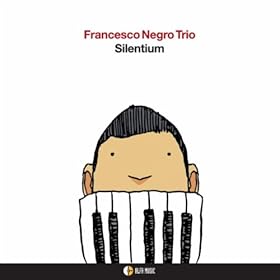
Francesco Negro Trio
Silentium


By Marco Sabellico
Il titolo già la dice lunga. Silentium. Pace, Calma. Intimità. Francesco Negro ci sta regalando un percorso attraverso dieci brani, dieci riflessioni. Dieci frammenti (come alcuni dei suoi pezzi si chiamano). Adorabili piccole perle da vivere fino in fondo, per cogliere l’essenza di un lavoro, di una ricerca che definire Jazz francamente mi sembra limitativo. Francesco, pianista dalla raffinatissima tecnica e dotato di straordinario tocco e sensibilità, si propone in trio con due eccellenti musicisti, il batterista Ermanno Baron ed il bassista Igor Legari.
Bene, se per un attimo provate ad eliminare il fantasioso ed improvvisativo drumming di Baron e il collante di Legari alla frase pianistica di Negro, il risultato è davvero un’altra cosa. Siamo in pieno Novecento, troverete reminiscenze di Satie e di Debussy e tanti altri prima di arrivare alle pulsazioni swing e all’hard bop, fino alle frasi melodiche più originali e ai suoni più attuali. Un bel viaggio da vivere trasognati e contemplativi, esplorando le nostre sensibilità, il gusto, i profumi e sapori che brani come La Mia Africa (mandorle nocciole fondente), Koala (tavoletta con granella di croccante), Angiolina (Africa) riescono a evocare.
Un viaggio del gusto in cui i dieci cioccolati artigianali di Maurizio Maglio - d’autore come i brani in questione - possono essere il giusto fill-in, come un sorso di puro malto o un vecchio cognac assieme a loro. Un gioco? Sì, un gioco bellissimo. Di rimandi, citazioni, contaminazioni tra Africa, Mediterraneo, Nuovo Mondo. Di suoni e sapori. Dove poi alla fine rimangono le cose vere e pure. Tre straordinari affiatatissimi musicisti, sapori eleganti nati da maestria e straordinaria materia prima. Interpretazioni, insomma, che sta a noi saper leggere.


VEIN (Thomas Lahns,Michael Arbenz,Florian Arbenz)
Plays Porgy & Bess

By Unitrecords
Product Information First VEIN are indeed classically trained musician. And love, as such, the opera as a genre.
Second, Gershwin's entire music not only close to the Jazz, but it has penetrated from the beginning and (with, I Got Rhythm ') marked forever. And thirdly, the jazz history and a long history of jazz interpretations of Porgy & Bess (with the illustresten, dazzling example of Gil Evans and Miles Davis). A mortgage that is too large, will for anyone new to add?Who knows the musicians of VEIN know: no. Because if VEIN goes to work, there is not a simple replay foreign music (what else), but always to create the challenge and self-image, it just something as idiosyncratic Independent.
And so with Porgy & Bess once again a gorgeous VEIN album was created, bursting with ideas, full of surprising tempo, rhythm and dynamics of change and studded with enchantingly lyrical and witty and whimsical Impromptus.
It is precisely because they love this music so seriously, take all three again the freedom of their own, unique way to play with the music: from the explosive iridescent overture of cranky-playful tone picturesque distorted solo lots and wonderfully harmonious interpretations of, I Loves You Porgy 'or' Strawberry Woman 'to unusually fast-paced versions of' It Is not Necessarily So 'or' There is a boat leavin 'soon for New York'.
How to say in general is that it has become a VEIN-album, which is in between very carelessly allowed to come thus ternary, fantastic swinging, and identifies its protagonists as a veritable jazz virtuosos.
Virtuoso in the best sense. Because each of the three white always take back the right moment. And is such a great dramatic arc, and the subtly balanced musical structure its grip.

1 Ouverture
2 Summertime
3 Bess, you is my woman now
4 I got plenty o' nuttin'
5 Here come de honey man
6 I lonesome here all by myself
7 I loves you Porgy
8 Summertime
9 It ain't necessarily so
10 Crab man
11 My man's gone now
12 Strawberry woman
13 There's a boat dat's leavin' soon for New York
14 Oh Bess, where's my Bess / Oh Lawd, I'm on my way


Anthony Wilson
Seasons: Live At The Metropolitan Museum Of Art

Cover (Seasons: Live at the Metropolitan Museum of Art:Anthony Wilson)

By Michael J. West/JazzTimes
Seasons is best approached as a DVD release with bonus audio CD, not vice versa. The April 2011 performance features four guitarists (Anthony Wilson, Steve Cardenas, Julian Lage and Chico Pinheiro) on gorgeous, custom acoustic archtop guitars built by luthier John Monteleone. (The instruments were on display in the Met’s “Guitar Heroes” exhibit earlier this year.) With each part of Wilson’s four-movement Seasons suite, the leaders—and guitars—rotate. There’s no knowing who plays what without visual aids.
The suite itself, commissioned by Monteleone, is a winning, eclectic piece. It varies its styles to capture seasonal moods: Pinheiro nimbly leads a samba on “Spring,” for example, and “Autumn” features Lage in a wistful folk ballad. However, each movement has a cadenza that echoes themes from the previous movement, binding them together without stepping on the surprises. “Spring” and the bluegrass “Summer” are the most lyrical and memorable (though the latter bears an unfortunate resemblance to “Dueling Banjos”). “Autumn,” though more challenging, compensates with its sweetness as well as an expressive valedictory solo by Cardenas. He also leads on the opening “Winter,” dissonant and austere to the point of being avant-garde; the movement locates its main theme in an off-kilter descending figure that’s simultaneously discomfiting and an earworm.
Wilson, who leads on “Summer,” finds other ways to dominate the full suite, whether in a prominent solo on “Spring,” or closing “Autumn” with a “Winter” recapitulation. This isn’t a complaint: It’s his piece, and his work is superlative, as is everyone’s. The CD is filled out with four solos and an ensemble take on Joni Mitchell’s “The Circle Game.” All are nice, Lage’s “April Kisses” especially, but essentially Easter eggs.

Monday, April 02, 2012

Tracks of the Week - April 2012

Cover (Sarah: Dedicated to You:Carmen McRae)


By Claudio Botelho
#01- Roberta Gambarini and The Dave Brubeck Trio performing "Alice in Wonderland"
This is the track # 7 of the CD "Everybody Wants to be a Cat" - Disney Jazz, Vol. 1. If there’s any other extremely tuneful jazz singer south of Ella Fitzgerald, this is Ms. Gambarini…
#02 – Antonio Faraó, along with Darryl Hall (b) and Andre Ceccarelli (dr), playing “Izieu”
This is track #3 from “Domi”, his latest album. In a word: wonderful!
#03 - "Everlasting" From Gordon Goldwin's BIG PHAT BAND "That's How We Roll" 
#04- "It´s Not Polite To Point", From the Same Album. 
Two very different renditions, one from the other, but having the convergence of freshness...
#05- "Sad Princess" - From Alex Domschot's "Venusian Commute"
More than eleven minutes of virtuose reflexive beauty in a combination of guitar, cello and bass, makes this tune un unforgetable experience!...

By Leonardo Barroso
1- Laurence Hobgood and Charlie Haden building a masterpiece: "Que Sera Sera"
 Beautiful ! Pure music ! Pure Jazz !
2- Canada's Power Trio: Holly Cole Trio - Holly Cole, Aaron Davis, David Piltch
Jazzin' on "Calling You" ! Eargasm !!!!
3- "Send In The Clowns". Sent from heaven: Carmen McRae's Trio: Shirley Horn, Charles Ables, Steve Williams. 
Recorded in 1991 it's McRae last recording, in a homage to Sarah Vaughan - Sarah: Dedicated To You.

Friday, March 30, 2012

THE DEATH OF JAZZ


By Claudio Botelho
Think it’s already happening? Think it’s gonna happen? Afraid of it?
Jazz isn’t and will never be a very popular kind of music, for the simple reason of lack of accessibility: it’s not easy to follow someone who, at will, doesn’t follow the previously established score of a song. The music inside other music isn’t accepted or even perceived by many (the great majority). If the listener is not aware of what’s going on, he may find the musician unskilled or, worse still, fraudulent. Those who have listened jazz on any regular basis know this very well.
If it was ever popular, it was on those years when it was a vehicle of dance music, in the first half of last century, chiefly in the United States. But, in that days of yore, to be possible to associate it with another leisure practice (dancing), it had to follow certain rules which assured it could be so used: appropriated and constant rhythm; little spontaneous improvisations, other than the previously planned and repertoire of great popular appeal. In short: it was a jazz very little “jazzy”. By then, there were orchestras like Harry James, Woody Herman and Les Brown which epitomized the so called “Swing Era”. Their popularity spanned from 1936 to 1946 and I’d say these were the golden years of the popularity of jazz, although, as I sad above, a jazz somewhat sterilized by those regulations.
From 1946 on, the big musical groups disbanded, as a result of the bankruptcy of post war years. But, some of them went on: Duke Ellington; Count Basie and Stan Kenton. But these were in a higher level and were the exception that confirmed the rule and, if I’m not wrong, had strength to keep on playing at least until the passing of their leaders.
Now, the jazz went on by itself: its sole point of interest was music itself. So, jazz musicians, free from any limitations, let loose their inner instincts and expressed their feelings in abandon.
Certainly no country more than United States documented, analyzed and classified all kinds of jazz manifestation and terms like east coast jazz, west coast jazz, mainstream jazz, free jazz, cool jazz and a bunch of others were coined along the time and gained the world.
Now comes the core of this writing: Is it possible jazz, in any day of the future, to vanish; to disappear; to become extinct so that nobody will ever listen a single note of it? No, never, for the simple reason that it was never invented; it was not a kind of music but just a way to play music and, as such, has always been practiced. Johann Sebastian Bach, to name one, knew this very well…
The North Americans had the venture of identifying it before any other people and the greatness of the United States helped to make it their own. As a matter of fact, jazz has always been around and, in my view, it’s nothing more than instantaneous arrangements; the kind of music one introduces into another when performing it. It can be as subtle as it can be fierce, in such a way as making the original composition barely recognizable or even unrecognizable for many.
To exemplify: you may have singers like Brazilian João Gilberto, as an example of jazz at its utmost subtleness: the only thing he does when singing is to make tiny changes in time; sometimes he advances his phrasings, others he delays it. It’s a jazz barely perceptible and I’m sure many never had any clue of it. Those who don’t like his singing simply don’t like jazz and, so, prefer to listen to other more conventional artists. In spite of this, his understated jazzy way of singing may pass unaware for many, which, even though not necessarily jazz fans, might like his performances.
You may also have artists like Betty Carter and Anita O’Day who had took jazz to the other extreme; the first one having serious problems of recognition, when she first appeared in the music scenery, due to her great uniqueness. Both, in my opinion, represent the quintessence of jazz singing and, for my money, Ms. O’Day is a little ahead, as she is even more tantalizing. Ms. Carter, being her greatest contender, is an artist of more prominence, for being akin to Art Blakey in his keen eyes (or ears) in recognizing new talents; many of them she discovered and introduced to wider audiences, just like Blakey did so many times. So, she was a bit more than just a single super singer…
You even have jazz singers who are not jazz singers at all. Many of them earning prizes as such, without ever spitting a miserable note different from those from the previous arrangements, usually done by some other musicians. So, these jazz singers never did any arrangements or improvisations and the sole reason for being so classified must go to the musicians they work with. Here, you have a territory belonging all to them; a land of make-believe of those who make their mouth, throat and tong their musical instrument, but nothing more than just that, if taken into account the realms of the subject hereon discussed…
You also have players which seem to be improvising from the very first note they play and you may have a hard time trying to distinguish the theme from the improvisations. Cecil Taylor, for instance, comes to my mind. Maybe too much room for improvisations… An excess of freedom for my liking…
So, why all this blah, blah, blah? To express my feelings that jazz is an innate state of mind, which come standard with some people, musicians or just listeners like me. It is a feeling of “inadequacy” with the written chords; an inner force to make them different, each one having his way of doing it, which may or may not suit the taste of a listener. That’s why those who like jazz follow the musicians in the first place, letting the songs he performs to play a secondary (but not unimportant) role.
(On account of this, I don’t believe when someone tells me he likes “music in general”; he “likes every music”. For me, it seems more like he doesn’t like “music in general”. He’d rather watch TV…)
All said, if jazz comes in all sizes, shapes, textures and colors; is independent from the will of anybody; germinates in any place, in any weather and, in its early days in the core of each of the “chosen ones”, is undetectable, how come it may ever end?
(As a matter of fact, our editor – Mr. Leonardo Barroso – when proclaims that “jazz is alive” (and he does it a lot…) seems to me to be afraid of awaking one day and discover that there’s no jazz anymore.)
The question is: jazz is and will ever be the nth most listened way of playing music, but this should not mislead you into thinking it is dying. Besides, remember: it is “insidious” sometimes, being unknowingly present in many presentations and this is what makes it an enemy difficult to destroy…
Still afraid? You don’t need to be. The title of these writings is a fake, as much as the skull and bones which illustrate it...